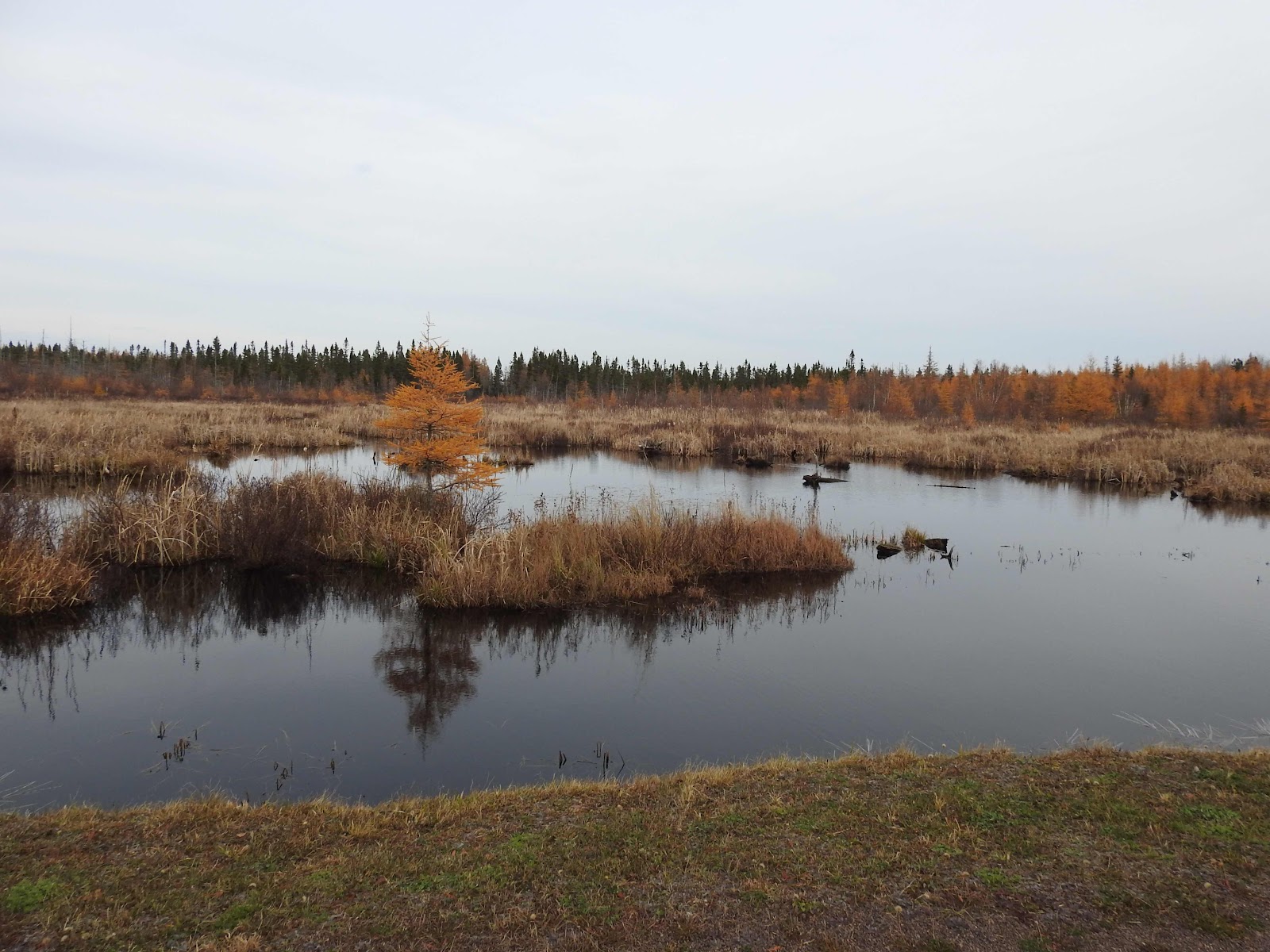
We were prepared to put our bikes away but a rare November 12 C day enticed us to go cycling again. My husband and I continued westward on Prince Edward Island, beginning at Portage. No need for warm clothing this day. The slight southerly breeze was warm and fall clothes were sufficient. The sun never exposed itself for the day, merely hinted at an appearance.
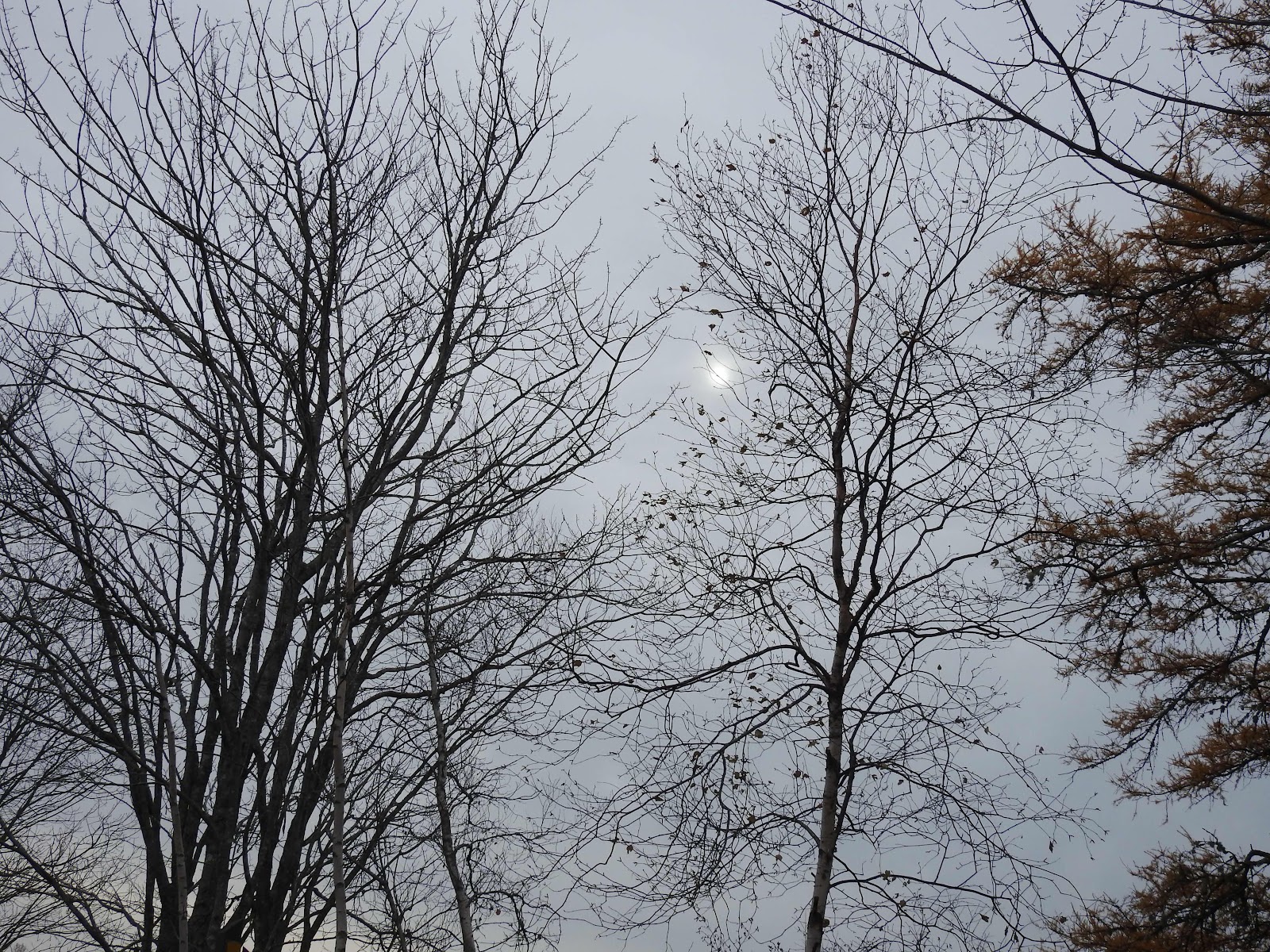
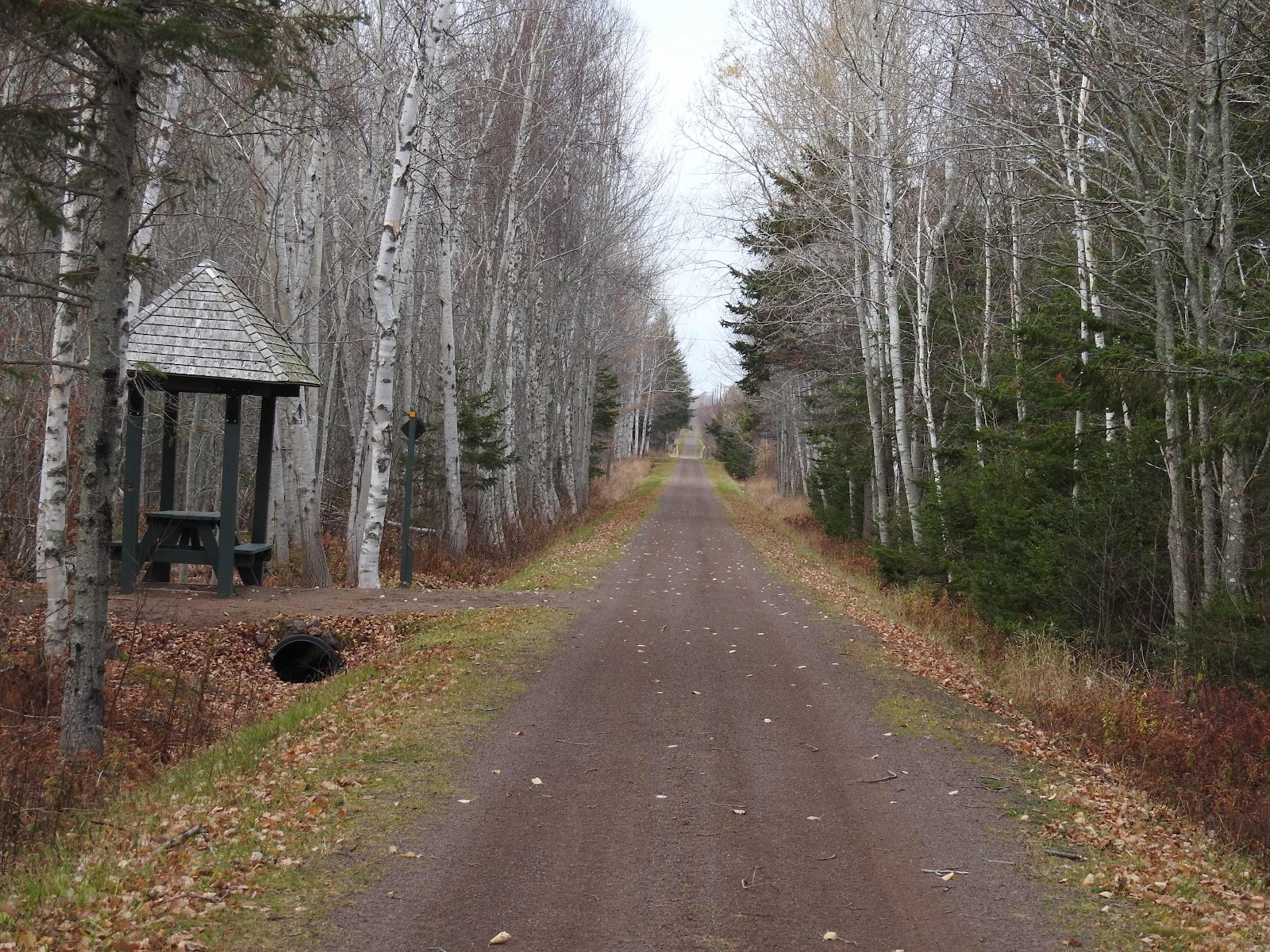
This section of trail has many flat straight stretches through areas of bog and farmland. The bogs are rimmed by juniper/larch trees which are pretty as their needles respond to the darker days and cooler temperatures.
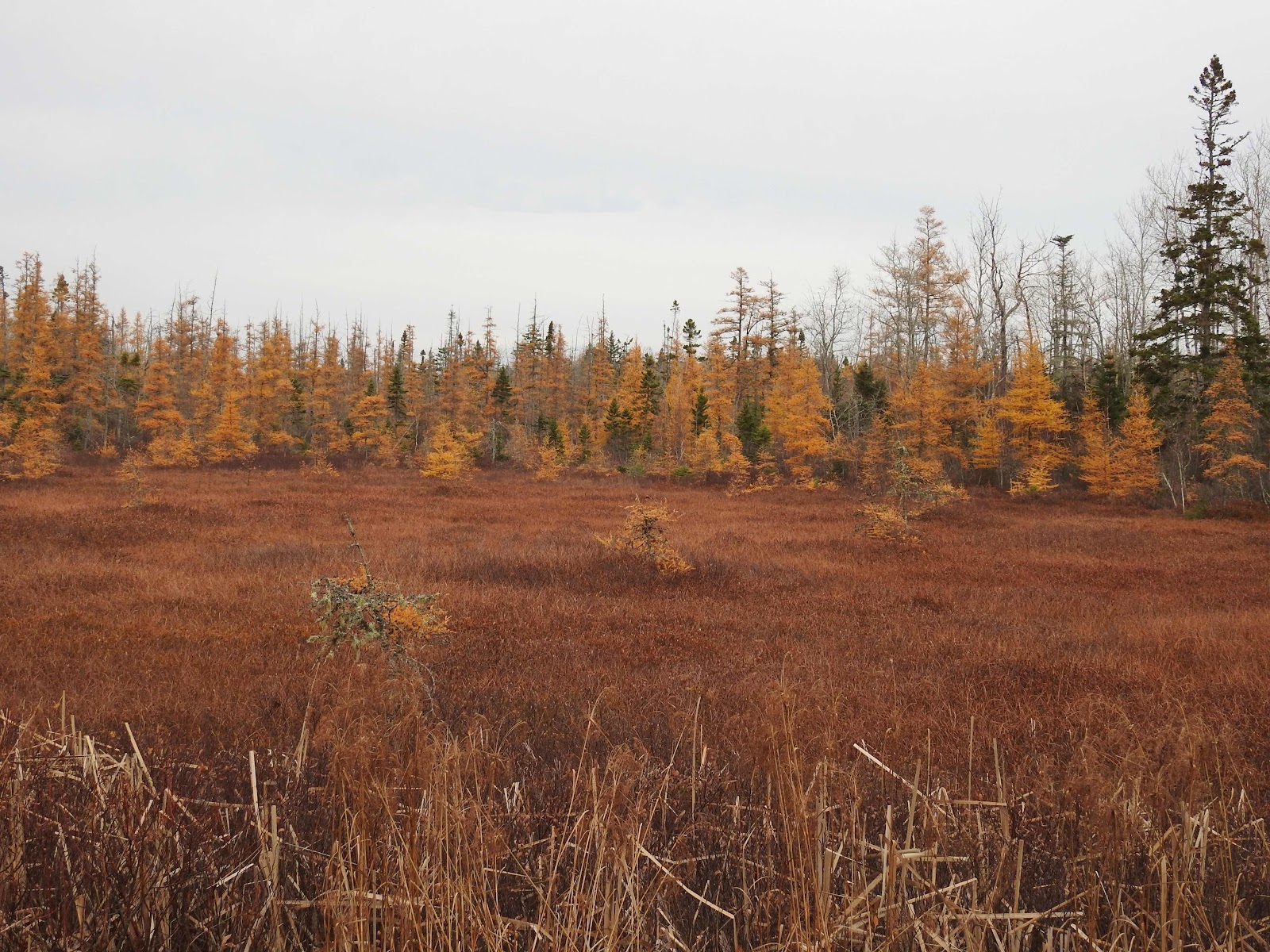
The deciduous trees are naked, spent leaves covering the woodland. Grey branches and trunks predominate and contrast with the browns of tall grasses and bulrushes.
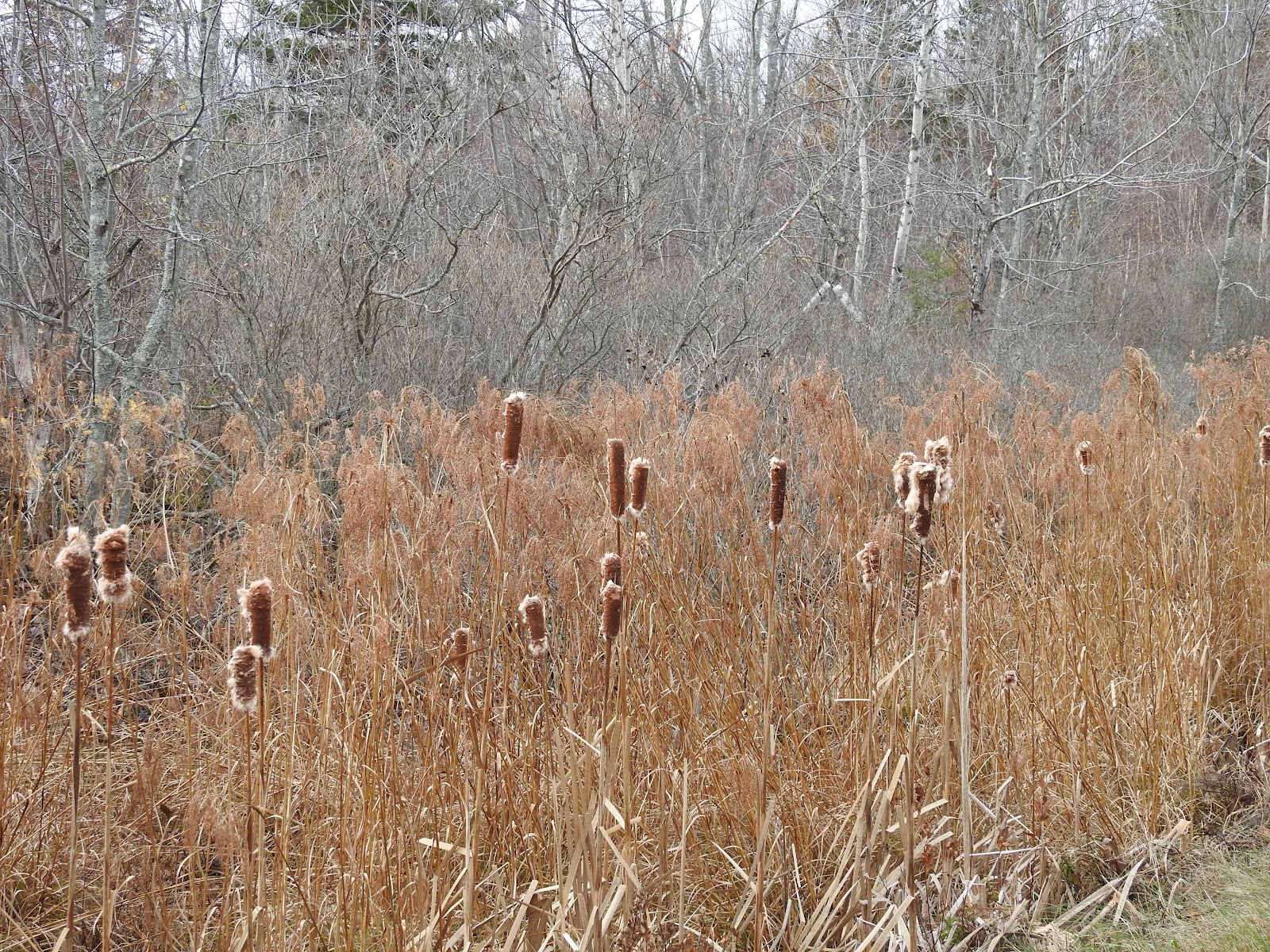
White birches stand out in this setting.
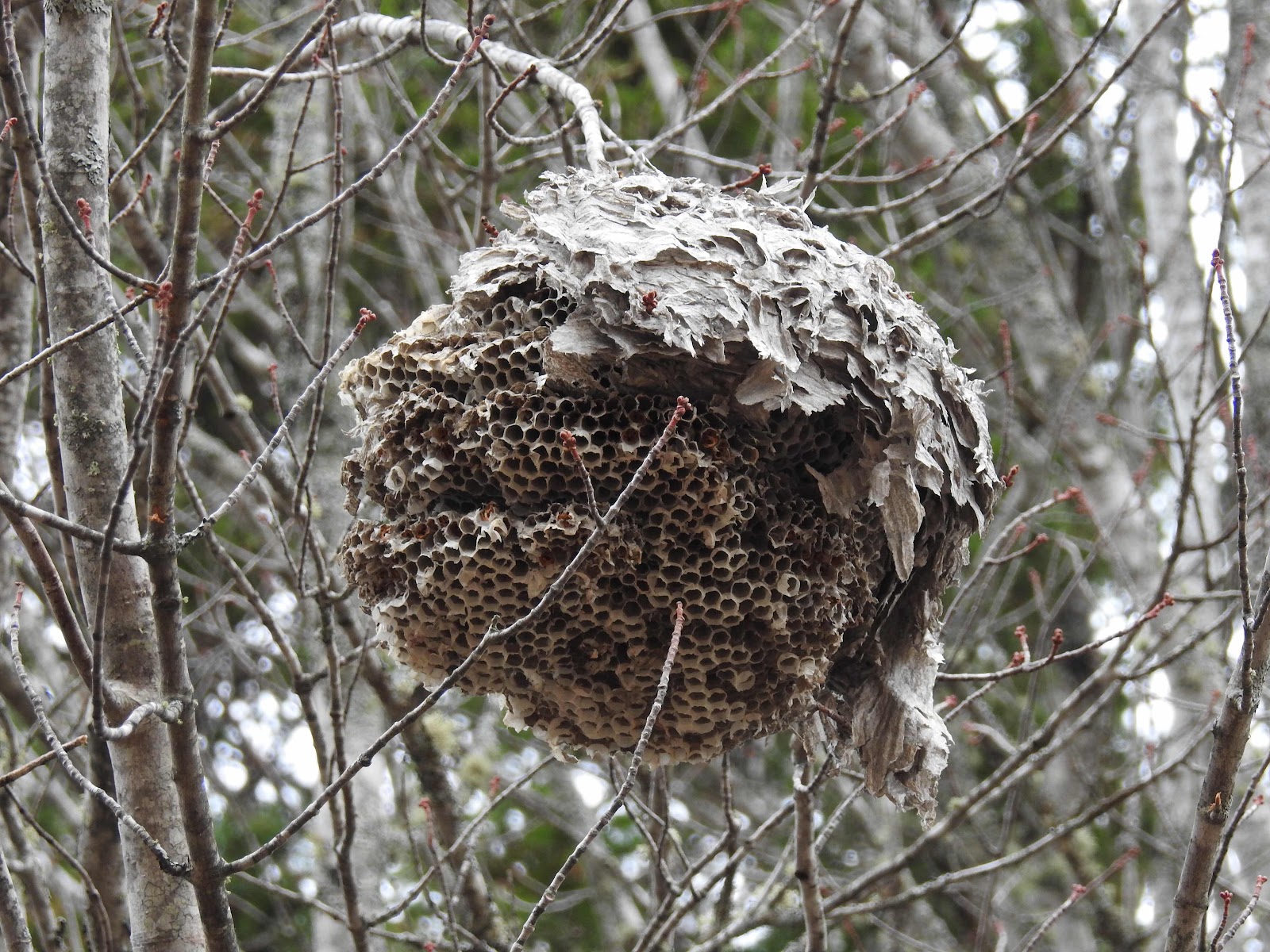
The bare branches expose wasp and bird nests, curiosities now that their former residents have moved on.
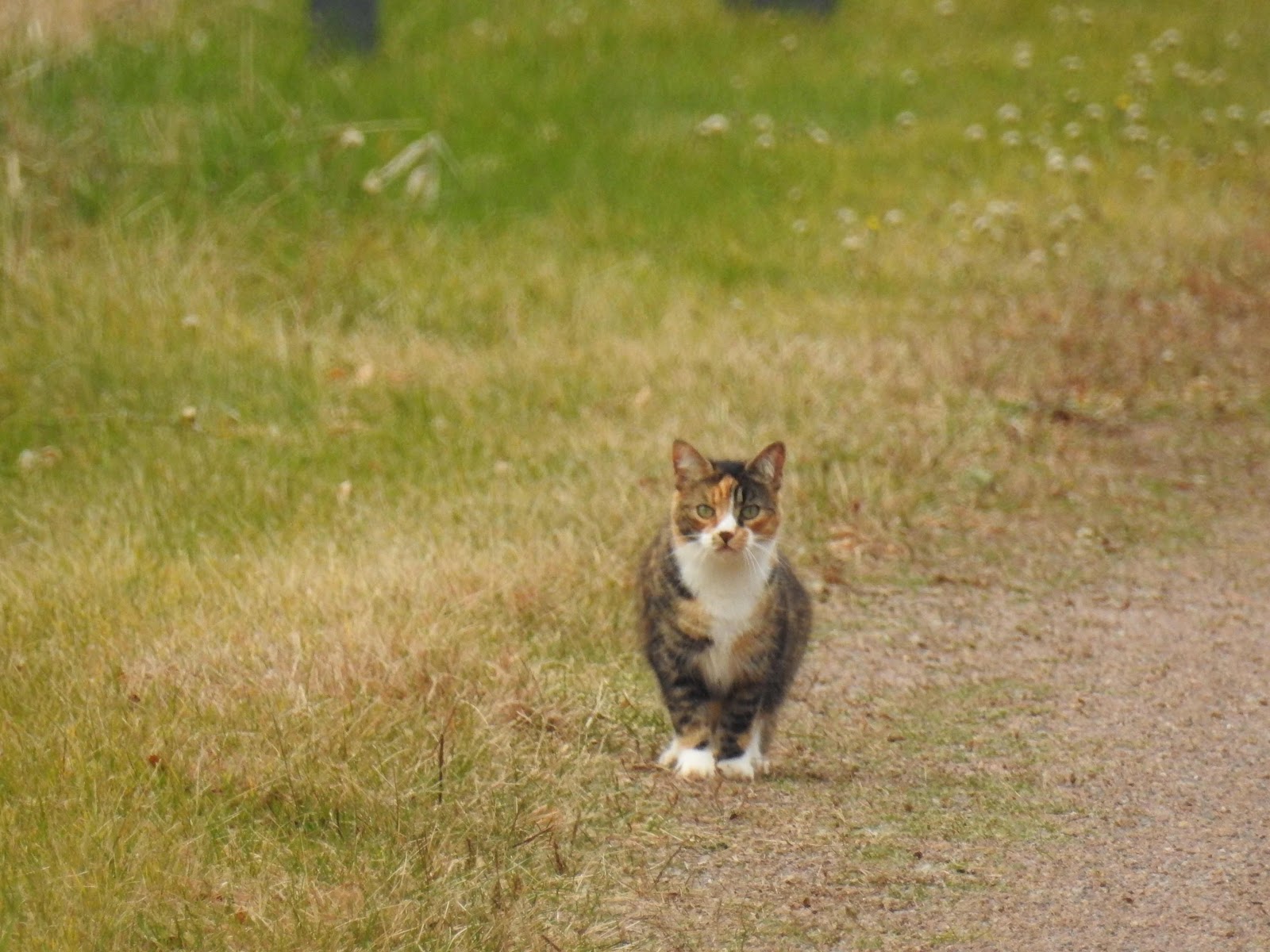
A cat stops to watch the two seniors approach on bikes.
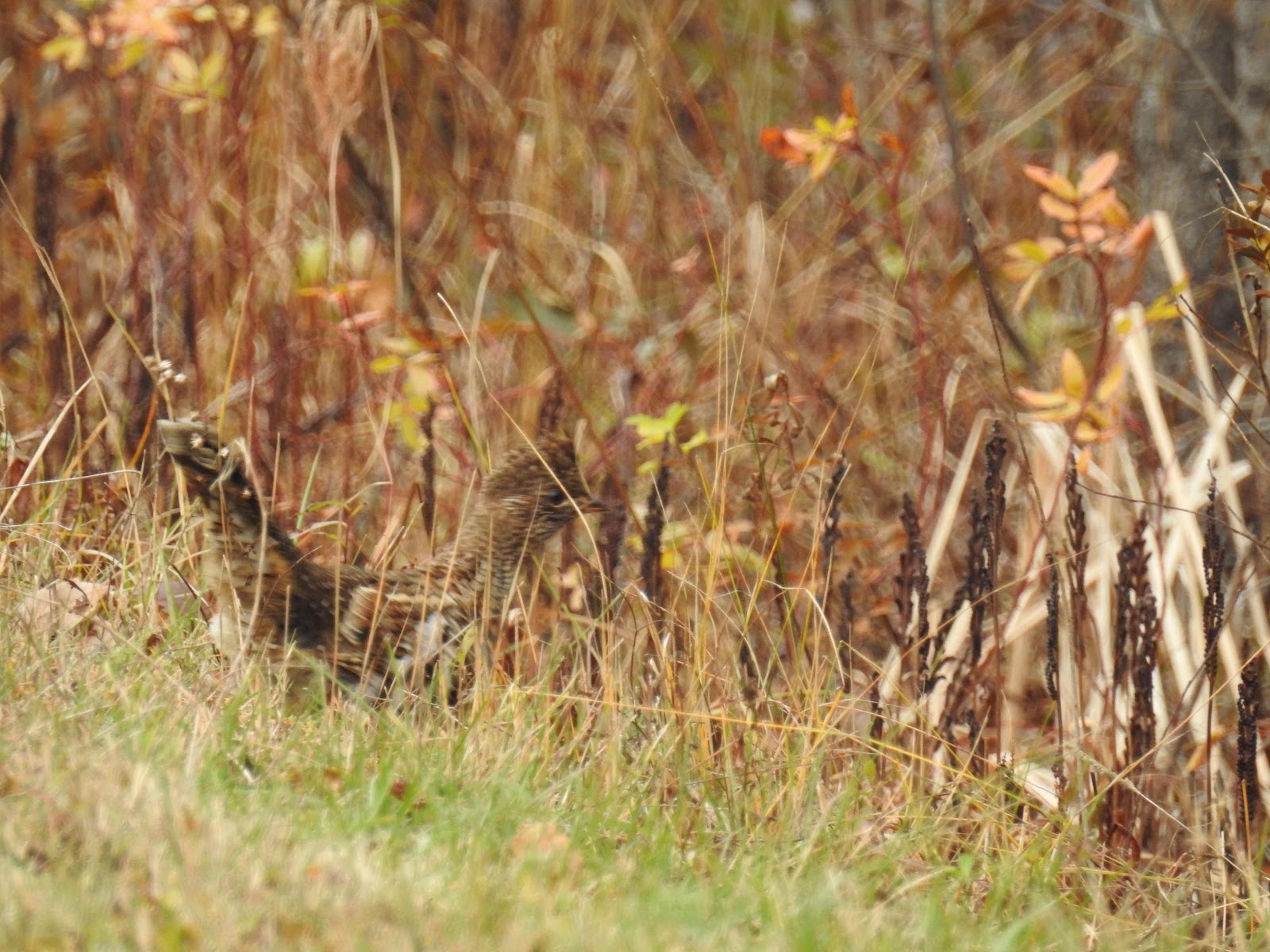
Further along the trail, a Ruffed Grouse follows a companion across the trail. I stopped for the first one, and while I waited for my husband, the second one sauntered across as well.
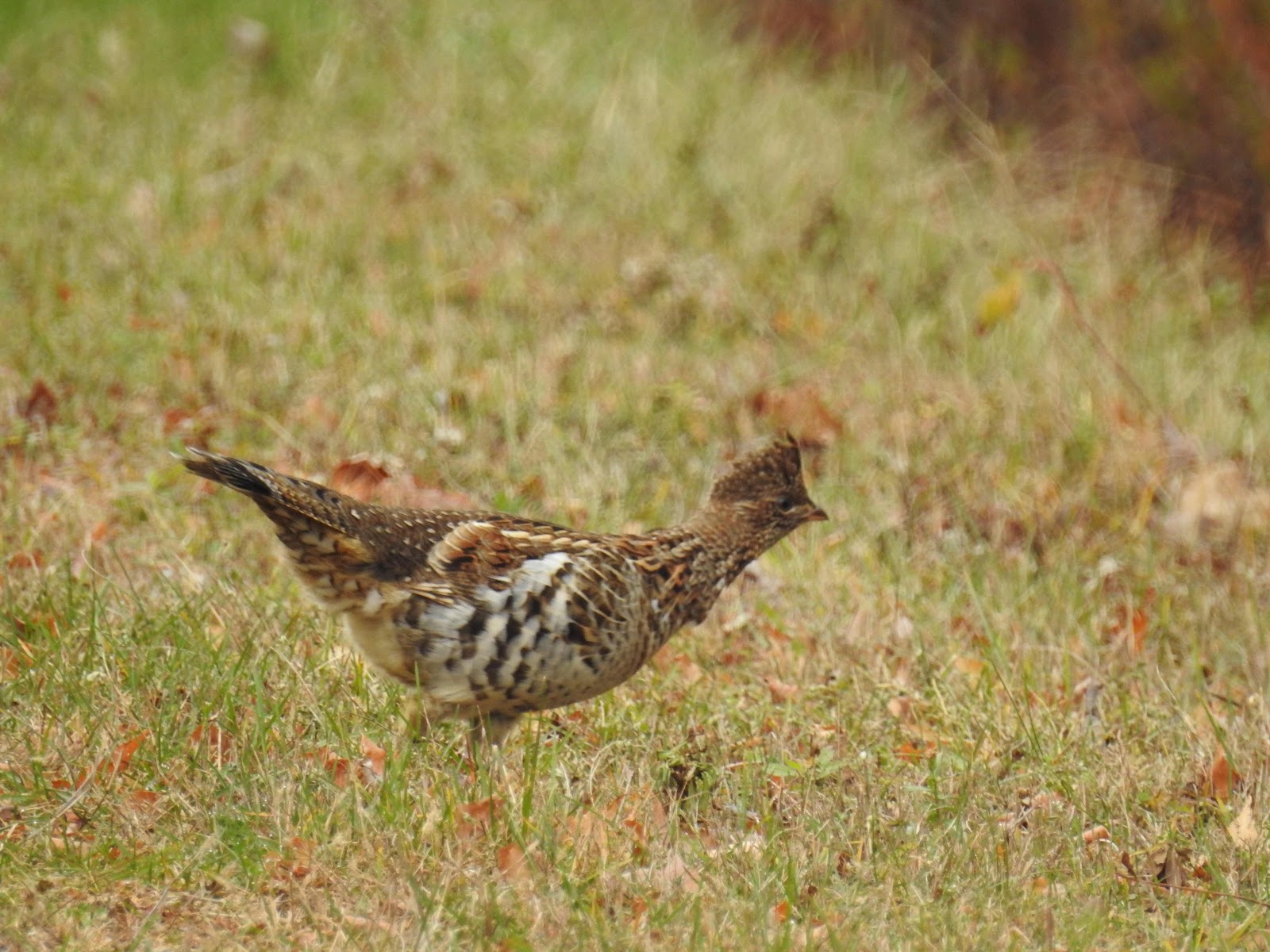
It was well camouflaged in the vegetation along the trail.
An old house on Jack-a-Point Road has seen better days. The roof could provide a roller coaster ride. The house doesn’t look that old which poses the question as to what caused its current curvaceous shape.
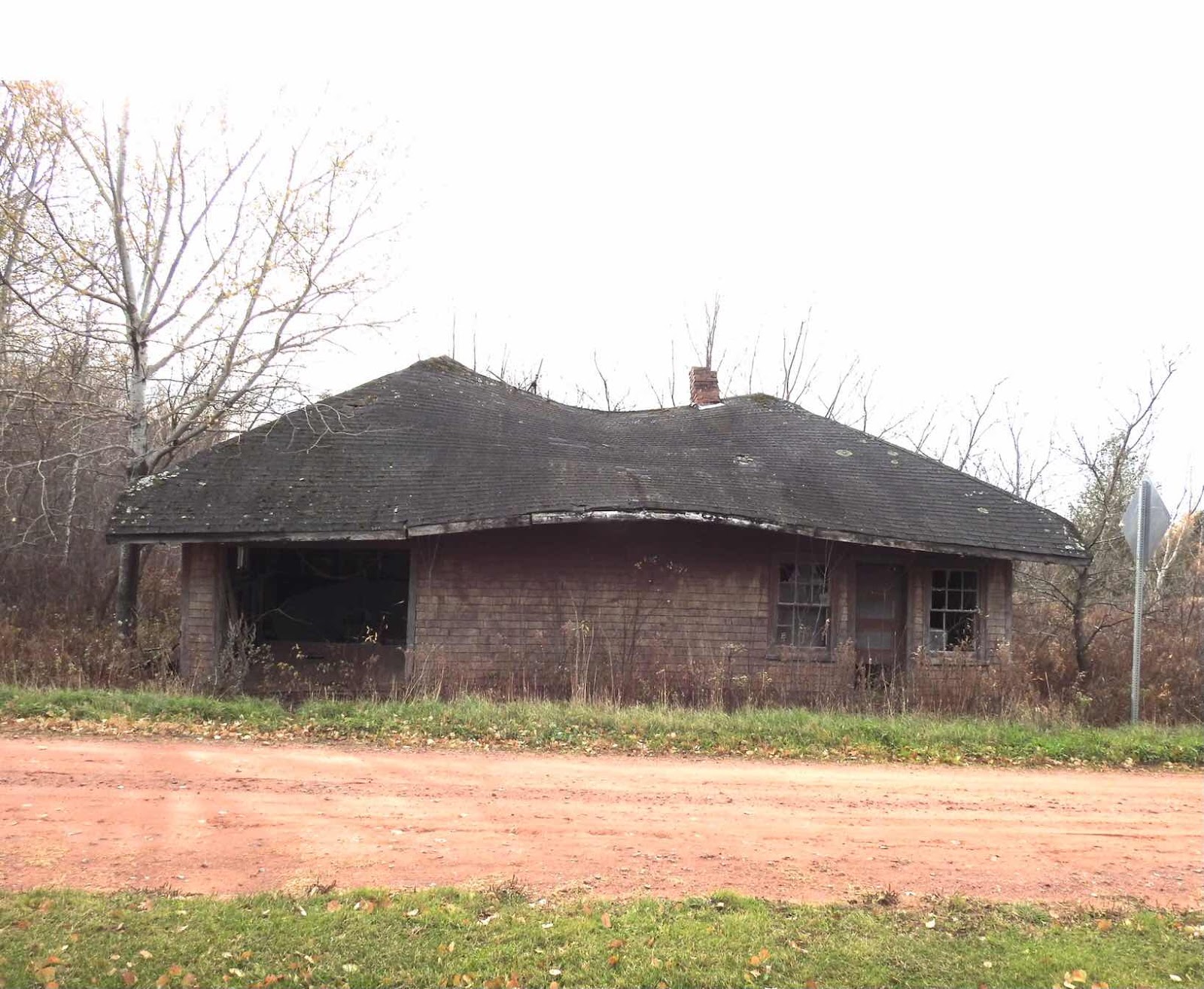
One also has to wonder about the name of the road.
On the way back to the car, we stopped for a breather. We had cycled thirty kilometres and were tired as we looked around. The light was typical of November but the stillness of the day was not. It was perfect!