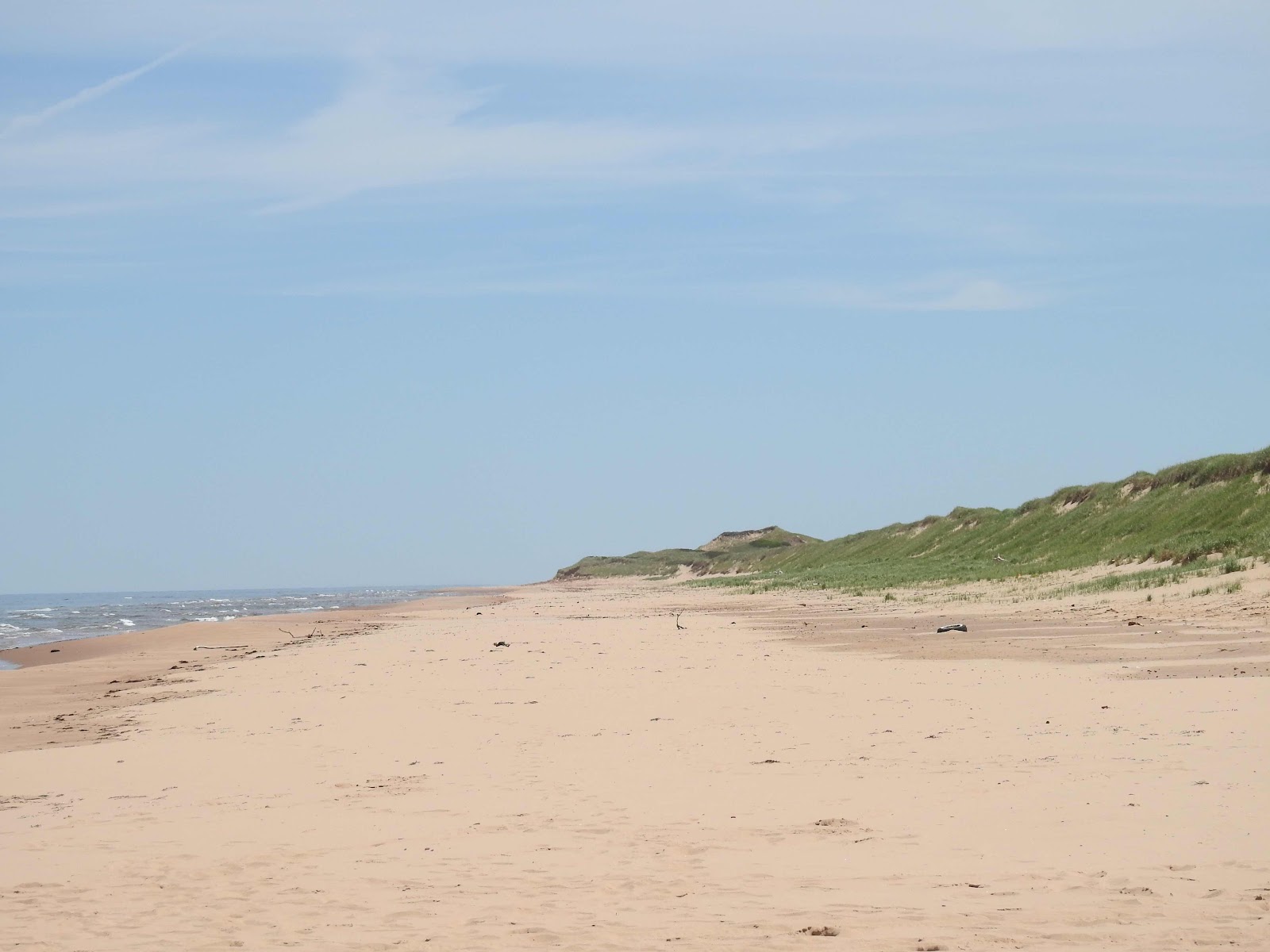
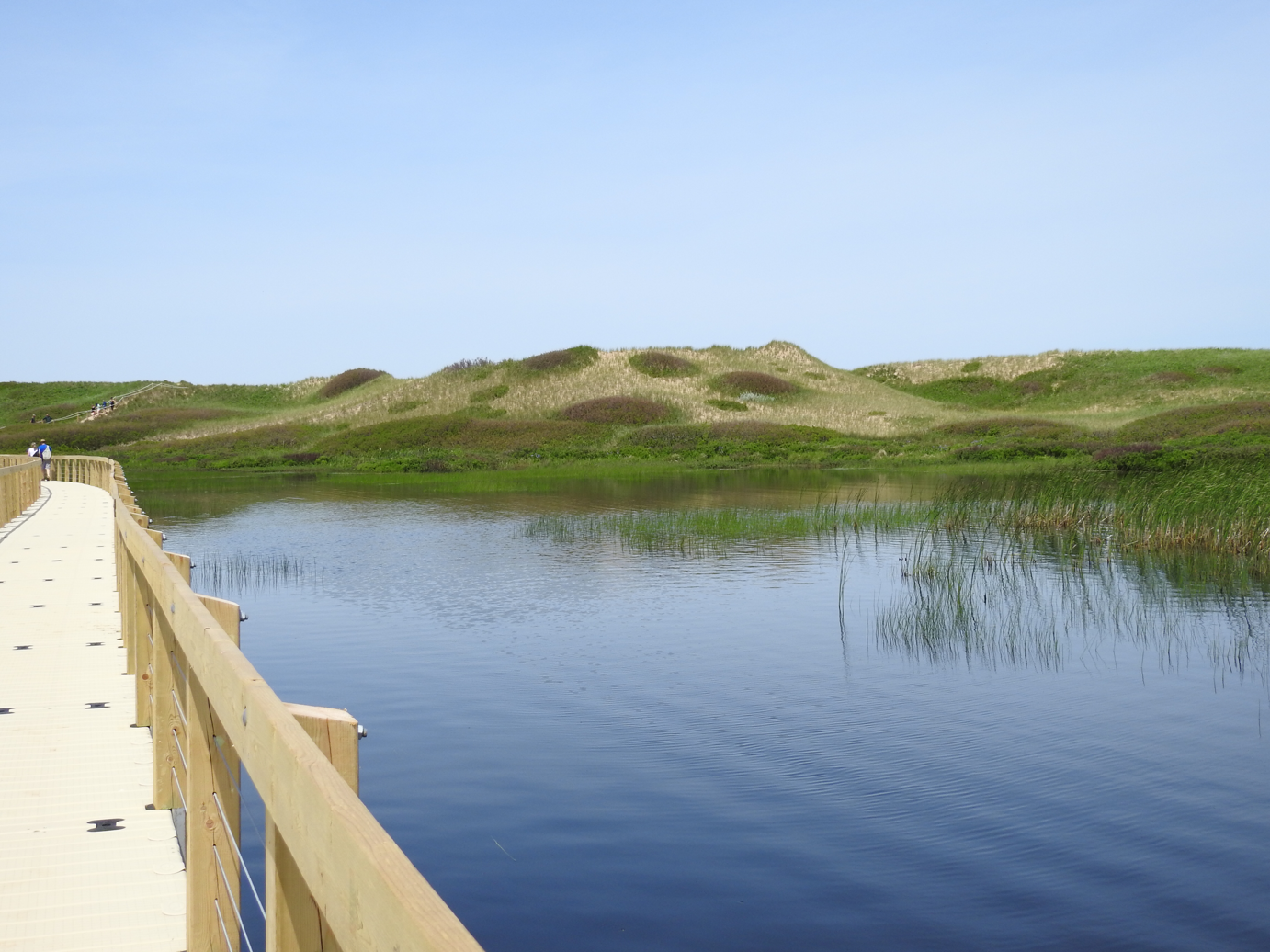
When our daughter is working night shifts, we take the golden grand-dog, Georgie, for a few days. She loves any walk but especially those on the boardwalk where there are lots of dogs and other animals.
Every morning after breakfast she begins her “Let’s go for a walk,” behaviour. The silent stand and stare at my husband and I are the hardest to ignore. We would feel guilty if we didn’t take her. When we say, “Let’s go for a walk,” the dog does a little dance with her front paws.
Georgie especially enjoys the squirrels and chipmunks. She stands firmly to watch them with a look of intense interest, head lowered. It is not easy to take her away from them.
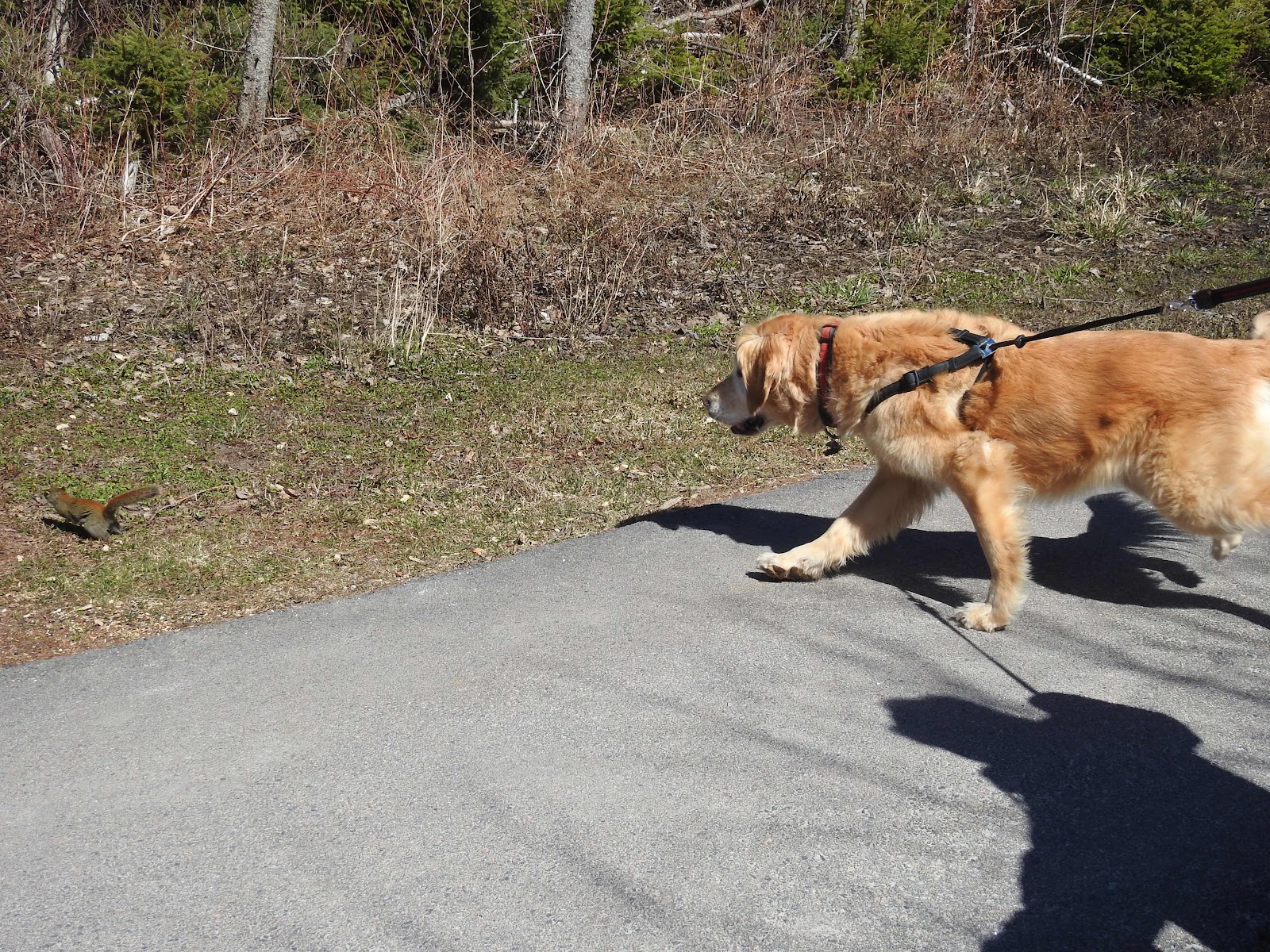
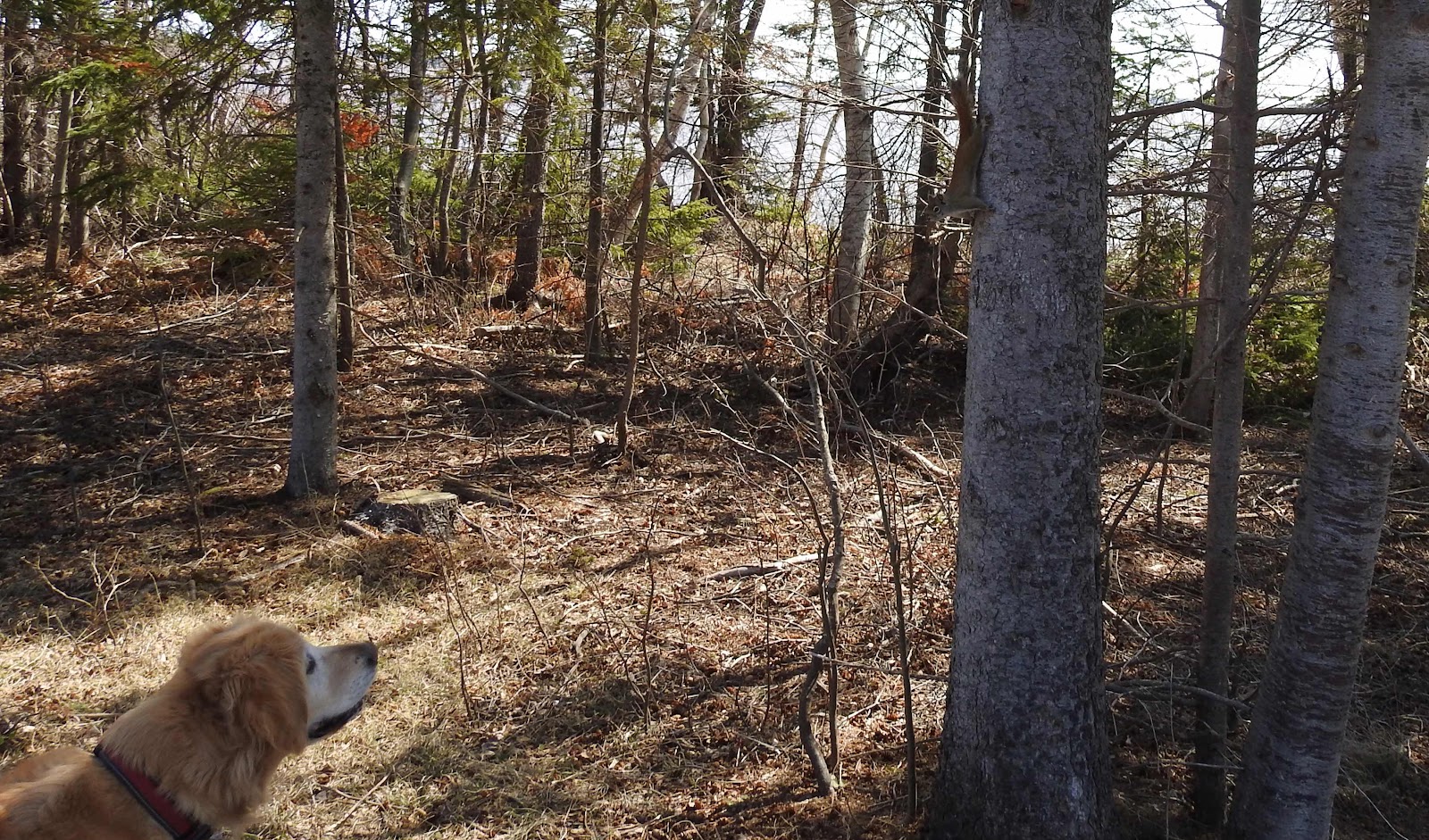
During a recent squirrel encounter, the little rodent teased Georgie. It was high in a tree but came down to the base of the tree and approached her.
Can you see the squirrel coming down the tree?
When Georgie pulled on the lead to move towards it,
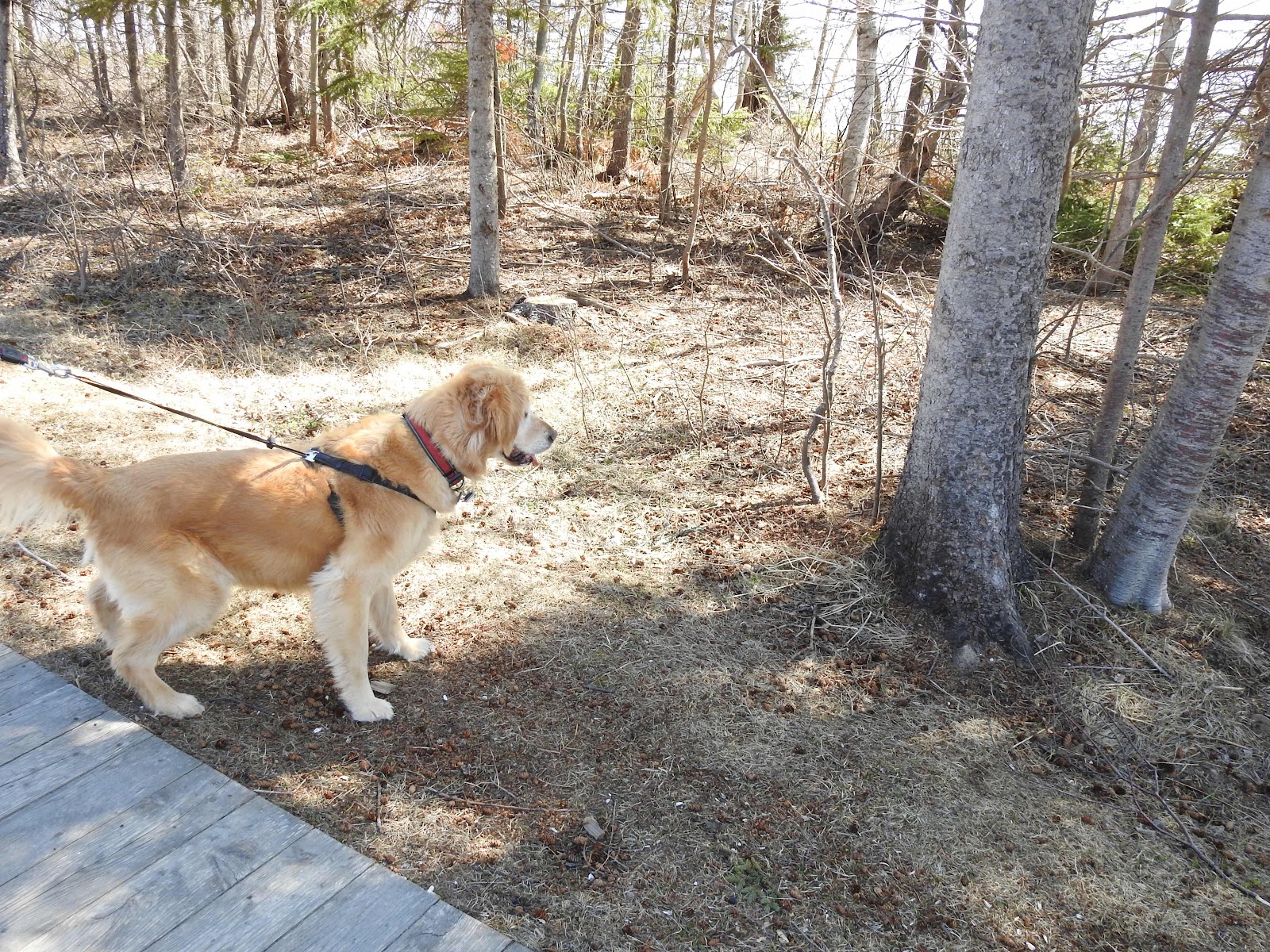
the squirrel scurried up the tree and sat on a twig to look down at the dog again. It repeated the behaviour a second time.
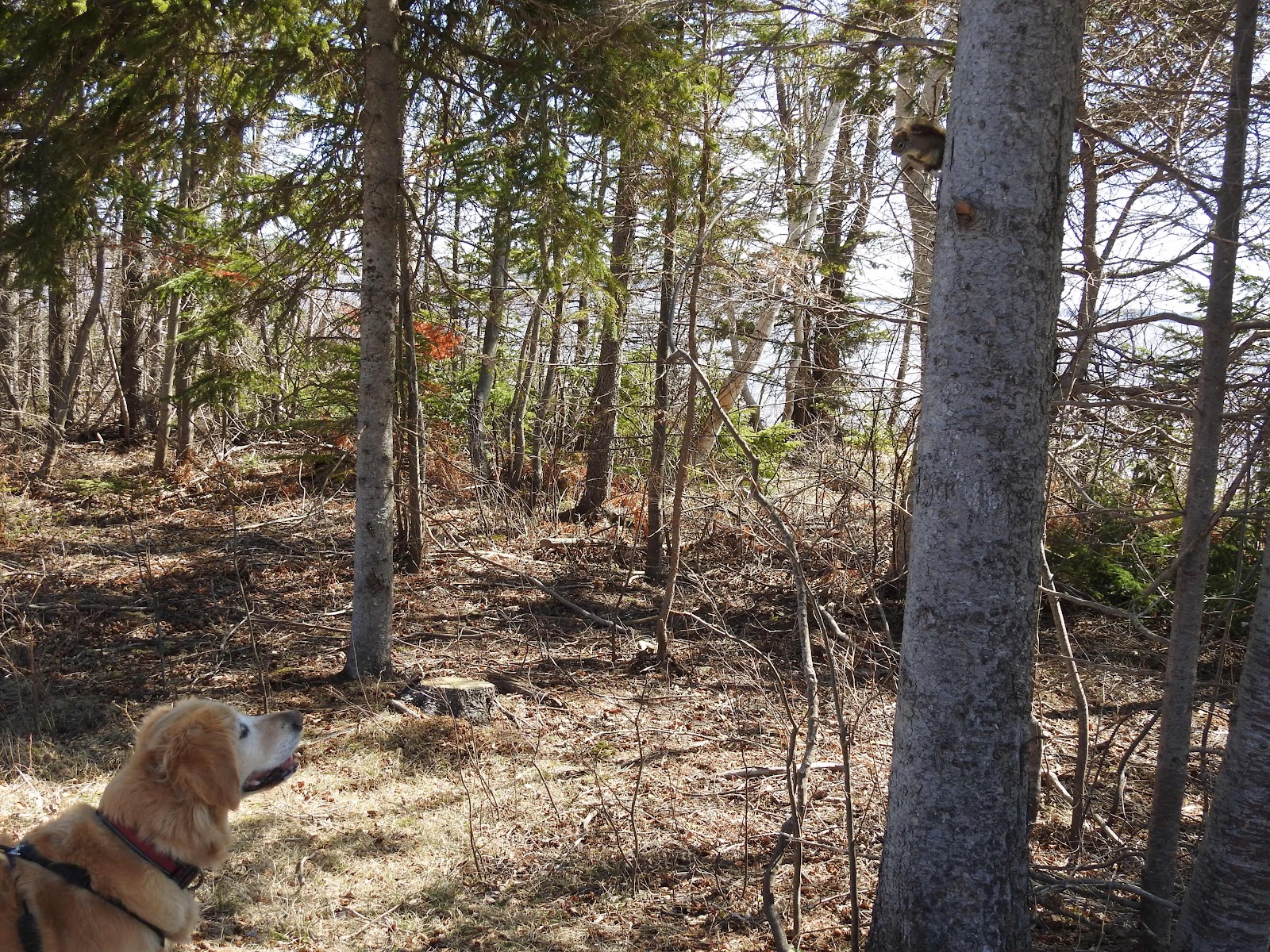
The squirrel appeared to understand the dog could not reach it and didn’t mind approaching. You could almost hear the furry little critter saying, “Na-na, na, na-na. You can’t catch me,” as it looked down from on high.
The world would be a sadder, lonelier place without animals.
Question and answer:
Boud at https://fieldfen.blogspot.com/ and
Perth Daily Photo at http://perthdailyphoto.blogspot.com/
asked about the red sandy beach in the last post titled Relief.
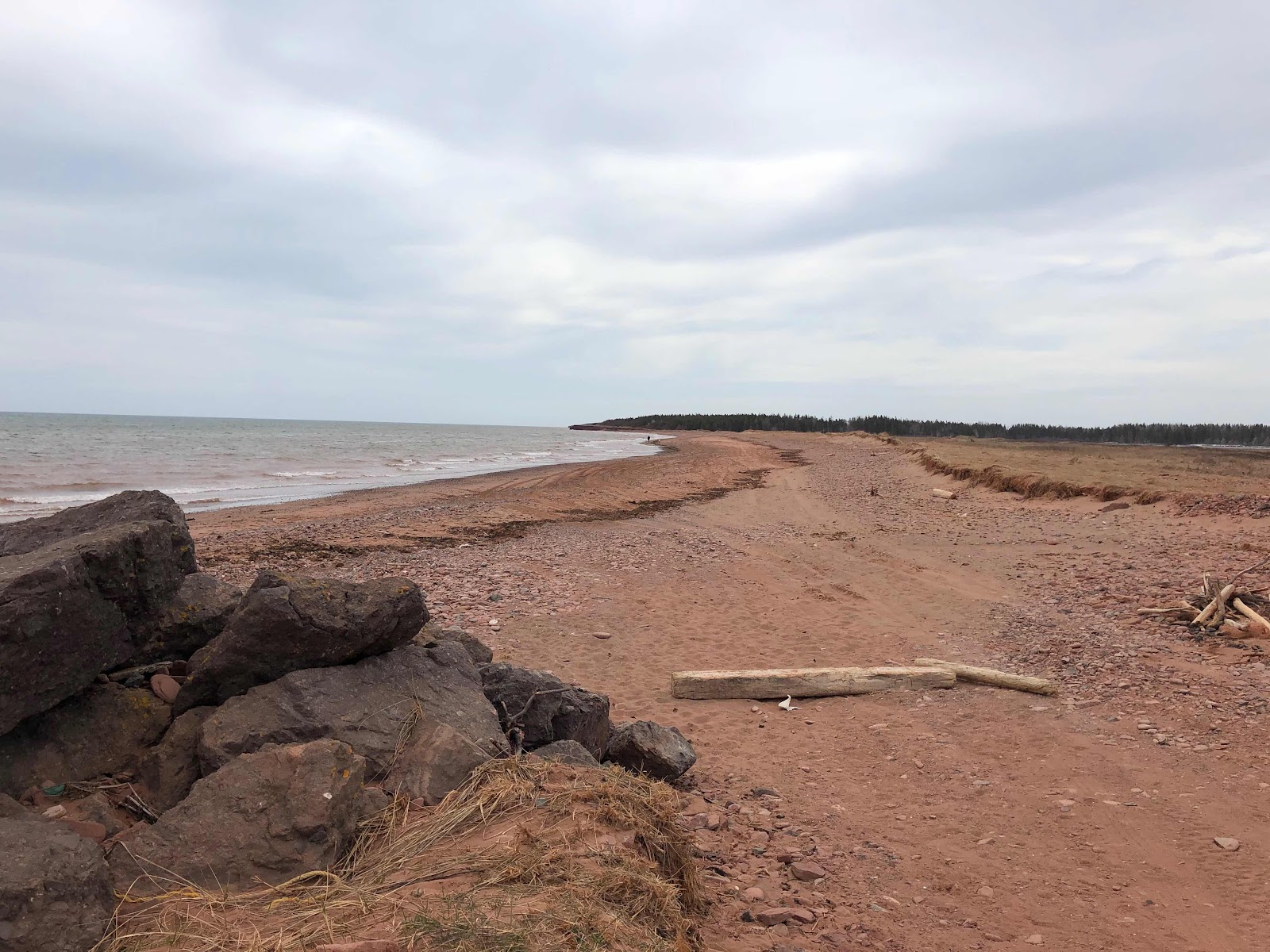
The soil and sandstone on Prince Edward Island are rich in iron. Exposure to air results in oxidation, creating the red coloured iron oxide or rust.
There are some beaches on the island where the iron oxide is washed away by the wave action in that area. One such example is the beach at Greenwich, Prince Edward Island, part of the National Park.