Most Popular Post

Showing posts with label seaweed. Show all posts

Sunday, 21 May 2023

Up west

On a recent excursion west of Summerside, my husband and I visited several of the areas we love on Prince Edward Island and visit at least once a year. Islanders refer to this part of PEI as up west. Our first stop was in the Northport area which is on the northwest coast of the province.


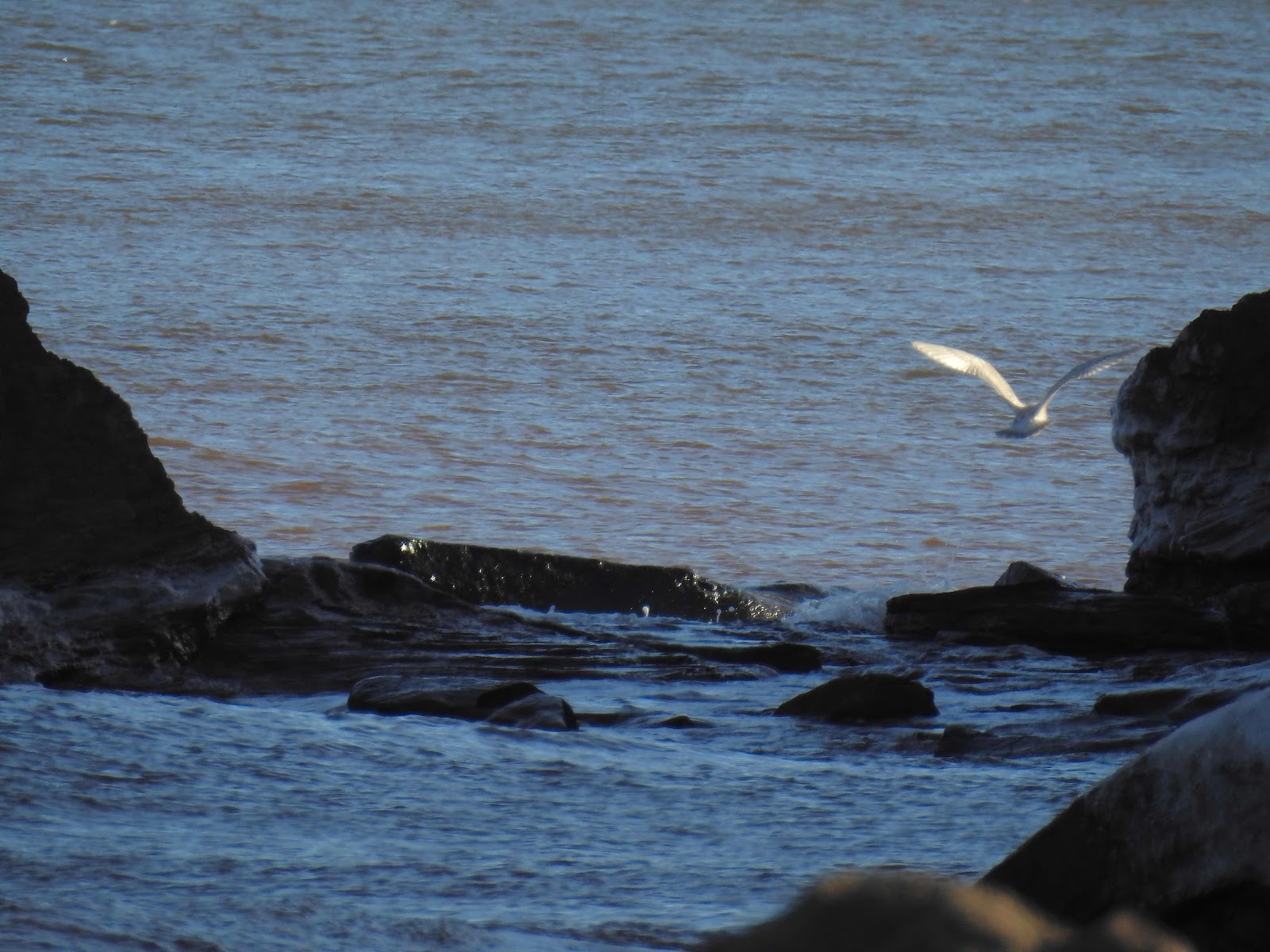
The boat basin at Northport was empty since the fishers were lobster fishing. However, it looked like a school of fish was cruising in the harbour and gulls and cormorants relocated around the harbour after them. The lighthouse, now in private hands, stands out against the horizon.


We continued on to Tignish Run at the northwest tip of the island where the boats were out to sea as well. The run provides calm water for the boats to tie up along the wharves. 


At the end of the run the water is rough, as the gulls maintain their vigil, waiting for the boats to return and provide food. 


You can see one of the boats enter the run below.


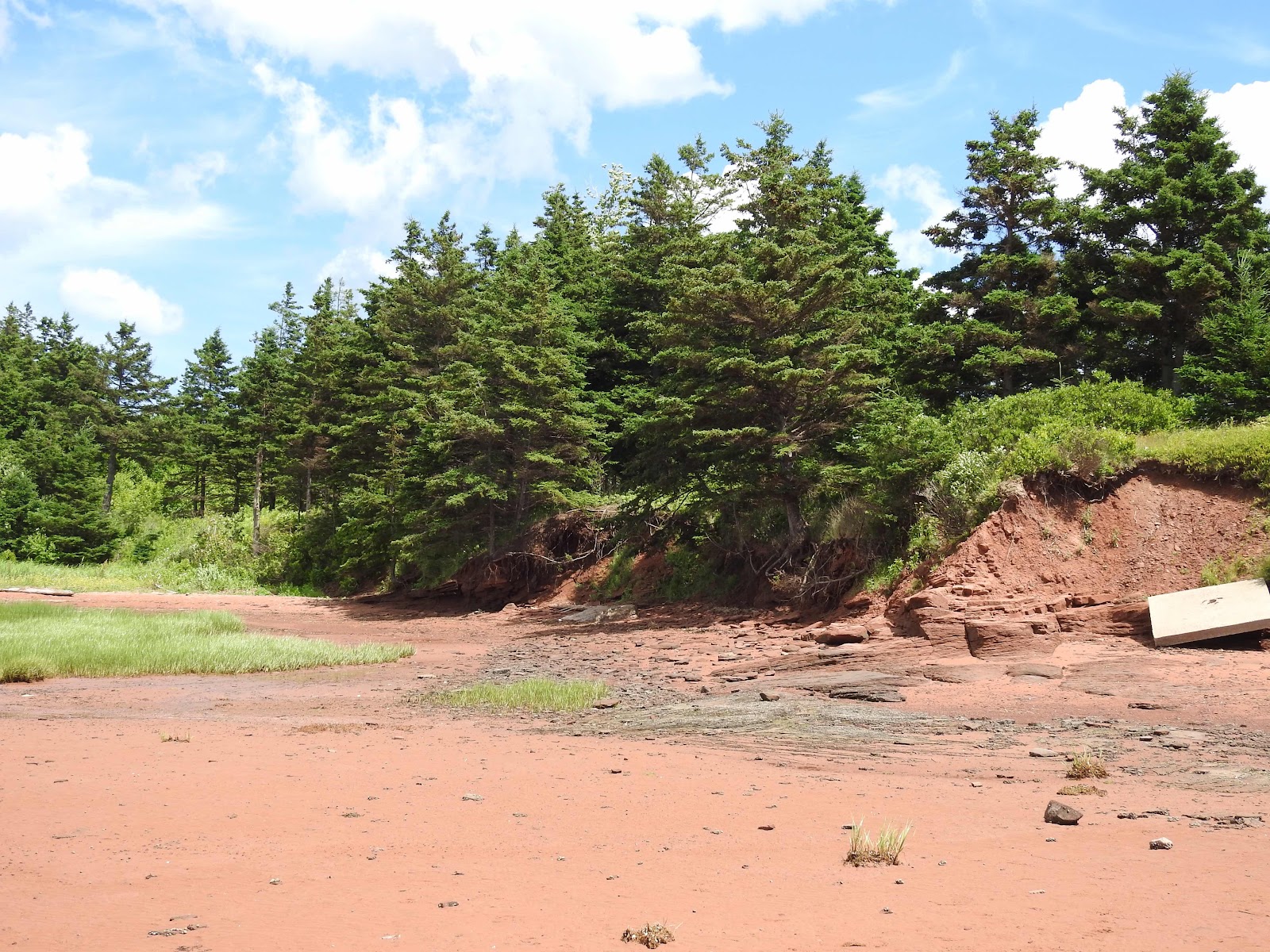
We walked along Tignish Shores nearby where the red sand beach was covered in seaweed of various colours. A beach has its spring colours too.


Finally we had a picnic lunch in the yard of the church at Kildare Capes where birds serenade us from their lofty perches. 


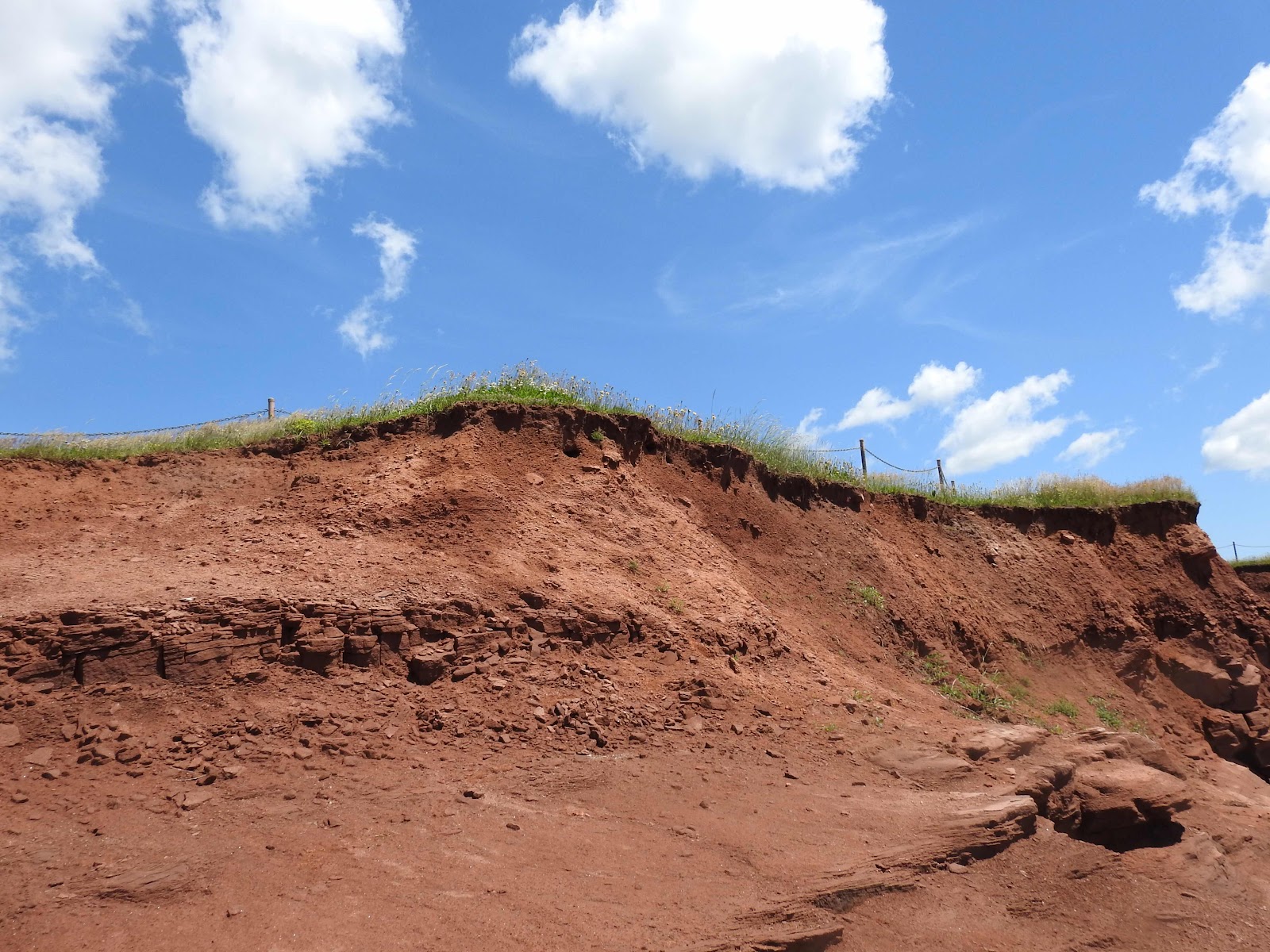
Behind the church, along the shoreline, a sea arch is forming in the sandstone cliff. 


Such arches have a short life along the coastline these days, especially due to post tropical storms.


We will return to these locations before long.

Sunday, 5 February 2023

Winter beach

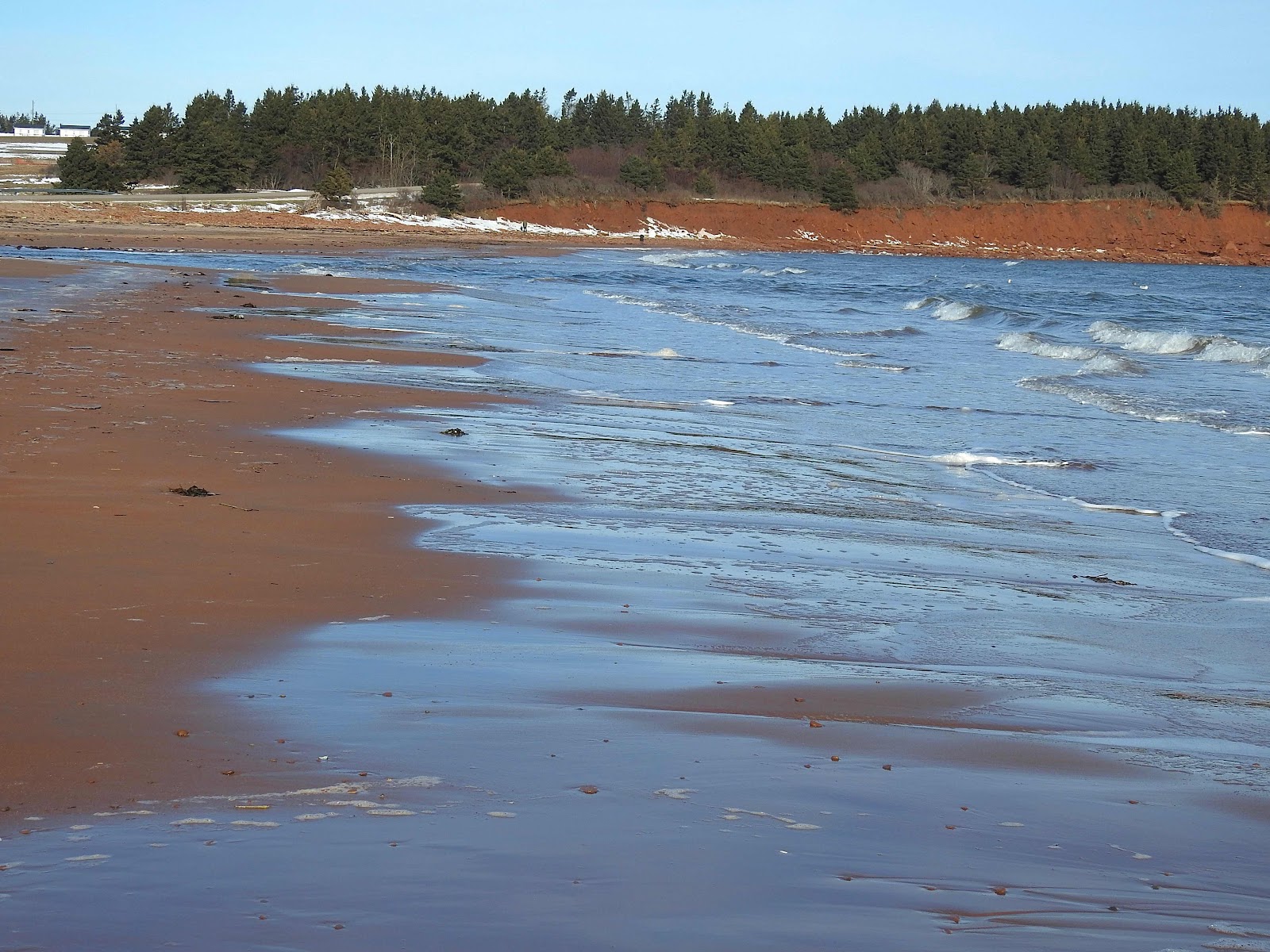
A walk on the beach in winter is a welcome distraction. Of course it is easier on a windless day which is what we did. My husband and I drove to the north central shore in the national park on Prince Edward Island but beach access is limited this year. Much of the damage to the park has not been repaired since the destruction of Fiona. Also this year, the Gulf of St. Lawrence hasn’t frozen around the coastline of the island. The ice would prevent much of the erosion in winter. Therefore, the shoreline is unprotected thus far this winter and more erosion is a concern. However, one of the few areas where one can access the beach is at North Rustico. 


It was a cold day but without the wind, one could dress for the temperature. There were a few people on the beach, but gulls were the main attraction. 


They provided the beach music, that call so familiar in a maritime setting.

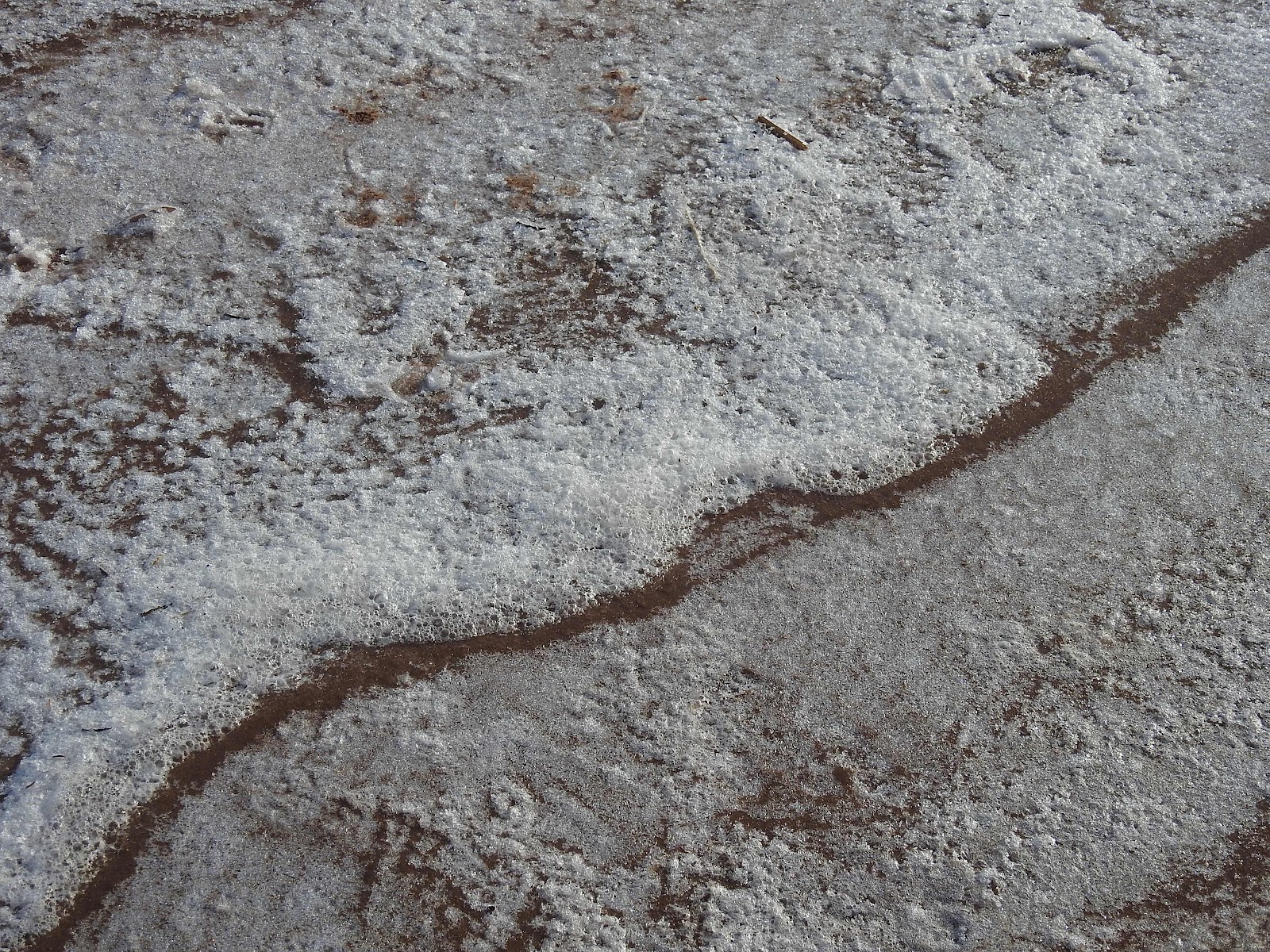
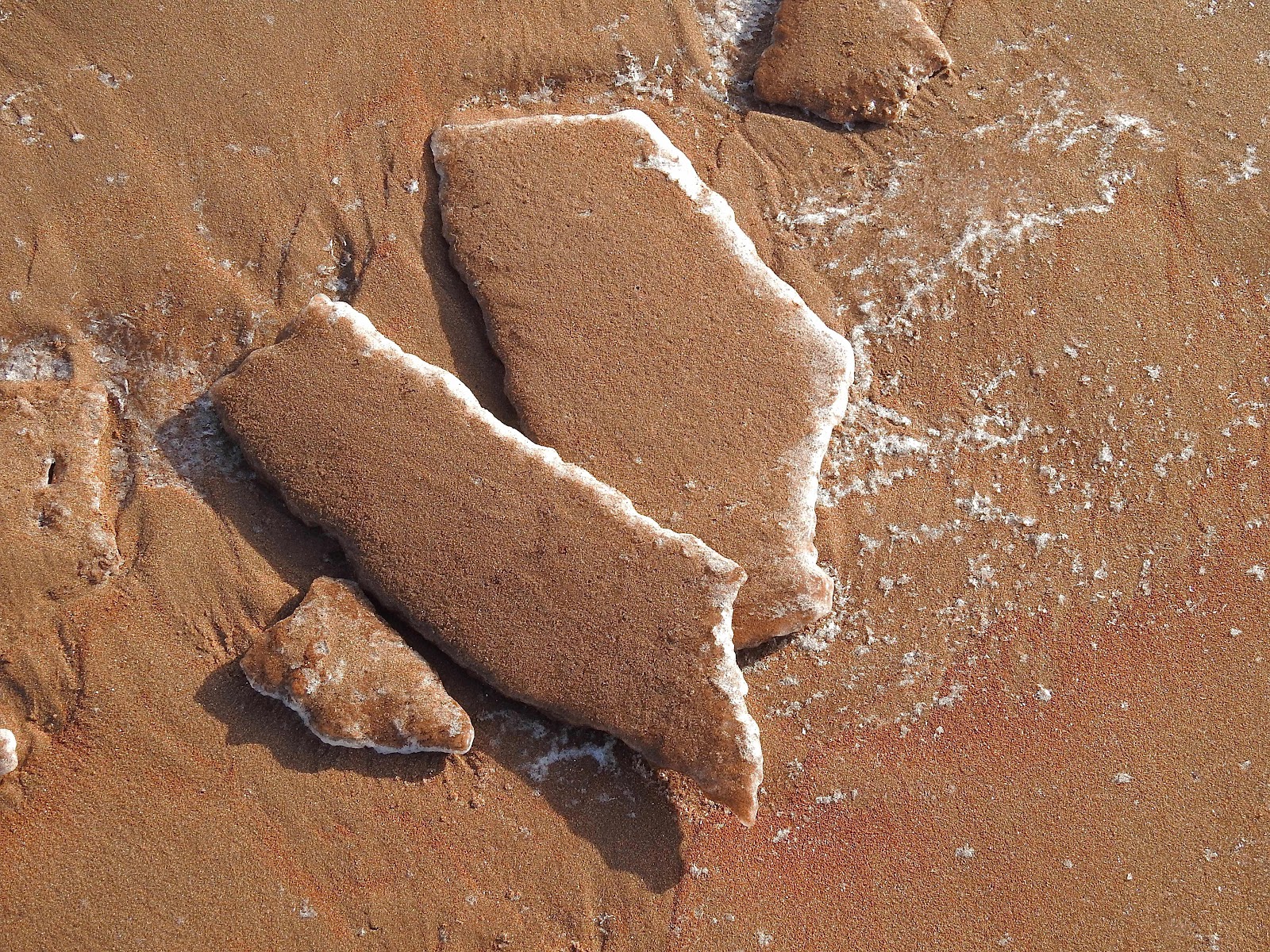
Along the beach, at the high tide mark, the foam was frozen. 


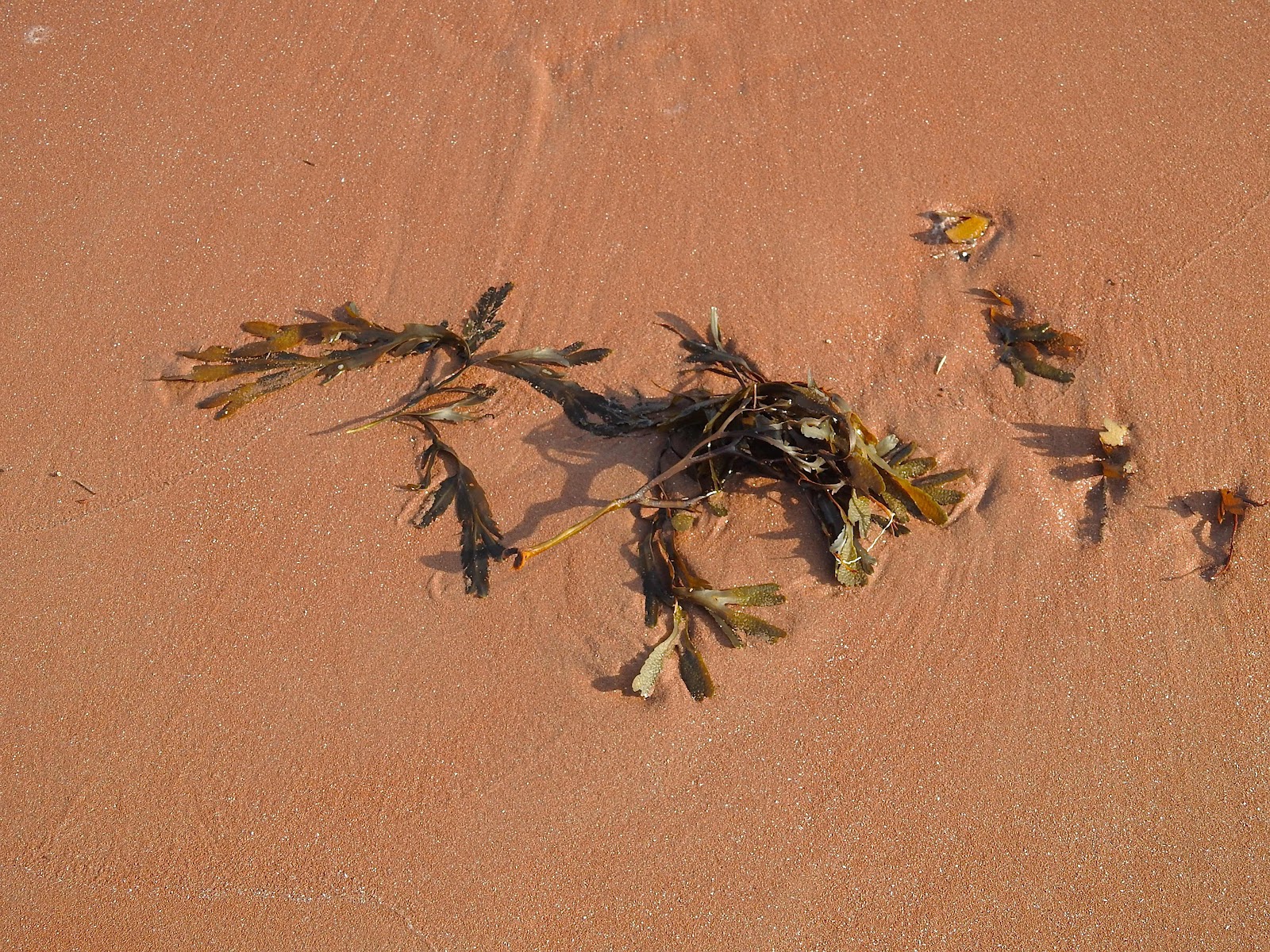
Seaweed strewn across the beach was stiff from the cold. 


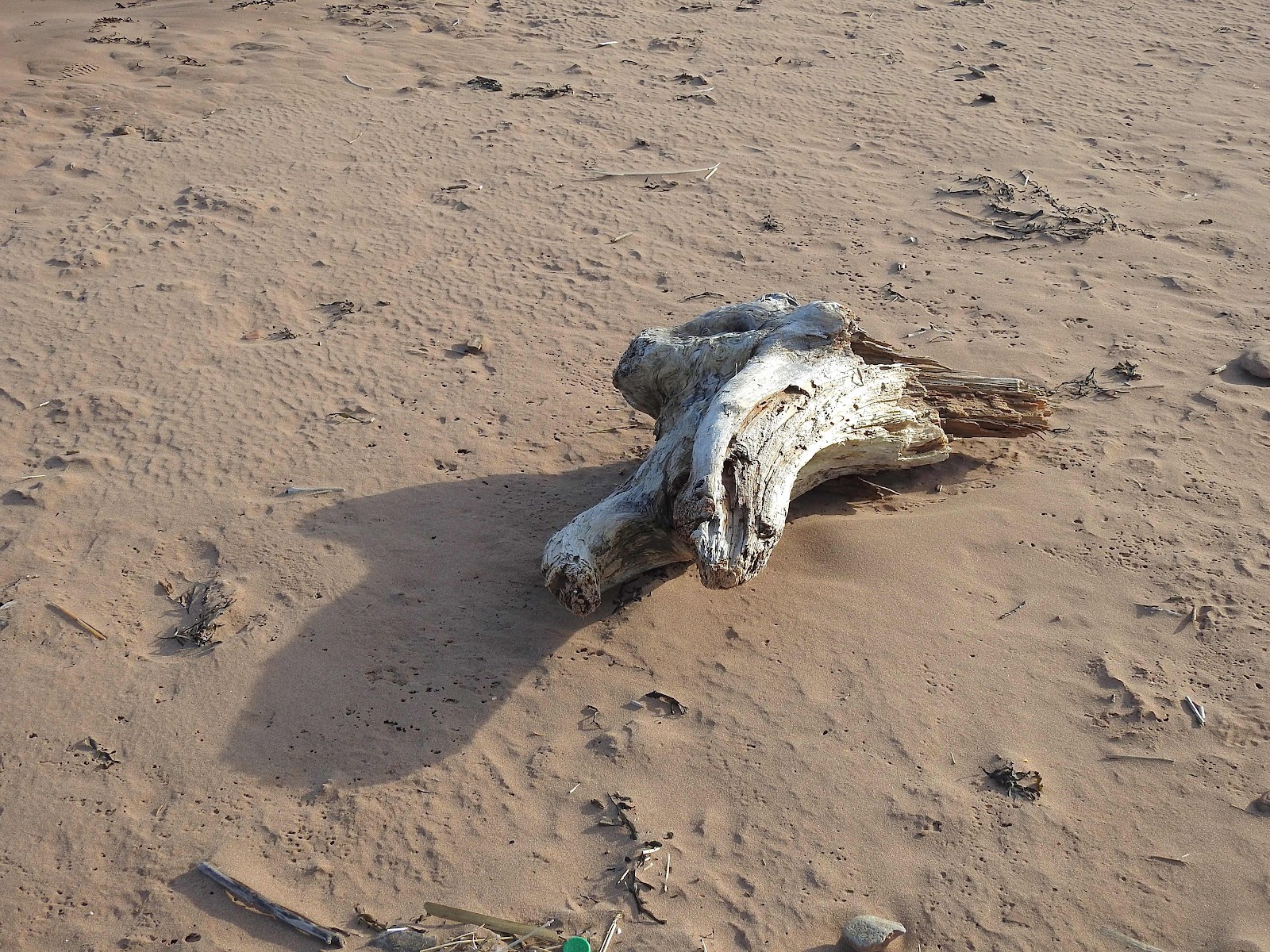
Driftwood cast a shadow in the winter light.


Even the rocks looked petrified. 


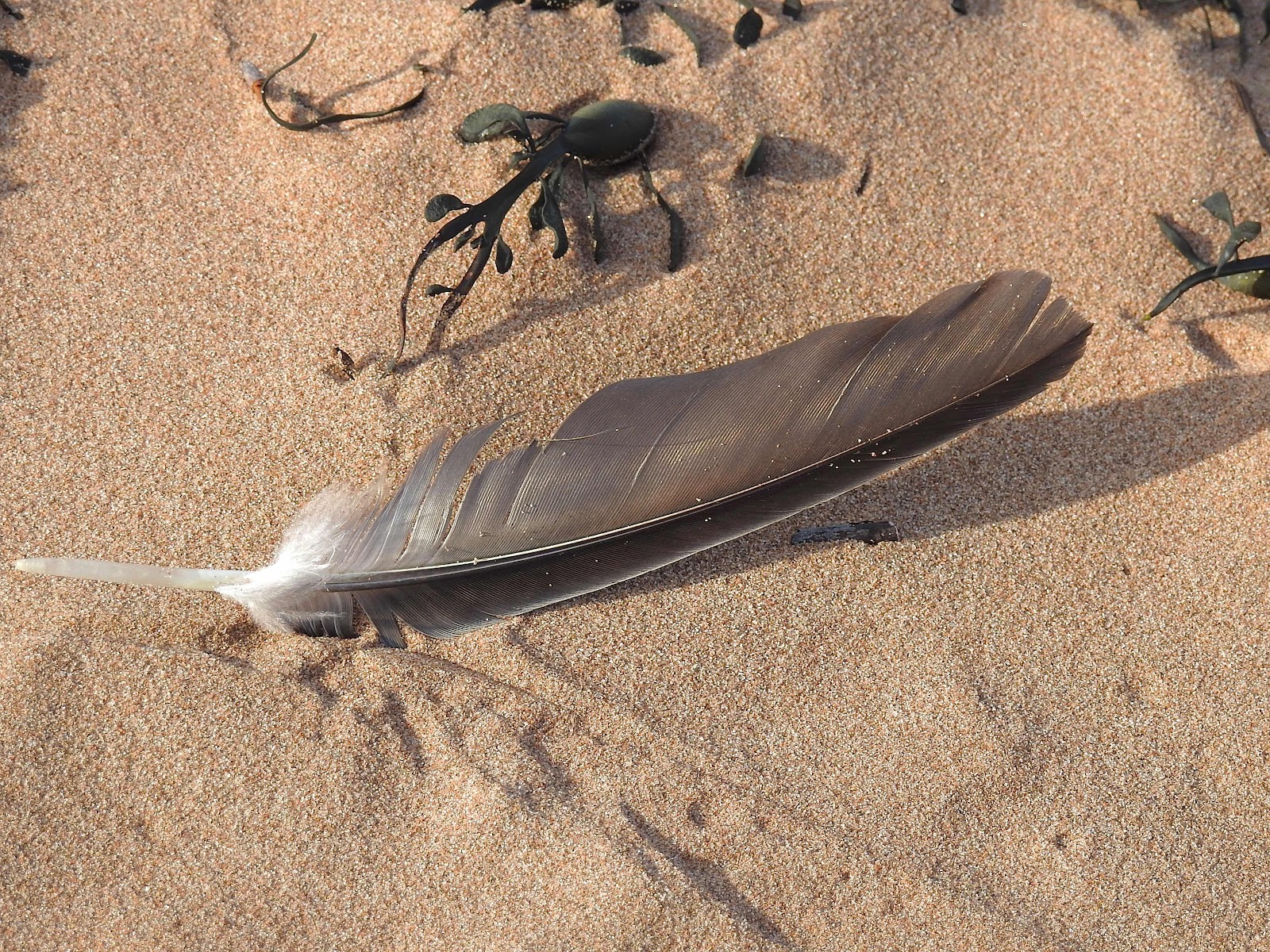
An occasional feather made one wonder if a bird missed the insulation the feather would afford.


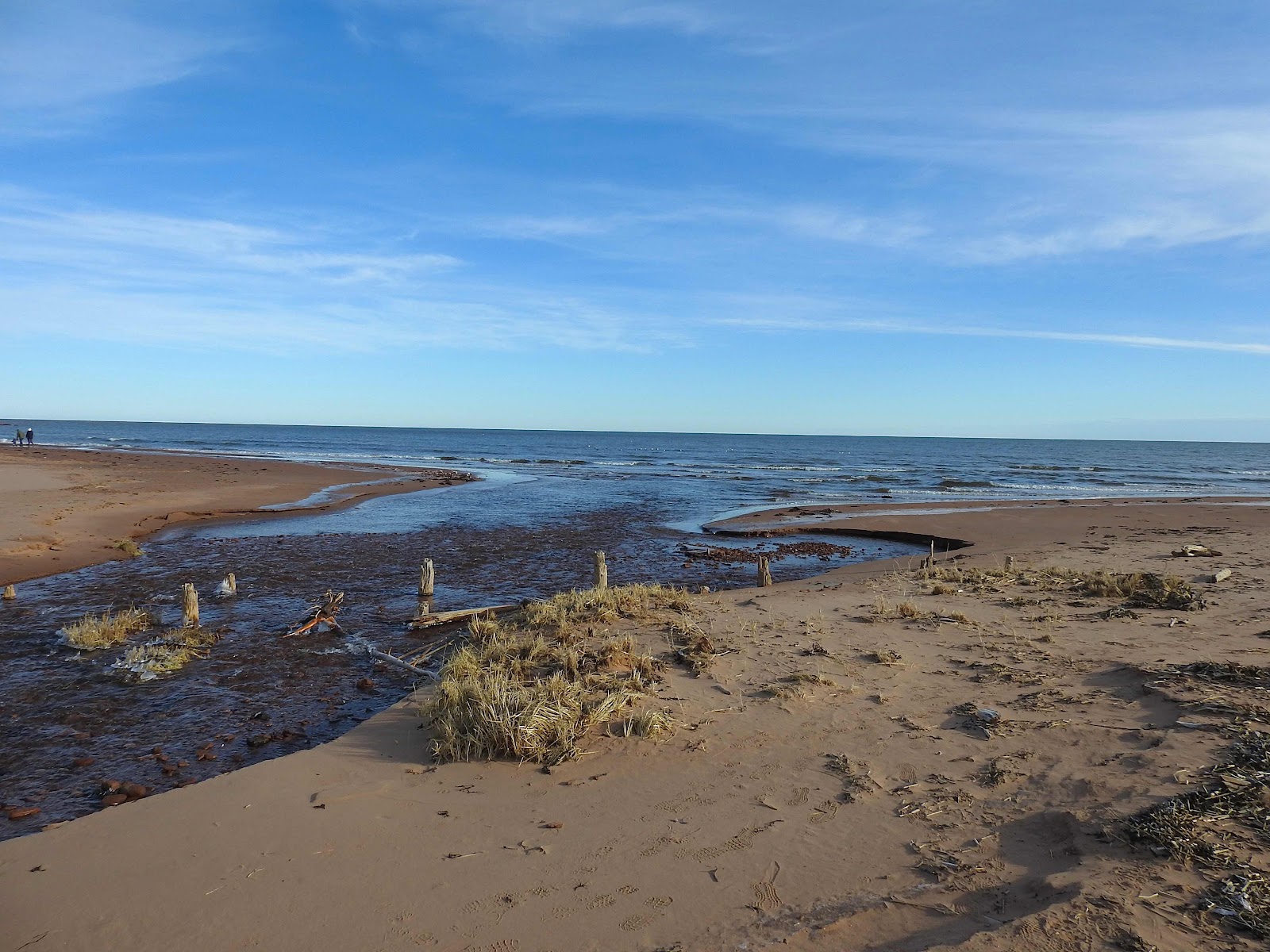
A stream crossed the beach, rushing to meet the Gulf of St. Lawrence. 


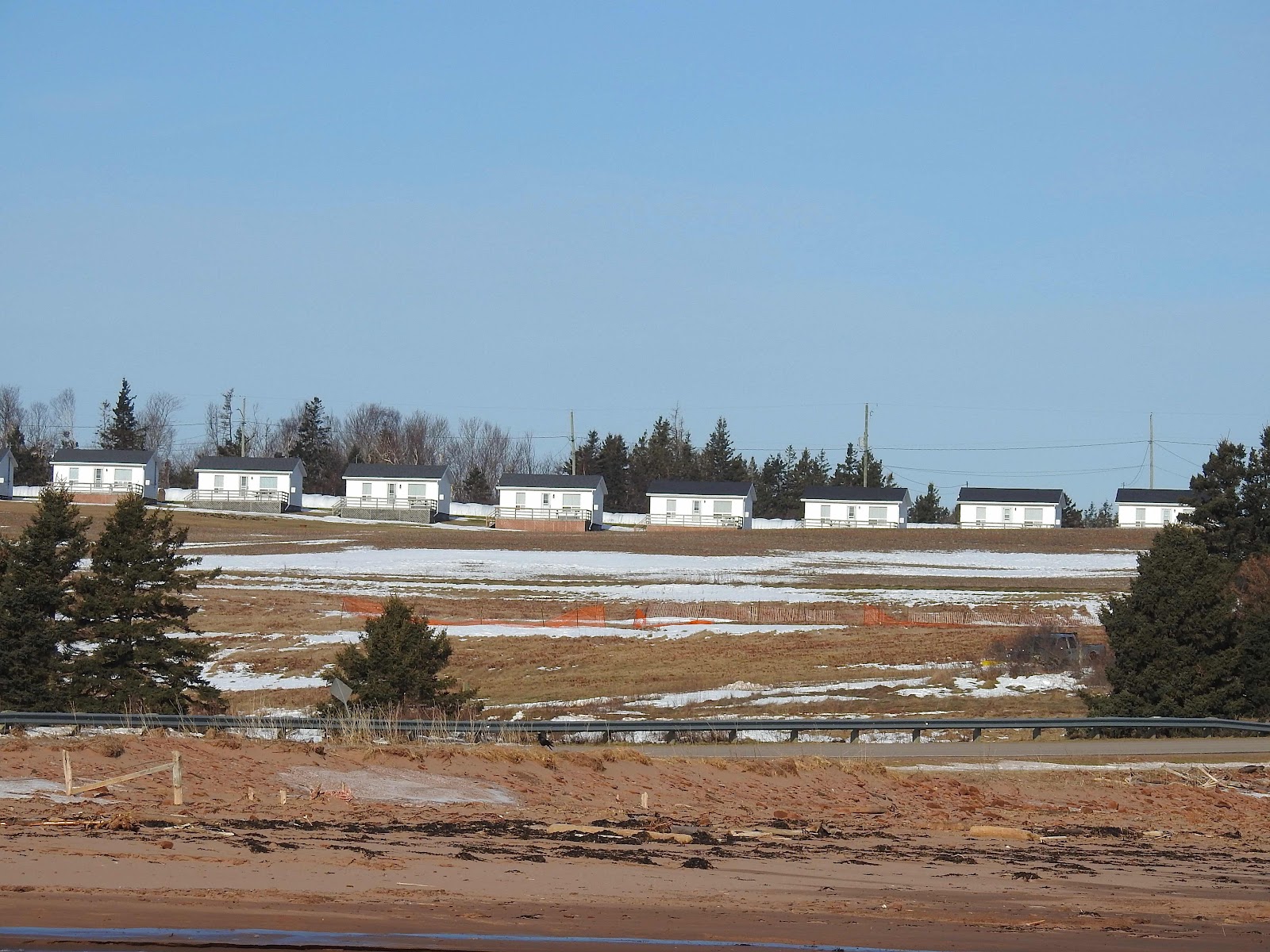
Old weathered pylons from what could have been a wharf cross the stream. In the distance summer cottages wait for the heat which always brings visitors. 


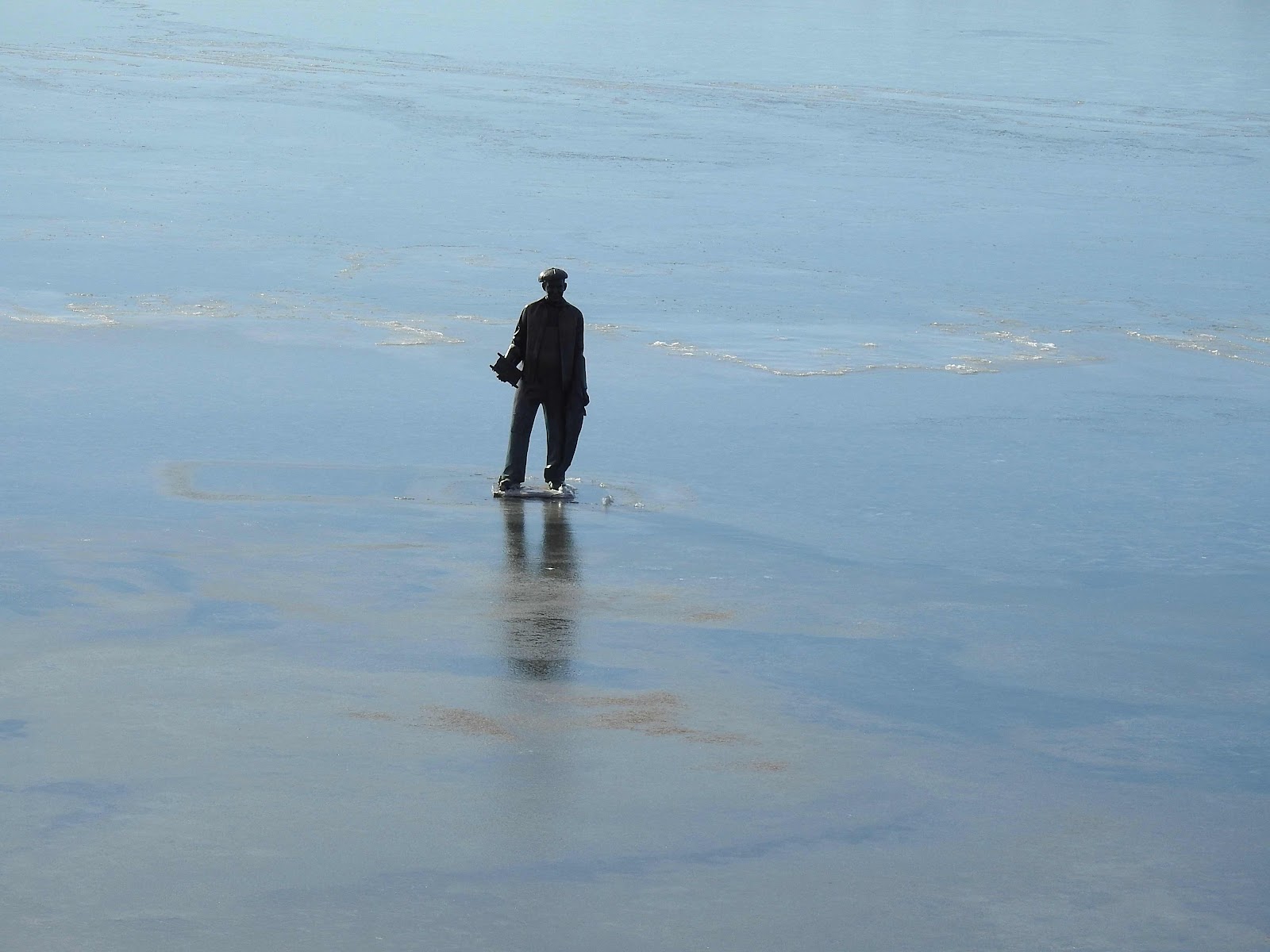
Later, we visited the old fisherman, frozen in the North Rustico Harbour this time of year. 


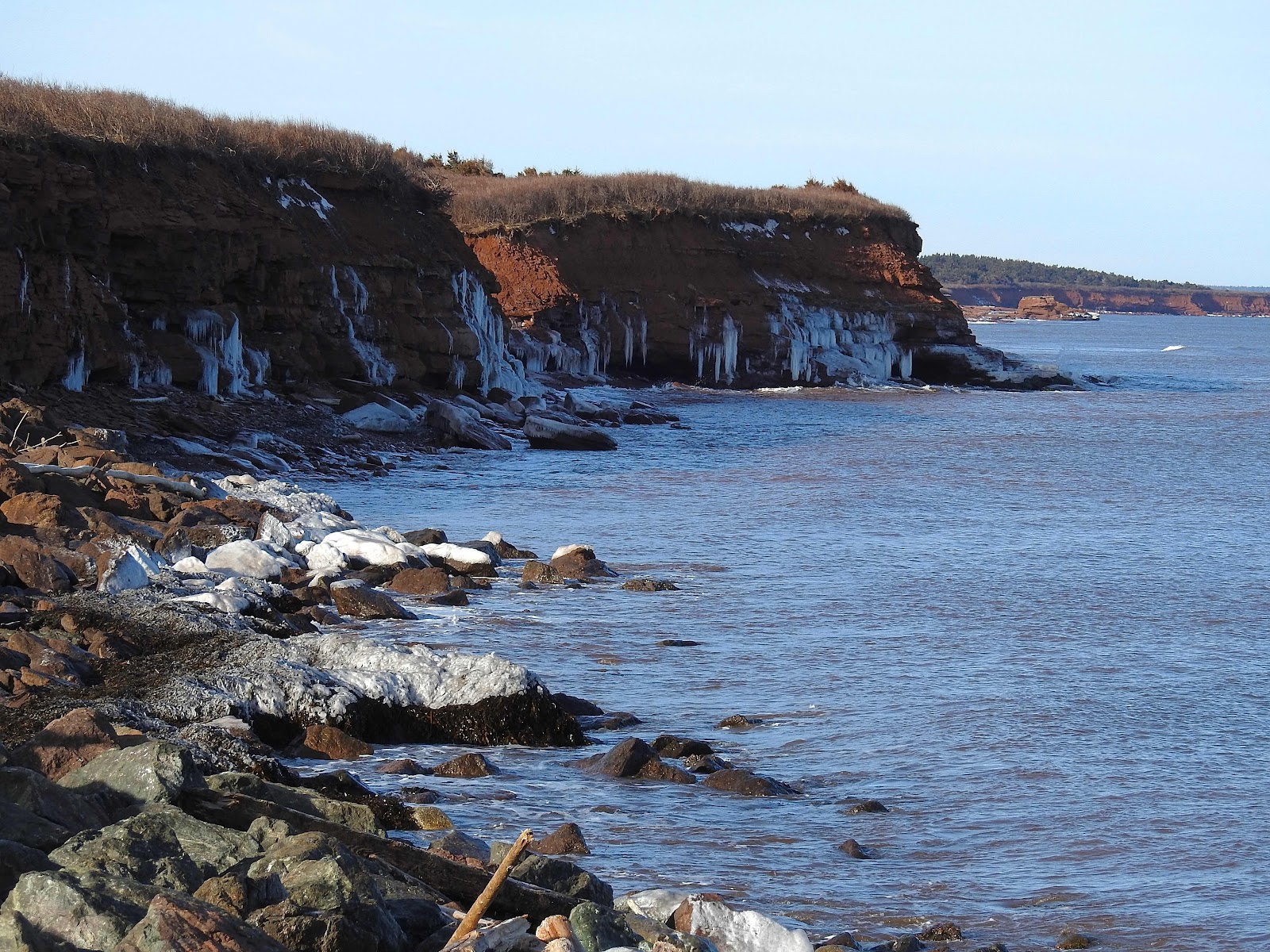
Along the north shore, the coastline showed the icy touch of winter on the cliffs and rocks.


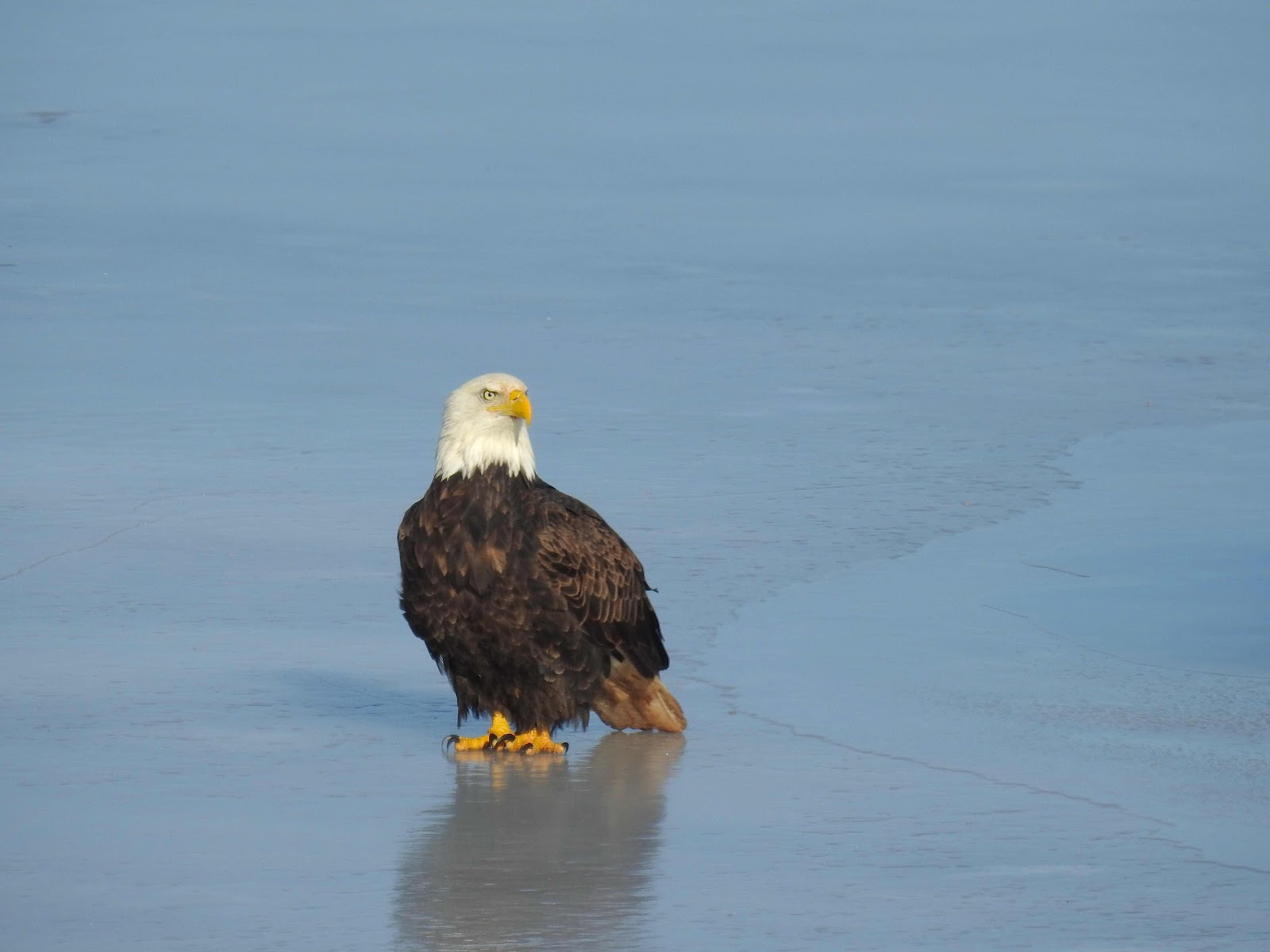
On our way home, we drove through the community of Stanley Bridge where the Stanley River is frozen. On the ice a Bald Eagle was scanning the area.


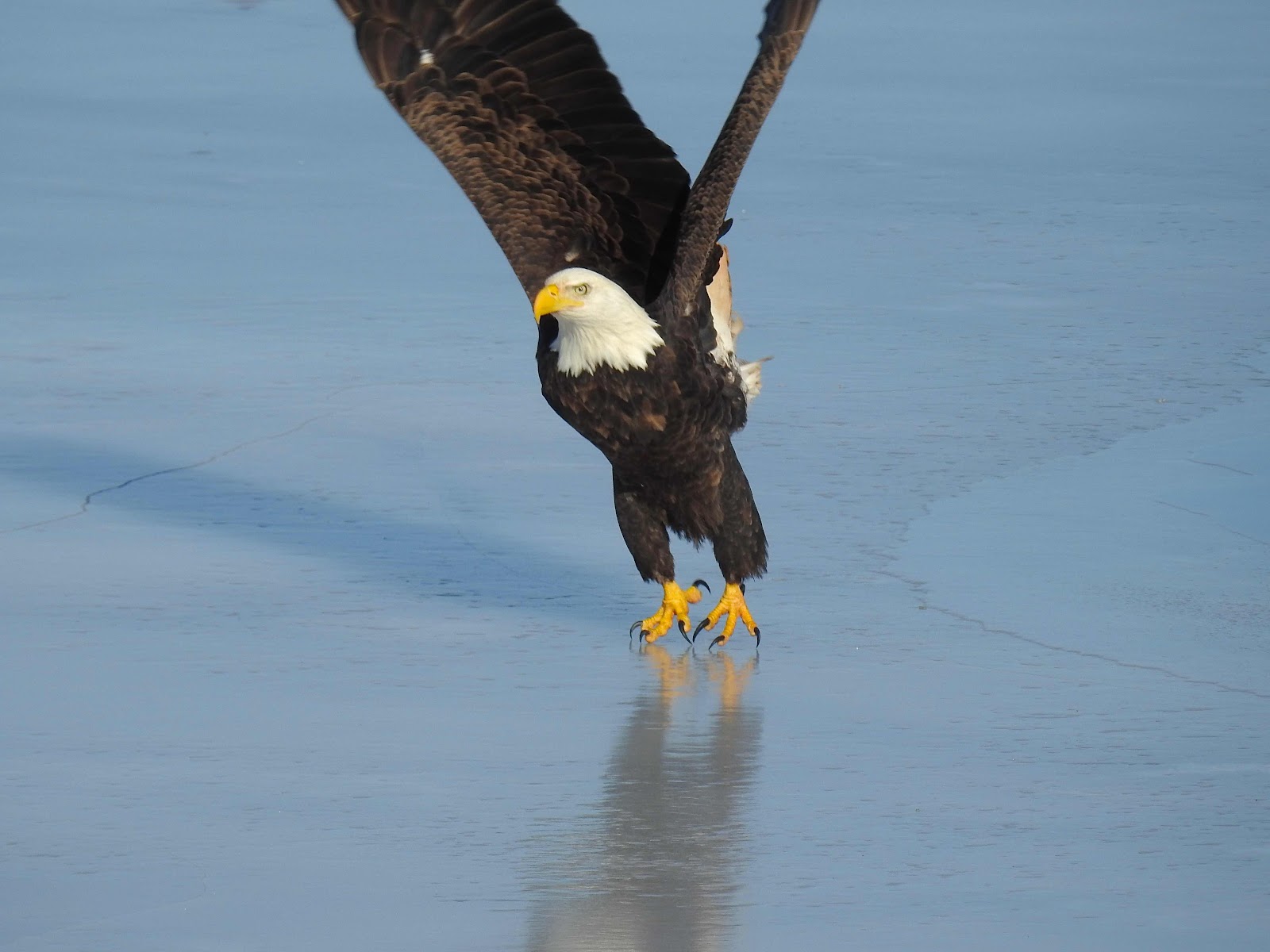
I took some photos from the car which it didn’t appear to mind as it stayed there the longest time. I wish it had let me know when it was taking flight so I could have had a better shot of its length. However, its feet and claws were well exposed in this shot and one can well imagine how this bird catches its food.


And it’s only six weeks to spring!


Thursday, 8 December 2022

Soaring

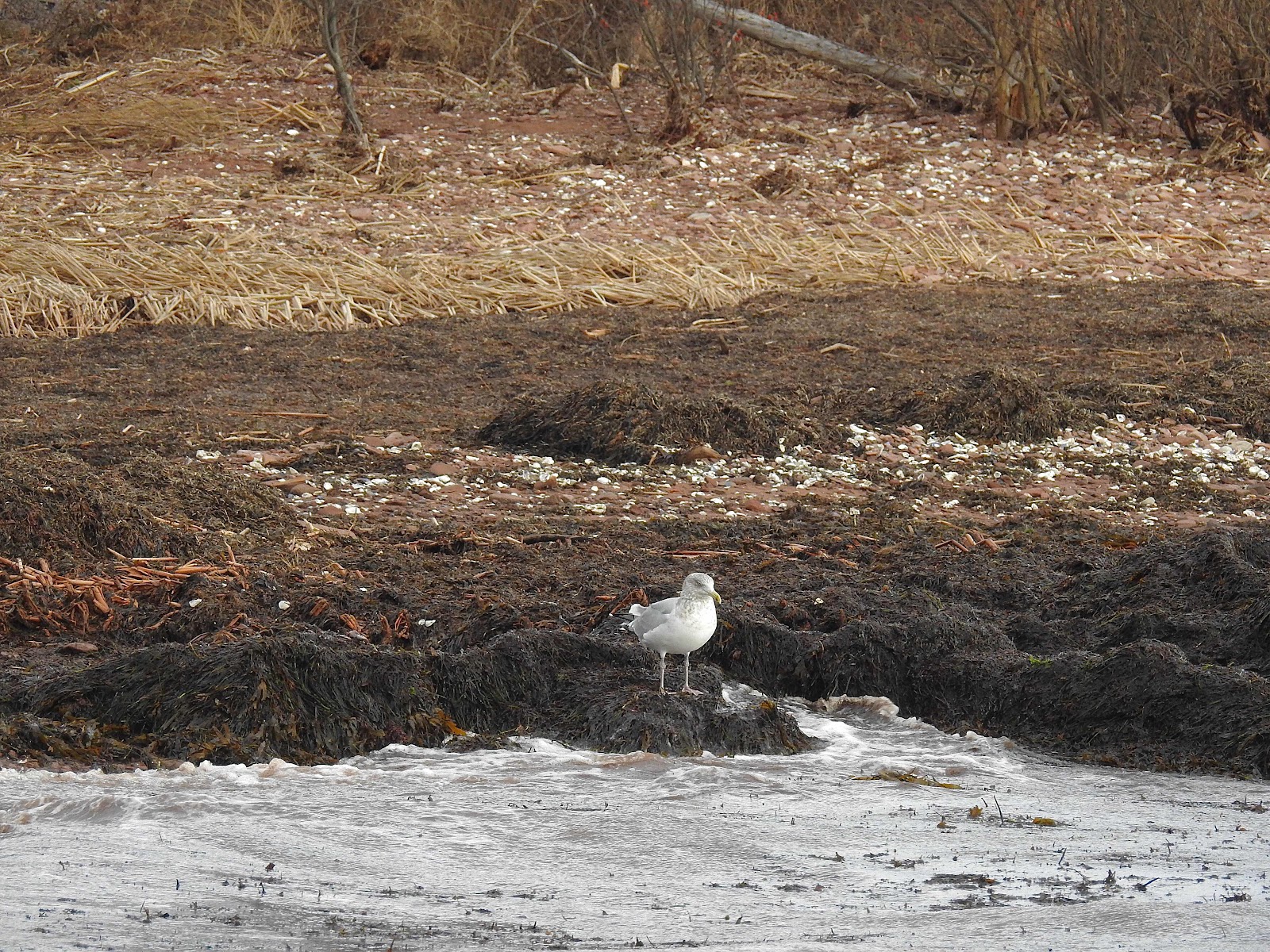
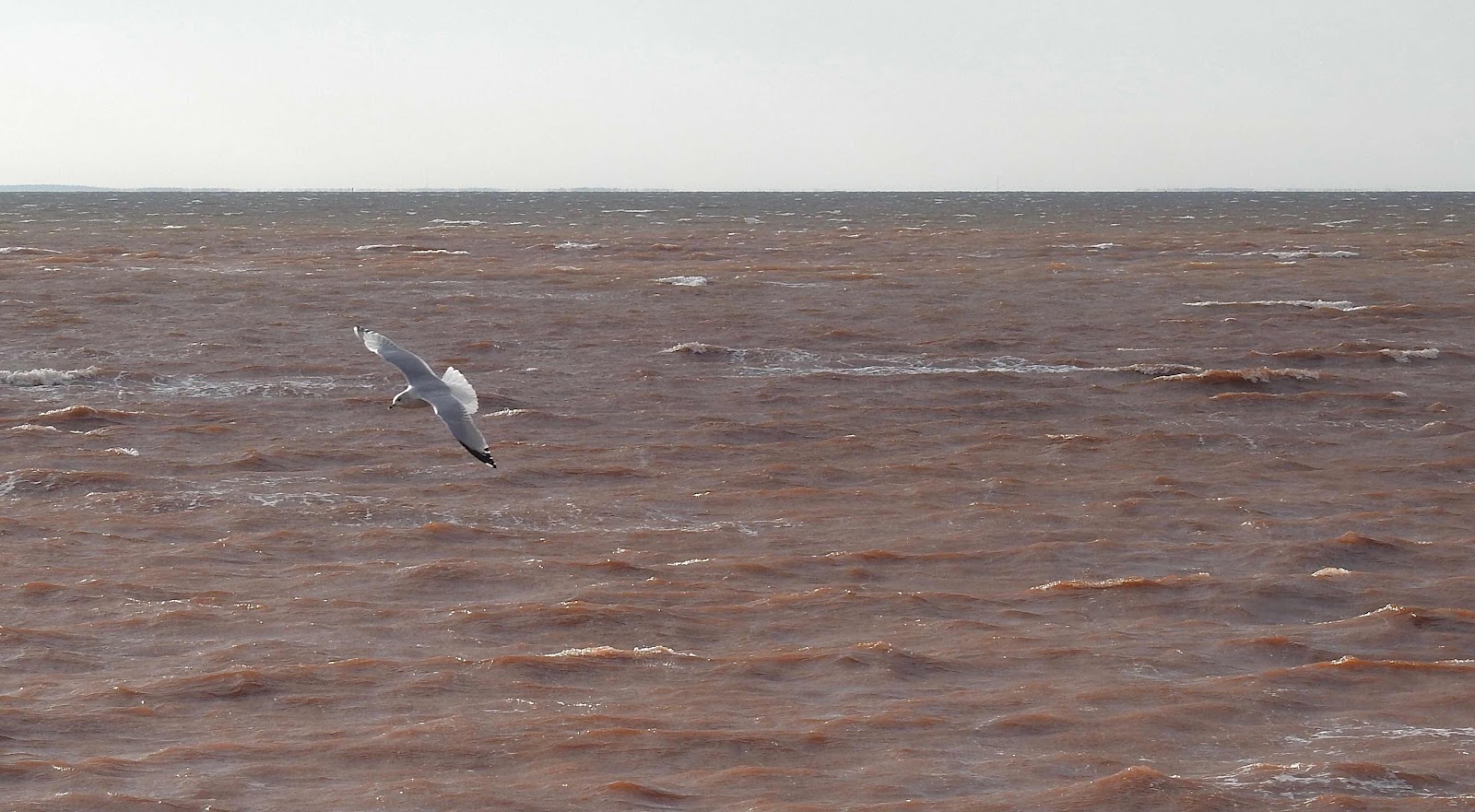
Around him, others are enjoying themselves, revelling in the conditions. They take the challenge of the high winds and the higher gusts as a dare, to lift off in the maelstrom and control movement as if to take charge of the wind. All he can do is watch.


He stands a distance from the water’s edge, amid tons of seaweed and slowly inches his way towards the churning sea. Around him the waves occasionally splash upward as they end their journey along the shoreline. Bravery is not his strong point he thinks as he watches the others, wings spread, soaring on the wind gusts. He’ll be an adult soon and others will wonder why he doesn’t play anymore. Thing is, he never did, always afraid to throw caution to the wind and soar with it. Maybe today…


A couple arrived and watched too. He’s seen them numerous times before when they stop at the salt marsh. They watch the flock with interest as it lifts, floats and falls on the currents. They see him too, but move on watching other birds around the bridge. 


Later, when the couple returns, they notice his absence from the seaweed. Meanwhile, along the shoreline, the flock continues to soar on the wind. Is he there with them? The couple likes to think so. 


Sunday, 16 October 2022

At the salt marsh

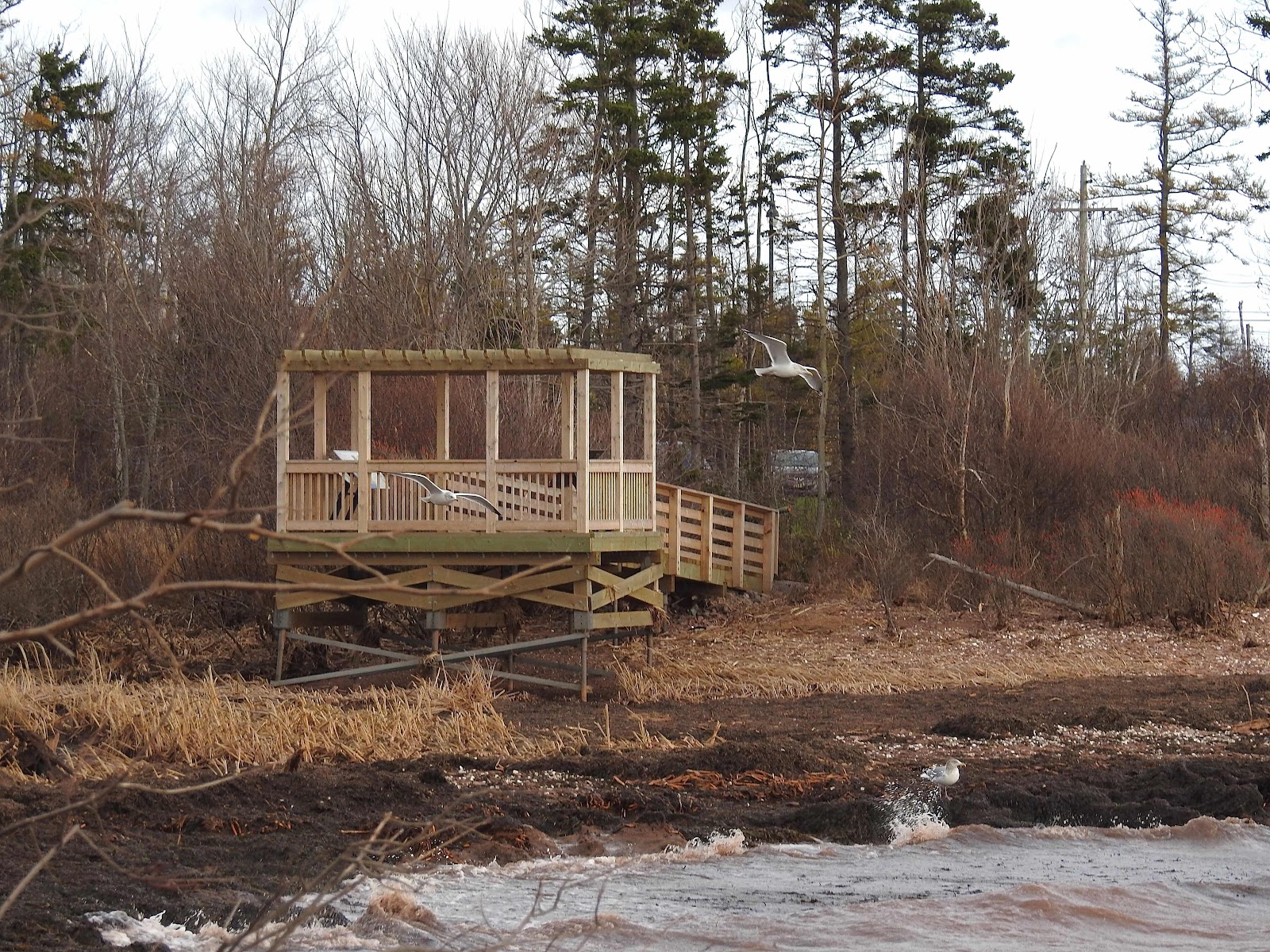
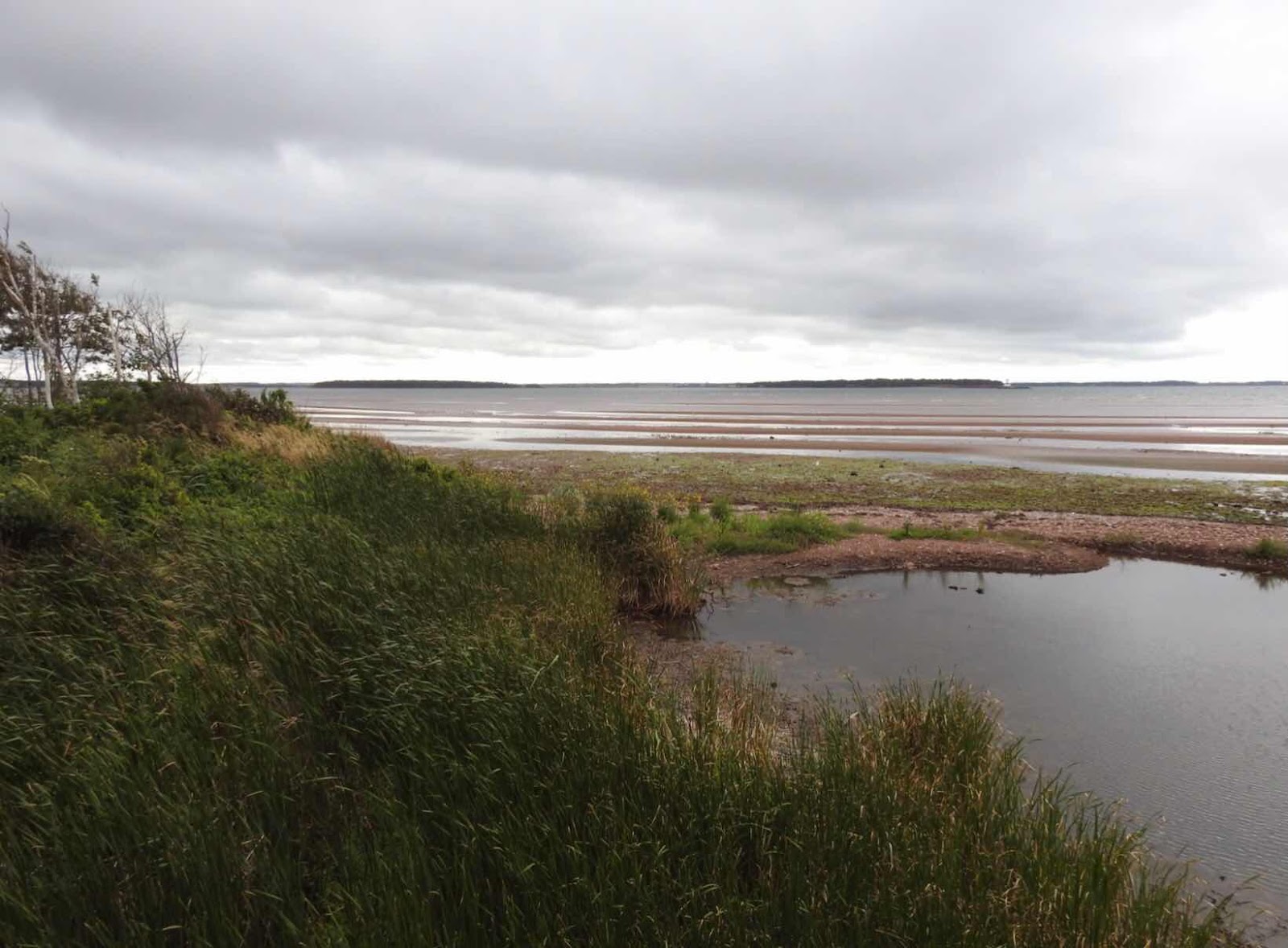
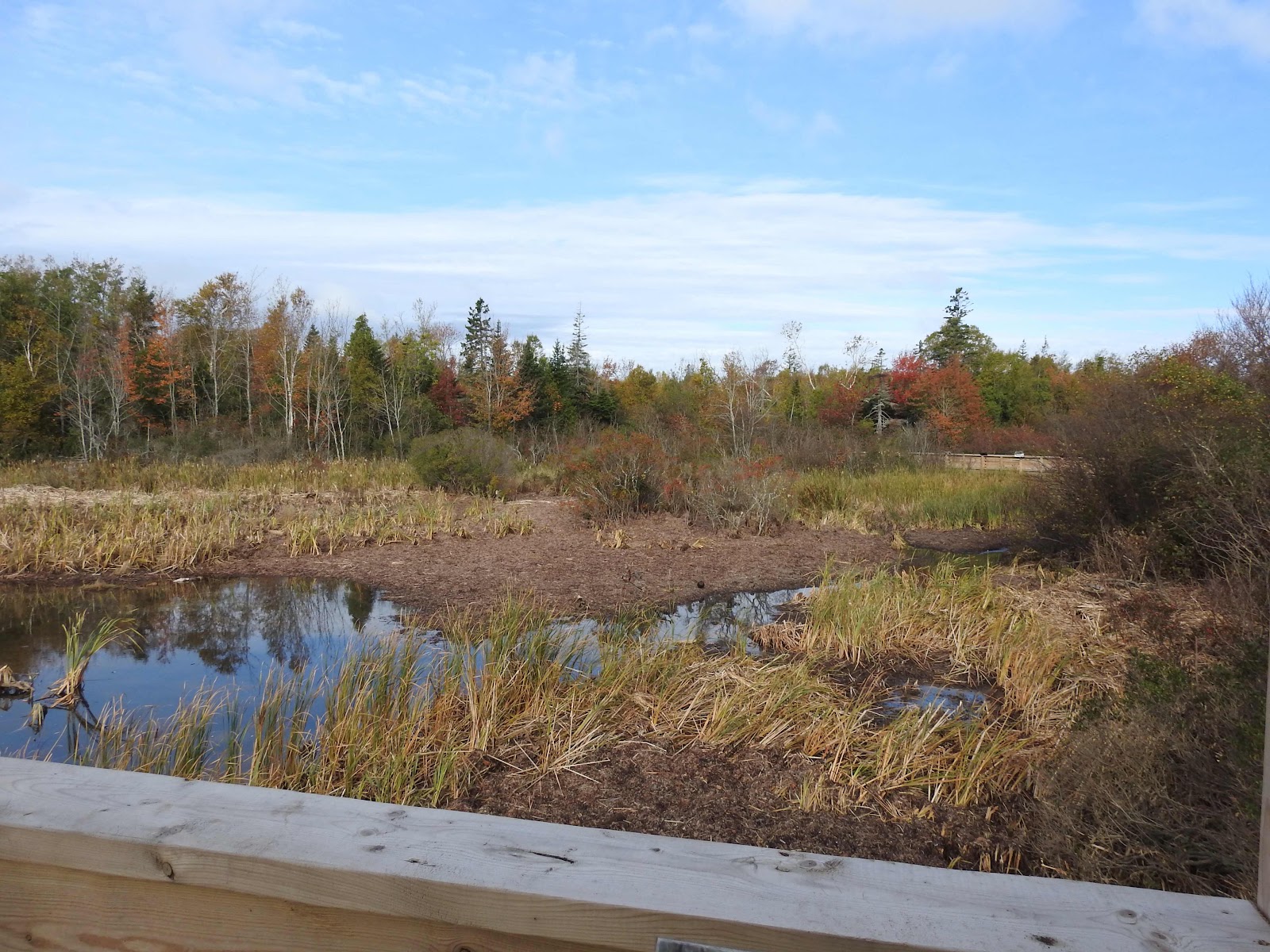
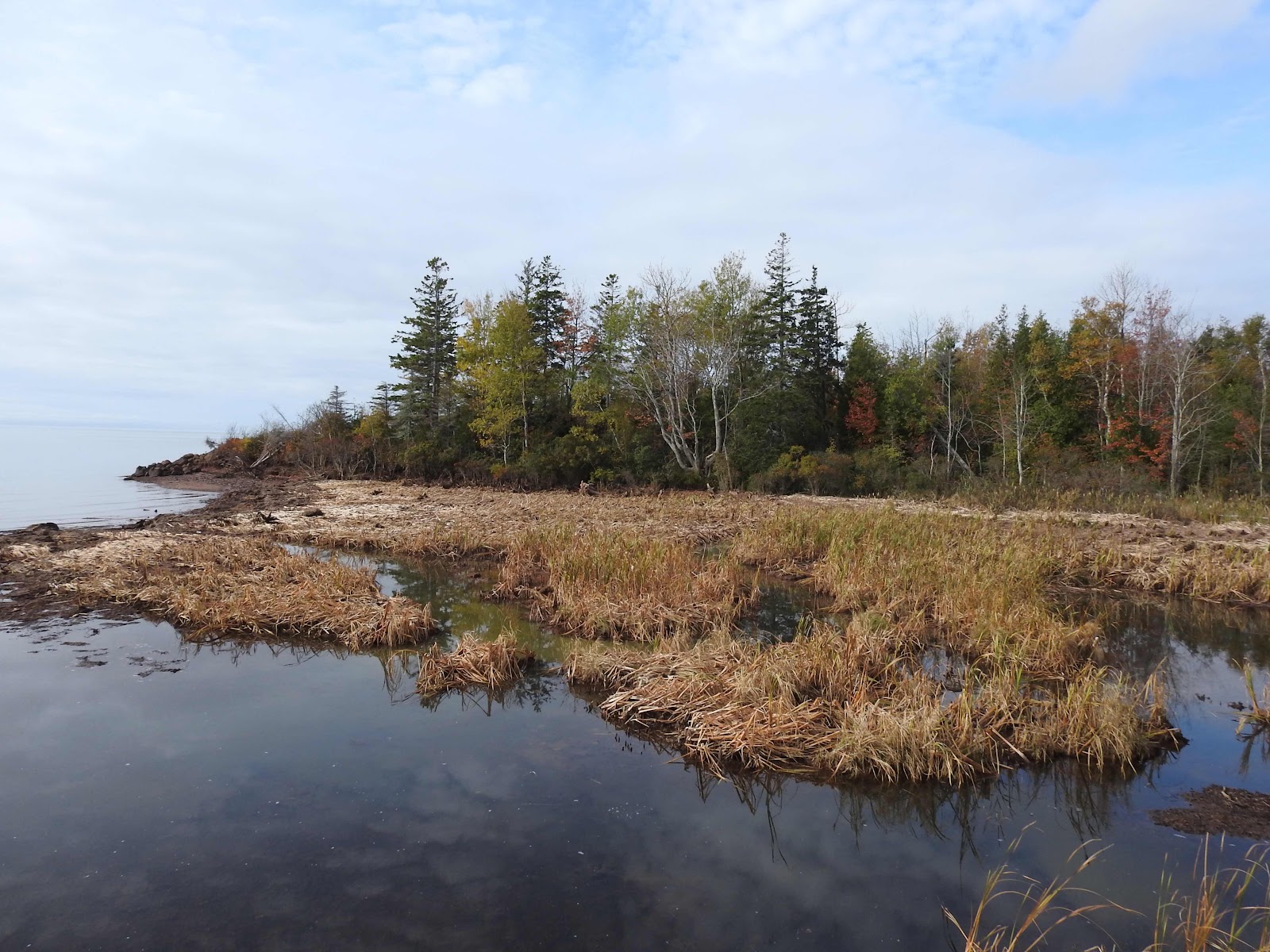
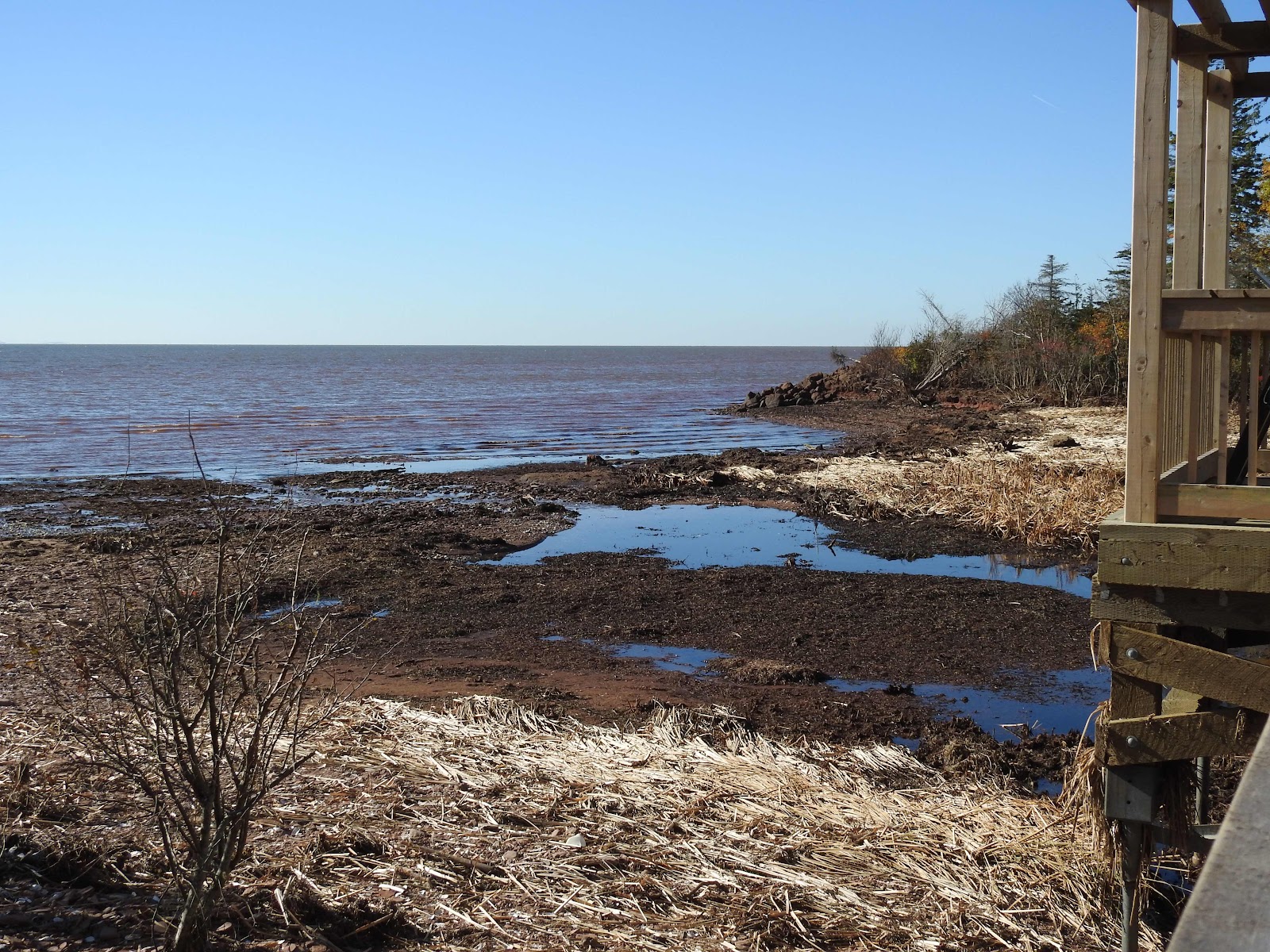
Every time we go for a walk to the boardwalk in Summerside, we always begin at the gazebo overlooking the salt marsh. 


The view across the bay is tempered by the weather.


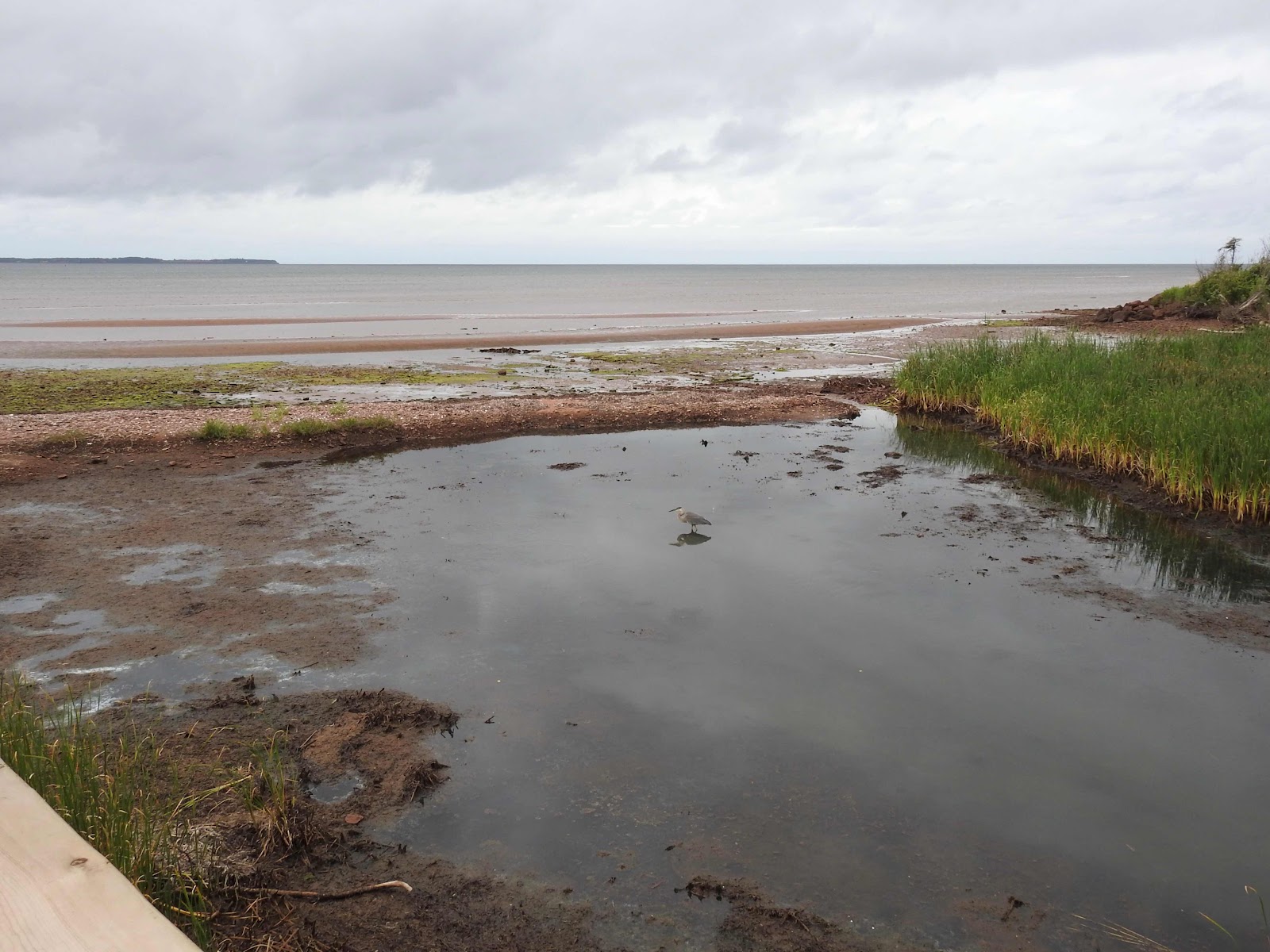
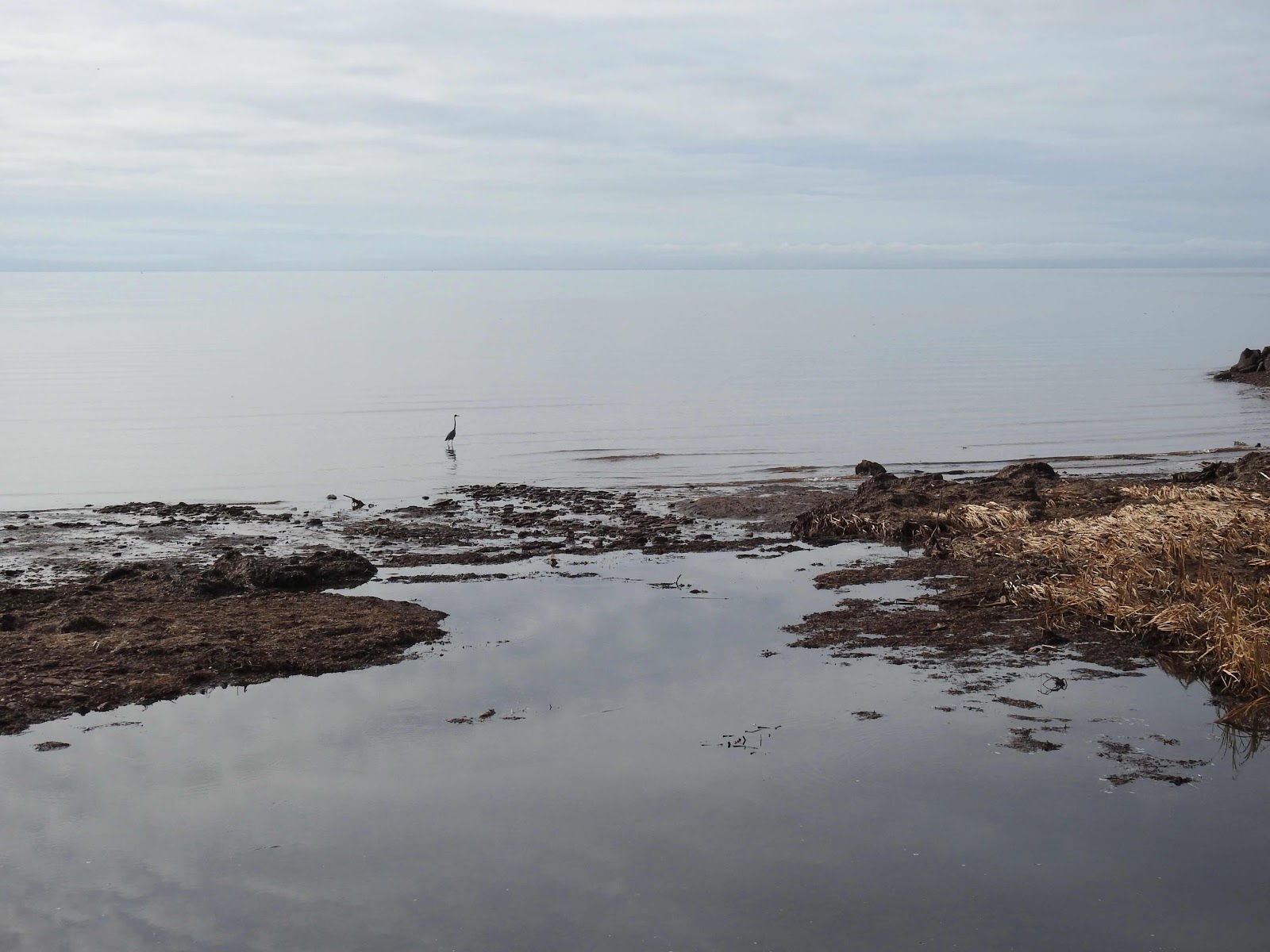
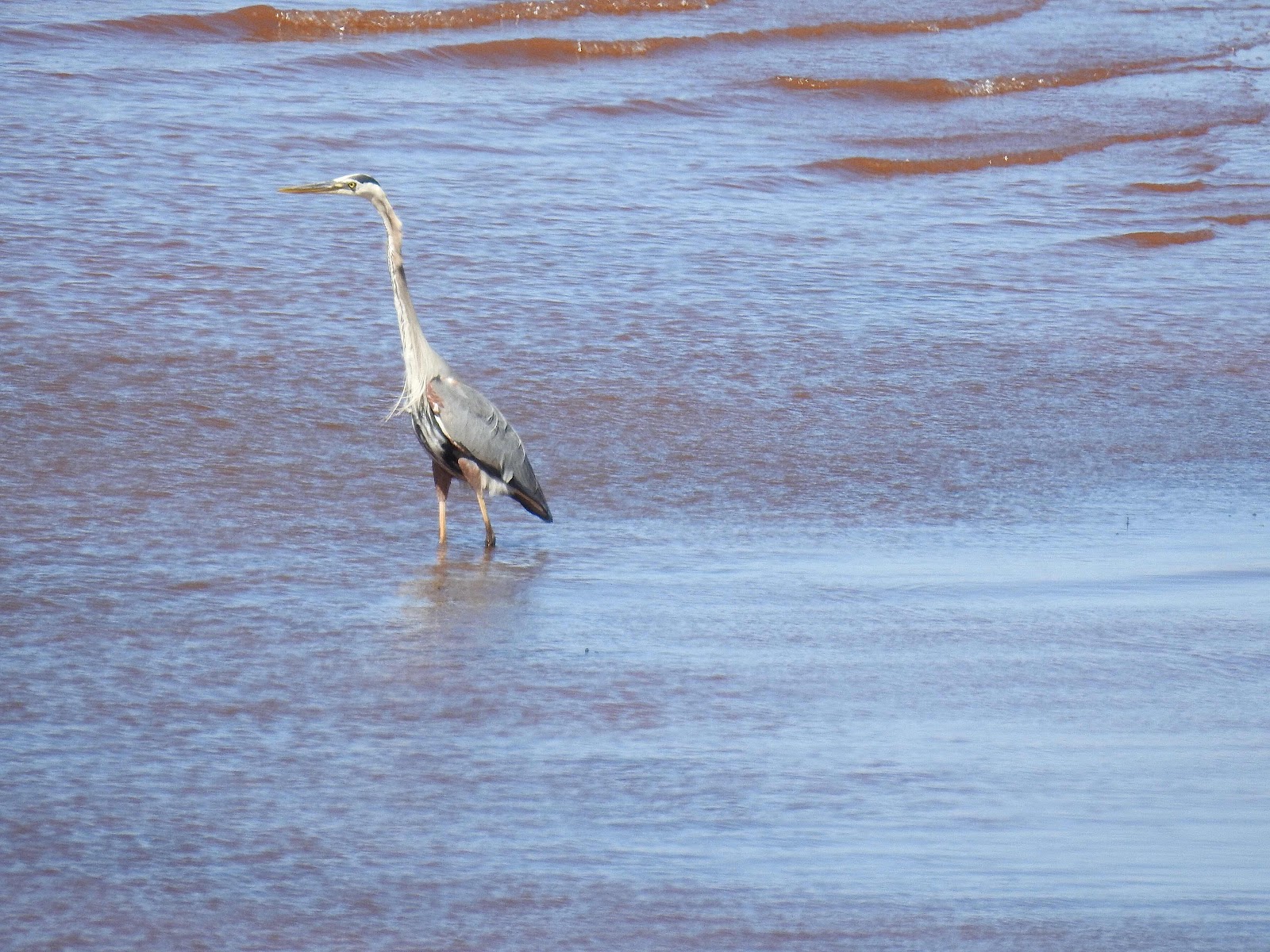
This area is frequented by numerous bird species from Black-capped Chickadees in the trees bordering the marsh to Great Blue Herons which wade in the water feeding on fish and frogs.


We were anxious to see how the area and indeed all of the boardwalk fared from Fiona when she blew through over three weeks ago. When the area was finally reopened, we didn’t know what to expect as far as damage there was concerned but it surprised us nonetheless. 


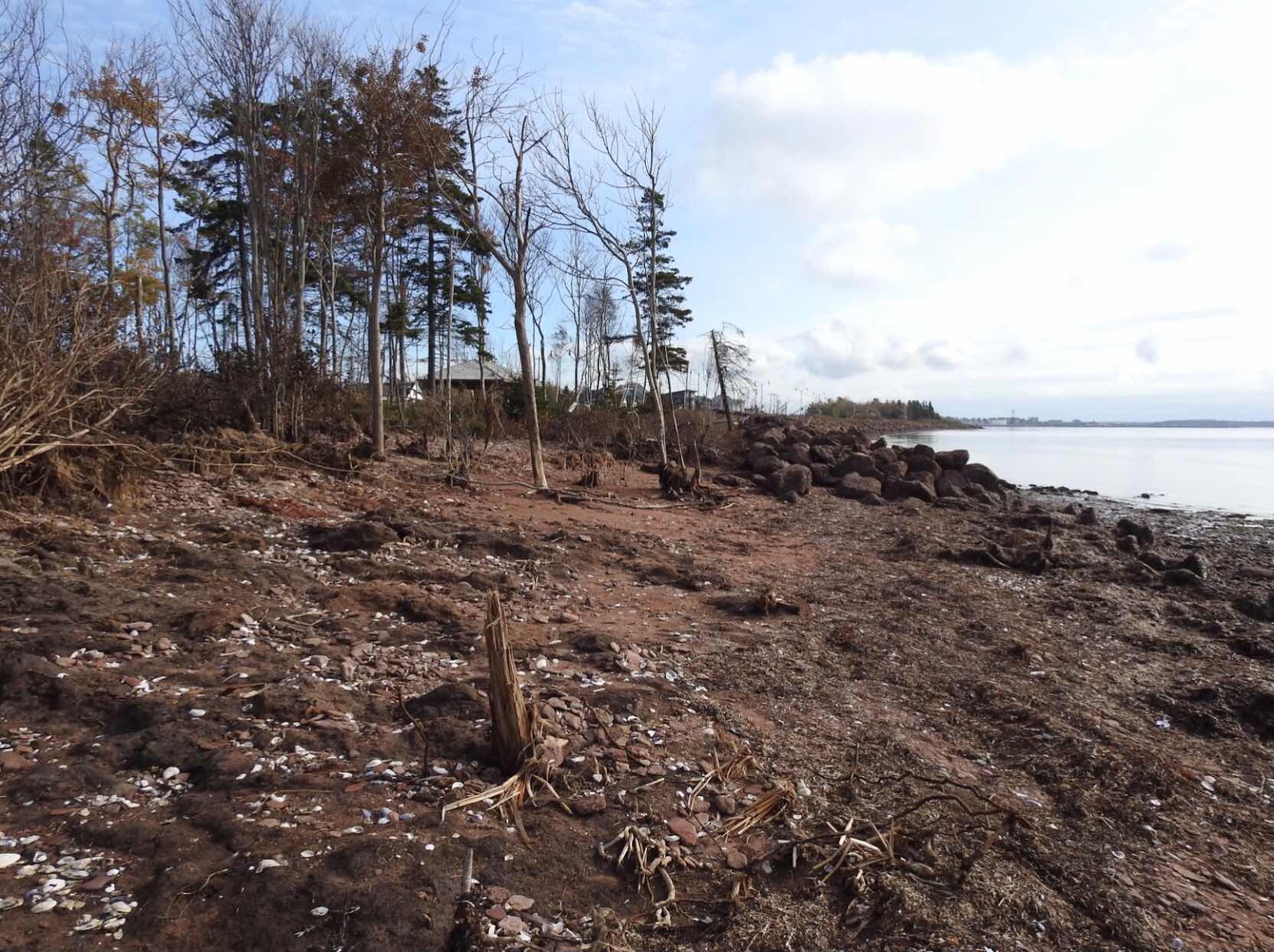
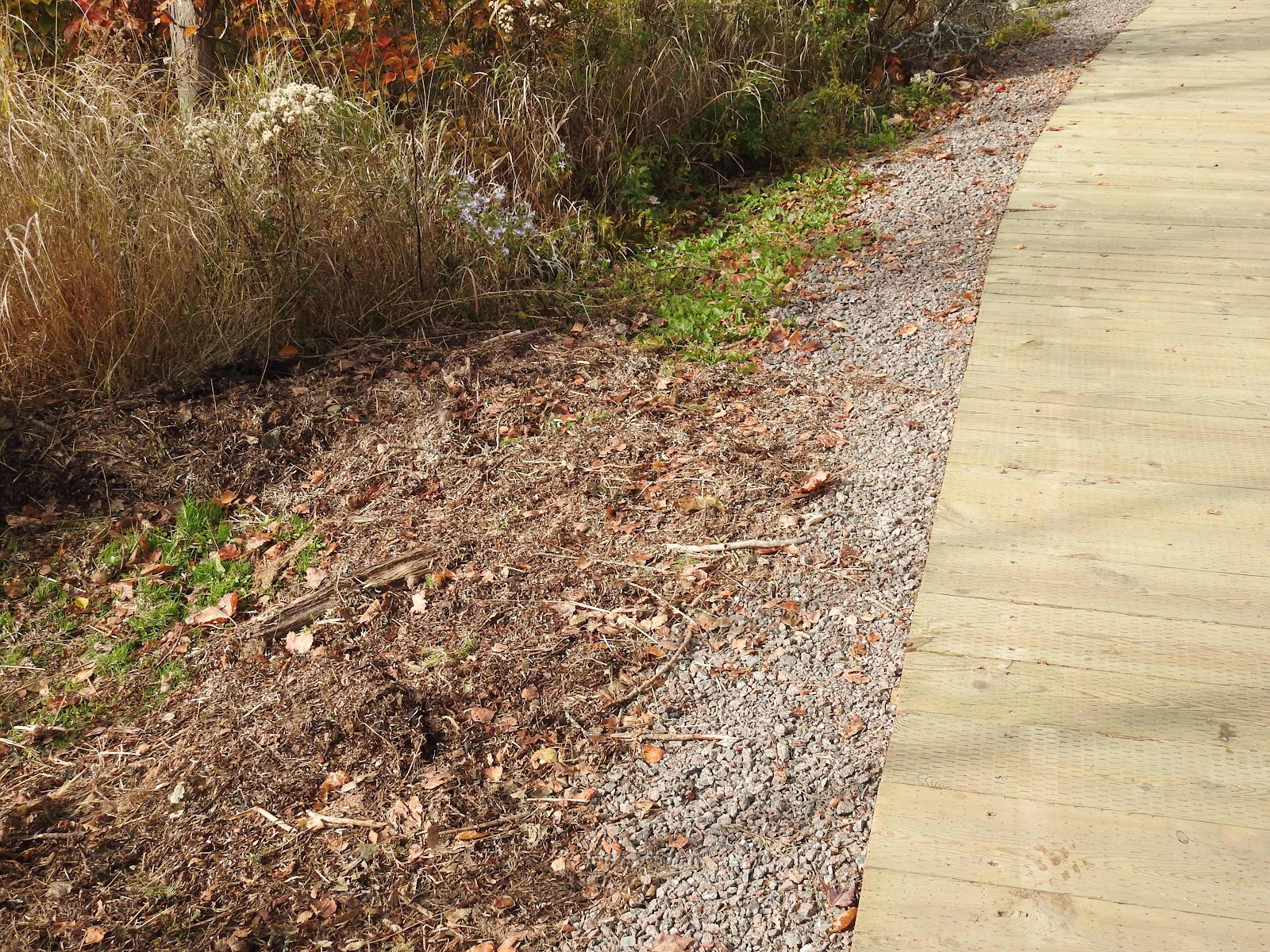
The area was devastated by the wind and especially the storm surge. 


However, while the environment was devastated, the animals were there!


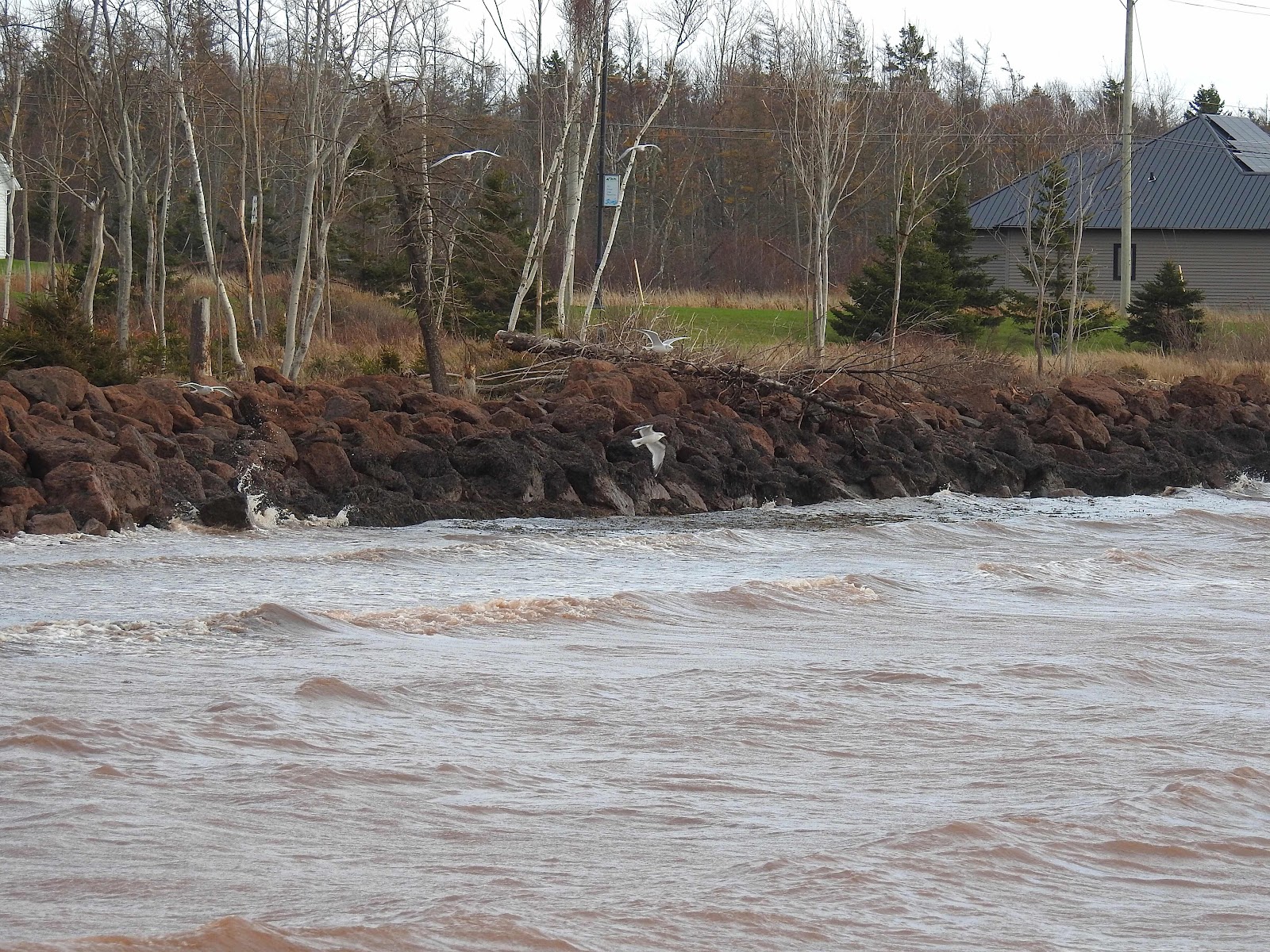
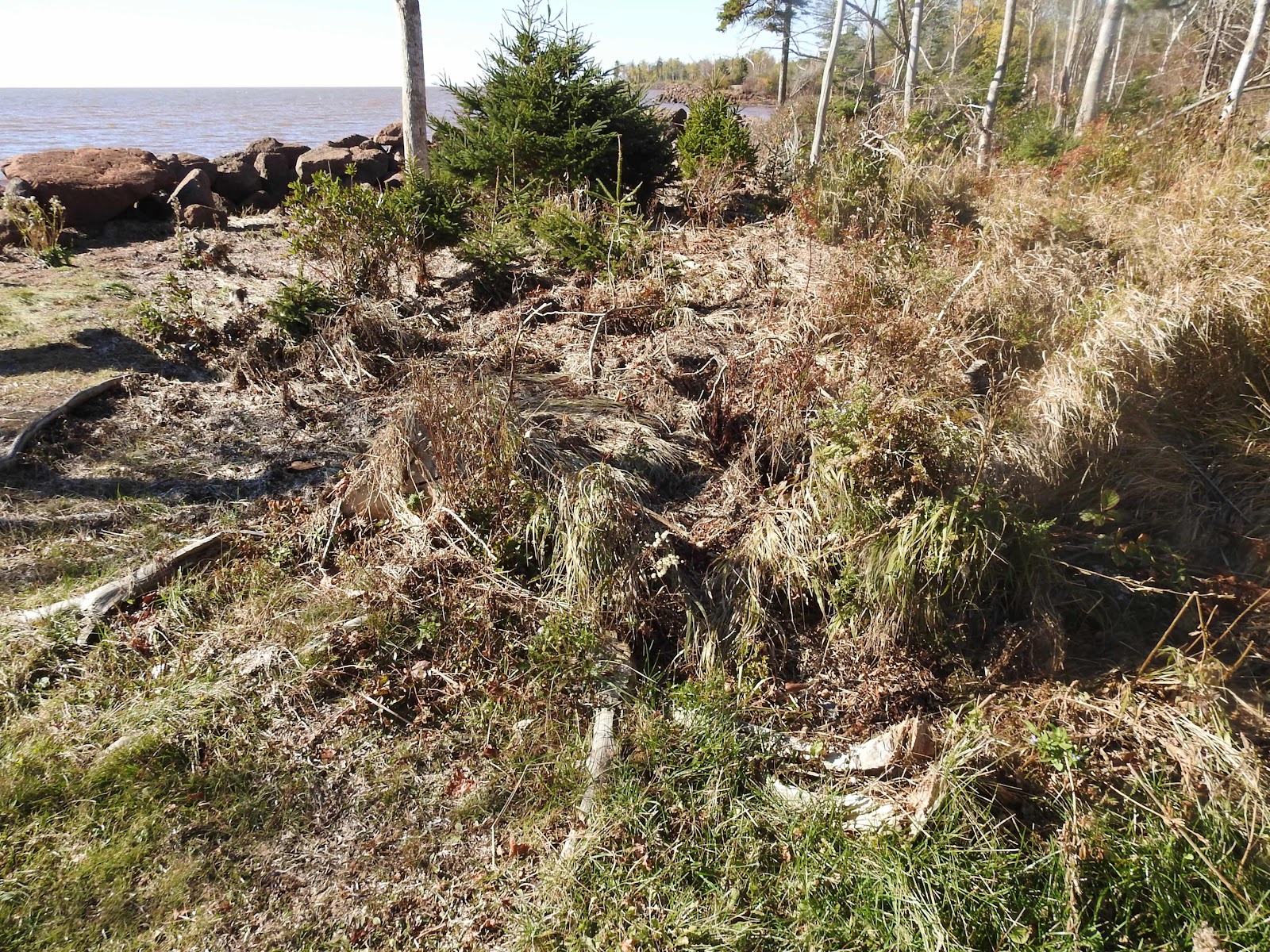
Waves had crashed over the rock revetments along the shoreline dropping seaweed by the boardwalk 


and everywhere in between.


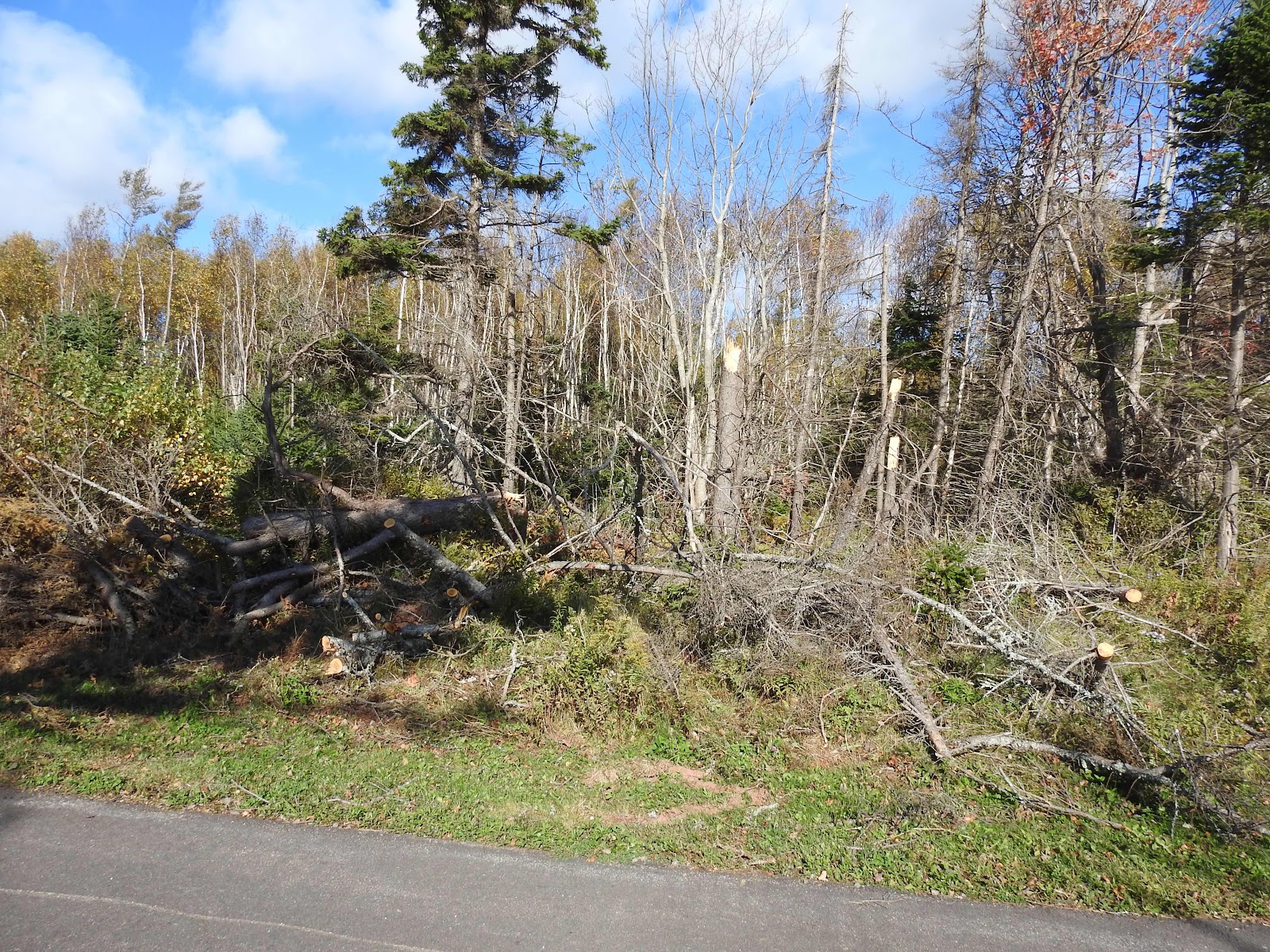
Some trees had succumbed to the winds and evidence of the damage is along the boardwalk. 


The more significant change, we felt, was in the salt marsh which is our favourite area. This section of trail always changes with the weather and the seasons anyway, depending on the amount of rain we have or high tides and wind conditions. The small boundary of seaweed and sand between the marsh and the sea was destroyed, with the tumultuous salt water advancing up the stream, depositing the seaweed almost fifty metres from the shoreline. 


Bulrushes and grasses were flattened. The change was dramatic. 


It has been interesting to hear environmentalists speak of the destruction on the island from Fiona, urging patience as dunes will recover over time. Watching the salt marsh over the last few weeks, I can see how this would be so. In those few weeks, the boundary of seaweed and sand is returning to the mouth of the salt marsh.


It will be interesting to see how the bulrushes and grasses return to the marsh with so much seaweed now as the substrate.


We are witnesses to both the fury and restorative possibilities of nature. 


Monday, 18 July 2022

A day at the beach

It was a sunny but windy day and the tide was low, a perfect morning for the park and beach at Canoe Cove. We love to visit that beach with our daughter and grandchildren, so we headed out early to get maximum time there at low tide. The kids were so exited when they jumped out of the car, all laughing and talking at the same time. The Cove is a great place for all of that energy. 


First they checked out the playground at the park. Meanwhile the tide was headed to its lowest point and before long, we headed down for a walk in the sand and tidal pools. We watched a pair of Great Blue Herons fishing for an early lunch. 


Also, this is an area of coastline which is home to seals. They are in the distance in this photo but as so often happens, I didn’t notice them until I looked at the photos later.


This cove drains off most of its water during low tide so all that remains is water in low lying areas. The exposed sand shows the action of the water on the sea bed. 


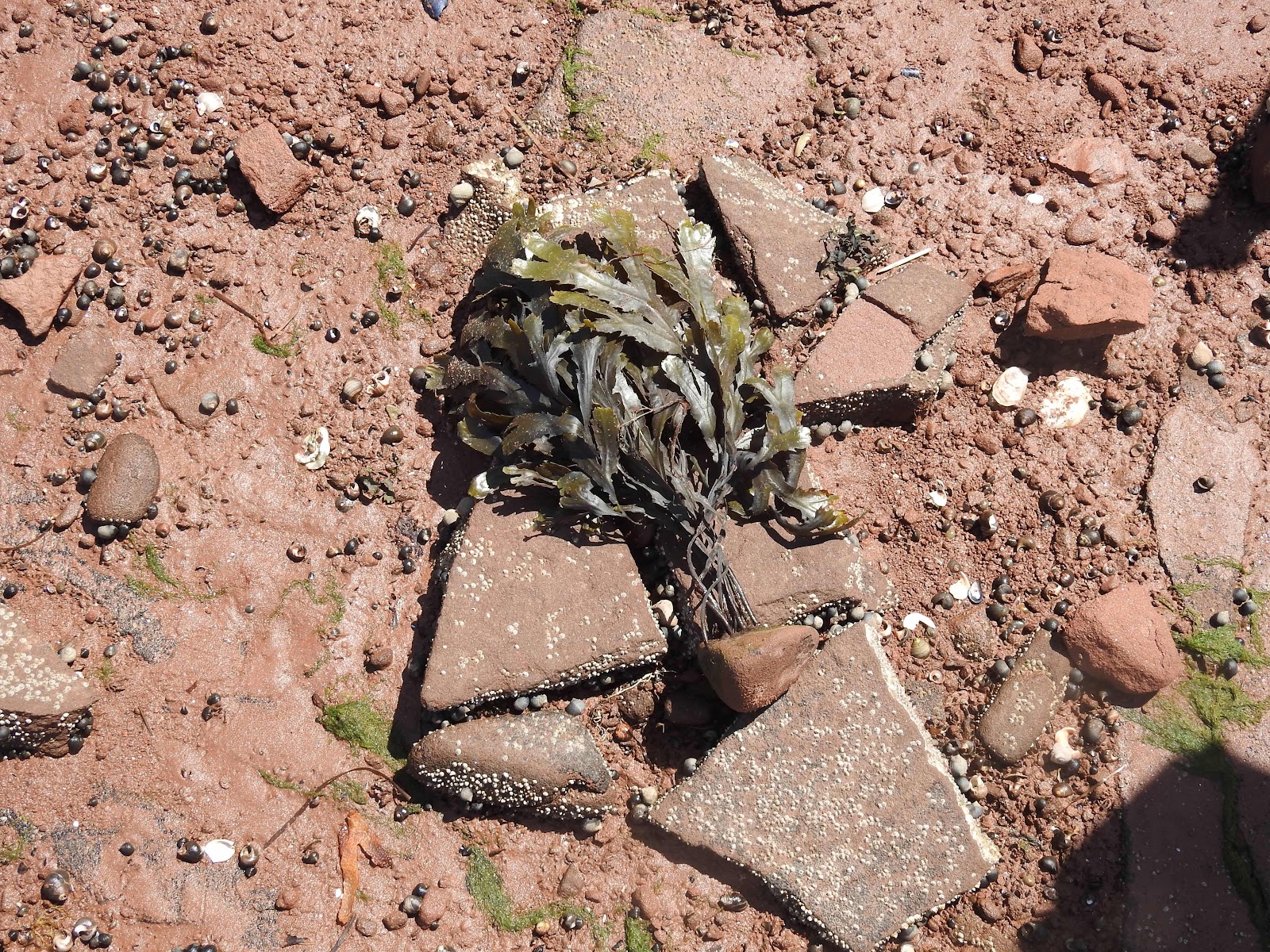
Seaweed is strewn around the beach and we spent some time observing the Toothed Wrack variety 


which anchors itself to rocks via a holdfast. 


Wouldn’t it be wonderful if each person in the world had a holdfast to anchor us when the storms of life are particularly rough?


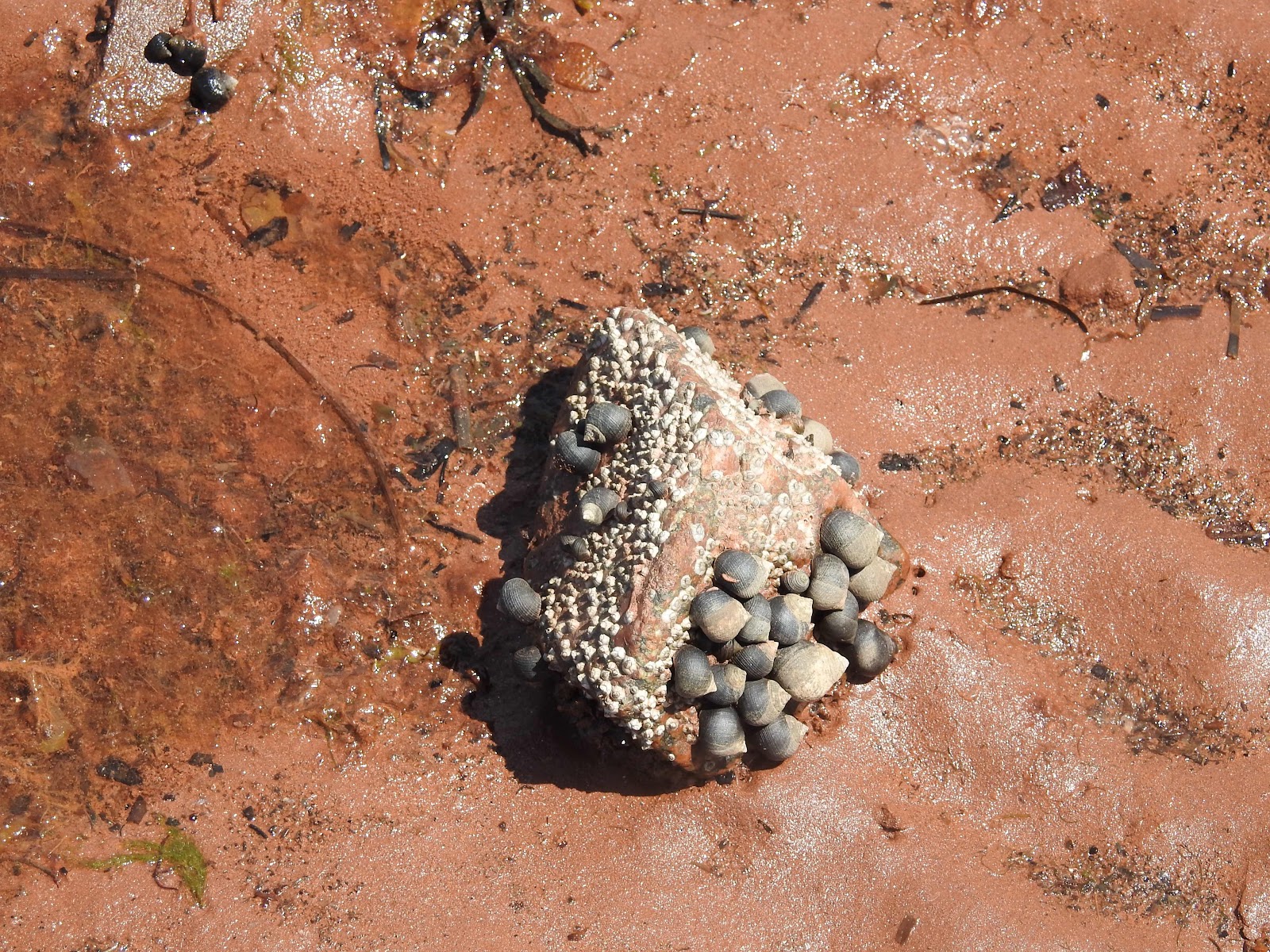
We explored the animal life remaining on the beach including barnacles and periwinkles attached to the rocks. 


The periwinkles in the tidal pools were crawling over the sand and explored our feet when we walked among them.


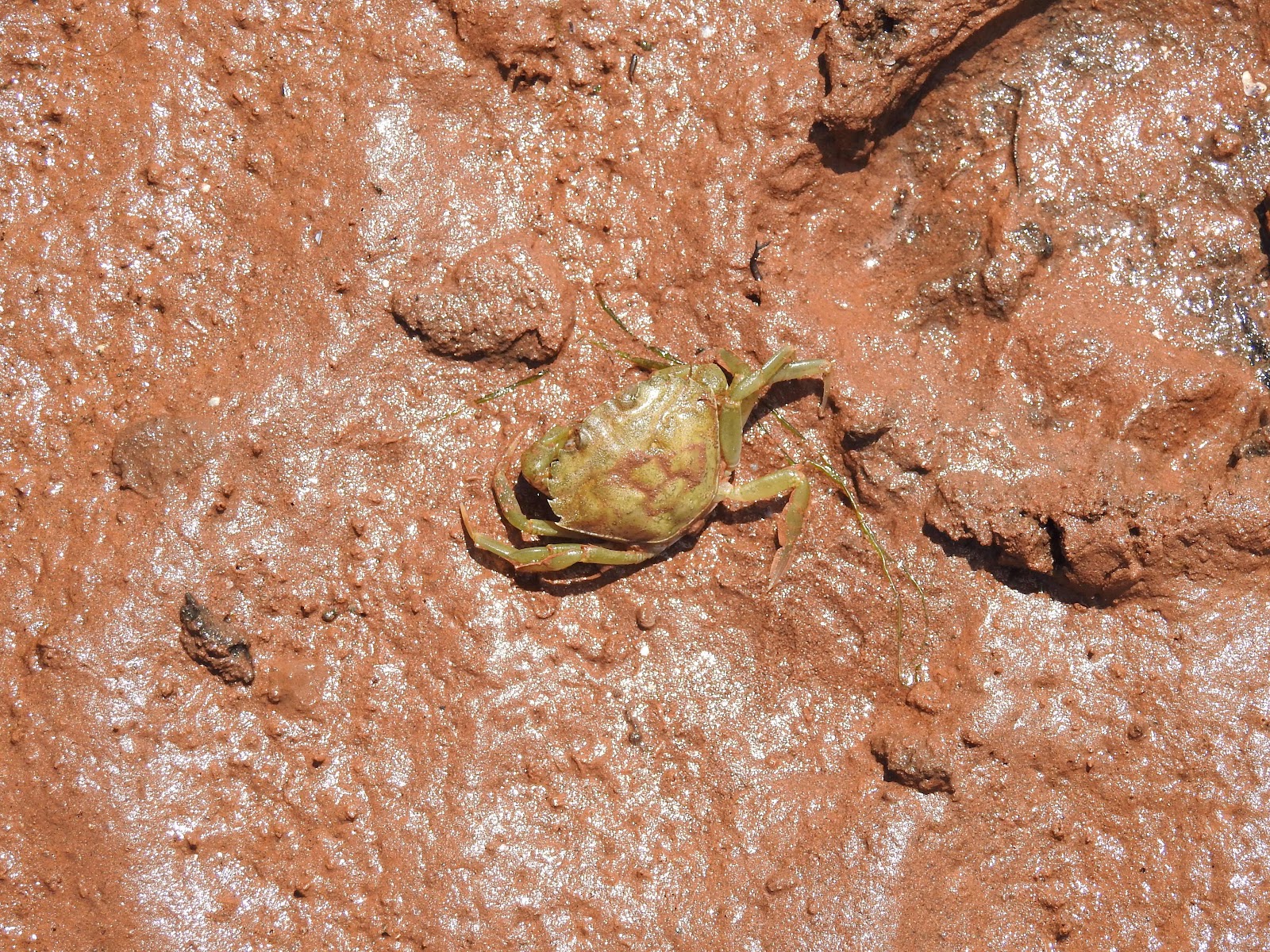
It was an interesting sensation. Around the exposed seabed, we found several dead crabs which were intact. 


We didn’t find any starfish that day however.


Several jellyfish were in tidal pools and stranded along the beach. 


The children always avoid them but are curious about them too.


Overhead, the Bank Swallows darted through the air in pursuit of insects and from the exposed shoreline, we watched as they entered and left their nests through the holes in the bank above the sandstone.


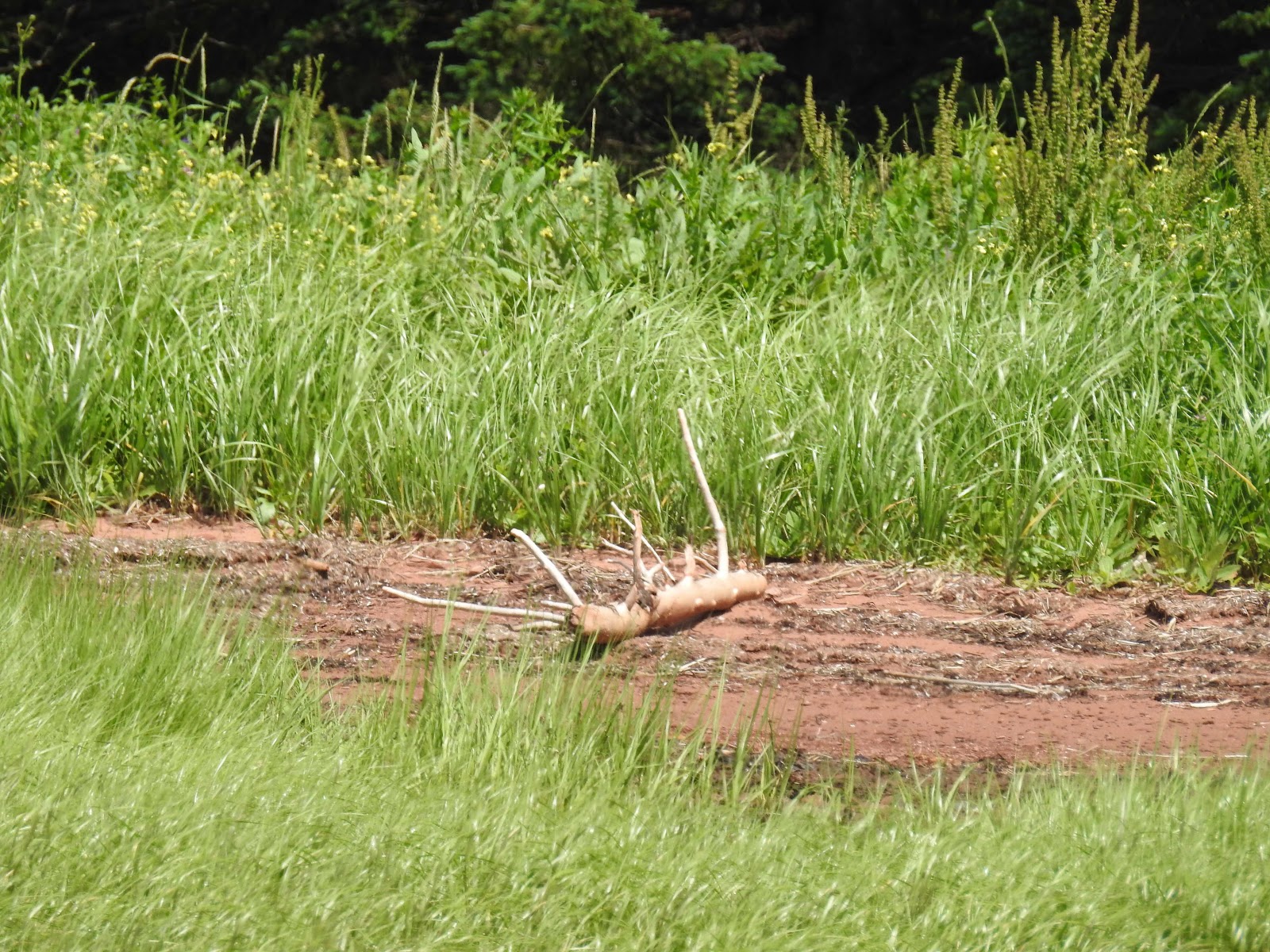
Along the shoreline, driftwood of various sizes stands against the elements, 


while trees drape their roots over the elevated shoreline. Those trees will eventually be but a piece of driftwood too.


Our grandson played with toys to make a channel in the sand. It flooded later with the rising tide, a lesson in tidal action he will remember.


The girls had mud baths, coating themselves in some muddy sand along one of the tidal pools. They had a natural spa day with the mud bath and the periwinkles tickling their feet.


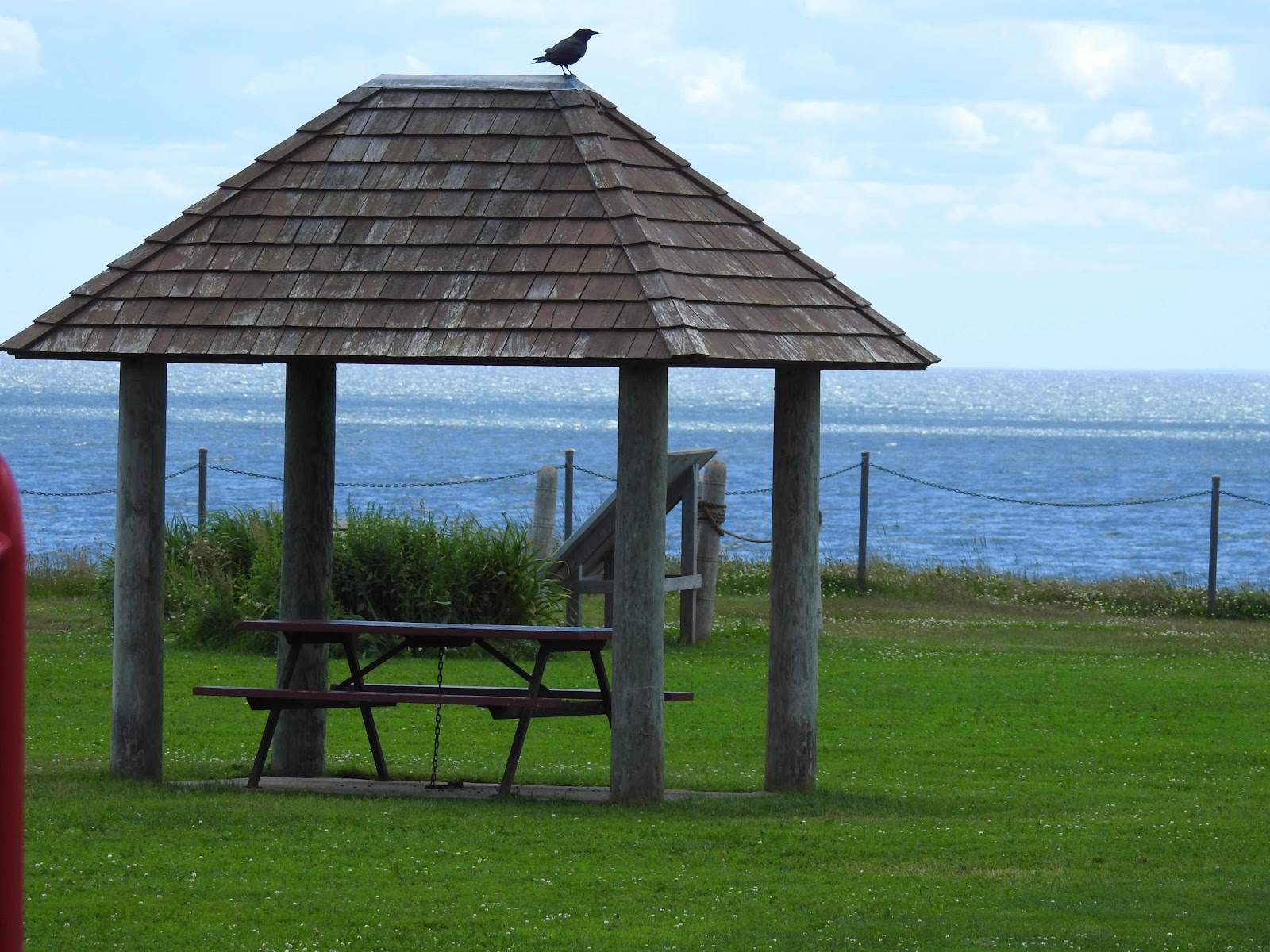
Lunch in the park at a covered picnic table was a cool affair in the shade on that windy day.


As we left the park, the rising tide sent people off the beach as the Cove filled with the rising sea.


Canoe Cove at low tide is a great place for children to explore and swim. The added bonus of the day park facilities makes it an ideal location for families to spend the day.


Friday, 28 May 2021

At the beach

A beautiful sunny day without much wind drew my husband and me to the beach for a walk for the first time this year. We decided on the beach at Brander’s Pond to see how the sea stack there had fared over the last year. It is one of my favourite beaches but I have many favourites on Prince Edward Island.


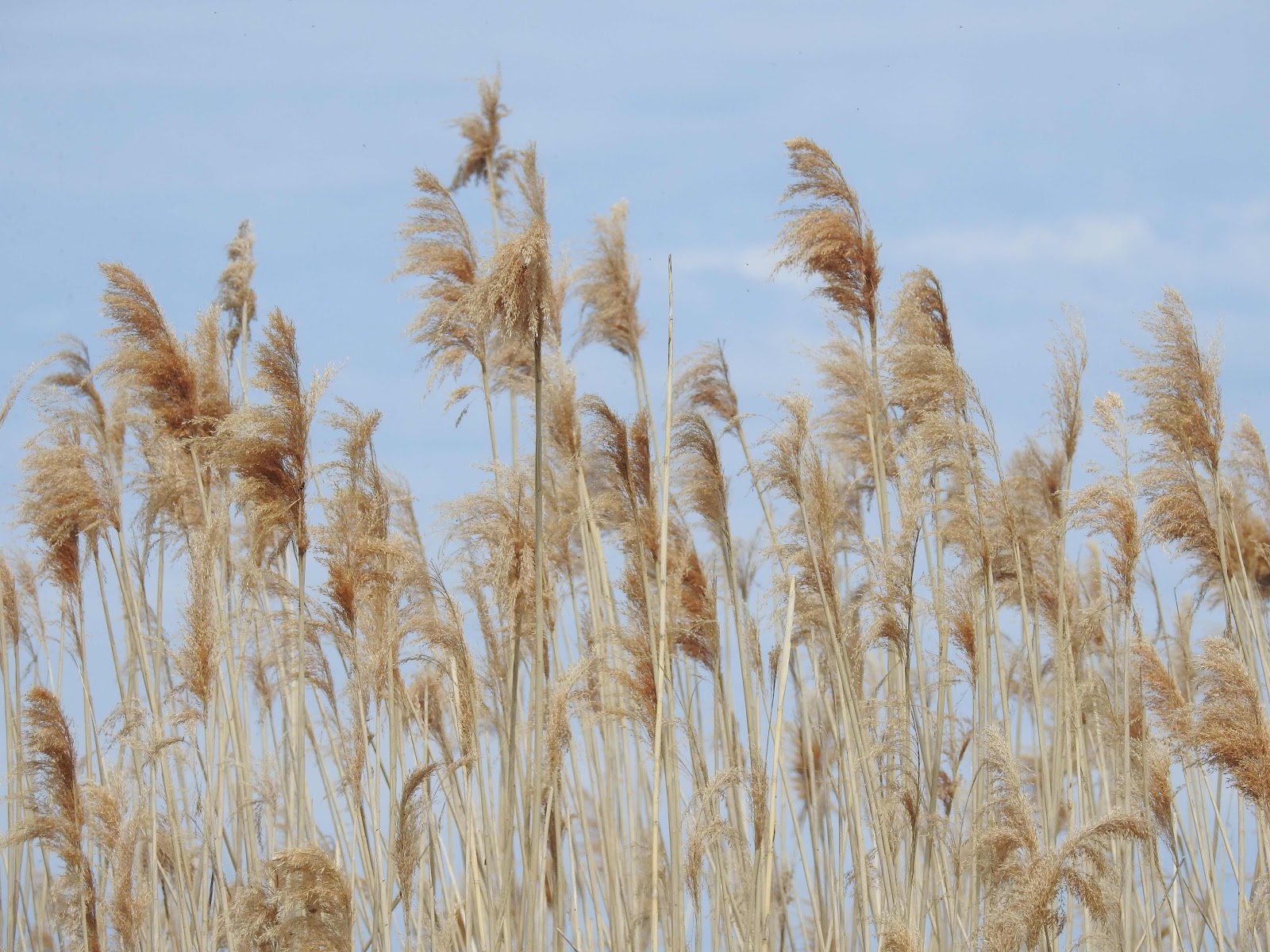
Along the way we passed the Cavendish Farms Wetland, an area with huge grasses which the Red-winged blackbirds love. They found a way to land on the tall grasses, 


which sway under their weight, making them impossible to photograph.


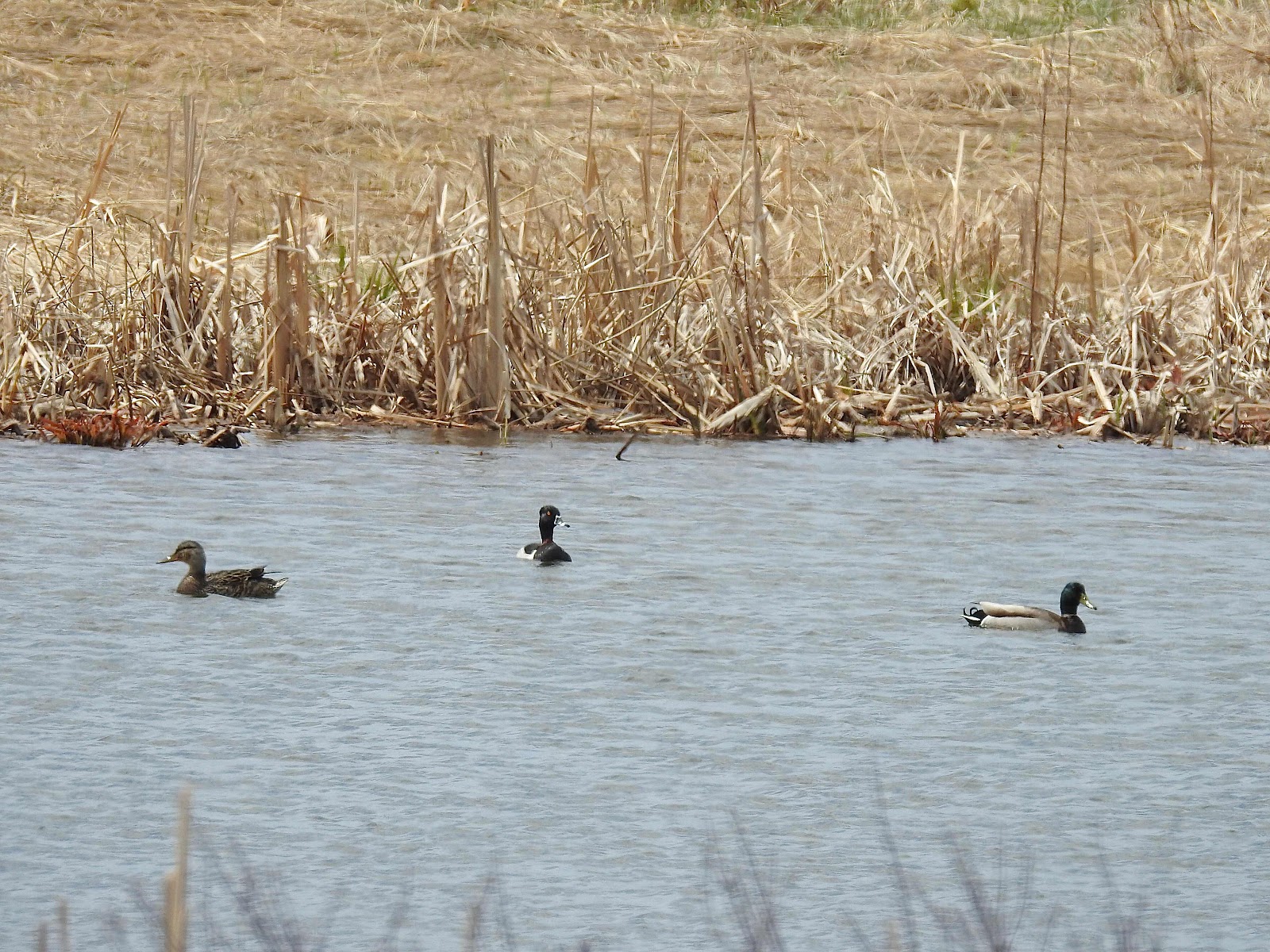
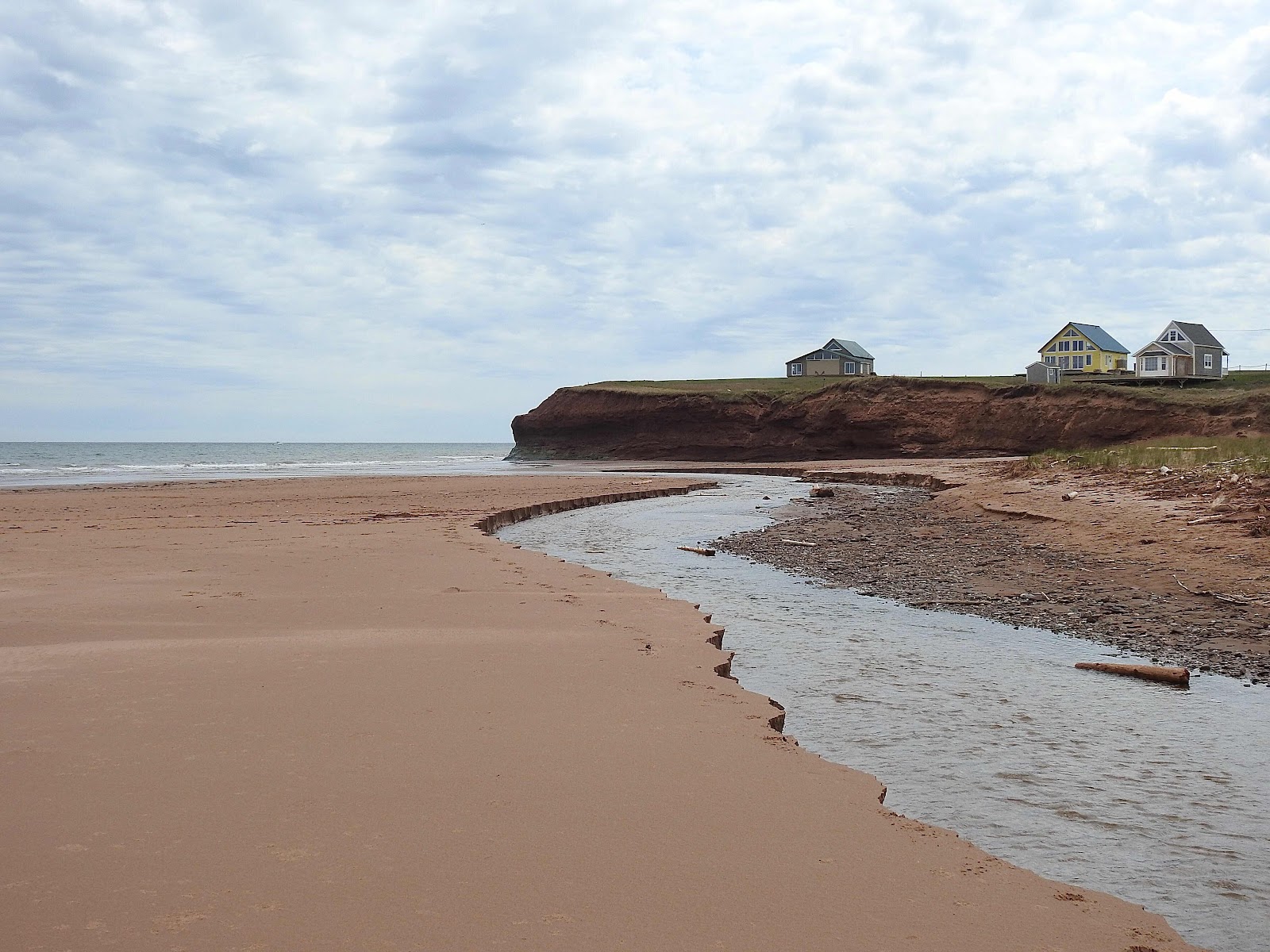
At our destination, the pond is mere metres from the shoreline and a stream flows to the beach nearby. This year, Mallards and Ring-necked Ducks swam there. 


The local cottagers have fortified sides of the stream closet to the road which leads to the cottages lining the shoreline above the beach. The steam meanders more along the beach now than it has in the past however.


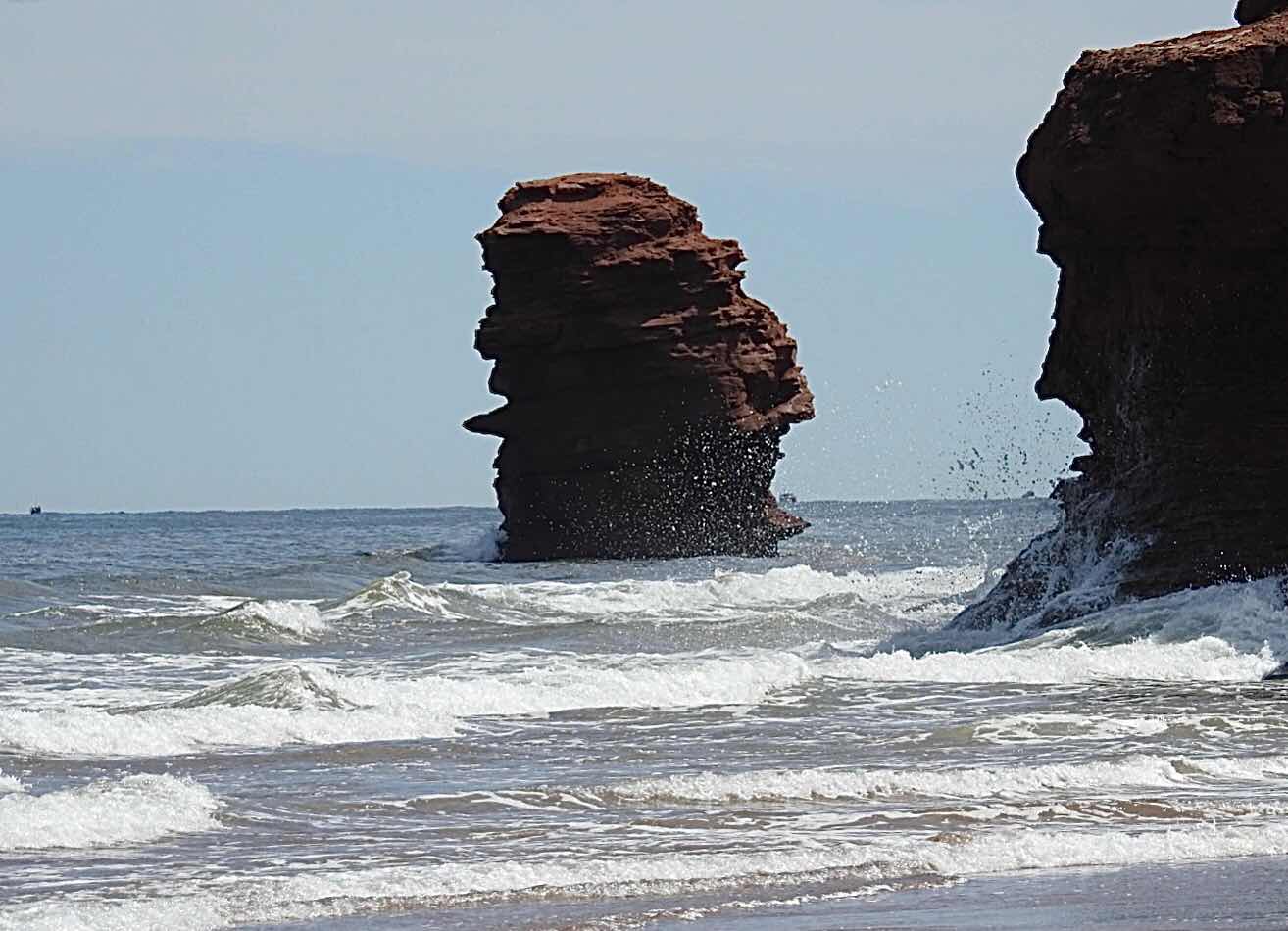
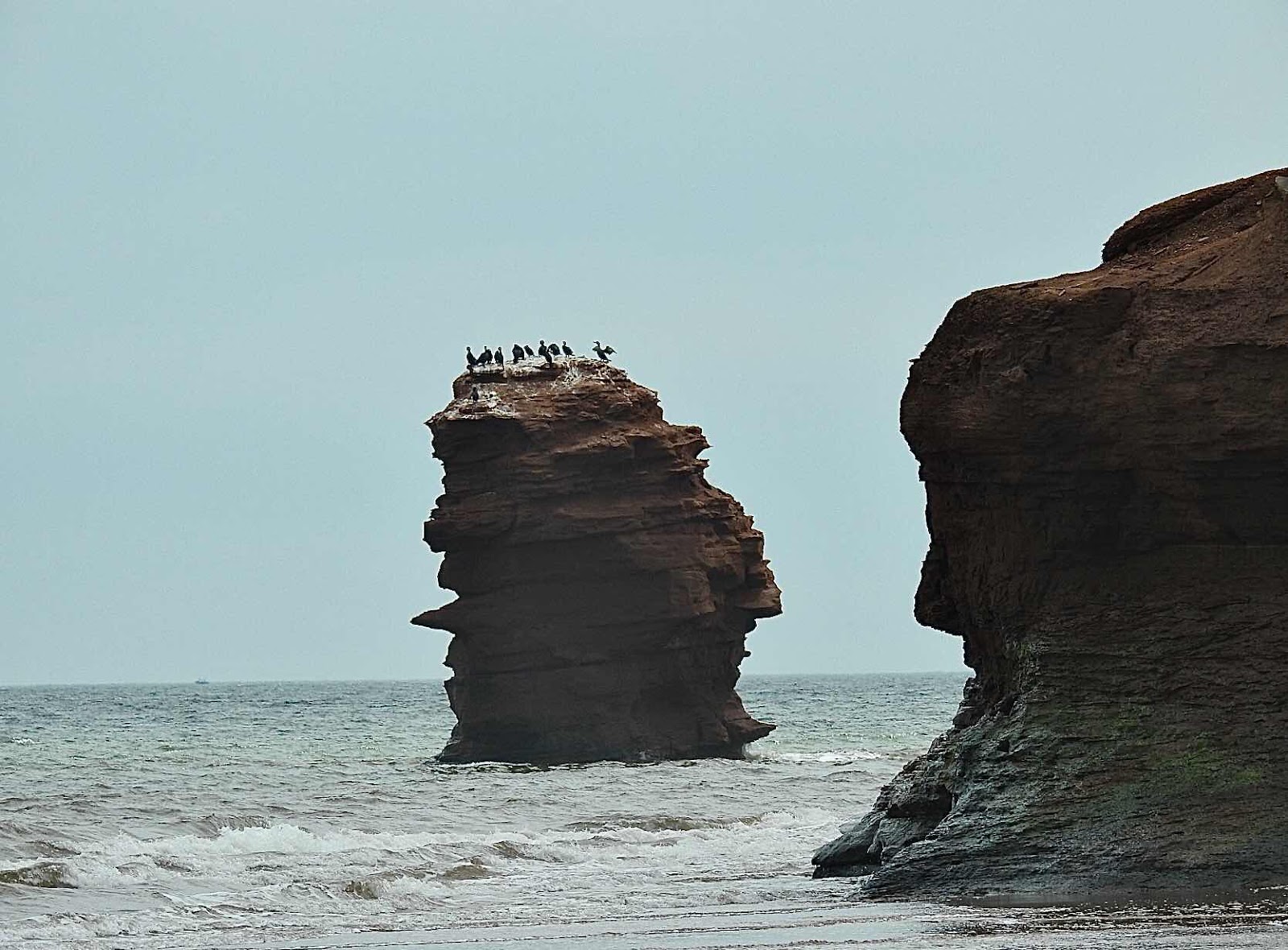
The sea stack looks much the same as last May, except the cormorants are hanging out there again. It is good to see the prehistoric looking birds back at one of their old haunts. 


                                                                        May 2020


                                                                                  May 2021


The face in the cliff looks more tired though. You can’t blame it after this past pandemic year.

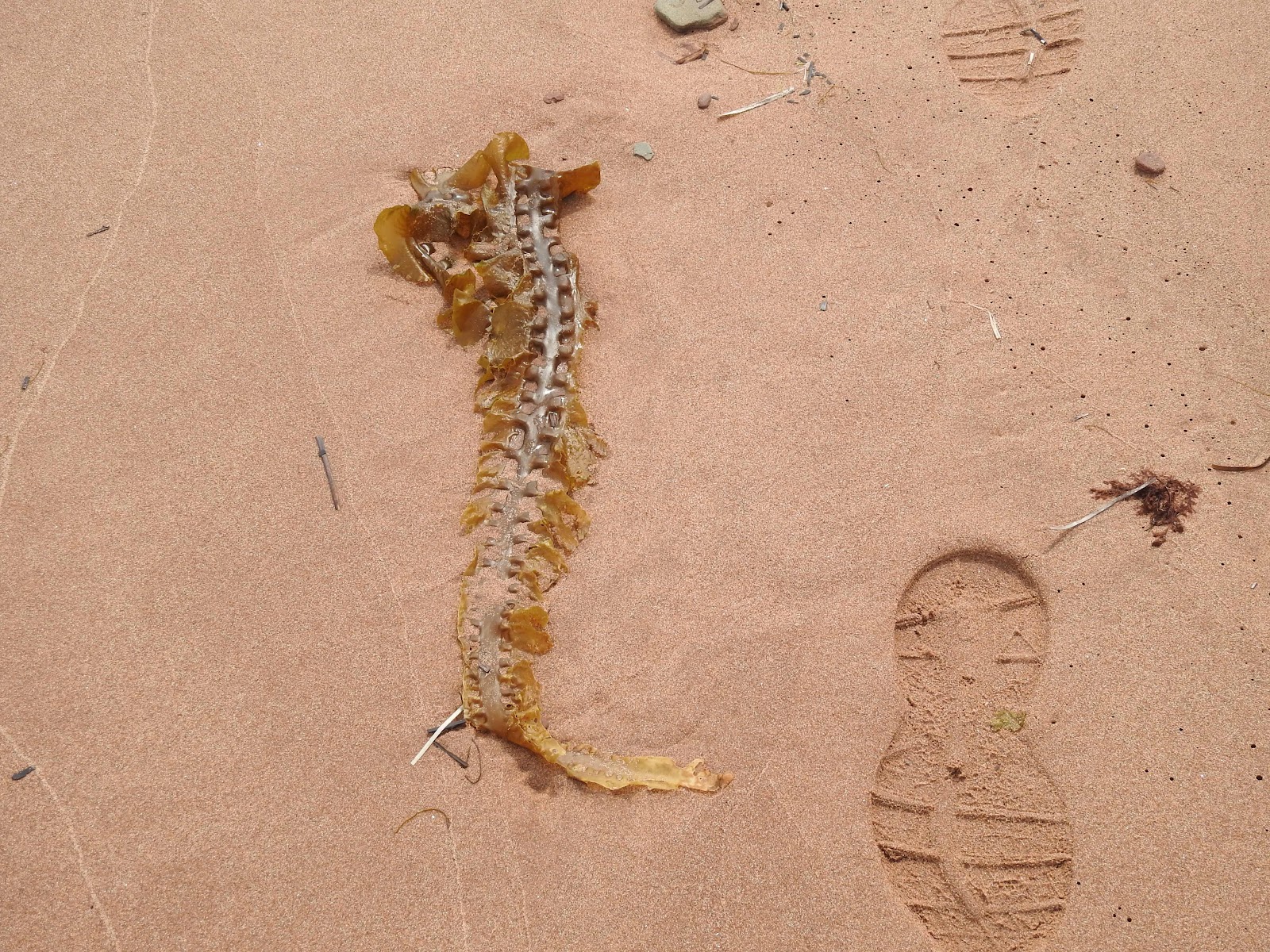
The beach is in pristine condition, undoubtedly people picked up any debris which was deposited over the winter. Some seaweed is all that remains. We will only leave footprints which will vanish with the tide. 


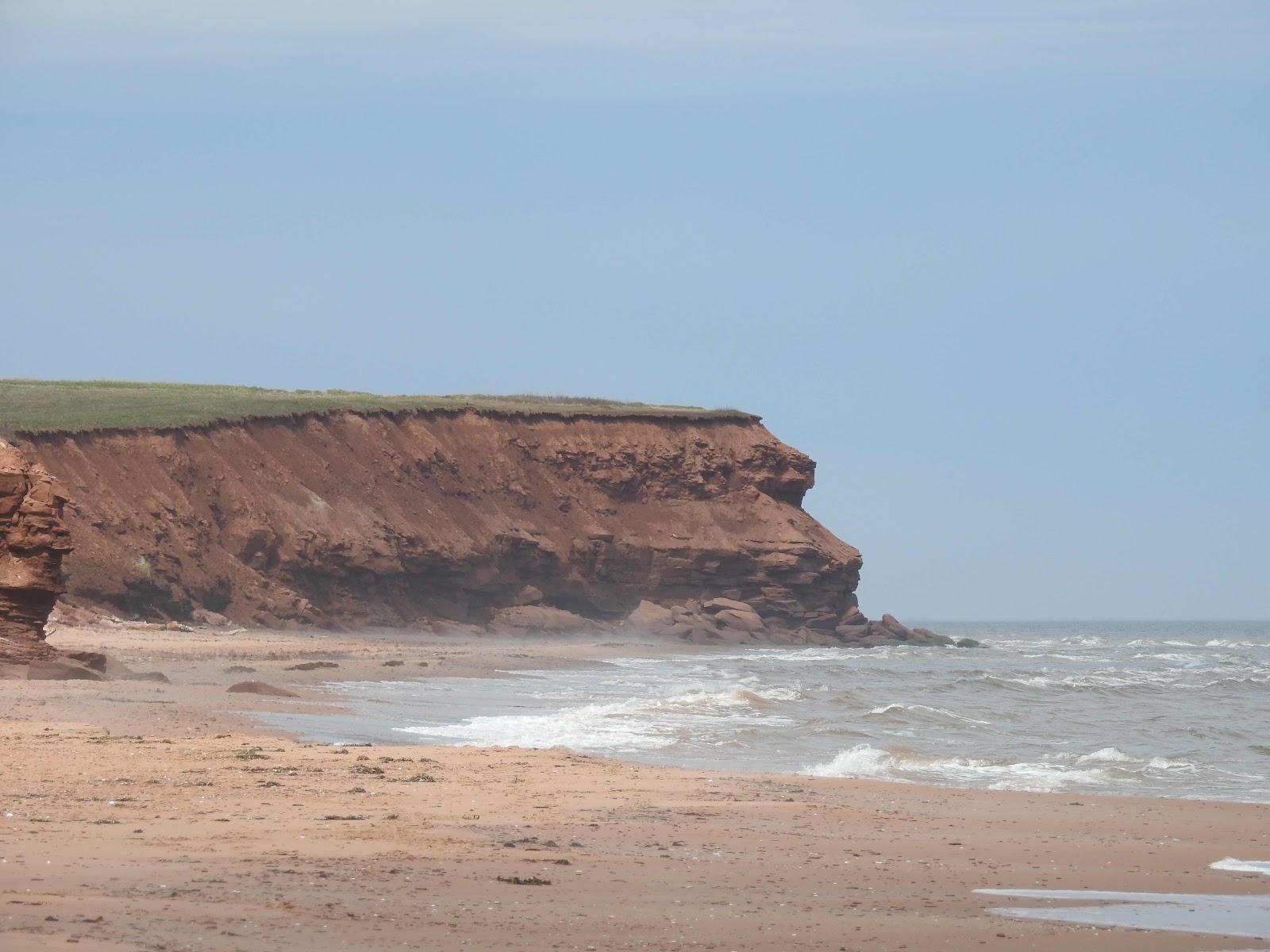
Walking along, we could see fog rising from the wet sand in the distance. We imagine the earth, like us, is ready to exhale.


The sound of the sea fills the senses. It is good to be back for another year.