Most Popular Post

Showing posts with label Great Black-backed Gulls. Show all posts

Sunday, 5 September 2021

Along the shoreline

The boardwalk at Summerside is undergoing repair work and the popular section of the trail where many of the birds, squirrels and chipmunks hang out has been closed to walkers. 


With replacement of the bridge over the stream, workers have drained the area to facilitate construction and the setting has changed a great deal. 
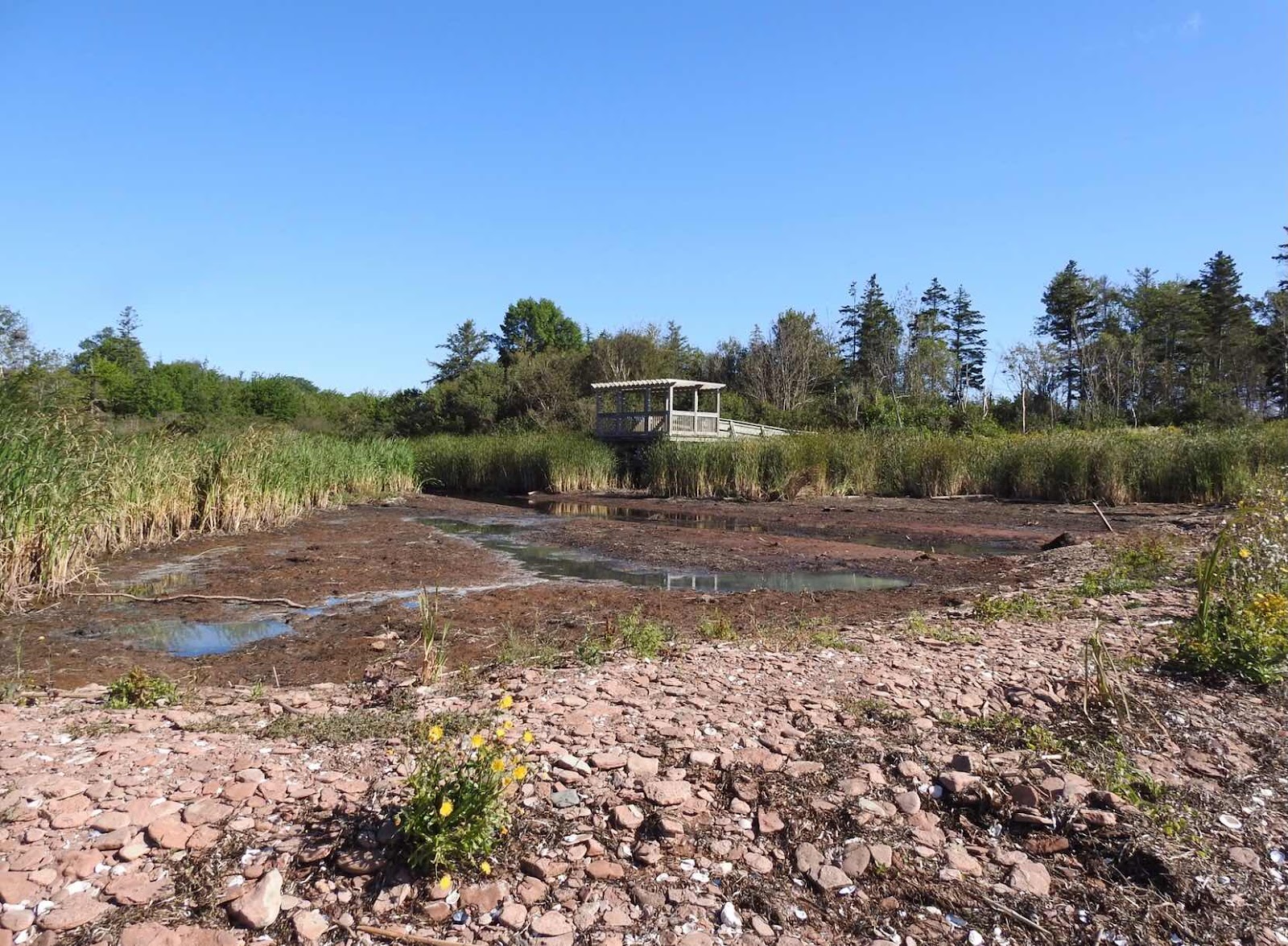


Ducks who frequented the salt marsh have moved on but the usual late summer shorebirds still frequent the shoreline. We walk near the section under construction and enjoy the gazebo and shoreline. We have seen a few birds new to the area this month and enjoy our time observing them.


Greater and Lesser Yellowlegs are walking and feeding along the shoreline these days. The two species are so similar but beak size is a distinguishing feature. They appear to live in harmony together.


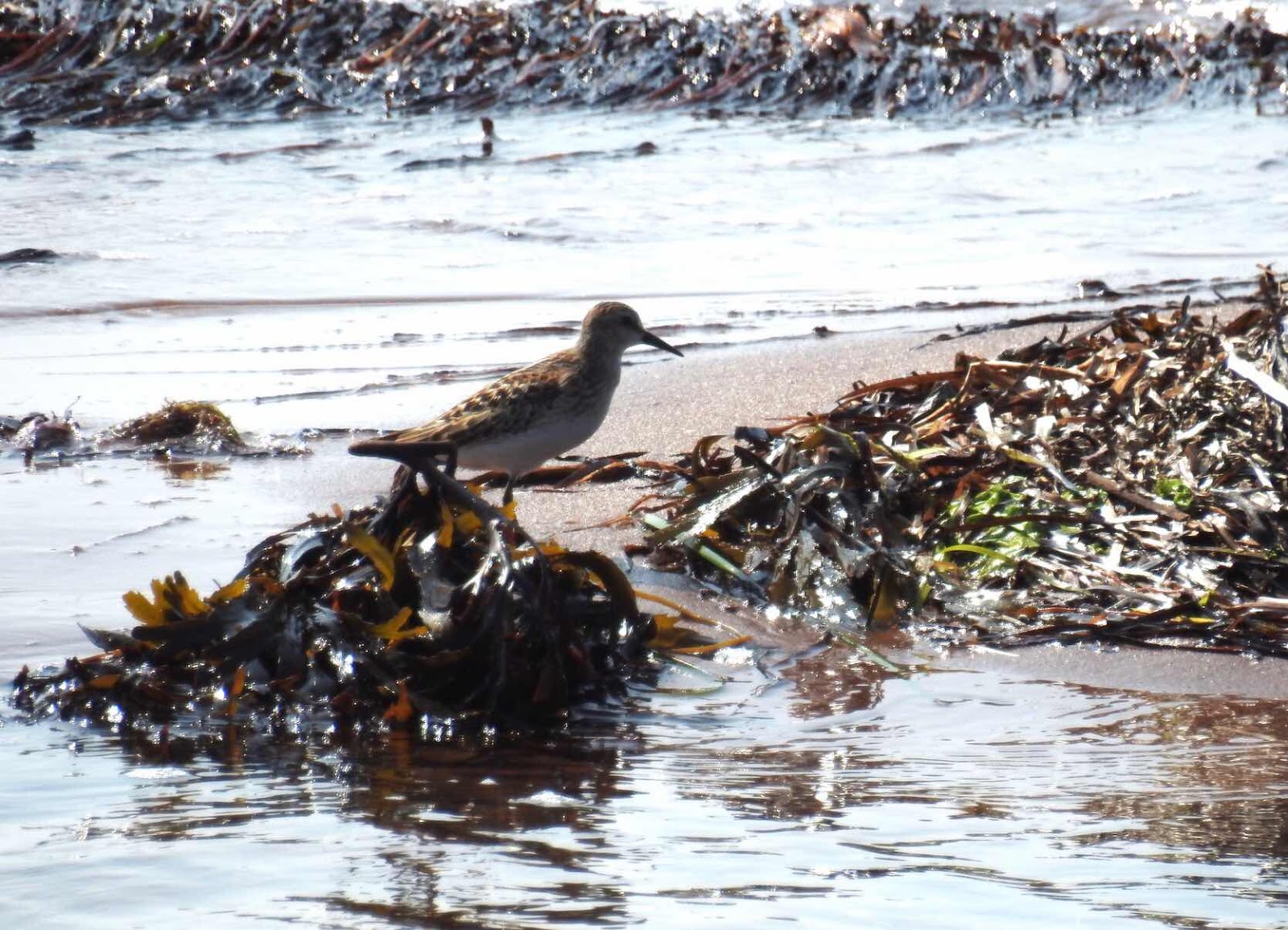
One day, watching from the gazebo, I noticed what looked like a small flock of sparrows land on the beach which would be an unusual sight. I watched the birds, obviously not sparrows but Least Sandpipers, the smallest of the sandpipers. They stayed long enough for me to take a photo.


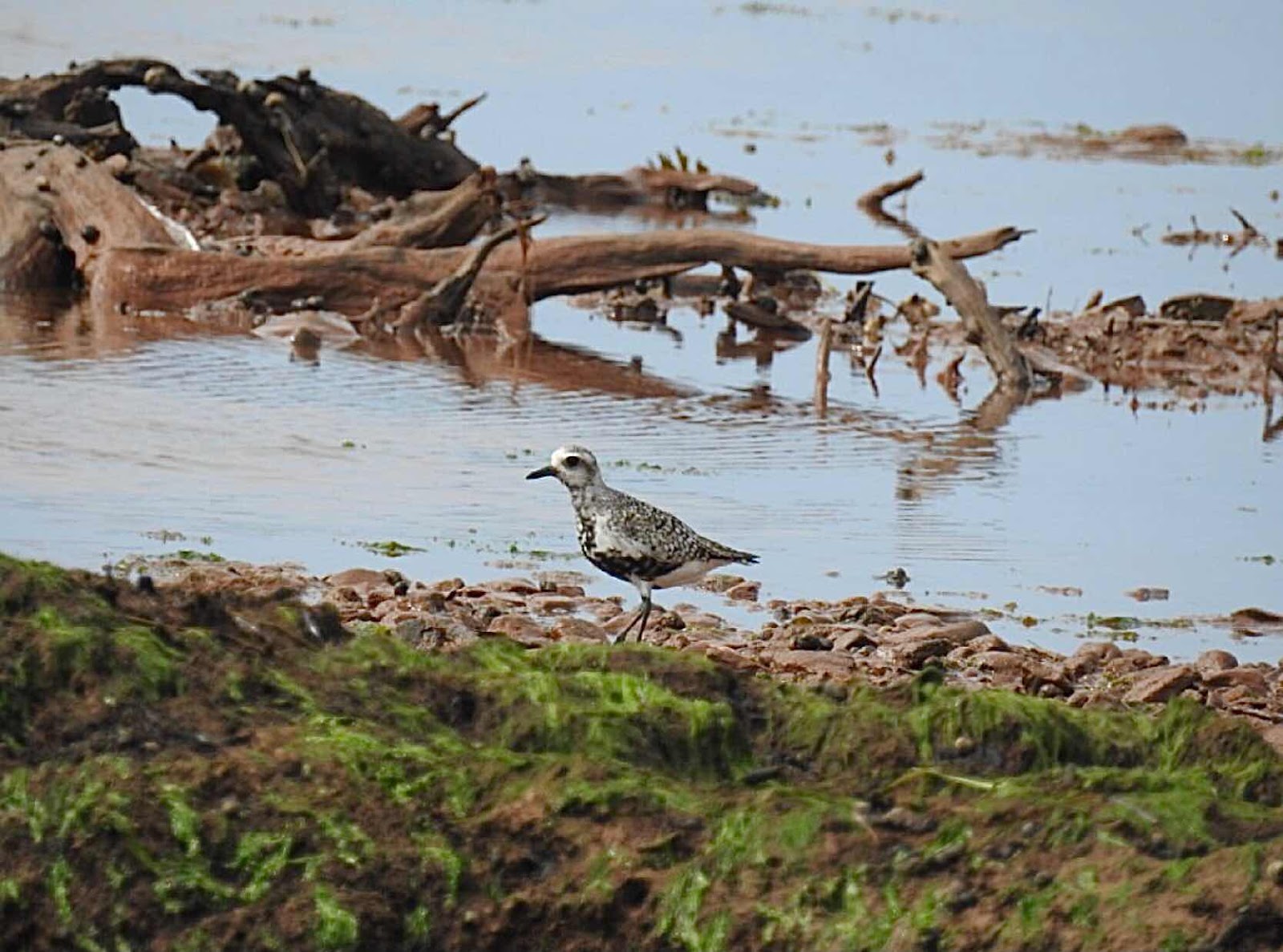
Another day, Black-bellied Plovers stopped for a visit. Eventually I managed a good photo.


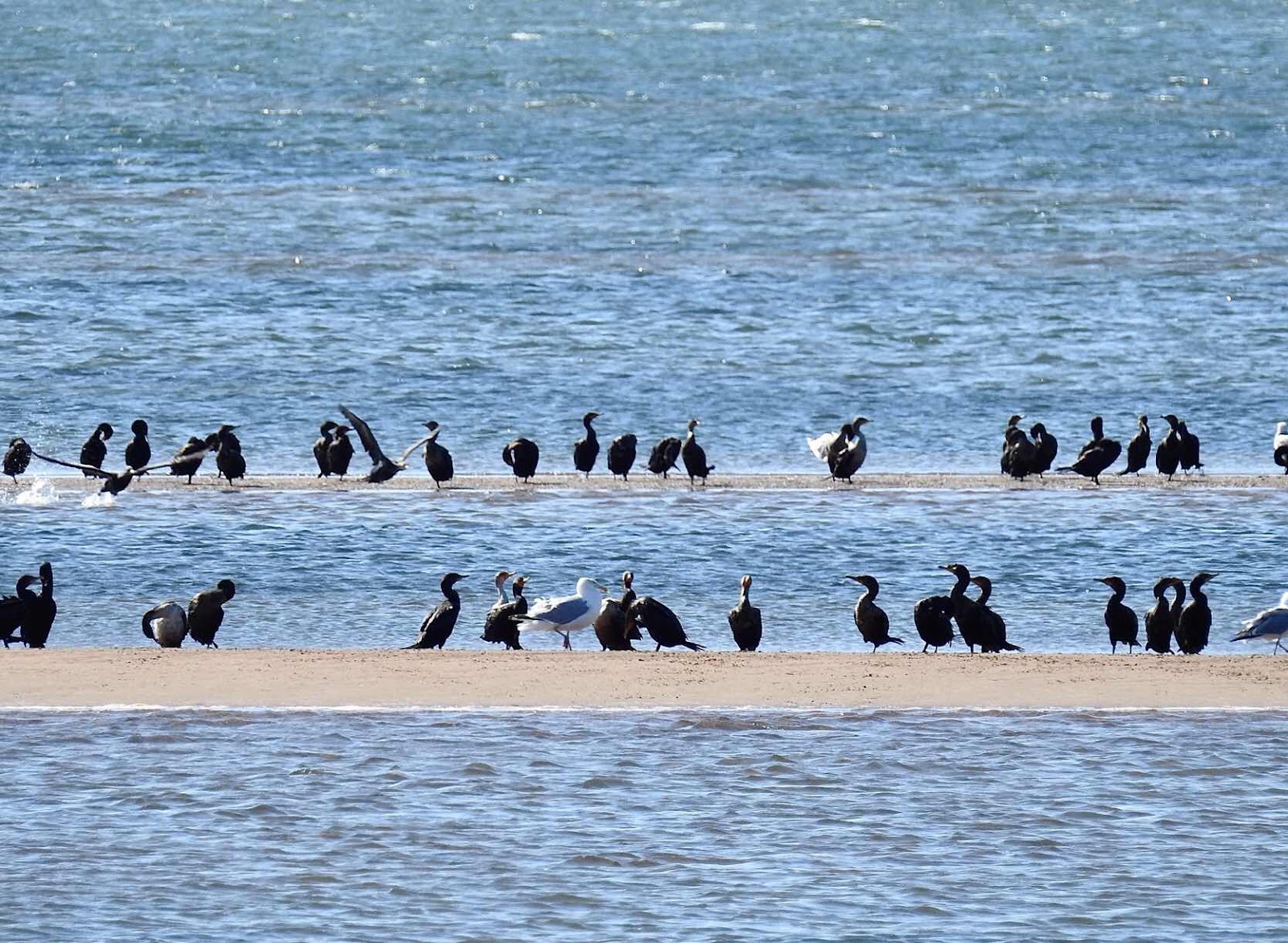
One of my favourite days brought the Double-crested Cormorants from the breakwater


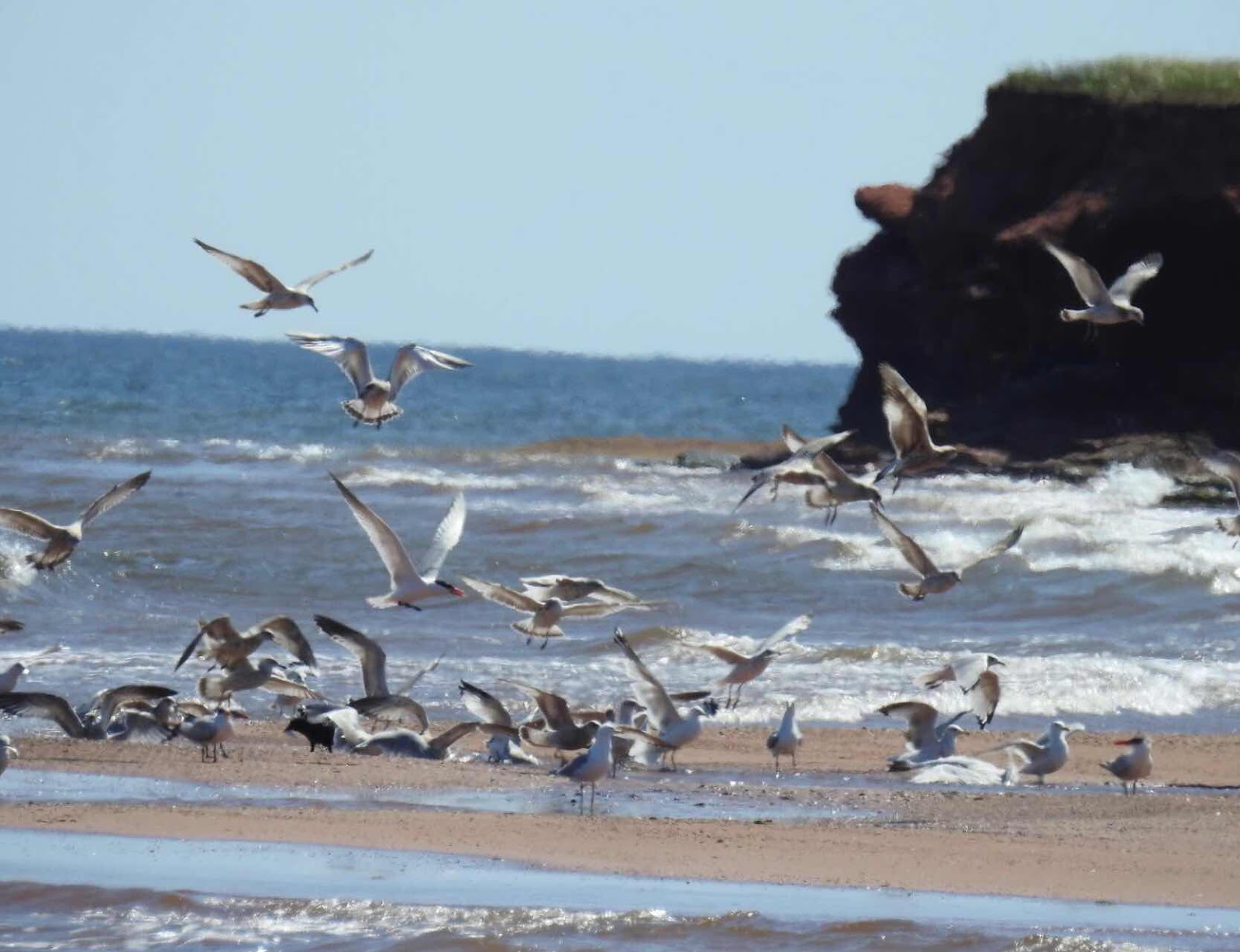
to a sandbar near the old Rifle Range. A few Great Black-backed Gulls sat among them. One could imagine the birds chatting, moving around to speak to friends they spot nearby, waiting for fish to enter the channel. Poor fish, though I would have liked to see that fishery.


                                                                           The Stand

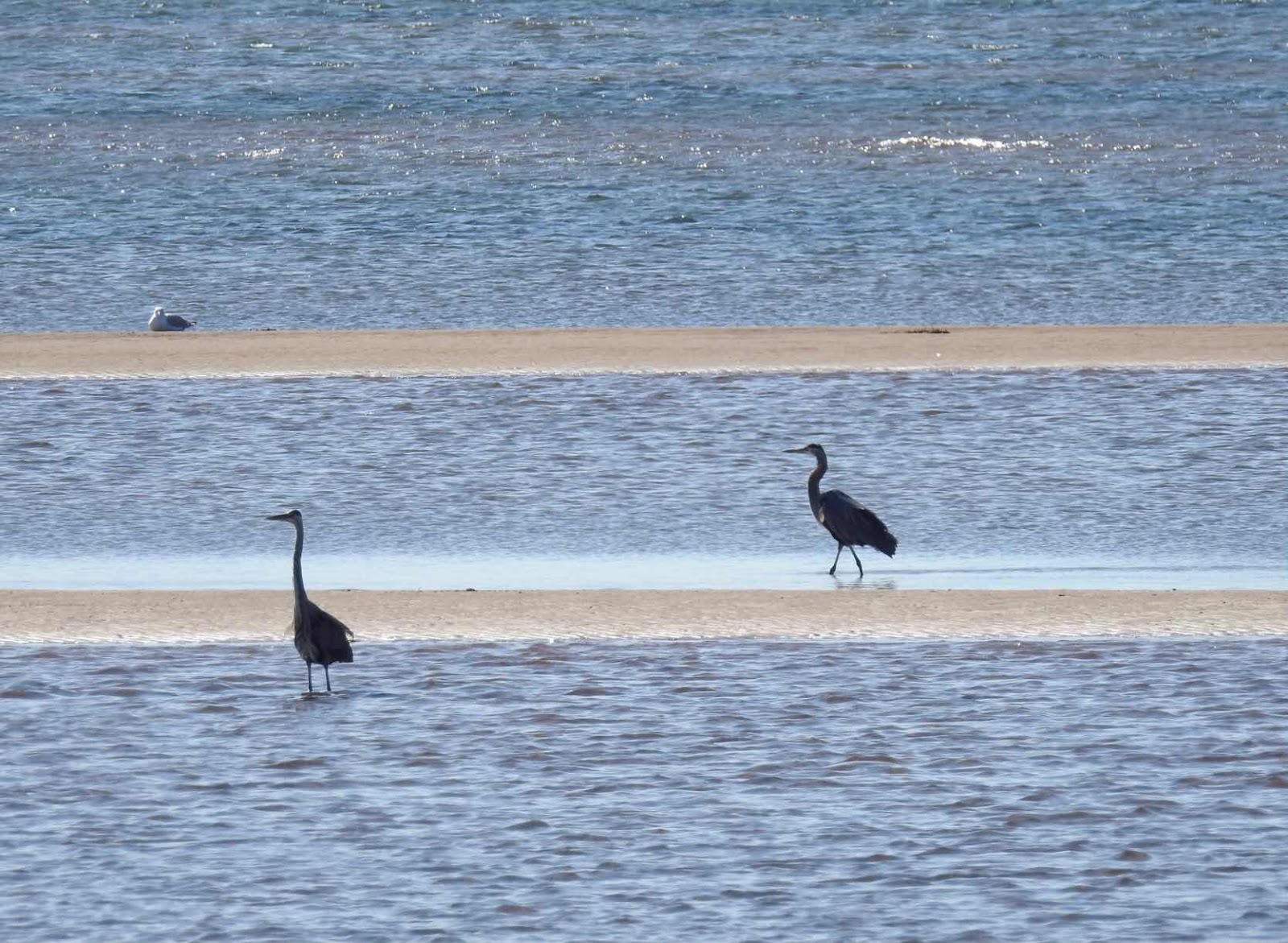
Great Blue Herons were vigilant nearby as well, watching everything with those eagle…rather, heron eyes.


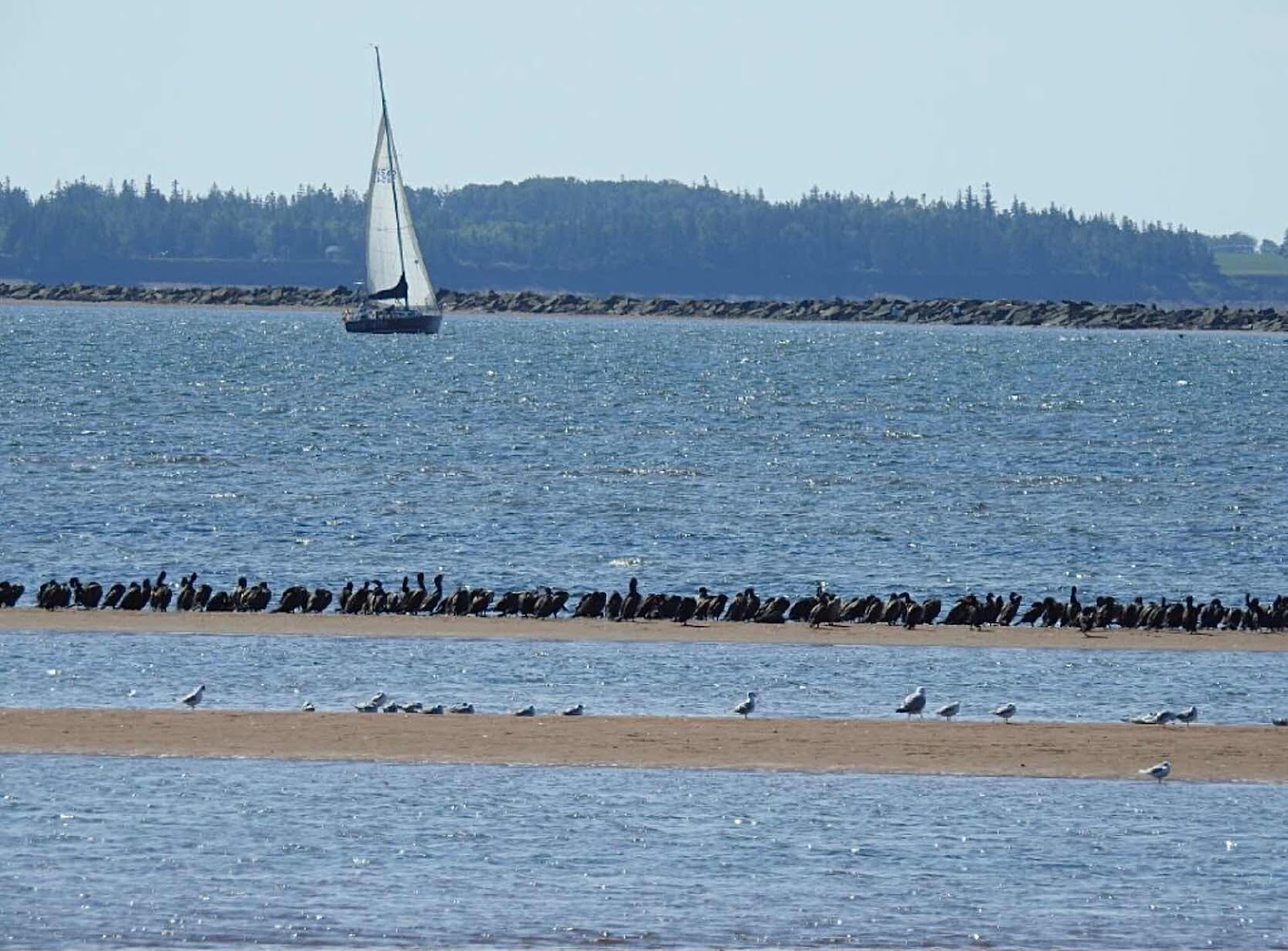
The next day, the cormorants were back at The Stand again, this time, a flock of Bonaparte’s Gulls rested on a sand bar in front of them. There is quite a contrast in size between the cormorants and these tiny gulls.


As often as I can, I sit for a time on a rock or a bench, enjoying the breeze with the sun shining and the wonder of birds spread before me. It is a time when the troubles of the world disappear and all is well for a few precious minutes. Perfect!
Tuesday, 20 October 2020

A great view

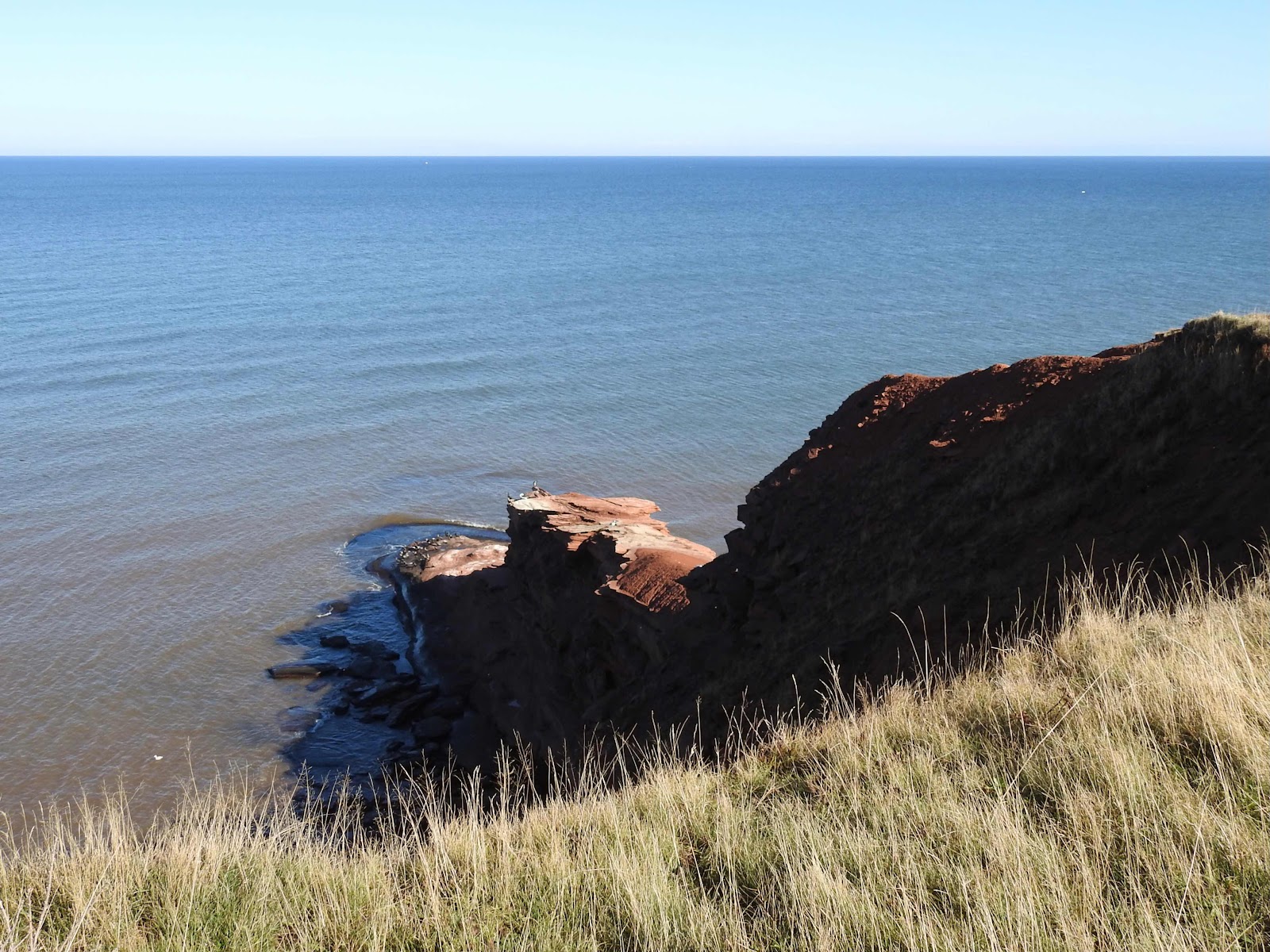
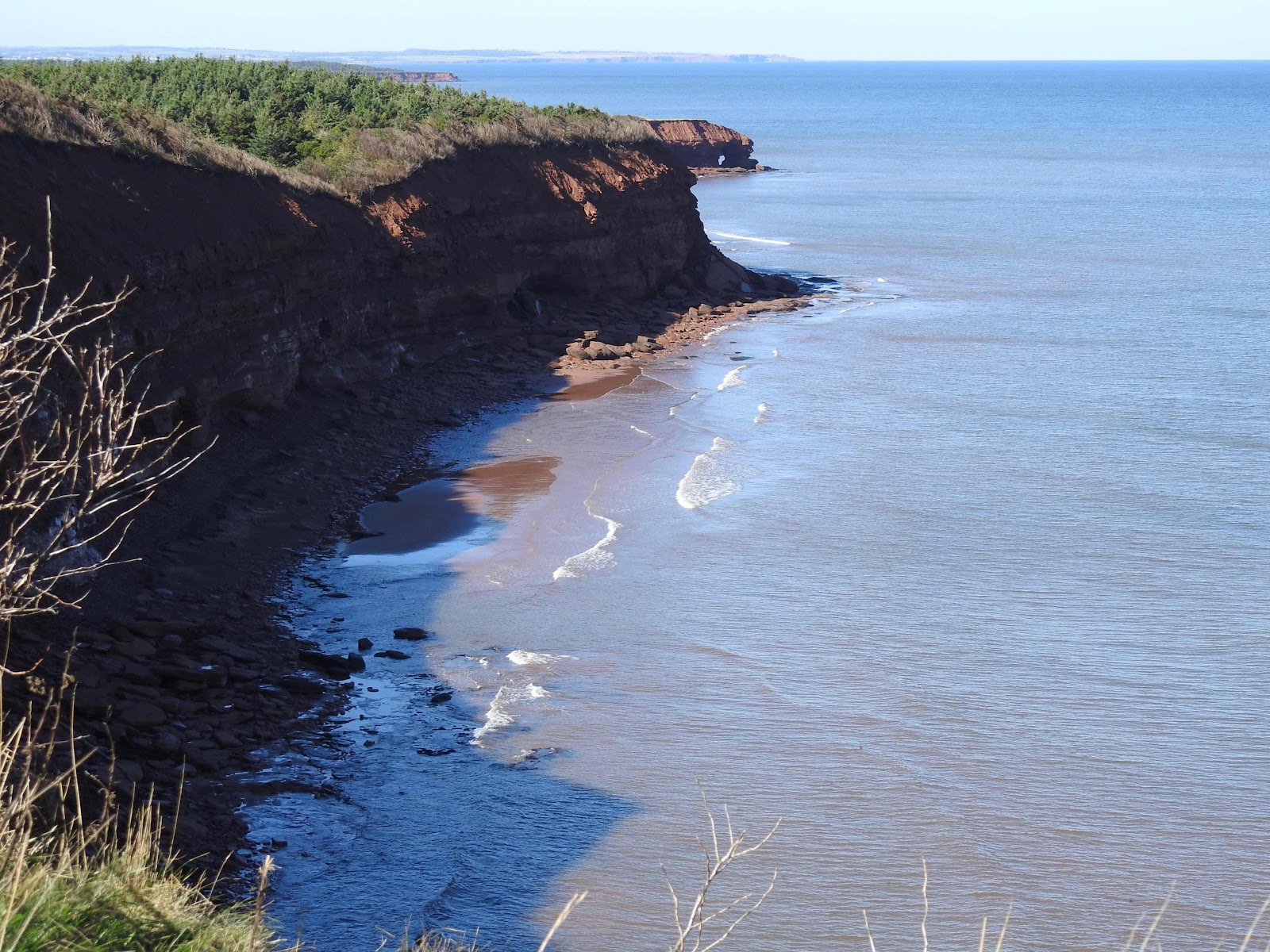
When my husband and I recently cycled on the Gulf Shore Parkway at the National Park on Prince Edward Island, we stopped at Orby Head. From this location along the north shore of the island, you can see the east and west coast on a clear day. And a gorgeous day it was!


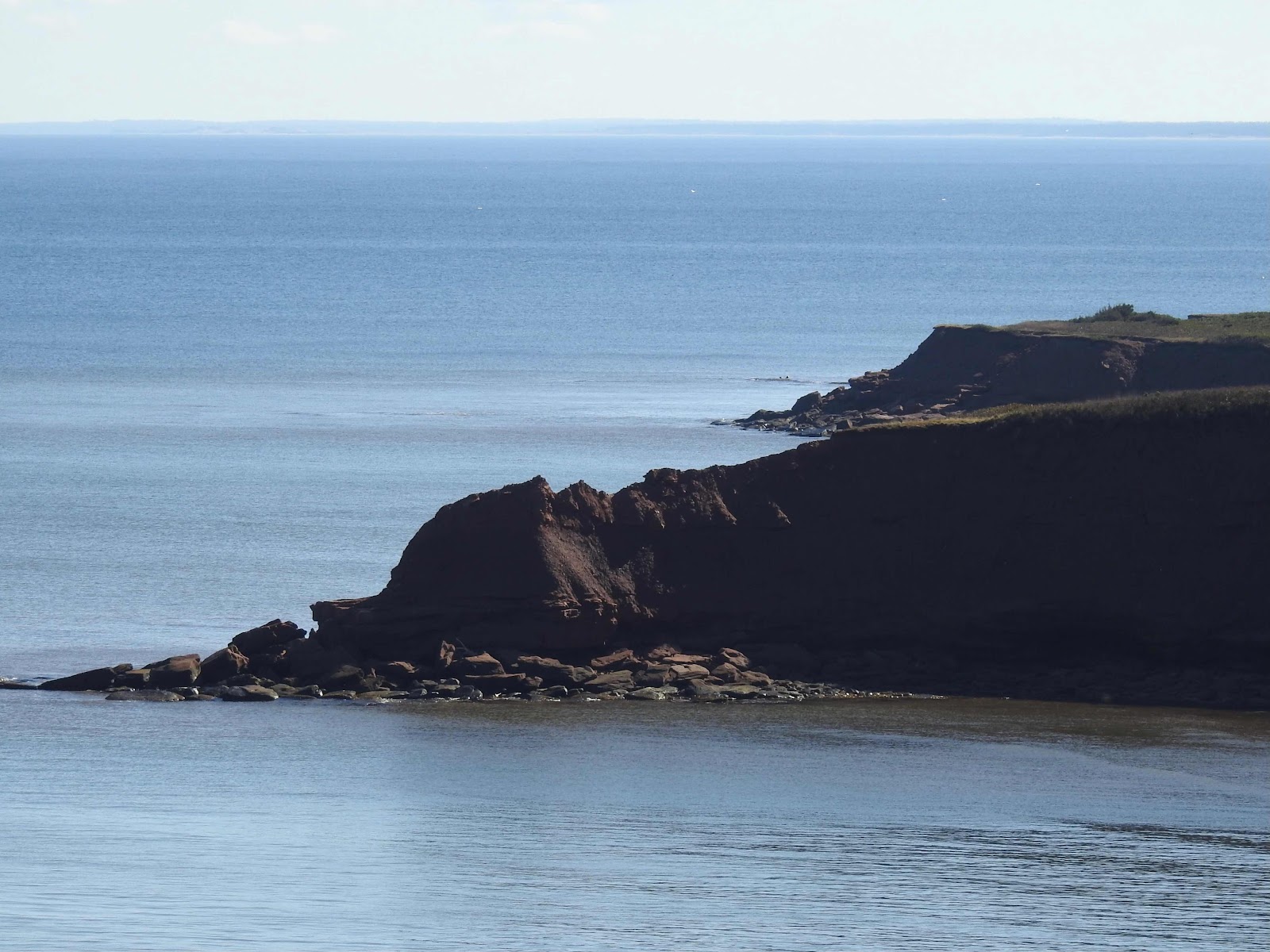
The sandstone shoreline is visible east and west, its redness mostly hidden in the October morning shadows. Looking east, you can see a faint flat line just above the sea. There aren’t any mountains here. 


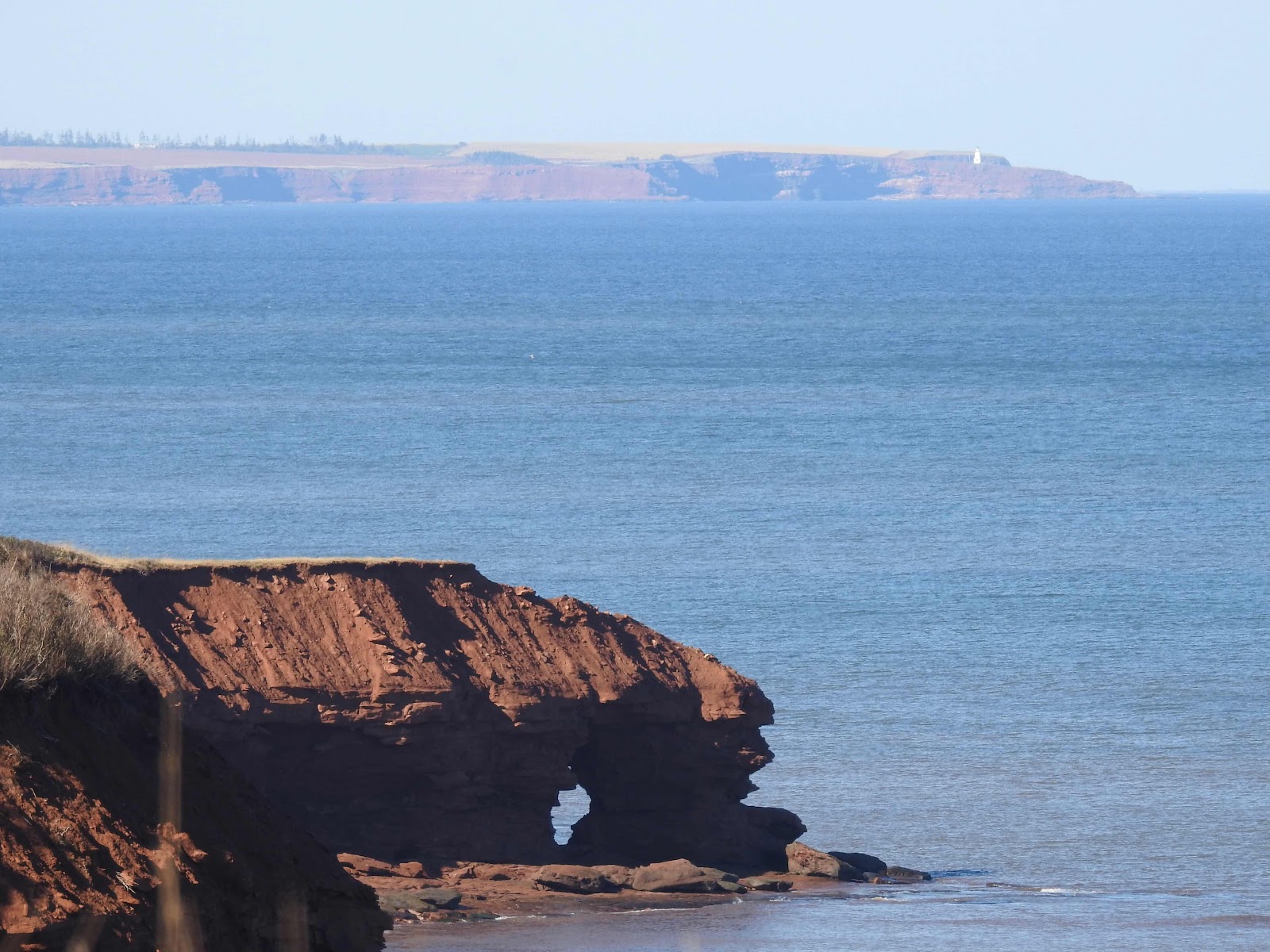
Looking west, the hole in the cliff is nearby, without the bird this time, featured in my last post.


Off in the distance, the lighthouse at Cape Tryon sits above the cliffs just west of a huge colony of cormorants.


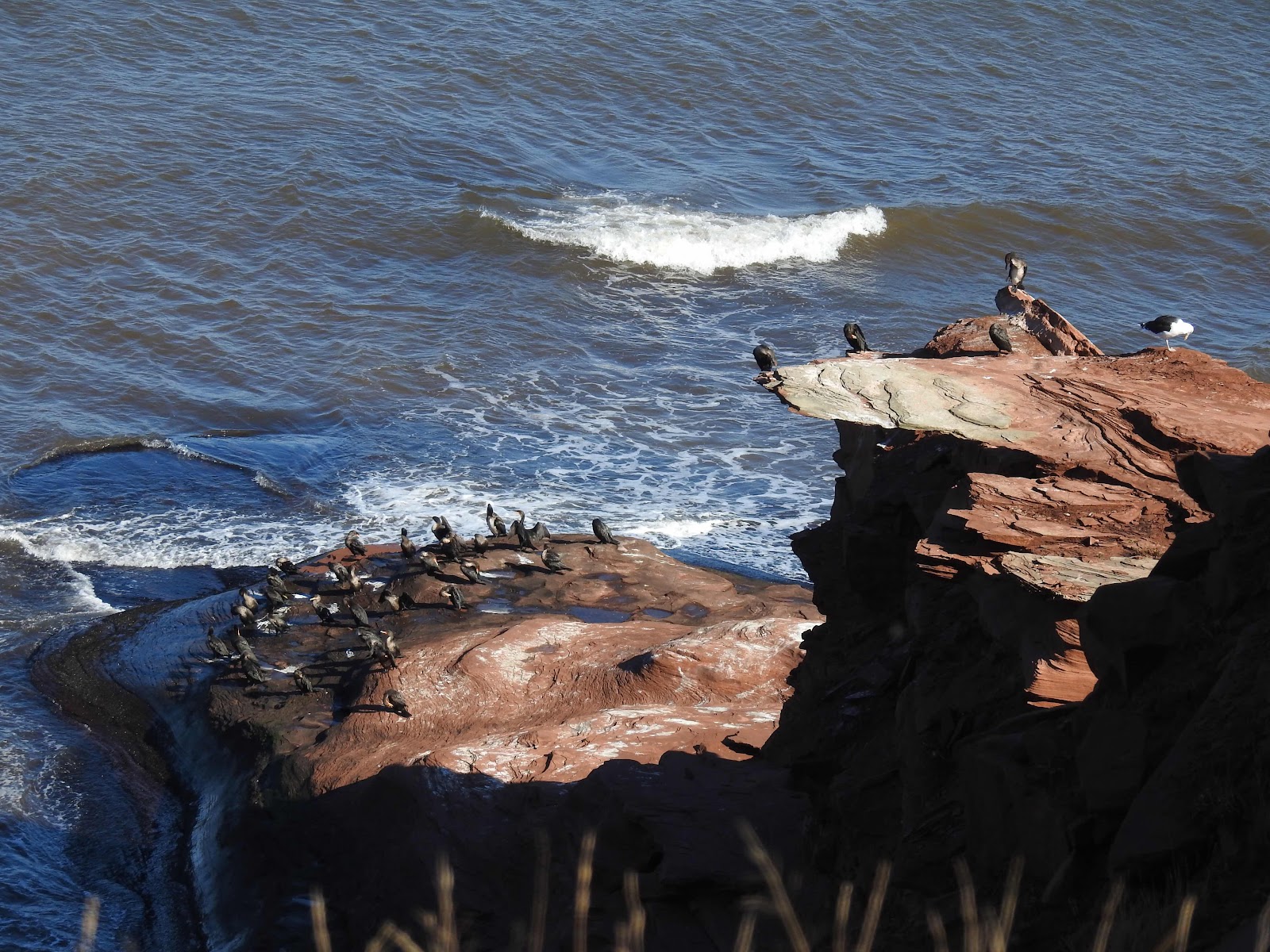
The headland at Orby has eroded mightily over the years and is now a favourite perch for some of the greats, like we see today. 


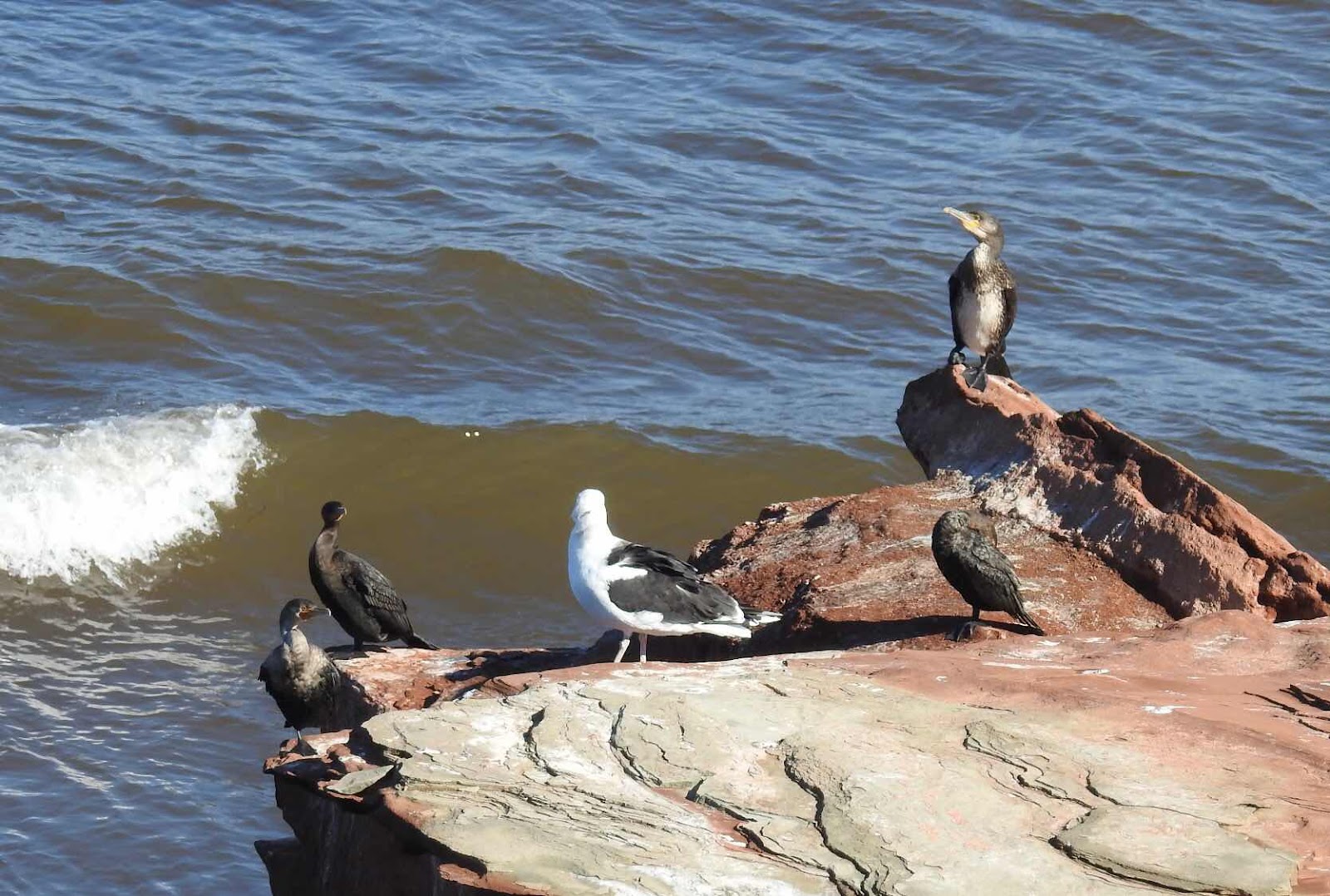
A Great Black-backed Gull and Great Cormorants are sunning themselves in the heat on this ideal location. The gull looks at home among his great friends.


I always enjoy watching cormorants, such unusual pre-historic looking birds. We have many Double-crested Cormorants in the harbour at Summerside. They congregate near the Indian Head Lighthouse during the day and their flight path takes them over our house as they head home for the night. These birds are fantastic swimmers and fly in a loose v somewhat like geese, without the honking. They spread their wings to dry since they have less naturally protective oils than other seabirds.


At Orby, many Great Cormorants were standing on the headland, like this juvenile at the back.


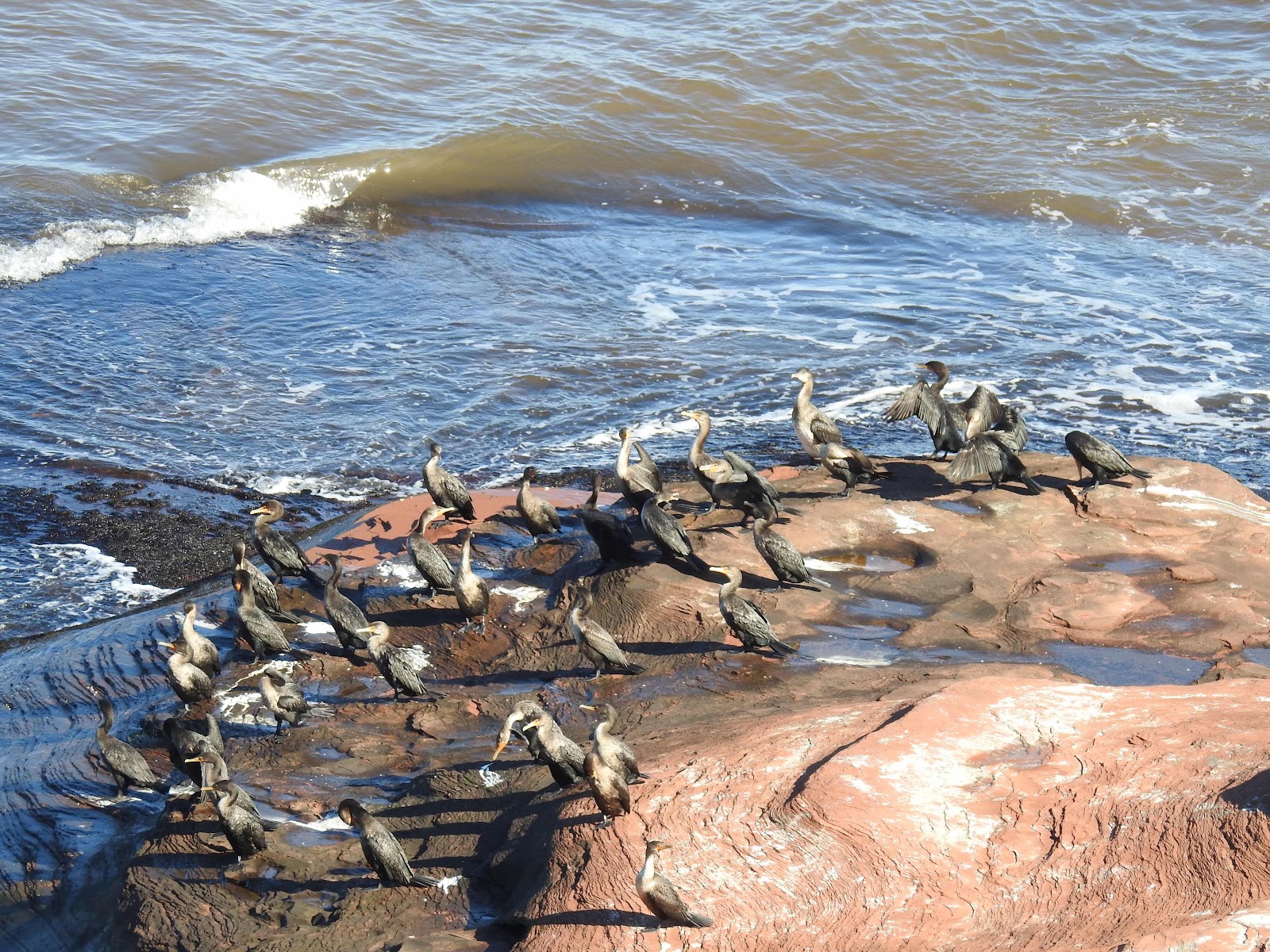
I have never seen this many Great Cormorants together so I was thrilled with this sight. Look at those feet and that face!


Below, closer to the water, others were preening as they stood facing into the westerly breeze. Two birds were fanning their wings having been swimming.


While the setting was impressive as always, the real thrill of Orby Head on this beautiful autumn day was the Great view.


Thursday, 8 October 2020

Along the shoreline

Gulls are a common sight in Summerside along the shoreline and in the harbour in the spring, summer and fall. Some stay year round. When the harbour freezes in December, those birds head for open water around the island. Having lived all my life on eastern Canadian islands, gulls are as much a part of life as the tides. Their calls are synonymous with the sea. 


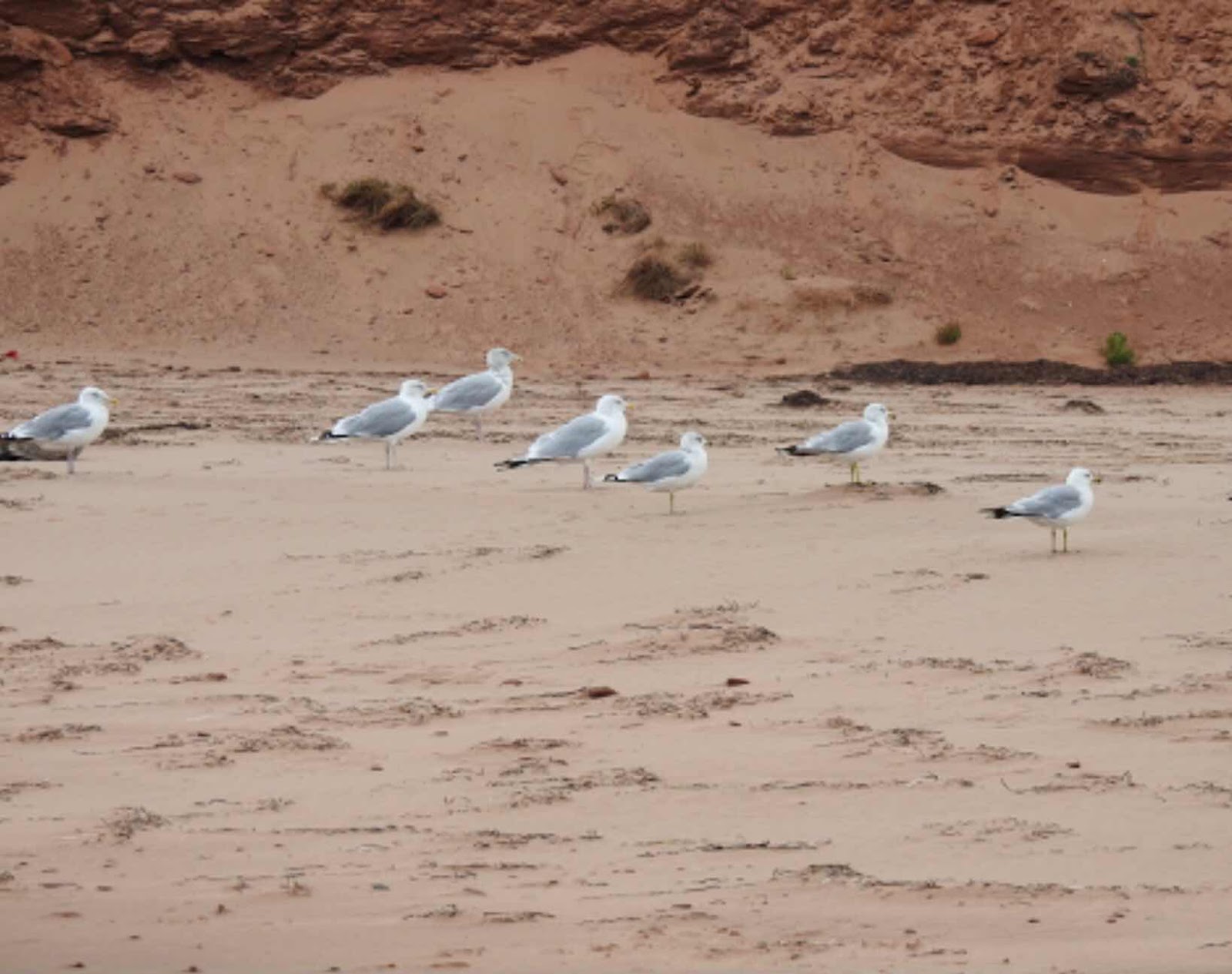
They stand into the wind along the beach like sentinels of the marine environment. 


They glide on the wind as if at play and are the cleaners of the environment as tremendous scavengers. 


There is so much to appreciate about gulls.


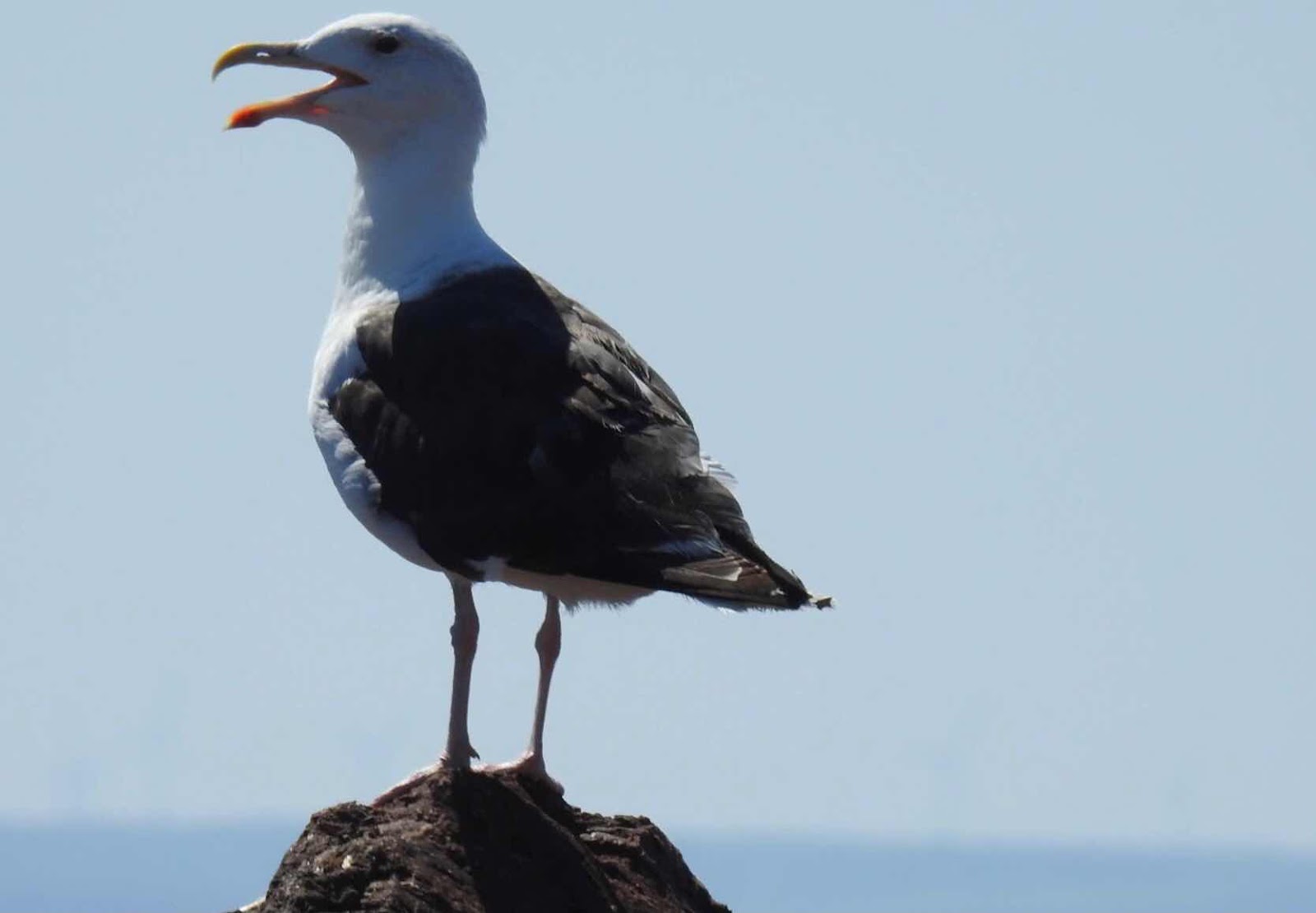
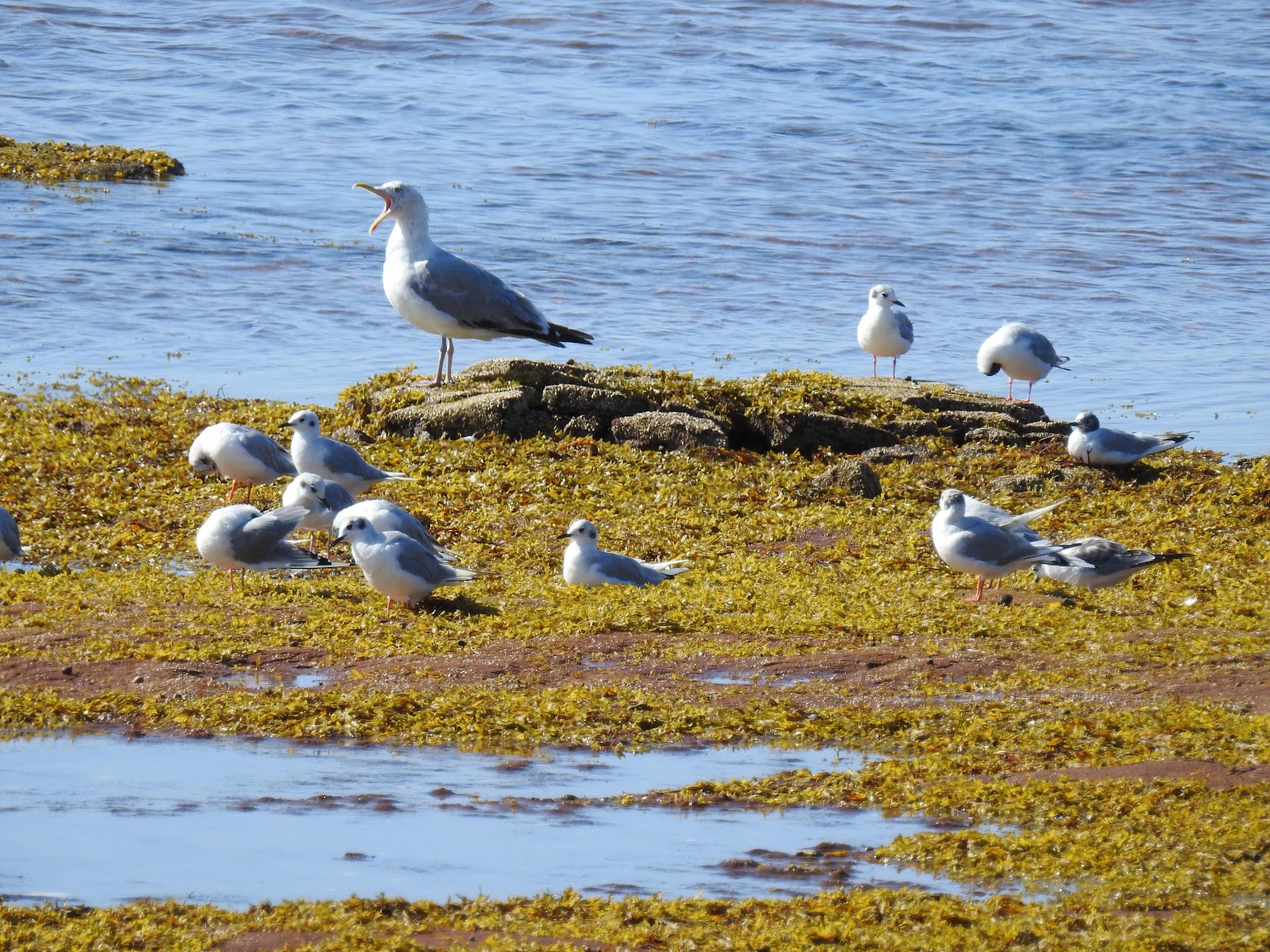
This past summer, my husband and I were interested to see some of the smallest and biggest gull species. Great Black-backed Gulls are the largest gulls in the world. When we have seen them with other species of gulls, they can be aggressive, taking food from the others. 


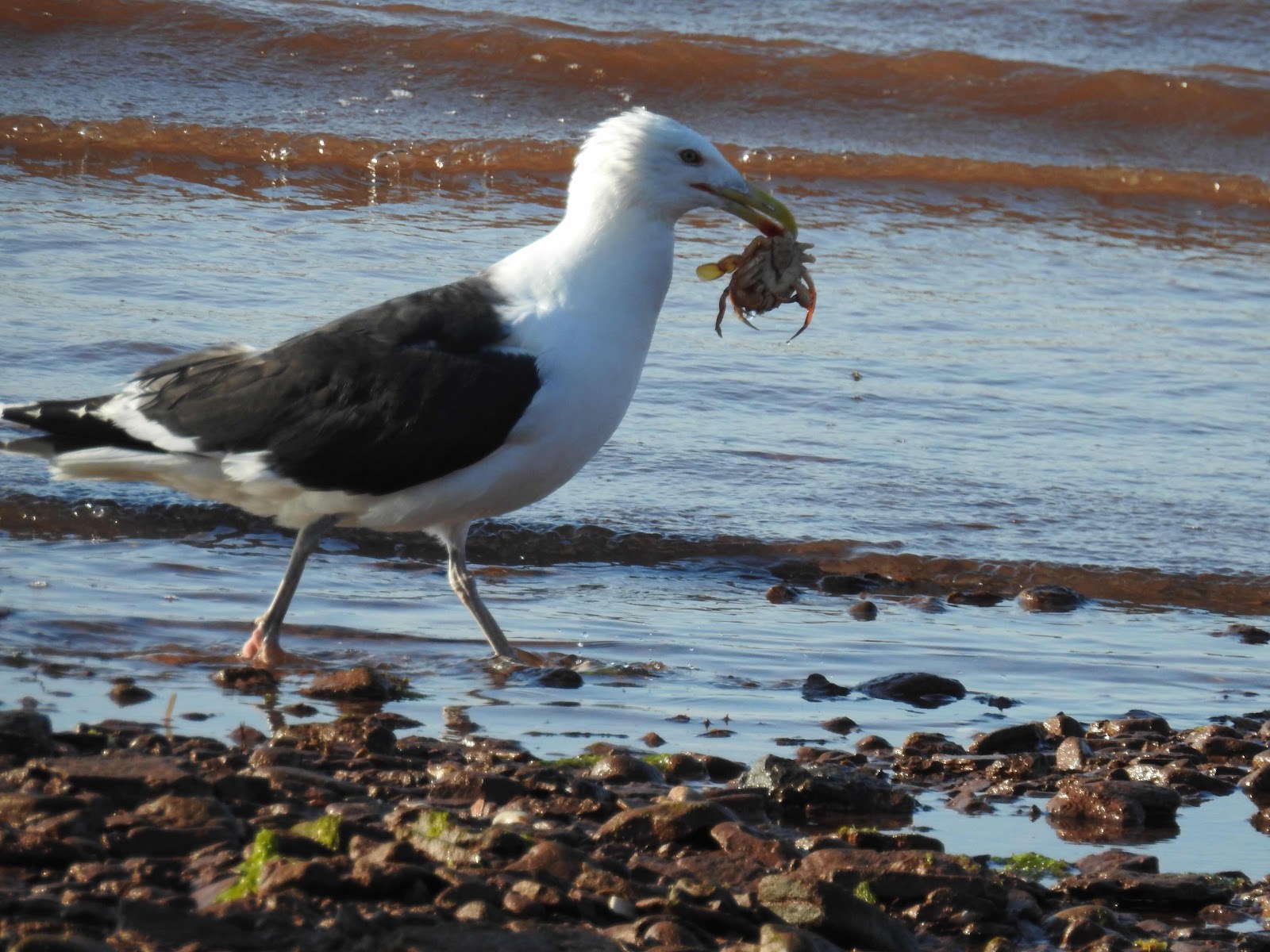
On one occasion though, a Great Black-back with its mouth full of crab, landed in the middle of a group of smaller gulls.


The others wanted the crab but with one lift of its wings, the large bird sloughed off the other birds with a loud cry. They quickly moved away.


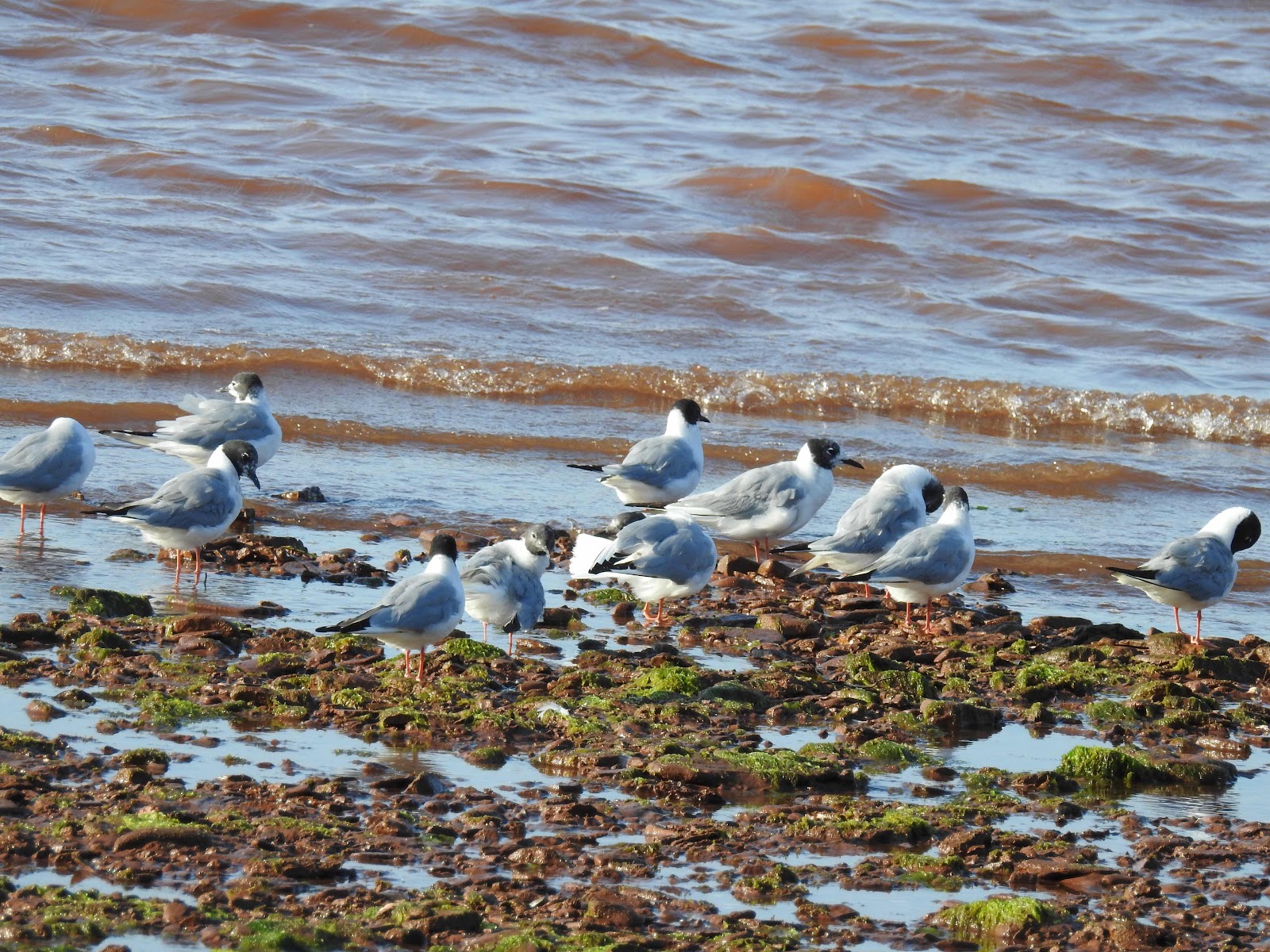
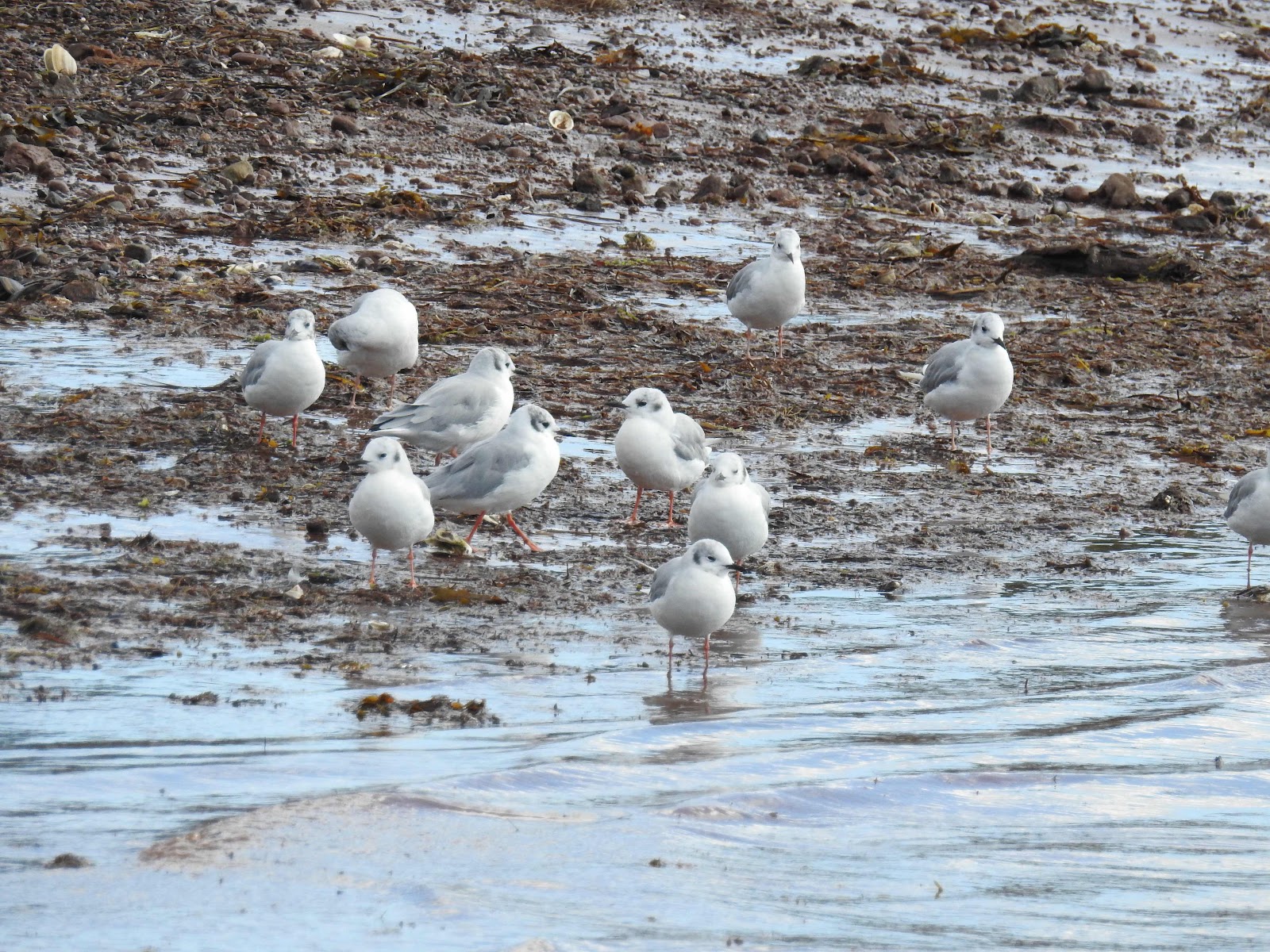
Late July every year, Bonaparte’s Gulls return to Prince Edward Island from their breeding grounds in the northwest. They are among the smallest gulls and are unique among gulls in that they nest in trees. We always see them in a flock, adults as well as immature ones spend time along the shoreline, in preparation for their trip south. They feed along our shoreline for a month or so.


The adults have black heads when we see them in the summer. 


The juveniles have white heads with a black dot behind each eye. 


One of the last times we saw these little gulls this year, they were facing south. I imagine they were pondering the long journey ahead.


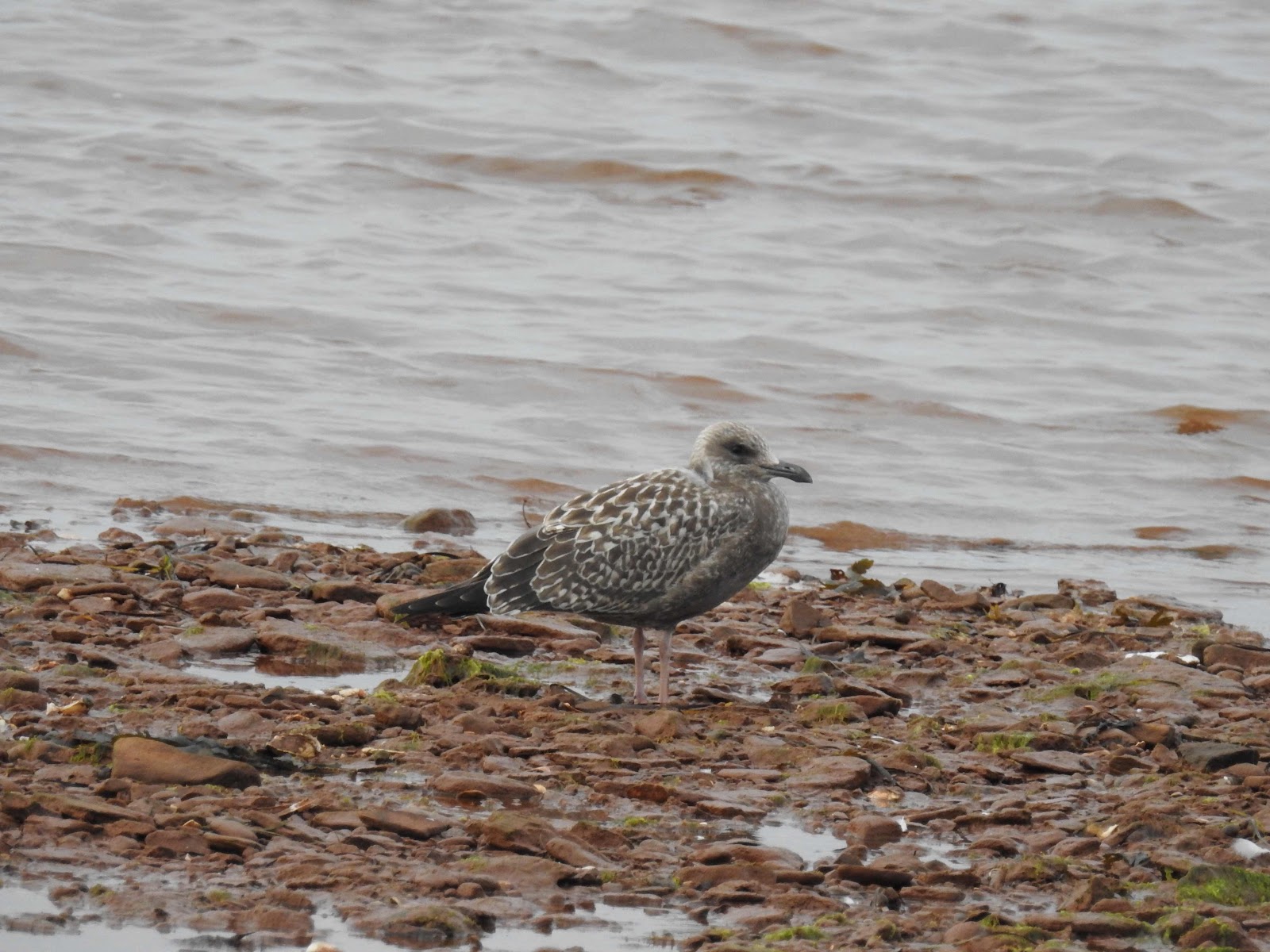
Herring Gulls are common around the island too. They are larger birds and their call is the sound of the seaside I grew up with in Newfoundland.


The juvenile Herring Gulls look different from the adults and with their dark grey brown feathers you would not connect them to the adults of the species.


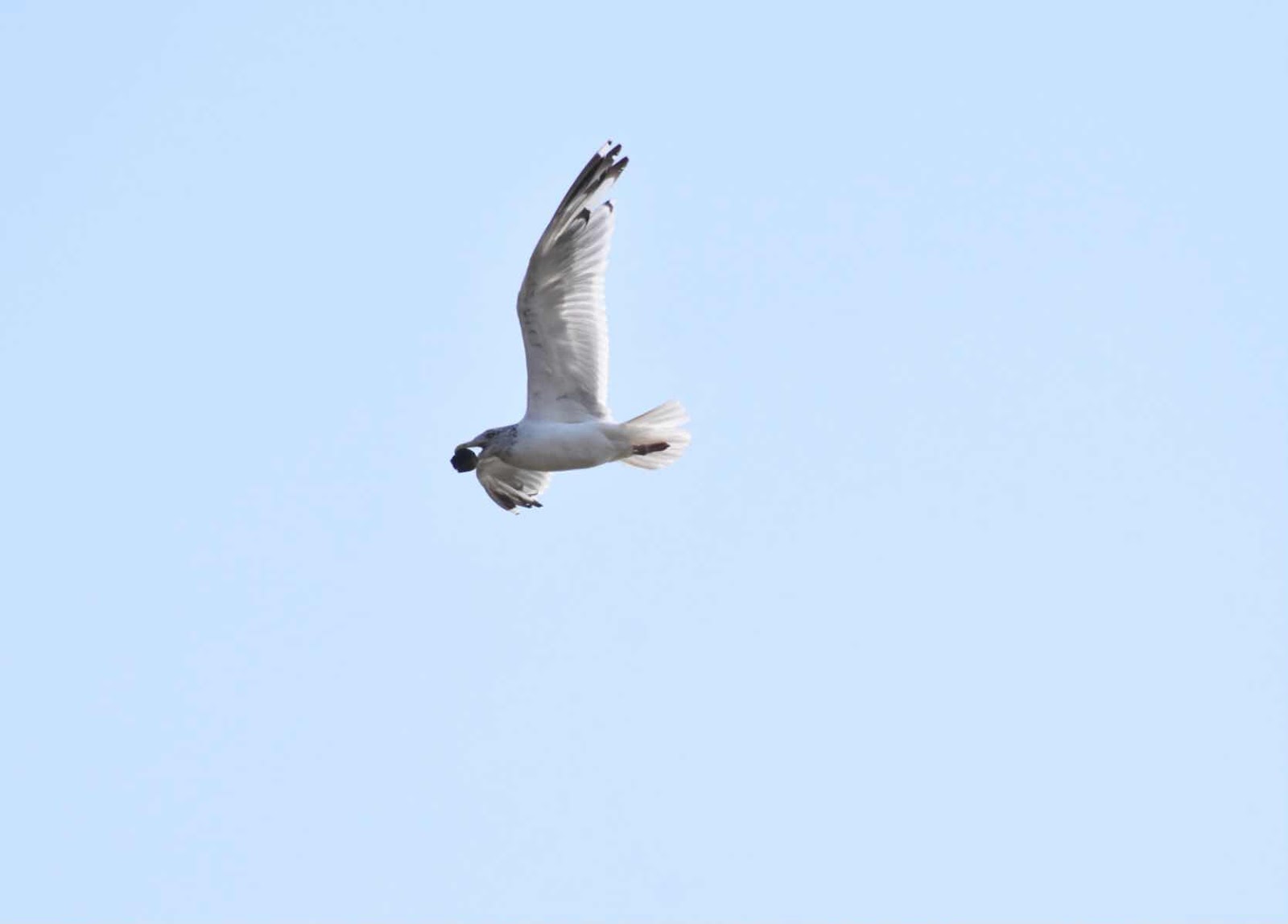
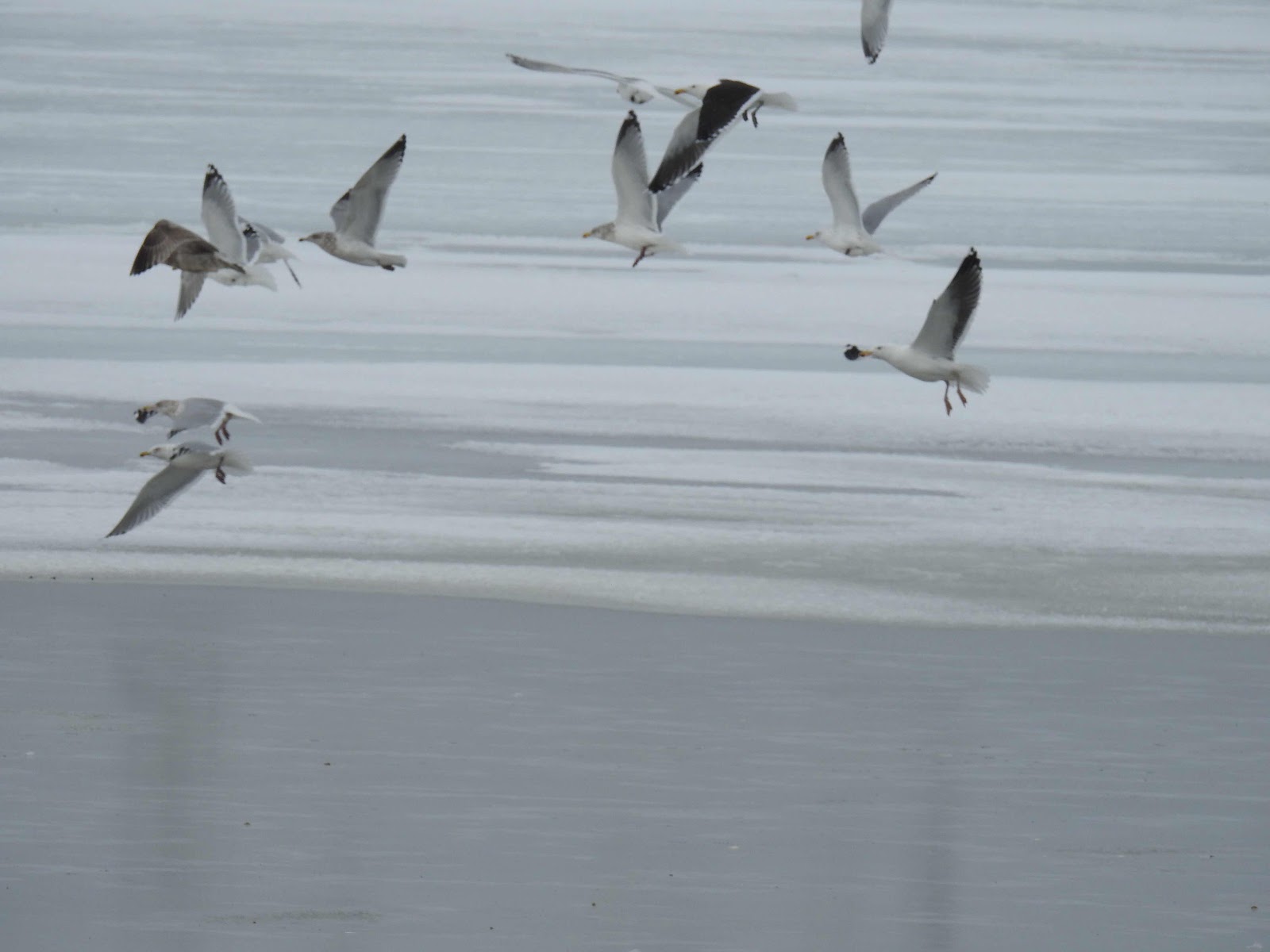
Herring Gulls are some of the birds who drop seafood in shells from a height to break the shell on the rocks below. 


We have watched the Herring Gulls prepare their lunch this way and other gulls last winter did the same as we watched them fly along the Grand River.


While gulls also live in inland parts of Canada, as an east coast Canadian island woman, gulls are as much a part of my life as the sea itself. I cannot imagine life without either.