Most Popular Post

Showing posts with label cormorants. Show all posts

Sunday, 29 September 2024

Early autumn


It was a wet morning as we headed to Covehead and nearby Tracadie Beach on the north coast of the island, east of home. We were meeting our Australian friends, Frank and Helen* there. We were lucky the rain stopped but the sky was spectacular, overcast with shades of blue. It was a picture perfect day!
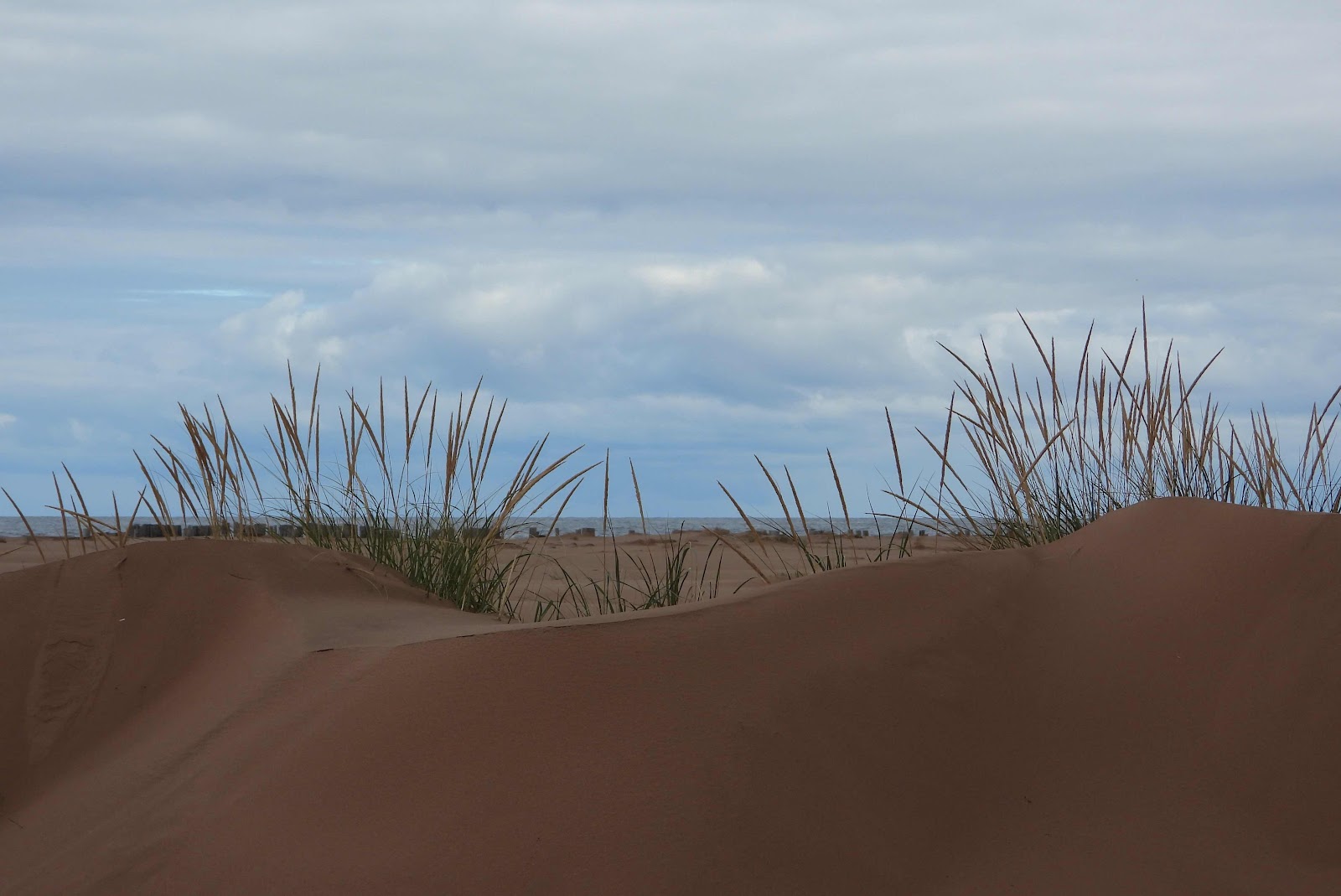


At Tracadie, the remains of a 19th century fishing wharf spread across the sand, 


the pylons weathered but still surprisingly strong despite their age.


The dunes in the distance protect the area against the ravages of a stormy sea.


Like last year when we visited, a Bald Eagle was atop the tallest dune, surveying his domain. We suspect eagles nest nearby. 


Later, at our favourite picnic area near Bubbling Springs, we had a leisurely lunch before we stopped by the lighthouse at Covehead. There we walked past the lighthouse onto the beach and under the nearby overpass. 


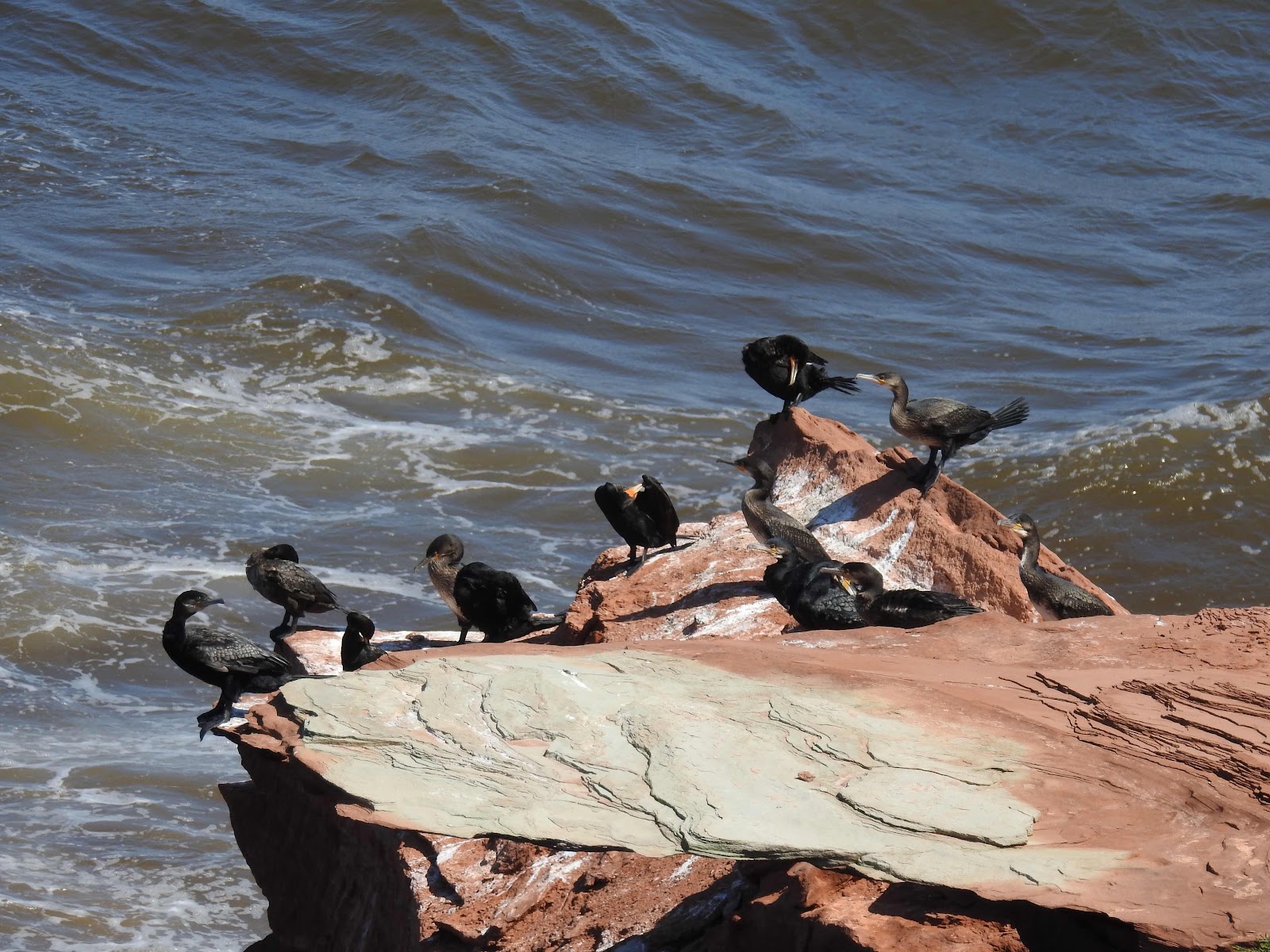
Across the inlet, a flock of Double-crested Cormorants congregated. It always amazes me how tattered the birds can be, yet they manage to fly so well. I wonder how the most tattered ones do during their migration south which will begin soon?


Our walks this week included the Confederation Trail with Daisy, the golden grand-dog, before she went home. We spotted this old building, nestled into the countryside. 


It may collapse from the snow this coming winter. What stories can the old place tell?


I was lucky to photograph this White-throated Sparrow along the boardwalk. The Sparrows are in abundance there this time of year.


The birds, as tiny as they are, are just as interesting as the Great Blue Herons, but much harder to spot and photograph.


On our recent visit to the national park at Covehead, driving along the parkway, I counted at least 30 Great Blue Herons in Covehead Bay. It is impossible to stop there so I couldn’t photograph the beauties. However, the Heron which frequents the salt marsh along the boardwalk in Summerside was present this past week and I managed some photos again.


My favourite was taken from the bridge looking towards the marsh where the bird stealthily fished.


Another day, the Heron waved from a tree top which is a rare photo in this area.


Along the boardwalk, the trees have the look of early autumn. We will head to some of our favourite trails to see the autumn colour over the next month.


We are fortunate to be able to enjoy the beauty and variety on our island home.


*You can see Helen’s blog at http://outandabout3.blogspot.com/. 

Sunday, 28 April 2024

Spring by the sea

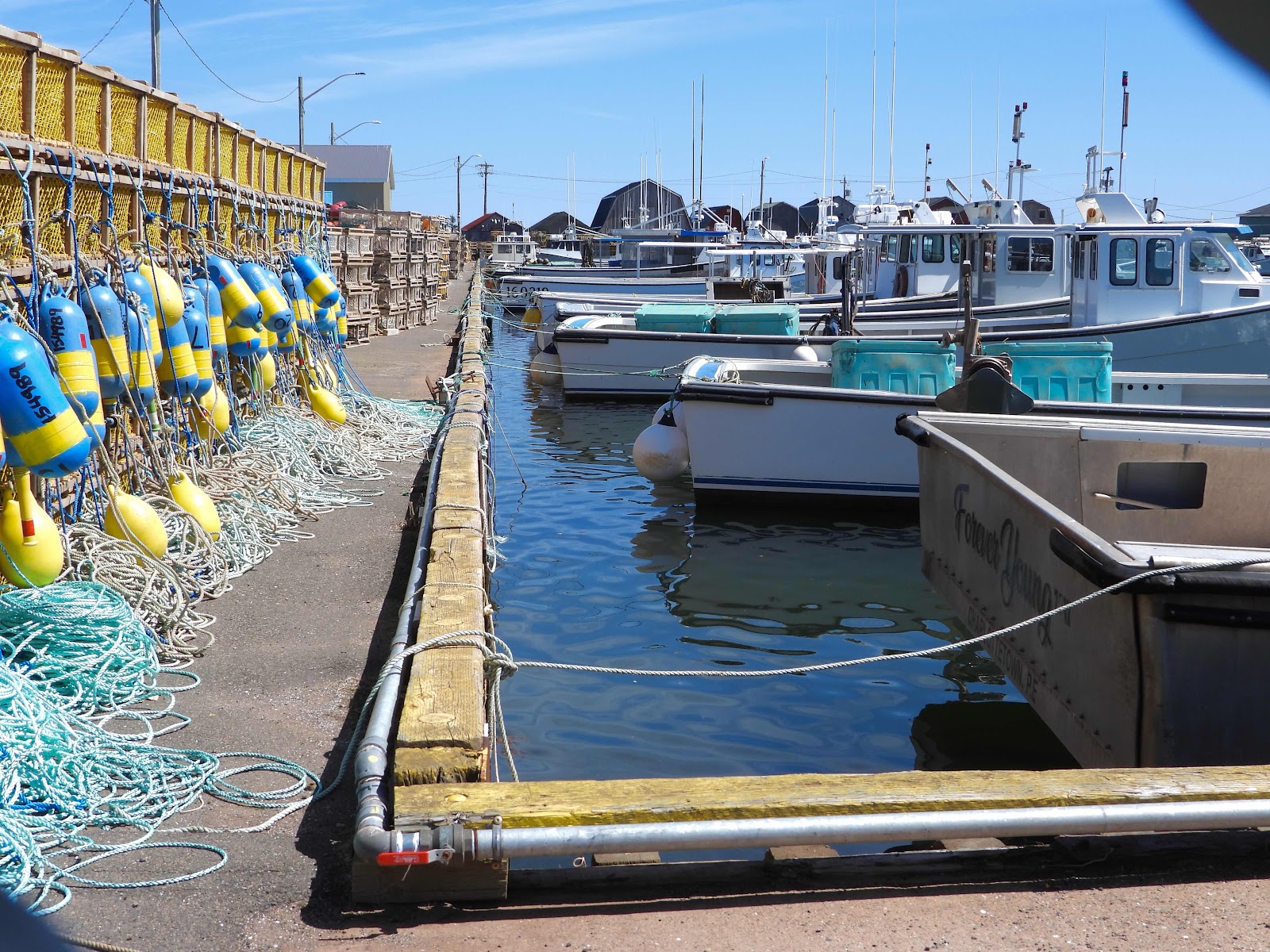
The spring lobster fishery has begun on parts of Prince Edward Island and another area opens today. My husband and I like to visit Malpeque prior to the season opening to see the activity around the wharf after a quiet winter. 


This week, all of the boats are ready to go. The traps have the buoys attached and will be baited before loading.


This past week we had our first meal of crab this season. Crab and lobster are wonderful treats from the sea and we look forward to our first lobster for Mother’s Day.


Meanwhile, at Malpeque, we always watch for herons and one was nearby feeding in the marsh.


In the river nearby, cormorants took flight and the water sparkled around them.


We walked the beach at Brander’s Pond one day too. It was another beautiful day but cold. Winter clothes are still in use since even without any wind, the air is still frigid. Meanwhile, the sea stack at Brander’s survived another winter and the sea sparkled in the April sun.


From the boardwalk this week, it was easy to see the Confederation Bridge in the distance. 


Along the Rotary Trail, the path disappears in the distance and is intriguing enough to keep us going.


We look forward to new adventures this week. Maybe it will be warm enough to have our first picnic for this year.


Sunday, 7 April 2024

To the park

The grips of winter on the island have loosened and snow and ice are gone. One day this past week, my husband and I woke to a sunny day and a forecast of 9 degrees Celsius. After days of rain, it was a perfect day for an excursion to Cavendish, our first for the year. 


We love the area of the National Park on Prince Edward Island, the trails, beaches, dunes and ponds. The park has been a source of immense enjoyment over the years and we look forward to spring as it heralds months of enjoyment in the park and elsewhere on the island.


Our first visit left us feeling sad however. Over the last few years, the erosion in the park has been dramatic along the coastline. Orby Head, where one could look east and west along the shoreline from the centre of the island, is gone. The shoreline above the cliffs is undermined so much the area isn’t accessible any more. We always watched the cormorants who hung out at Orby and this is one of my last photos of them.


At the look-out in Cavendish, damage to the boardwalk from Fiona is being removed and the area returned to nature while a new boardwalk and look-out are under construction. 


The area which had tables where we had picnics, even in winter, is no longer accessible since it is undermined too.


Elsewhere, as we walked along the trail by Clark’s Pond,


it is shocking to see how many more trees have come down this winter. 


Here, Bald Eagles, gorge on the fish in Clark’s Pond which migrate from the sea up-river to spawn. The eagles will have to compete for a place to rest atop a tree as they allow their food to settle before heading back to their nesting areas.


This young Bald Eagle, 


between 2 and 3 years old was a bit early for the smelt run which is beginning now. This one looks like it has been through a rough time resulting in mangled tail feathers. You can see in the photo that snow was falling in Cavendish despite the sunny day in Summerside. We hope to get more photos of the Eagles this coming week. 


Meanwhile, the western portion of the island will experience the total solar eclipse today. We hope to find an uncrowded beach location later to view the eclipse using our solar glasses.


Also, another natural phenomenon which is on-going these days is  iceberg season off the coast of Newfoundland. Most bergs are broken pieces of glaciers from western Greenland and a small percentage are from Canada’s Arctic. They travel through the Labrador Sea south along the coast of Labrador and eventually off Newfoundland in the North Atlantic.


I always enjoy seeing the incredible photos and videos of the icebergs which are posted on the Facebook page, Newfoundland and Labrador Iceberg Reports. If you put that name in Facebook Search on top of the Facebook Page, the site will come up. You can browse or add it to your feed.


Despite the changes to the park, nature has a lot to offer us this week. We hope to enjoy it to the fullest.


Sunday, 12 November 2023

Two blue sky days

We have had two weeks of rain, temperatures in the low single digits and high winds. Sometimes the rain becomes sloppy, wet snow. We haven’t been able to have any picnics and we’ve confined our walks closer to home. Most days, we walk between the raindrops. 


The skies are occasionally dramatic with heavy cloud cover and this recent deep blue with the clouds looked foreboding though beautiful. It was the bluest cloudy sky we’ve ever seen.


On the last beautiful blue sky day prior to the change in the weather, we drove to a beach which is new to us at Tracadie, on the central northeast coast of the island. Tracadie Harbour sits among sand dunes, an area constructed by the sea itself, without the fortification of sandstone cliffs.


In the harbour, the sea is surrounded by flats of sand exposed at low tide and dunes which are farther inland as time and the sea add more sand. The red sandstone cliffs elsewhere on the island are noticeably absent.


Cormorants stood along the shoreline in the harbour, enjoying the October sun, probably anticipating the long flight south.


We walked towards the beach which borders the Gulf of St. Lawrence and a Bald Eagle caught my eye in the distance. It sat surveying the area from atop a dune along the Gulf coast.


Along that coastline, the pristine beach stretches out to the west and appears to go on forever. 


This coastline is not developed although an occasional house/cottage dots the shoreline. To the east, the entrance to the harbour is marked with two buoys. 


The remnants of an old wharf stretch diagonally across part of the beach, some of it submerged at high tide. 


Besides the eagle, 


three other people were on the beach that day but a restaurant near the parking lot was attracting people for lunch. We enjoyed our picnic lunch nearby. 


Tracadie is a place of rare beauty which is peaceful and natural in a modern world. We will be back.


Sunday, 8 October 2023

A day at North Cape

One of our most memorable outings ever was to North Cape on Prince Edward Island which we visited recently. We saw on social media about seals at North Cape and changed our plans that morning in the hope of spotting some. We weren’t disappointed with the seals but they were a small part of the experience that day.


North Cape is on the northwest tip of the island and on a beautiful autumn day, the hour drive was enjoyable. When we arrived, the seals were obvious, 


on the rock reef, part of the longest such natural reef in North America. There the waters of the Northumberland Strait and the Gulf of St. Lawrence merge.


Double crested cormorants and a variety of gulls enjoyed one end of the reef 


while the seals took up two areas at the far end. 


Looking at the water nearby, bobbing heads of the furry mammals basked in the sun between fishing forays into the briny blue. 


Meanwhile, human fishers shared in the bounty of marine life as well.


We walked along the shoreline to the sea arch in the area which has greatly expanded since our last visit. Storms may make a sea stack out of this arch in the near future.


The trails along the shoreline are lined with grass which was full of crickets in an orchestra that was loud but tuned. As we walked by, dozens of Savannah Sparrows flew out of the grass and flew nearby, waiting for us to pass so they could continue lunch. This one landed on a nearby rock on the shoreline.


We had lunch at the head of the Black Marsh Trail, and listened to the sounds of the crickets and the sea. Afterwards, we walked the trail and watched three Turkey Vultures as they sailed on the thermals above the shoreline, smelling and looking for carrion. 


The trail meanders along the edge of the shoreline and through trees nearby. One viewing area lets observers see what lies ahead. 


The wind turbines in the scene always give me hope that one day, humankind will be easier on our environment.


At the black marsh, we sat and looked out over the landscape, a marsh which is familiar to Newfoundlanders like us, containing cloudberries and pitcher plants. 


We continued on to the sea stack, past the remains of the trees along the shoreline. Weathered by sea spray and wind, they stand as sculptures created by nature’s hand.  


When we arrived back near the reef, we noticed sea birds enjoying the area too, floating around among the seals bobbing in the water. Eider Ducks, Scoters and Mergansers added to the nature quest for the day. 


Nearby, a small flock of Sanderlings landed on the rocks in front of us.


On the way home, we stopped at St. Simon and St. Jude Roman Catholic Church to see man’s creation compared to the natural one we had just left. 


The church is a beauty, with some stained glass windows, not often seen in island churches. Its ceiling is reminiscent of a night sky.


It was a gorgeous fall day on the island and at every turn, there was something to appreciate and enjoy!