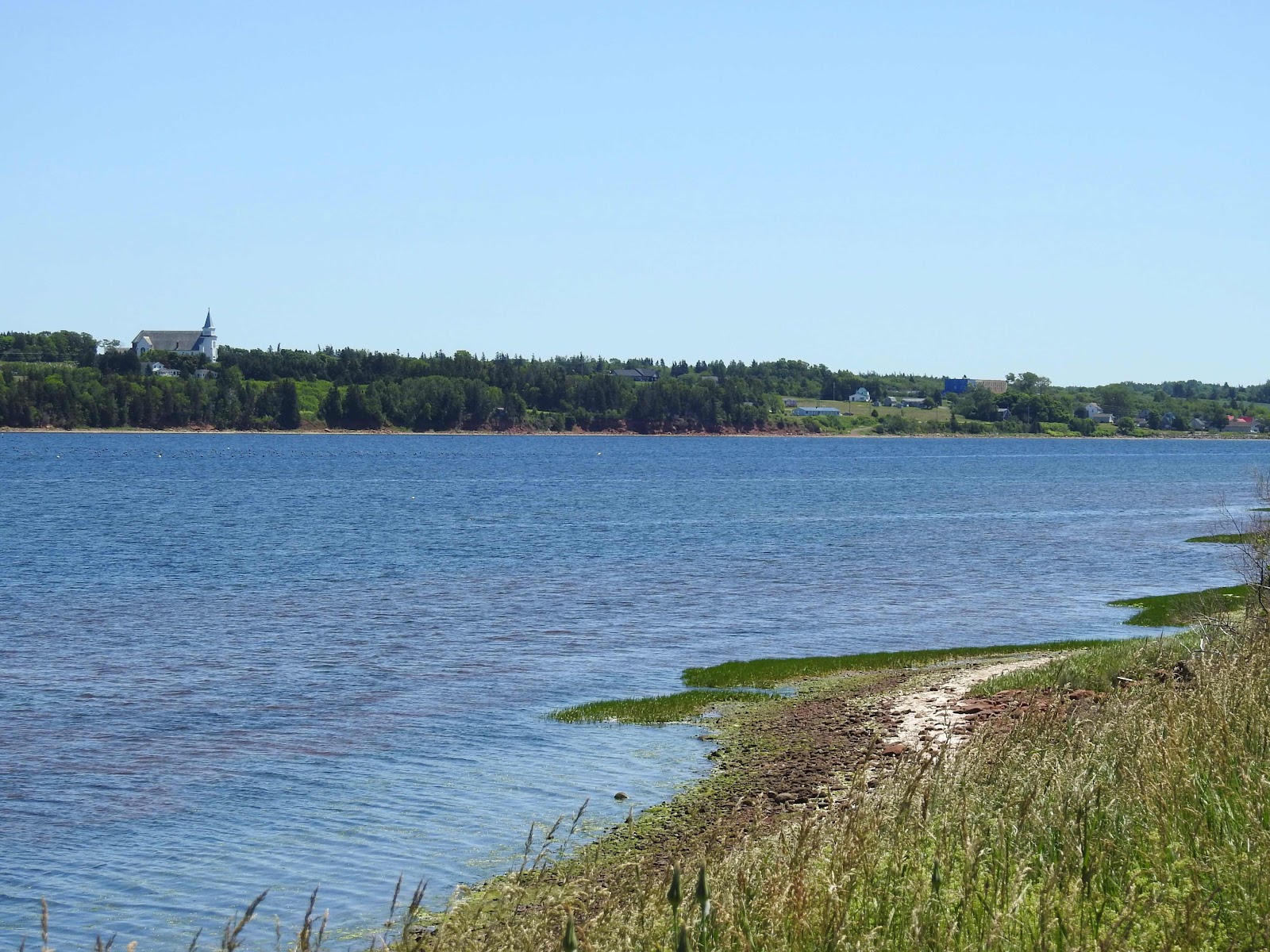
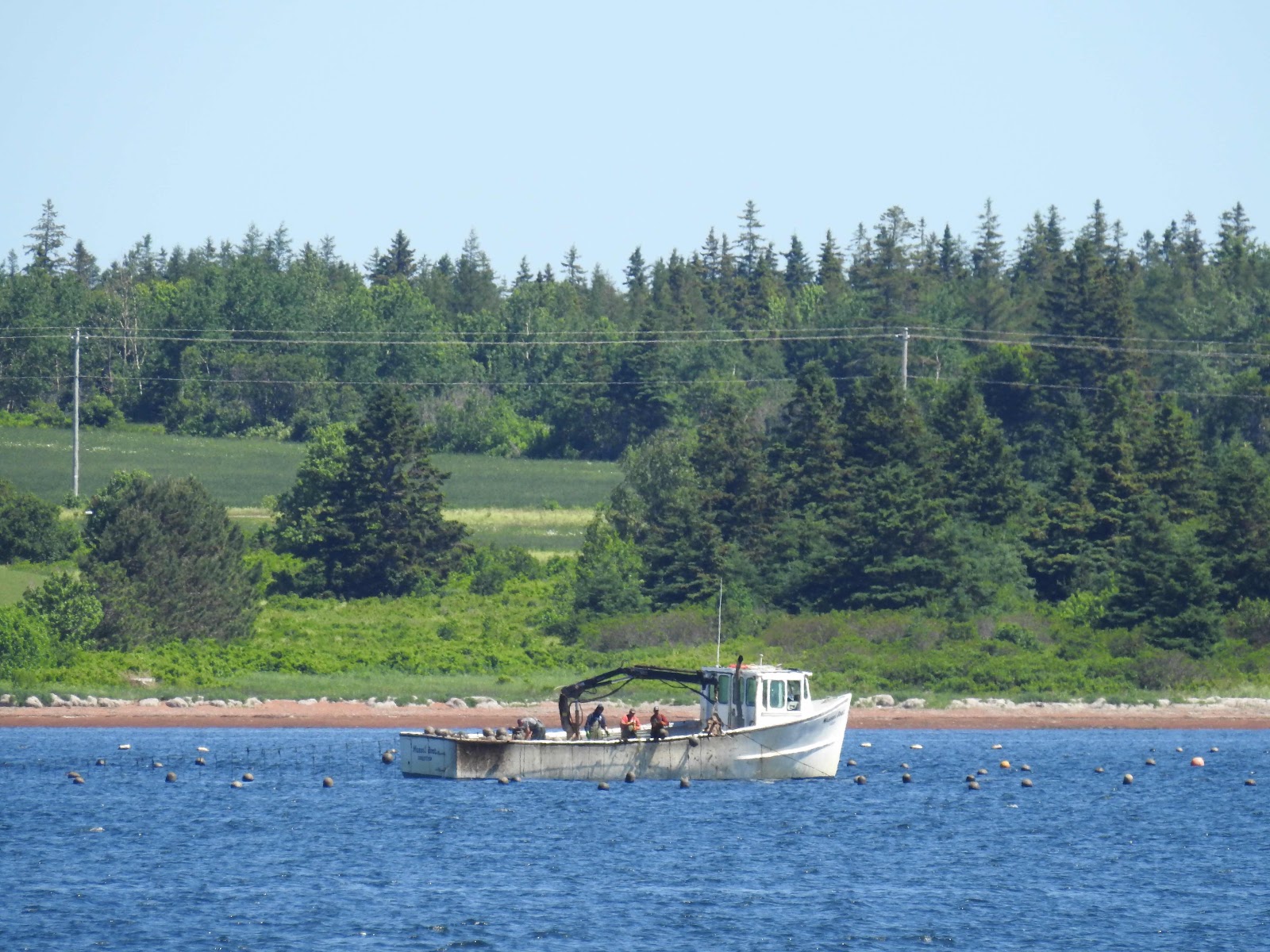
Just off-shore, two fishers work to flush oysters. The tasty molluscs grow in brackish water which is often sandy. Sandy oysters wouldn’t be marketable so fishers immerse them in clear sea water for a time to flush out the sand before the morsels are sent to market.
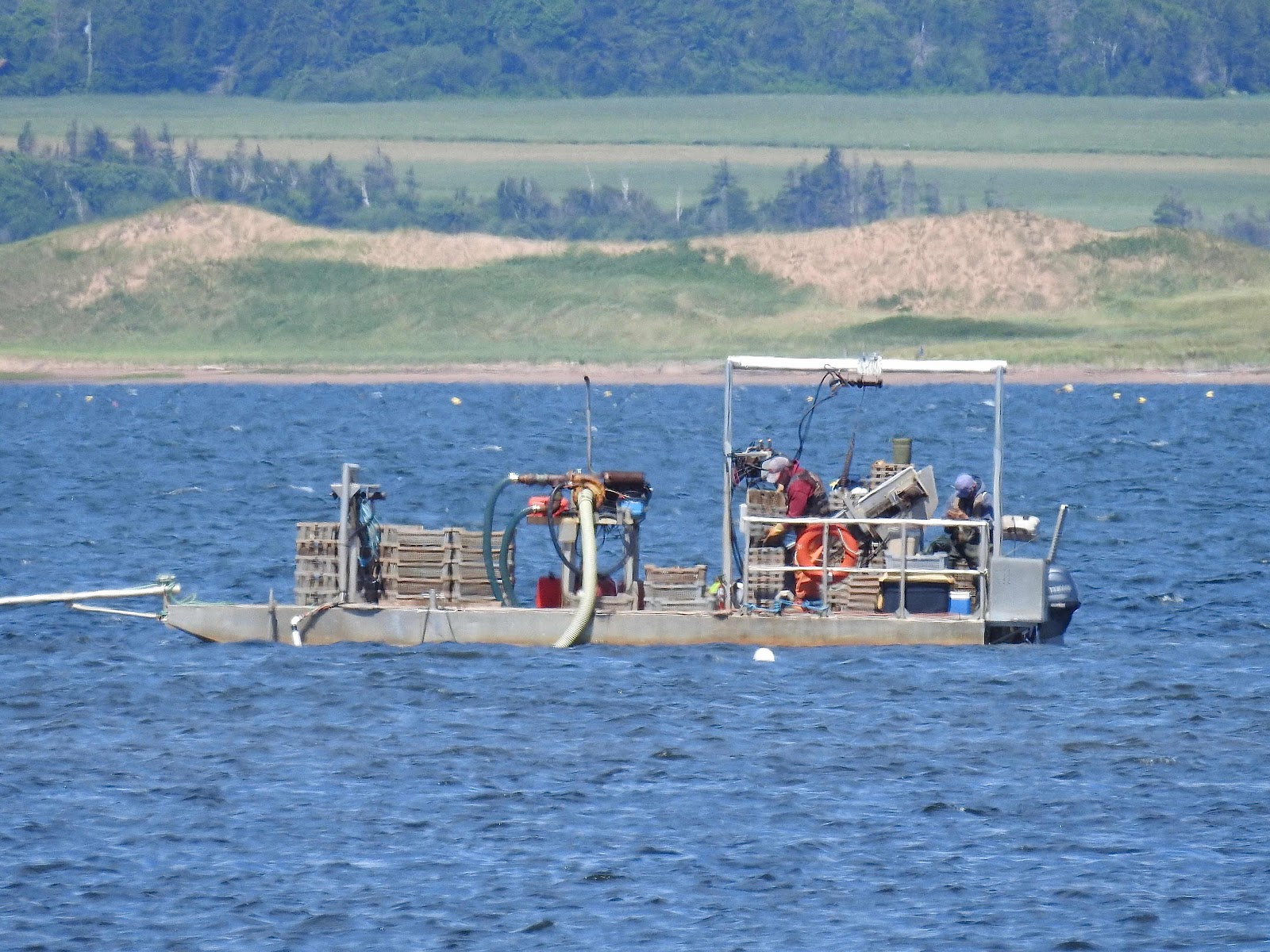
We could see the cages with the oysters. This area is in New London Bay, tucked behind the sandspit at the western end of Cavendish Beach.
My husband and I had loaded our bikes and headed for the national park at Cavendish in Prince Edward Island. It is one of our favourite places to cycle and we visit often. There is always something different and interesting to see as we ride. This oyster cleansing was a first for us.
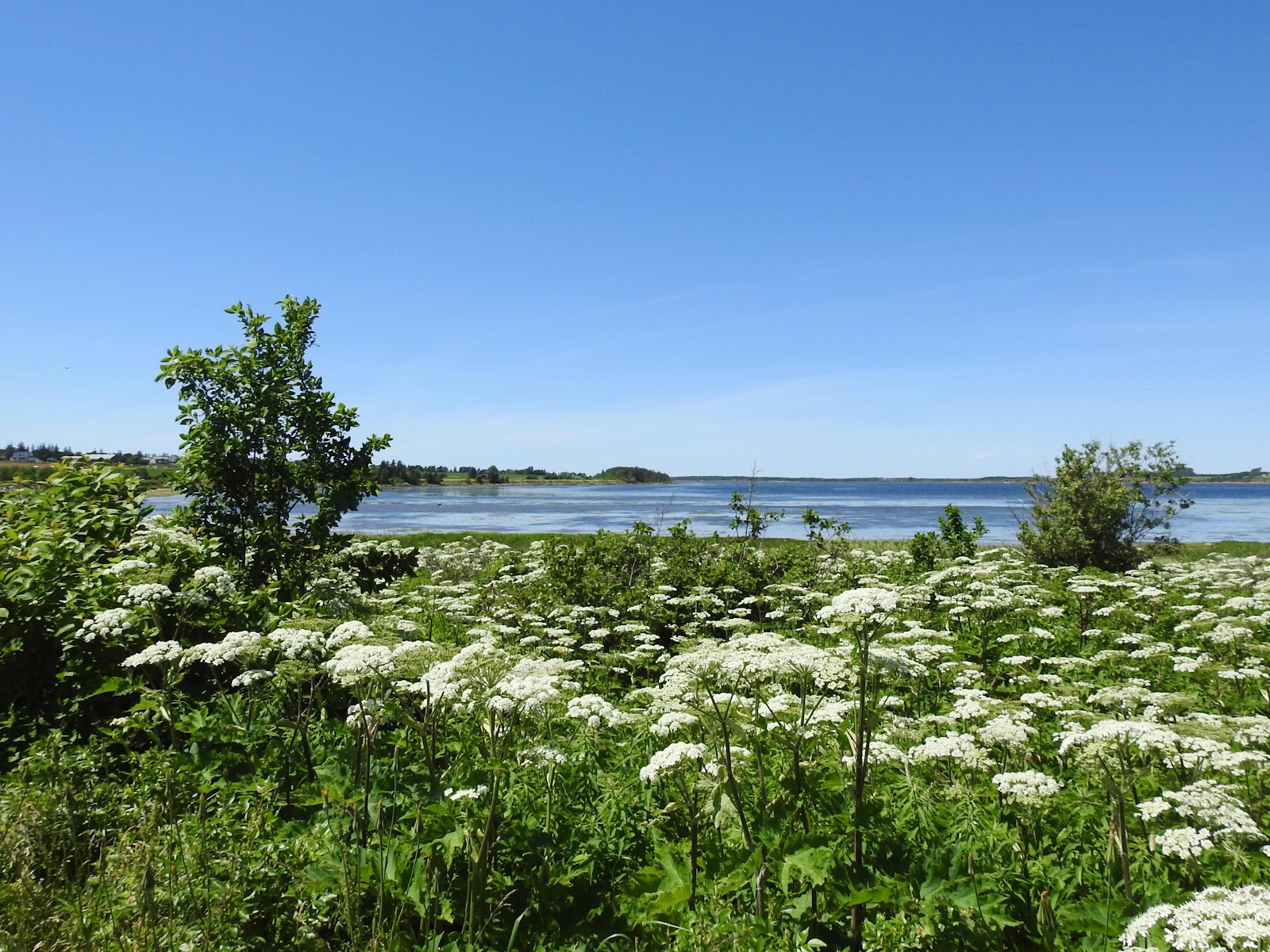
On the way to the Homestead Trail, we pass a patch of giant Cow Parsnip,
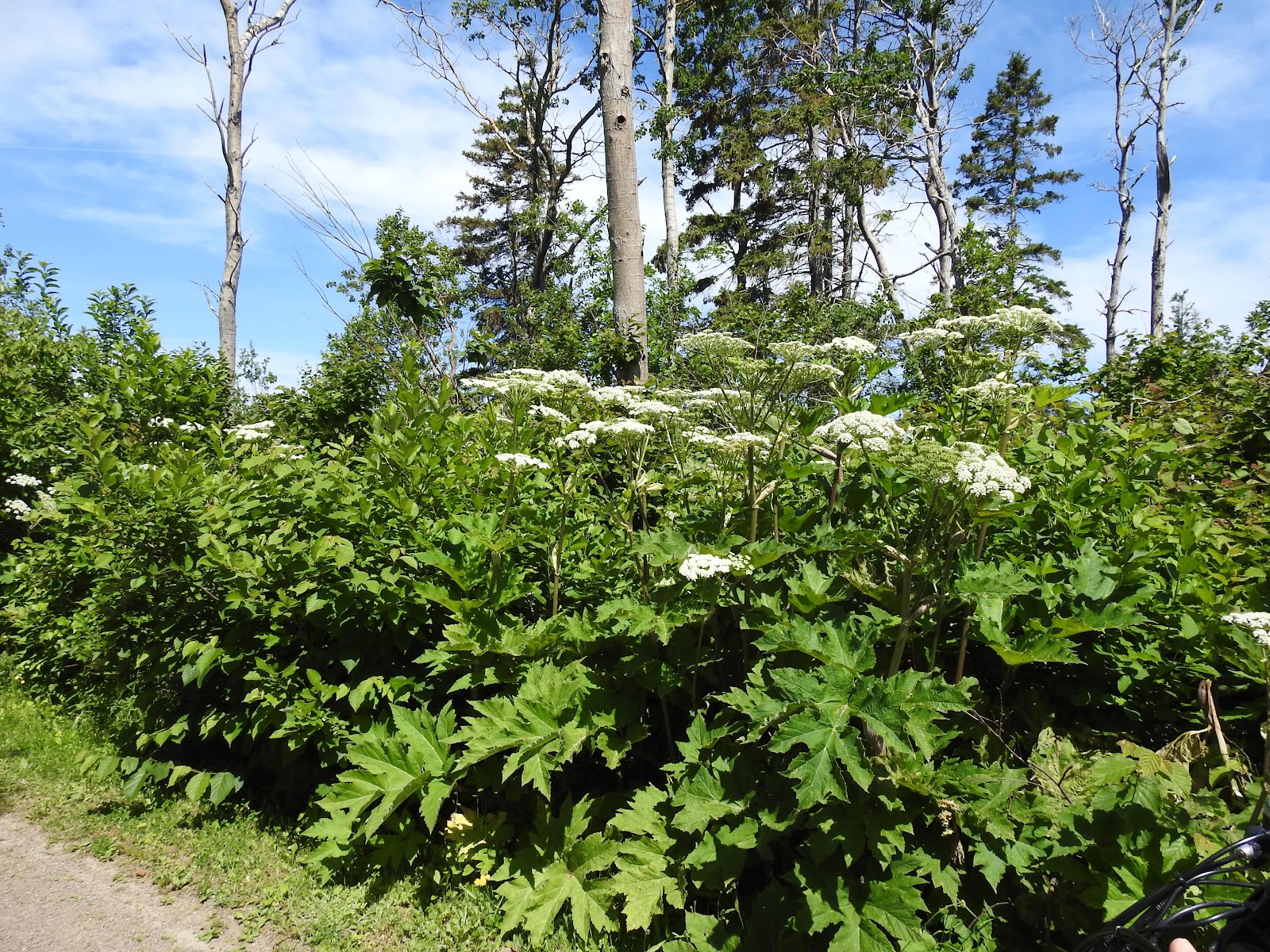
which is at least waist height now. It resembles Queen Anne’s Lace which we haven’t seen yet this year.
Overhead, the contrails are back.
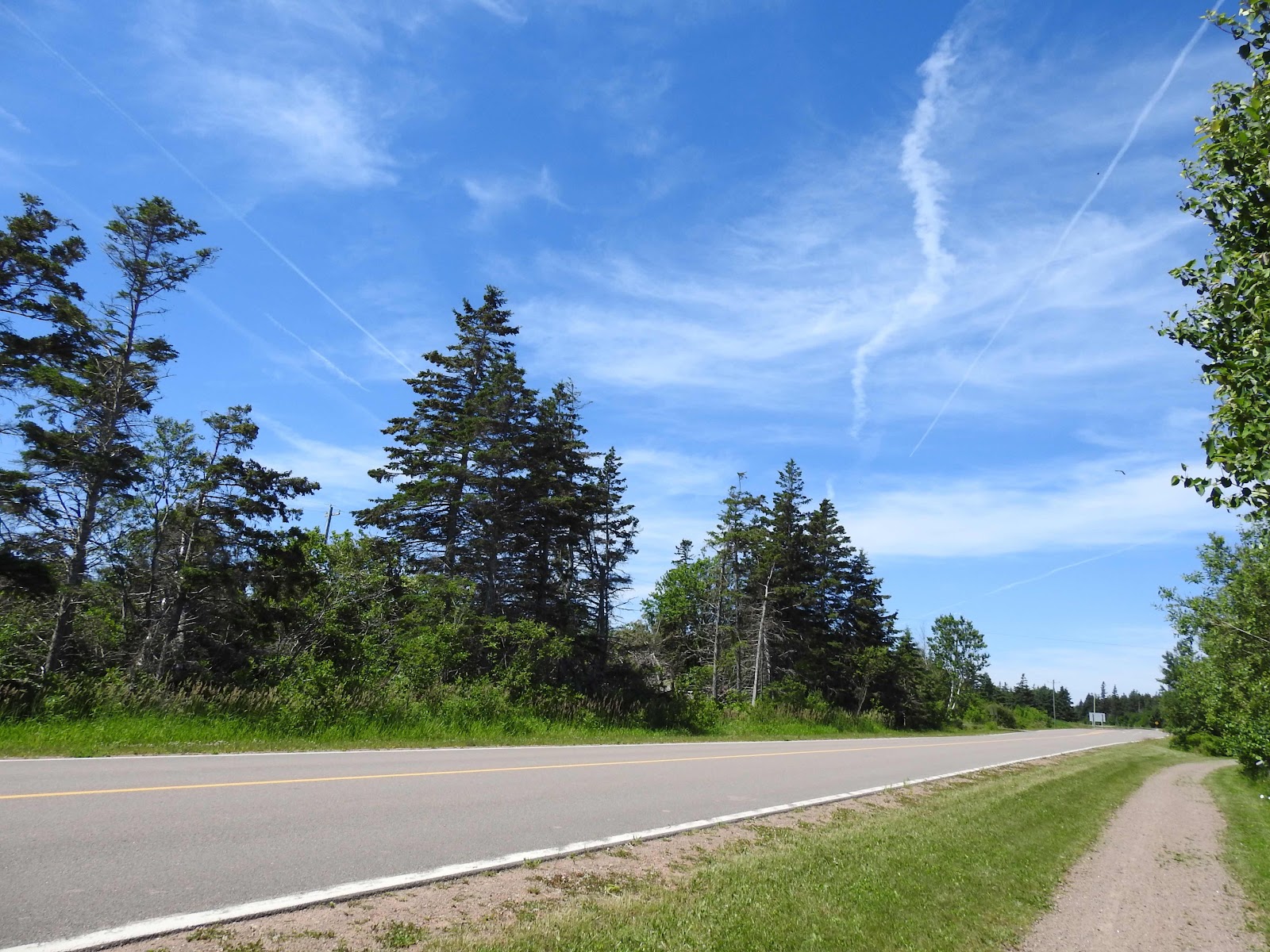
Skies above Prince Edward Island are usually full of air traffic from across the Atlantic and the rest of North America. This past year, the contrails have been missing. Seeing them this day is a hopeful sign about returning to pre-Covid life.
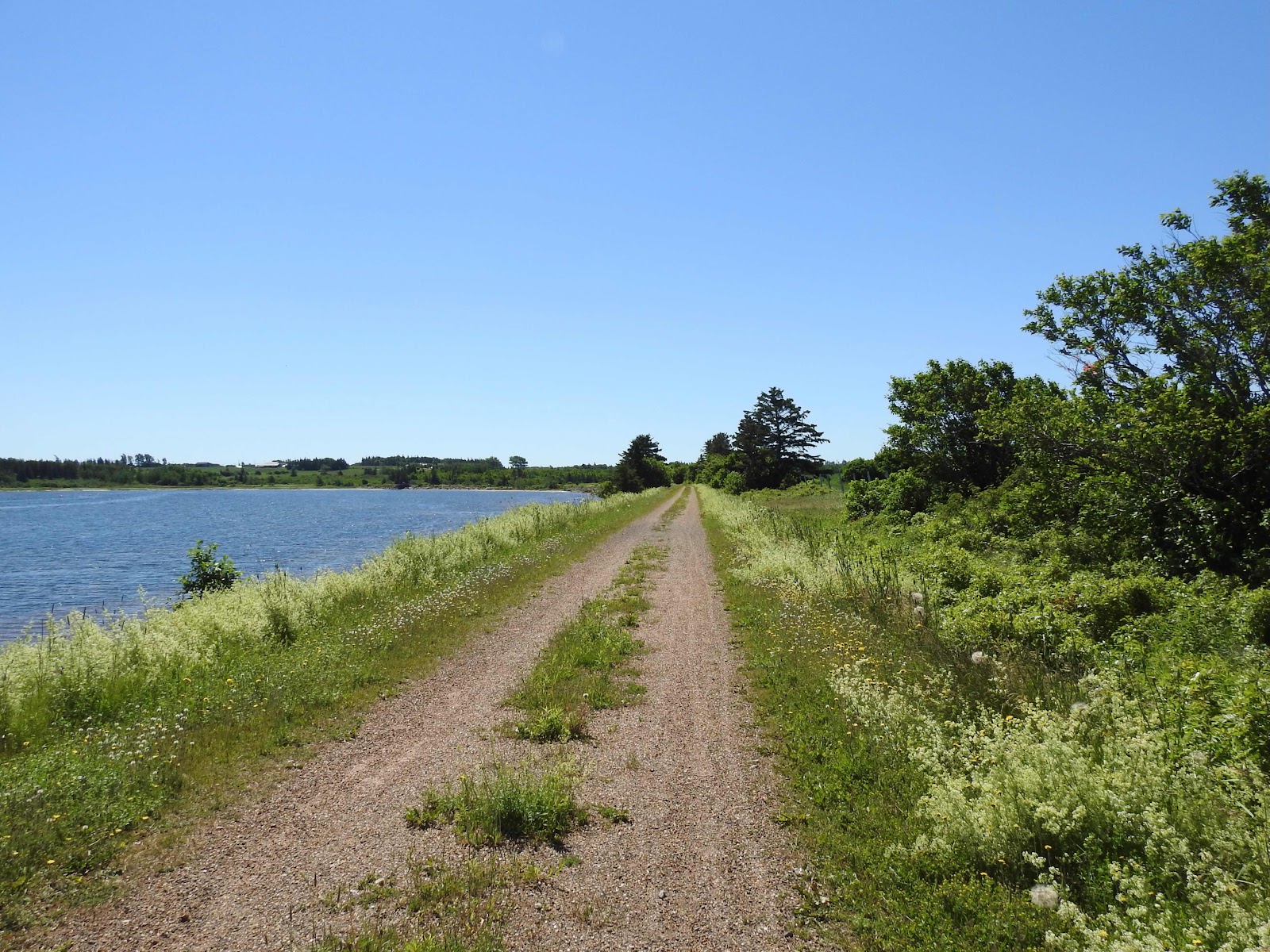
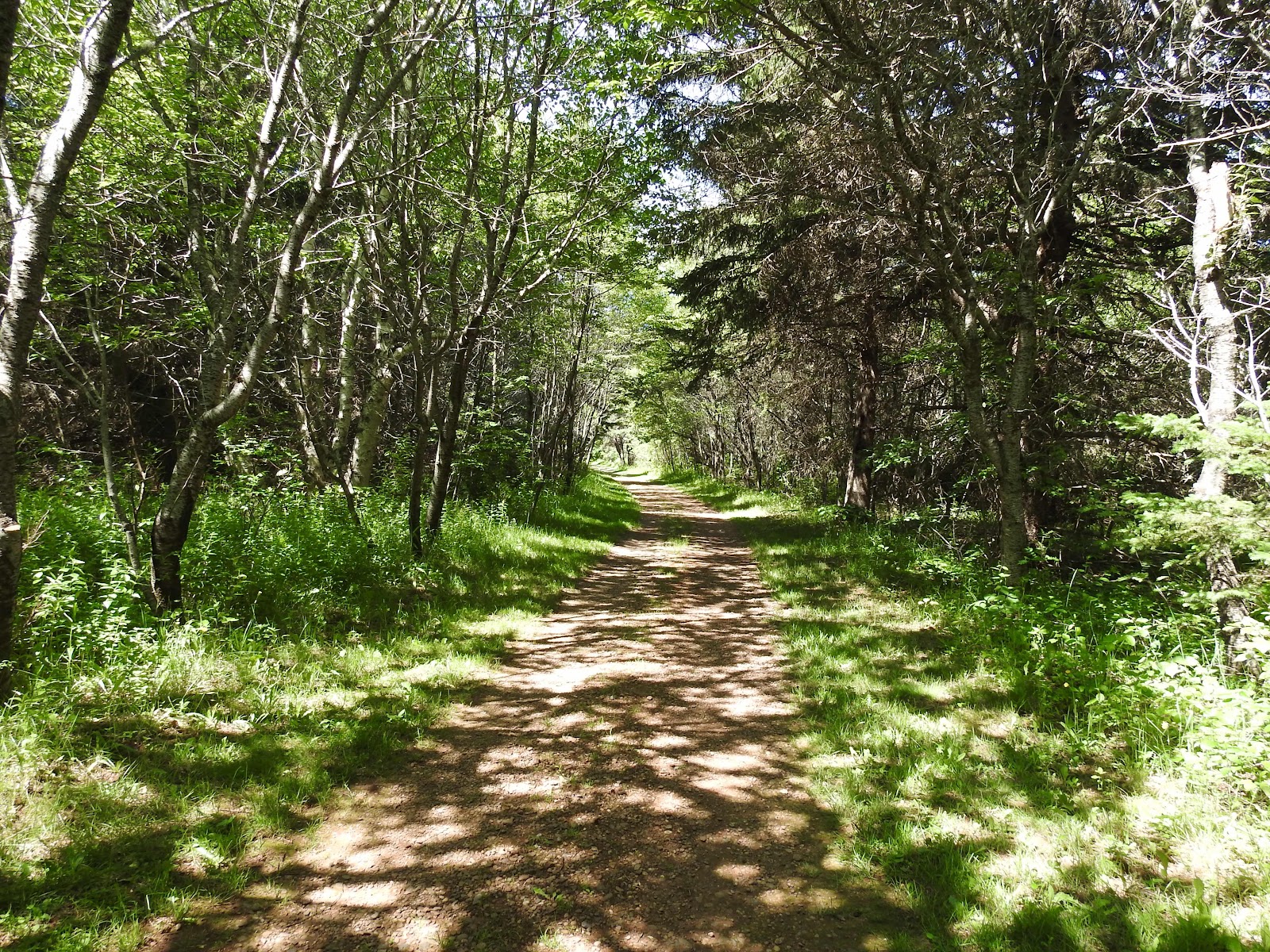
The Homestead Trail is bumpier than we remember but it adds a new element to the journey. The canopy covers the trail in places and the bumpy downhill ride through light and dancing shadows makes us laugh when we compare experiences at the bottom of the hill.
Wildflowers abound,
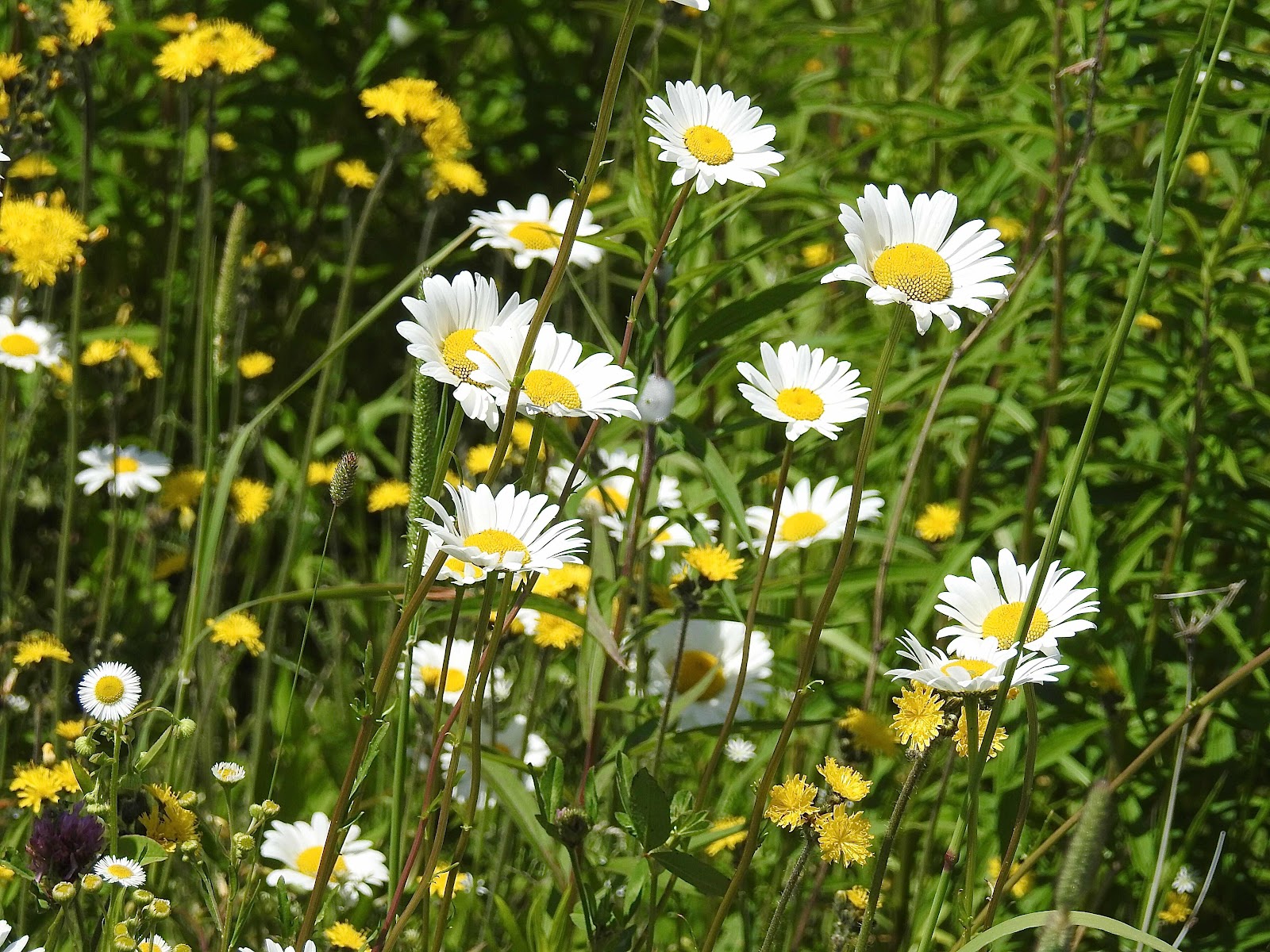
a succession of colour and variety, so we stop often. Beautiful floral faces reach for the sun. Rose bushes line a picnic area.
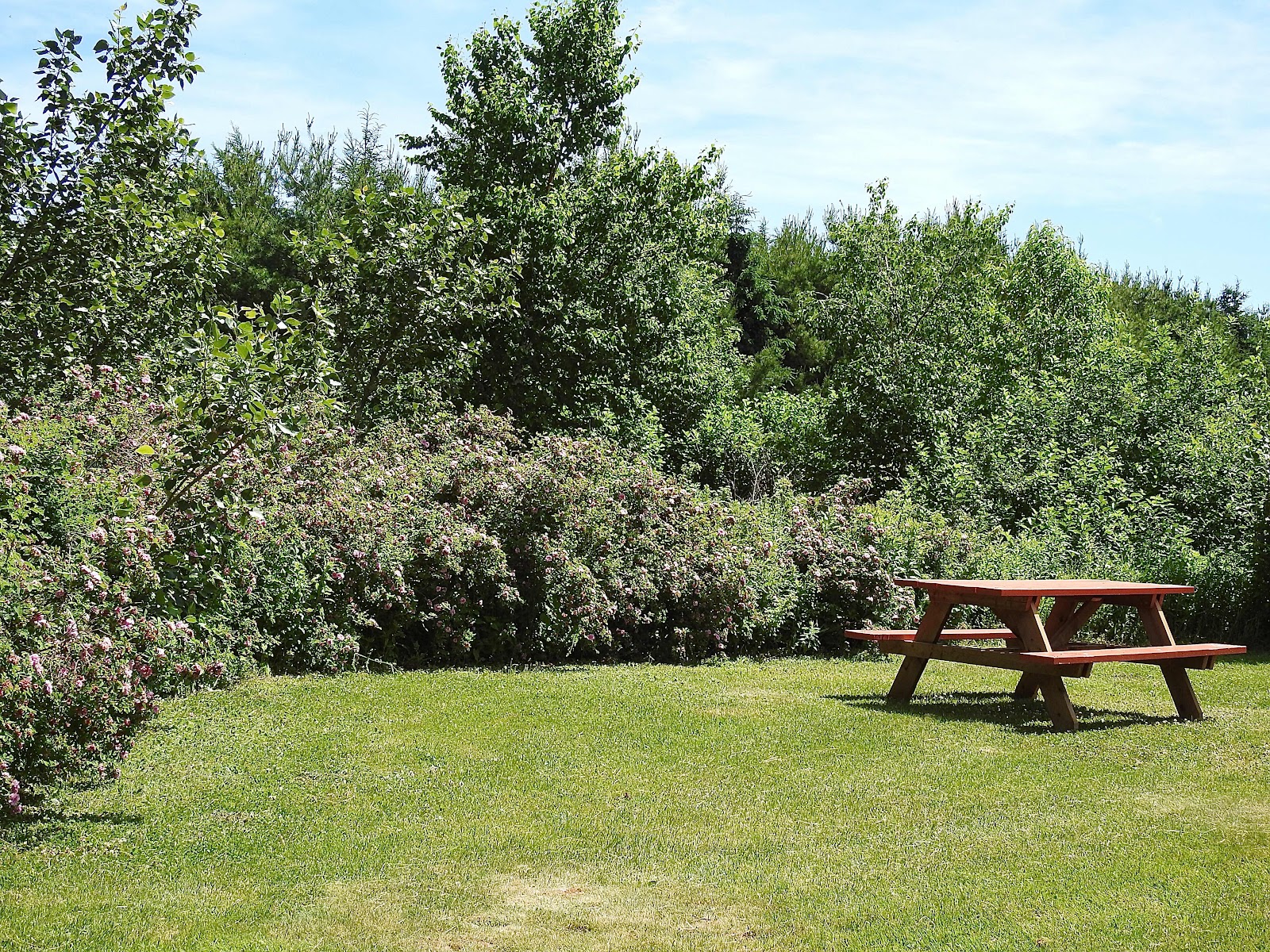
Was a homestead here at one time?
Wild Madder is everywhere along the trail.
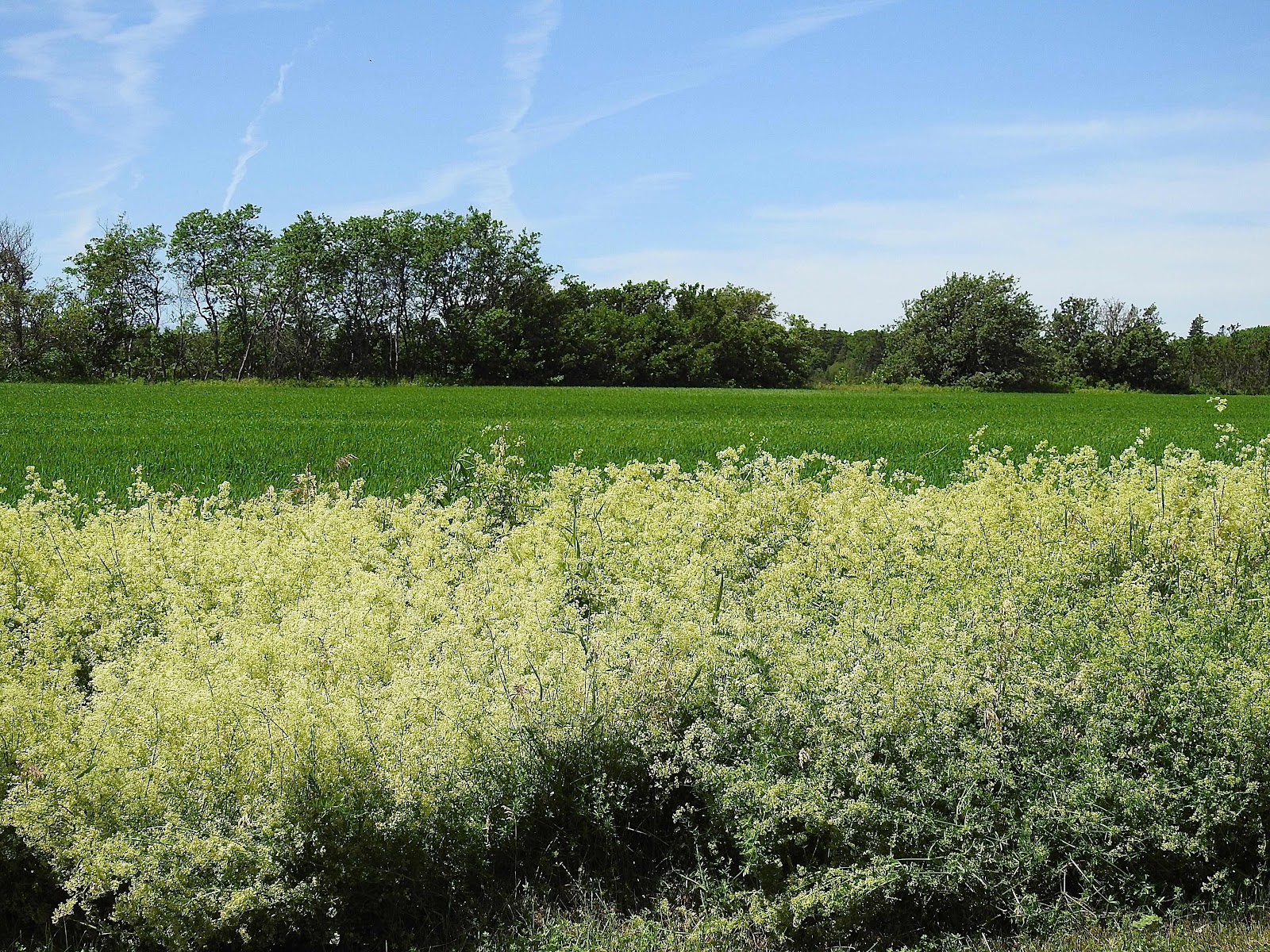
Also known as Smooth Bedstraw, early settlers used it for mattress stuffing. It is also a source of dye and today pharmaceutical companies research its bioactive ingredients. Of course, it was used in traditional medicine.
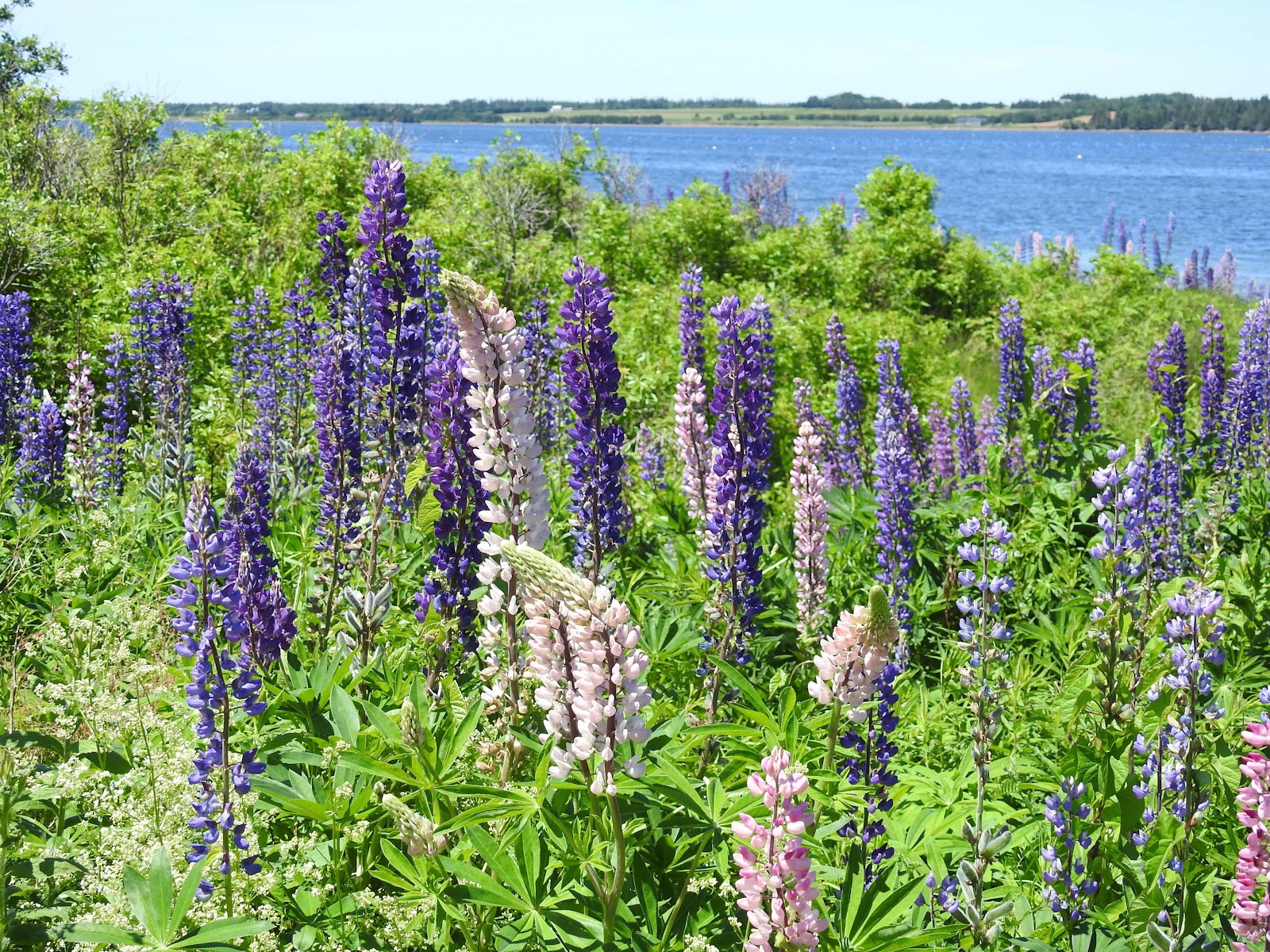
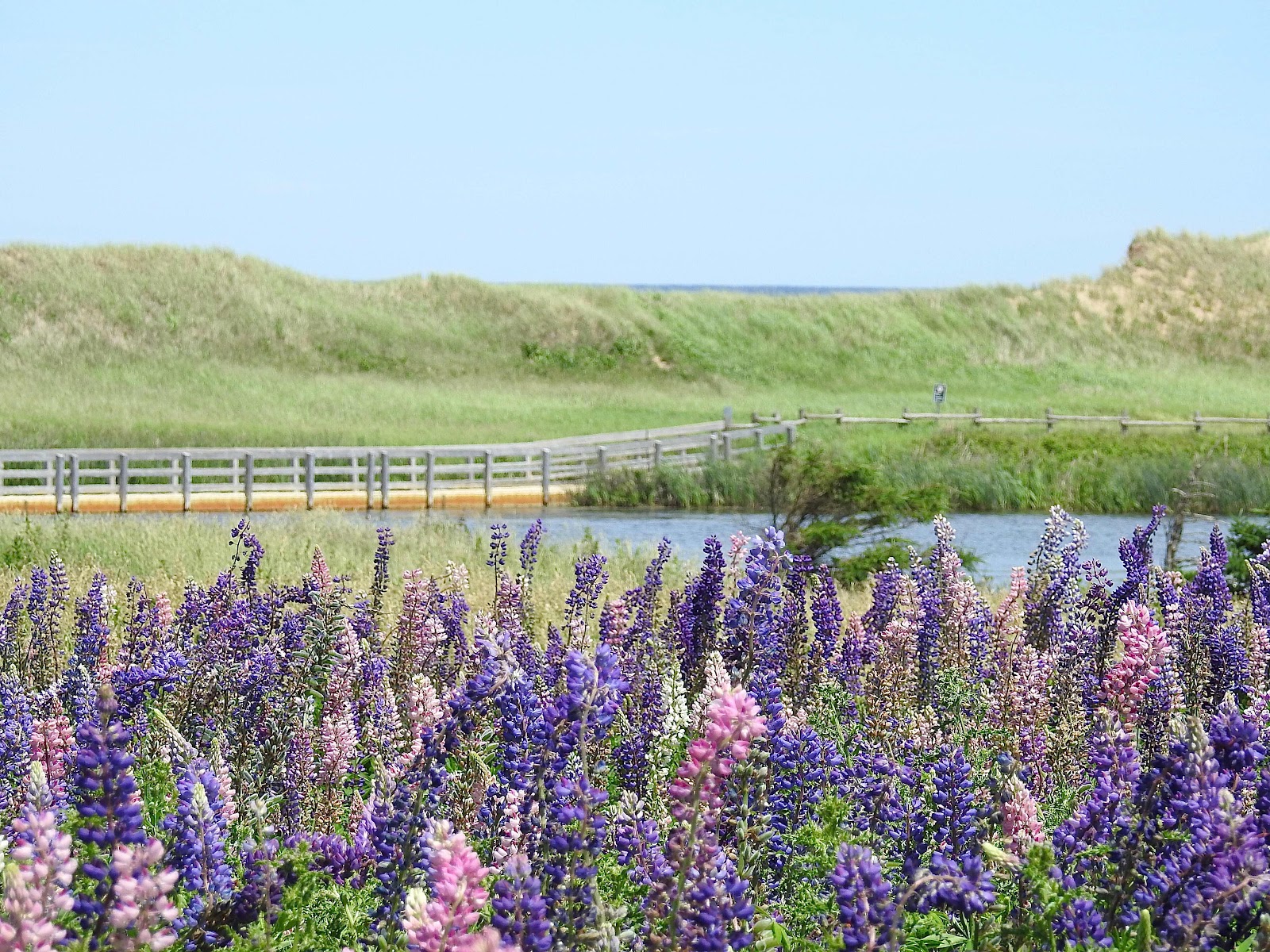
Later, beside the Lake of Shining Waters, lupins reach for the sky too, with the dunes of Cavendish in the background.
Meanwhile, we notice the sea arch at MacNeills Brook is widening. How long until a sea stack is formed?
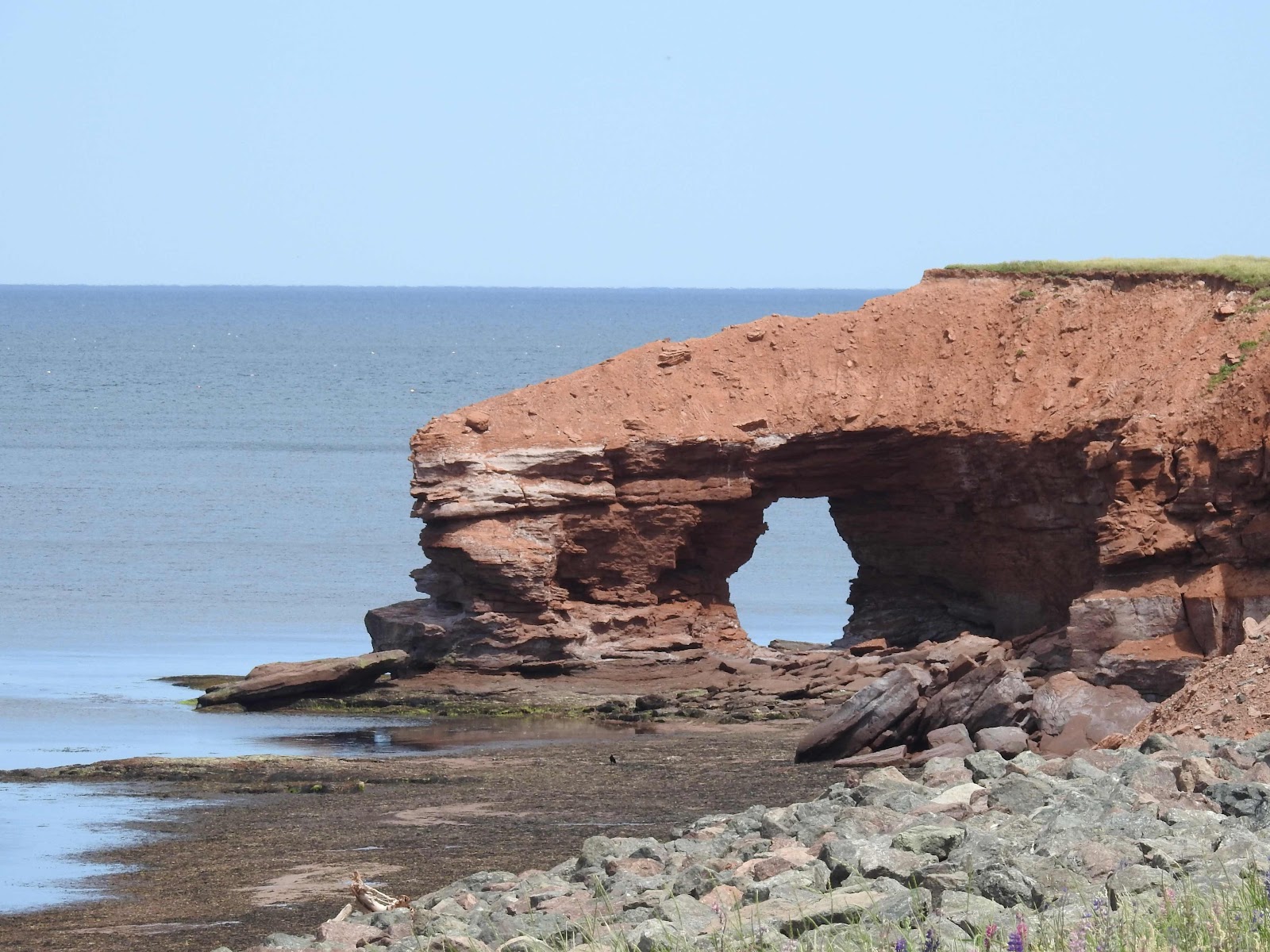
Geological succession is fascinating too.