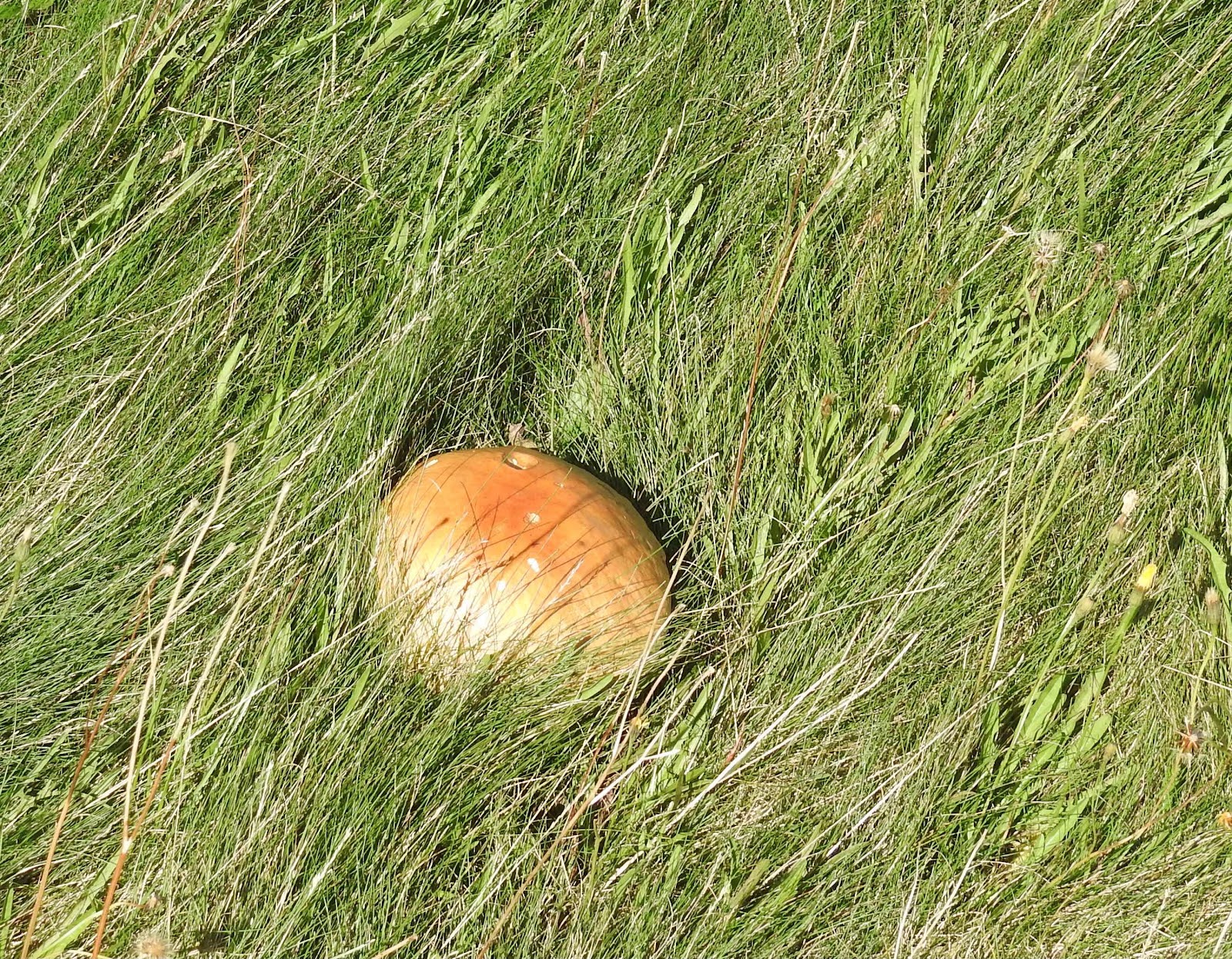
This past week was busy and on several occasions we walked between the raindrops. However it was a lovely first week in October although a bit cooler than last month.
We met up with our friends, Helen and Frank, again and this time we drove west, stopping at Northport. The view from a wharf there is classic,
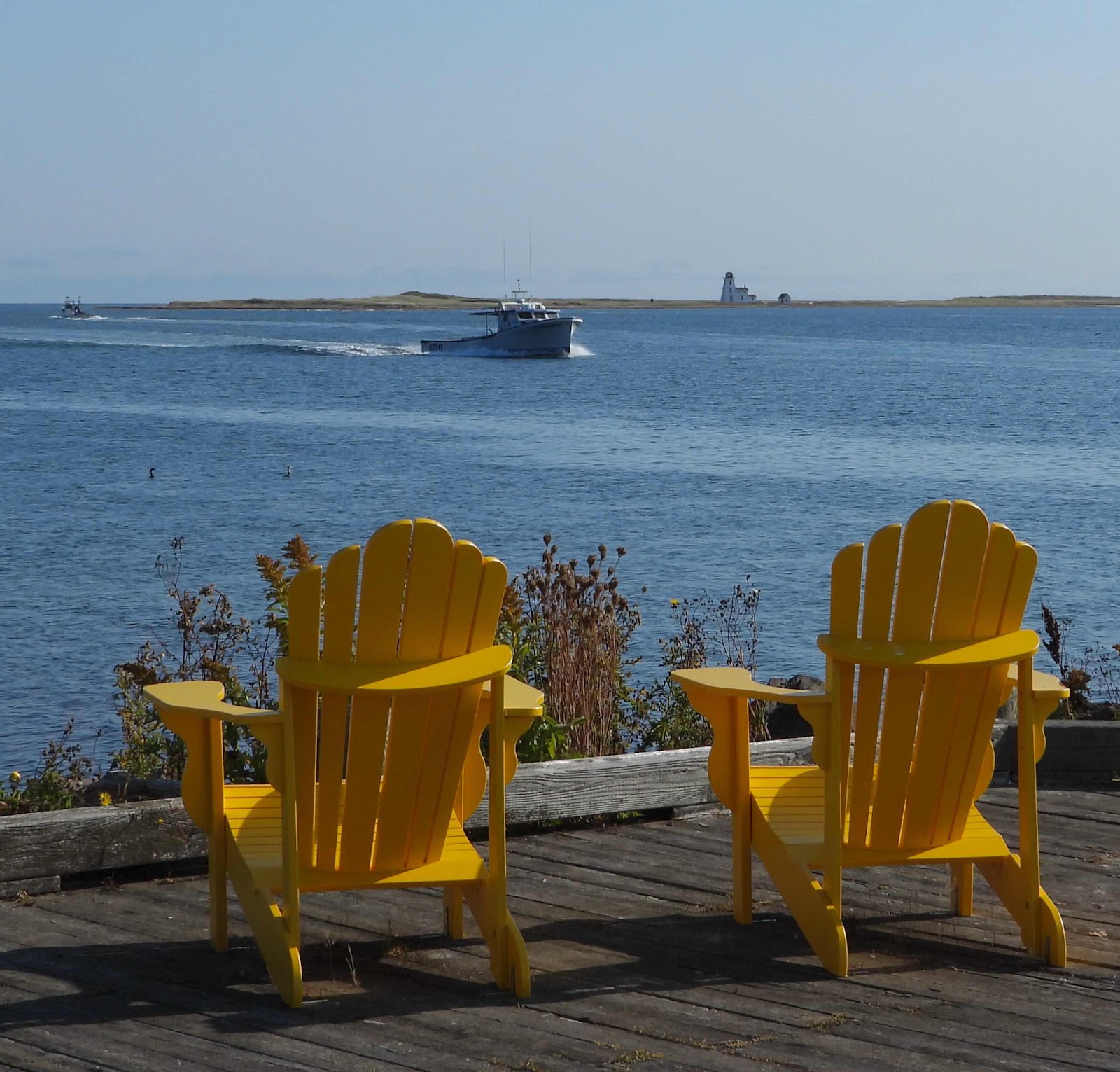
the sea, lighthouse*, cormorants, and fishing boats. Some boats have already been pulled ashore for the season.
We continued our drive along the coast to Tignish Shore where the low tide revealed sea glass along the shoreline. Helen’s keen eyes found browns and greens which eluded me. Thank you, Helen!
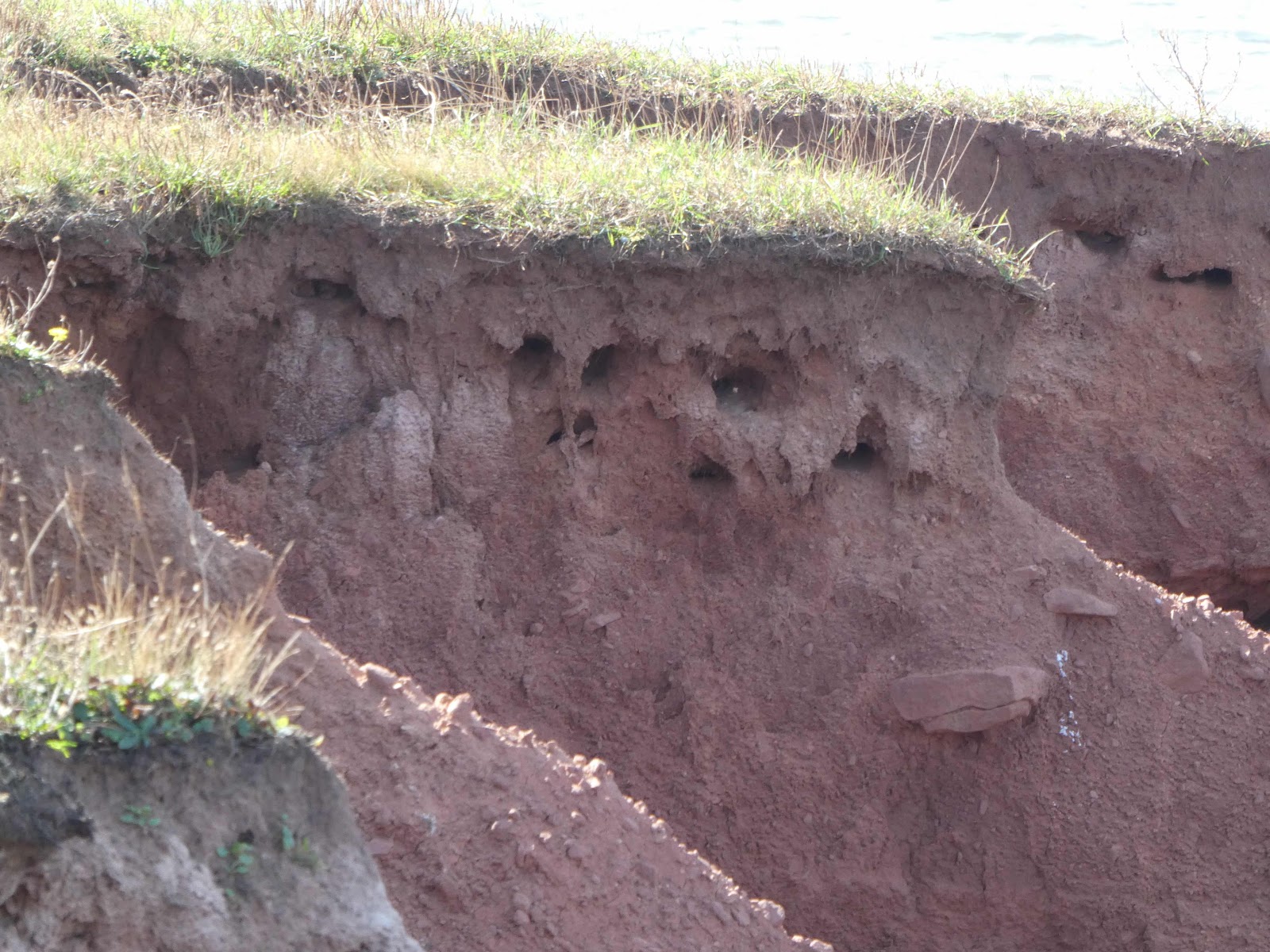
At the far eastern end of the beach, we saw the nesting holes of Bank Swallows although the birds left the island for southern regions weeks ago.
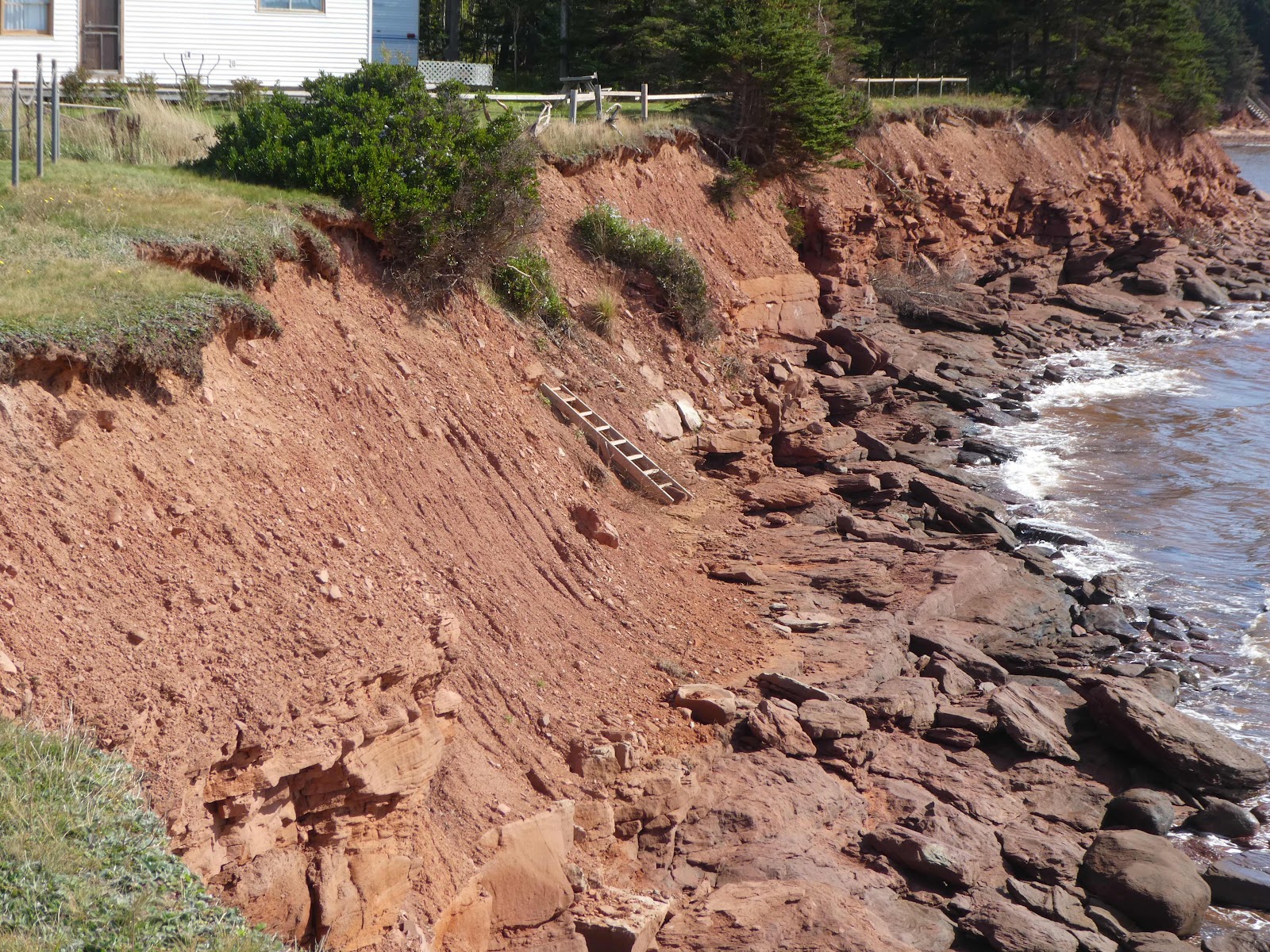
I hope winter doesn’t erode the soil, destroying the holes for the birds on their return.

At North Cape, we saw seals in the water, their heads poked out between dives, as they observed the people along the shore and the rock reef.

The reef, the largest of its kind in North American, is formed where the Northumberland Strait and the Gulf of St. Lawrence merge. People were walking on the reef, the first time my husband and I have seen people there.
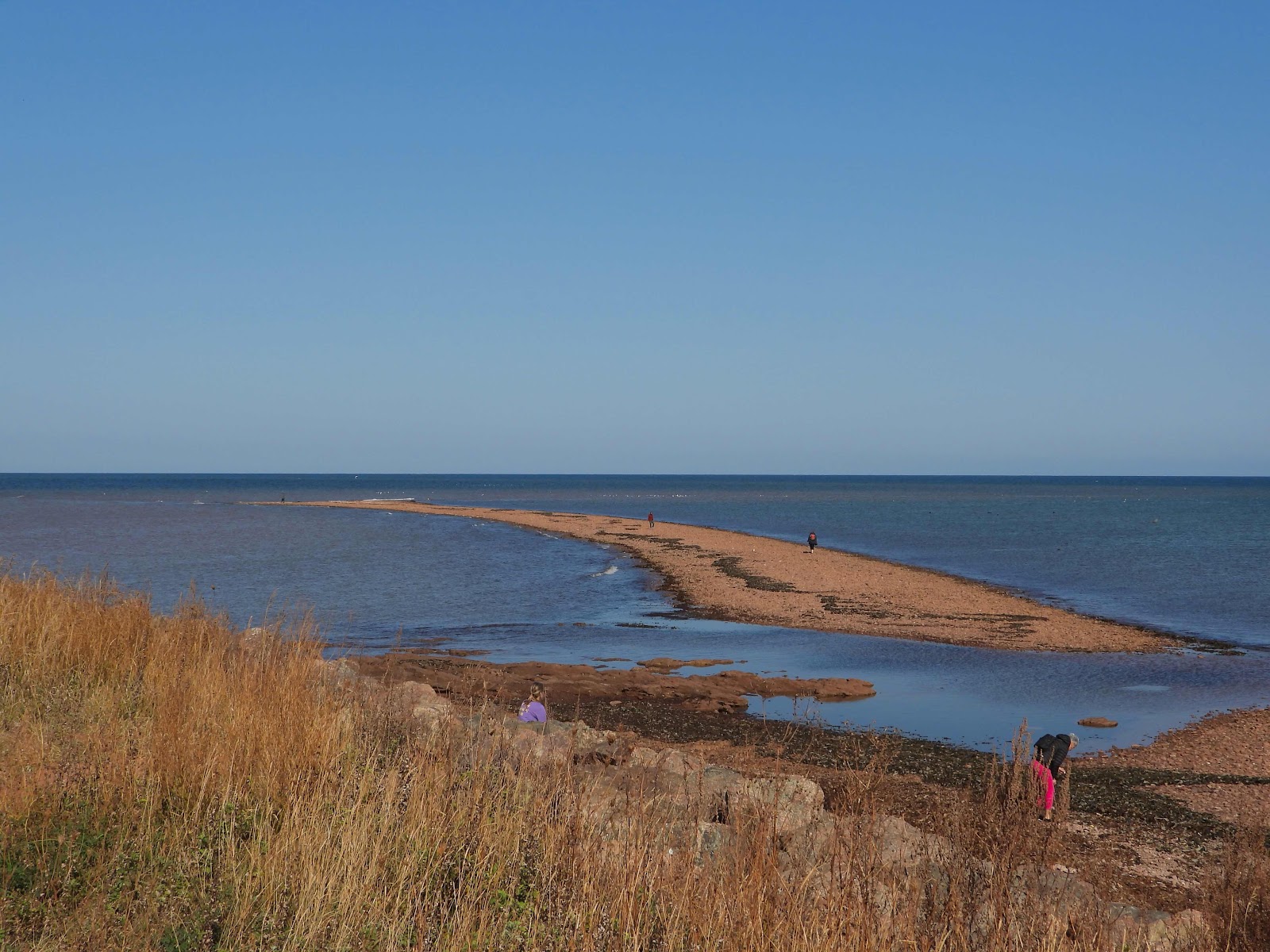
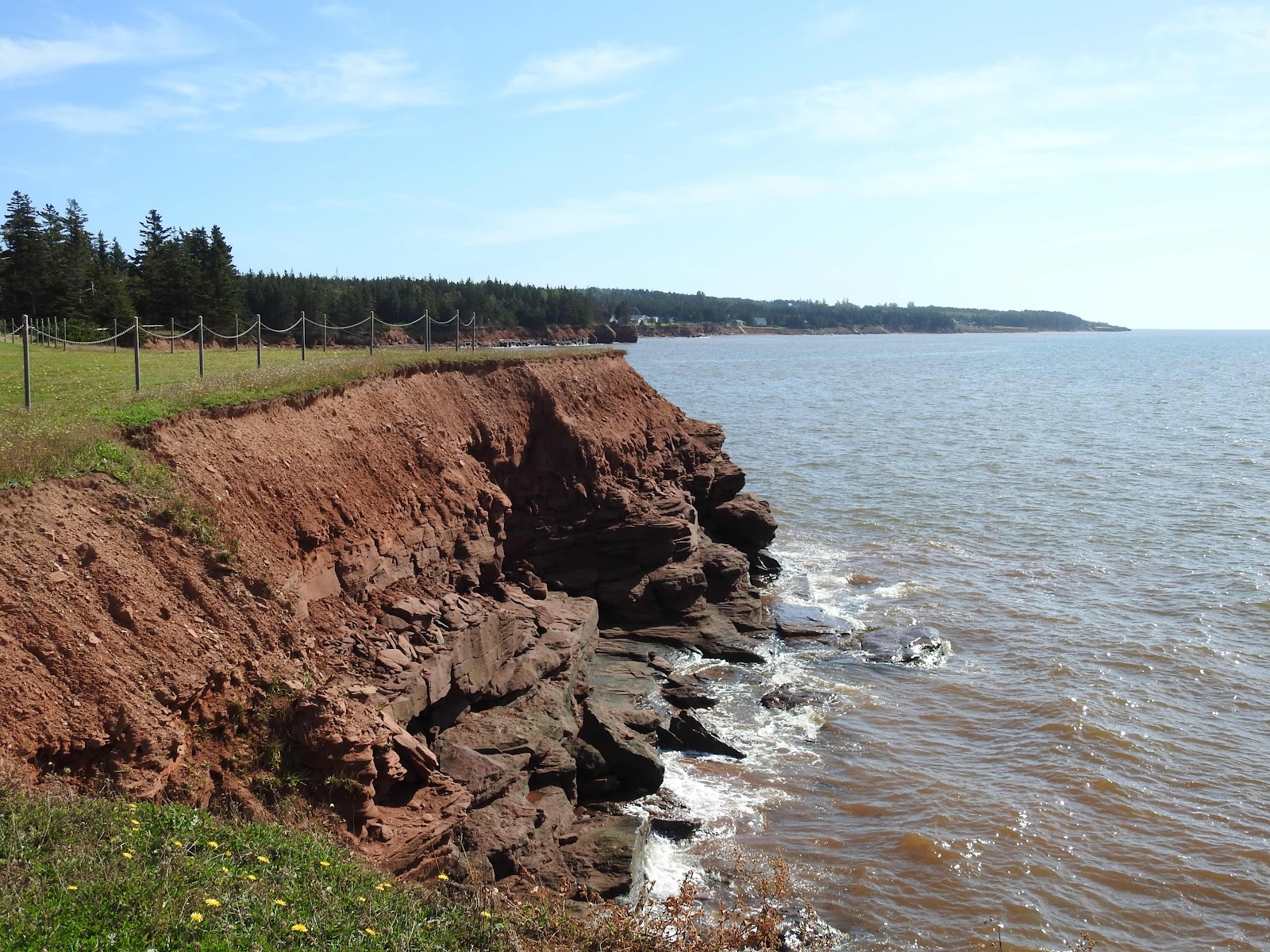
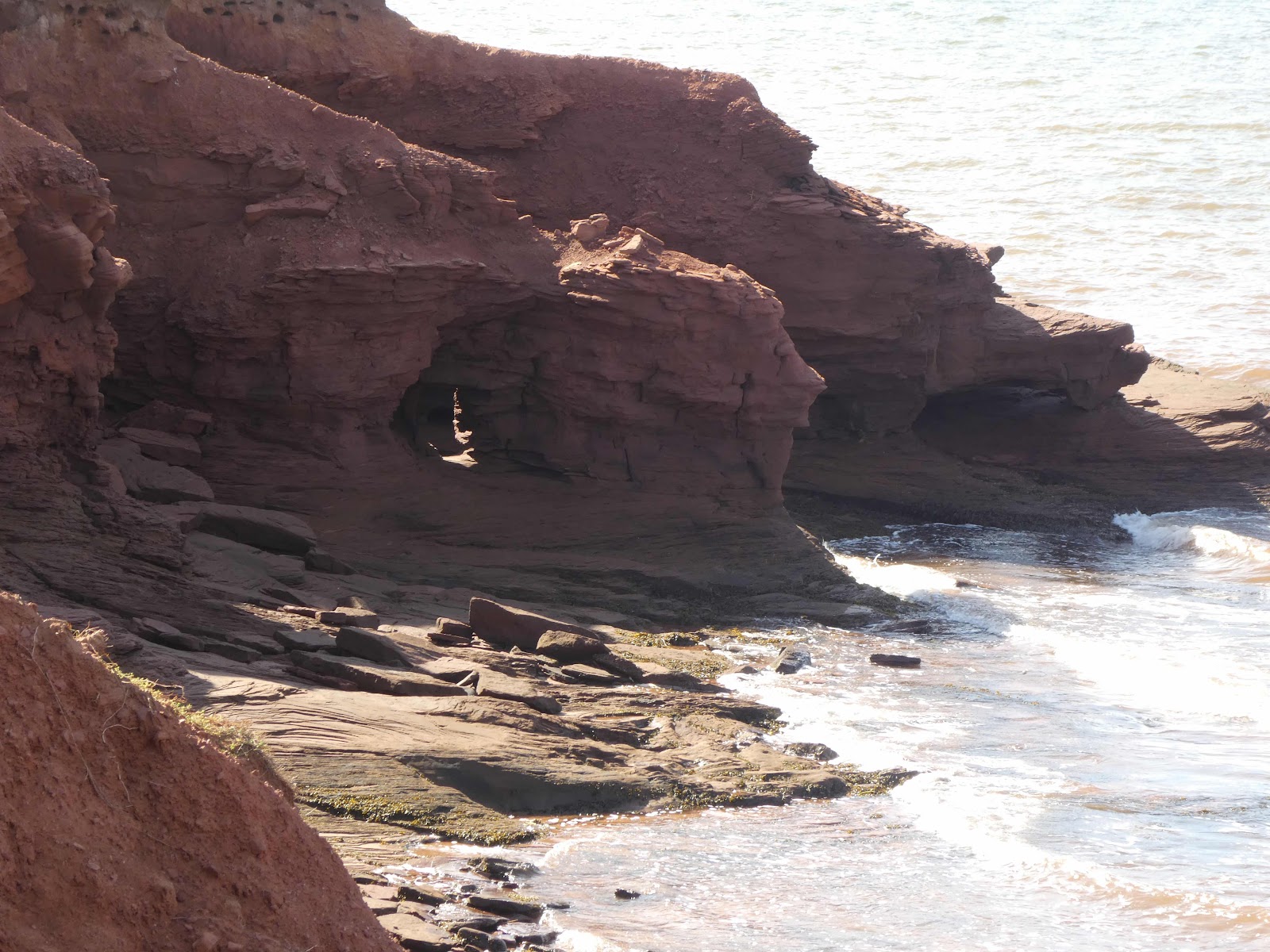
Erosion is obvious along this shoreline with the collapse of the arch roof forming this sea stack. A hole in the stack will probably undermine the stack itself over the next several seasons.

We had a leisurely picnic lunch at North Cape and enjoyed the time with our friends.
This past week, as always, presented some interesting sights along the boardwalk. One day, from the gazebo, we observed a Great Blue Heron, Black Ducks and Mallards along the shoreline by the salt marsh.
As we watched, a lone Black Duck came out of the bulrushes in the marsh and started quacking insistently. Many of the ducks in the bay headed into the marsh,


some waddled, while others flew.

Once there, the ducks dispersed around the marsh.
It was fascinating to watch how one duck could marshal the others as it did. We can only wonder the reason for the action of one and response of the others. Meanwhile, the Heron caught some fish which you can see from the bulge in its long outstretched neck as it swallowed.

Also along the boardwalk, Common Grackles were their usual loud selves as the chatted in the trees.

I love how the shape and colour of the feathers are visible in this photo. They are late migrating this year.
A male Northern Flicker, a species of woodpecker, was busy digging in the ground. The markings on its feathers are impressive.

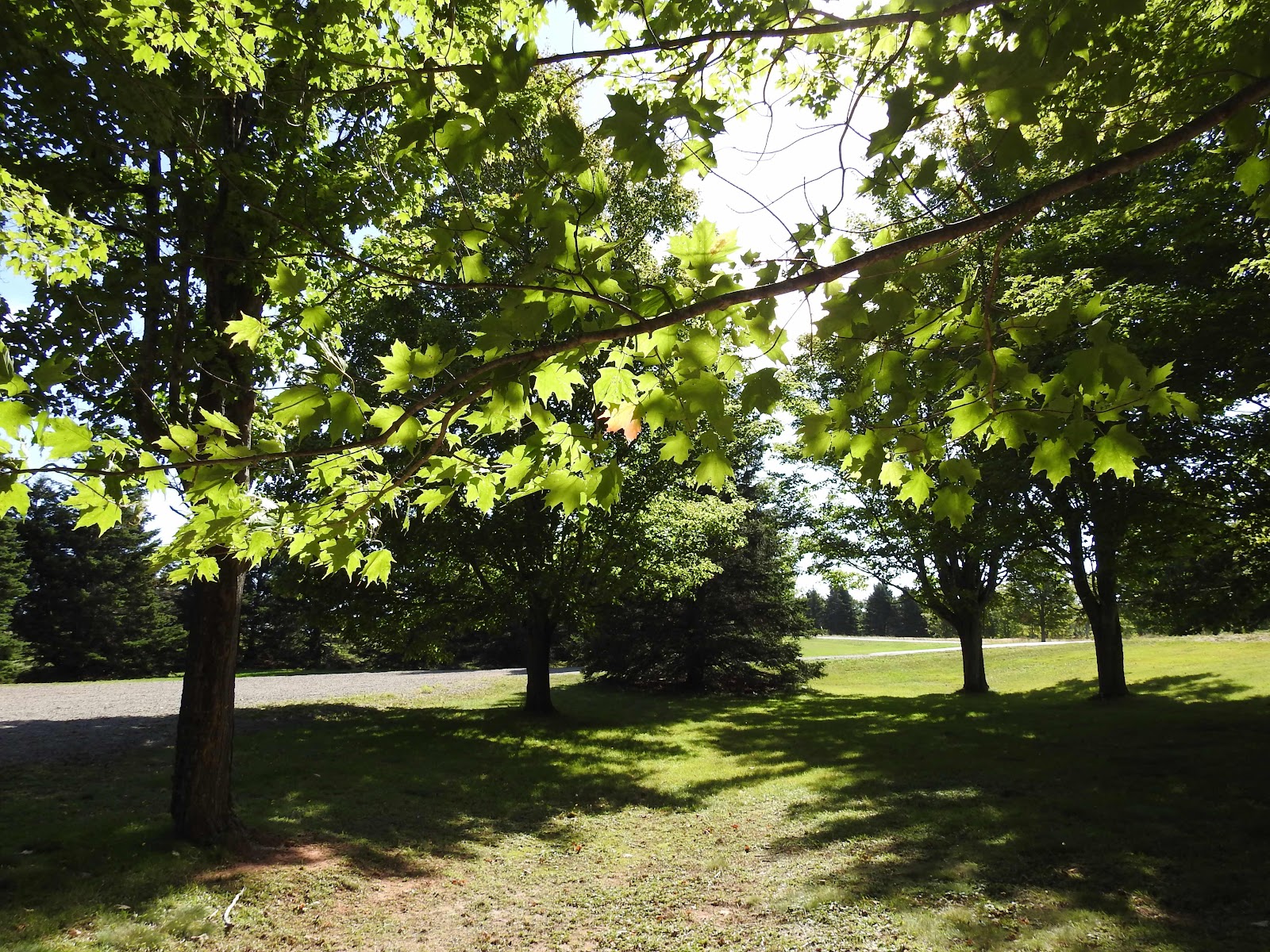
The autumn colour has begun, as the trees, including many Red Maples, are beautiful again this year.

Along the shoreline, the Asters stand out among the seed heads and changing leaves.
The view never fails to amaze us!

*The lighthouse was decommissioned and is now in private hands as a summer home.
P.S.
I walked with my friend, Lucy, at Brander’s Pond this past week. It was a sunny day and the coastline look different from the same scene last month.