Most Popular Post

Showing posts with label Sanderlings. Show all posts

Monday, 6 November 2023

Just beachy

One of our last picnic outings for this fall was to the beach at Brander’s Pond on the central north shore of Prince Edward Island. It was a rare day, not a breeze in the autumn air though the sky was overcast. The area is home to cottages which are mostly empty this time of year, closed after more than two seasons of beach living for those lucky enough to have a cottage there.


Brander’s Pond flows into the Gulf of St Lawrence 


but part of its attraction for me is the sea stack on the eastern side of the beach. 


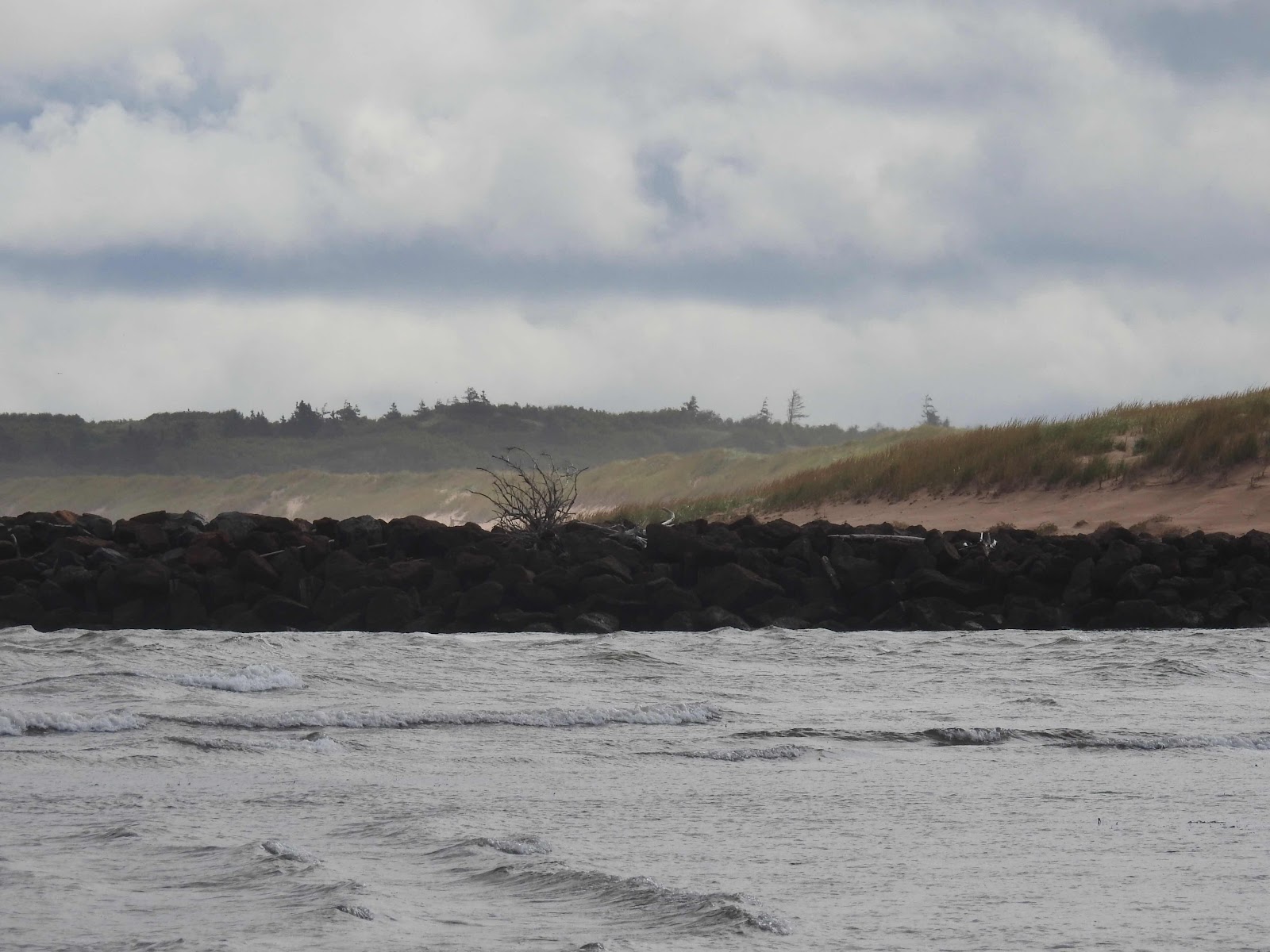
This beach, maintained by the cottagers, is pristine. As usual, various species of gulls hang out at the mouth of the stream. As my husband and I approached the stream, the gulls took flight briefly and moved farther away,


though not without expressing their displeasure.


We walked the beach slowly, taking in as much of the day and the setting as possible. The rhythm of the sea is comforting and as I walked I wondered how many other such days were left this season. However, those thoughts soon disappeared to the joy of this present.


In the water, Red-throated Loons enjoyed a day on the water.


Nearby, a flock of Red-breasted Mergansers dived for brunch. 


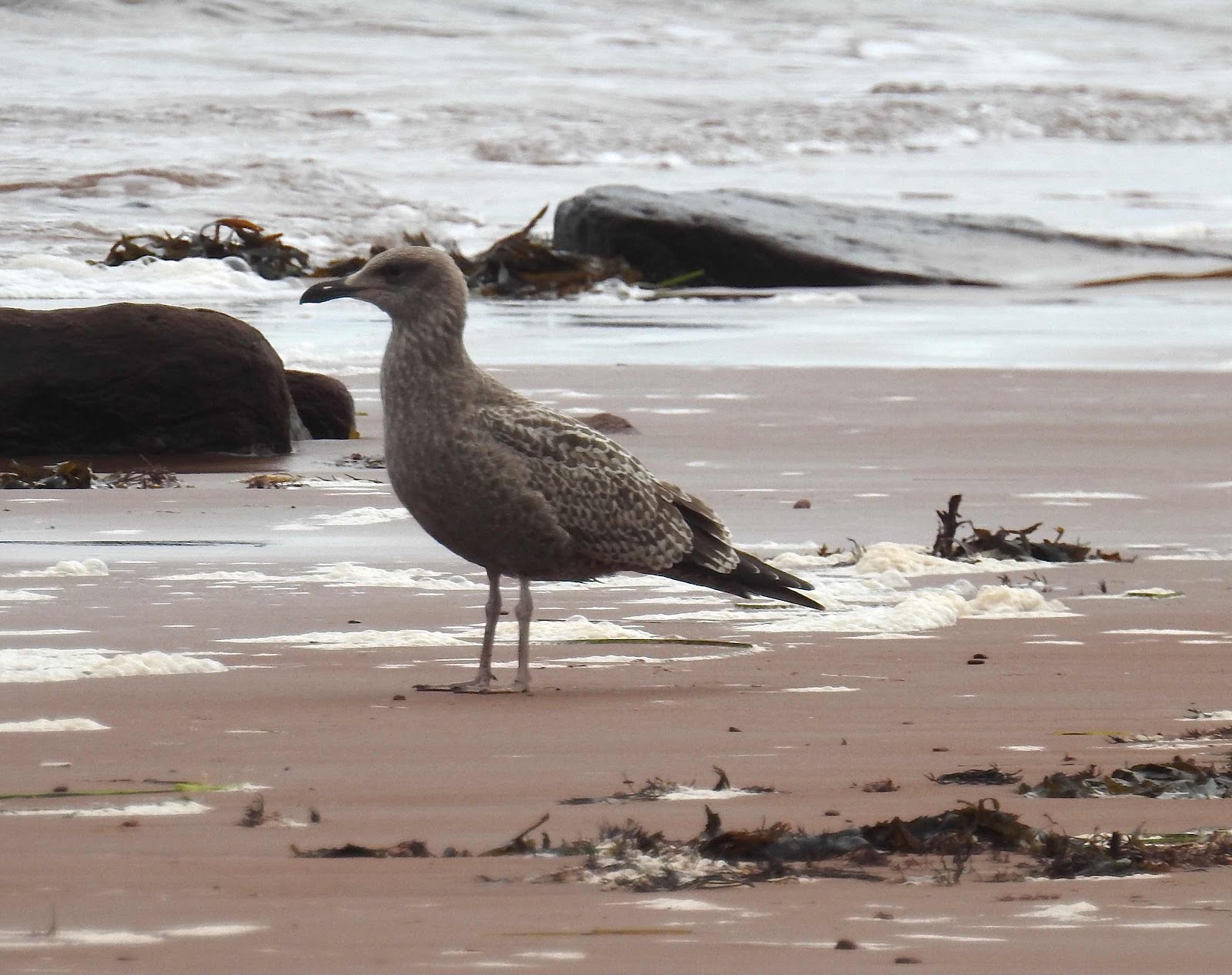
 By the turn-around, I watched a young Herring Gull catch and slowly eat a crab.


At this point, the sun broke through after previous attempts had failed.


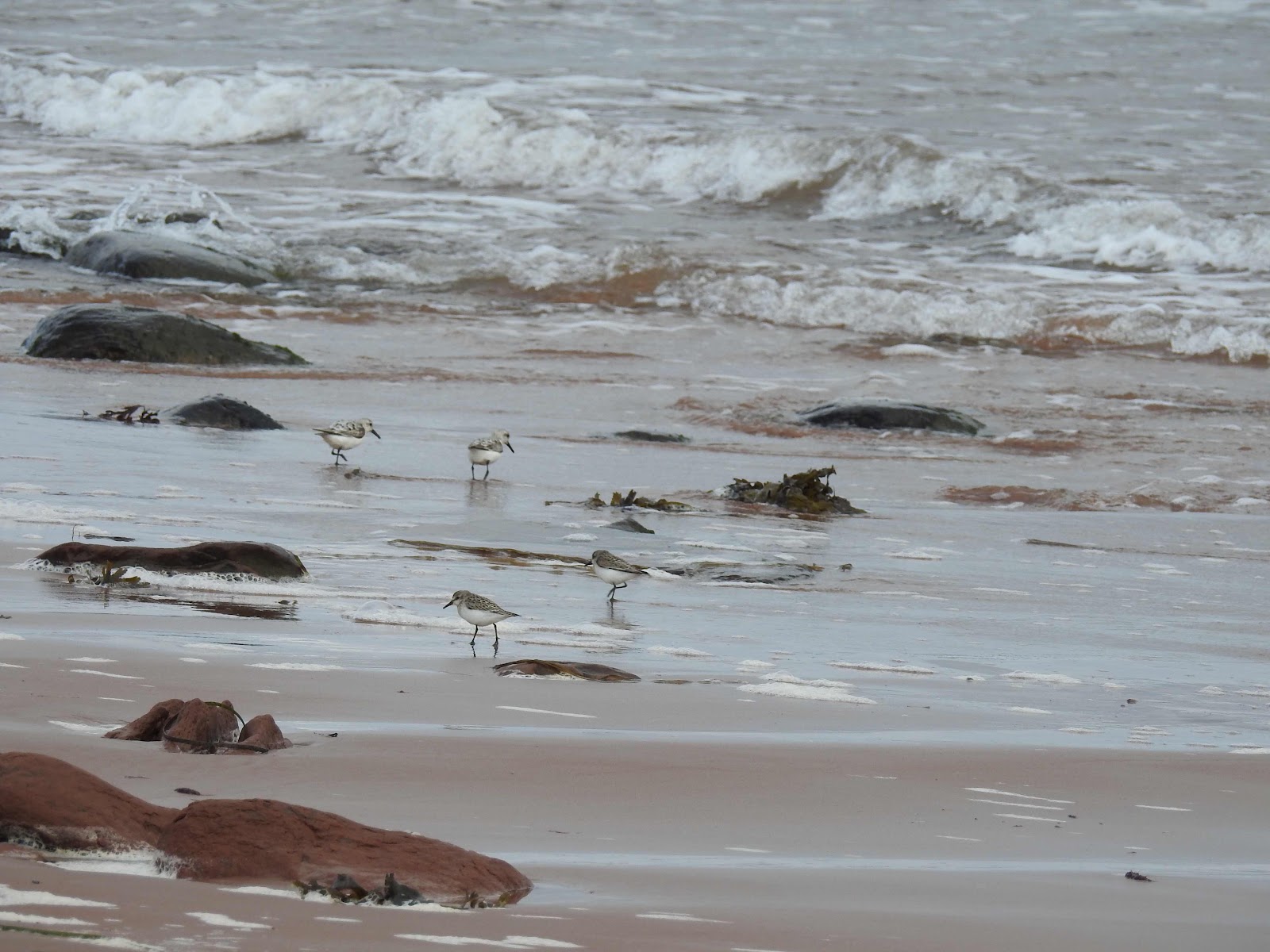
On the way back, I watched a small flock on Sanderlings which are among the last shorebirds to stop by the island on their migration south. The little birds fed along the shoreline and stopped to stand on one leg periodically. 


By the time we were back down the beach, the moody sky was replaced by blue and the late October sun provided some warmth. It was a perfect beach day!


Sunday, 8 October 2023

A day at North Cape

One of our most memorable outings ever was to North Cape on Prince Edward Island which we visited recently. We saw on social media about seals at North Cape and changed our plans that morning in the hope of spotting some. We weren’t disappointed with the seals but they were a small part of the experience that day.


North Cape is on the northwest tip of the island and on a beautiful autumn day, the hour drive was enjoyable. When we arrived, the seals were obvious, 


on the rock reef, part of the longest such natural reef in North America. There the waters of the Northumberland Strait and the Gulf of St. Lawrence merge.


Double crested cormorants and a variety of gulls enjoyed one end of the reef 


while the seals took up two areas at the far end. 


Looking at the water nearby, bobbing heads of the furry mammals basked in the sun between fishing forays into the briny blue. 


Meanwhile, human fishers shared in the bounty of marine life as well.


We walked along the shoreline to the sea arch in the area which has greatly expanded since our last visit. Storms may make a sea stack out of this arch in the near future.


The trails along the shoreline are lined with grass which was full of crickets in an orchestra that was loud but tuned. As we walked by, dozens of Savannah Sparrows flew out of the grass and flew nearby, waiting for us to pass so they could continue lunch. This one landed on a nearby rock on the shoreline.


We had lunch at the head of the Black Marsh Trail, and listened to the sounds of the crickets and the sea. Afterwards, we walked the trail and watched three Turkey Vultures as they sailed on the thermals above the shoreline, smelling and looking for carrion. 


The trail meanders along the edge of the shoreline and through trees nearby. One viewing area lets observers see what lies ahead. 


The wind turbines in the scene always give me hope that one day, humankind will be easier on our environment.


At the black marsh, we sat and looked out over the landscape, a marsh which is familiar to Newfoundlanders like us, containing cloudberries and pitcher plants. 


We continued on to the sea stack, past the remains of the trees along the shoreline. Weathered by sea spray and wind, they stand as sculptures created by nature’s hand.  


When we arrived back near the reef, we noticed sea birds enjoying the area too, floating around among the seals bobbing in the water. Eider Ducks, Scoters and Mergansers added to the nature quest for the day. 


Nearby, a small flock of Sanderlings landed on the rocks in front of us.


On the way home, we stopped at St. Simon and St. Jude Roman Catholic Church to see man’s creation compared to the natural one we had just left. 


The church is a beauty, with some stained glass windows, not often seen in island churches. Its ceiling is reminiscent of a night sky.


It was a gorgeous fall day on the island and at every turn, there was something to appreciate and enjoy! 


Friday, 17 September 2021

A walk on the beach

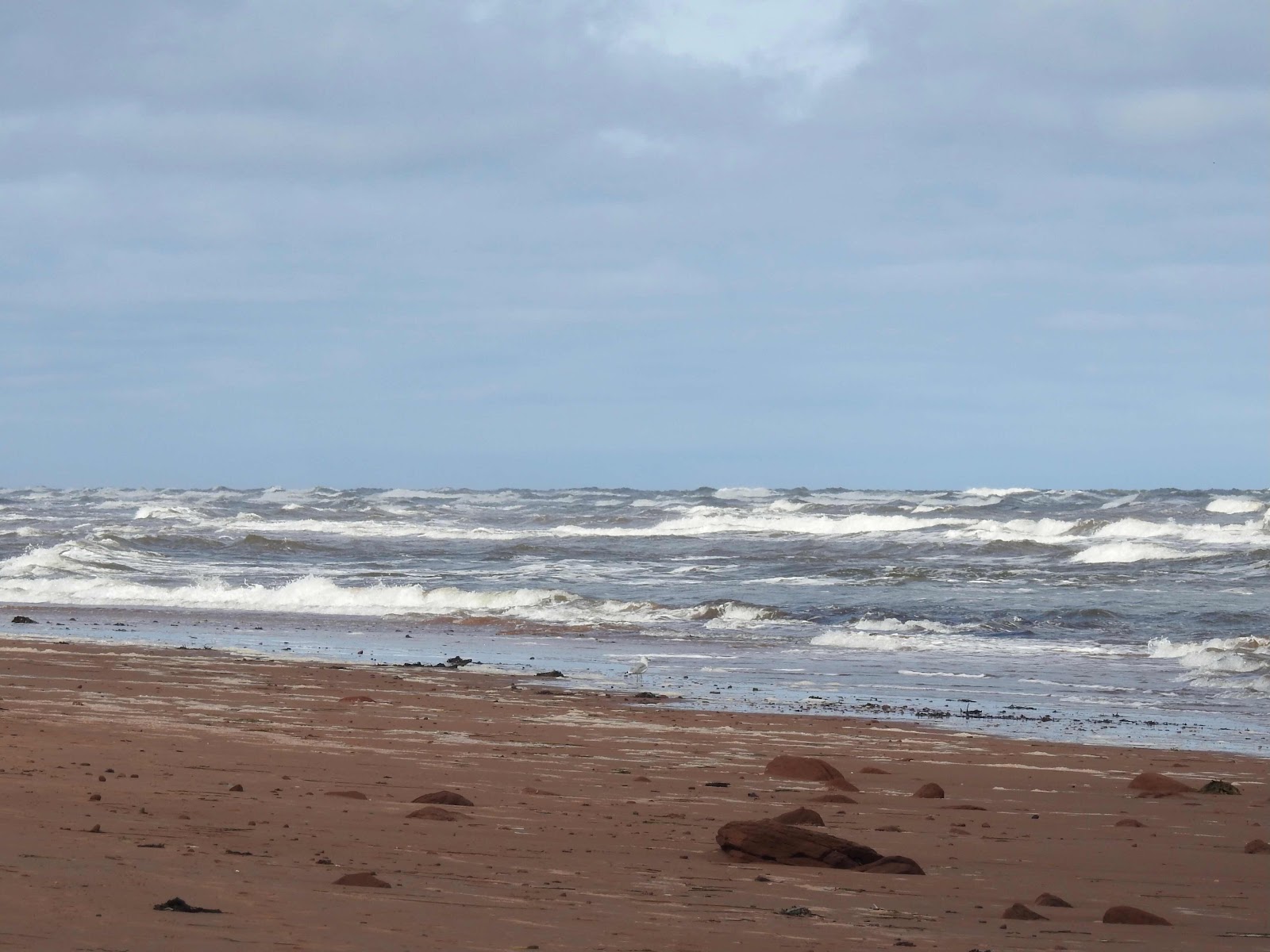
It feels wild and untamed, this beach on the northeast coast of Prince Edward Island. Savage Harbour lives up to its name on this day after a storm. The wind is high enough today to keep the sea agitated, roaring into our senses as we walk the beach, only the gulls and a few small shorebirds to keep us company.


The waves break a bit off-shore on the sand bars that constantly shift position around this Prince Edward Island, making navigation of fishing boats a constant challenge around the ever-changing shoreline.


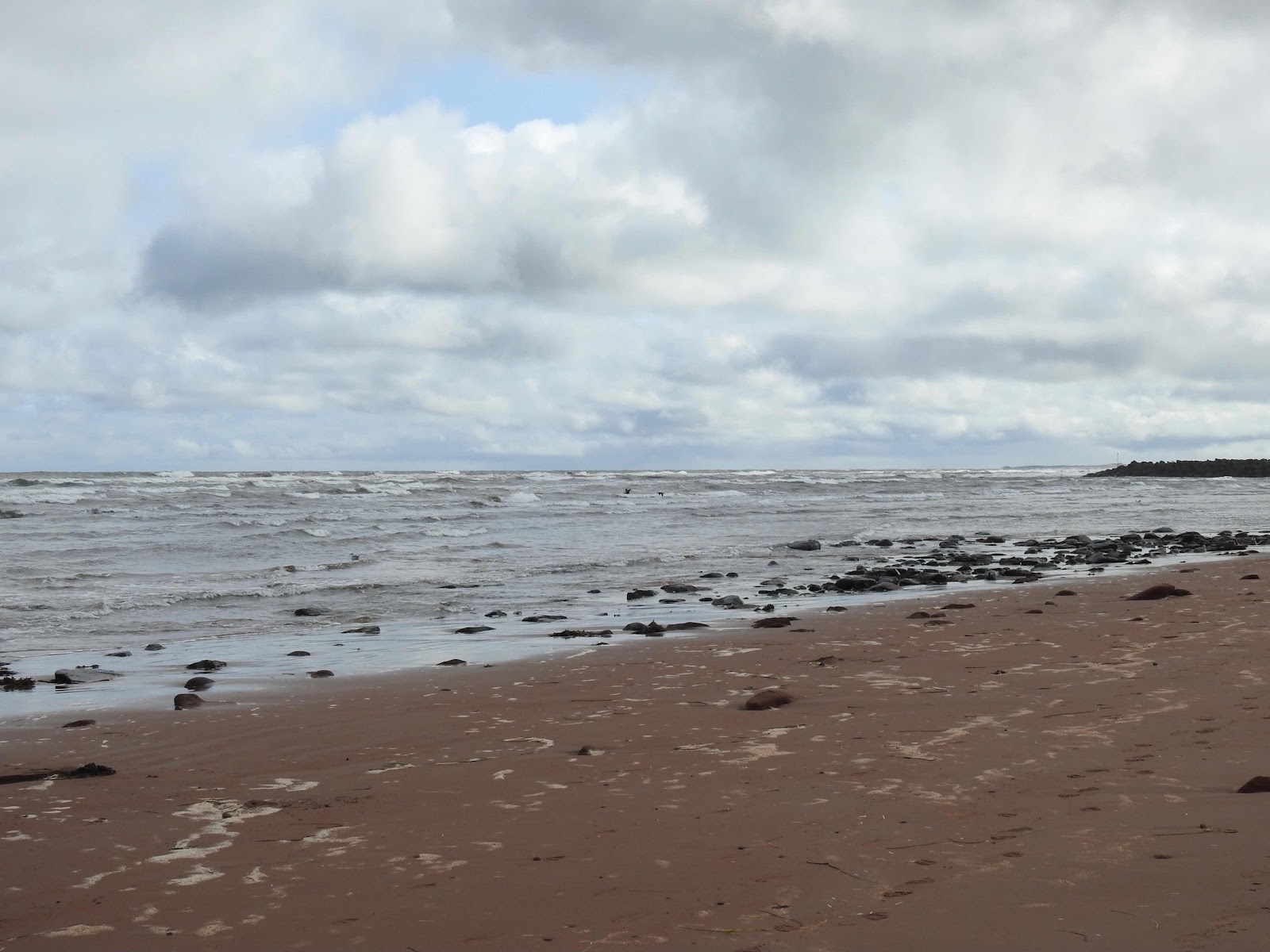
The sky is a character in this performance as well. Sometimes she teases us with blue, as if she will don her best costume any minute. 


Other times, she presents a hint of blue through thick white pillows. 


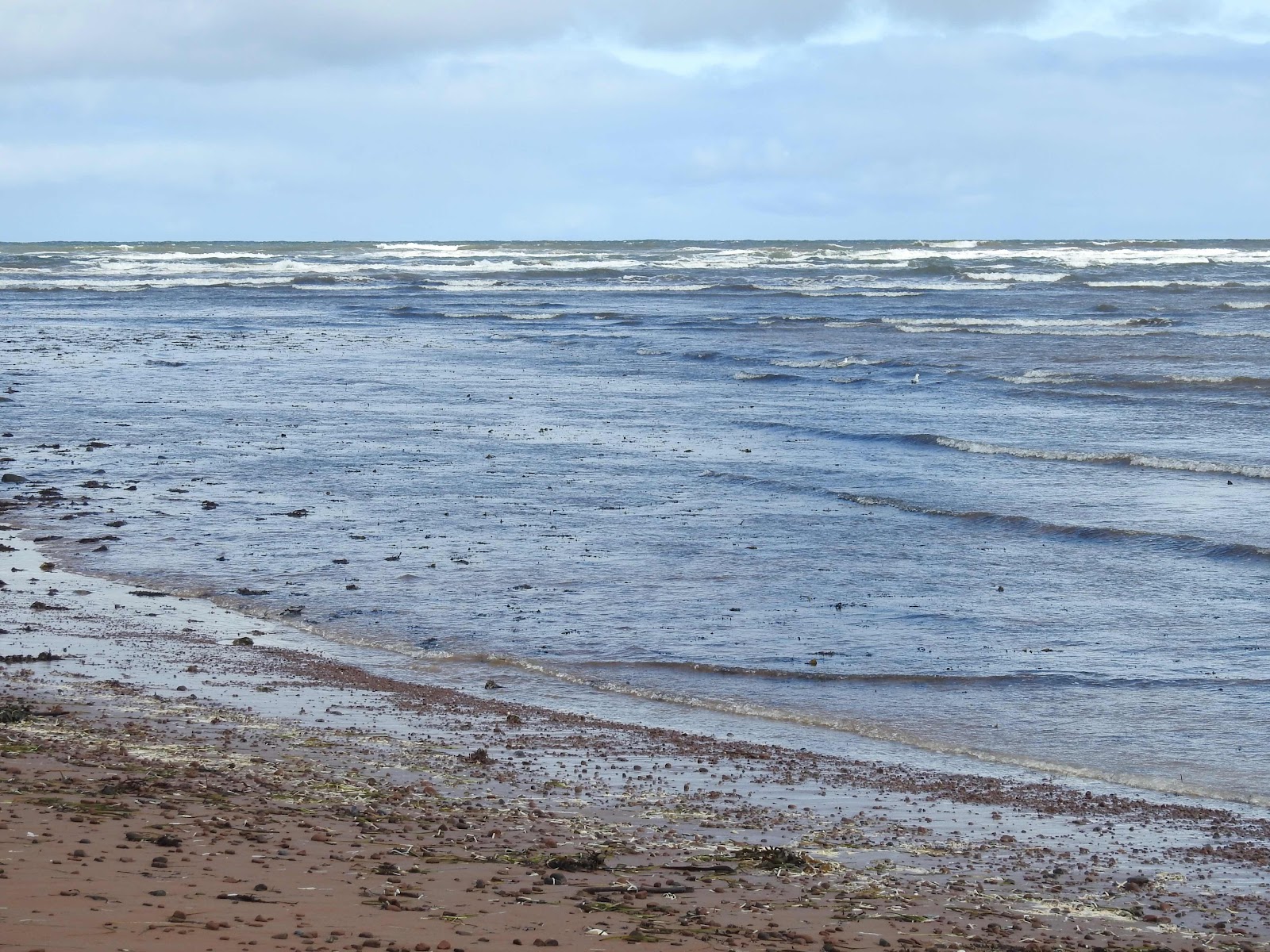
This character affects how the sea looks as well, and its blue is particularly appealing. 


Just beyond the nearby inlet to the wharf, the sea looks particularly rough today sending mist onto the beach. 


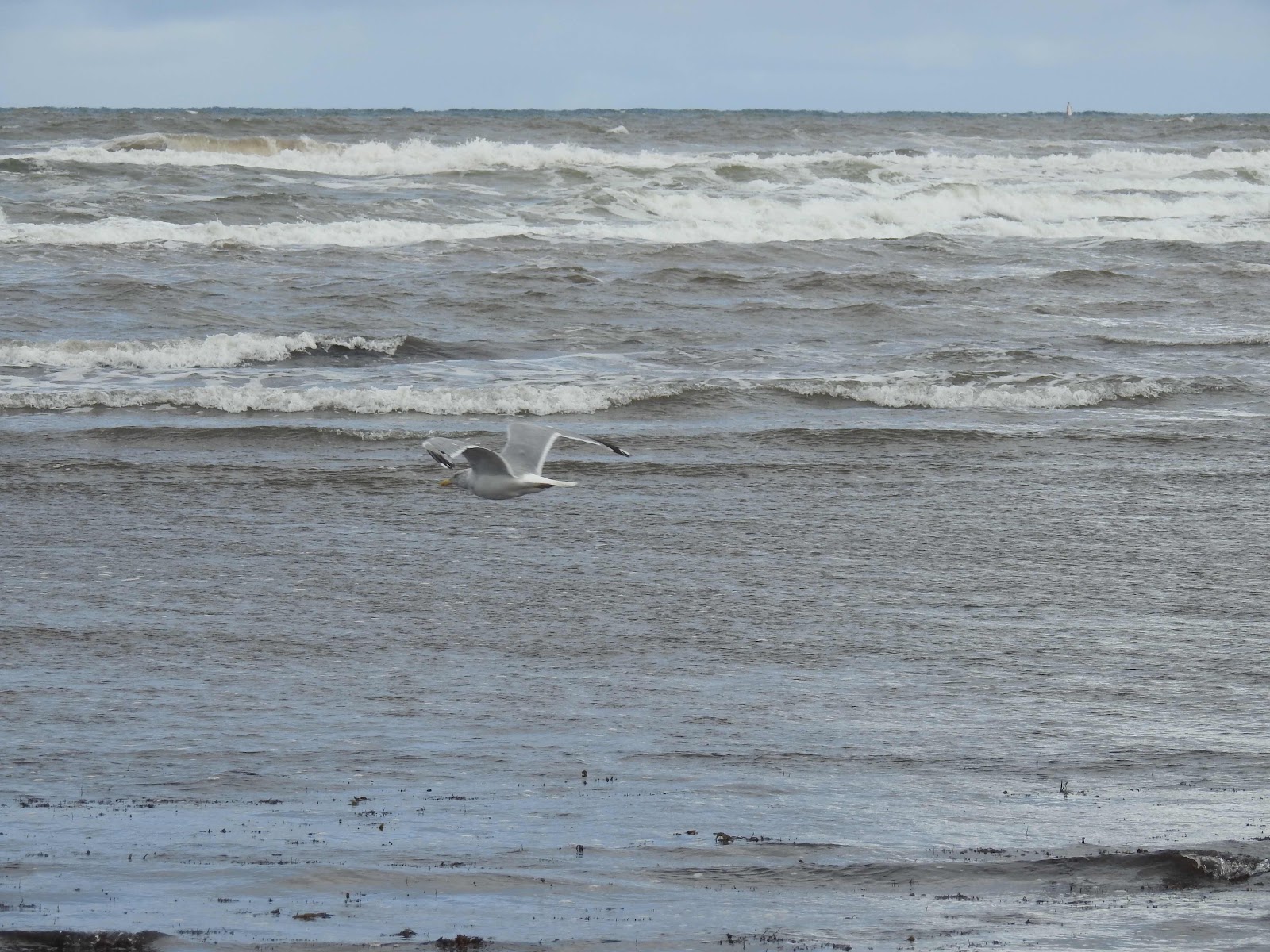
The gulls are in their element. Gliding on the breeze or foraging on the beach, they ignore the roving audience which stops to admire them on occasion. 


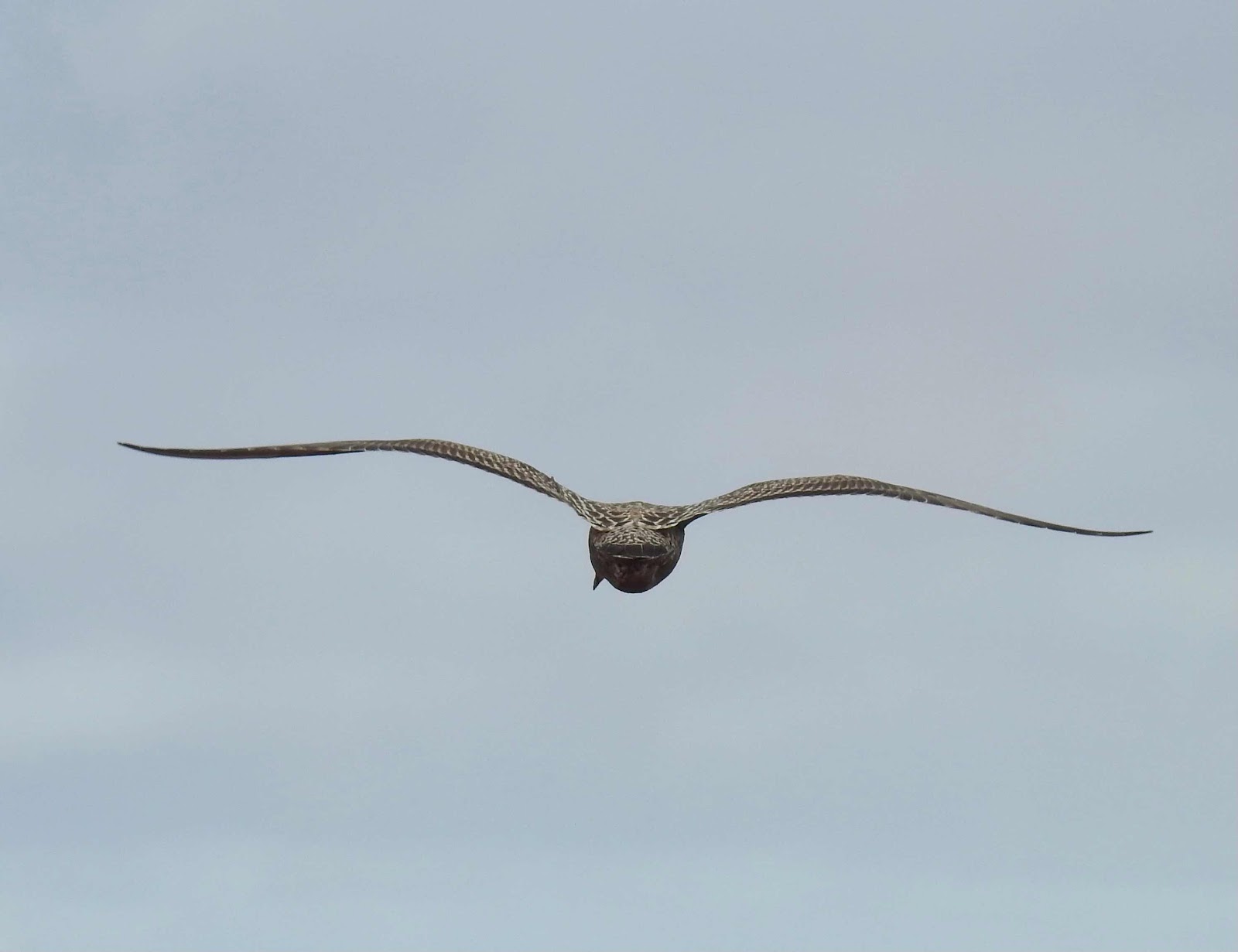
The young Herring Gull showed its marking as it floated on the breeze. 


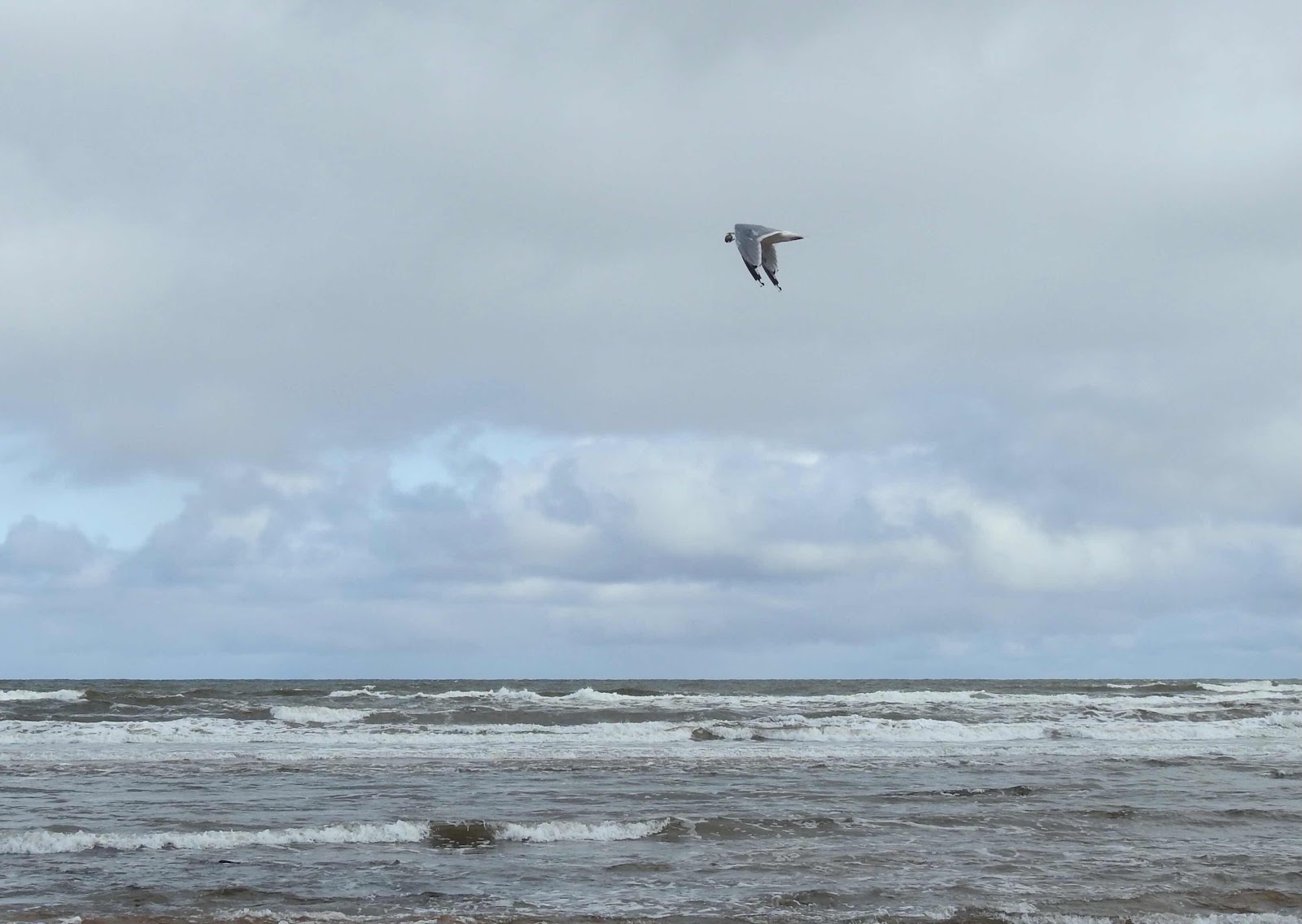
Another had its mouth full as it prepared to drop a shell, breaking it on the beach below. Such clever birds!


Meanwhile, the small shorebirds go about their foraging along the water’s edge, oblivious to the gulls.


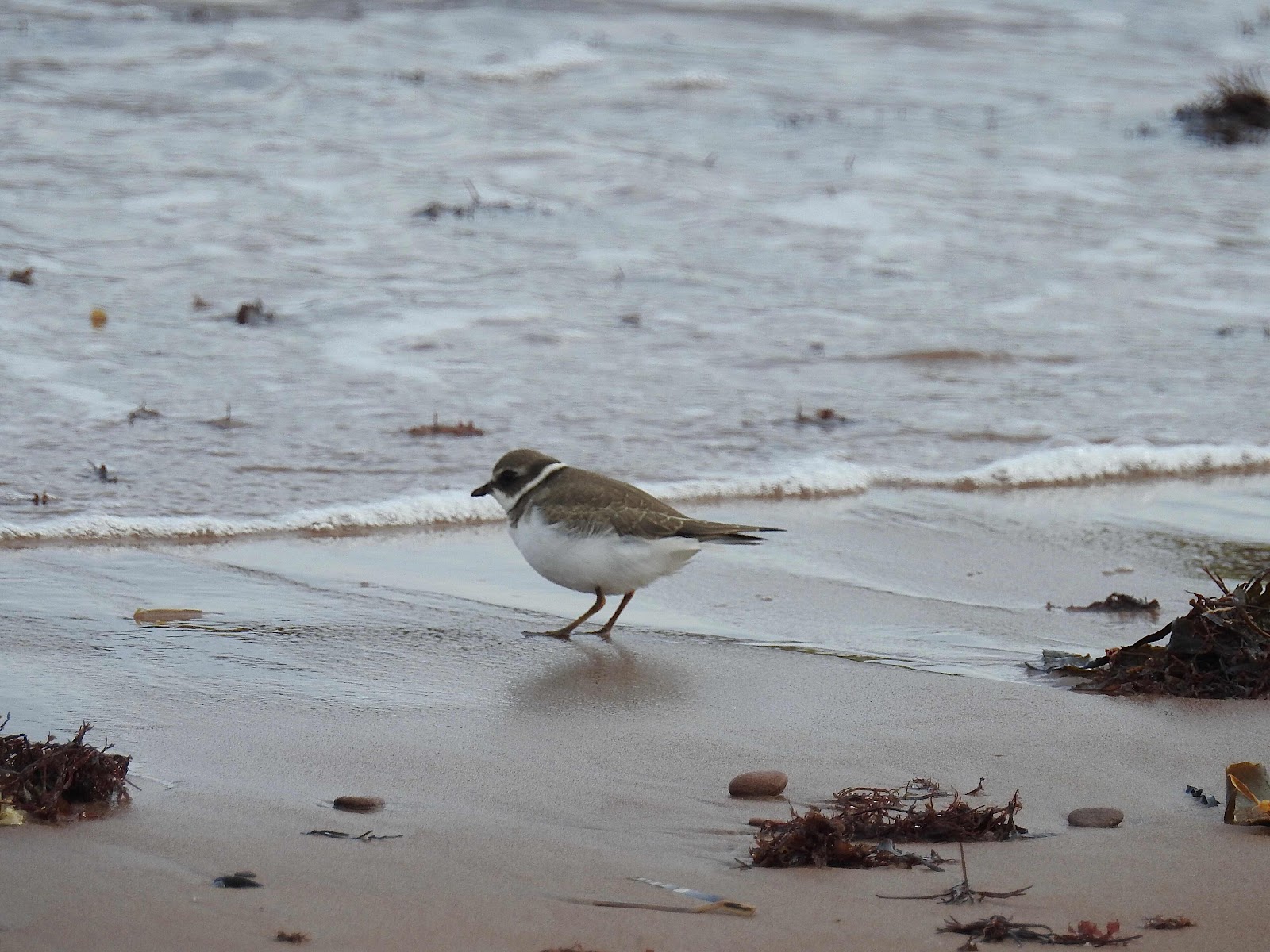
Sanderlings and Semi-palmated Plovers don’t mind the audience either, though they run along the shoreline as we advance up the beach. 


They do a lot of running though they can fly.


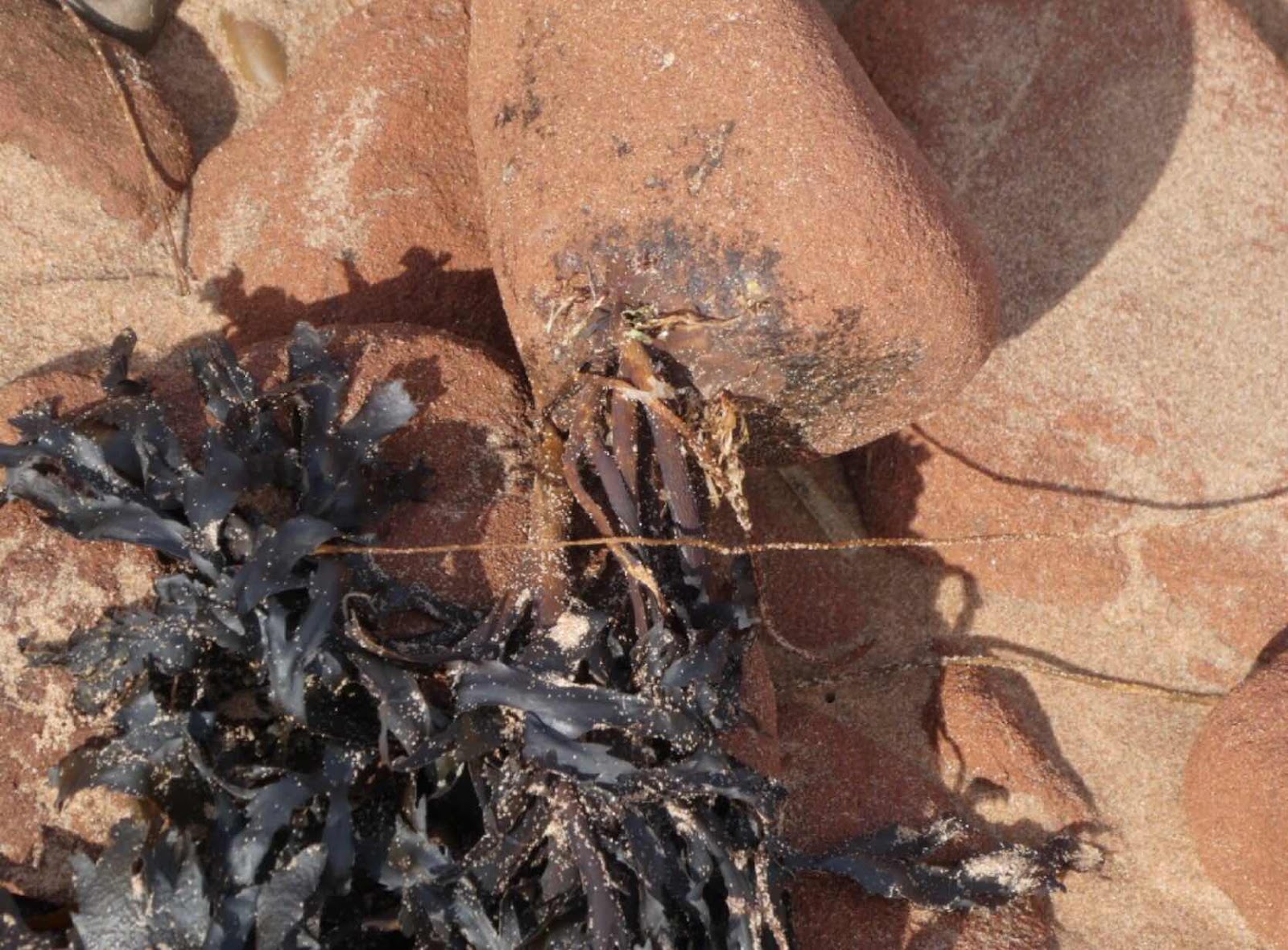
Along the beach, Bladderwrack, also known as Fucus has latched on to a rock via its holdfast. 


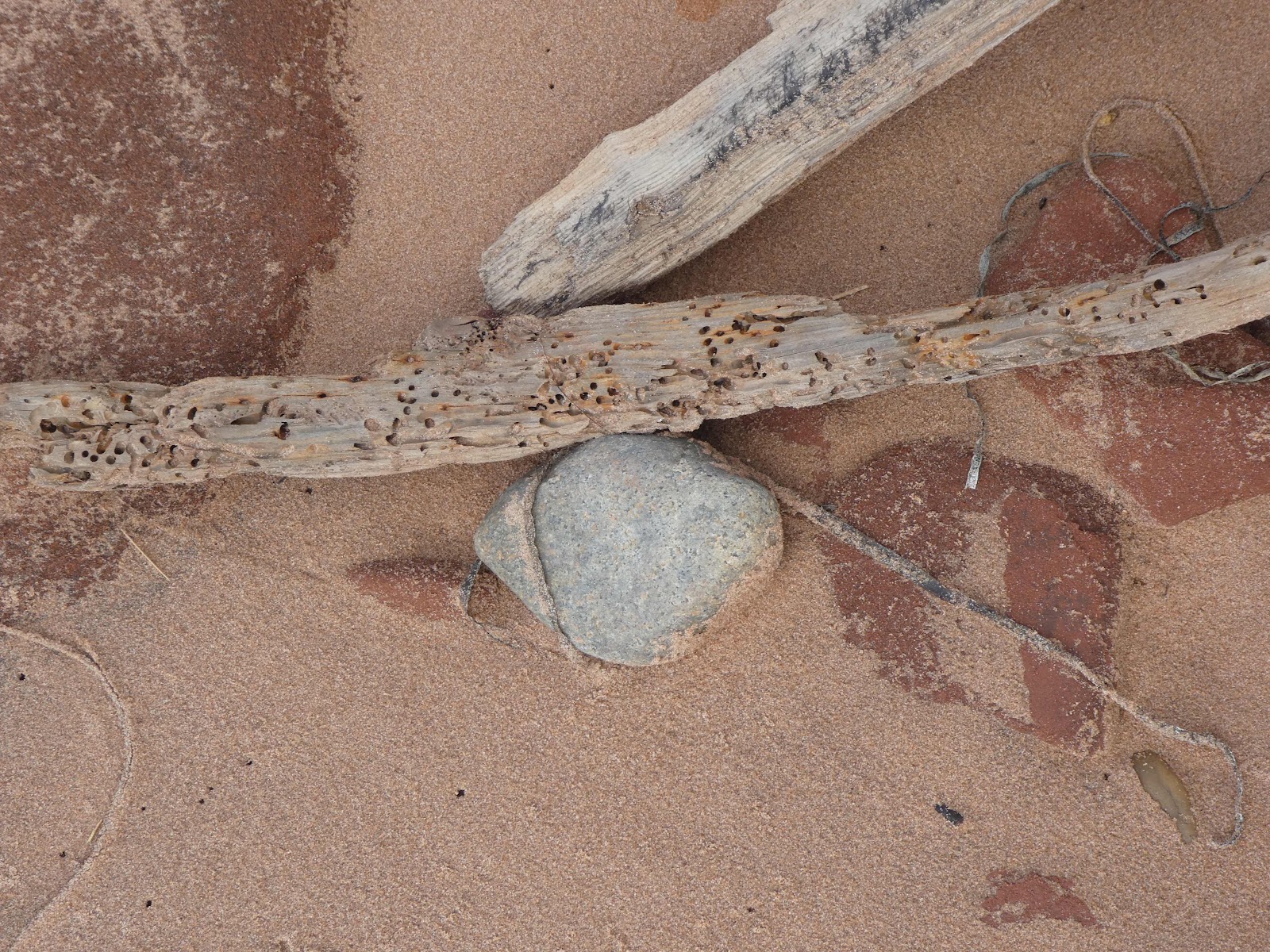
Further along, a piece of driftwood has been home to shipworms and Gribbles, leaving their impressions in the wood. 


There is much to take in as we watch and listen.


This theatre is one which will draw us back every year for a repeat performance.