Most Popular Post

Showing posts with label fish ladder. Show all posts

Sunday, 22 September 2024

September discoveries

Our past week started with a picnic in the community of Cape Egmont. We had driven along the Evangeline shoreline of Prince Edward Island, and stopped at the Cap Egmont lighthouse. The sea stack there is another favourite of my husband and I and we like to observe it seasonally.
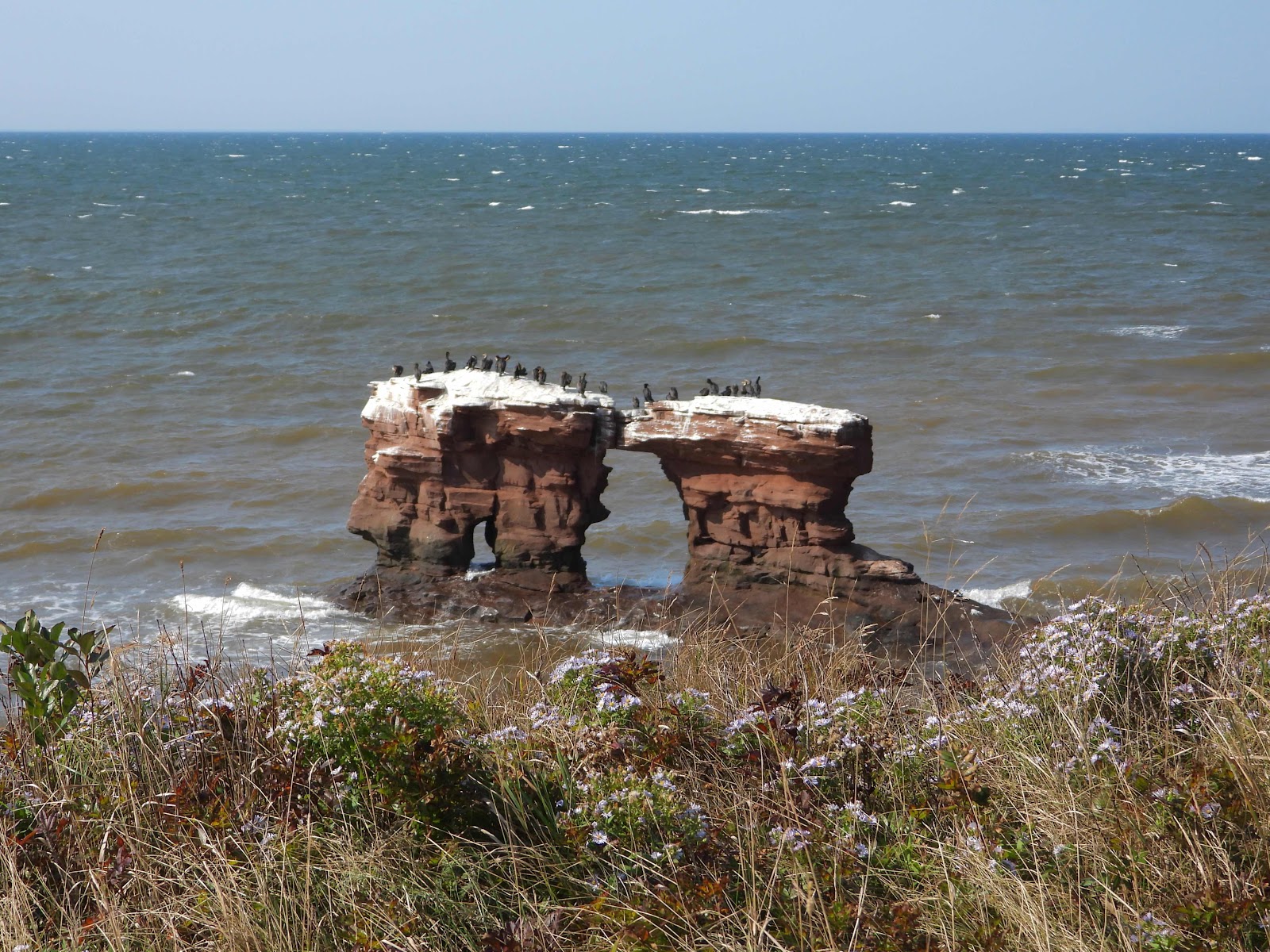


This year, the size of both openings in the stack continues to grow and the first part of the stack visible from shore has two faces. 


Can you see them? We will be interested to see how they change this coming winter.


The Double-crested Cormorants have enjoyed the stack this year if the guano is any indication. 


The birds perch on the stack between their fishing flights along the shoreline.


This nearby cove, accessible via a narrow path and chain to hold was beyond the risk we would take, though I wanted to try it.


The shoreline has Goldenrod and Asters in abundance and the lighthouse is a wonderful backdrop.


At Cape Egmont, Arsenault Pond is a beautiful setting for a picnic.
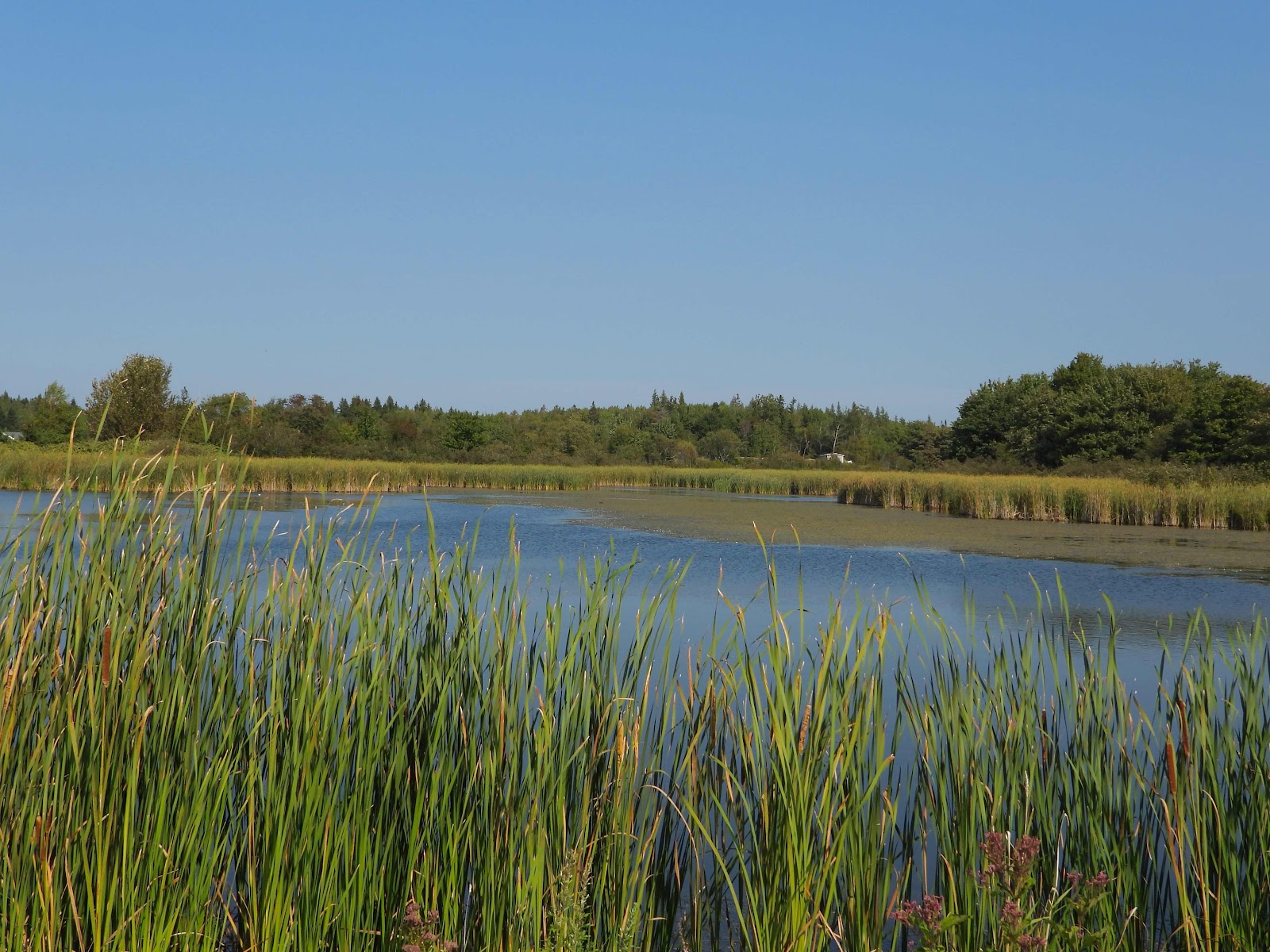


A trail around the pond goes through the wildflowers such as Fireweed and Joe Pye Weed all gone to seed.


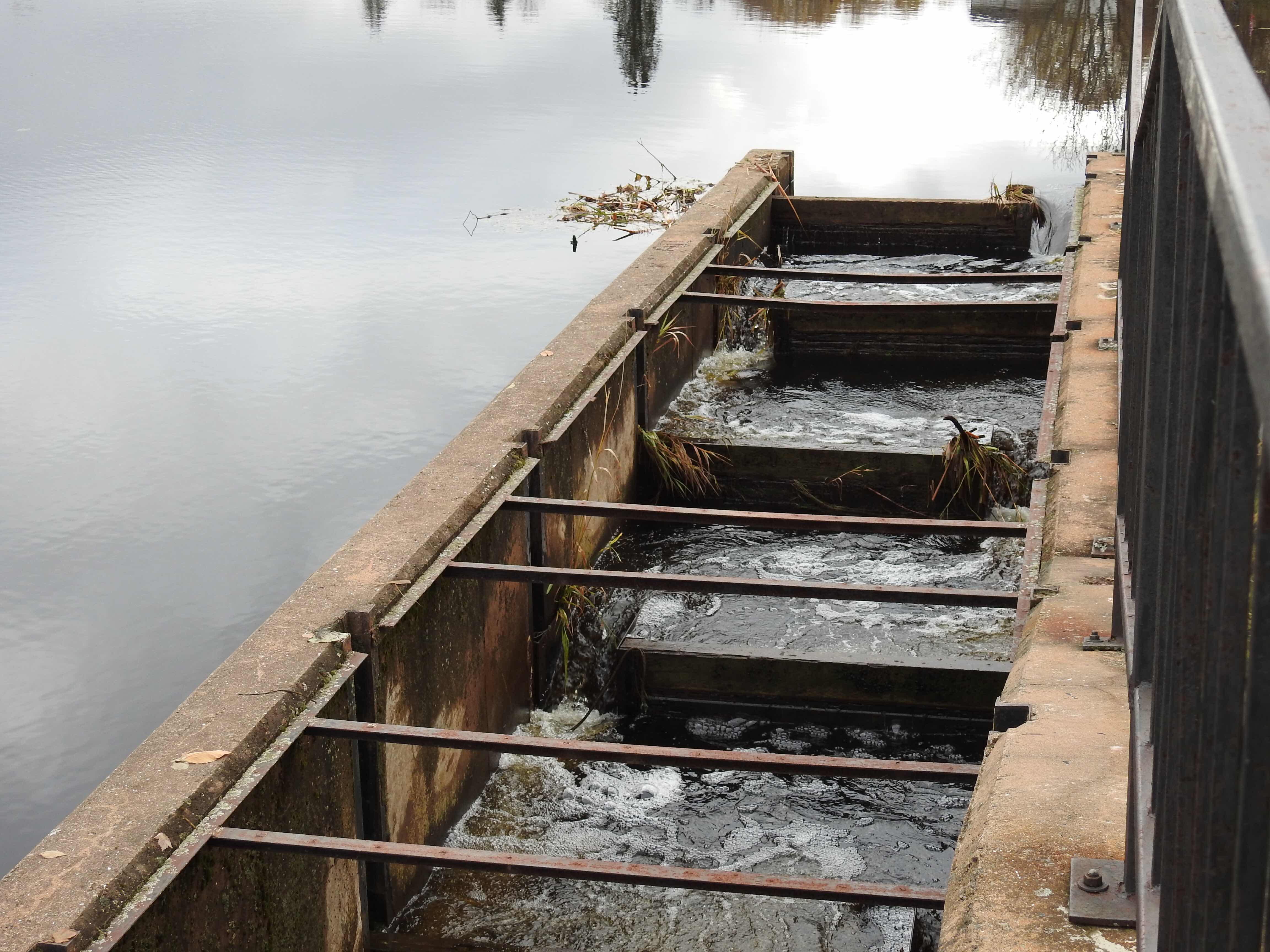
A fish ladder on the pond was busy that day as little fish were on their way down stream.


Just below the ladder, a Great Blue Heron knew of the fish too. You can bet it wasn’t his first day in this location.


We walked the boardwalk this past week as well. One location along the boardwalk is frequented by a flock of European Starlings. The chatty birds sometimes hang out in the trees in that area or among the seaweed along the shoreline below. 


Later this past week we cared for the golden grand-dog, Daisy again. She keeps us on our toes! It is cooler weather now so we didn’t take Daisy to the beach. Instead all of our walks were on the Confederation Trail, where we saw a few interesting things.


We expect this bird, probably a duck, fell prey to a raptor. 


Of course Daisy discovered it along the way. Only feathers remained around a headless body cavity. That predator was efficient! The tail feathers on this bird were beautifully coloured.


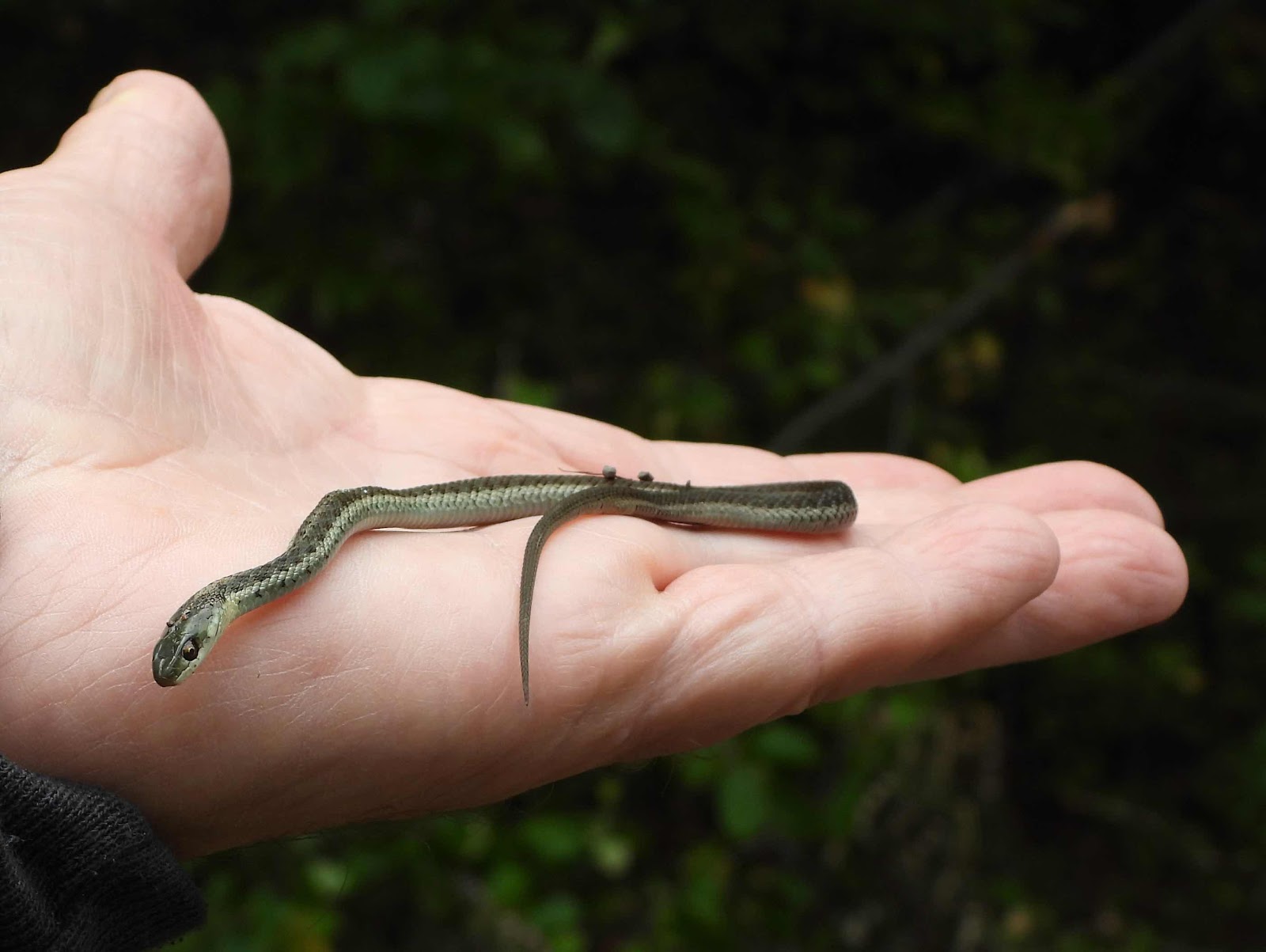
Also along the trail we discovered two tiny garter snakes. It looked like they had been run over by bikes. The tiny creatures would have been difficult to see as one rode along. We had never seen such small Garter Snakes.


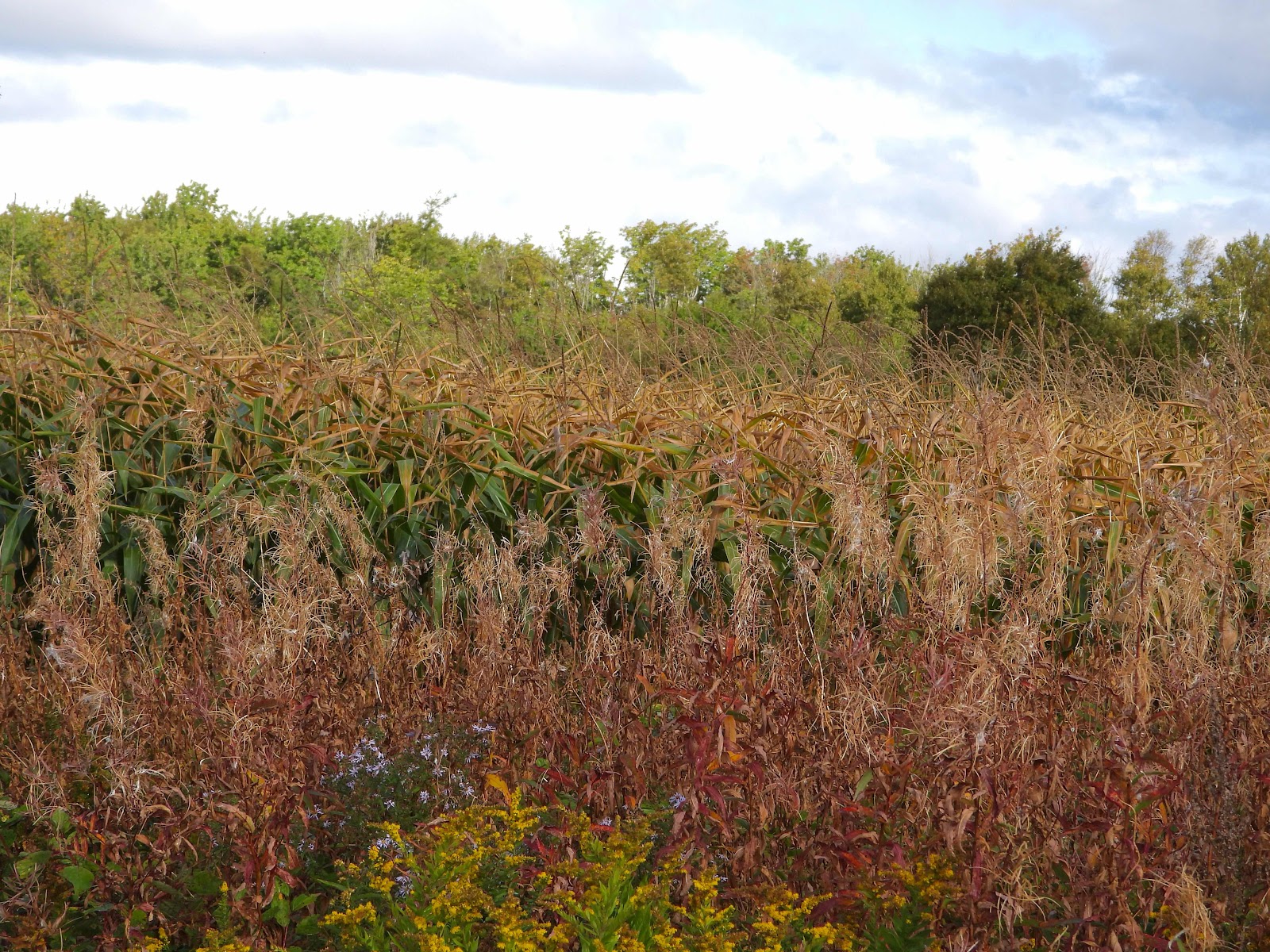
The fields along the trail are near harvest time, potatoes having been sprayed, waiting for harvesting. Corn fields are tall and provide beautiful texture to the wildflowers bordering the fields.


Meanwhile, this young dog, along for a walk to use up some of the energy she has in abundance, can run free on the trail when no other walkers or bikers are around. The faithful creature, runs ahead as fast as she can, stops suddenly and looks around, checking on the two seniors walking along behind her. 


We smile and walk on…


Friday, 24 September 2021

Close to home

Twenty kilometres from Summerside, the small community of Wellington is an integral part of Evangeline, the French region of Prince Edward Island. My husband and I enjoy riding to Wellington on our bikes. On the last full day of summer, we explored part of Wellington, near the Confederation Trail, which we hadn’t done before. It was a sunny day, without a breeze.


Mi’kmaq people, the first people of the island, were familiar with the valley of the Ellis River for many centuries before the Europeans arrived. They travelled through the valley on their way from the Northumberland Strait in the south to Malpeque Bay on the Gulf of St. Lawrence in the north. Europeans arrived in the area in 1833 and over time, the Mi’kmaq migration ceased. Like so much of Canadian history, the ancestral people of the land were relegated to small parcels of their own land.


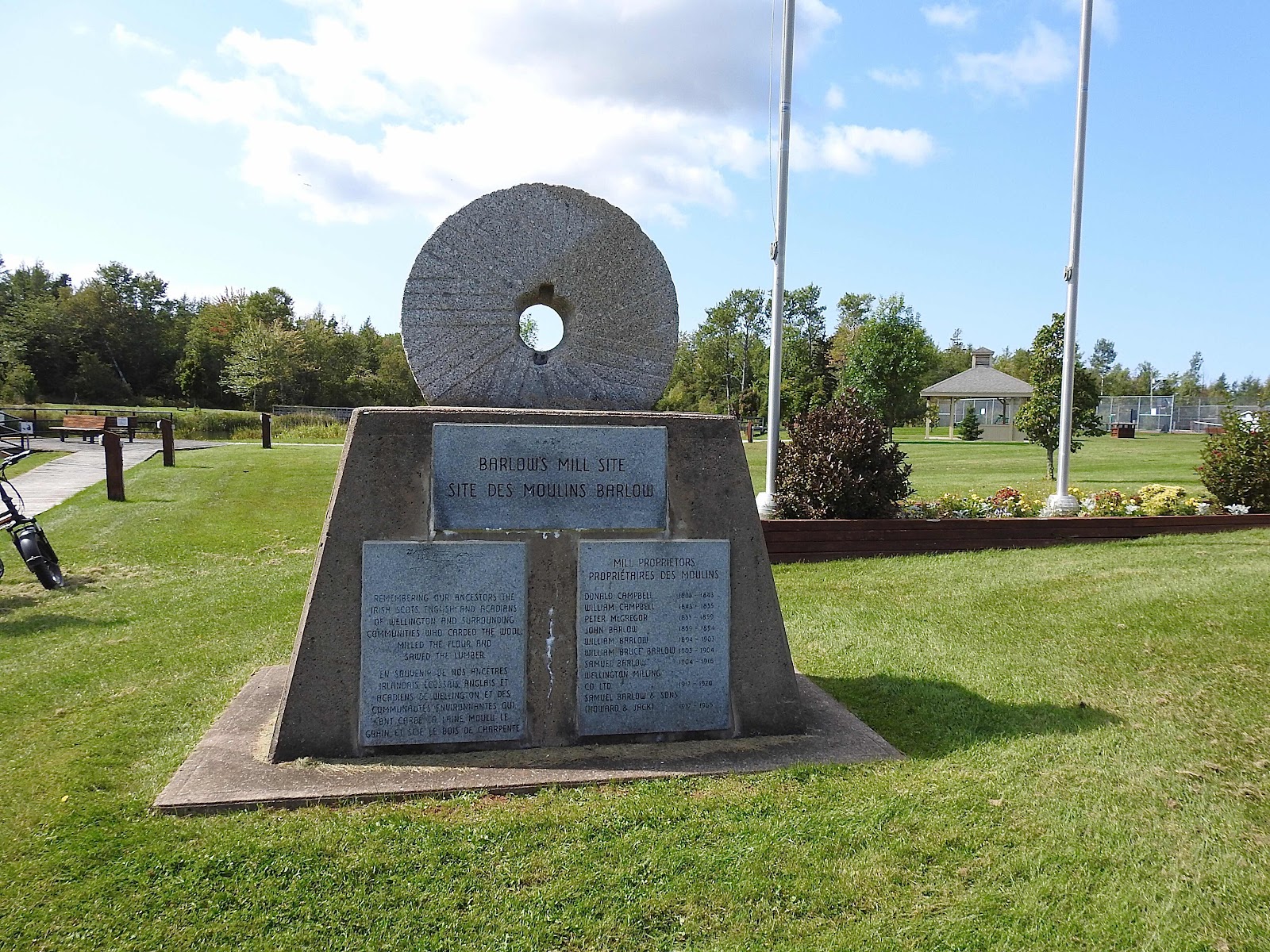
Meanwhile the newcomers established themselves in the area and eventually the name Wellington came into common use. By 1836, they had dammed the Ellis River and later, a mill was established there. Today, a mill stone is on display at a park in the area, a runner stone from the old mill. 


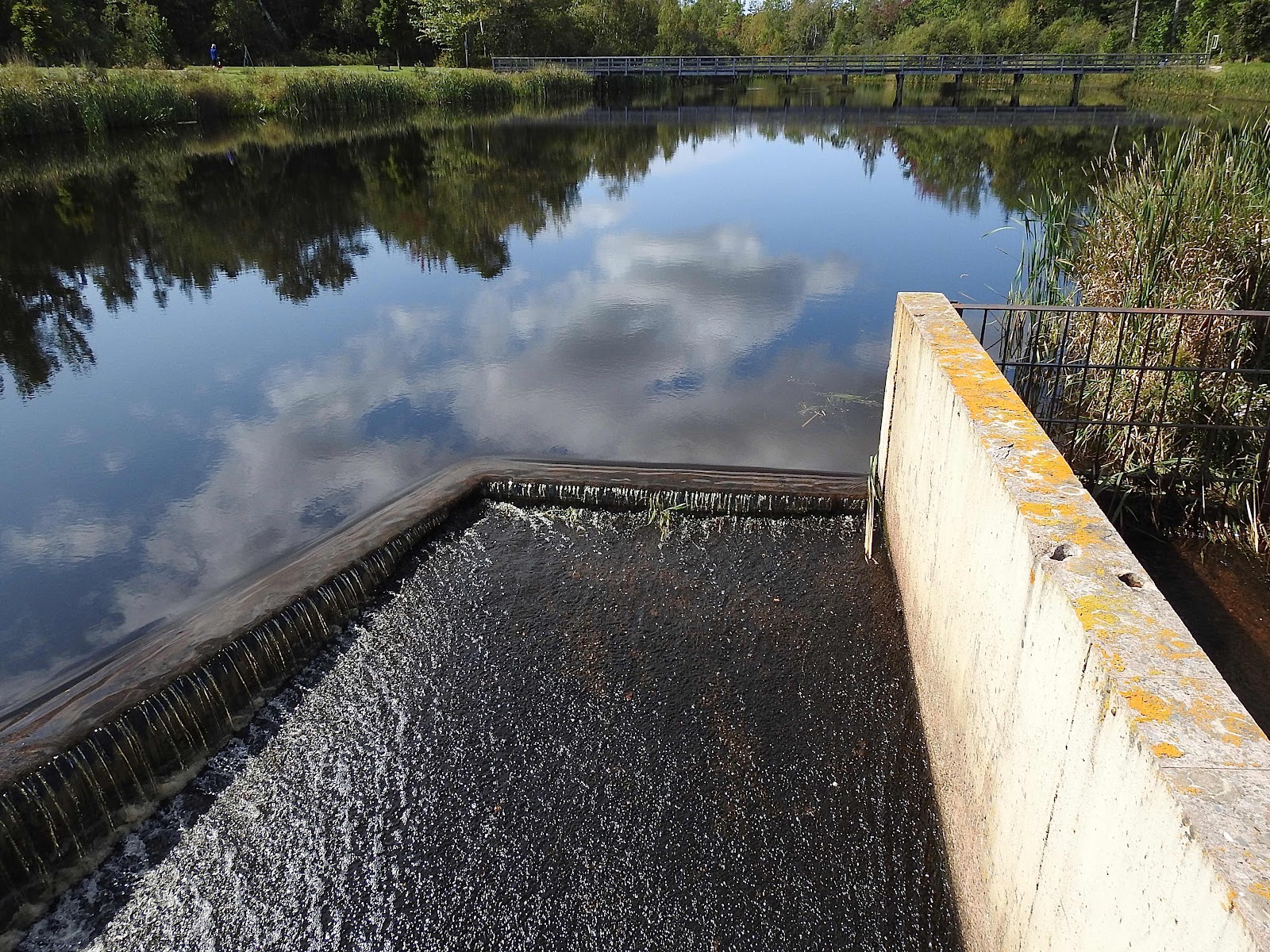
A fish ladder on the river isn’t busy with fish this time of year but the sound of the running water fills the senses. 


A bridge over the ladder provides a close up of the ladder below and the sky reflected on the water.


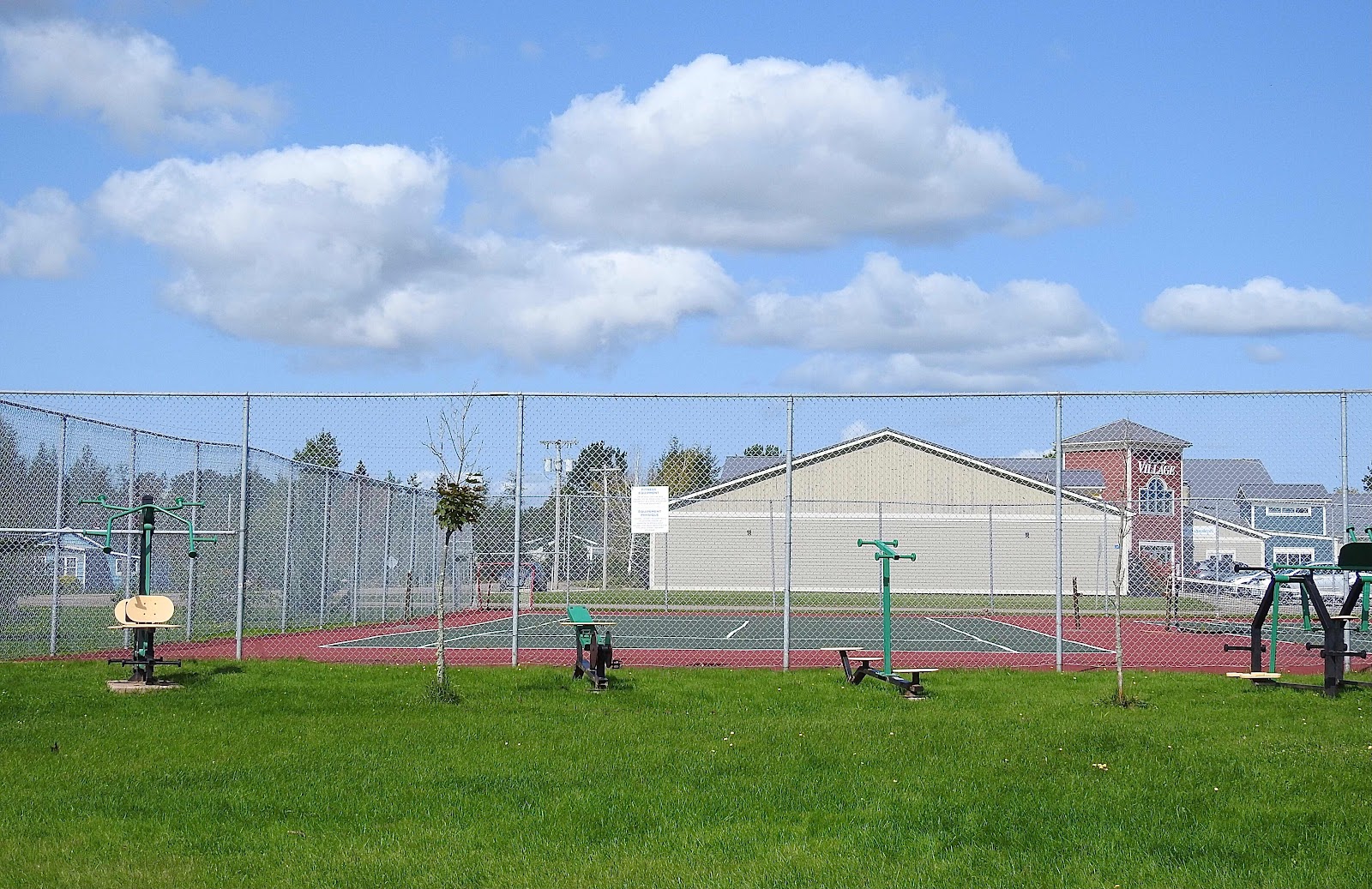
Nearby, tennis courts make up part of the recreation facilities in the area and are quiet like the playground that time of day.


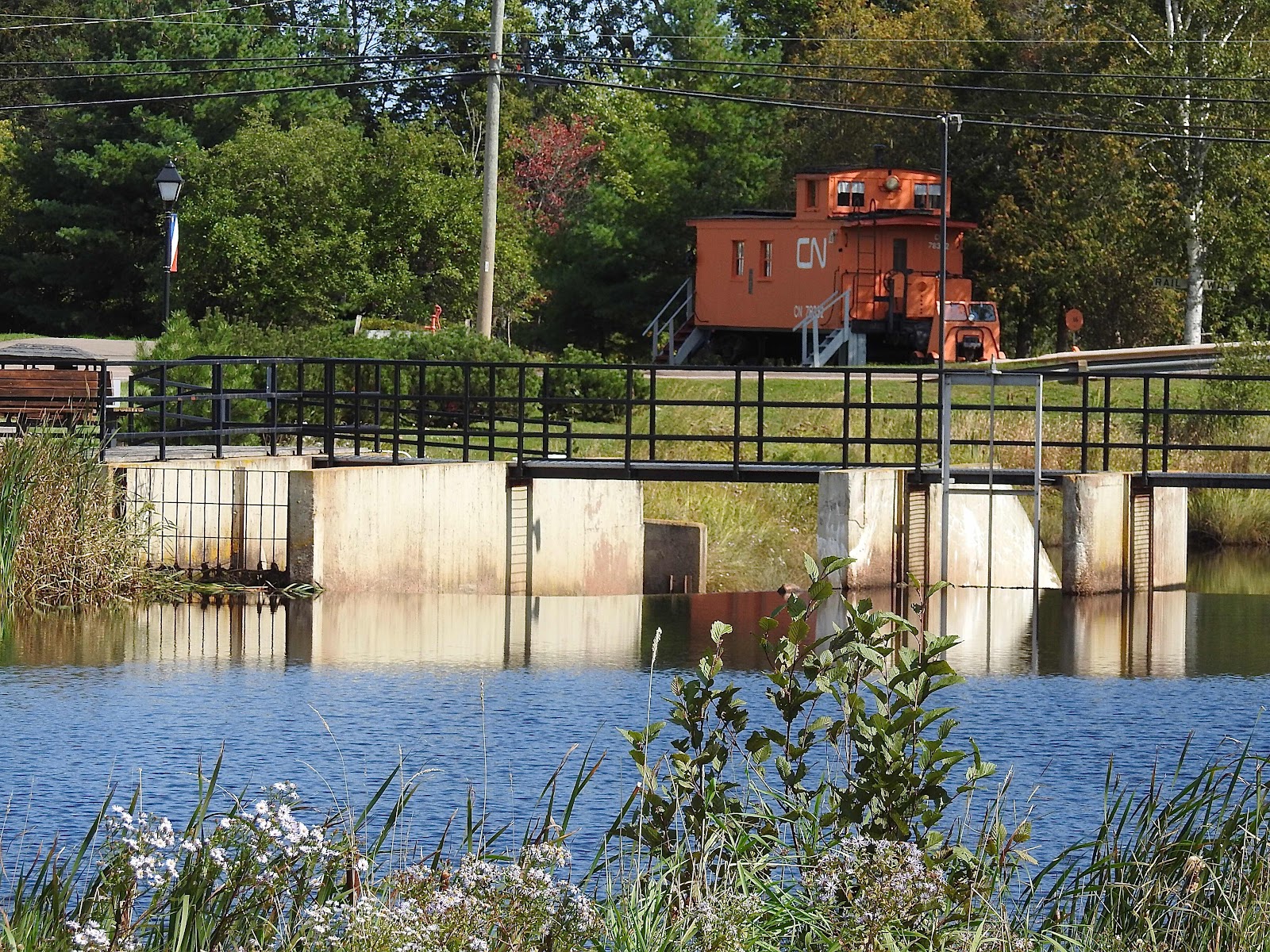
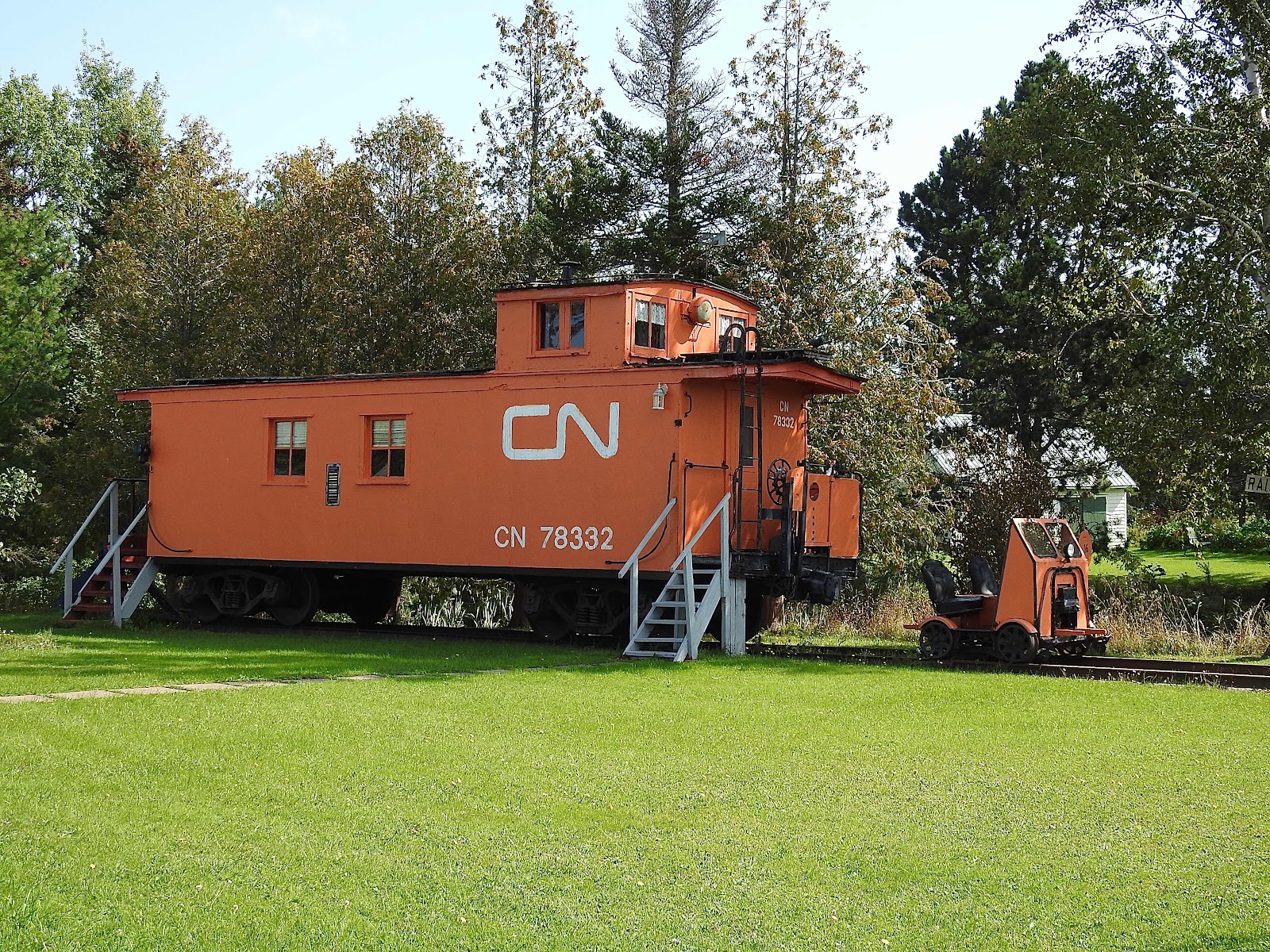
Across a road, a caboose from the old railway which ceased operations decades ago, is well maintained. 


With it is a speeder used by railway work crews as they repaired and maintained the rail line.


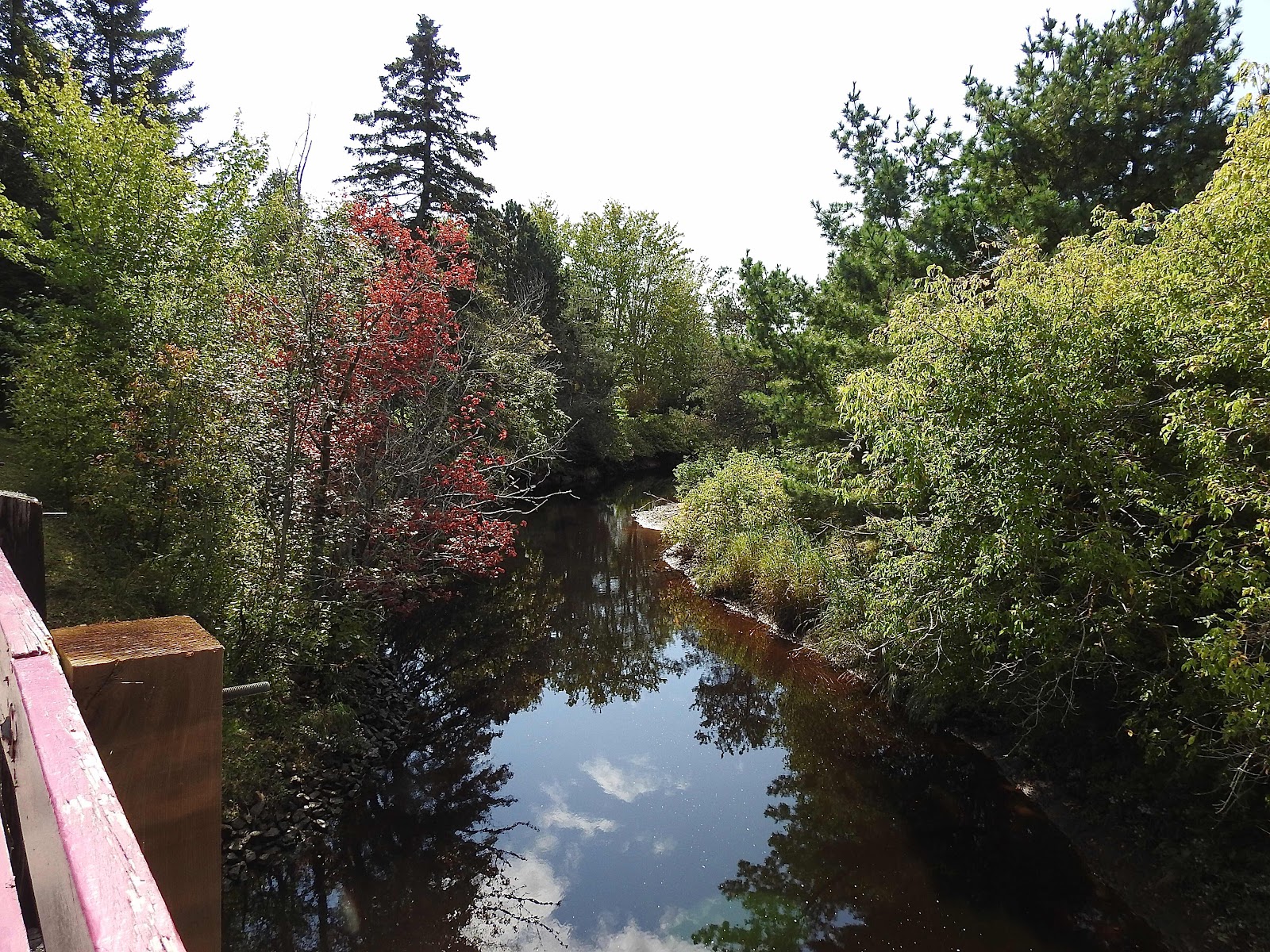
The Ellis River is picture perfect as we relax and enjoy the area. Autumn is working its magic here.


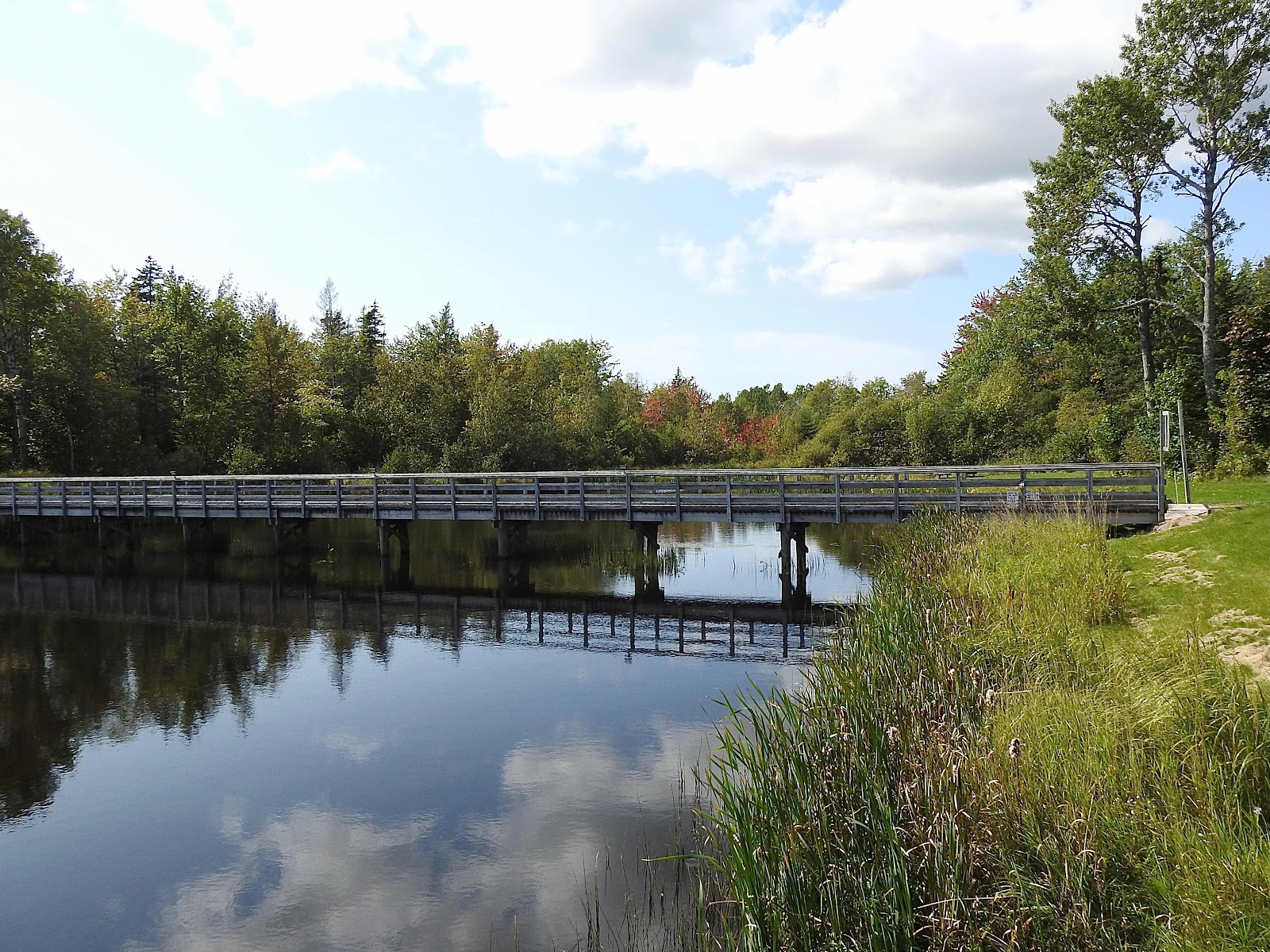
We crossed the bridge at the back of the park and discovered trails which parallel the river. We will be back for a picnic and to explore those trails.


Wednesday, 14 July 2021

Inland waters

Our quest to cycle the Confederation Trail from east to west on Prince Edward Island took us to what may be the most remote section of the trail last week. On our return ride from Selkirk to New Harmony, we only met one person, which is unusual. In addition, a section of this trail has not been groomed yet this year which made it look untamed. It is where I fell with my bike. However, the ponds and wetlands in this area are worth a visit.


Larkin’s Pond near Selkirk is known for fly fishing although on the two weeks we’ve been past there we haven’t seen anyone fishing. 


We saw ducks on both occasions but they were too far away to photograph. The wind in the bulrushes is almost musical. 


Numerous Baltimore Checkerspot butterflies flitted over the trail in this area and one posed for a photo.


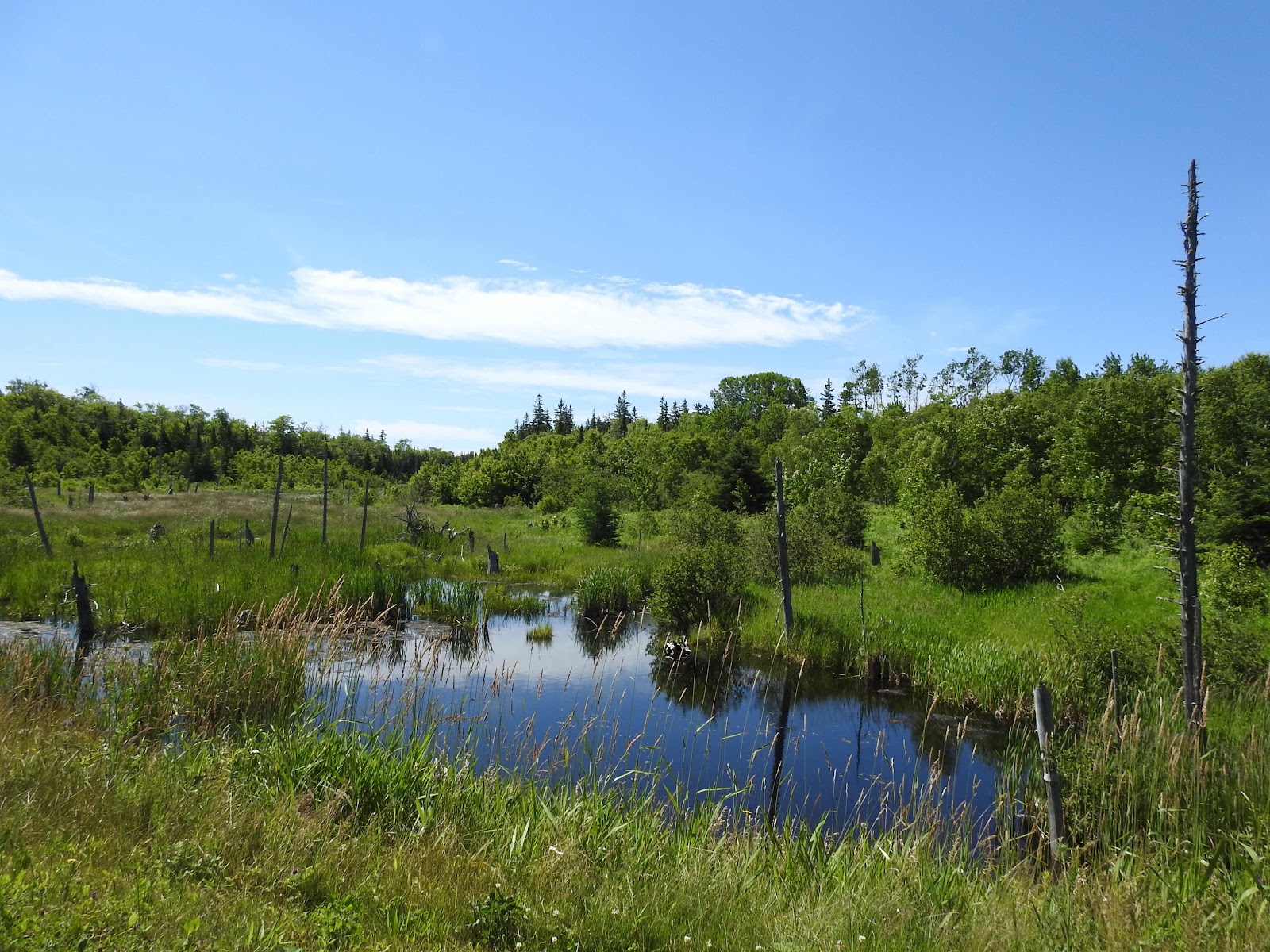
Further along, in a peaceful wetland area, 


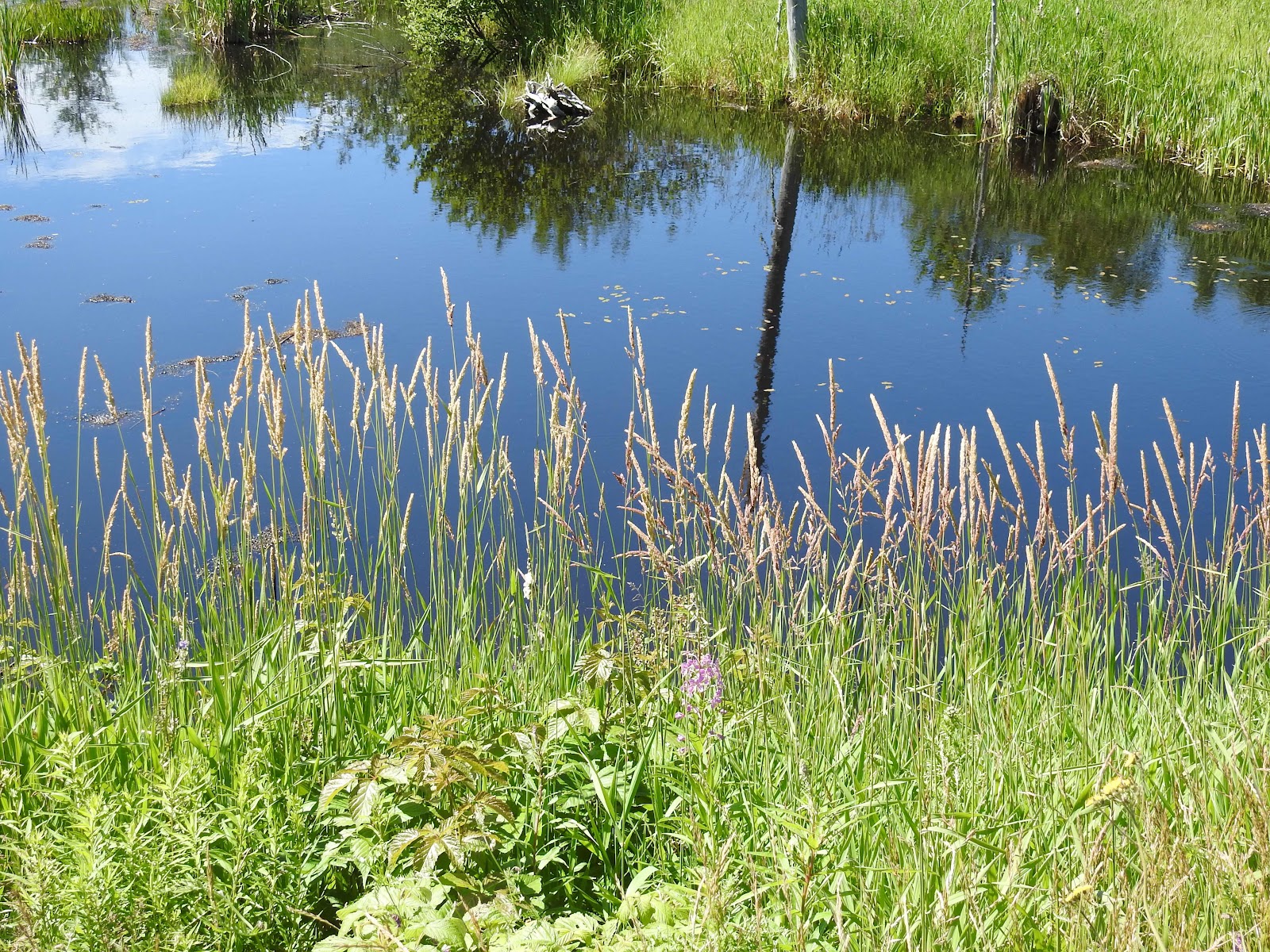
reflections of the occasional cloud overhead adds to the scene on the water.


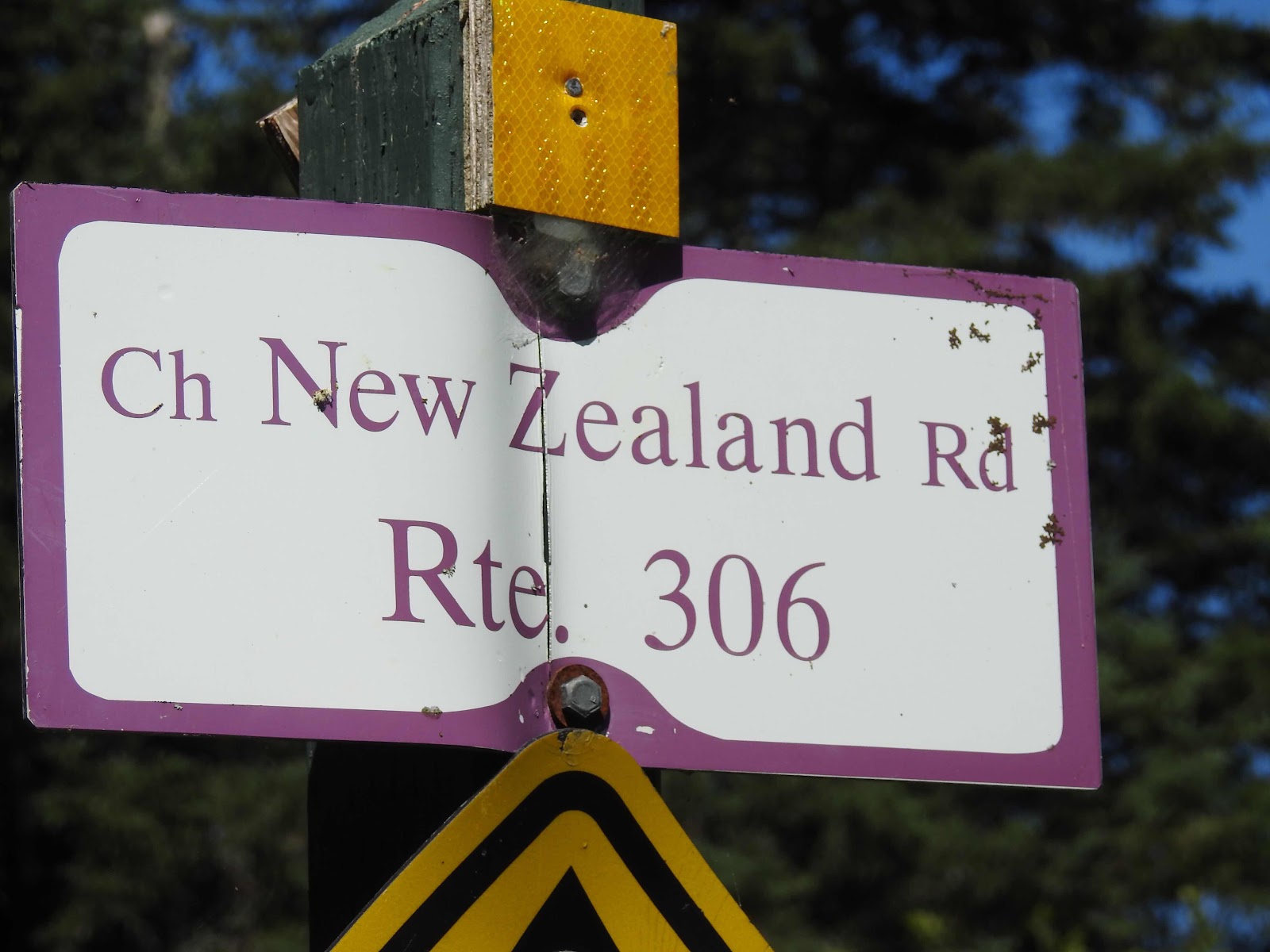
We crossed the road to New Zealand, PEI, 


a tiny farming community whose name first appeared officially in 1925. There isn’t much written about this community but several families left the area in the 1800s to settle in New Zealand. The name of the community on PEI reflects the connection of its people to that island so far away. 


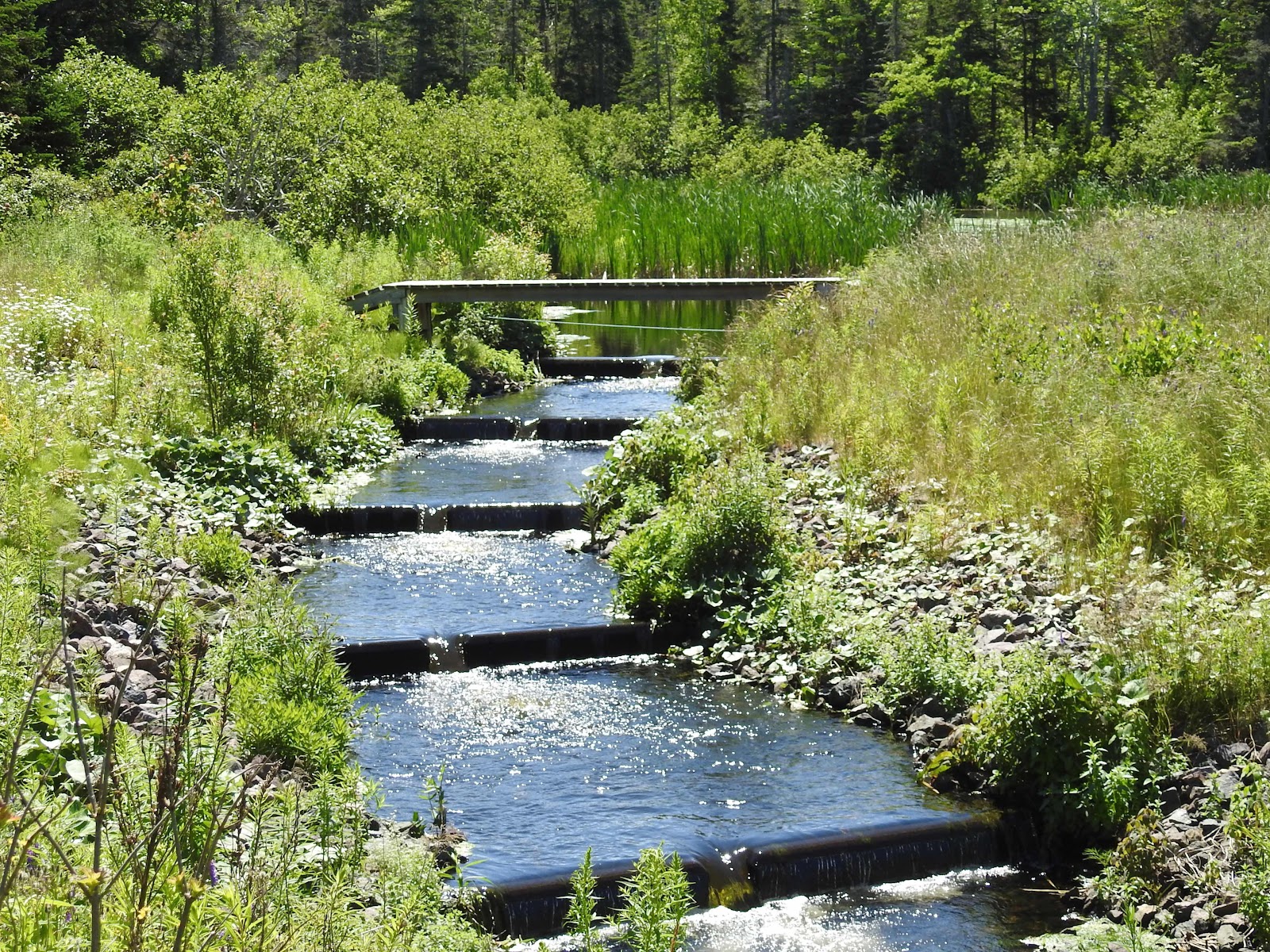
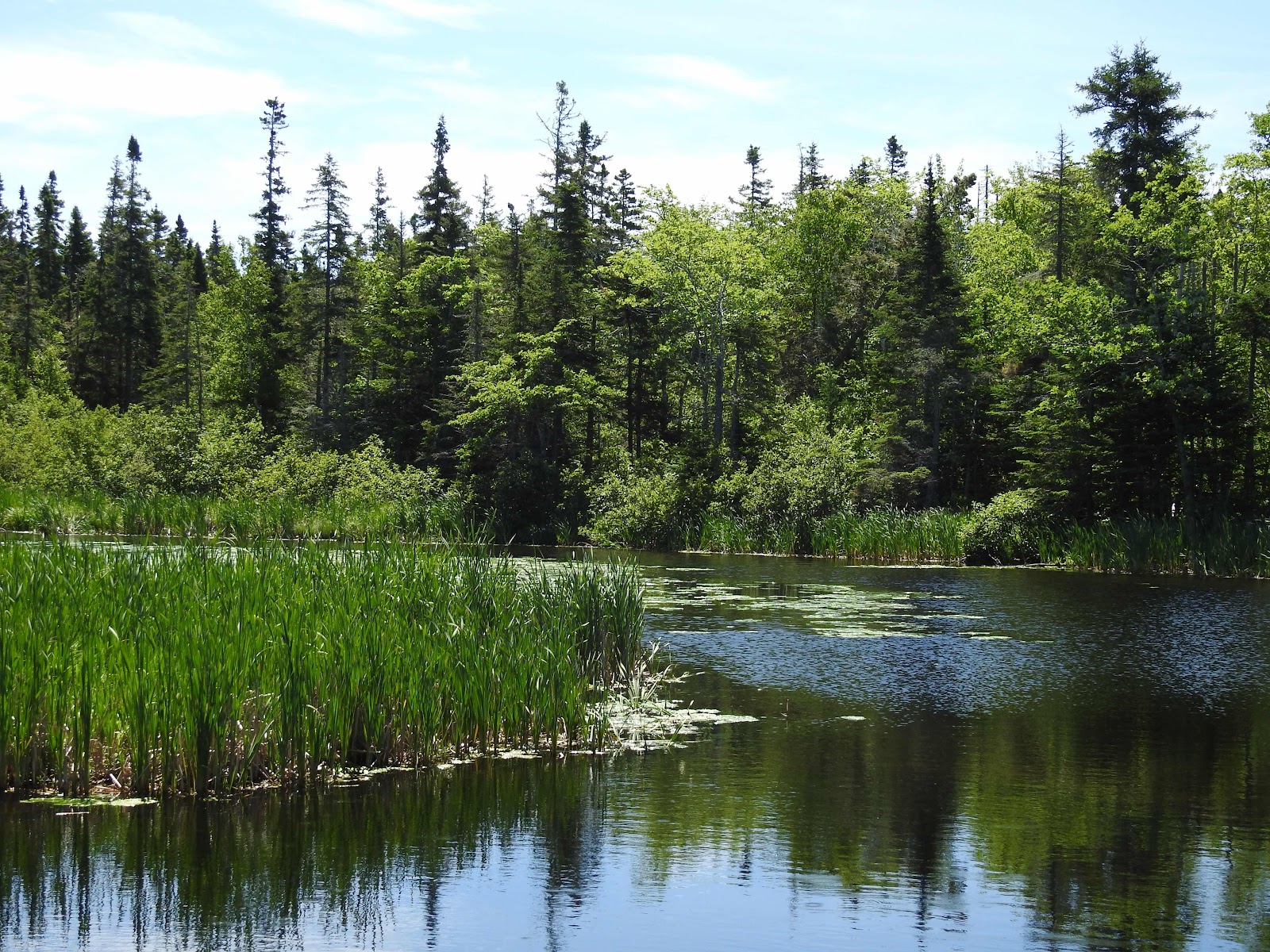
McVarnish’s Pond is a Conservation Area with a fish ladder which allows smaller fish, 


such as smelts and gaspereau easier access to inland waters where they return every year to spawn.


The area is pristine and quiet, the run of small fish over for another year.


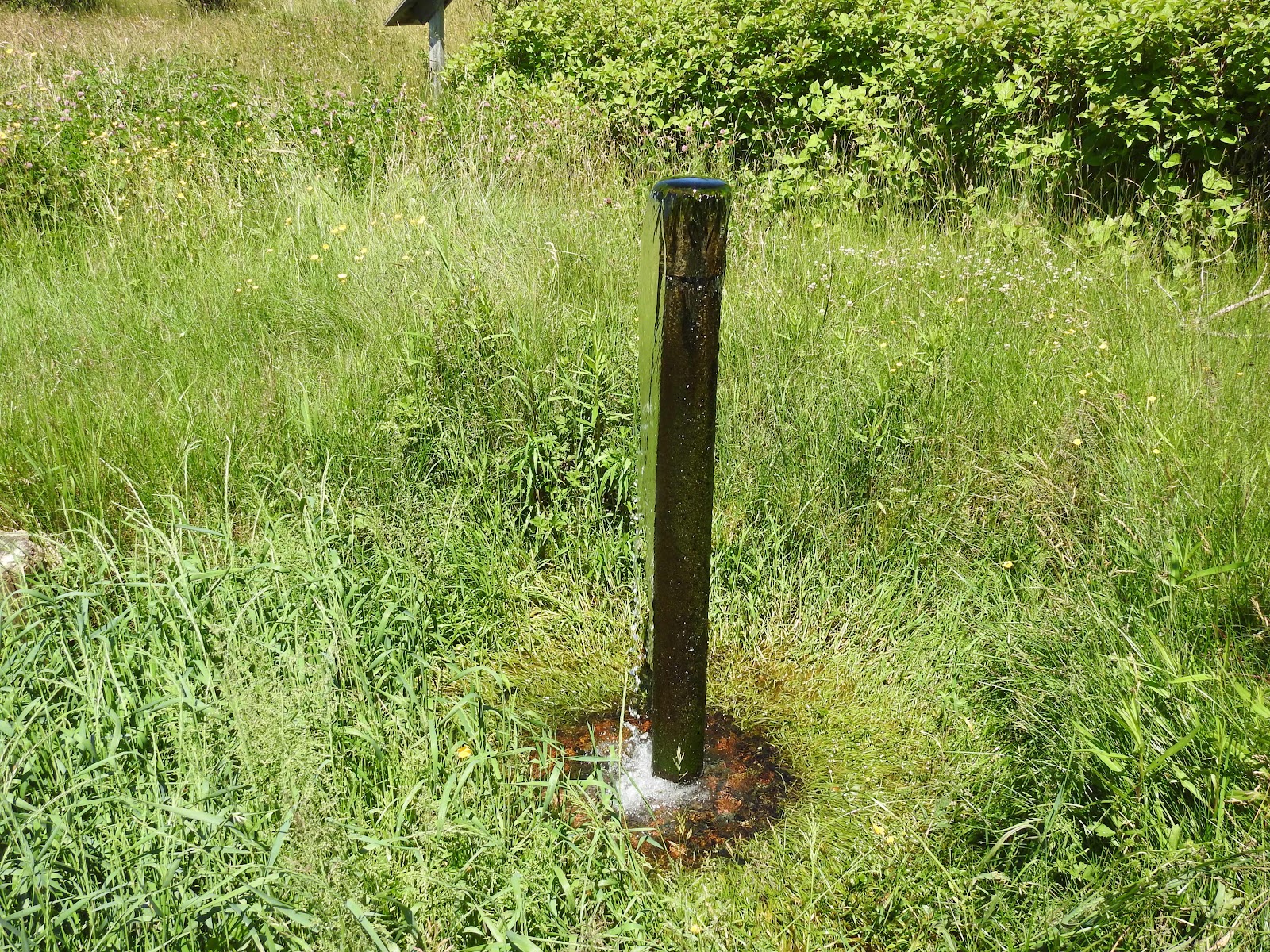
Near New Harmony spring water flows, rising from the earth below, at a constant temperature of 7 degrees Celsius year round.


This section of trail has pristine water features and is more isolated than many areas of the trail. It will be safer for bicycles when it is groomed for this year.


Wednesday, 7 November 2018

Bideford at Tyne Valley

The dam on the Bideford River at Tyne Valley was overflowing, a watery veil with a thunderous sound. It invited exploration.


This is one of the many rivers on Prince Edward Island with a fish ladder, allowing various species of fish to move to and from the sea. 


Above the dam, the air was still, the water without a ripple, reflecting the trees and the gray sky. The only sound was the waterfall.


Along the shore by the dam, a maple tree with its autumn-yellow leaves, showed every vein. 


A nearby tree, naked except for its red fruit, stood nearby, waiting for the birds. 


Such a wonderful combination of construction and natural beauty!


Wednesday, 12 September 2018

Nature Park

We have visited the Westmoreland River Nature Park several times since it opened in August of last year. A group of volunteers has worked to restore the Westmoreland Watershed and the park on Stordy’s Pond is part of their plan. 


Around the pond, there are two docks for fishing 


and bird boxes for tree swallows. 


There is also a Monarch Waystation, with milkweed plants and shelter for the butterflies. 


A ladder helps fish swim to the pond rather than navigate the river.


This year, the group built stands overlooking the ladder and the river. 


During our lastest visit, there were many butterflies, mainly sulphurs and whites, in the vegetation along the path around the head of the pond. I also saw this Viceroy, which I mistook for a Monarch.


Vegetation planted along the waterways and the pond provide rest areas for the fish. The Spotted jewelweed on both sides of the ladder was a great addition.


We met a fly fisherman who caught huge rainbow trout in the pond last spring. He enjoys the park and marvels at the work of the watershed group.

Last year, I took a photo of other fishers of this pond, the Double-crested cormorants.


This year, cormorants swam and dived in the water. They like the changes to the area as well.


Thank you volunteers! 


Friday, 15 June 2018

The veil

Our recent visit to a Heritage Road in central Prince Edward Island took us past a watershed conservation area overseen by the Trout River Environmental Committee. The non-profit group wants to “restore the natural integrity” of that watershed.


The waterfall, like a veil over the face of the pond, made us stop. 


In this area, boats appear to launch, people stop to fish,


and a ladder helps fish swim up river. 


A lone cormorant swam on the far side, periodically diving and resurfacing meters from his original place.


Overhead, tree swallows flitted in the air; their antics made us stop and watch. One of two bird houses in the area was broken on one side and straw could be seen through the opening. The birds availed of these homes.


The sound of the water was calming as was the scene. We will visit again, maybe to fish and have a picnic with the kids.