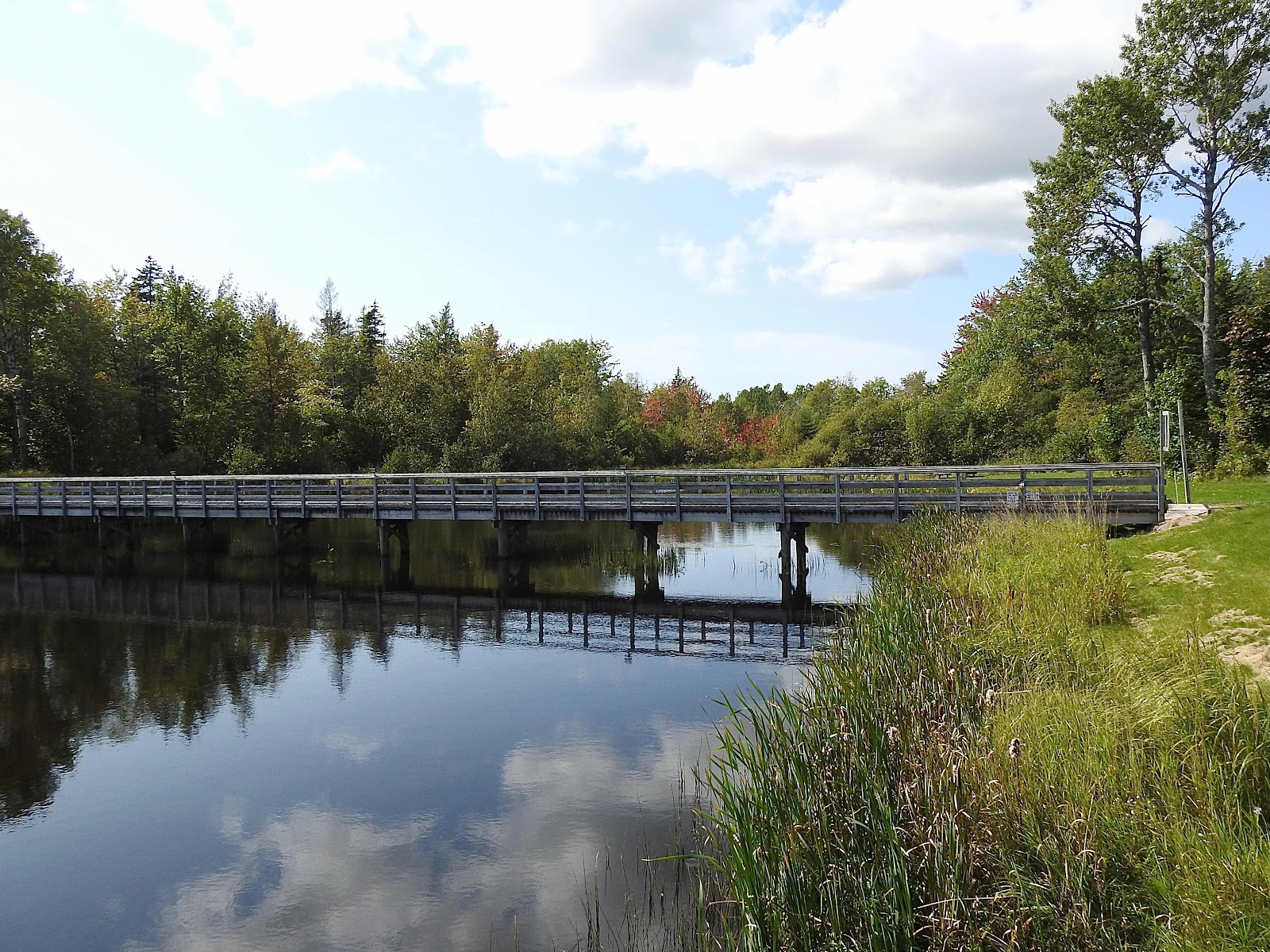
Twenty kilometres from Summerside, the small community of Wellington is an integral part of Evangeline, the French region of Prince Edward Island. My husband and I enjoy riding to Wellington on our bikes. On the last full day of summer, we explored part of Wellington, near the Confederation Trail, which we hadn’t done before. It was a sunny day, without a breeze.
Mi’kmaq people, the first people of the island, were familiar with the valley of the Ellis River for many centuries before the Europeans arrived. They travelled through the valley on their way from the Northumberland Strait in the south to Malpeque Bay on the Gulf of St. Lawrence in the north. Europeans arrived in the area in 1833 and over time, the Mi’kmaq migration ceased. Like so much of Canadian history, the ancestral people of the land were relegated to small parcels of their own land.
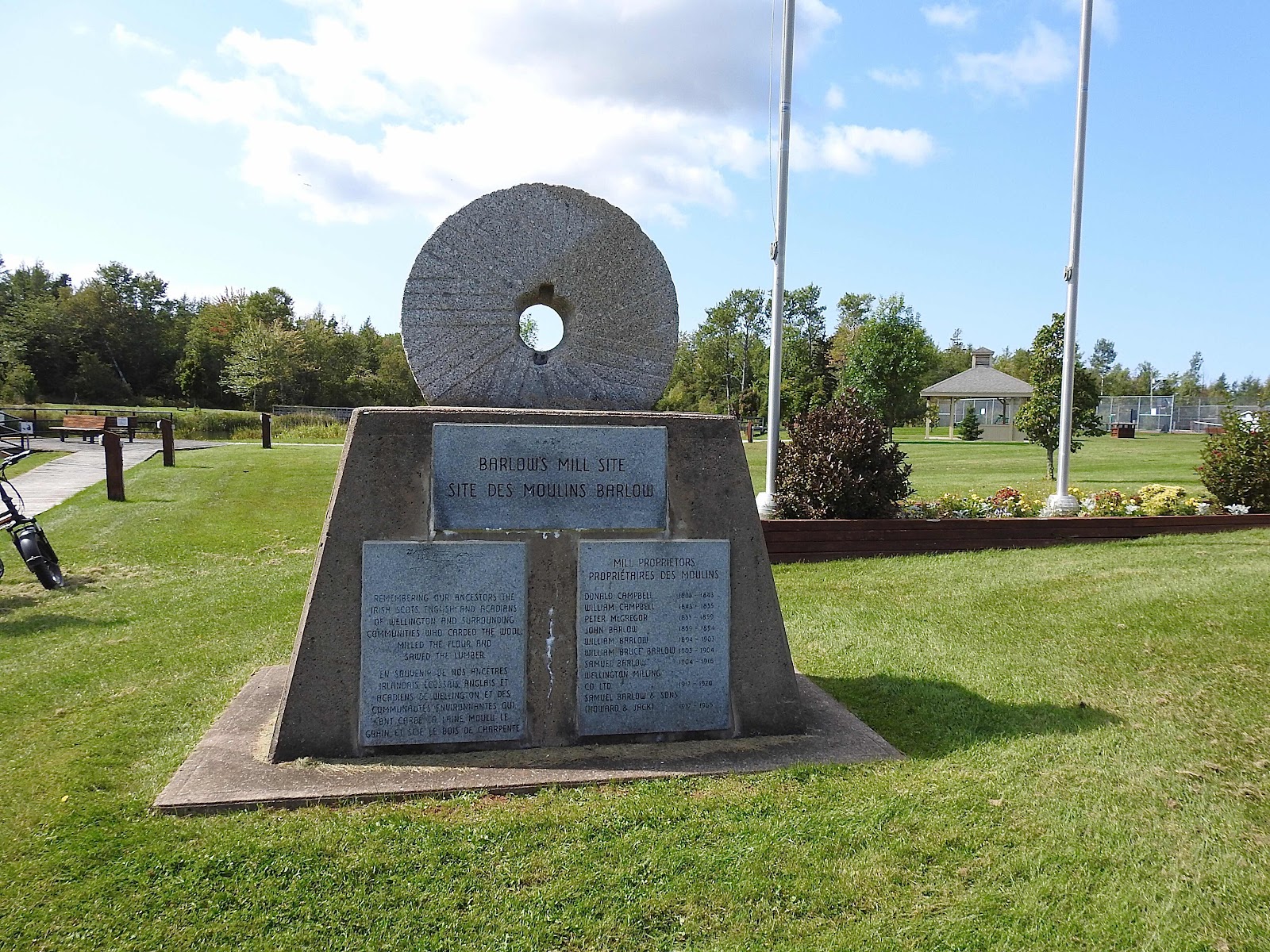
Meanwhile the newcomers established themselves in the area and eventually the name Wellington came into common use. By 1836, they had dammed the Ellis River and later, a mill was established there. Today, a mill stone is on display at a park in the area, a runner stone from the old mill.
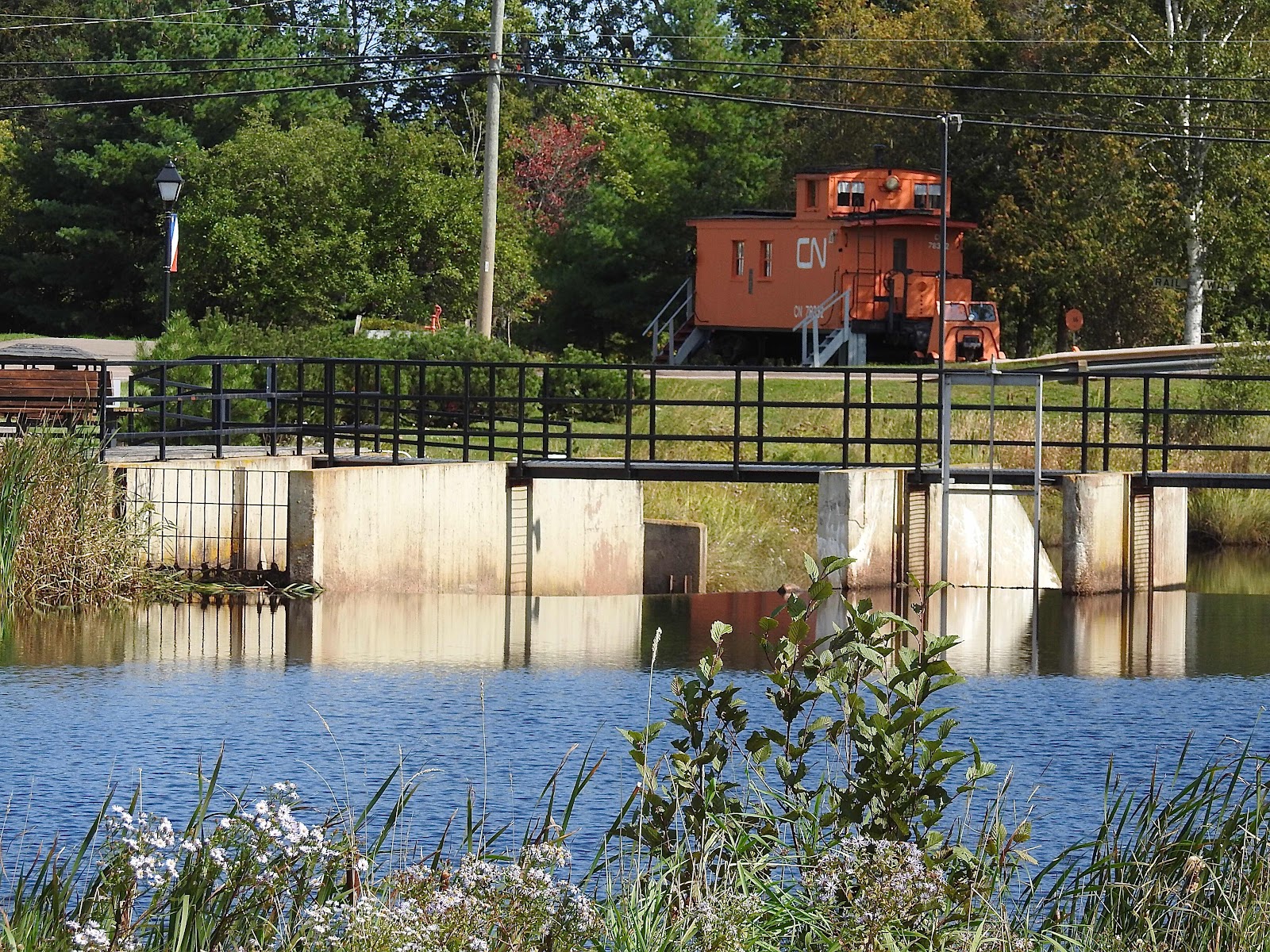
A fish ladder on the river isn’t busy with fish this time of year but the sound of the running water fills the senses.
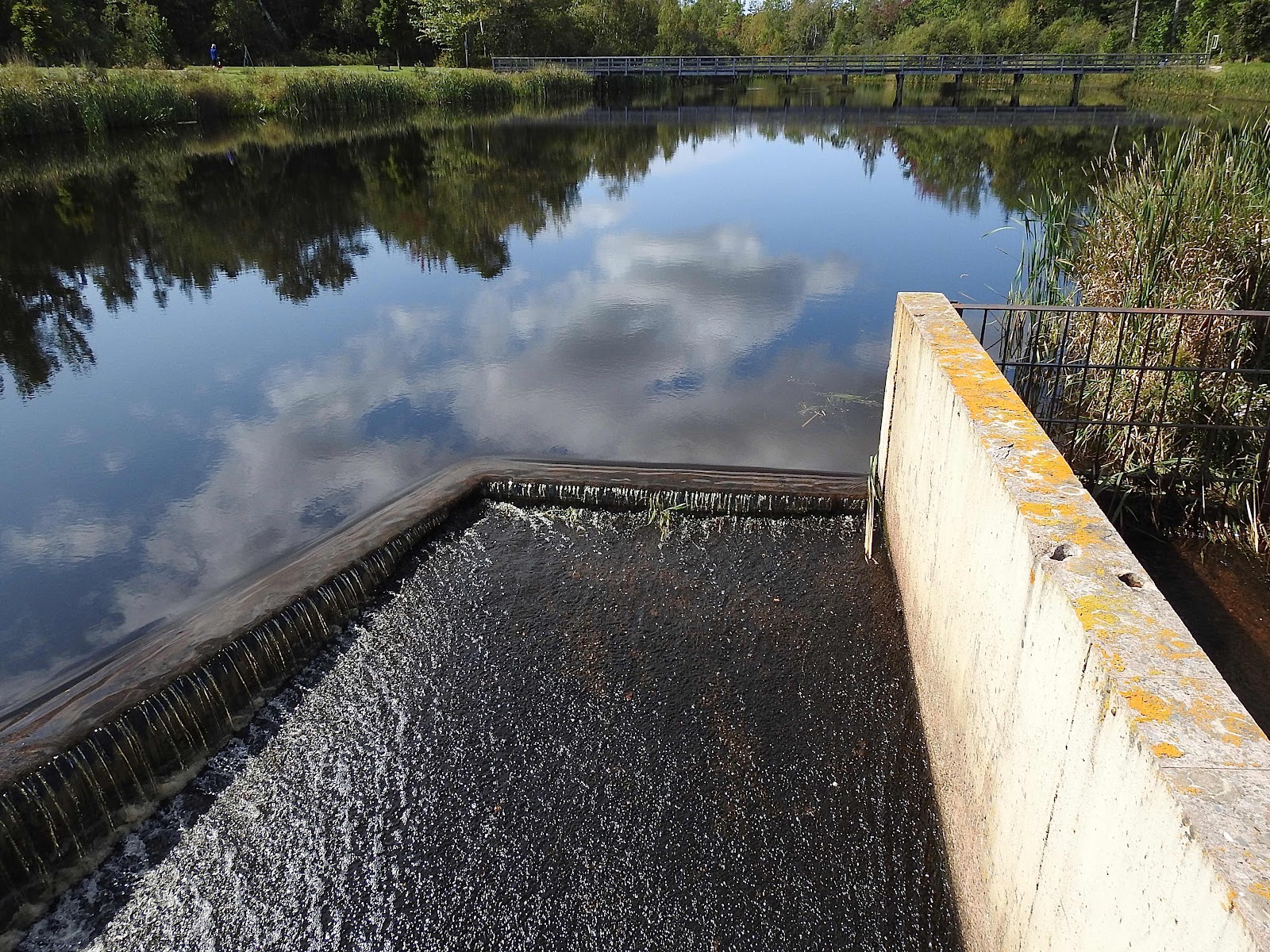
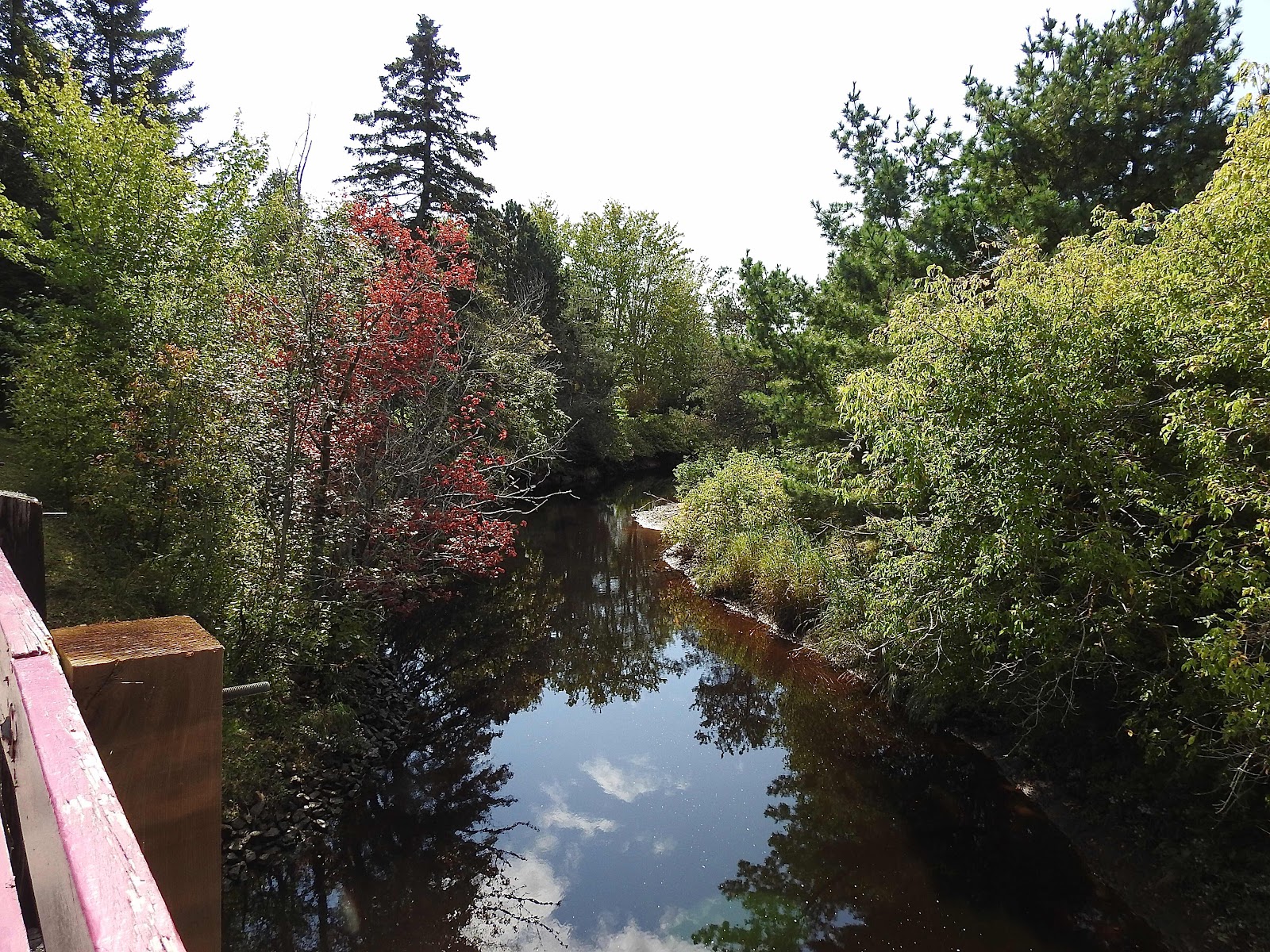
A bridge over the ladder provides a close up of the ladder below and the sky reflected on the water.
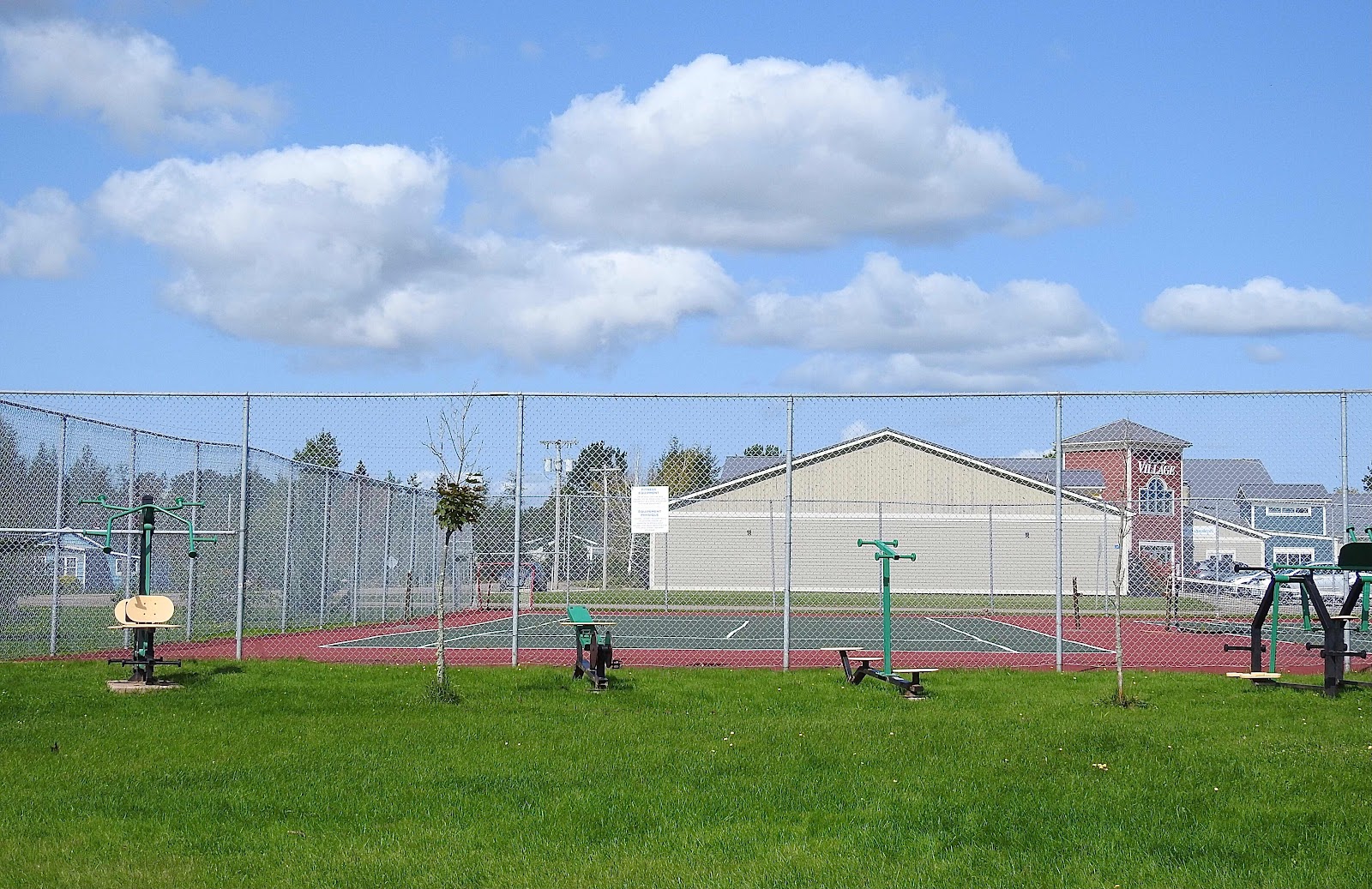
Nearby, tennis courts make up part of the recreation facilities in the area and are quiet like the playground that time of day.
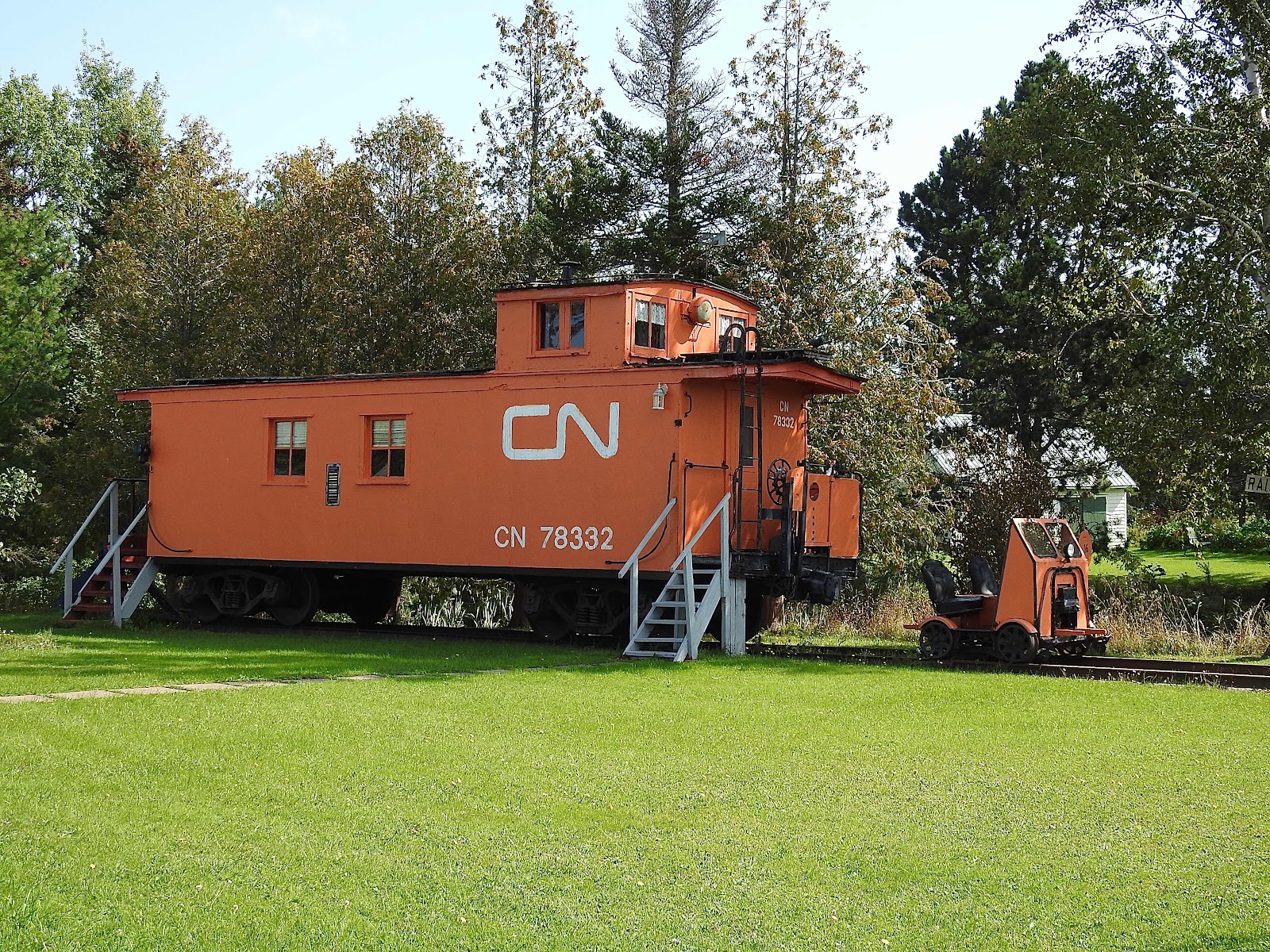
Across a road, a caboose from the old railway which ceased operations decades ago, is well maintained.
With it is a speeder used by railway work crews as they repaired and maintained the rail line.
The Ellis River is picture perfect as we relax and enjoy the area. Autumn is working its magic here.
We crossed the bridge at the back of the park and discovered trails which parallel the river. We will be back for a picnic and to explore those trails.