Most Popular Post

Monday, 11 December 2017

First steps

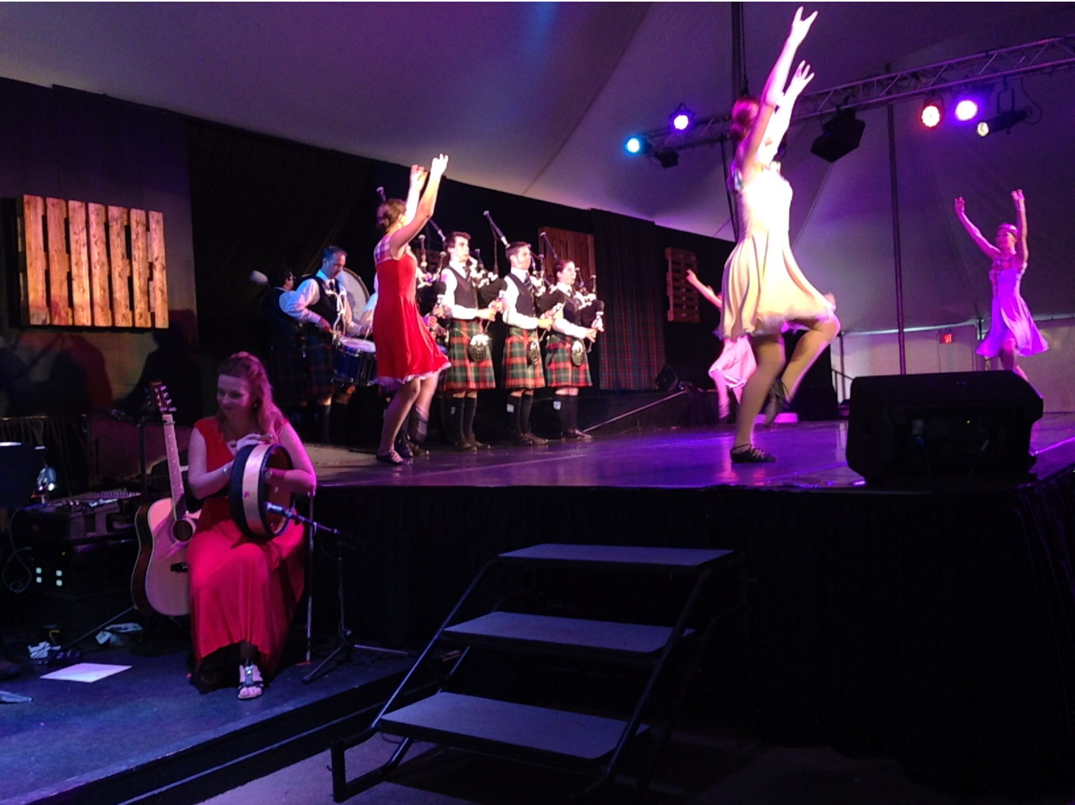
Last summer, I took our granddaughters, ages four and six, to see the summer production of the  College of Piping here in Summerside, Prince Edward Island. The girls loved the show and both wanted to take step dance classes at the college in addition to the ballet classes they enjoy.


They have taken classes since September and enjoy them. This past weekend, they had their Christmas show which highlights the work the students have done this fall.

Our girls were there, on stage, enjoying every minute. Neither is nervous going on stage and both look forward to performing. 


Sylvie’s expression shows her delight in the experience. She loves to dance.


The younger child, Caitlin, loves on stage too. She did every step and with much aplomb.


She delights in performance as well.


We have yet to discover from whom the girls get their love of dance. Neither their parents nor grandparents are performers and some of us lack rhythm. The love of movement, expression, rhythm and performance skipped a few generations to come together in the girls. Will this enjoyment continue through youth? Who knows? For now, the enjoyment is evident and encouraged by the family.

Meanwhile, their six month old brother watched every performance and didn’t cry when the bagpipes and drums performed. Is he a dancer too? Or a drummer? Only time will tell.

Sunday, 10 December 2017

Roadside reminder


                                                                            Source unknown

Friday, 8 December 2017

The art of small talk

I had the opportunity recently to spend time around a group of young women and children. However, it was difficult to make eye contact with the adults. Forget conversation. Do people even know how to make small talk any more? The people I did have conversations with were two other grandmothers, there to help their families, as was I.


Each young parent, when not interacting with a child, had their attention focused on a cell phone. Why speak to anyone else when you are messaging others or searching the web? Anyone who needed assistance and asked the collective for it, was ignored. A specific ask to an individual was given a positive response, however reluctantly.


There was a time in such a situation, you had conversations about the kids, the occasion, the weather, any number of topics which passed the time and spoke to the shared experience of the day. You might never see the people again, but you had the sense you shared this common human connection in time and place with them. Are those days gone? Is isolation in a group the new norm?  


Children learn the social norms from their parents and the other adults around them. What are we teaching them now, ignore the person next to you and say whatever you want to the world? The impersonal connections of today via social media, where anyone can say anything, can lead to bullying in the extreme. Not having to look someone in the eye makes it easier to insult or harass others. The rash of adolescent suicides due to on-line bullying is alarming.


Are we seeing the end of the shared human experience but rather parallel experiences, shared via hand-held devices? Will we be alone in a group, connected to untold information but uninterested in human presence around us? Where will it lead? I fear we will lose the humanizing art of small talk.

Wednesday, 6 December 2017

The quest

The elderly man approached as I took a photo of the gazebo which overlooks the stream.


“You don’t want me in this shot, Miss,” he said.

“Good morning, Sir,” I said. “It’s a cold one.”


He walked up to the gazebo and I continued to take photos of the area. My fingers was numb from the cold, the high wind with the -2 C temperature made fleece mitts essential. They didn’t work for the camera however.


A few minutes later, I walked to the gazebo as the man walked away. “Oh, a pair of mallards this morning,” I commented as I passed him. He came back with me. 


We watched the ducks for a minute and then he said, “See the muskrat lodge over there?” He pointed to the pile of straw straight ahead of us, in a channel from the main stream. “It wasn’t there yesterday,” he said.


“I didn’t see it yesterday,” I commented. “I saw two muskrats by the lower bridge last week but couldn’t manage a photo of them. I’ve had no luck with muskrats for the last two years.”


“A group of us watched six of them one day by that bridge,” he said as he pointed over his shoulder. “They love peanuts in the shell and wait around by the bridge for them.” He showed me the bag of peanuts he carried on his walks.


I thanked him for the information and for pointing out the muskrat push-up. He turned to leave and we said our goodbyes.


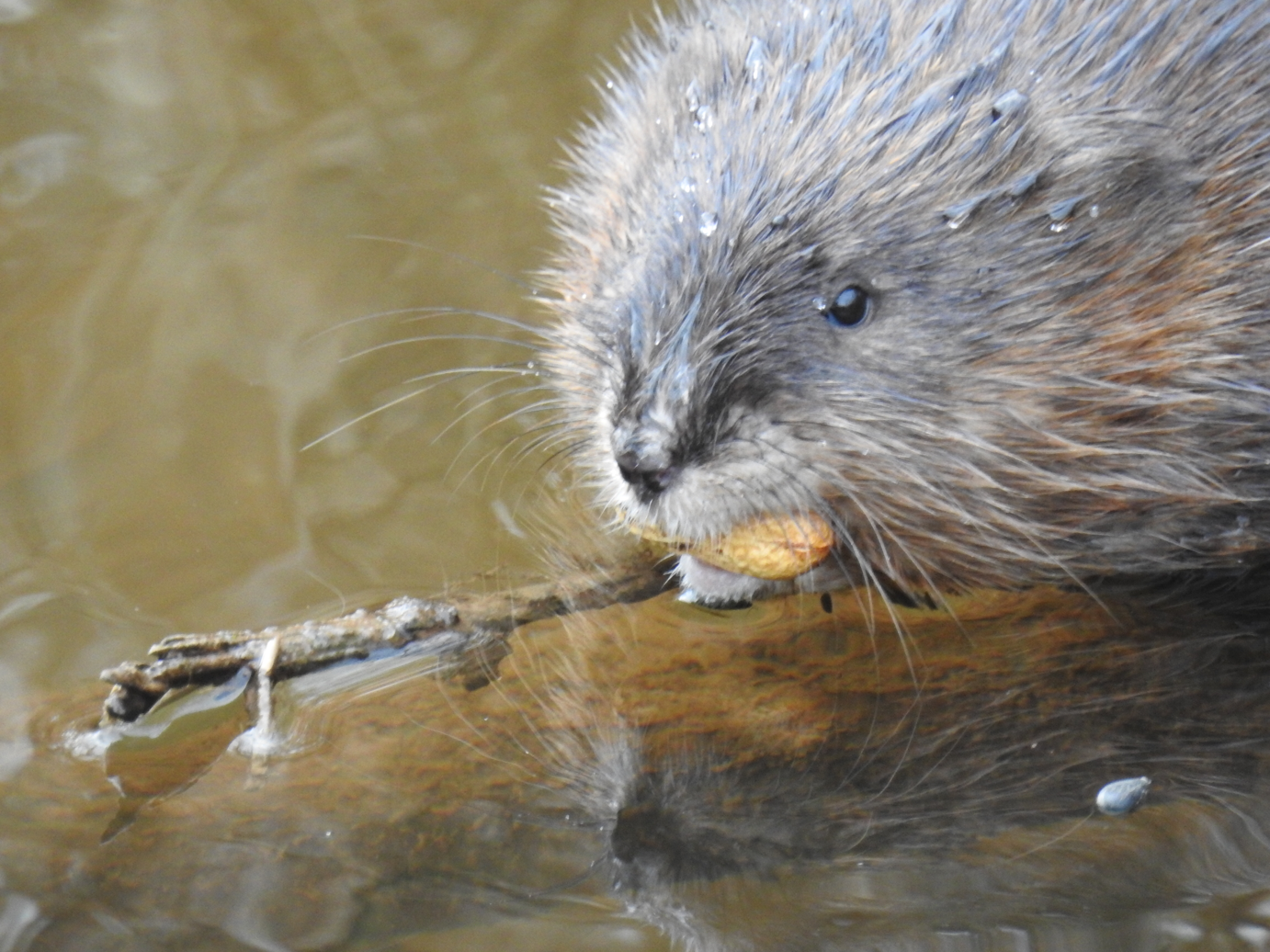
I headed up to the bridge nearby, hoping to see a few birds or maybe a squirrel. I looked in the water below. There was Mrs. Muskrat, bigger than I had ever imagined, sat on a stick.


She was huge, but with what looked like a tiny face, until I noticed the eyes further back on her head.


She had a peanut shell in her mouth. Mrs. posed on the stick for a minute, then slid into the water and was gone.


My husband finished his walk and we met by the bridge. We stayed for a few minutes to see if she would reappear. No such luck! 


By the time we arrived home, I was anxious to see the photos. While I’d only managed to get part of her tail in the shot, we were both pleased with the photo; you could even say excited after the two year quest.


We lead a simple life!


Monday, 4 December 2017

Before the rain

The forecast called for rain. My husband and I decided to go to the boardwalk anyway, hoping to complete a walk before the rain started. It was foggy too, not common for Summerside. The area had changed a great deal since our last visit. The colour had disappeared for the most part but if you looked closely, there was still much beauty to be found. 


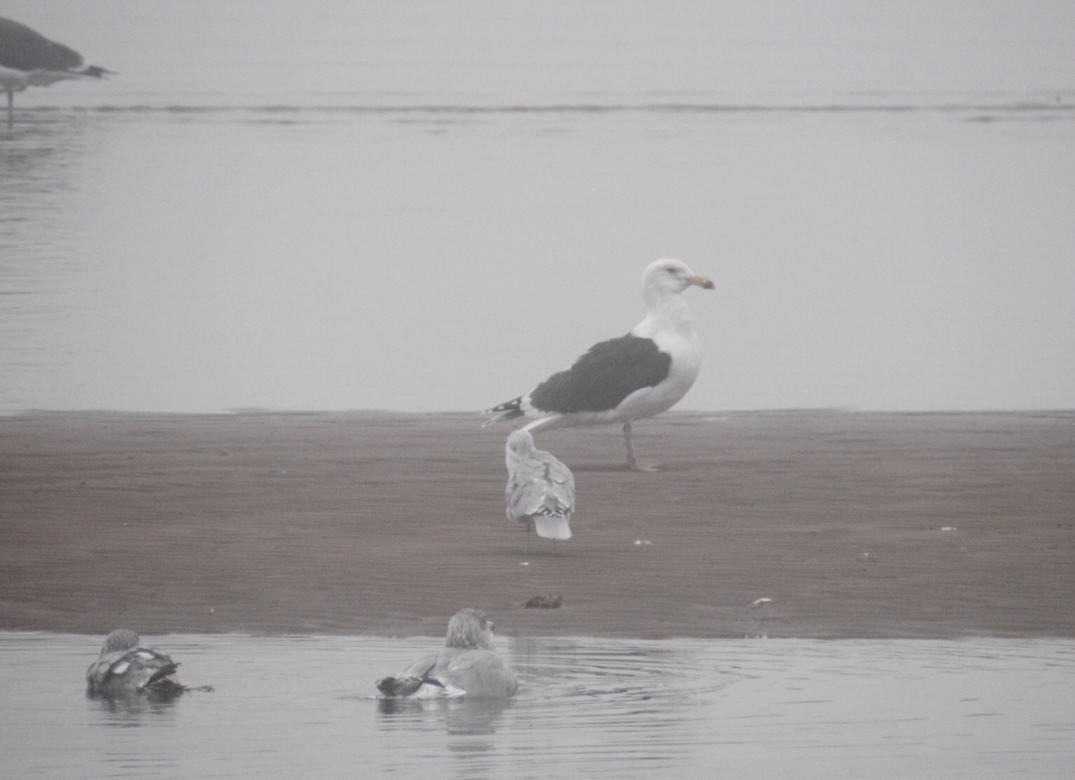
Fog is a lovely backdrop for the area by the gazebo. Along the shoreline, just beyond the stream, the gulls sing their songs, which have a haunting quality.


Across the stream, the foggy aura softens the grays of late autumn. The orange berries alongside the gazebo add just the proper touch of colour. 


Grasses along the trail are rusty now, and provide great contrast to the grays of the tree trunks.


The wild cucumber vines, which thrive in August and September, are now but threads along bare branches, 


with dangling seed pods.


A touch of spray paint would create a pretty garland!


Alders show the promise of spring with buds which lie in wait for light and heat again. The catkins are frozen in time and space.


The cedar adds some green to the scene and the clumps of cones are rich contrast.


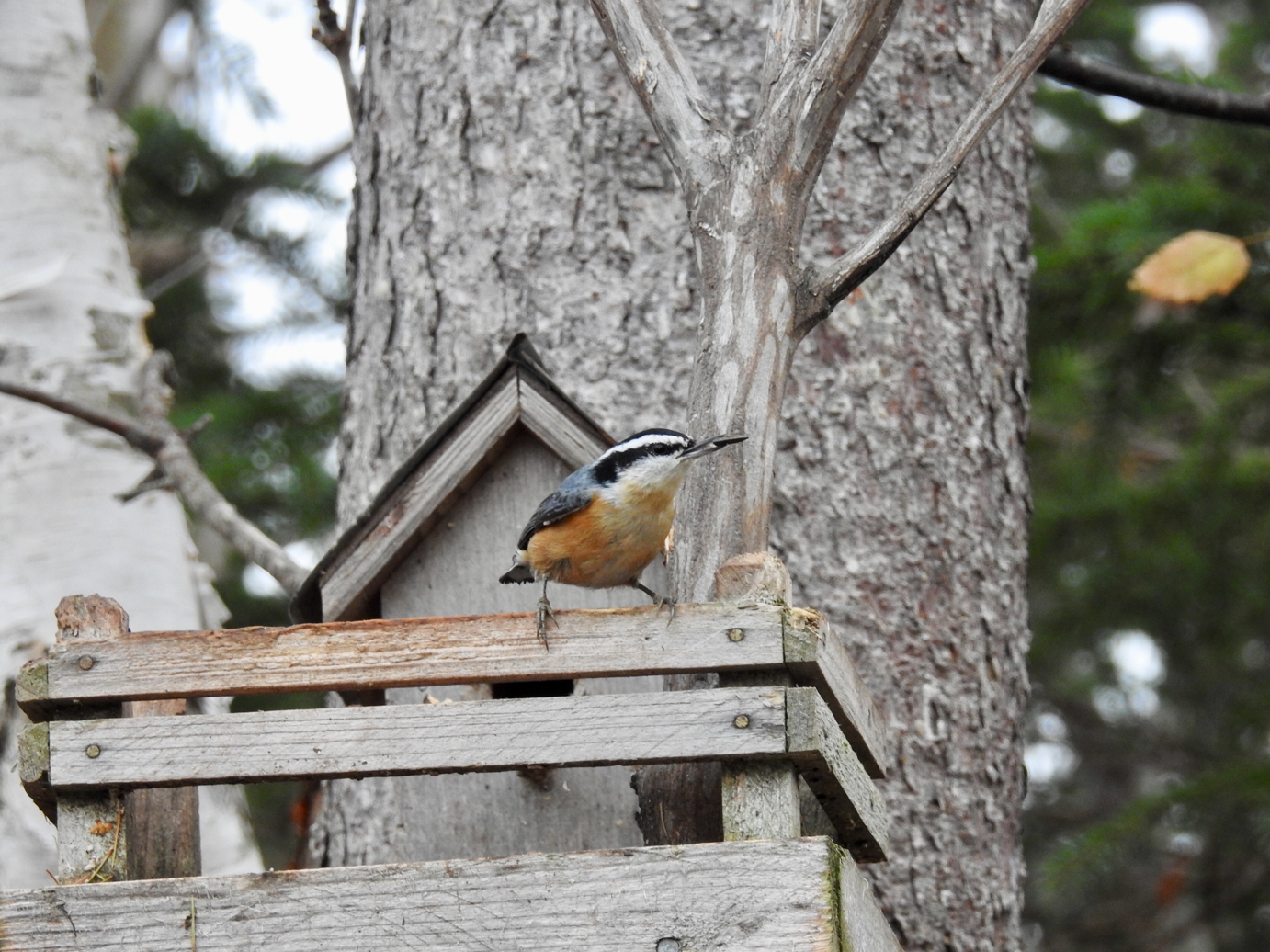
The birds are busy too. A nuthatch is active around a feeder and fights off the chickadees for sunflower seeds.


Blue jays watch from the trees, ready to swoop down for any peanuts we might leave.


Chickadees are numerous too and watch for sunflower seeds any time someone pauses near the bridge.


We finished our walk just as the rain started. We took time to observe our surroundings and concluded there is much beauty this time of year if we take the time to notice.


Friday, 1 December 2017

The beginning?

I worked as a science teacher for seven years and then applied for the principalship in the same school. I was twenty-eight years old. While I enjoyed my work as a teacher, I wanted something more. As a principal in that small school, I also taught, so I didn’t have to leave the classroom altogether. 


The previous principal and I didn’t see eye to eye on many things. This man was not one I could ask questions of. And I had lots of questions, about school funding and budget to name a few. As a regular classroom teacher prior to this time, I would not have needed to know this information. I decided to ask school board personnel for information when I started the job. 


However, I did learn to be diligent with paper work from the previous principal, which was his strong point, not mine without great effort. Thanks to him, I became efficient and met deadlines in spite of my distaste for paper work.

My first week on the job, a truck pulled up to the front door of the school with dozens of boxes of text books. This was a small school with a small number of students in a limited number of courses in senior high. The previous principal had ordered five copies of every book on the provincial senior high curriculum. It cost the school a great deal of money to send the books back, money which could have been put to better use for the students. Those books could not have been ordered by accident! 


The superintendent of this small school board had hired me for the science position seven years before. He was a gentleman. I had stopped on my way across the island for an interview with him. He showed this young east coast woman around the central Newfoundland town where the school board was centered. He was part of the reason I accepted the job in one of the rural communities under that board.


The assistant superintendent was a former principal himself, an administrator at heart, with knowledge and ability suited to his job. I needed answers from him about administration, things I could have asked the former principal had he been approachable or helpful. Any time I asked a question of the assistant however, he smiled or laughed. I couldn’t get a straight answer from a man who had much he could teach someone who valued his knowledge and experience. What could I do? 


I approached the superintendent and discussed how I valued the assistant’s ability and how he didn’t take me seriously. I wanted a working relationship. I was eager to learn and could learn much from the assistant if he treated me with respect.


The next time the assistant visited the school, he said his boss had spoken to him about the situation and things would change. They did. I learned a great deal from that man after I spoke up about his treatment of me. I wanted a chance at that job, to be respected for the educator I was and the one I could become.


The next year I began a Master’s degree in Educational Administration, the theoretical side of the job. I learned the practical information from the assistant and another mentor. I did correspondence courses throughout the next four school years and attended university for those summers. While I stayed in administration for four years, I changed my degree to Educational Counselling which I enjoyed much more.


These events occurred thirty-five years ago. According to the news these last few months, women still don’t have equal treatment in the workplace. In some respects, it may be worse. 


How good does a woman have to be in order to be accepted as equal to members of the establishment? It is time for a change. Is it beginning?