

It’s a long way down so I didn’t want to stand too close to the edge. Fences keep people safe in a number of areas.
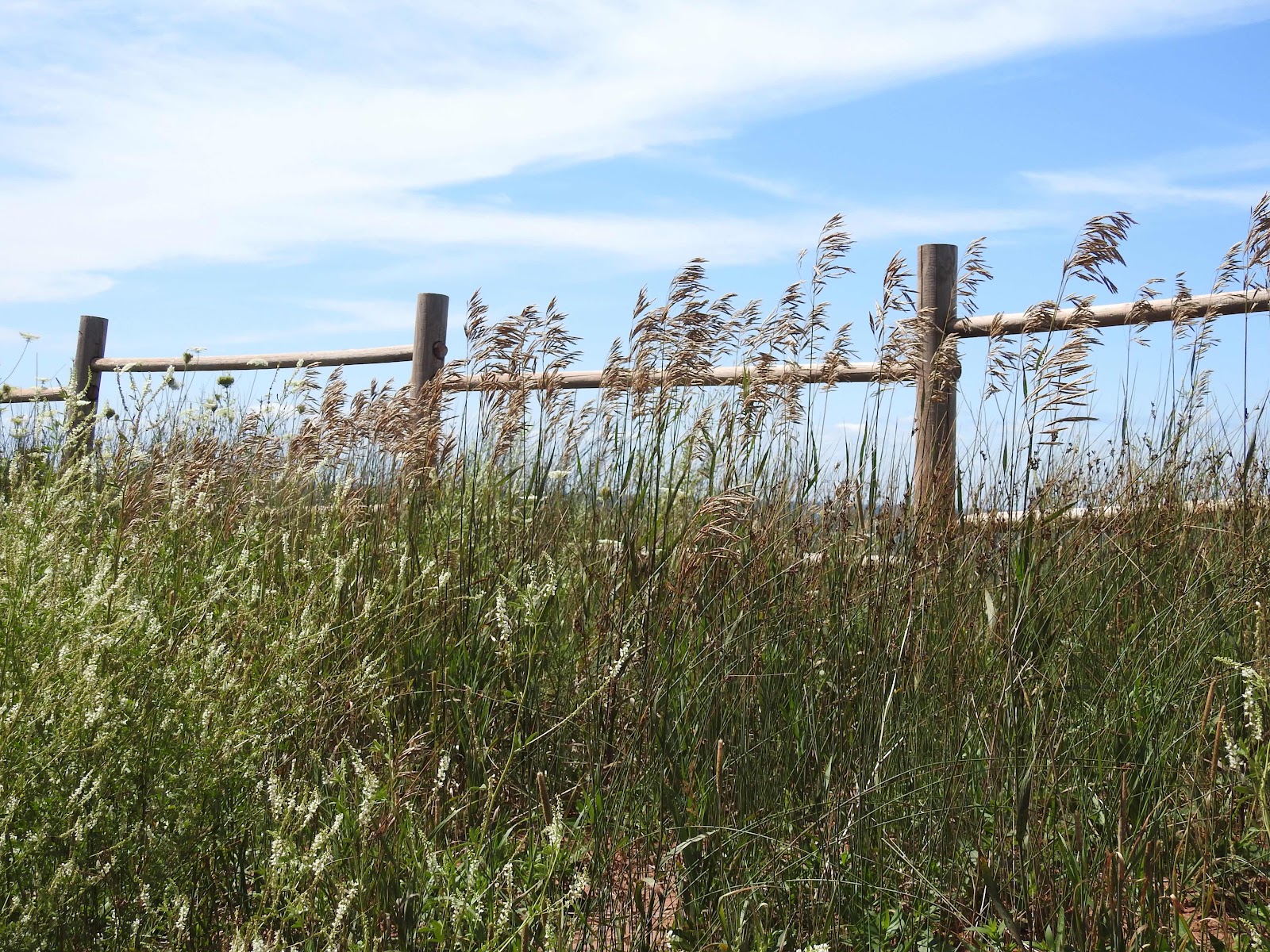
Lookouts, strategically placed, provide good views. The coastal path of the Black Marsh Trail is one of my favourites.
This trail parallels another trail through the forest along North Cape, each part of the trail providing a unique island experience. Both open to the Black Marsh, a huge peat marsh which drops off the sandstone cliffs onto the beach 10 meters below.
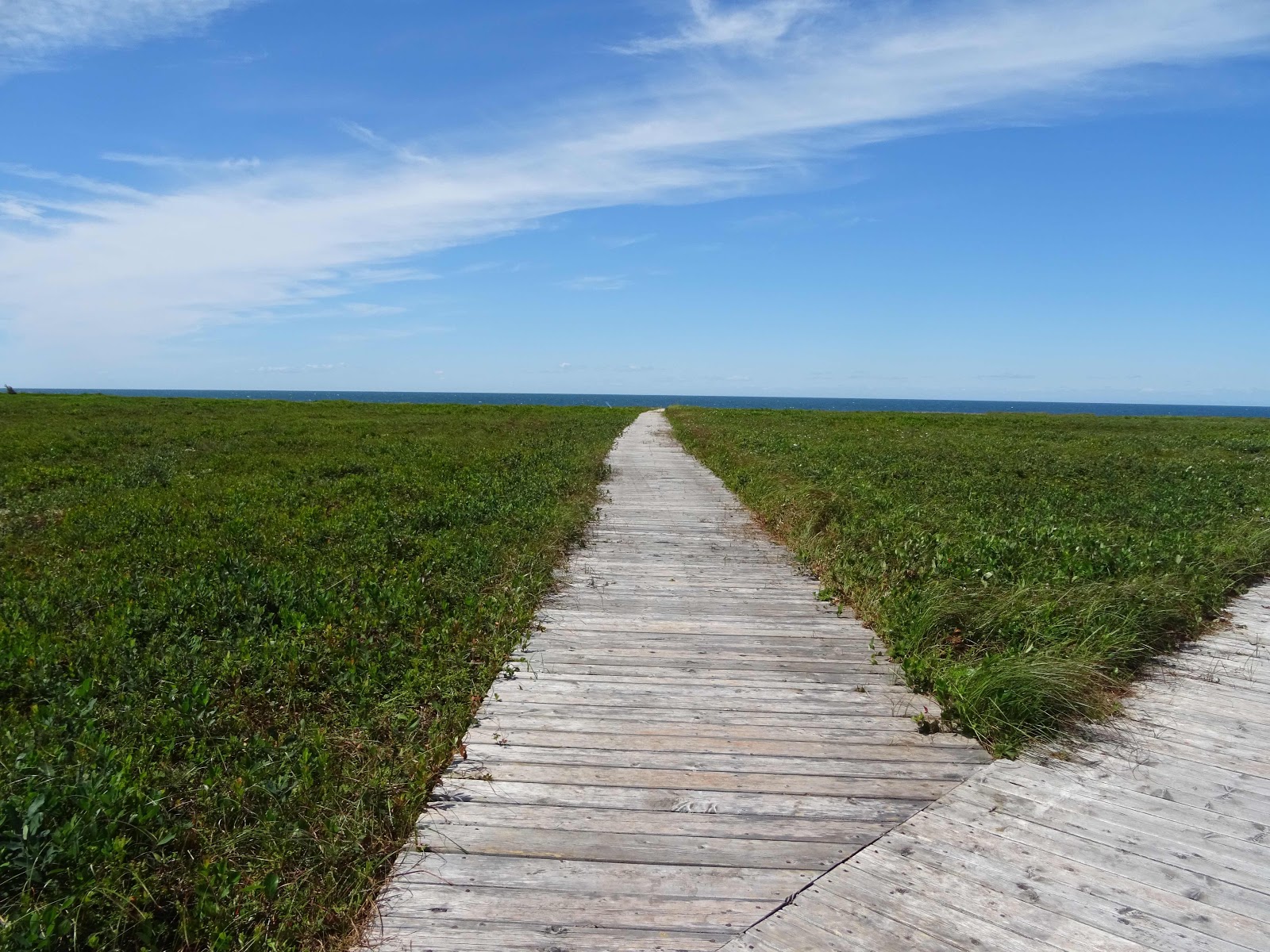
There are some unusual plants on the Black Marsh. The only one we could find was the pitcher plant.
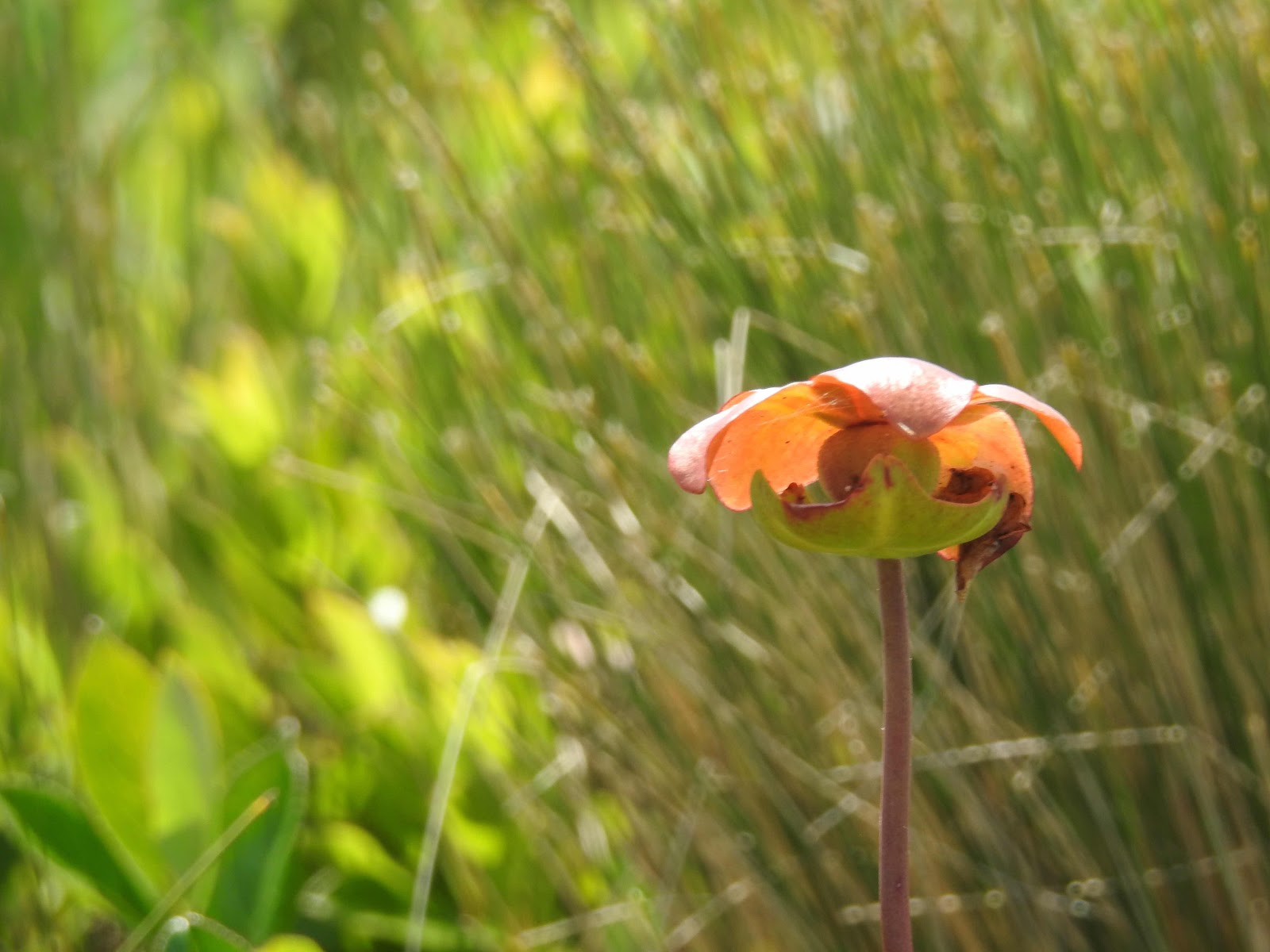
My husband and I are from Newfoundland and know this plant well since it is the provincial flower of that island. The plant lacks chlorophyll and is carnivorous which attracts insects into the pitchers on the ground where they are digested. The flowers are unique. We didn’t expose the pitchers in the bog at the base of the plant because we didn’t want to disturb the marsh.
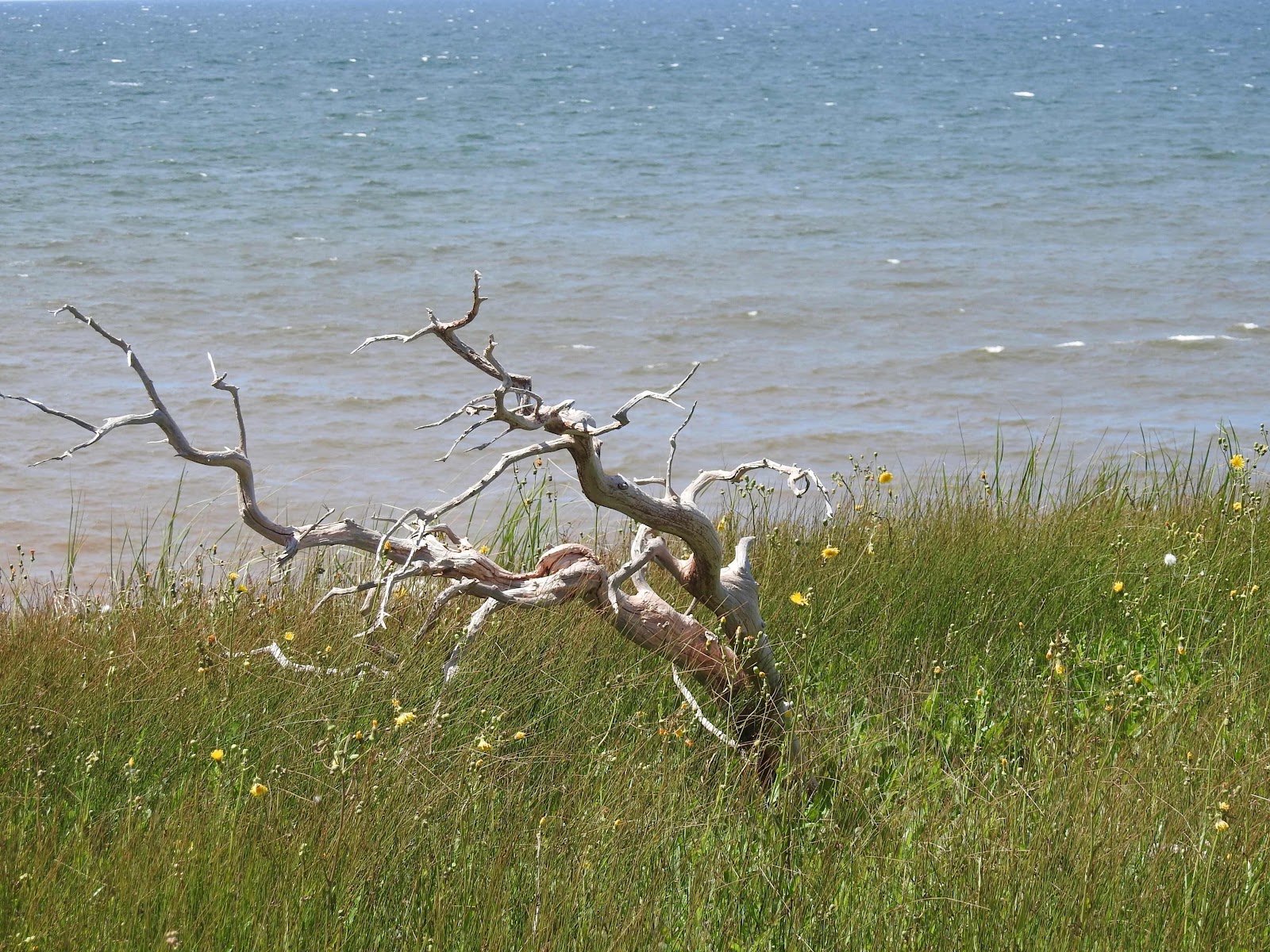
Walking along the coastal trail near the marsh, one sees the effect of the icy blast of winter on the trees along the cliffs.
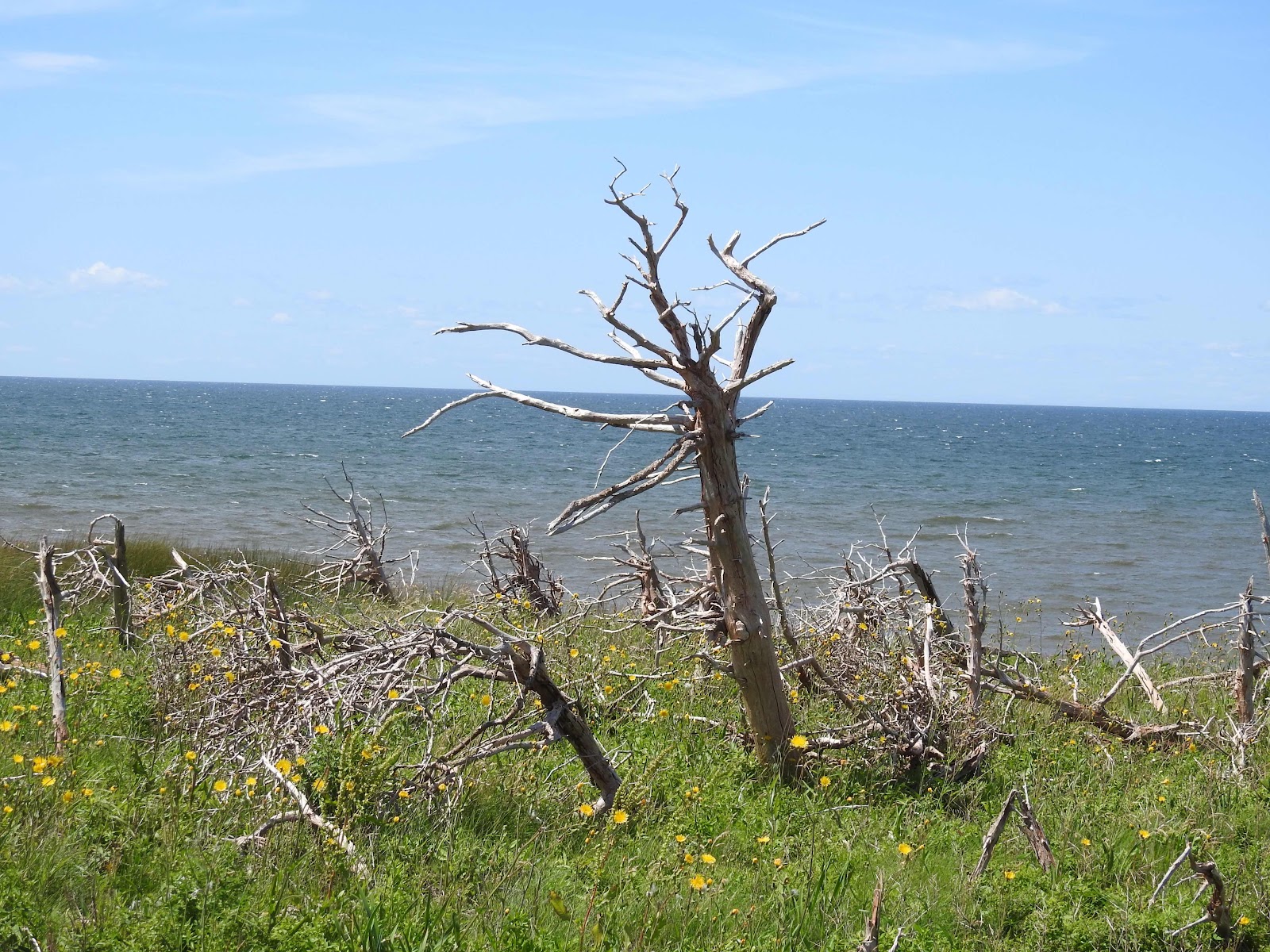
They are art now, weathered remnants of former majestic glory. They have found an artistic raison d’être in this natural gallery until the sea finally claims them.
The sea stack draws visitors to this place as well. It has changed over the years of course, from its days as an elephant in the late 1990s to the shape it presents today.

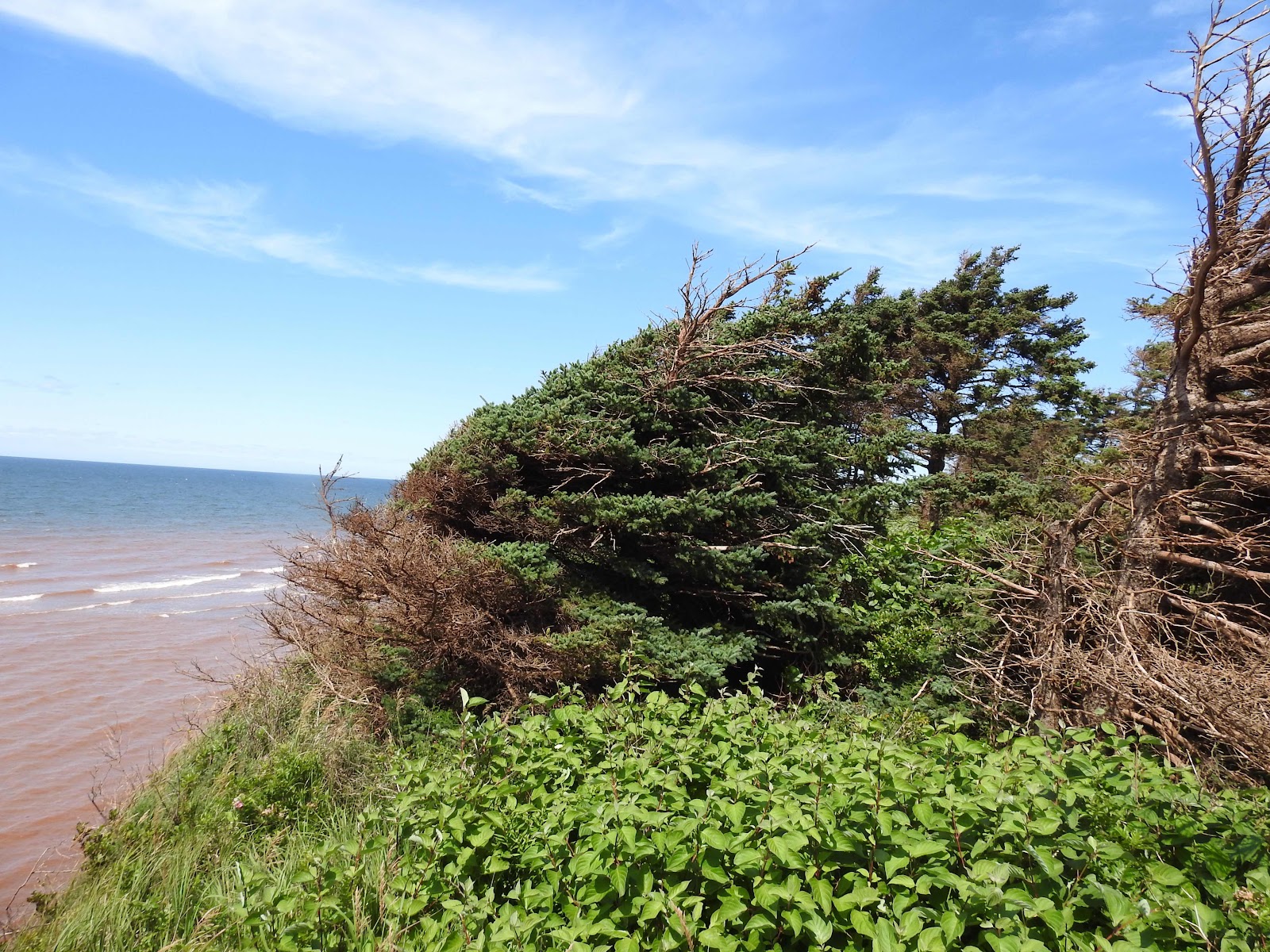
On the way back along the coast, we stopped at the lookouts.
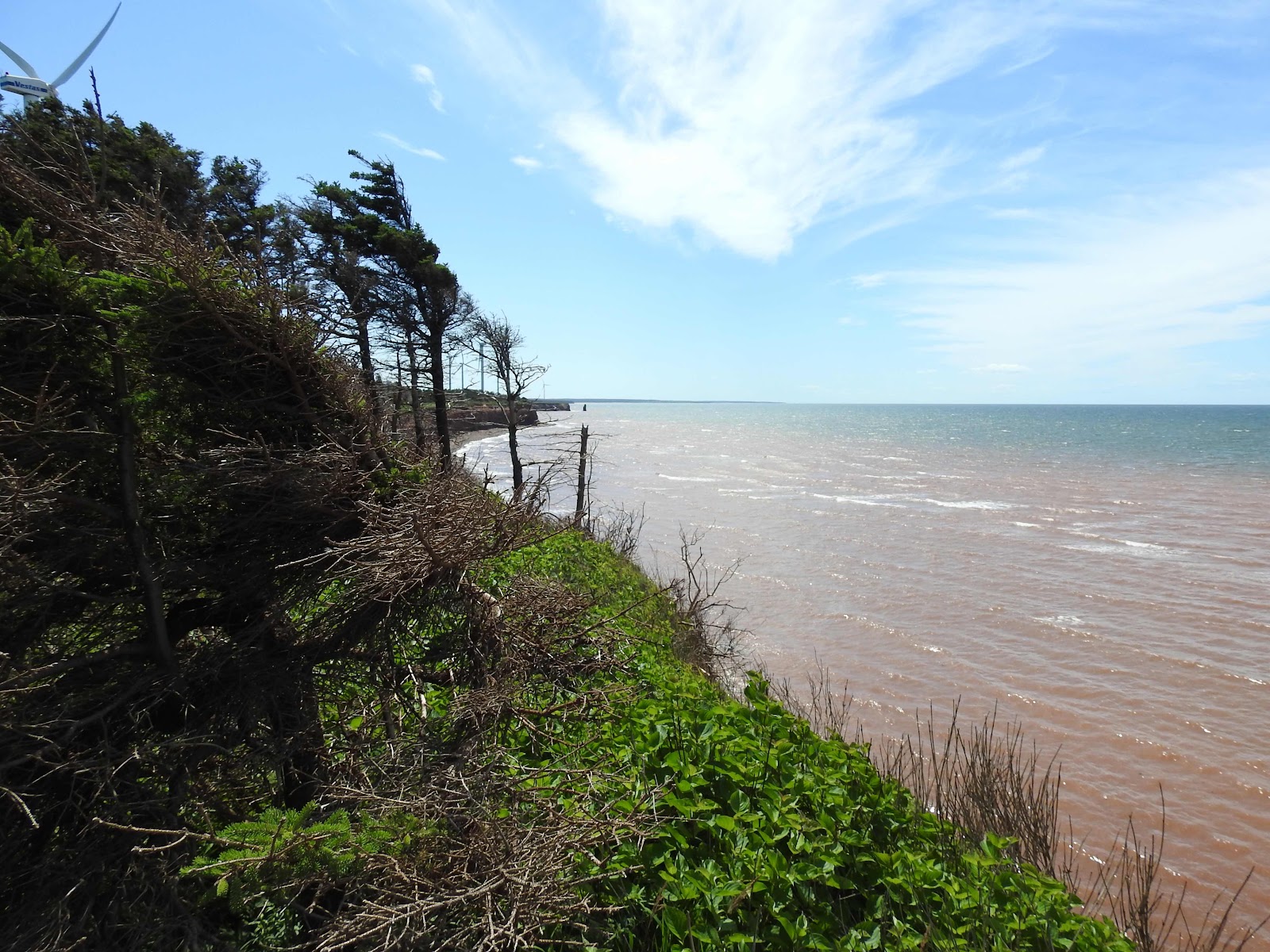
The trees clinging to the edge of the cliff defy gravity.
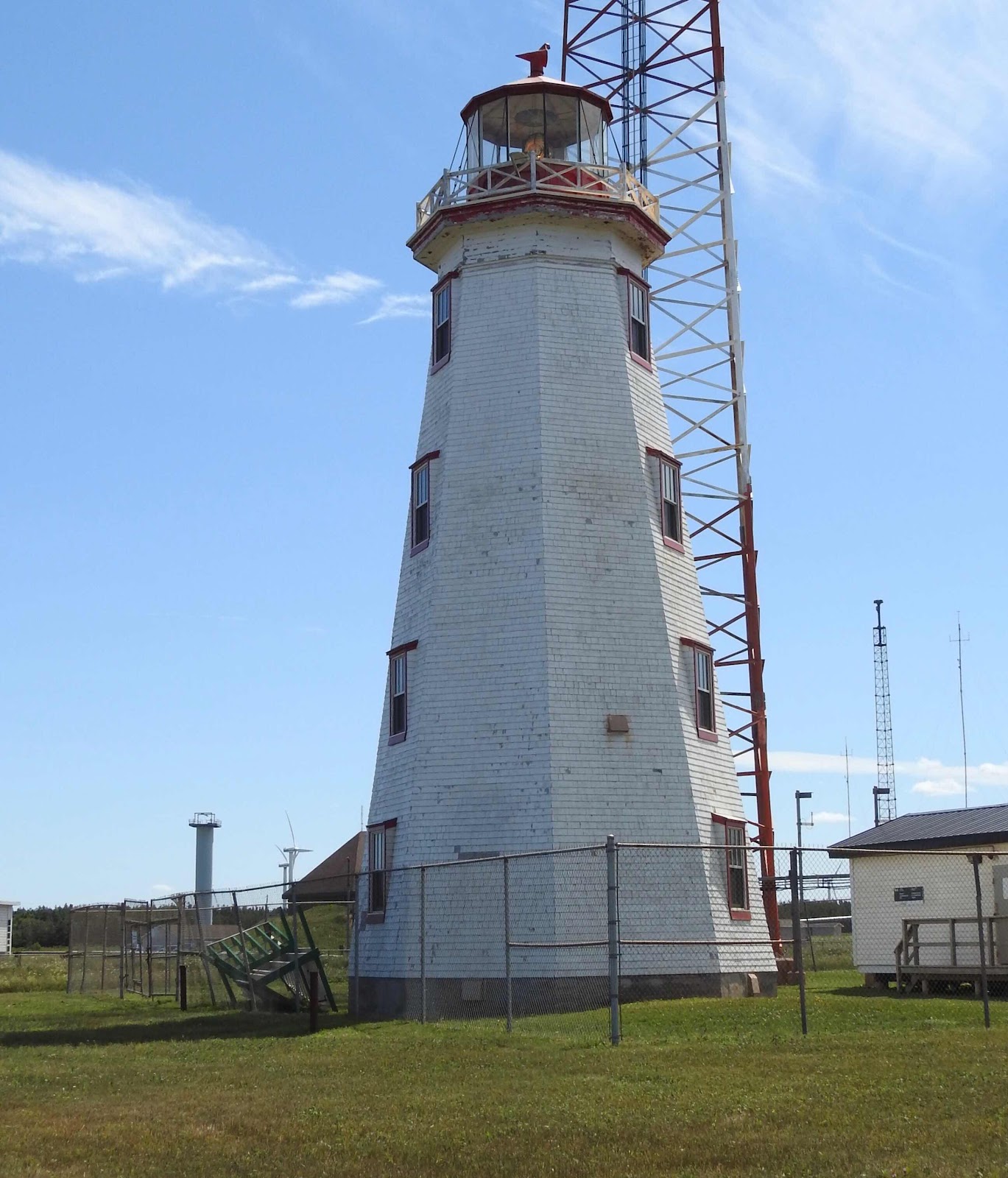
I walked the trail to the lighthouse and watched as seagulls floated on the breeze.
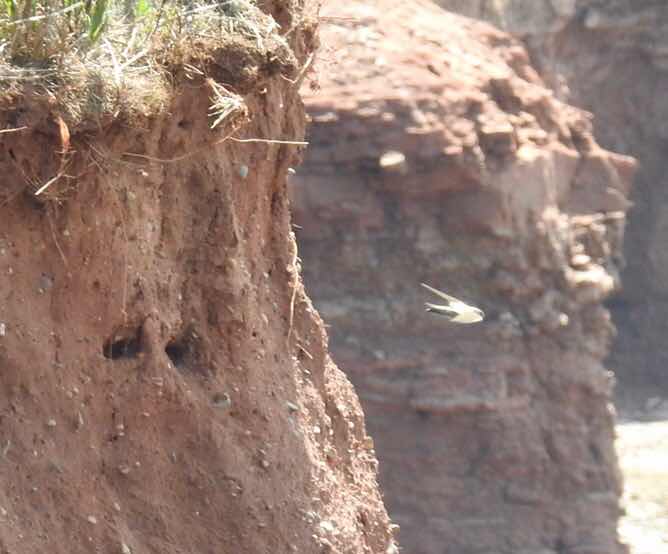
Bank swallows darted overhead. After numerous photos, I captured this shot of one leaving the nesting area. It’s hard to capture bank swallows in flight.
We had a picnic and made a few more stops before we headed home.