It was our first visit to Seacow Head lighthouse. The area, about twenty minutes from Summerside, Prince Edward Island, is cottage country. At this time of year, the cottages stand empty against the worst weather conditions.
This year though, has been unusual so far. While the winds have wreaked havoc on trees and roofs, the snow has stayed away with the exception of a few days earlier in the season. Now, little remains. My husband and I could drive up to the lighthouse, a rare mid-winter experience.
This lighthouse stands on a headland of sandstone cliffs. Here, the sandstone along the shore is covered in red soil which washes away easily. You can see the vegetation hanging over the side of the the cliffs as soil disappears faster than the sandstone below.
The ice in the Northumberland Strait extends to New Brunswick on the mainland, visible in the distance.
On closer inspection, one realizes there are small areas of open water.
Along the shoreline, the ice piles up with the on-shore wind and the tide.
The red cliffs are in stark contrast to the ice, but water has frozen in transit down the rock, as if attempting to link land and sea.
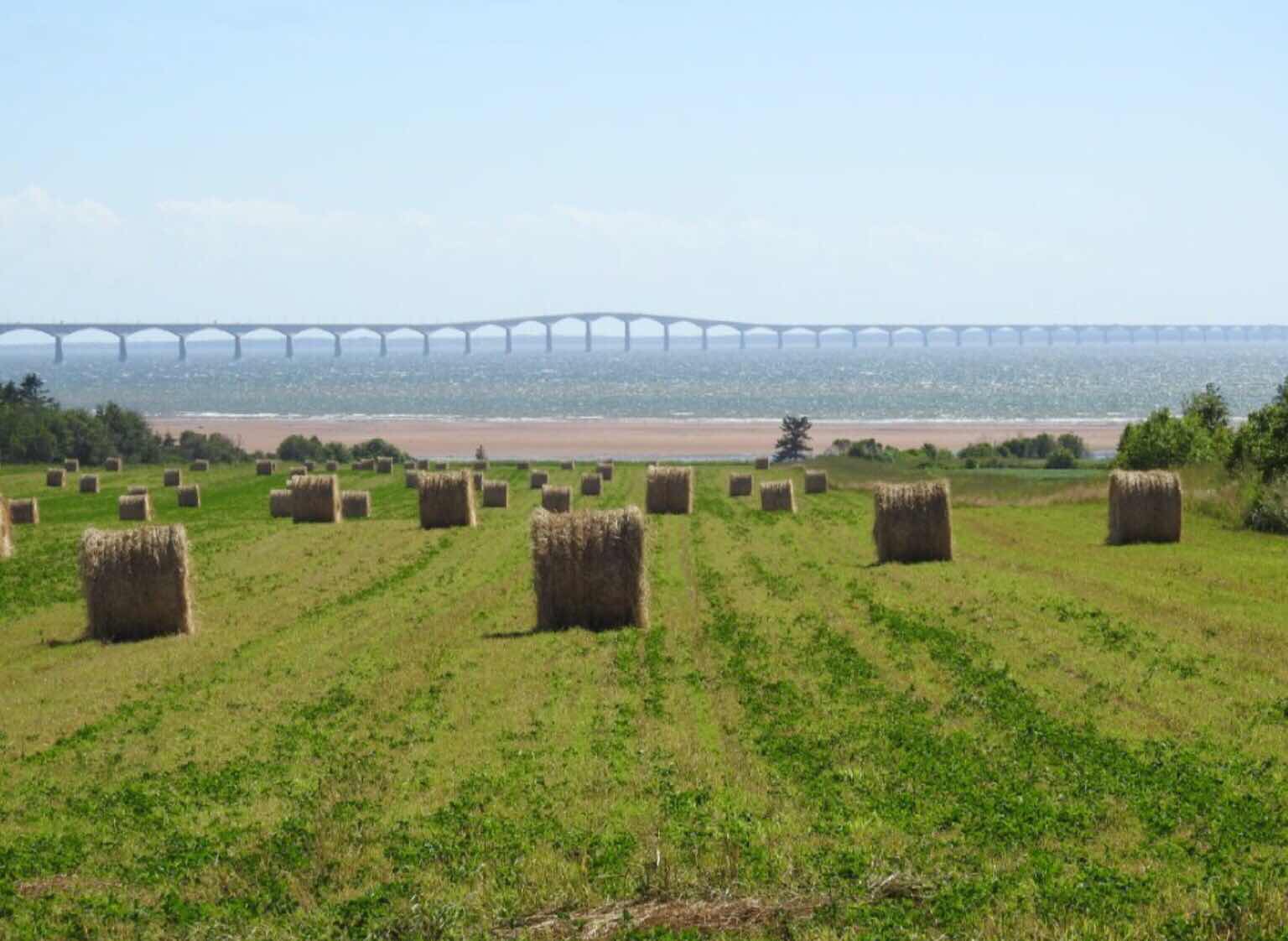
The Confederation Bridge is visible in the distance.
It is the world's longest bridge over ice-covered water. People and nature have worked their magic and today, the bridge looks like part of an ice field.
High winds do not test the lighthouse today so the cold is bearable.
The lighthouse and the land are named after walrus which lived in these waters at one time. The structure was built in 1864 but was moved from its original site in 1979 due to the effects of erosion. Today, gullies into the shoreline show that effect.
The long grass on the headland looks like waves of blond-gray frosted hair.
A tree near the edge of the shoreline has experienced severe conditions if the trunk is any indication.
Nearby, the road around the lighthouse is like a skating rink.

The weather sculpts this place. We look forward to its artistry next season.