Most Popular Post

Showing posts with label erosion. Show all posts

Sunday, 3 August 2025

Summer distractions

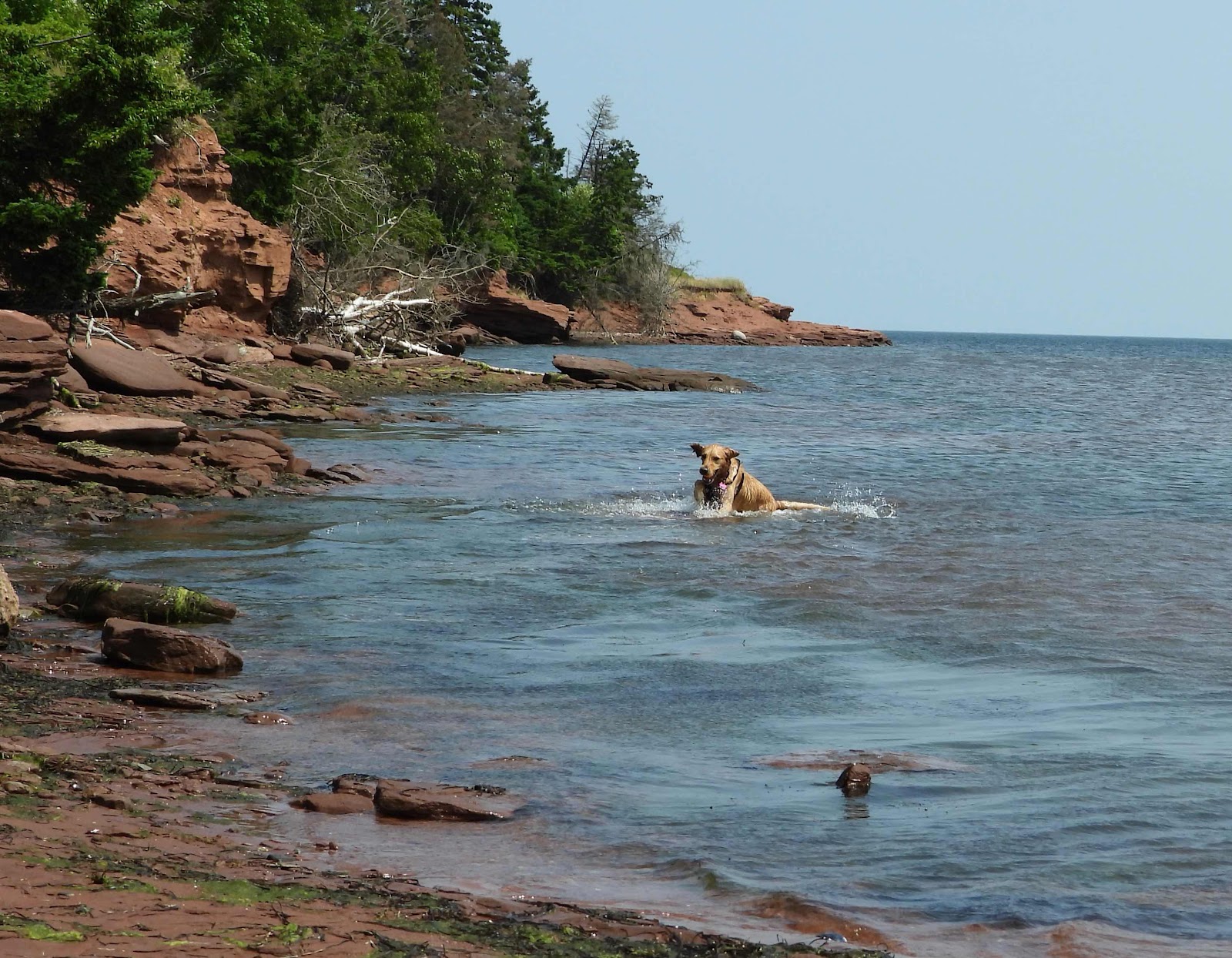
Last week was busy but lovely with many distractions. We walked the boardwalk, the Confederation Trail and enjoyed two provincial parks. Daisy was with us at Belmont Park and enjoyed playing in the water at high tide.


Most days were sunny with the wind blowing which made it perfect for picnics last week. The mosquitoes can’t compete with the wind which is always a bonus. 


Even when we don’t leave home for a picnic, we eat on our patio at every opportunity. We will have to move indoors soon enough when the temperature drops, the wind howls and the snow falls. Such is life in eastern Canada. For now though, meals are outside, under an umbrella or in a park under a tree. It is a beautiful time of year!


It was a great week in nature. Nearby a piece of land is for sale and the lot is covered in Queen Anne’s Lace. Walking past, with the breeze blowing the blooms, one is mesmerized by the white sea.


Along the boardwalk, in the salt marsh, Great Blue Herons drop by occasionally. This one looked to be laughing.
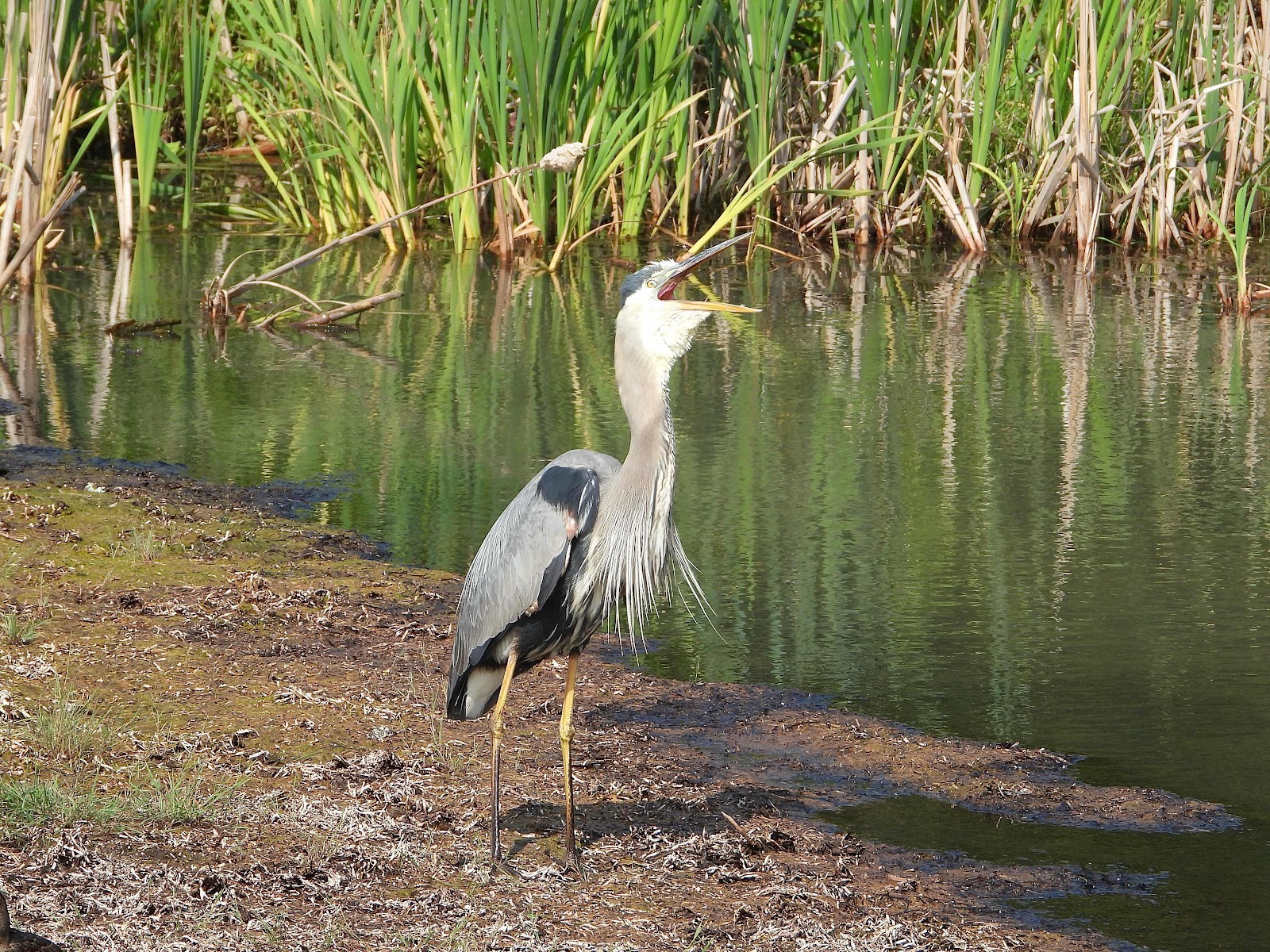


In Malpeque Bay later last week, this Great Blue had its mouth open too. Seeing two of these birds with open mouths was unusual, the second one looking as if it is in conversation.


Near the boardwalk is an Osprey nest which a pair of birds call home every summer. Early next month the birds will head south again, but for now they are raising their young which we expect to see any day. Meanwhile, the birds take turns watching the young ones and the mother had her eyes on something nearby as I took her photo from across the street. 


Twice last week we saw the same young fox on a lot between two houses across from the boardwalk. We wonder if people are feeding it.


The second time we saw it, two teeth were visible due to the way it was seated. We call it Boots because of its black legs.


One day, as I was stopped to talk to someone along the boardwalk, we watched as this adult Bald Eagle flew into an old snag it frequents. It flew off after a few minutes but not before I captured a photo.


One can see a tiny Black-capped Chickadee within minutes of seeing the huge Eagle. Birds are so varied, they make a wonderful study!


The island is alive with shorebirds now as numerous birds of various sizes stop on the island to feed in preparation for their journeys south. 


Yellowlegs are a common sight in the salt marsh and along the beach. They were joined this past week by Semipalmated Plovers, 


Black Bellied Plovers 


and Semipalmated Sandpipers. 
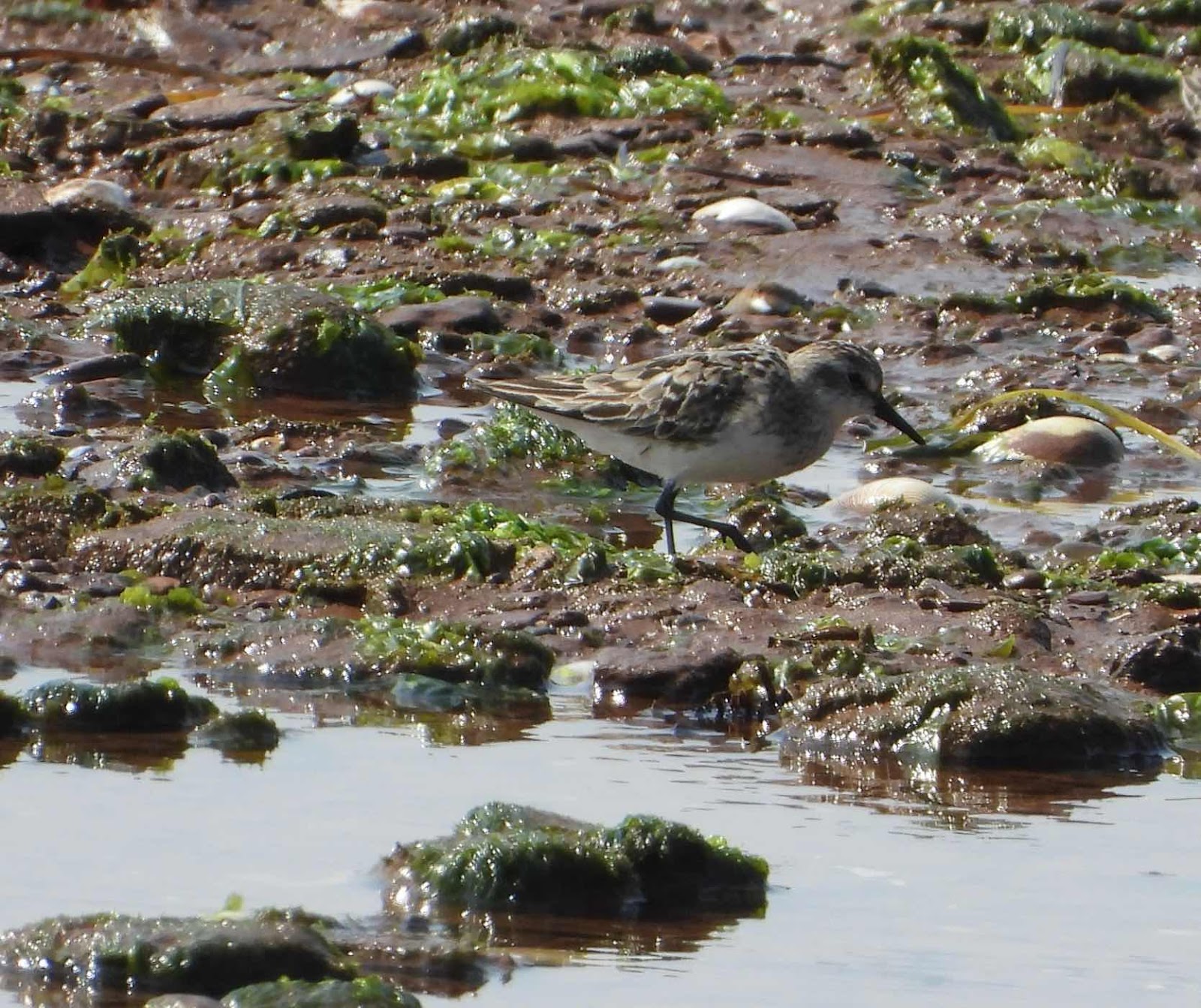


We will visit various beaches to see some of the avian visitors over the next month or more.


The scene at the wharf in Malpeque last week shows some boats still in the water although the lobster season is over in that area. Mussel boats are still active in the area.


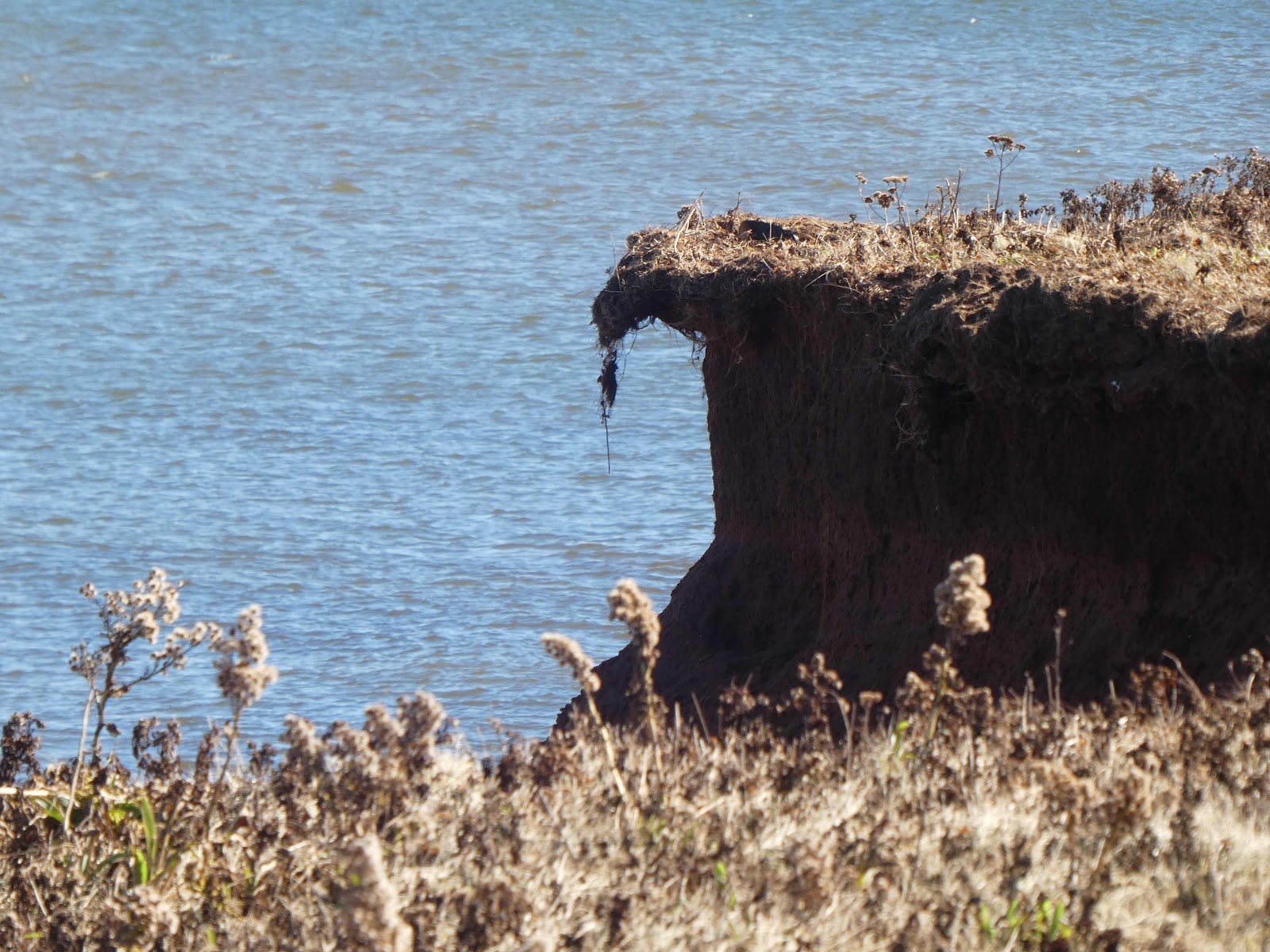
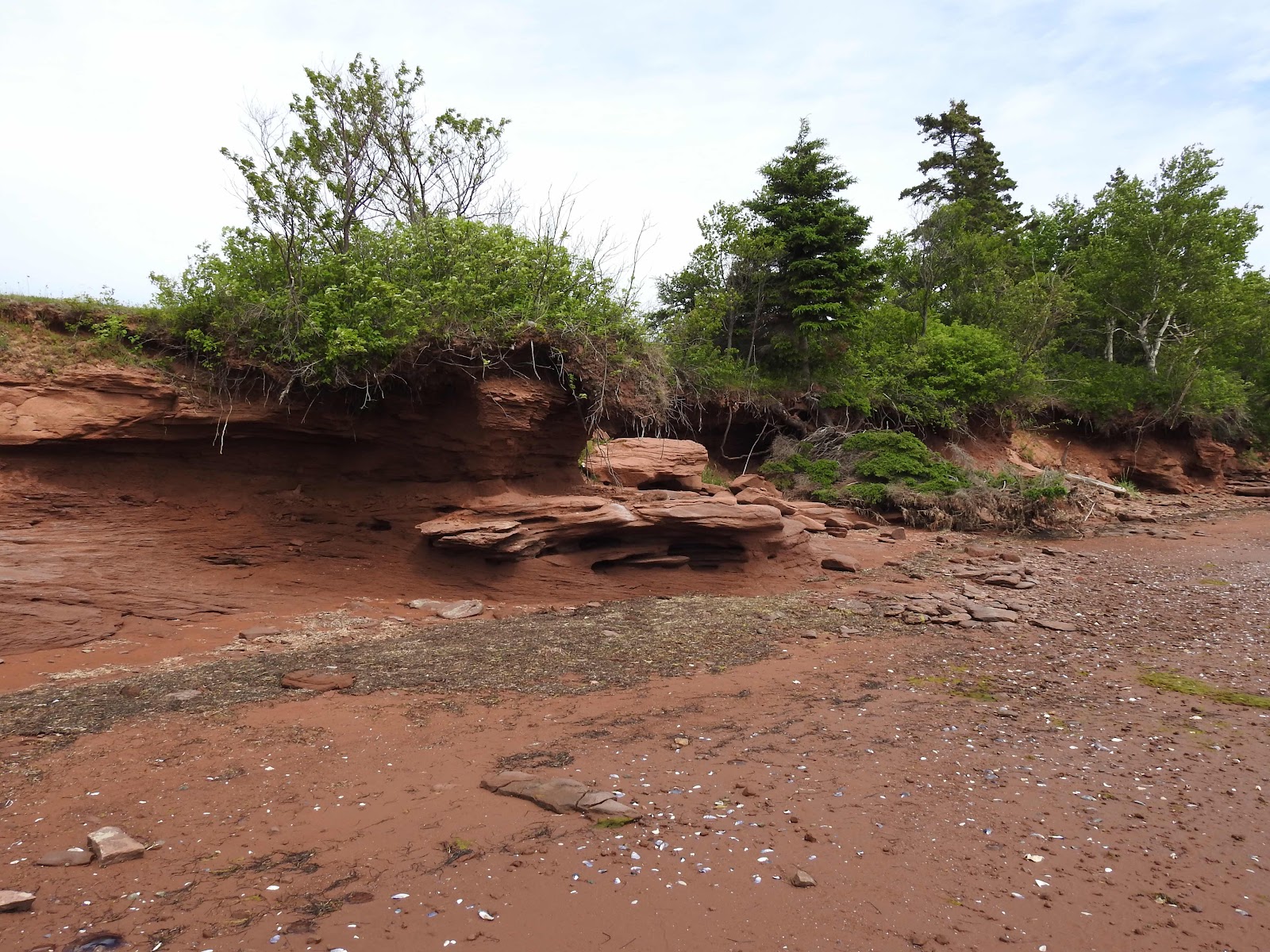
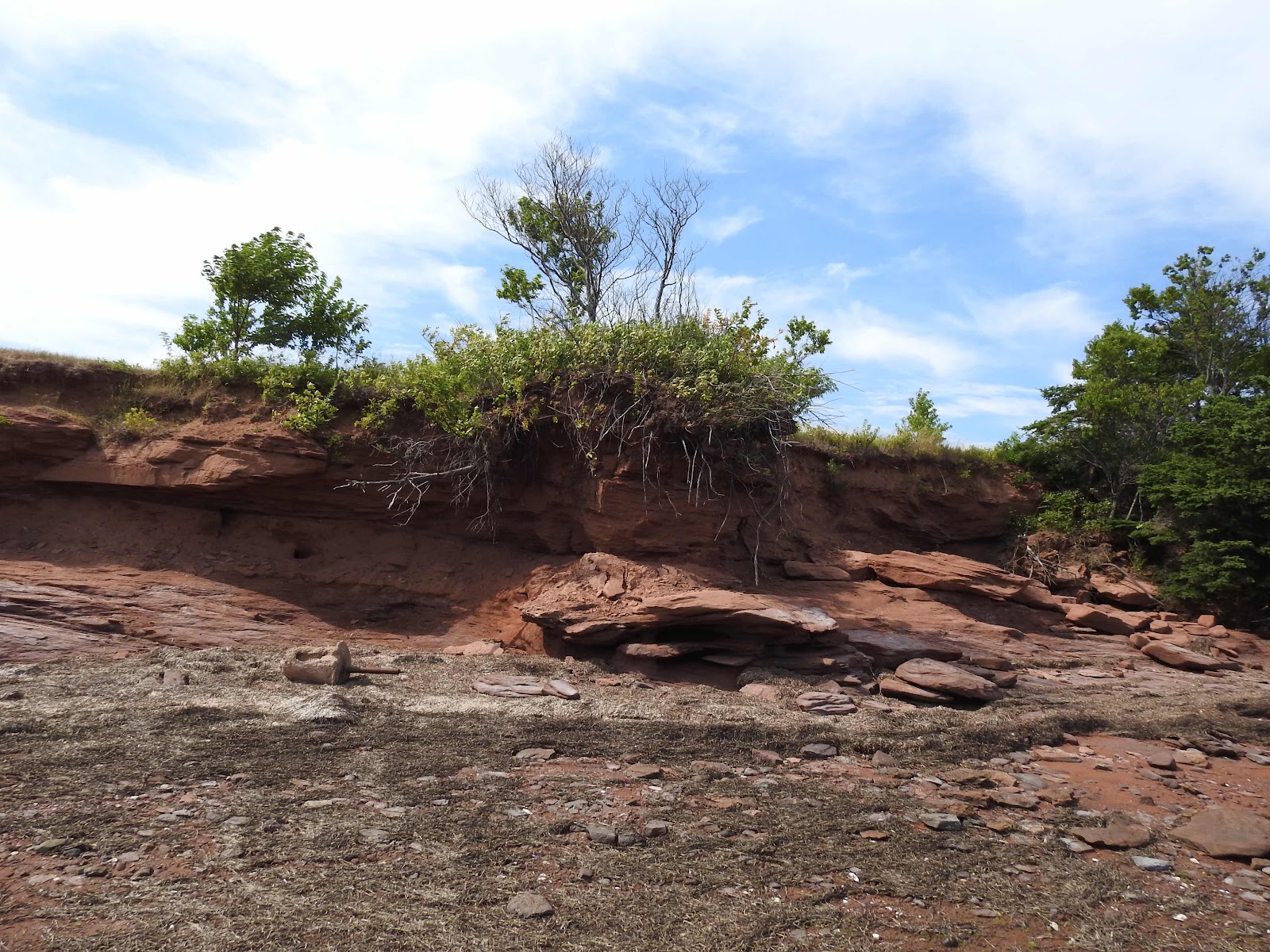
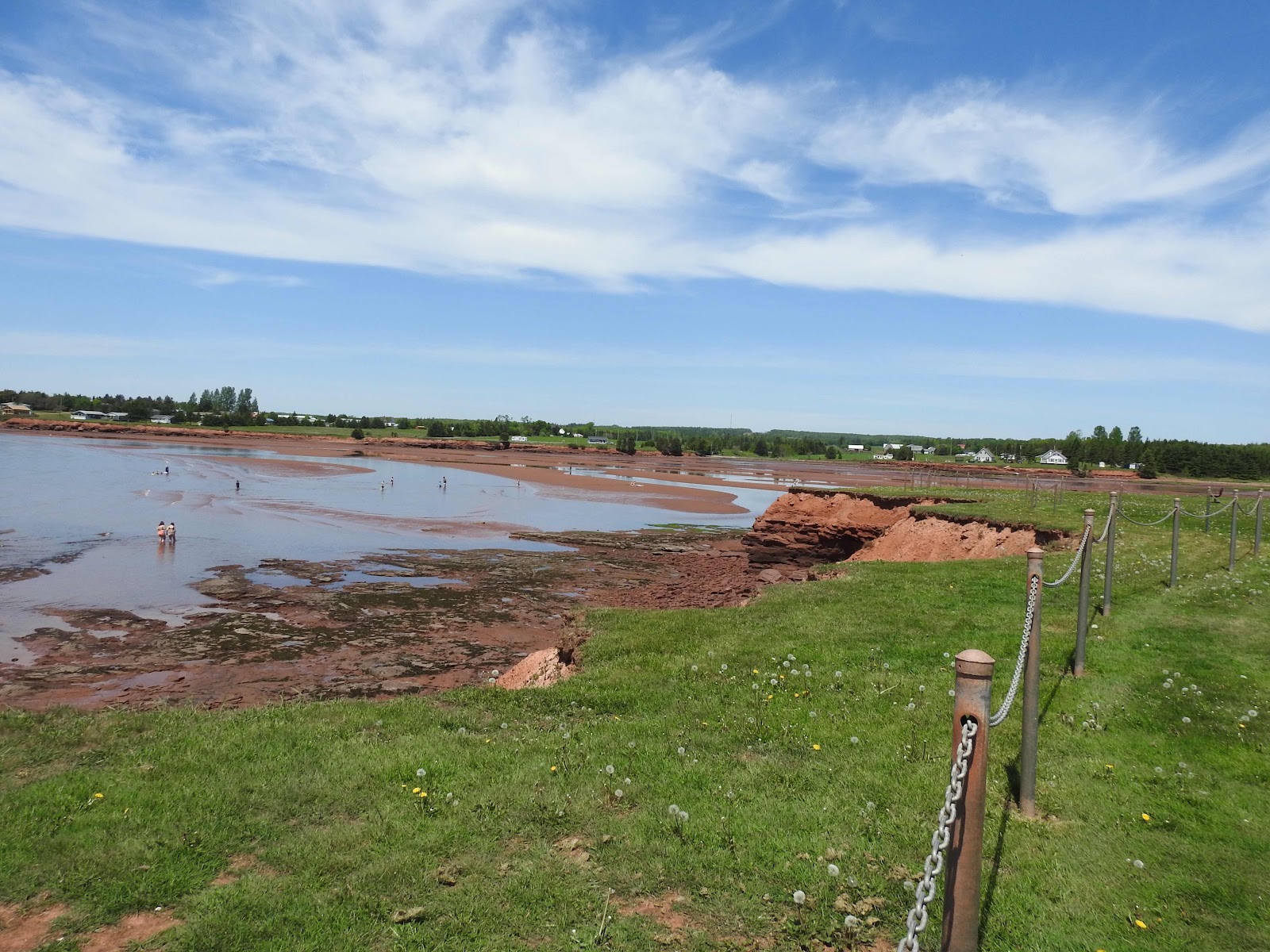
We had a picnic at Cabot Beach and walked the shoreline as the tide went out. It is sad to see how much damage is done to the shoreline as the sand is washed away, leaving the vegetation to fall onto the beach. The rate of erosion is alarming.


I am happy to share some good news from the island too. Our daughter was Bass fishing last week and sent beautiful photos of the area on the north shore. She and her husband waited for low tide to walk to the sand bars. 


There were lots of migrating shorebirds there, including Piping Plovers. They are a threatened and endangered species which is increasing in numbers nesting on Prince Edward Island every year. 


I wish you a great week, filled with your favourite distractions.


Wednesday, 19 October 2022

The north shore

We were slow to return to our excursions around the island after Fiona. Trees are down everywhere and trails are slowly being cleared. Two weeks post storm, we returned to the boardwalk and later to beaches where we love to walk and have picnics. My husband and I will enjoy autumn as much as we can since we will be limited by the weather soon enough.
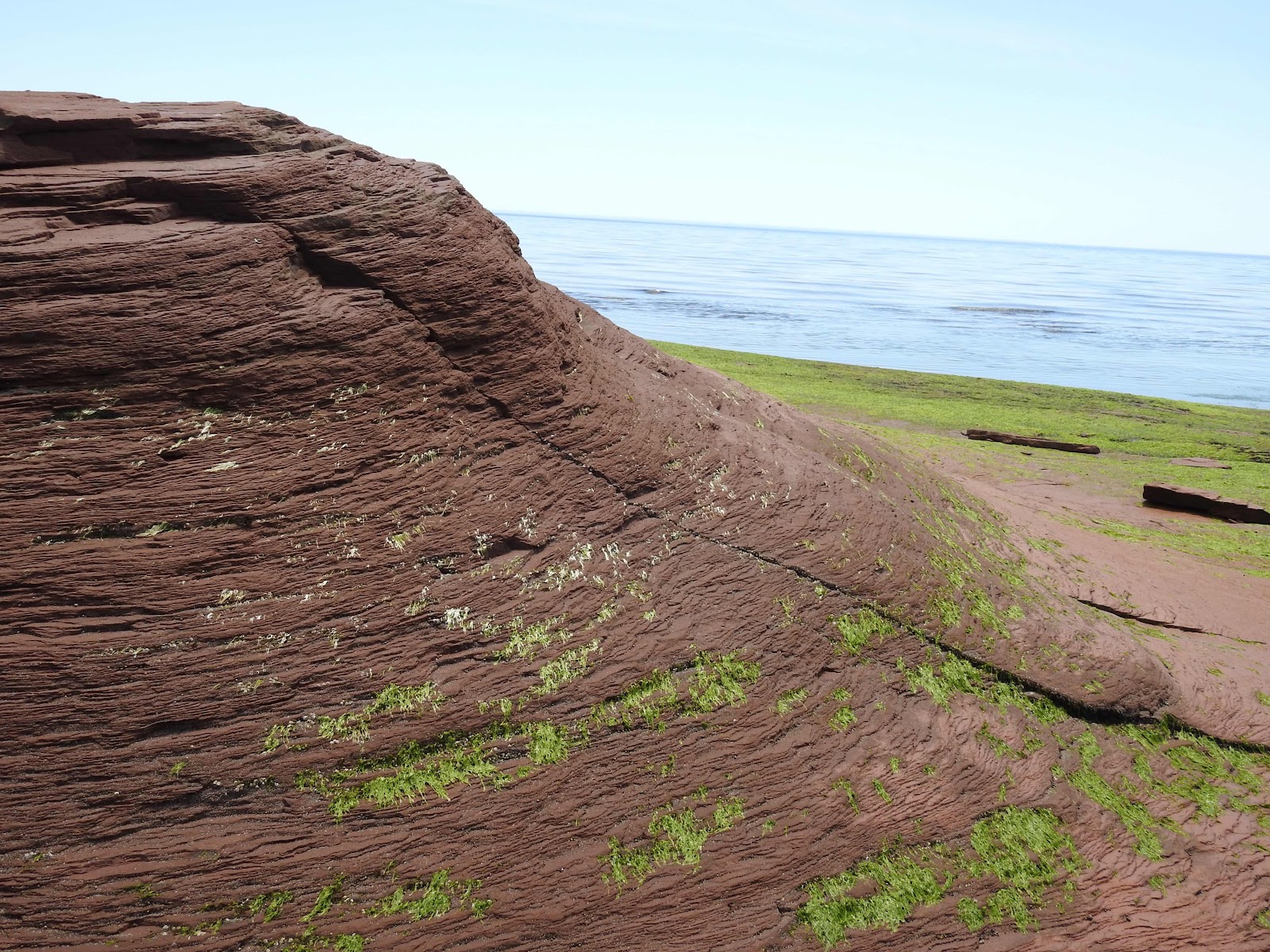
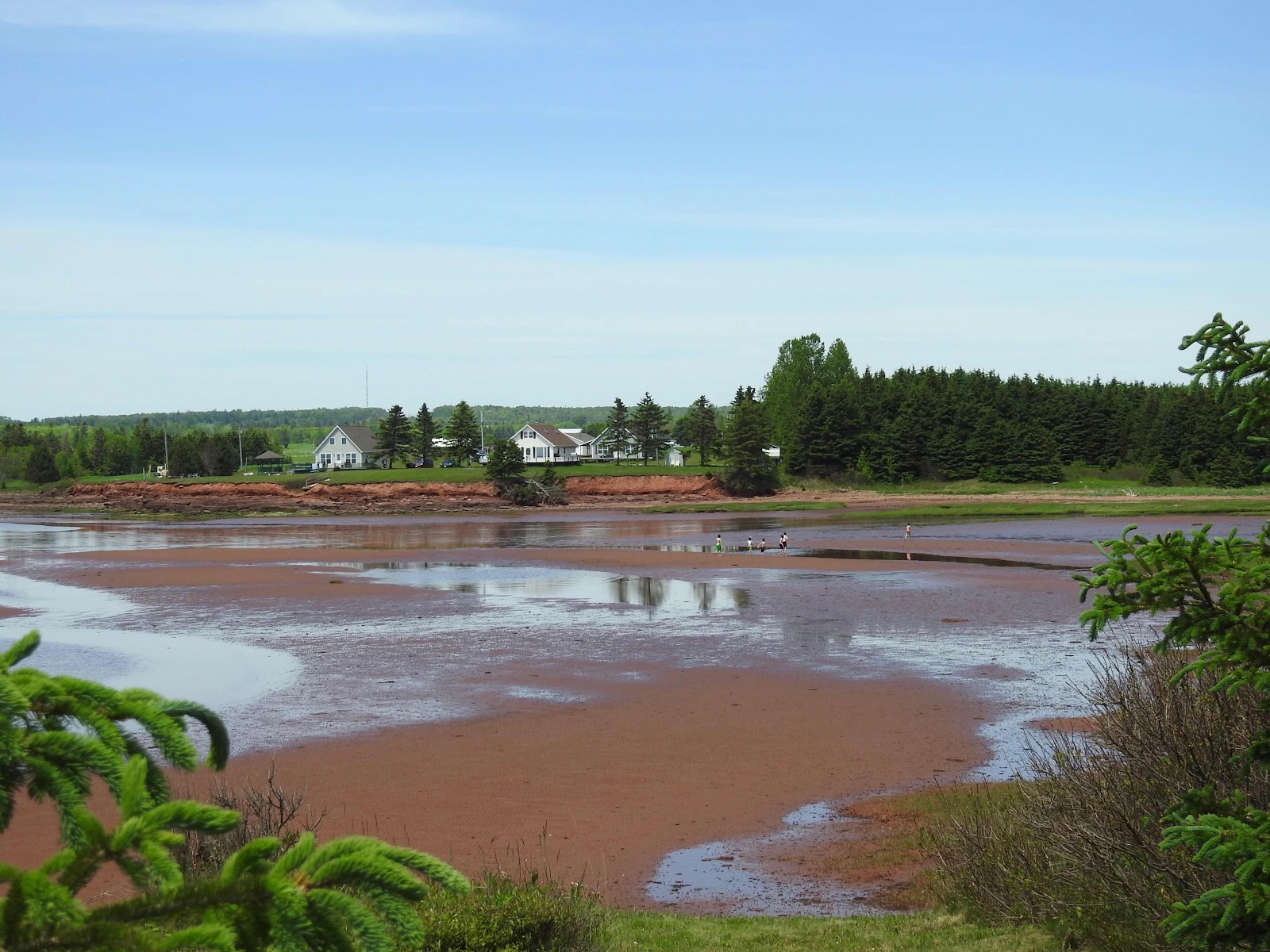

On one recent outing we went to the north central shore, first to the New London Lighthouse which I have featured numerous times on this blog. The old sentinel made it through another storm unfazed by the look of it. 


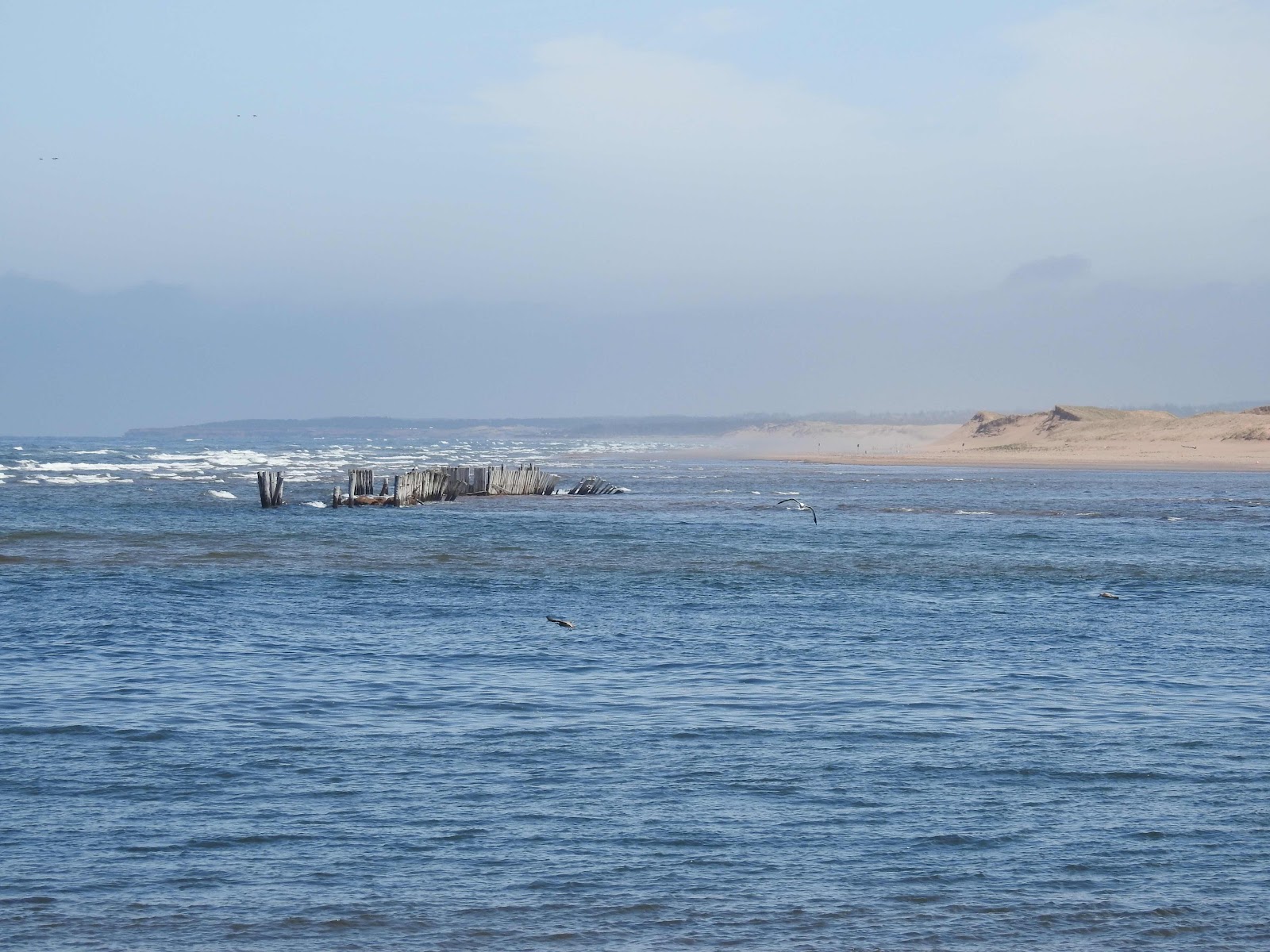
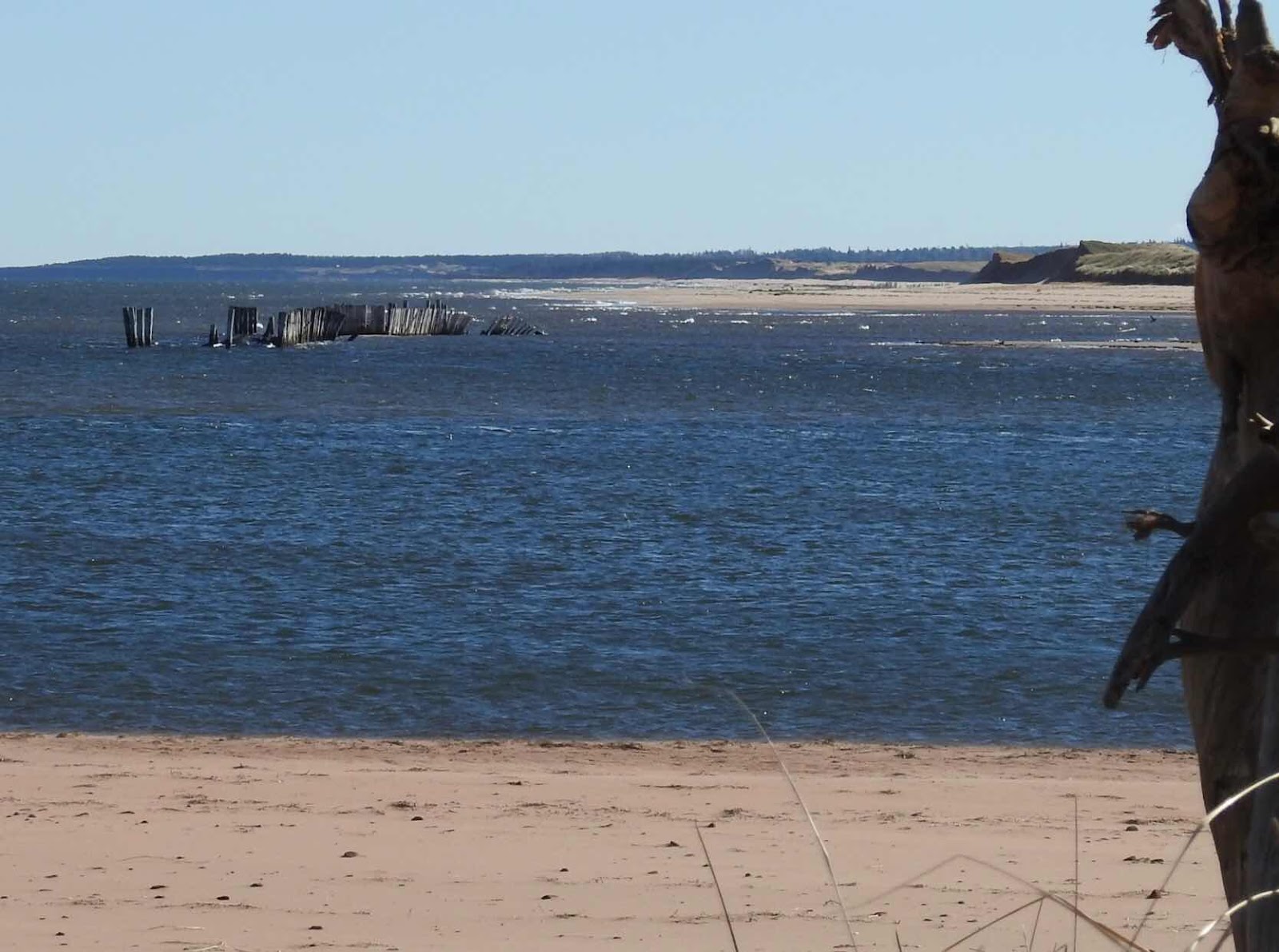
Not the beach and sand dunes however. In June this year, you can see the extent of the beach across the channel.


Post Fiona, the dunes are greatly reduced and the sand washed out to sea. It will be a slow return.


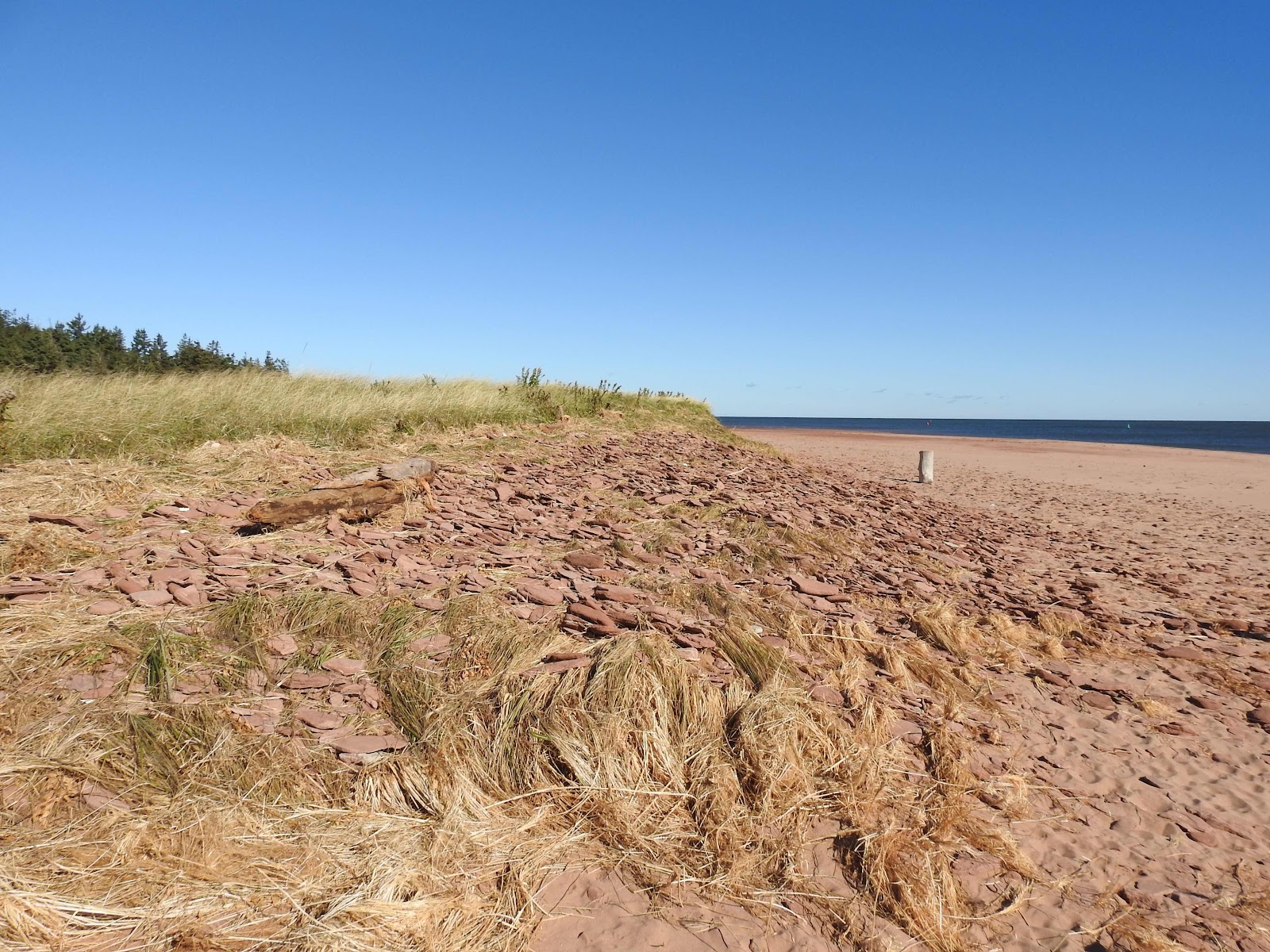
Closer to the lighthouse, the storm surge destroyed the Marram Grass and dumped sandstones over the area.


We walked the beach towards the cliffs where our daughter fishes for bass. We had never been to this area before and on such an autumn day, it was the perfect time to check it out.


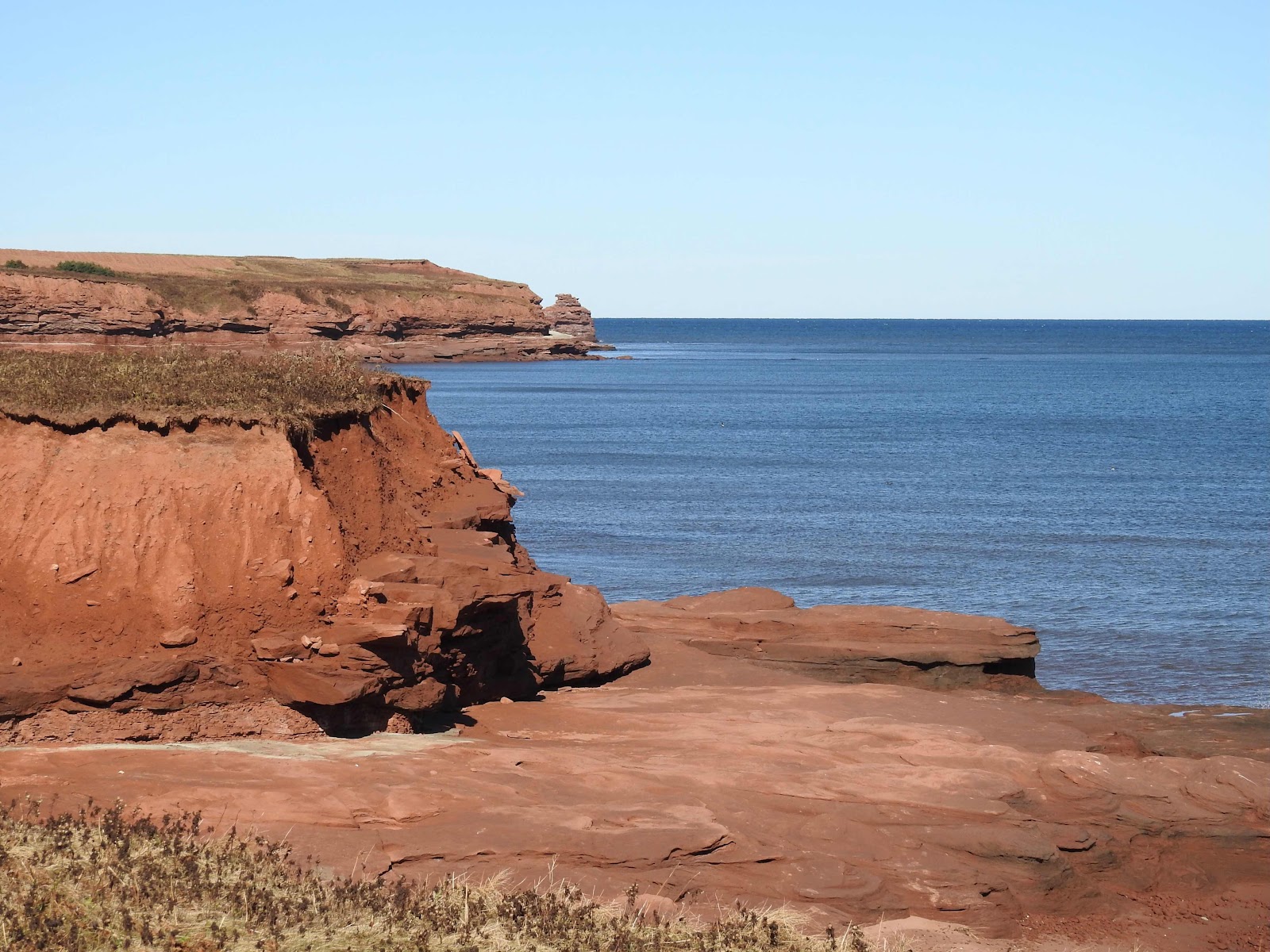
The red sandstone stood out against the natural blues. 


The faded October grass and wildflowers at the edge of a farmer’s field cling to the red soil as long as possible, hanging over the edge as more soil washes or falls away.


A lone tree nearby shows the direction of the prevailing wind and withstood the wind speeds brought by Fiona.


A sea stack, difficult to see in its entirety from the path, is beginning to become a sea arch. If you look closely, you can see two glimpses of sea blue through the sandstone.


Anglers park along the cliffs and take a path down to the shoreline below  It is too treacherous for these old legs to attempt such a walk. We will return when our daughter is fishing there one day.


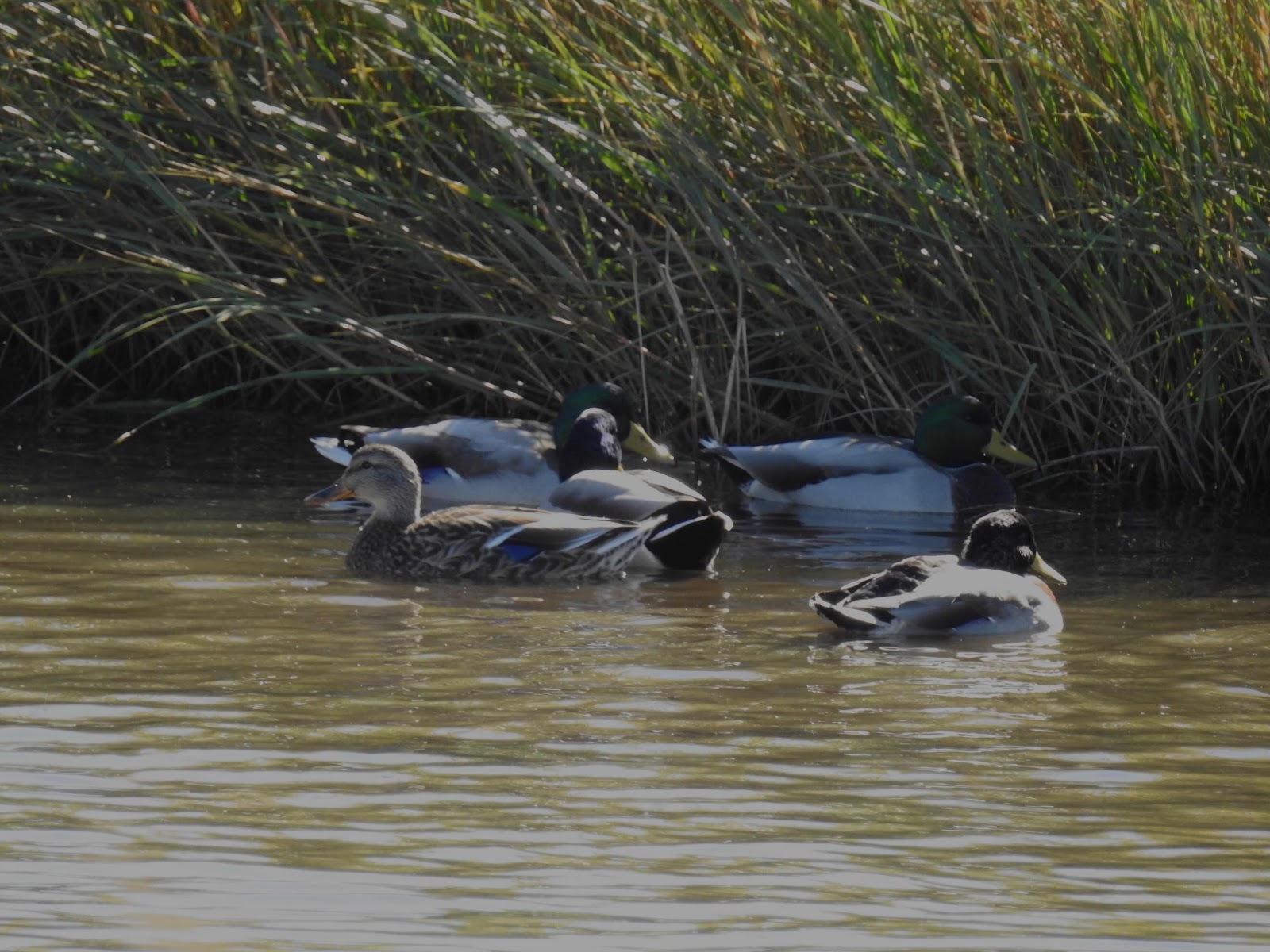
The wind was cold requiring gloves and a hat so we decided to have our picnic in a more sheltered area. On our way to North Rustico, we passed a flock of mallards enjoying the day at French River. I hadn’t seen mallards in some time, so it was a treat to watch them for several minutes 


and meet a new friend too.


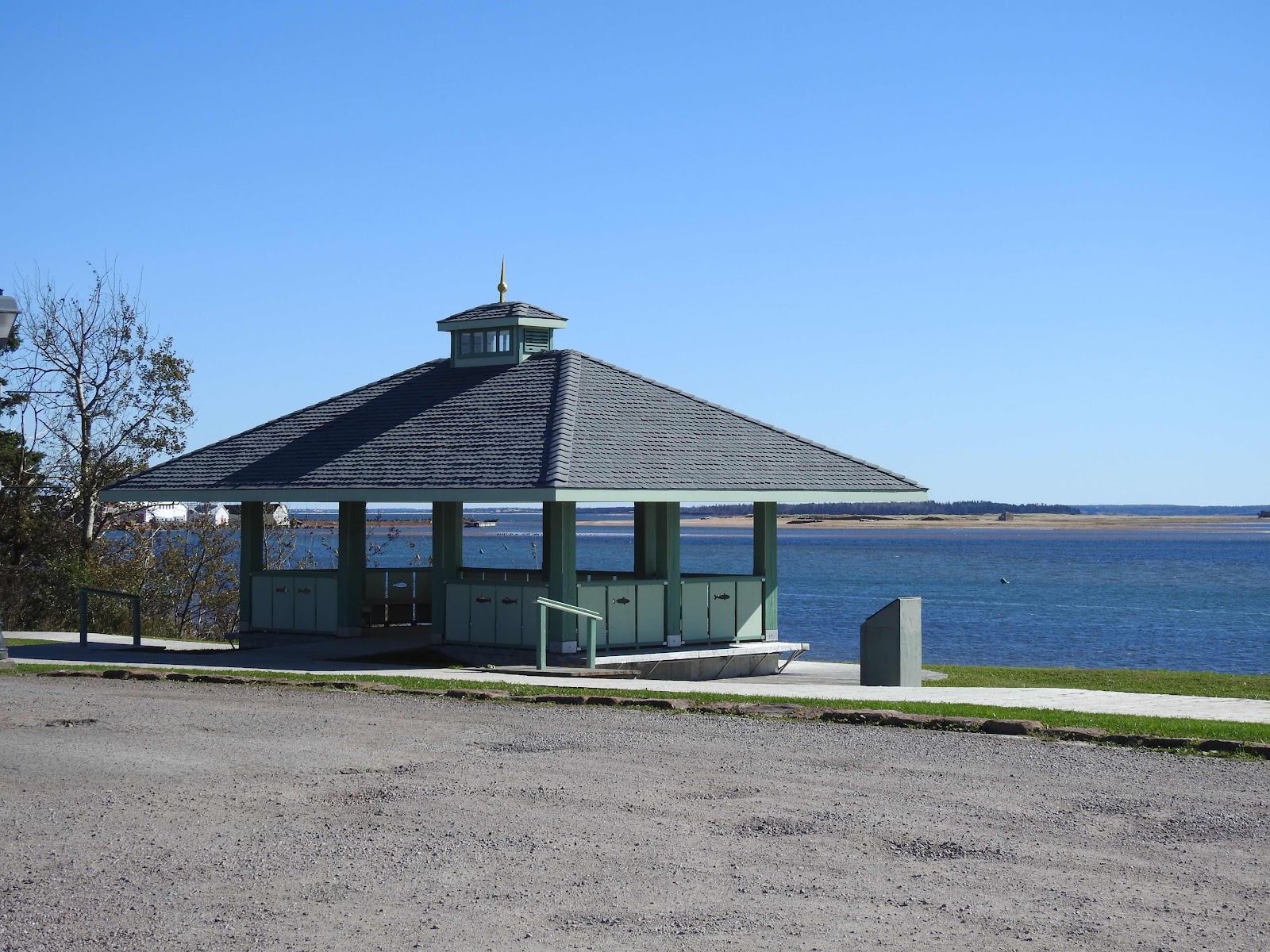
The gazebo at North Rustico has a view of the harbour and is a great place to have lunch. Our turkey soup hit the spot, warming us to our toes.  


Our excursions will continue as long as possible this autumn and a hot picnic lunch will be on the menu.


Monday, 29 August 2022

Hanging by a root

It is a small point of land projecting into Malpeque Bay on the north shore of Prince Edward Island. 


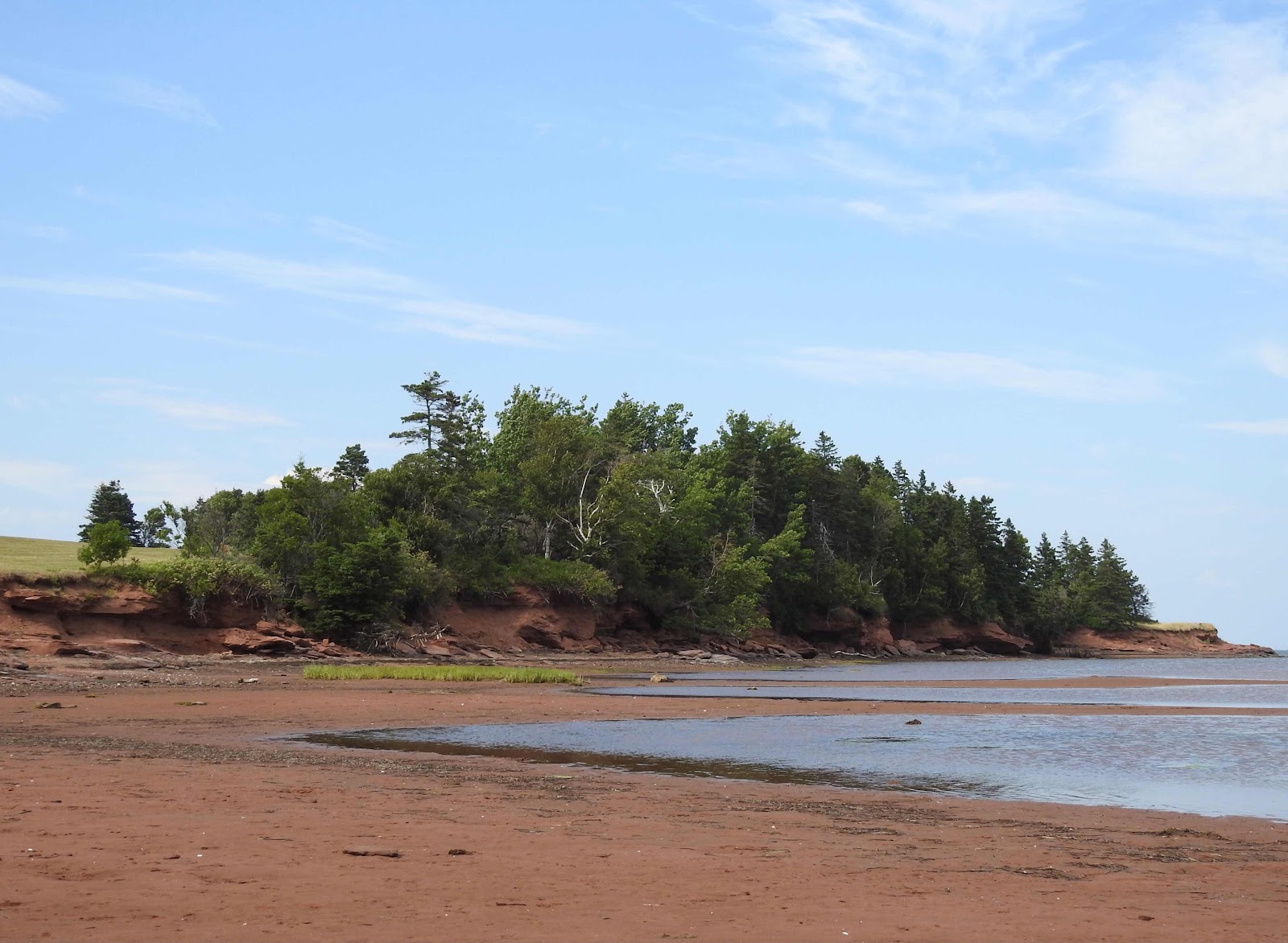
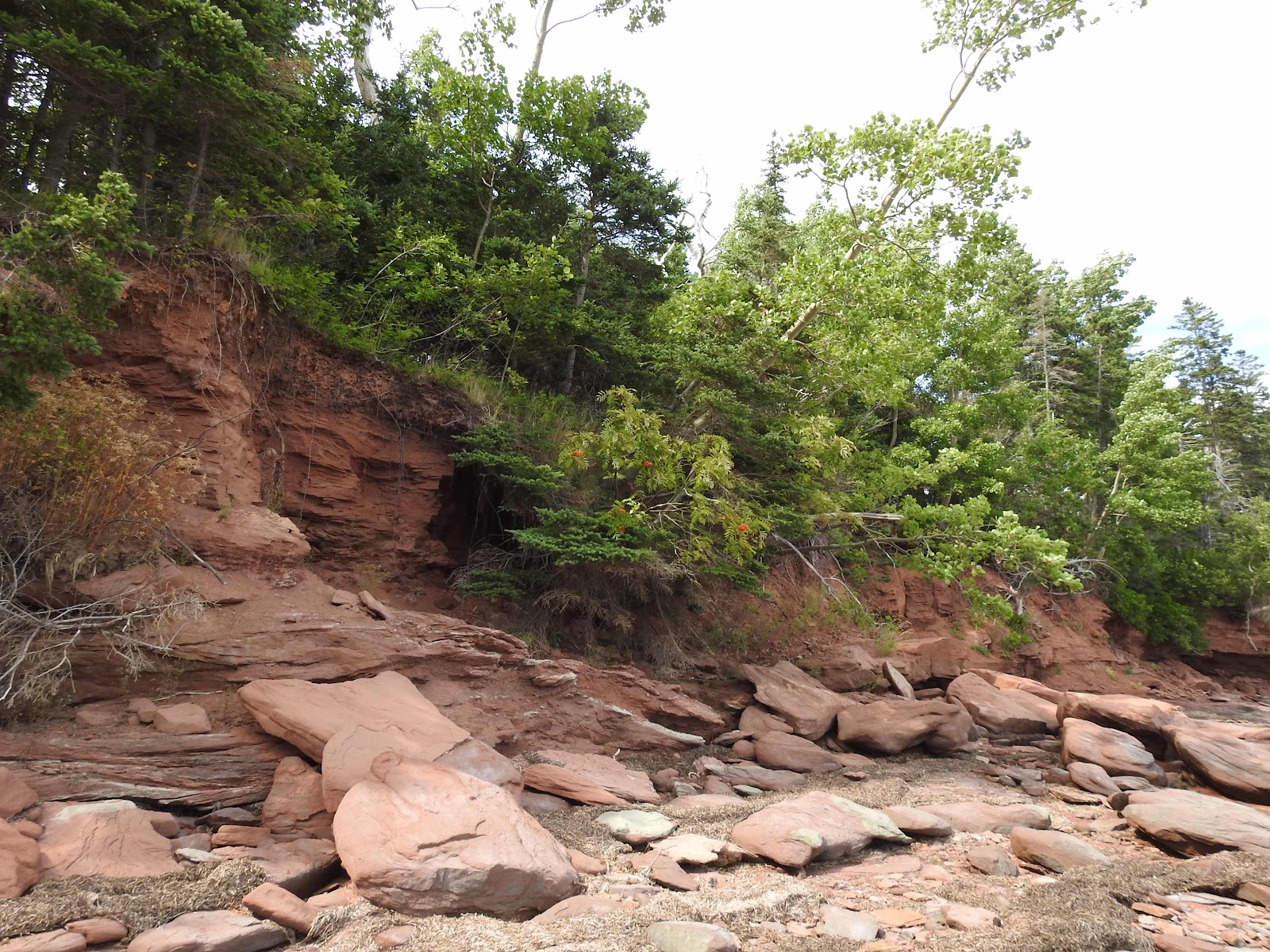
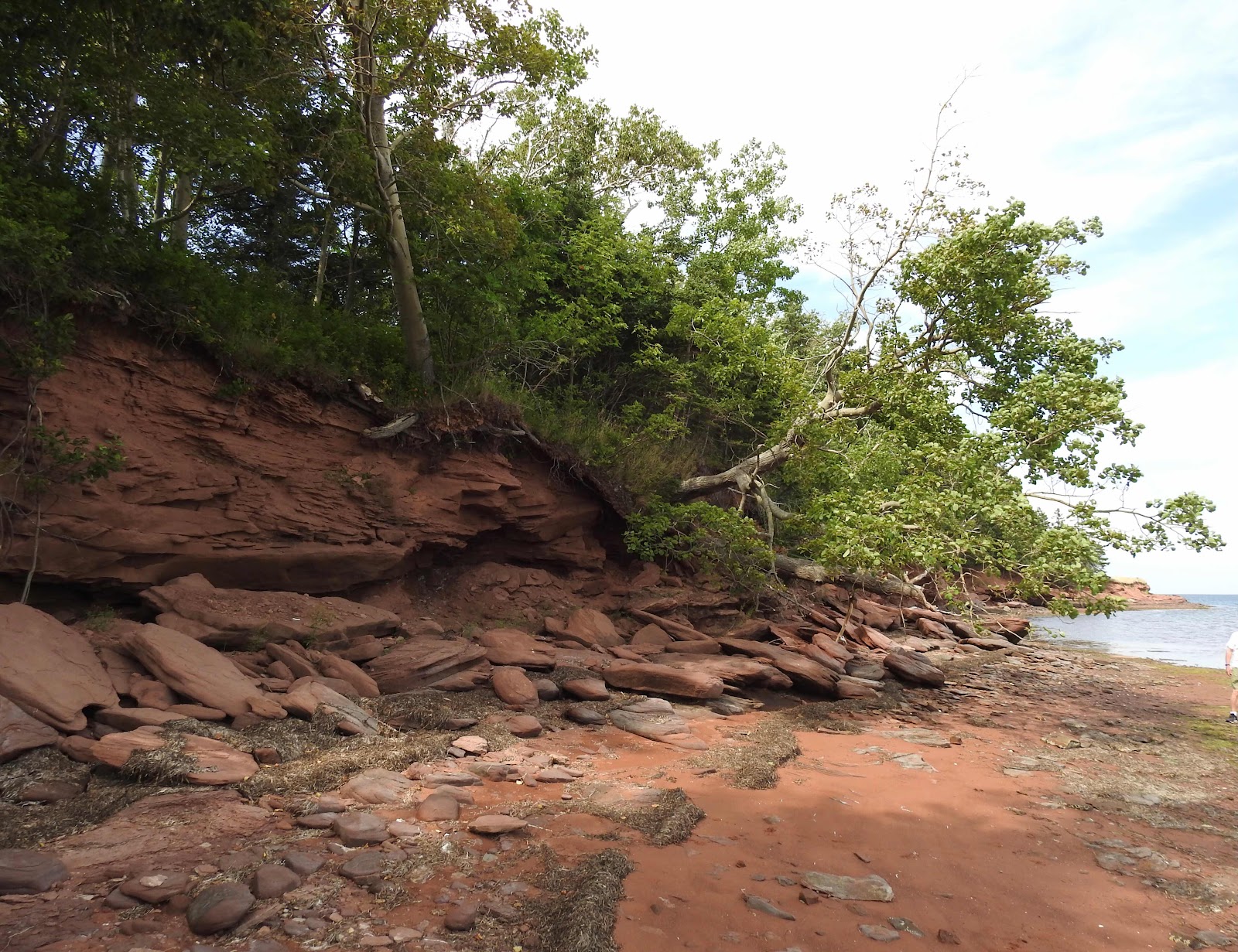
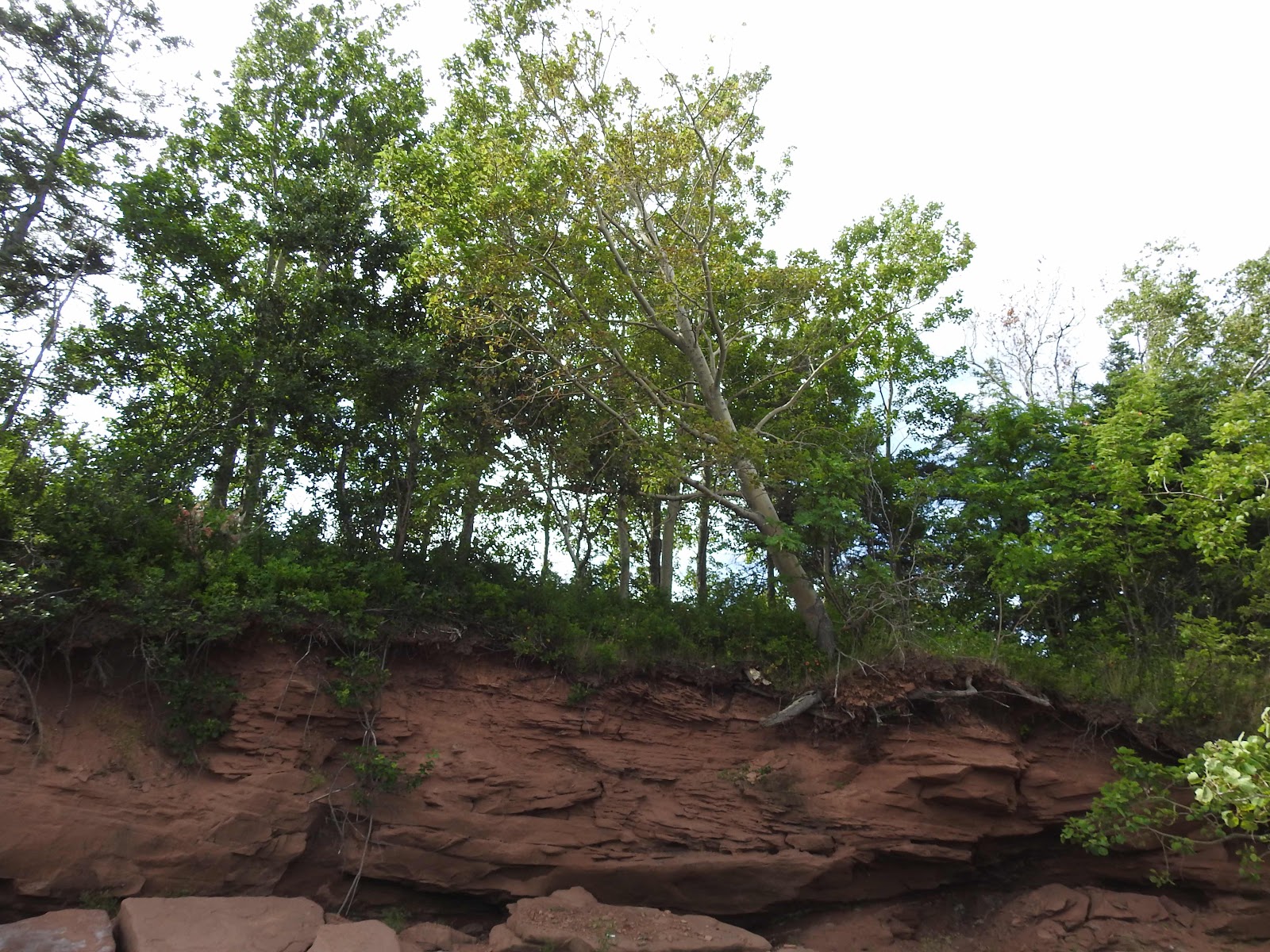
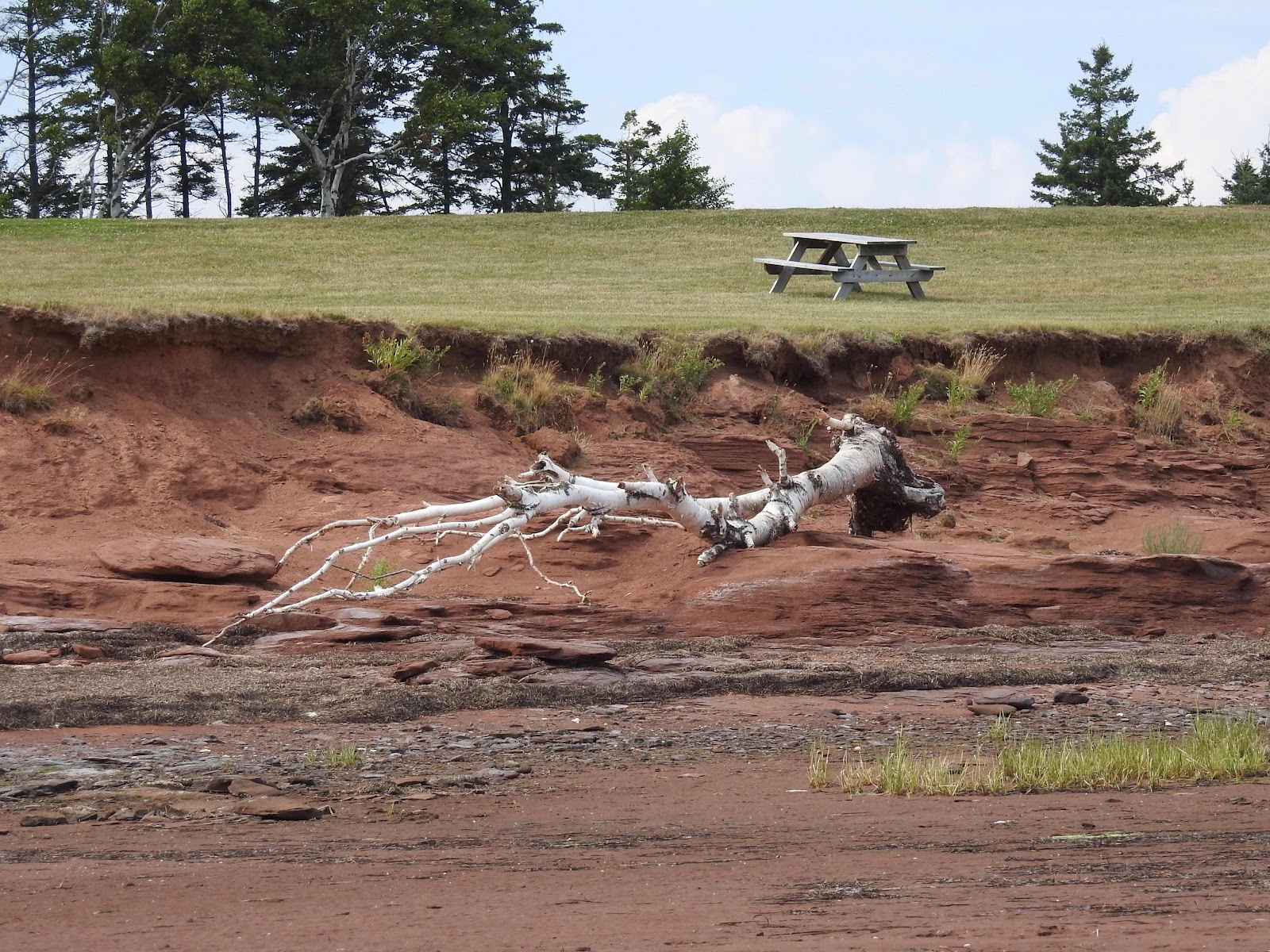
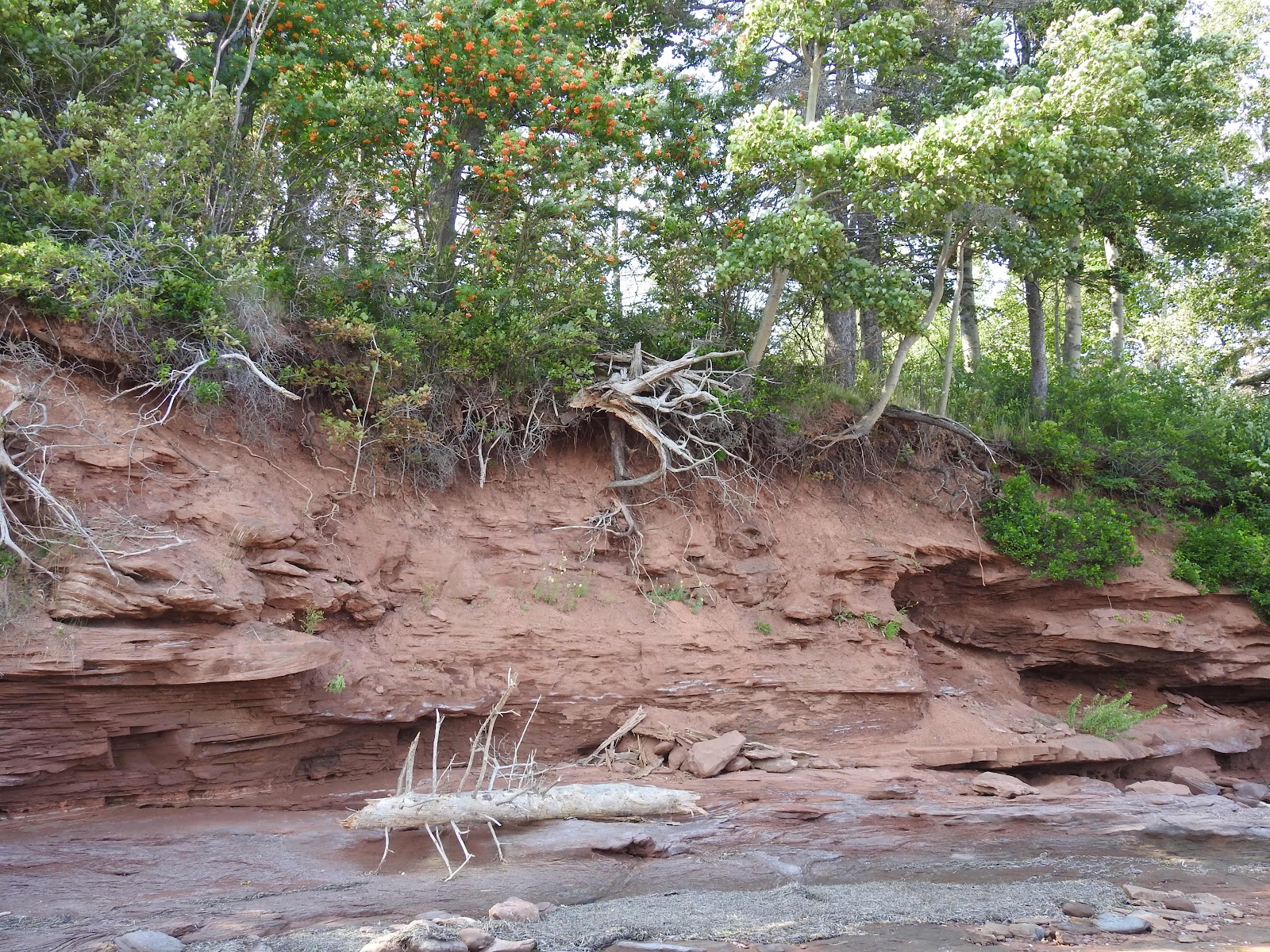
This day park has a lovely beach and picnic area which we visit every summer. The effects of erosion are obvious along the coastline in the park where trees hang by their roots over the bank.


My husband and I walked along the shoreline and observed the trees and other vegetation in their eroded state. They hold on to life as long as possible.


The red sandstone, once exposed, is eroded by the wave action. Sharp edges are soon made smooth as exposed pieces of sandstone litter the beach.


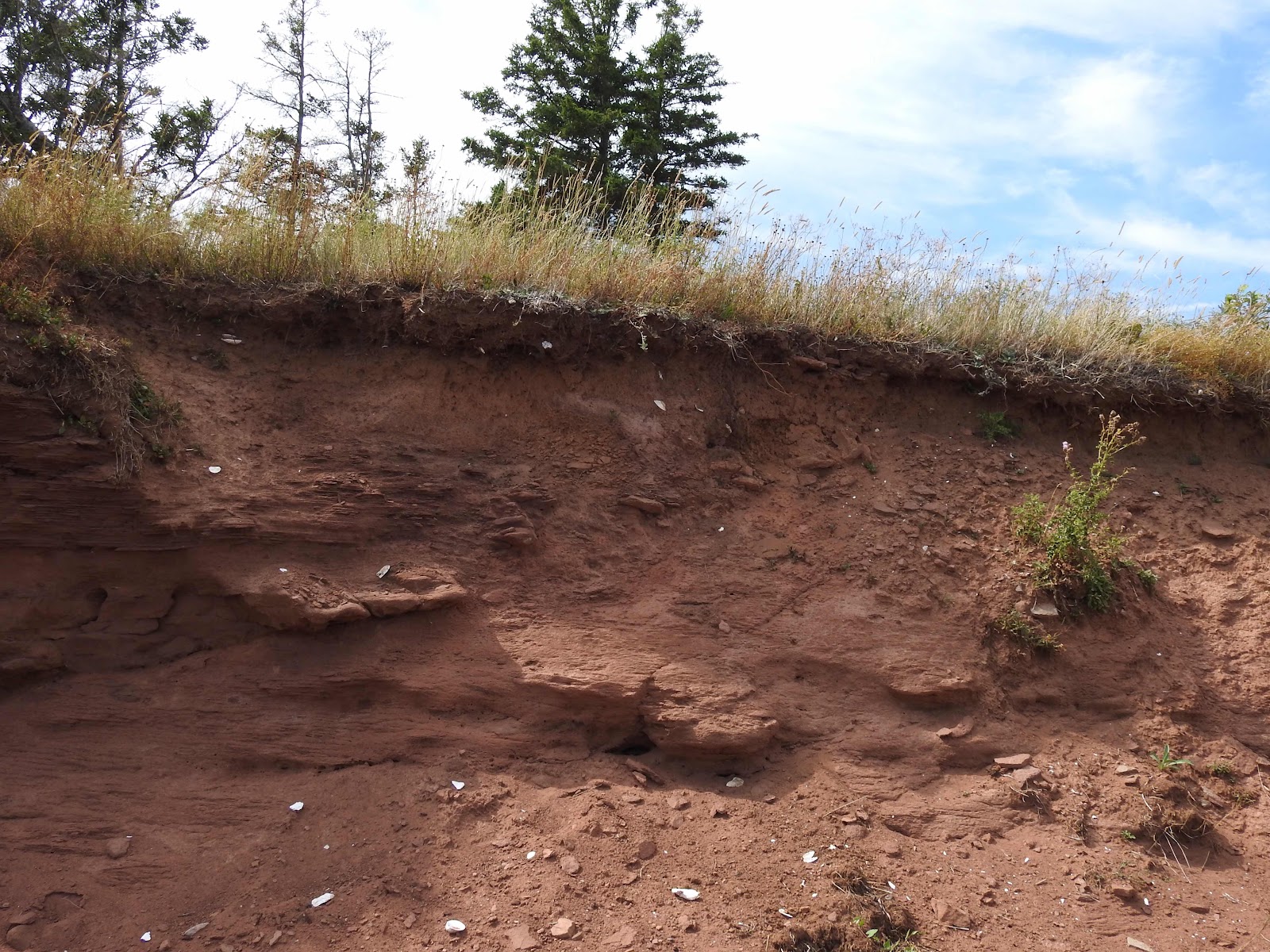
In some areas, the exposed soil contains shells. One wonders how long they have been caught in the soil.


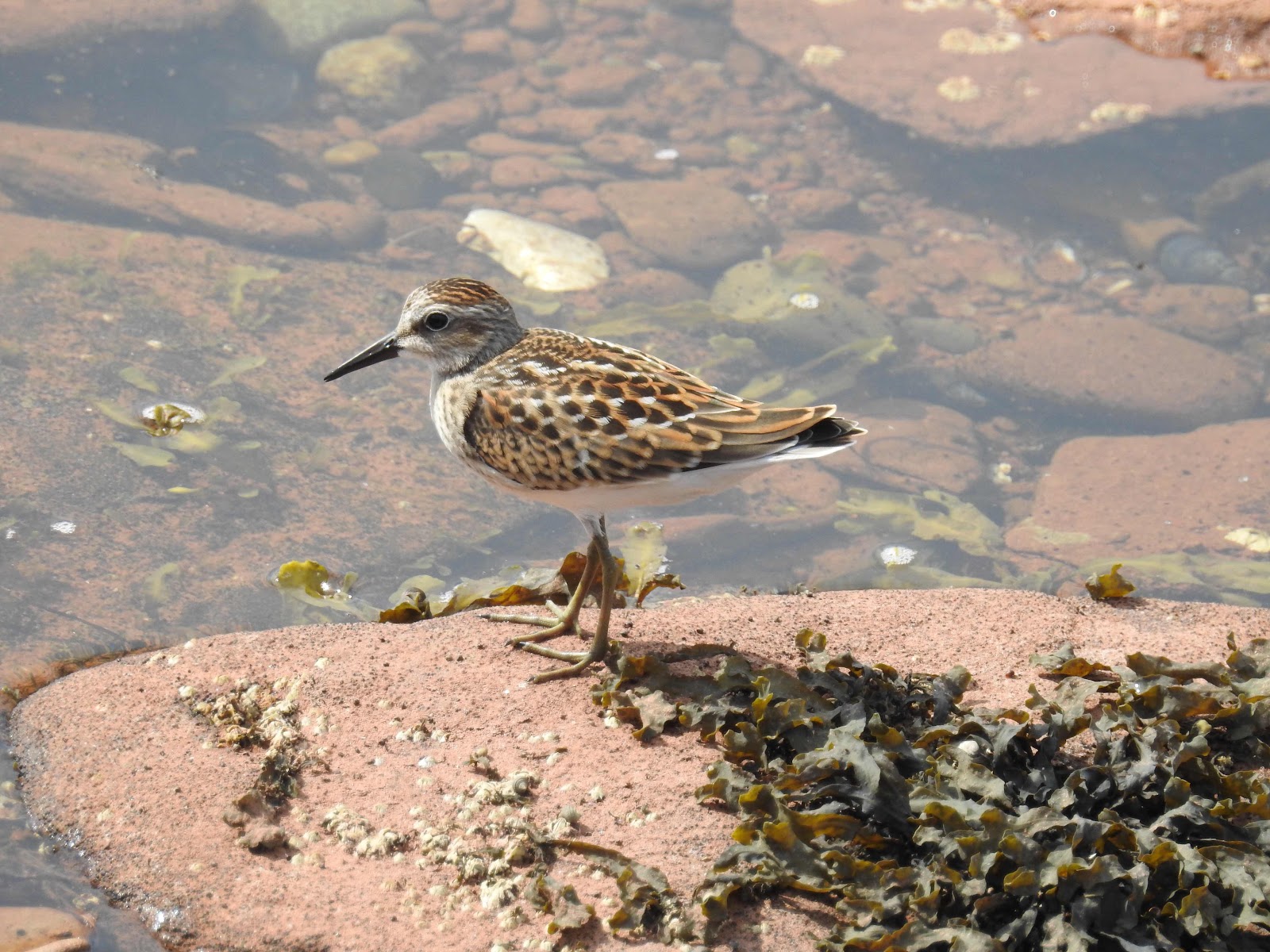
Closer to the water’s edge, several species of birds are busy feeding. Least Sandpipers are small birds which can be easily missed along the shoreline if one doesn’t stop and watch for movement.


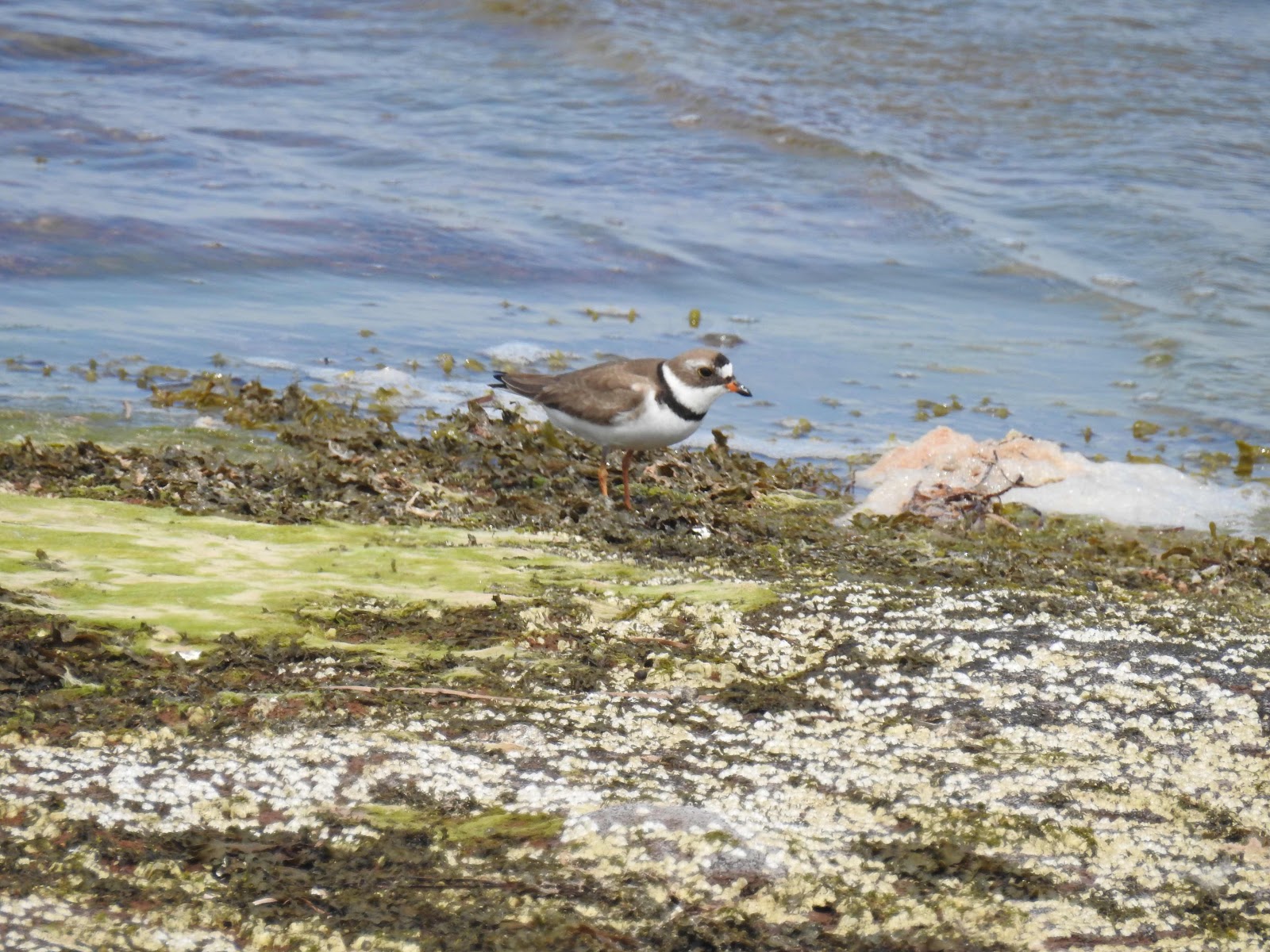
The Semipalmated Plovers are easier to identify but blend in so well too.


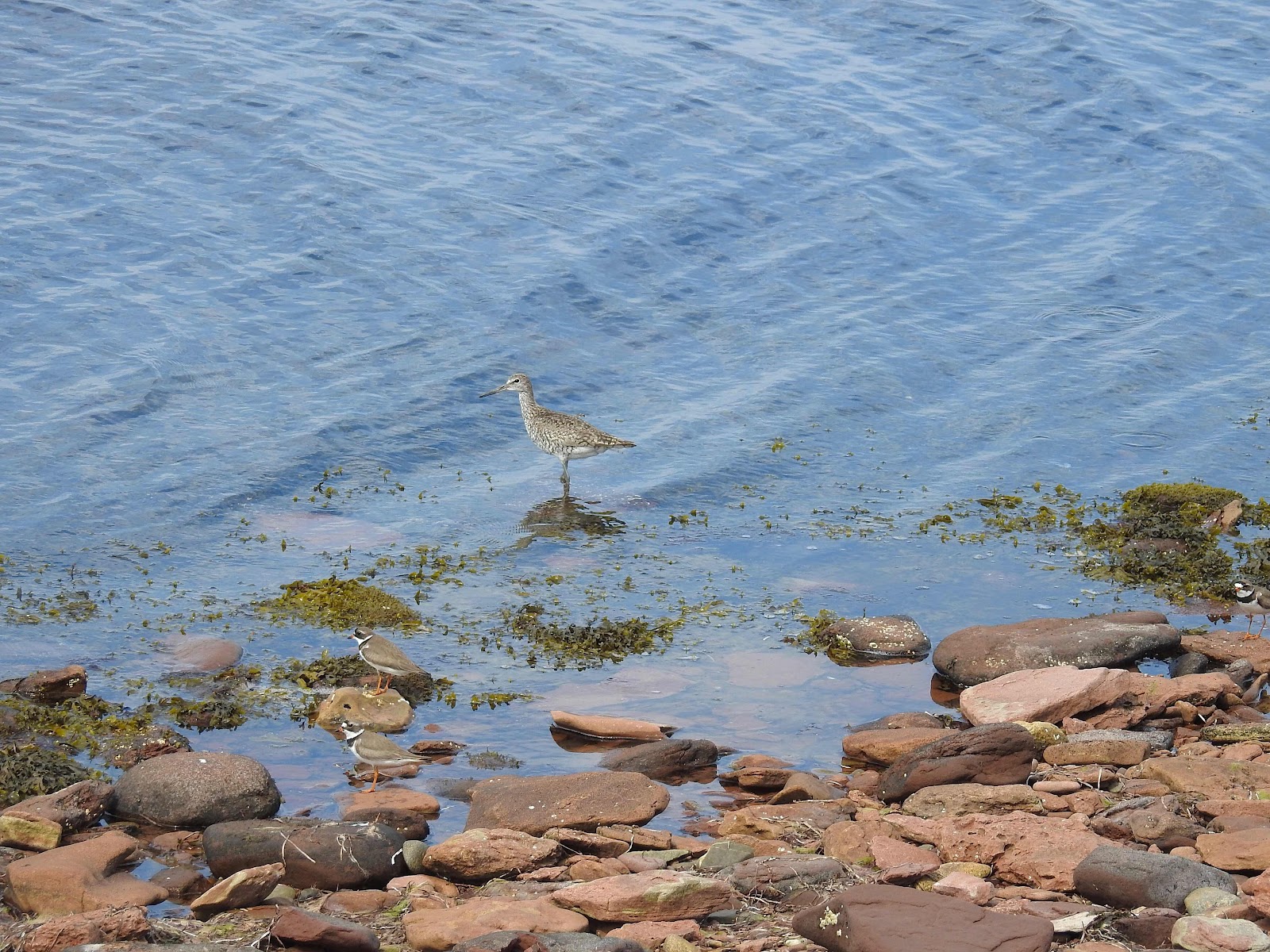
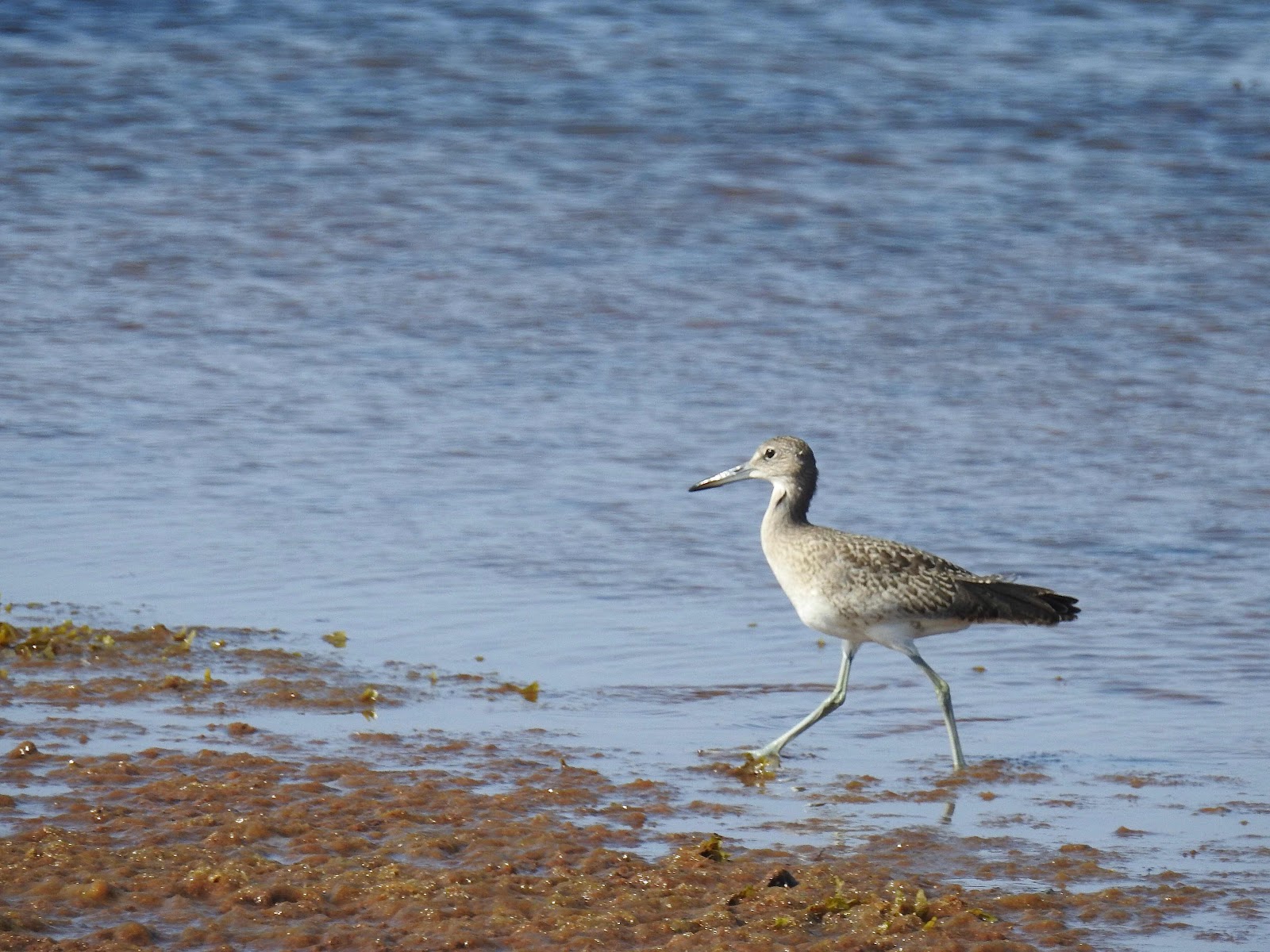
A larger bird, a Willet, likes this area and we see them here every year.


The picnic table above the beach gets a bit closer to the edge every year. For now, there is space to move it.


When we compare an area of shoreline from 2017 to 2022, one can see how much the bank and sandstone have eroded.


                                                                                     2017


                                                                                     2022

This park will disappear eventually, a victim of the changing climate. We will enjoy it as long as possible.


Friday, 13 August 2021

Lunch with friends

Treatment is going well. My friend has cancer and has had surgery, chemotherapy and now immunotherapy. Stage 4 cancer doesn’t leave you much hope but compared to a year ago, she has more energy and is embracing life. After her latest treatment, we headed to a nearby park for a picnic and time on the beach.


The Belmont Day Use Park is on the north shore of Prince Edward Island. A tiny triangle of grass covered red earth on a sandstone ledge overlooking the Gulf of St. Lawrence, the park has the essentials, plus trees to provide shade and a beach, perfect for a few hours in nature.


It was hot and humid but the island breeze made it bearable, as usual. We sat facing the empty beach and talked of the last year, about life and death and embracing the moments when all feels right.


After lunch we walked the beach and noticed how erosion, the ever present force of nature and threat, has felled great trees and threatened others. 


Further along, the sandstone ledge dominates the landscape and the sand gives way to rock and seaweed. We sat and talked as tiny fish, Silversides, leapt from the water and swam past in schools, as we watched from a sandstone bench.


We ventured further around the point and noticed a bird busy along the shoreline.


We thought it was catching Silversides. It looked like a Willet but on the two occasions I had seen Willets previously, they were in salt marshes. That wasn’t the case here.


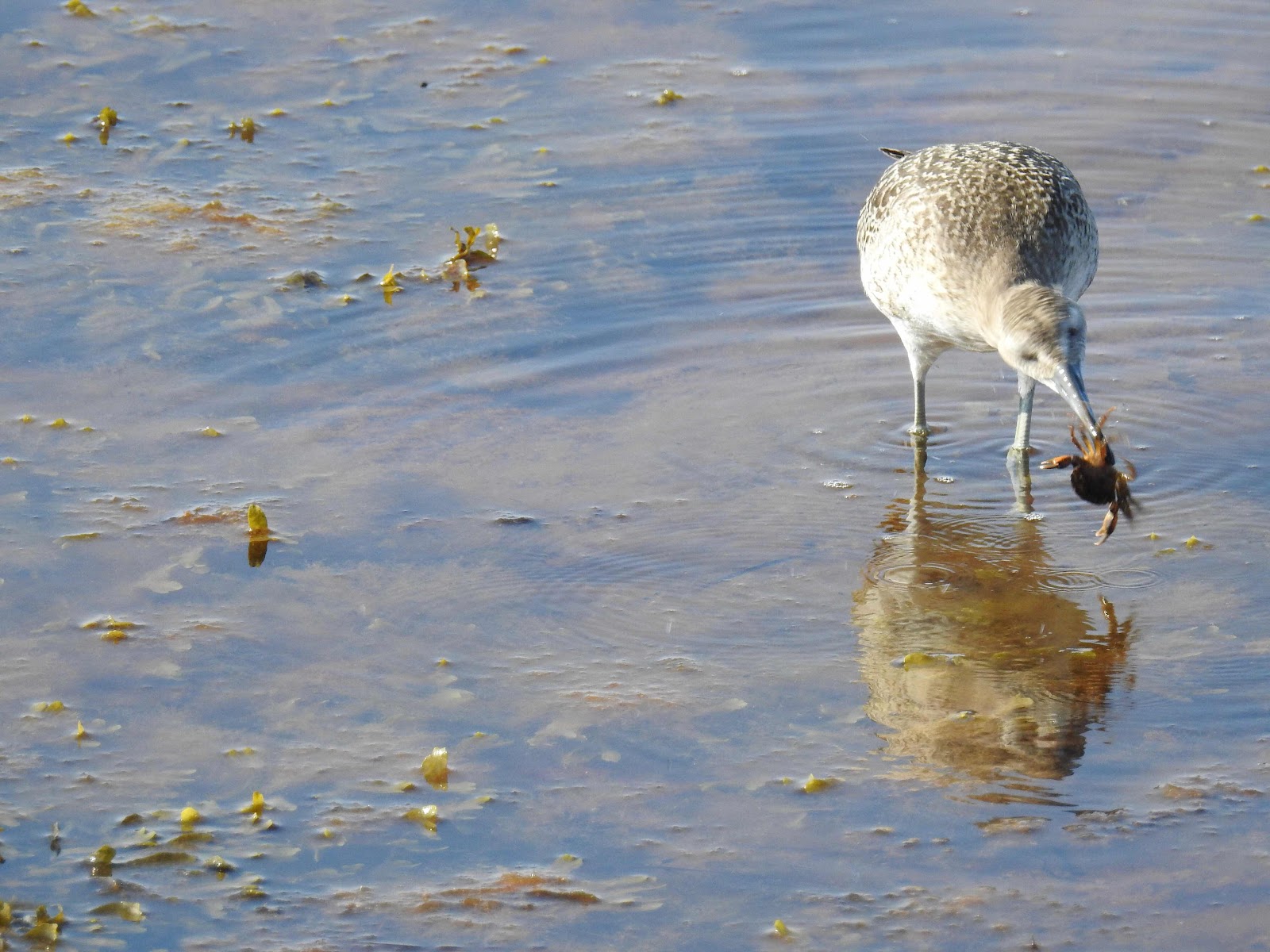
We sat on some sandstone and watched the bird, later confirmed a Willet, mere metres away. I thought it would fly off as we settled there. However it must have found the eating too good and ignored us. We discovered as we watched, it was crabbing, 


not fishing.


I took many photos as the bird posed but ignored us as it stealthily approached its prey. We watched for an hour and chatted, soaking up the atmosphere along the Gulf, sat atop the red sandstone with the bird below us along the shoreline, busy eating its fill.


The sun and the breeze were perfect. The bird was quiet but I heard another Willet in the area, knowing their sounds from previous encounters.


Cares and worries fell away as we sat there engrossed in this bird crabbing and enjoying its lunch as we had enjoyed ours. You can’t beat lunch with friends.

Wednesday, 9 June 2021

Thunder Cove

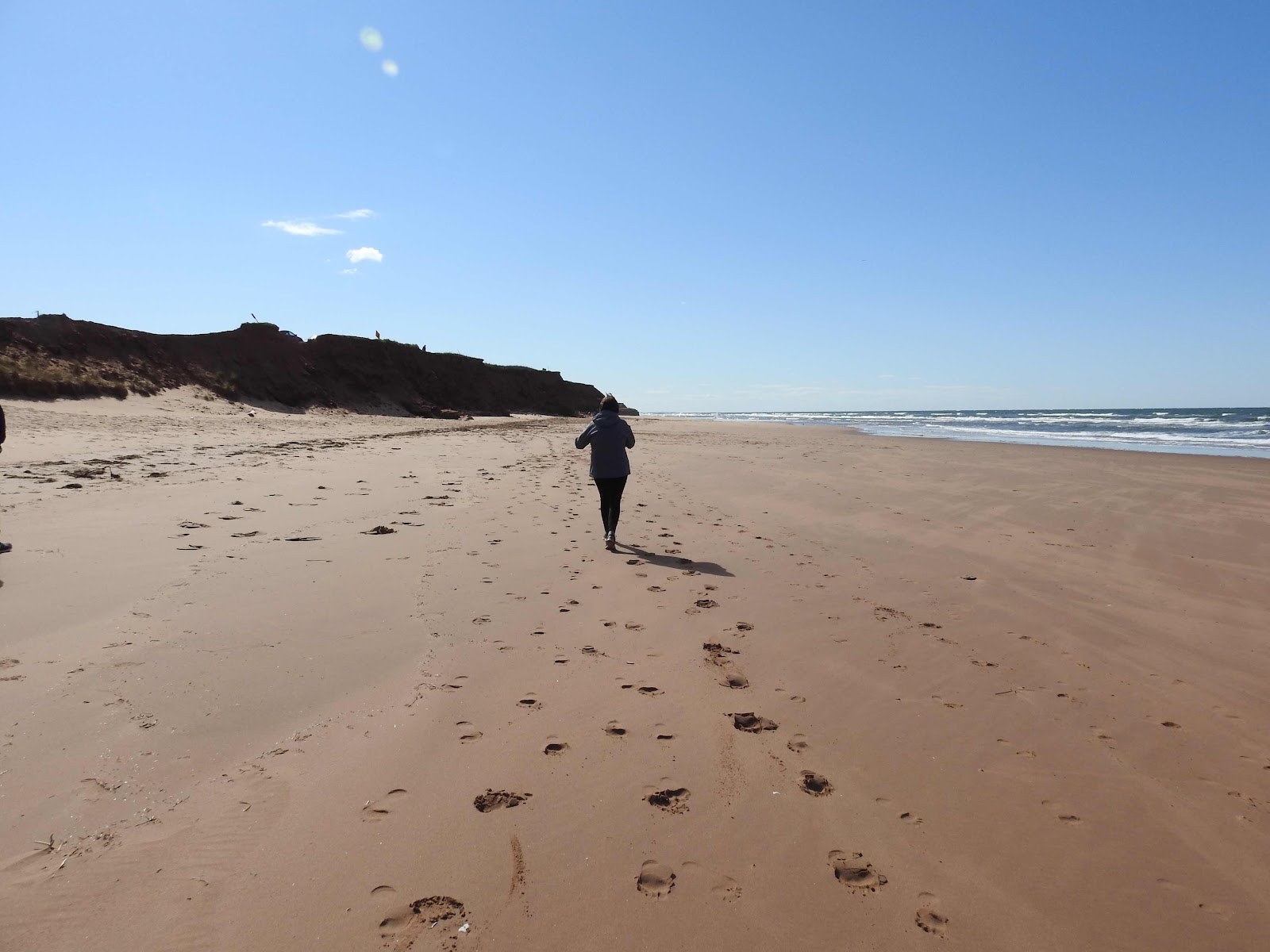
The beach at Thunder Cove is one of the most beautiful beaches on Prince Edward Island. The gorgeous red sand beach, tinted by iron oxide, is pristine and appears to stretch into forever. 


Sandstone cliffs along the length of beach are easily eroded and this process has always been a source of interest for residents and visitors alike. 


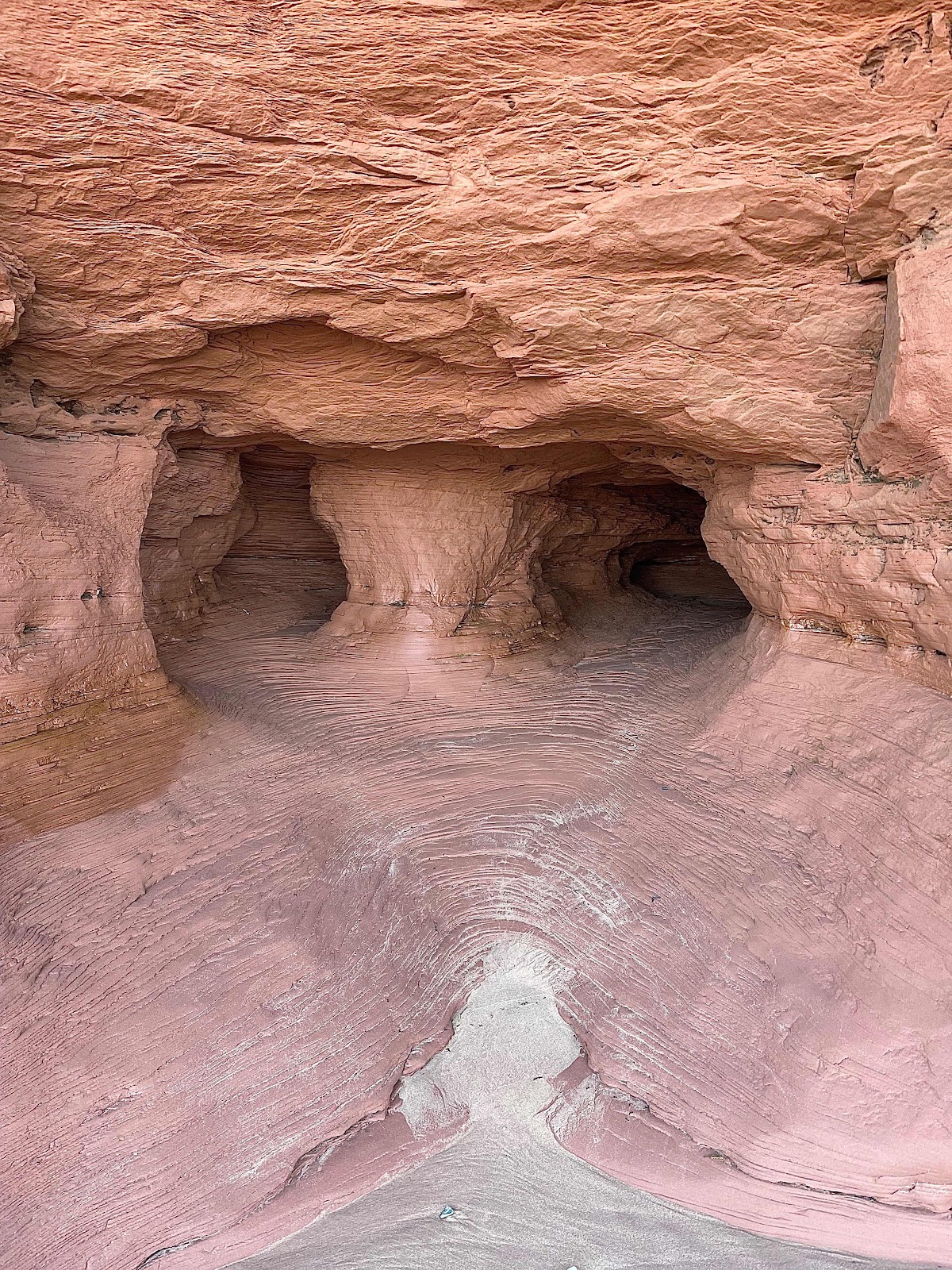
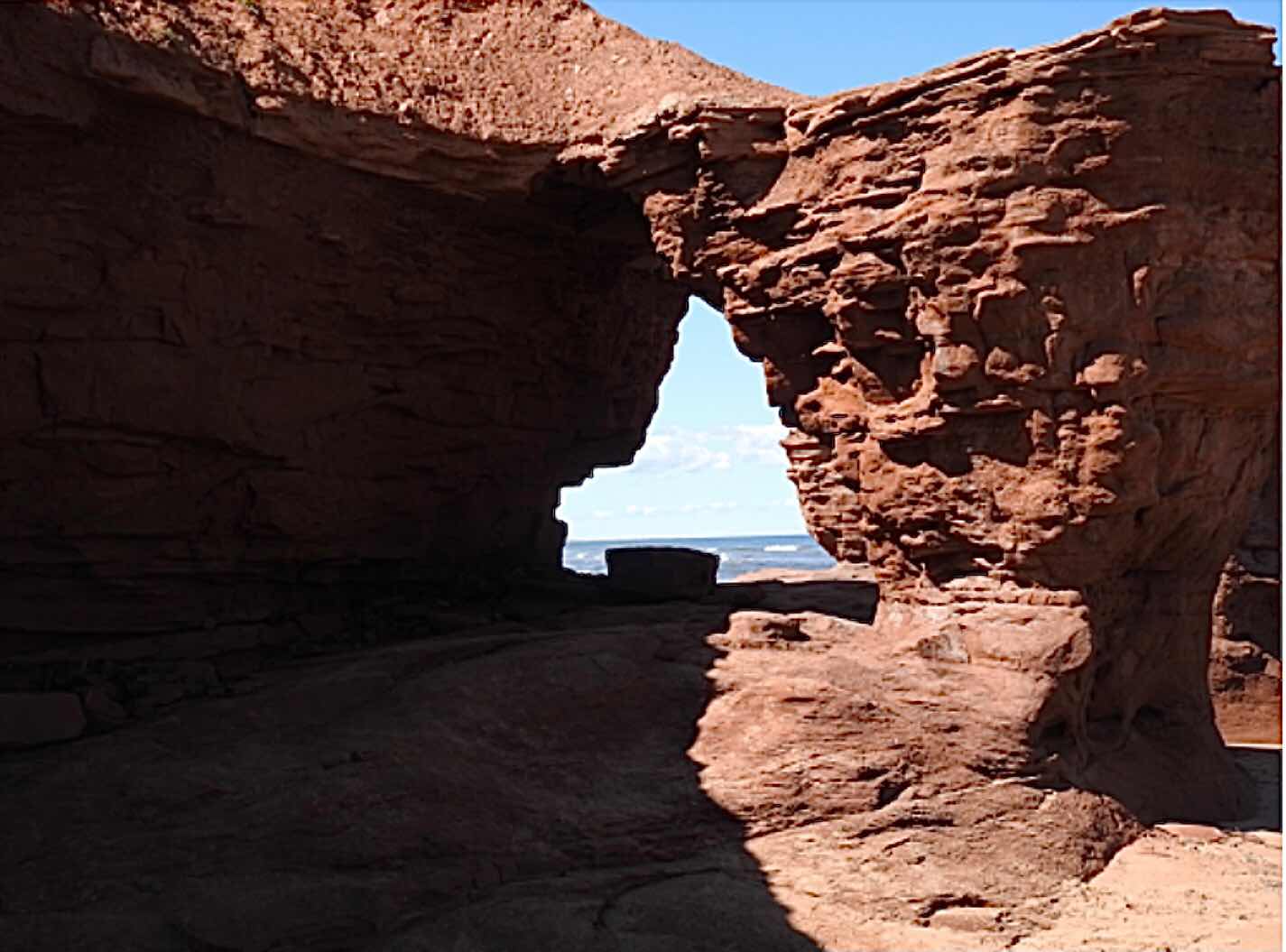
The sea’s sustained assault on the sandstone creates interesting shapes, holes and crevasses which are tempting for people to explore. This is not a safe practice however as the cliffs above collapse when the supporting sandstone is undermined.


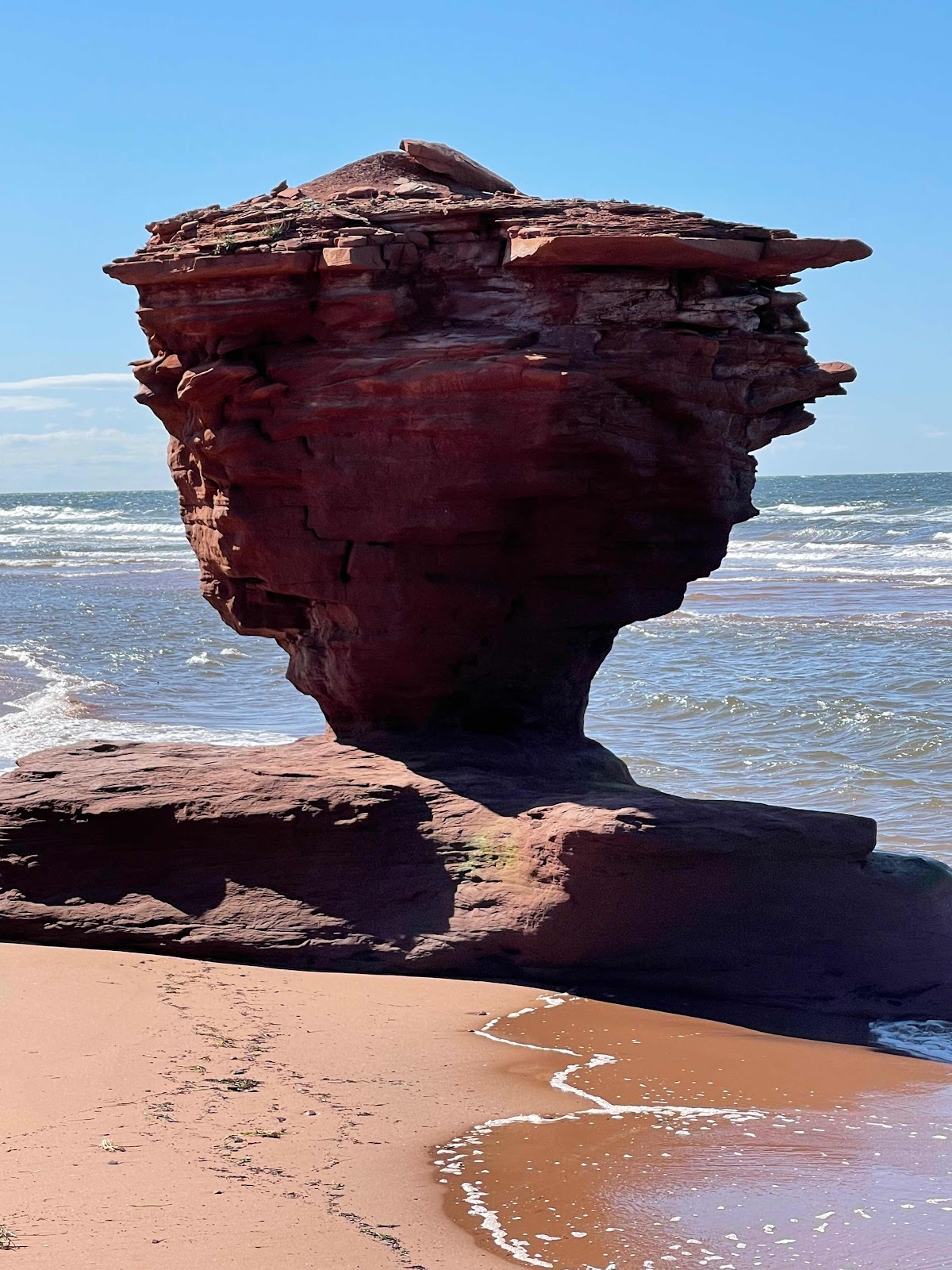
Then there are the sea stacks around the island, the most famous of which is the Tea Cup at Thunder Cove. Created by erosion, they too draw people, as this one drew us on a recent visit to the Cove. 


We hadn’t seen the Tea Cup in several years and it was interesting to compare it to previous photos. The Tea Cup is not much different although the stem of the cup has narrowed. Every spring people expect to find the cup collapsed but it has defied the elements thus far. Its time is running out.


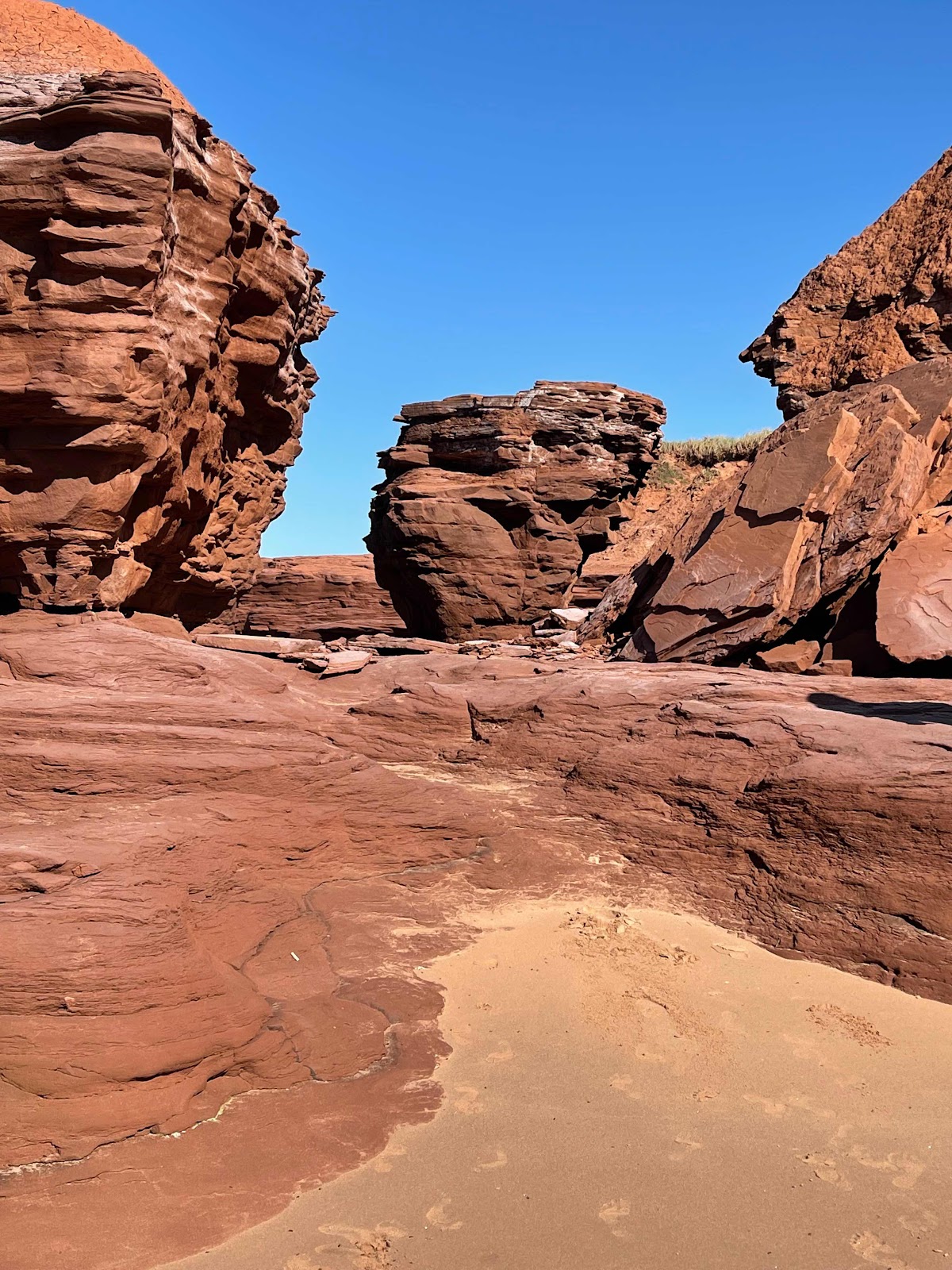
Meanwhile, one of two other sea stacks nearby has changed more noticeably since it lost its connection to the cliff.


The soil and sandstone nearby illustrate the danger of getting too close to the cliffs. 


We enjoy the cliffs at a safe distance and the sea stacks as long as the exhibit lasts.


Thursday, 18 June 2020

Canoe Cove

We discovered Canoe Cove this week. We hadn’t been there before but the beach quickly became one of our favourites on the island. 


It was a hot day at low tide when we arrived at the Lloyd Inman Memorial Park. The park has all the facilities for day use and is in a beautiful location. We had a picnic at one of the covered picnic tables and walked to the beach at Canoe Cove just below the picnic/play area.


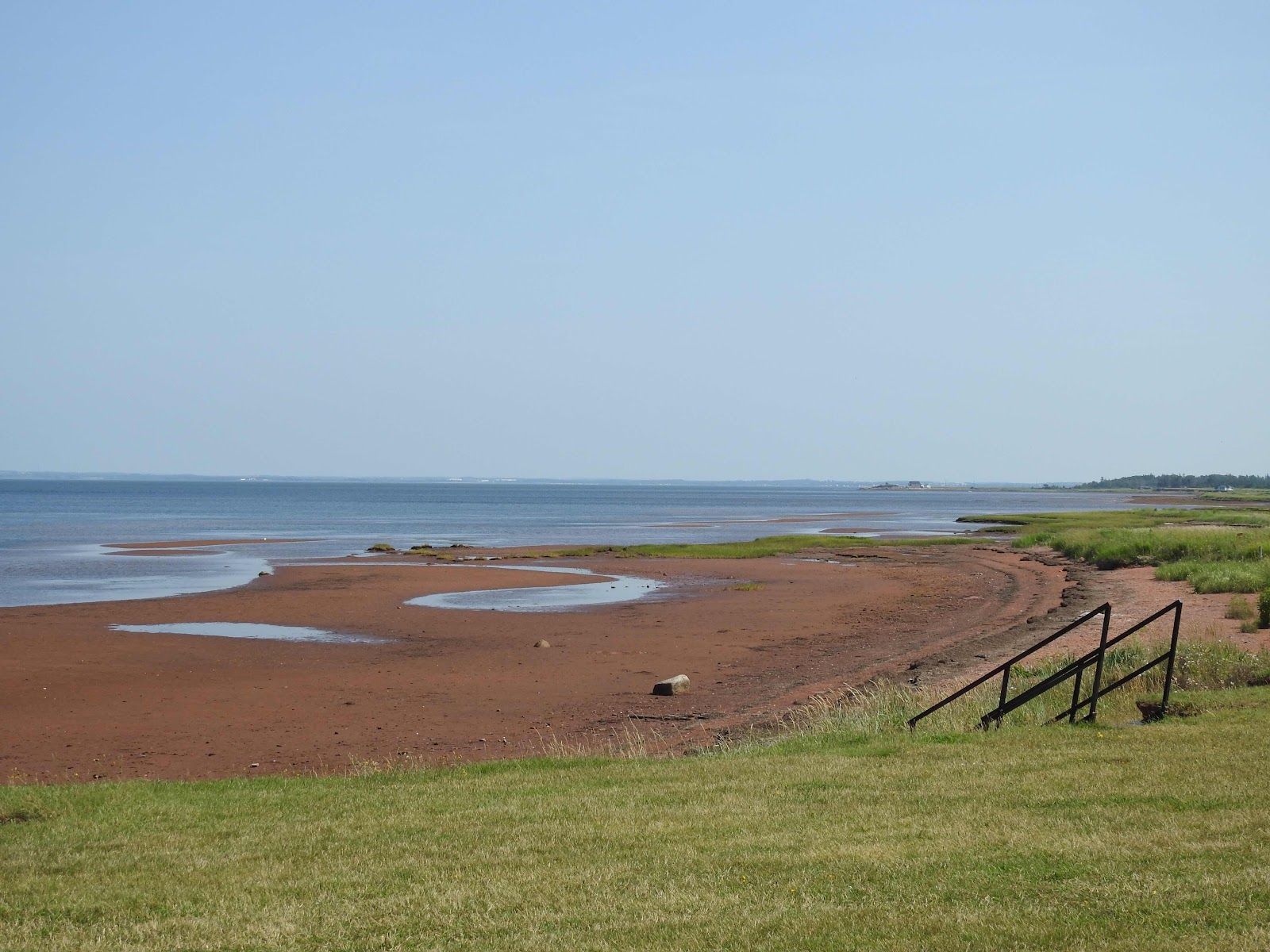
The beach at low tide is long and wide, 


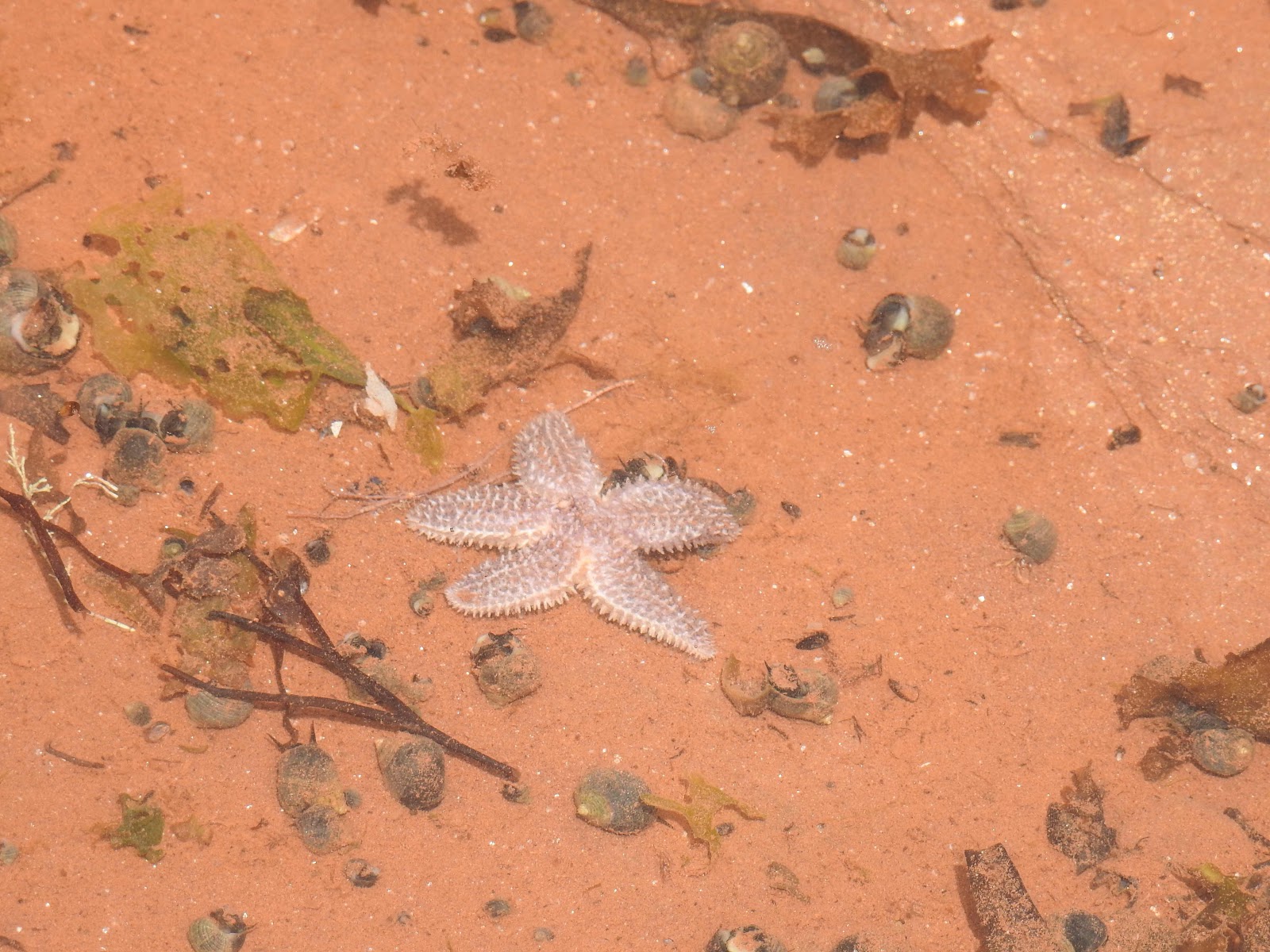
with numerous tidal pools spread over its expanse. The tidal pools have sea life in abundance and we were thrilled to see starfish, a first for us on the island. 


They and hermit crabs will be very popular with our grandchildren.


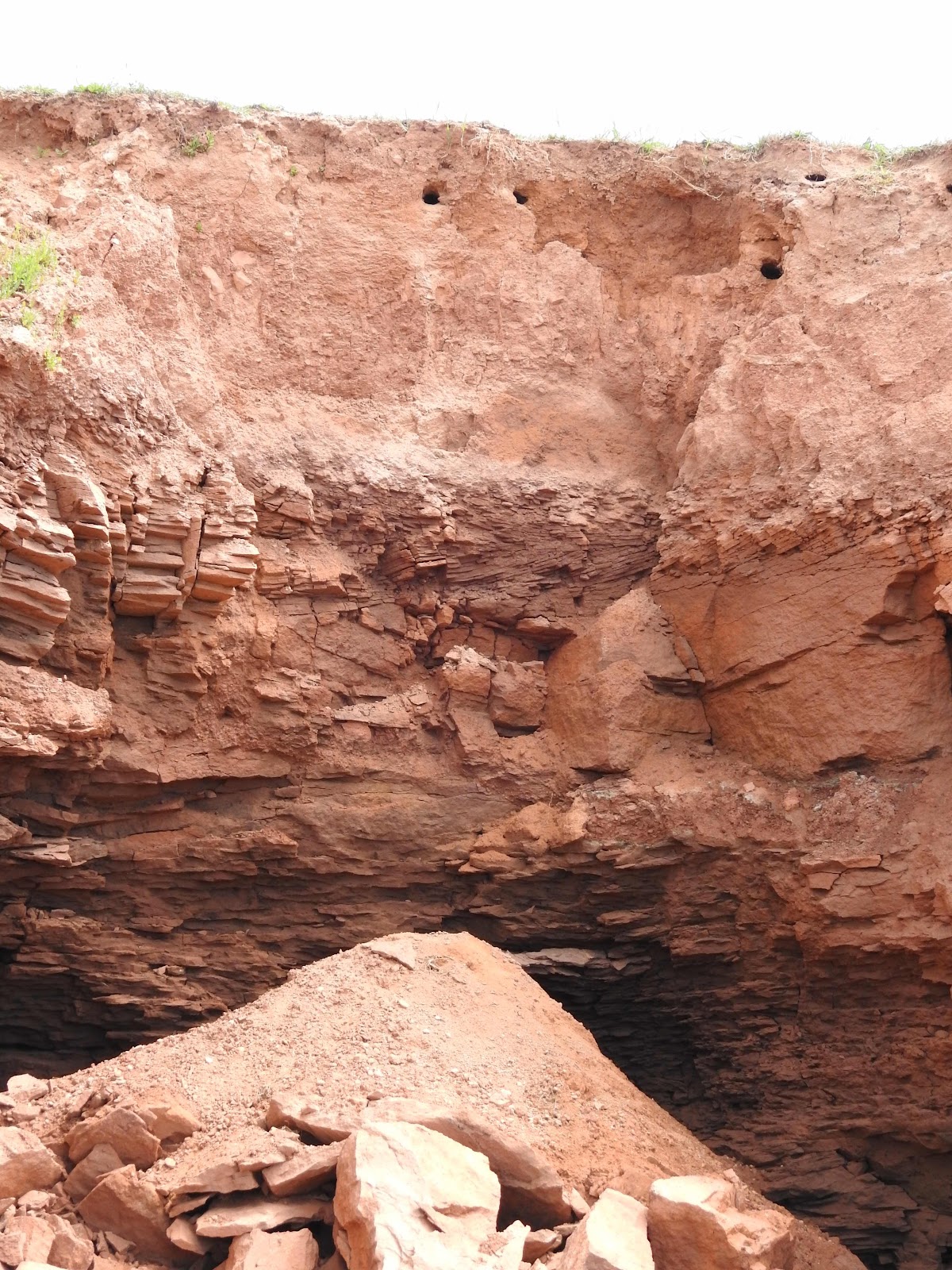
No sand dunes here. The sandstone cliffs which line the cove have a layer of rich red soil above them where Bank Swallows have their nests. We watch the birds flitting around but they stayed away from the nesting holes while people walked nearby. 


There is concern for these swallows in Prince Edward Island due to the speed and amount of erosion of the cliffs. Earlier this spring, residents were asked to report sightings of the birds. You can see how much soil is lost when the bank collapses.


People swam and others walked a long way off-shore without getting their knees wet.


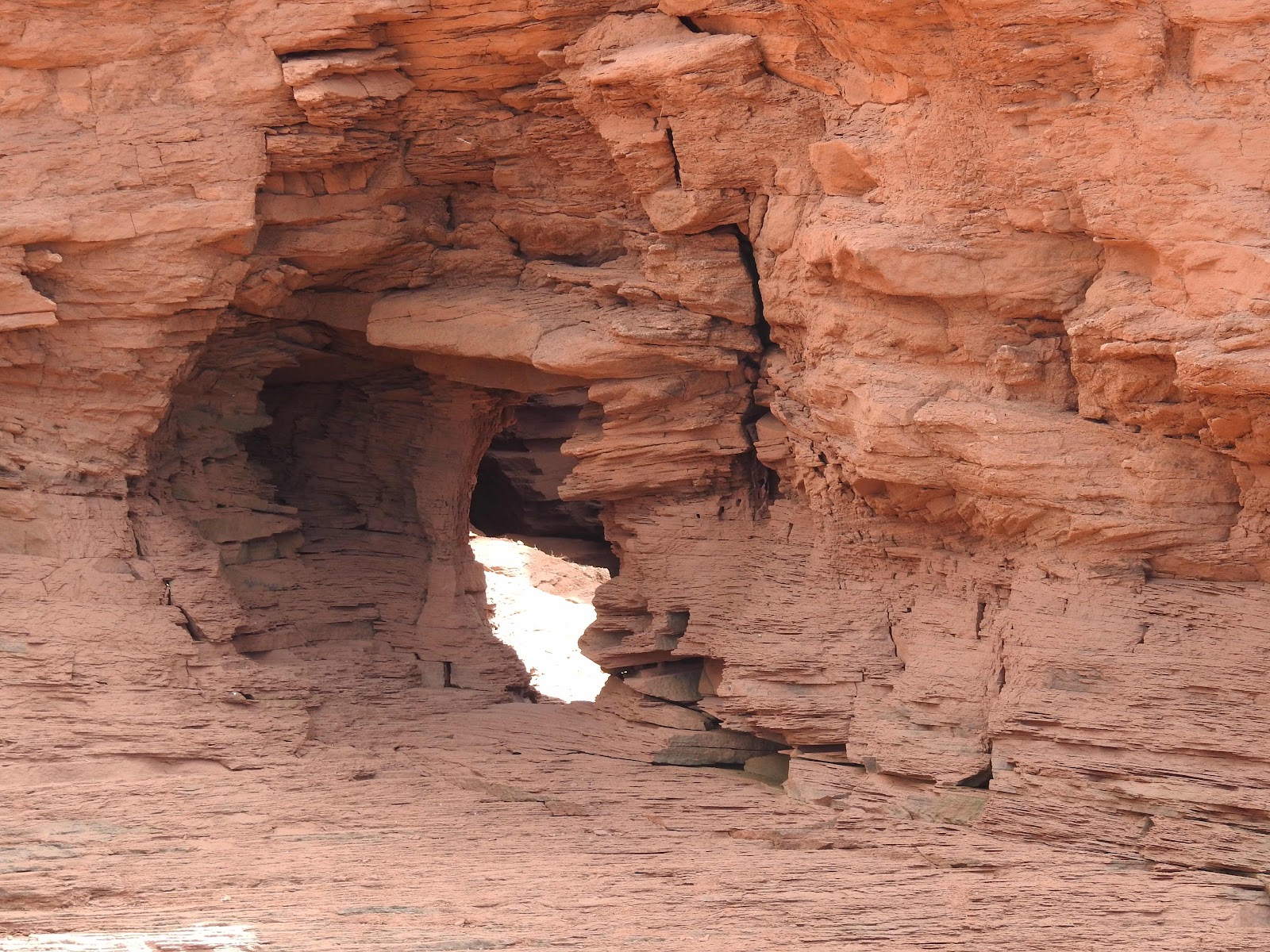
We observed the sandstone cliffs as we always do and found a sea arch in the making. 


The layers of sandstone show how high the tide rises.


My favourite photo of the day shows the cove, children on the beach and the coniferous trees lining the shore.


We will visit again soon.