Most Popular Post

Showing posts with label wheat. Show all posts

Sunday, 13 July 2025

July beauty

One of the environmental highlights for us this past week on Prince Edward Island was a calm day, without any wind, when the sea and sky became one. On such a day, the horizon disappears and different elements are indistinguishable.
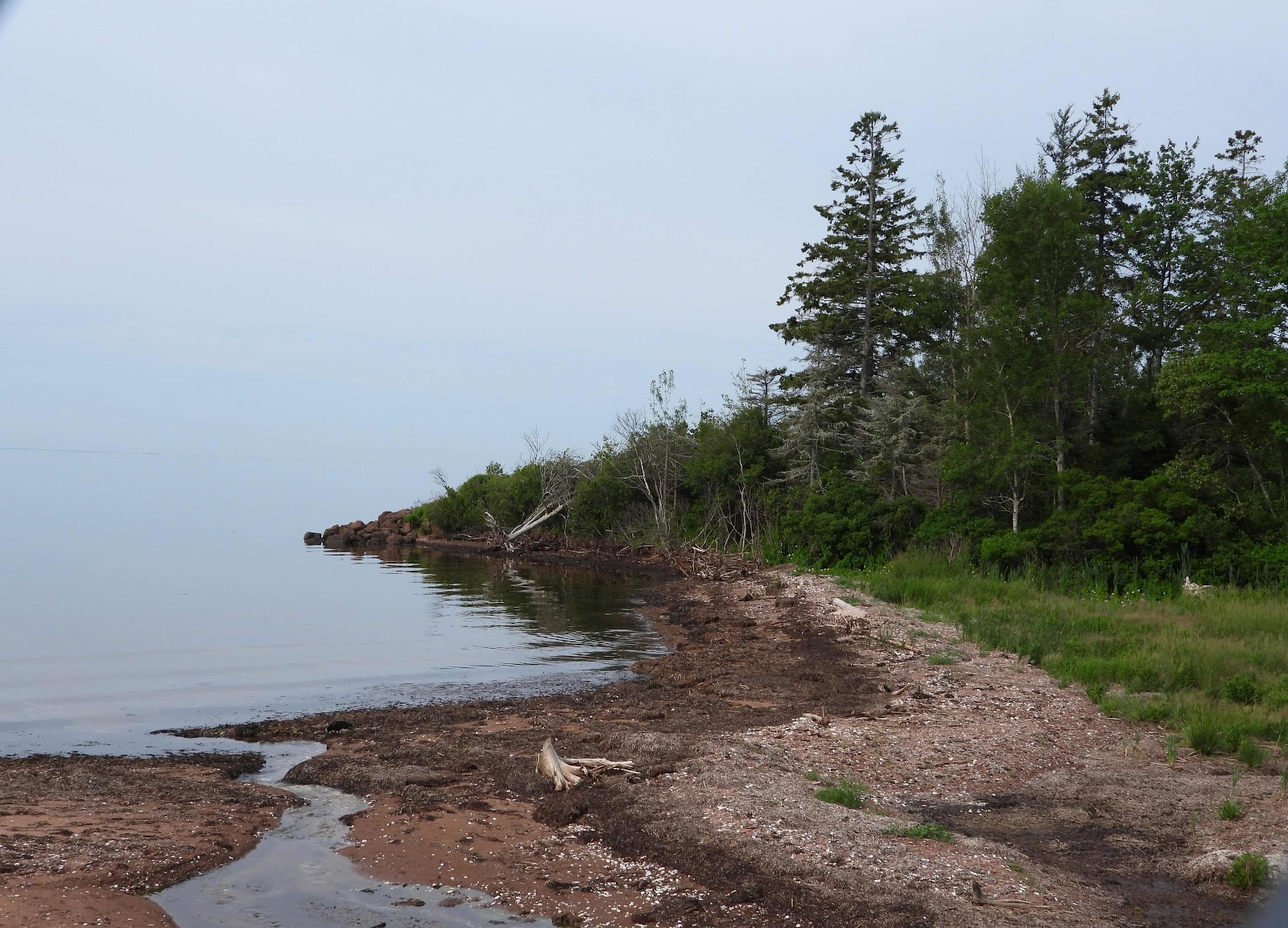


I wonder what the cormorant sees when it looks around?


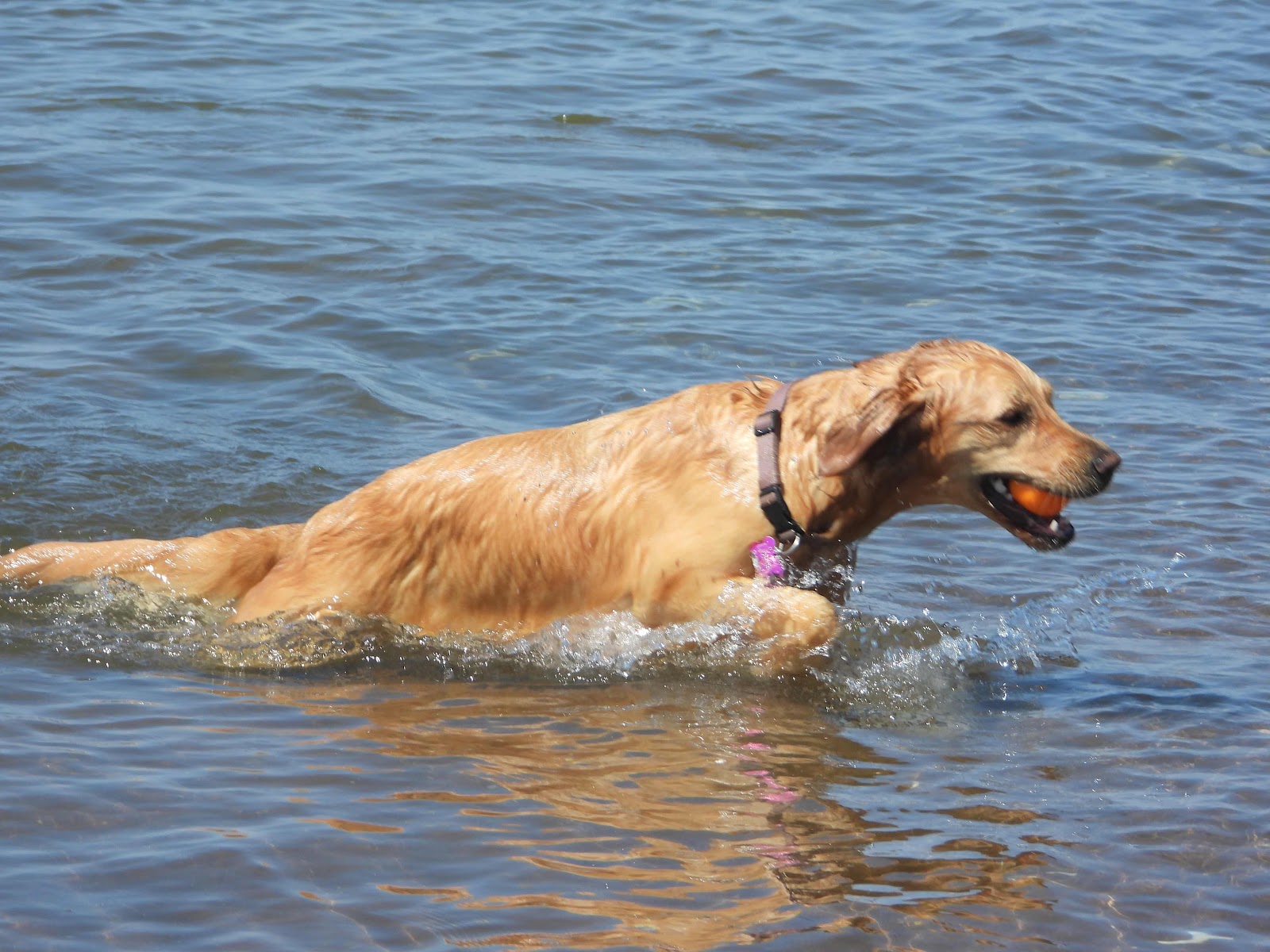
Our family went camping this past weekend, so my husband and I had the golden grand-dog for a few days. Those days included a visit to the beach at Mont Carmel. Daisy can be off-lead there as few people frequent the beach. She loves to fetch a ball out of the water.


It was a calm day and local cottagers were enjoying water sports . Paddle boards, Sea-doos, 


and a hydrofoil provided hours of entertainment for the cottagers and those watching.


Other days we walked on trails where other walkers were obvious in the distance and Daisy could run free before they approached. Unfettered, she runs ahead and stops periodically waiting for the seniors to catch up. 


We know it was a successful outing with Daisy if she is tired afterwards. A tired dog is a good dog.


Nature provided hours of entertainment this past week as the parade of wildflowers continues along the trails. Along the Confederation Trail, fireweed is resplendent in some areas. 


Queen Anne’s lace dominates in places though the two are usually not together. 


In the fields, some potato plants are in blossom already while others have some growing yet to do. 


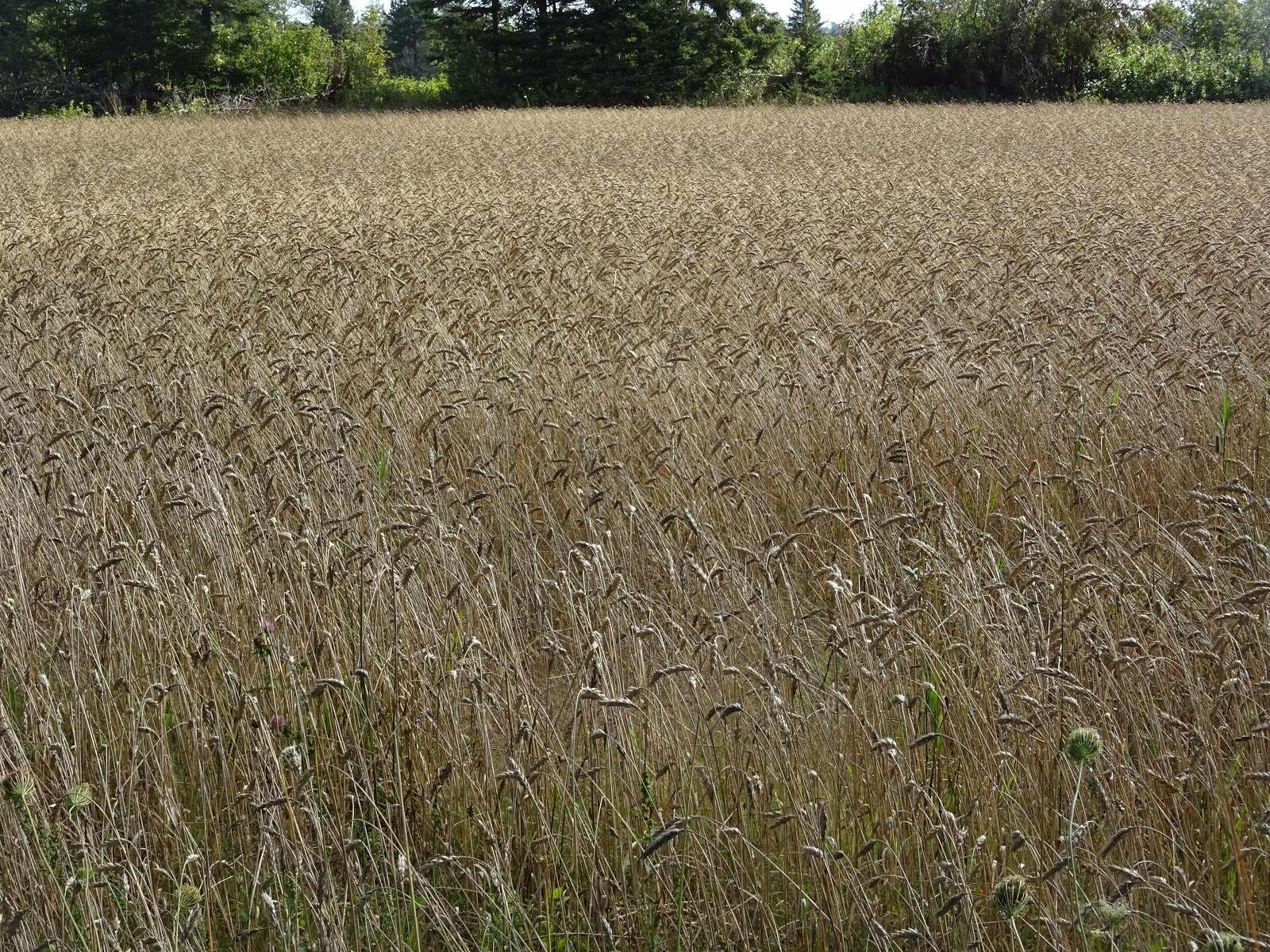
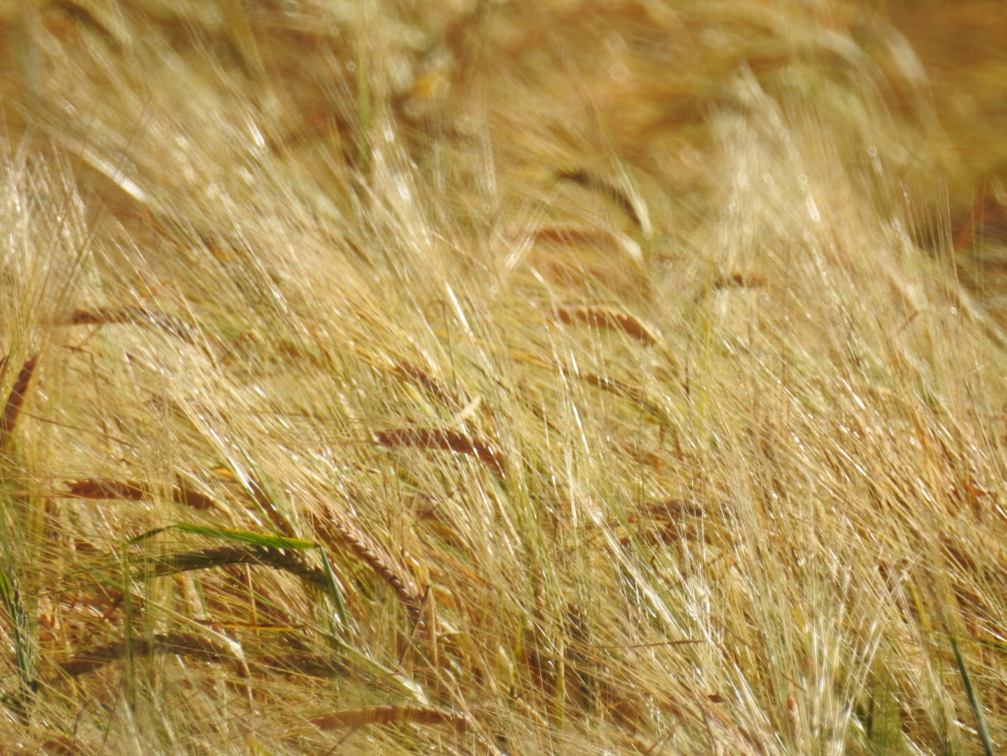
A wheat field that borders the Confederation Trail looks to have benefitted from the rain we’ve had recently.


Along the boardwalk, the wildflowers are doing well. Yarrow 


and St. John’s wort grow beside the trail and brighten the days with their colour. 


At more than a metre high, wild roses and vetch attract bees. We stopped to watch the bees among the roses as we could hear their collective buzz.


Another interesting sight this past week was a swarm of flies we suspect were midges. They are visible in the photo below 


and a close-up is better than I thought it would be. We were lucky they weren’t biting.


I was fortunate to see a Great Blue Heron fishing in the salt marsh one day.


Another fortunate photo was the Yellow-bellied Sapsucker with a beak full of pin cherries before it entered the nest to feed its young.


Finally this week, one evening, just after dark, we passed a young fox out hunting. It was near a wheat field where the hunting is good. The fox wasn’t afraid of us when we rolled down the window to photograph it. 


Our encounters and experiences in nature continue to brighten our days and keep us moving.


Sunday, 13 September 2020

Uphill both ways

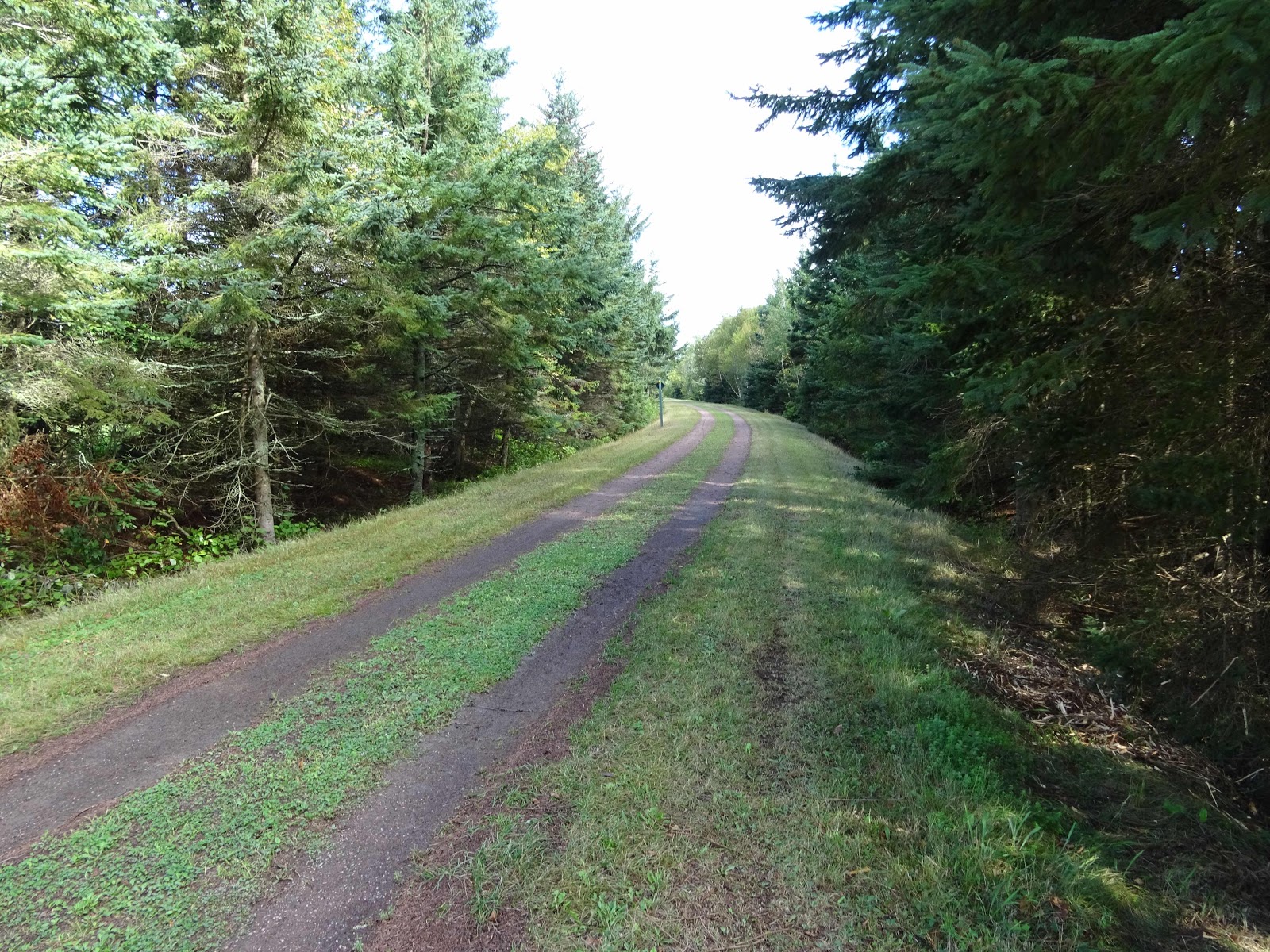
For one of our recent cycling experiences, my husband and I went to the Confederation Trail in the central part of the island, a bit further from home. The trail is on the old rail bed which was left after the track was removed when the trains stopped running in 1989.


The track ran through the center of the island rather than along the coast. At the various stops along the way potatoes from the farms were loaded into boxcars to be shipped to markets through Borden along the South coast of the island.


Though the island is relatively flat, it doesn’t feel like it when you’re cycling. There are long grades with a gentle climb which don’t feel particularly downhill on the way back when you are tired. To this person new to cycling, the trail feels uphill both ways. But fun!


We went further again this time which is our goal with each outing. We passed fields of wheat 


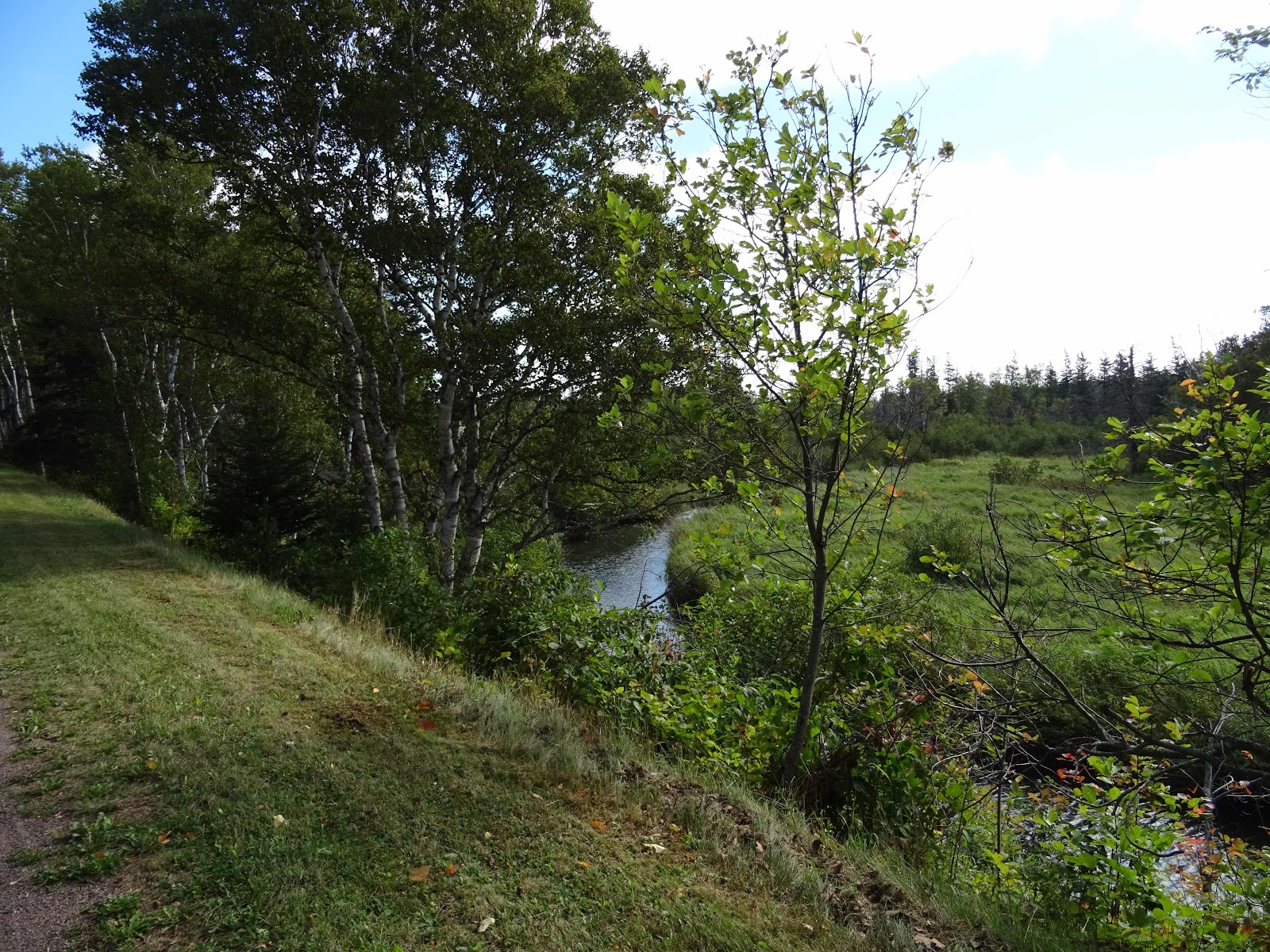
and potatoes ready for harvest, crossed two rivers 


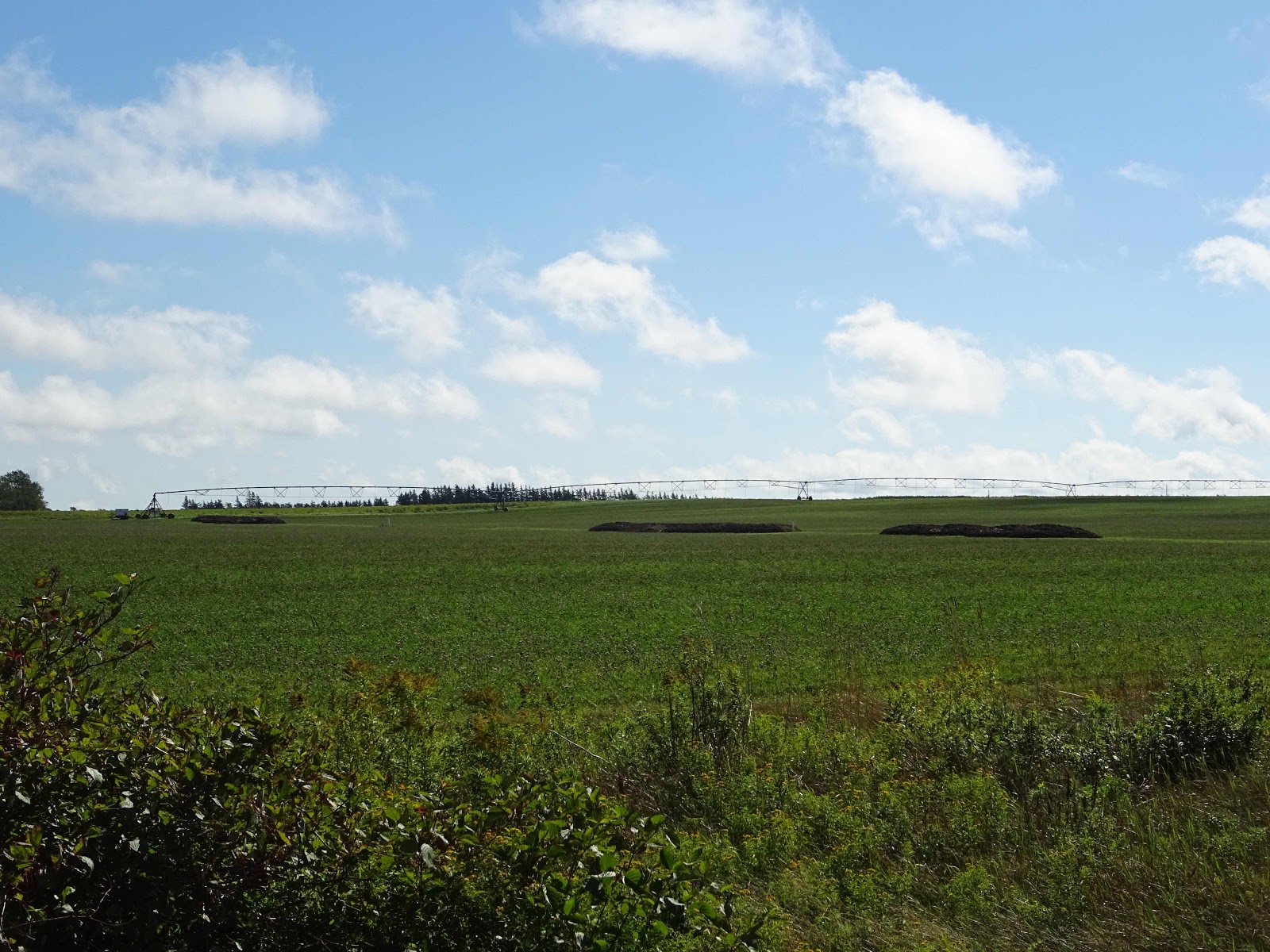
we had never seen before and fields with irrigation equipment.


Around one bend the light through the trees shining on the birch trunks caught us by surprise. We stopped for photos. The green on the path with the strips of red earth, shadows dancing over them and the stately highlighted birches, made us want to stay and watch. However the trail urged us on to see more of its beauty.


Along the way, lots of pale green butterflies lifted into the air as we rode by and in several areas small brown grasshoppers hopped around us as we passed. Even though you ride by quickly, you can notice the little things when there’s just you and the bike in nature.


Every now and then we see birds, such as robins, among the trees or on the trail. By the time you stop, they are gone of course. You can hear them among the trees sometimes and familiar ones like blue jays or chickadees are easily recognizable. I like the idea of the countryside around us filled with the unseen avians though I would like to photograph them. However, the beauty of the trail and the countryside suffice.


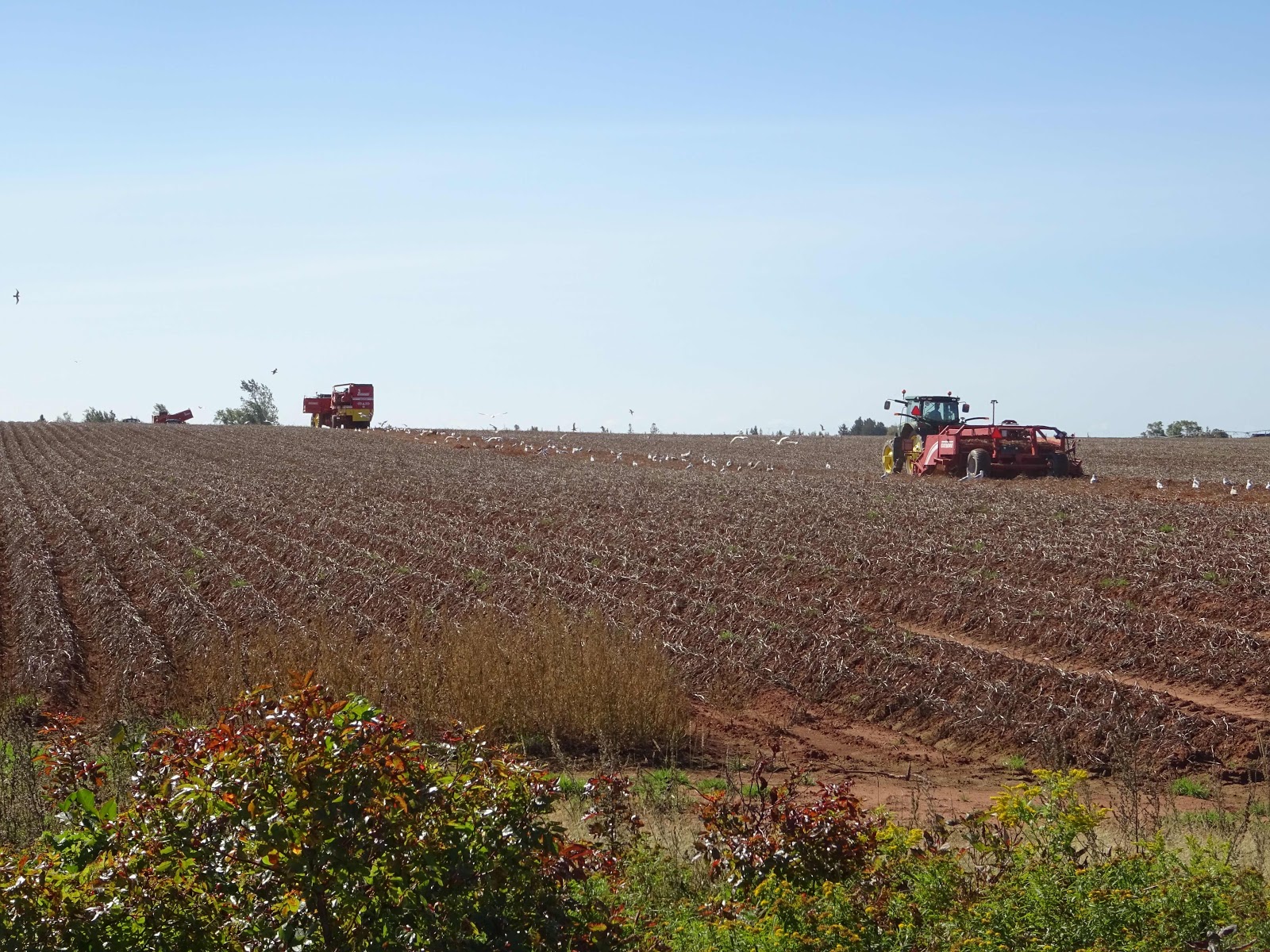
On another outing closer to home, we watched as a crew harvested a potato field. Never ones to miss a scavenging opportunity, dozens of gulls staked out places in the newly ploughed earth. They don’t miss much going on in the area.


Question and answer:


Red at http://hiawathahouse.blogspot.com/  who cycled himself until he was eighty, asked if we wear helmets.


My husband and I both wear helmets. Neither of us would dream of cycling without them. We were like children at the store trying on helmets and selecting our favourite colours.

Monday, 14 August 2017

Fields in August

On a recent drive through the countryside on Prince Edward Island, my husband and I stopped to observe the colour and appearance of crops on both sides of the roads. 


Rural Prince Edward Island is farmland, rolling hills or flat land and along the coast, the sea is the backdrop. 


Haying has been underway for some time now


and potato fields are in bloom, 


as are the canola plants.


 Or is it canola? It is hard to tell these days, as farmers are also planting mustard which looks like yellow blooming canola to the untrained eye. 

Mustard plants are a natural fumigant to pests such as wire worm which damage potato crops. Farmers grow the brown mustard plants, then plow them under. During decomposition, the plants release the bio-fumigant into the soil which controls and kills insect pests. Such natural pest control is great for consumers.


We recently saw another unusual plant in the fields as well. This one is buckwheat, 


which has the same effect as the mustard plants. Both buckwheat and mustard plant blossoms are attractive to bees. Honey production is increased in areas where these plants grow. 


Meanwhile, wheat is a dusty straw colour 


and so is barley. 


I find it impossible to identify them from a distance.


Clover, a cover crop used in crop rotation to help restore nutrients to the soil, is in bloom as well. The purple fields line roads and shoreline.


The most curious discovery was a field of peas, a new crop for the island, to supply a new processing plant in western PEI.


These are a fraction of the crops grown on the island. However, the expansion of the industry to include peas and the bio-fumigant properties of and bee preference for mustard and buckwheat plants are all great news. Now if we only had some rain!