Most Popular Post

Sunday, 21 August 2022

Straight ahead

Suntan lotion…check.


Hat…check.


Beach chairs…check.


Water…check.


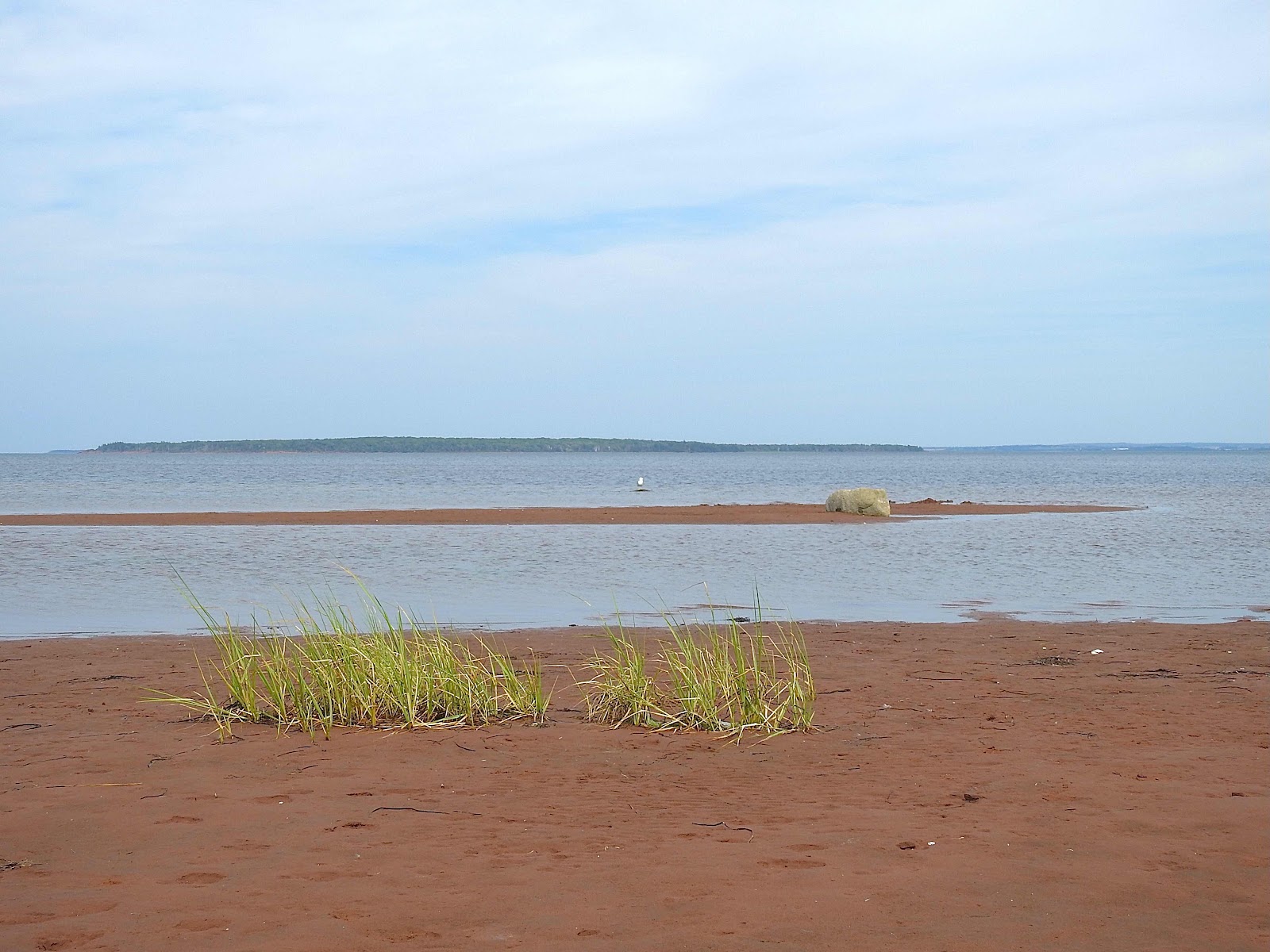
We headed to Belmont Park on the western shore of Malpeque Bay on Prince Edward Island. It was a gorgeous, blistering hot-under-the-direct-sun day with an island breeze which made the heat bearable. However, the breeze was too much for umbrellas, our preferred way out of the direct sun.


It is a small park and is rarely crowded, an excellent place for a picnic, just above the beach on the lawn or among the trees. We’ve picnicked in both locations sometimes with our daughter and grandchildren. This time, we were alone.


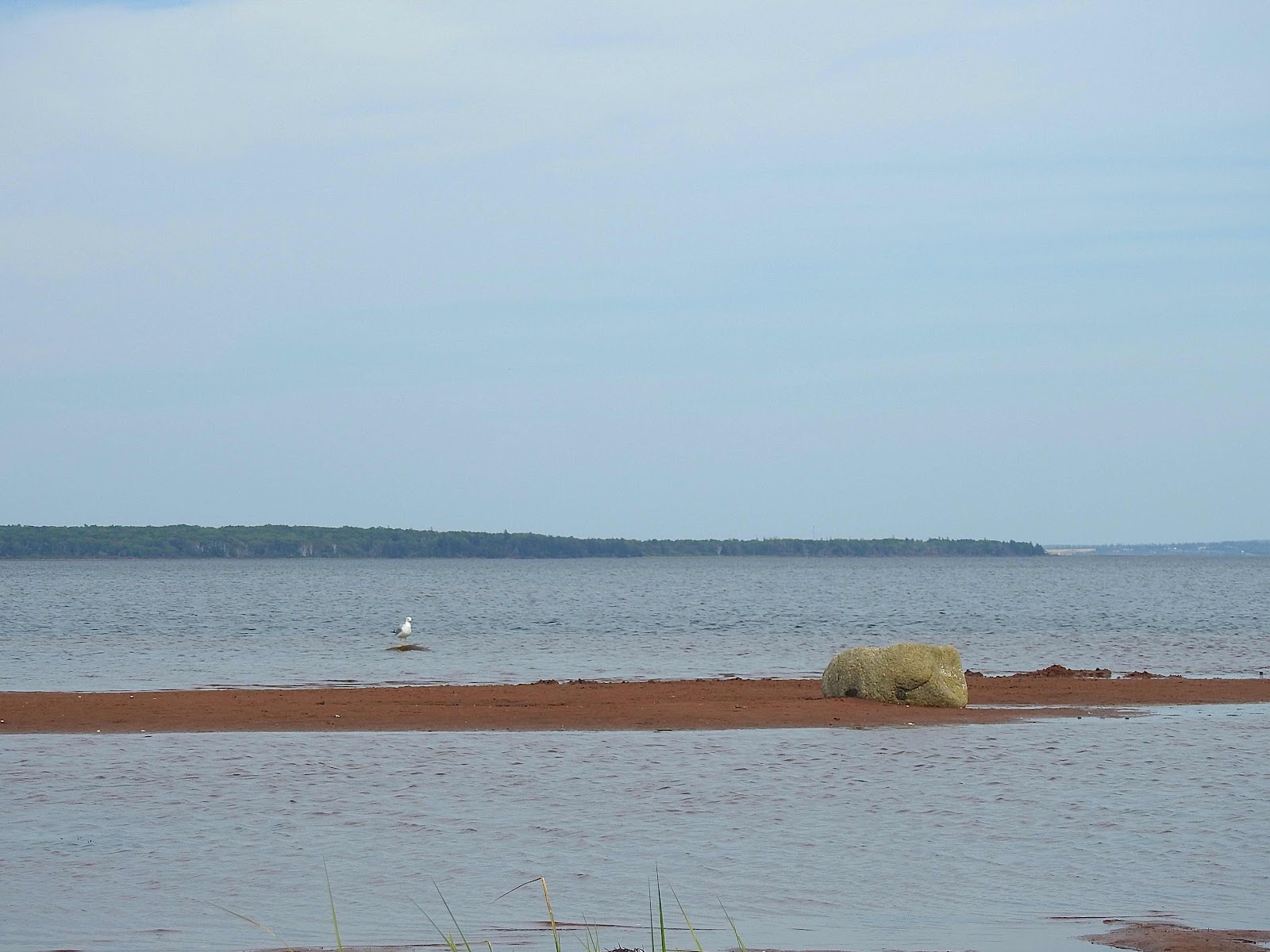
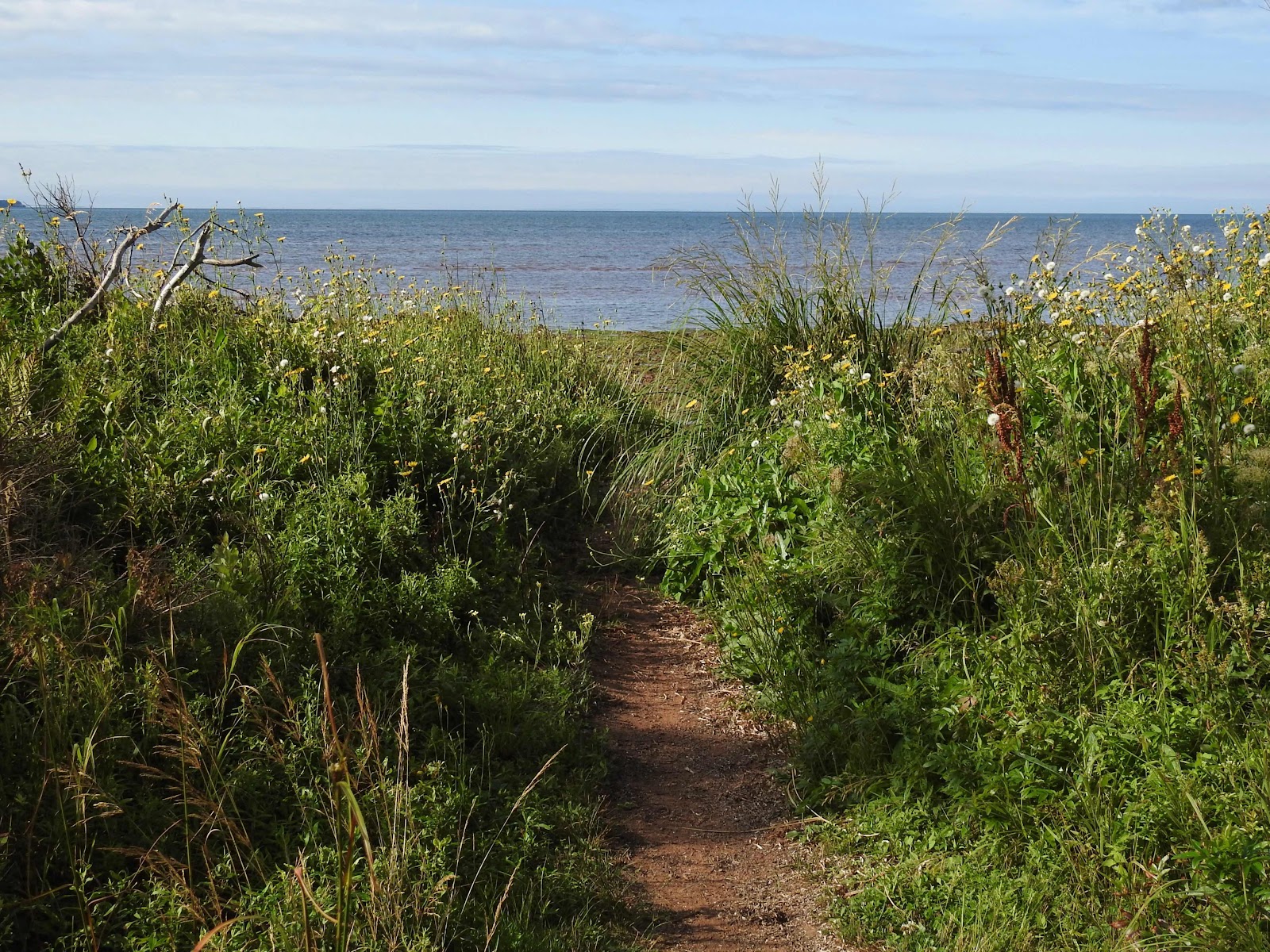
We walked along the beach, found some interesting shorebirds and took photos to share another time. Today is about the view, straight ahead.


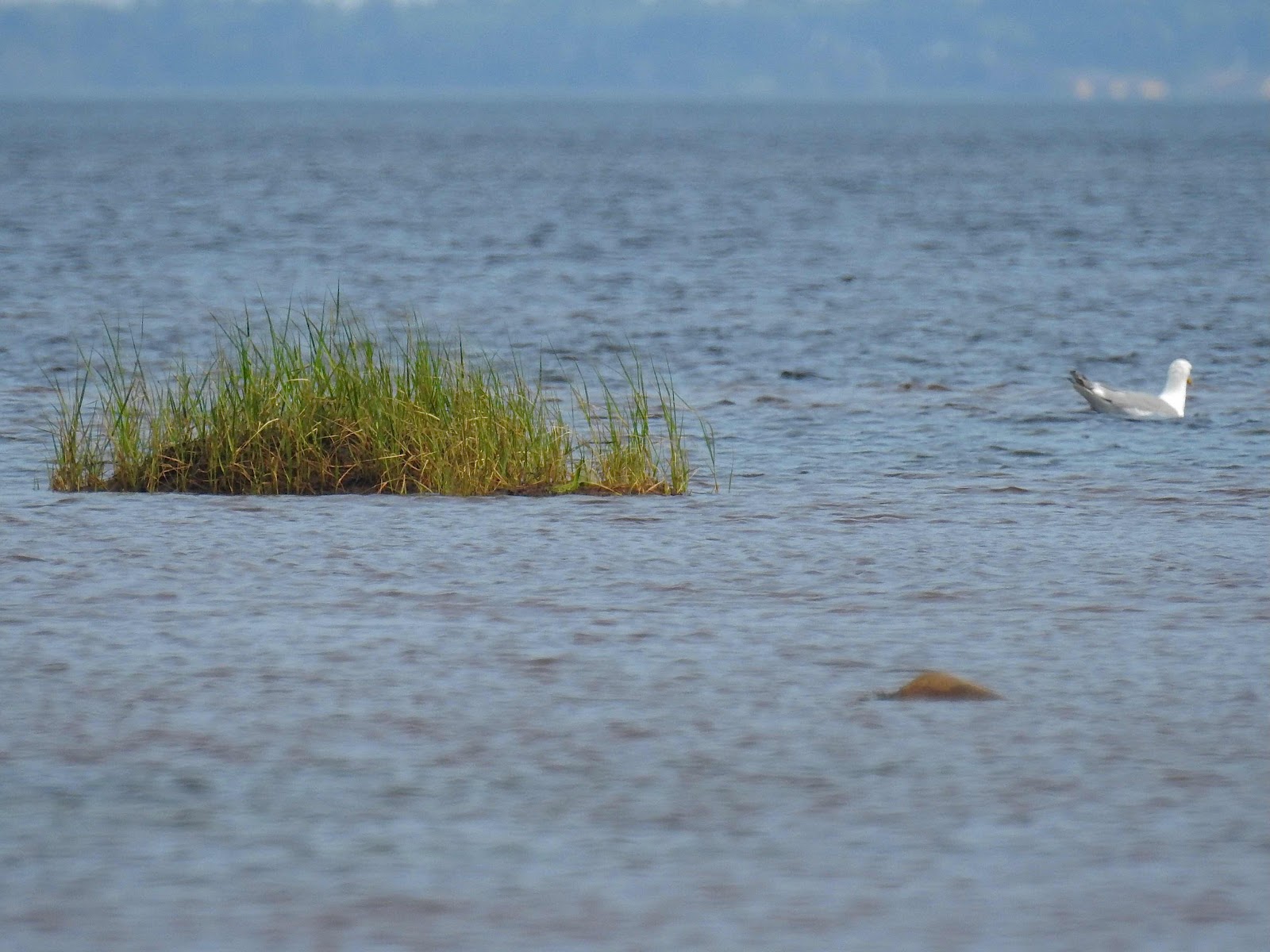
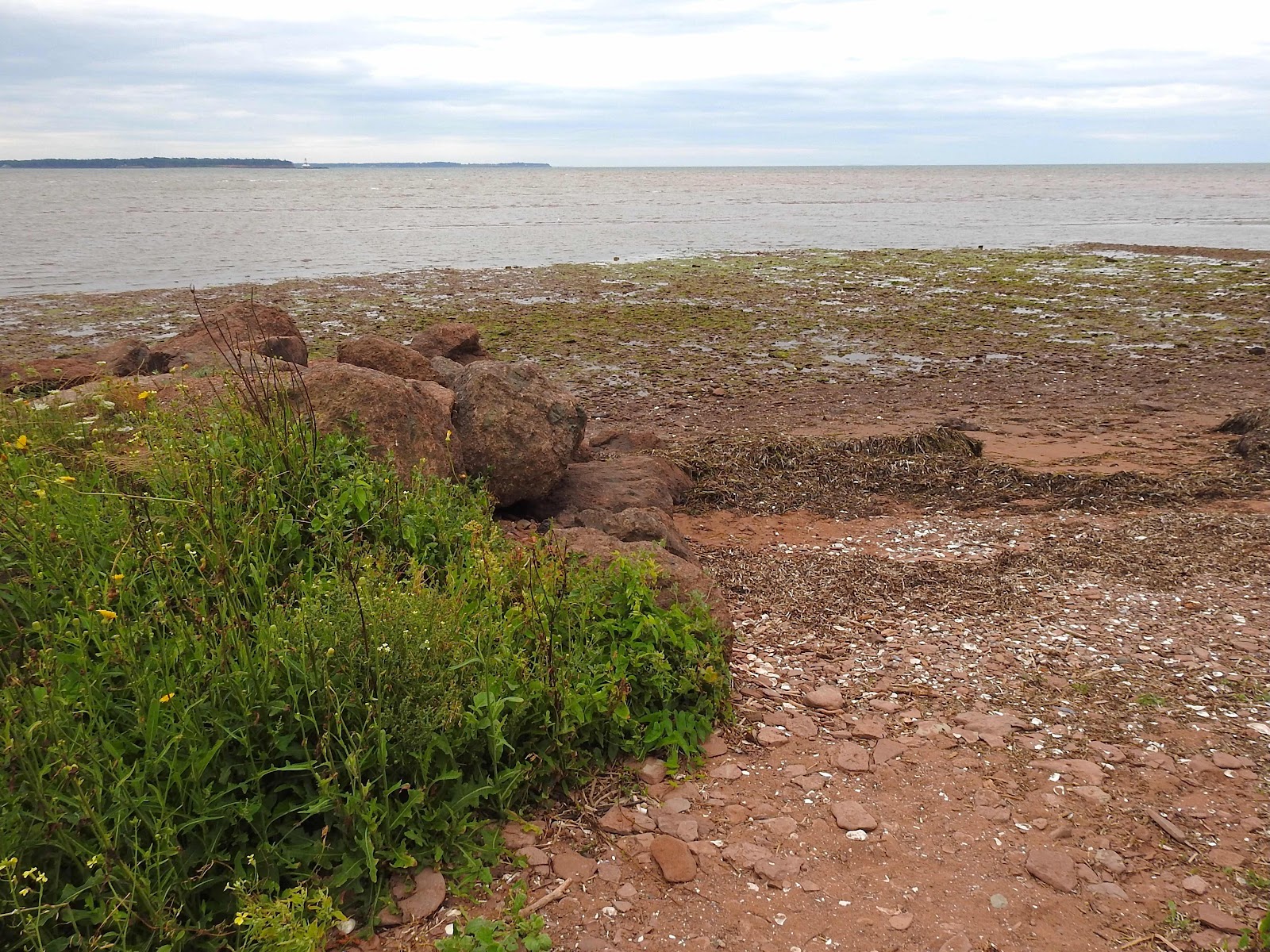
It was easy to be distracted by the activity behind us on the green or the other beach enthusiasts nearby. We settled in and chatted as we usually do, a level of comfort between us which is unique in our lives. I focused on the scene ahead, the gull, the red sand and the shades of blue.


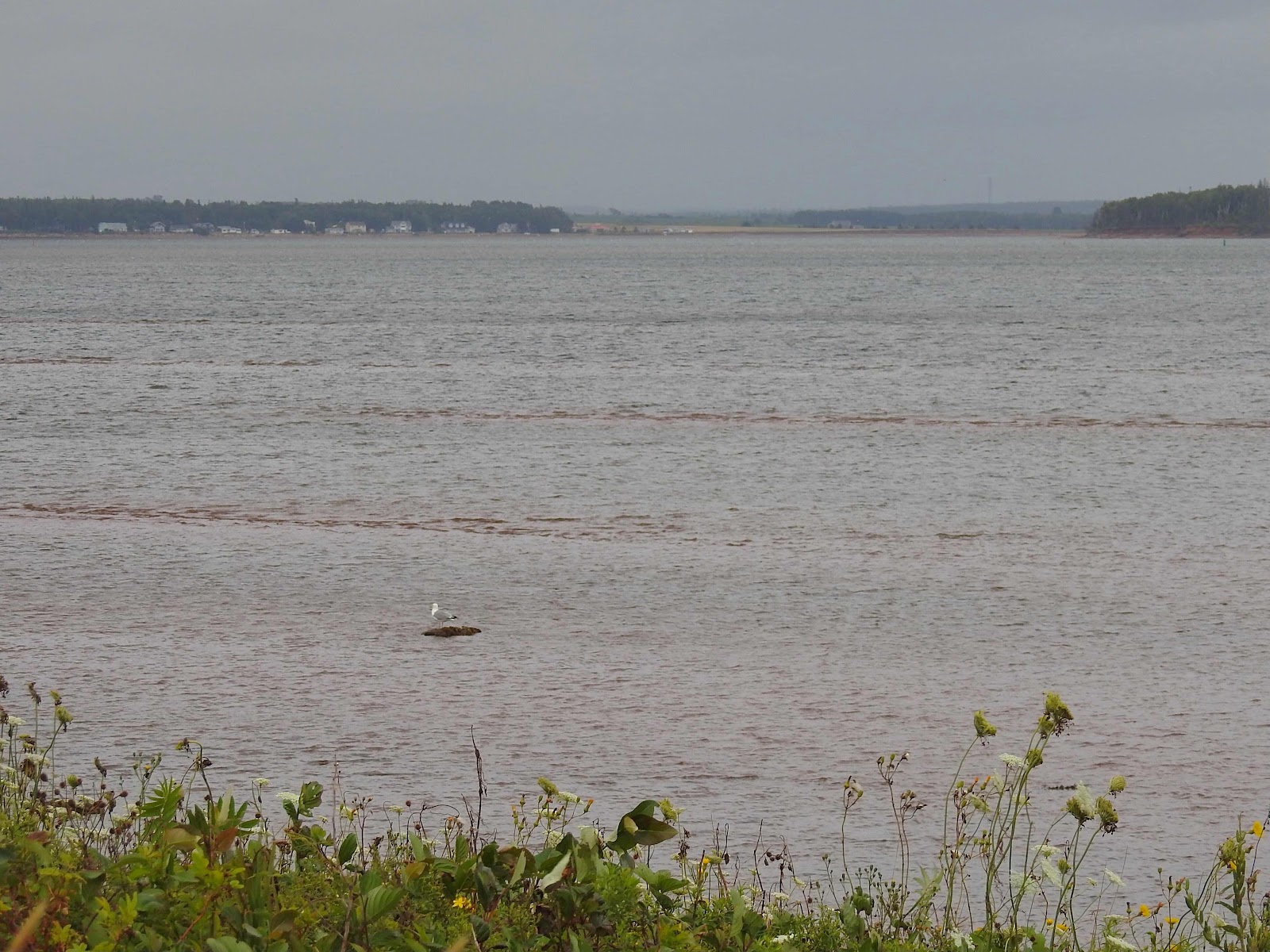
The tide was rising and an hour made a huge difference on the flat beach. Over that time, the scene before us changed. The gull floated and the grass swayed with the gentle action of the waves.


It is quite a change though all the elements are there still. It reminds me of aging as it is for us now anyway. Who knows what storms are on the horizon? 


Most importantly, enjoy here and now!


Wednesday, 17 August 2022

A rainy day experience

We walked between the raindrops. It was misty periodically, then cleared briefly and repeated. Thunder showers were forecasted but we’d decided to go in the misty rain, so as not to miss our walk for the day.


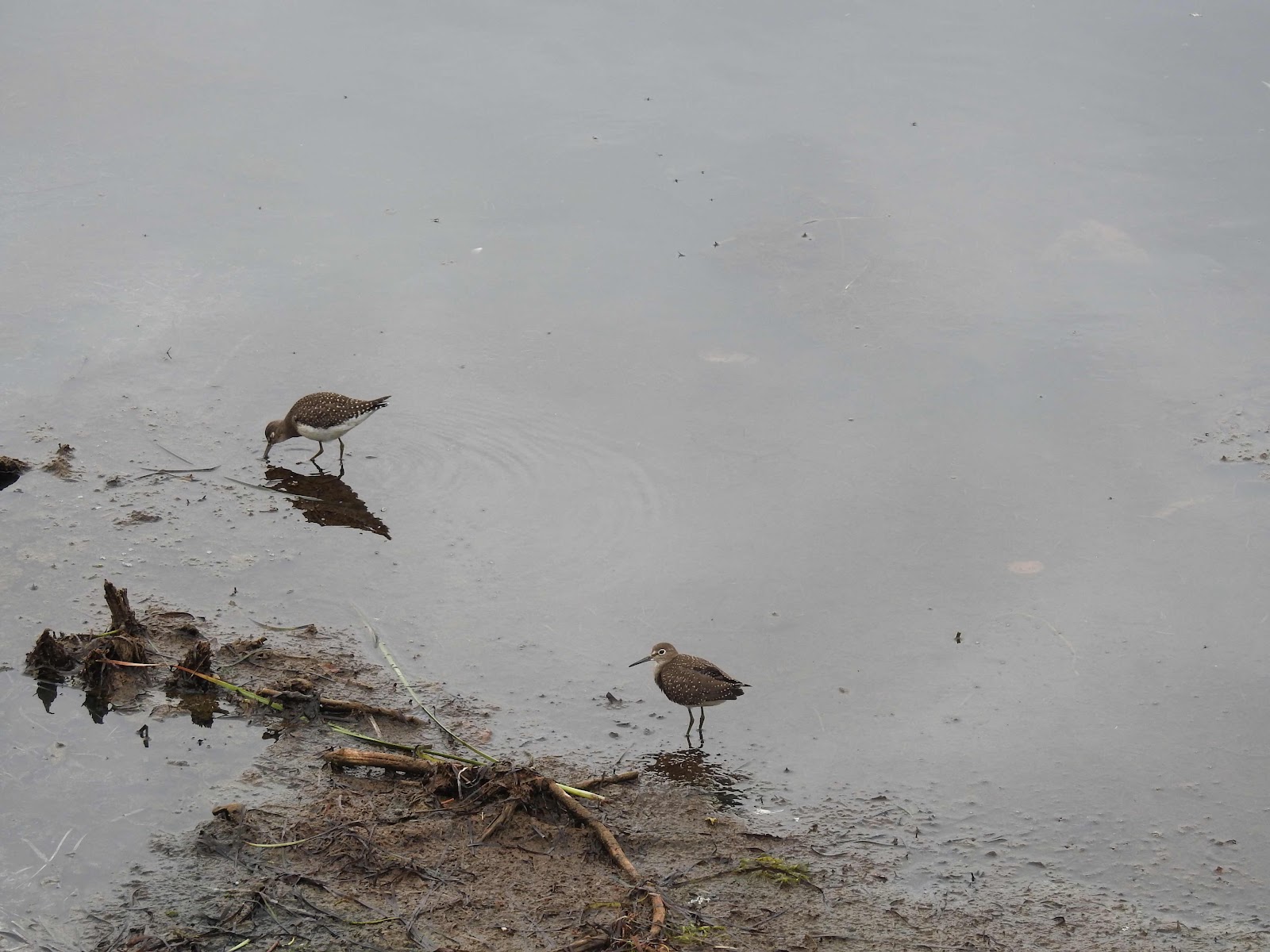
In the marsh, Solitary 


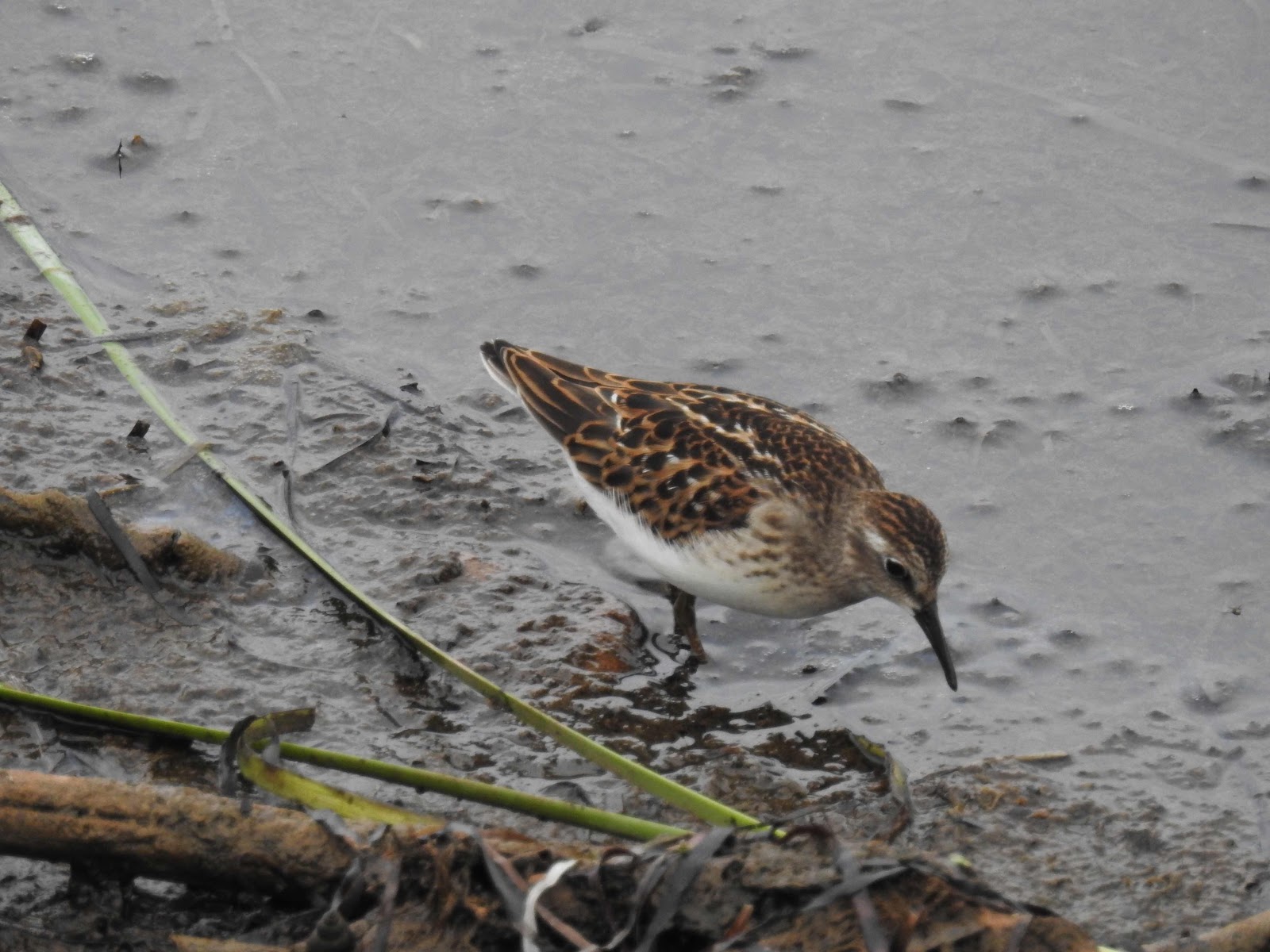
and Least Sandpipers 


were busy feeding, oblivious to the rain and enthusiasts who stopped at the gazebo. From there we went down to the beach. A flock of shorebirds flew by as we settled on the rocks where we watch the beach. However, activity over the bay soon caught our attention! 


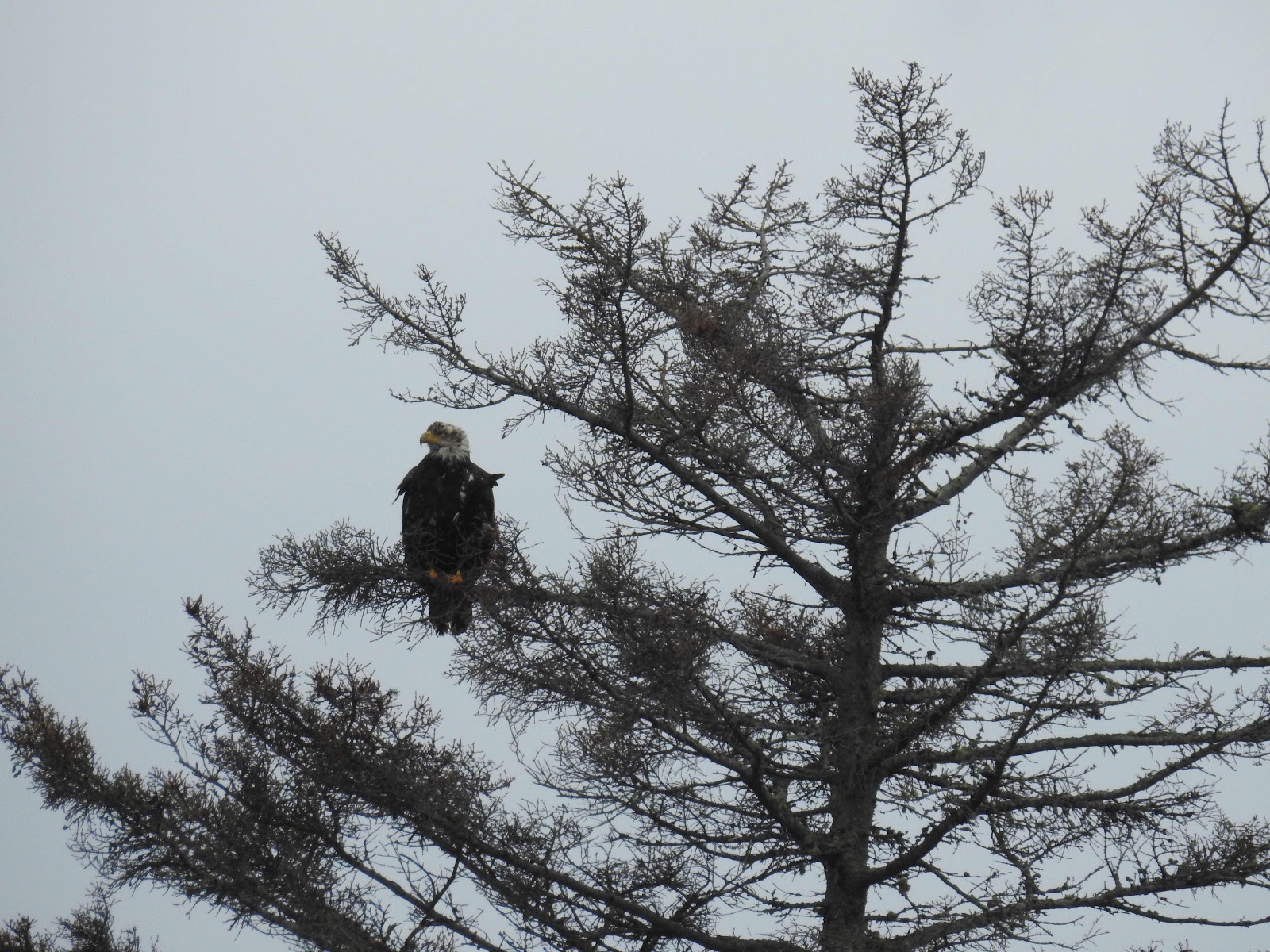
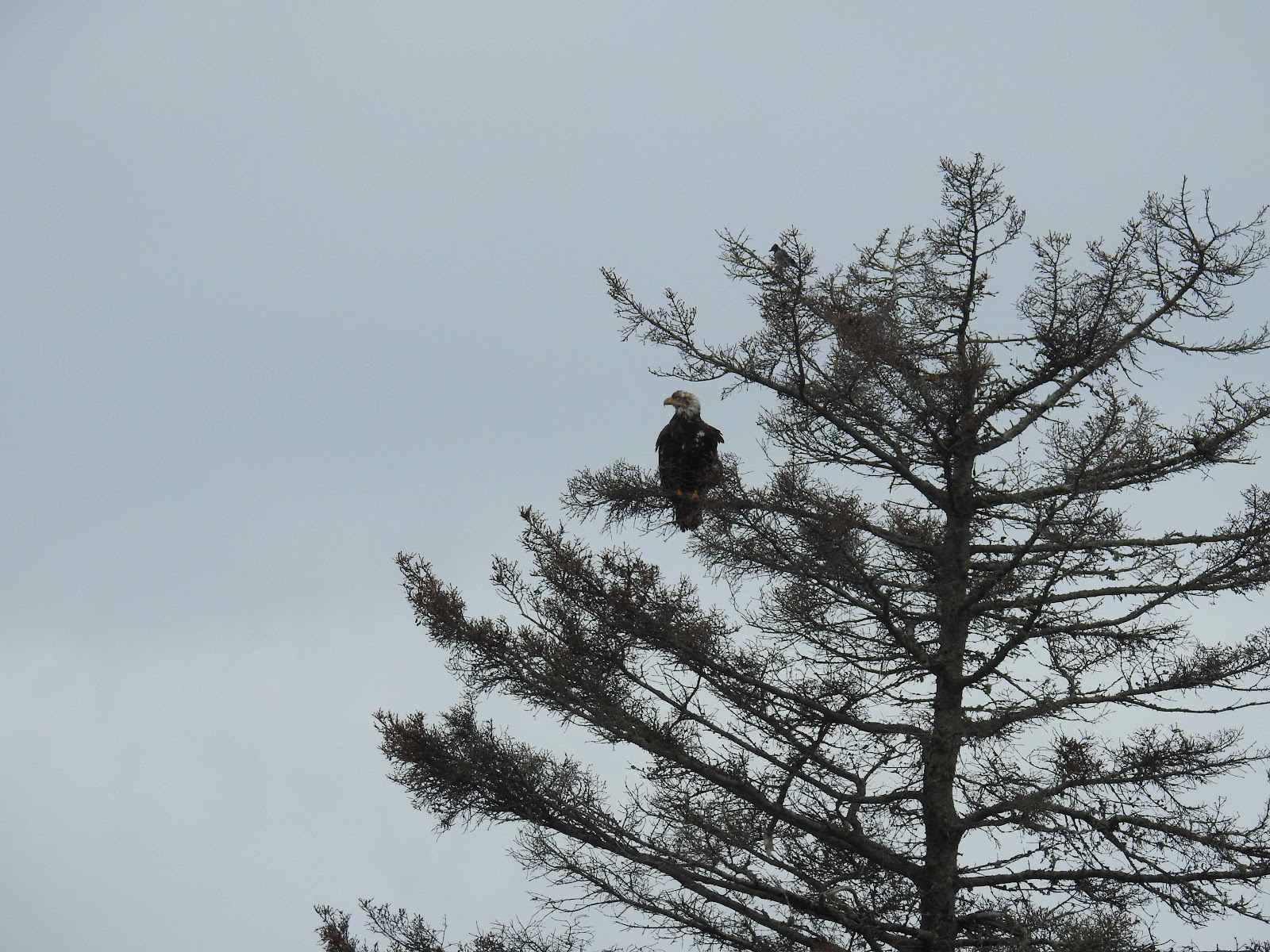
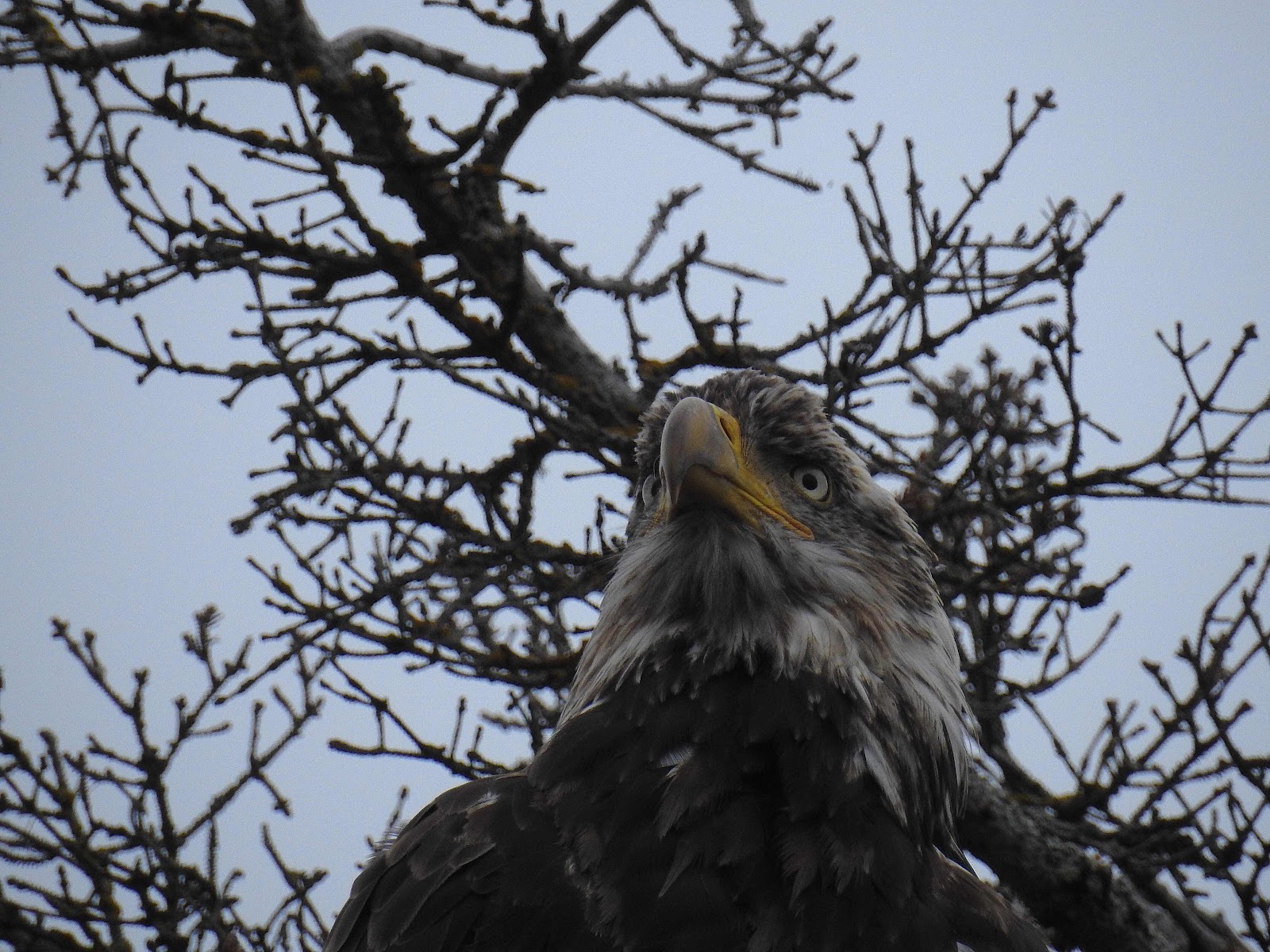
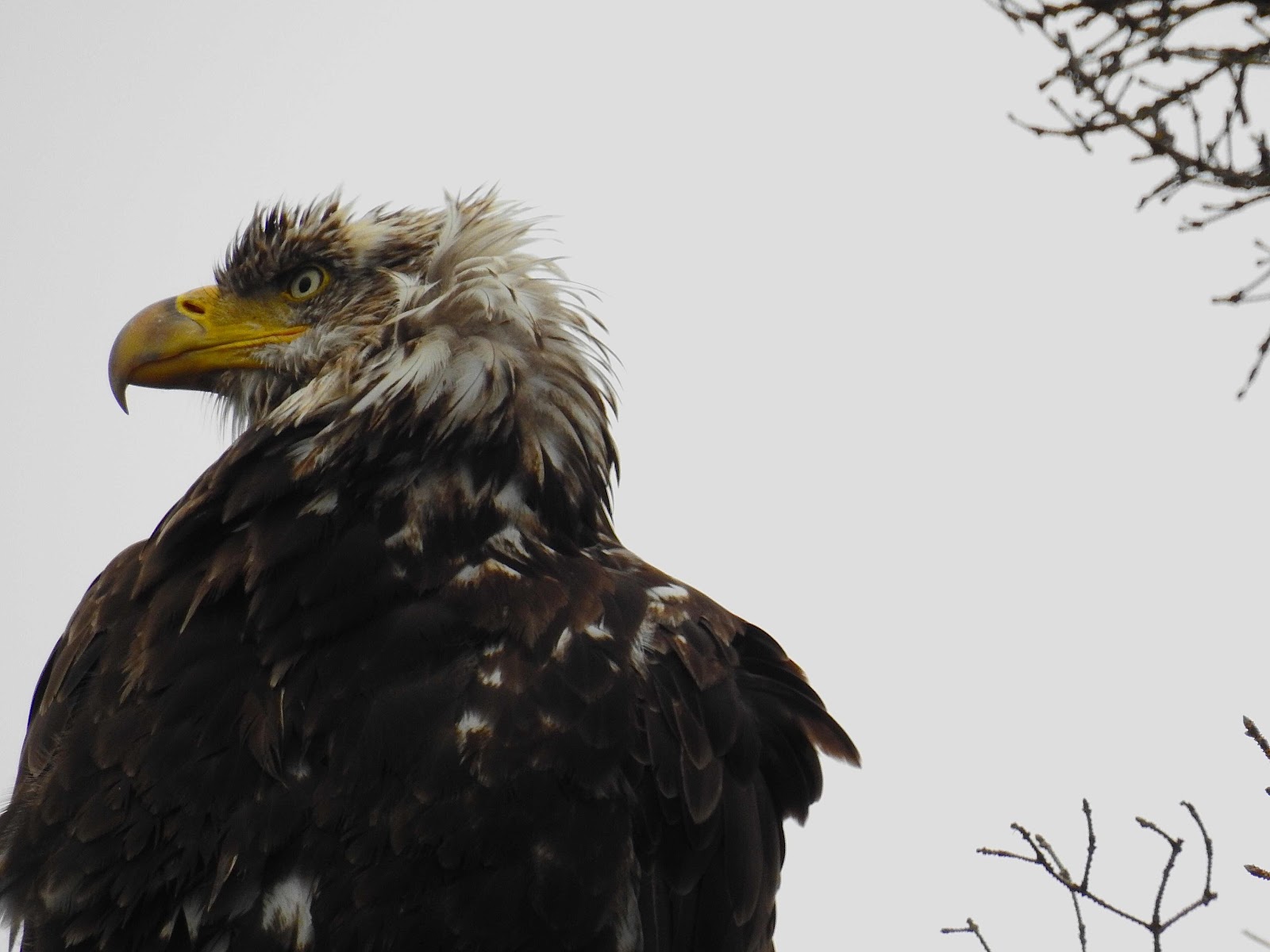
A Bald Eagle was fishing, though it didn’t catch anything. Then it flew to a tree just ahead of us. 


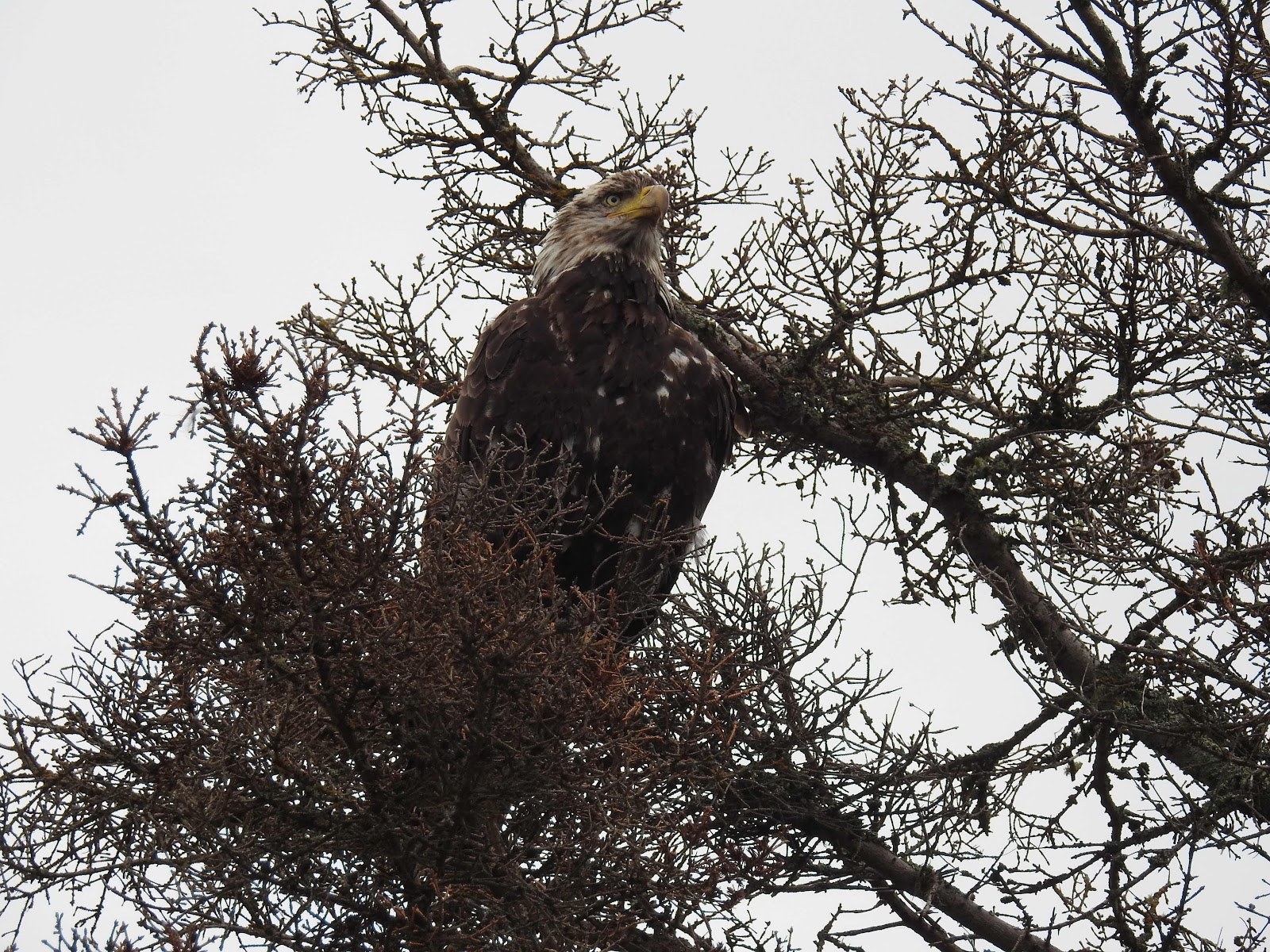
The young bird perched above the boardwalk and was visible from the beach. We watched from that location for a few minutes, then walked to the area in hope of seeing it up close. The Eagle hadn’t moved.


Before long, a Blue Jay perched in the same tree and in typical Jay fashion, alerted other animals in the area about the visitor.


The Jays provide the alarm system for the animals when a predator is nearby.


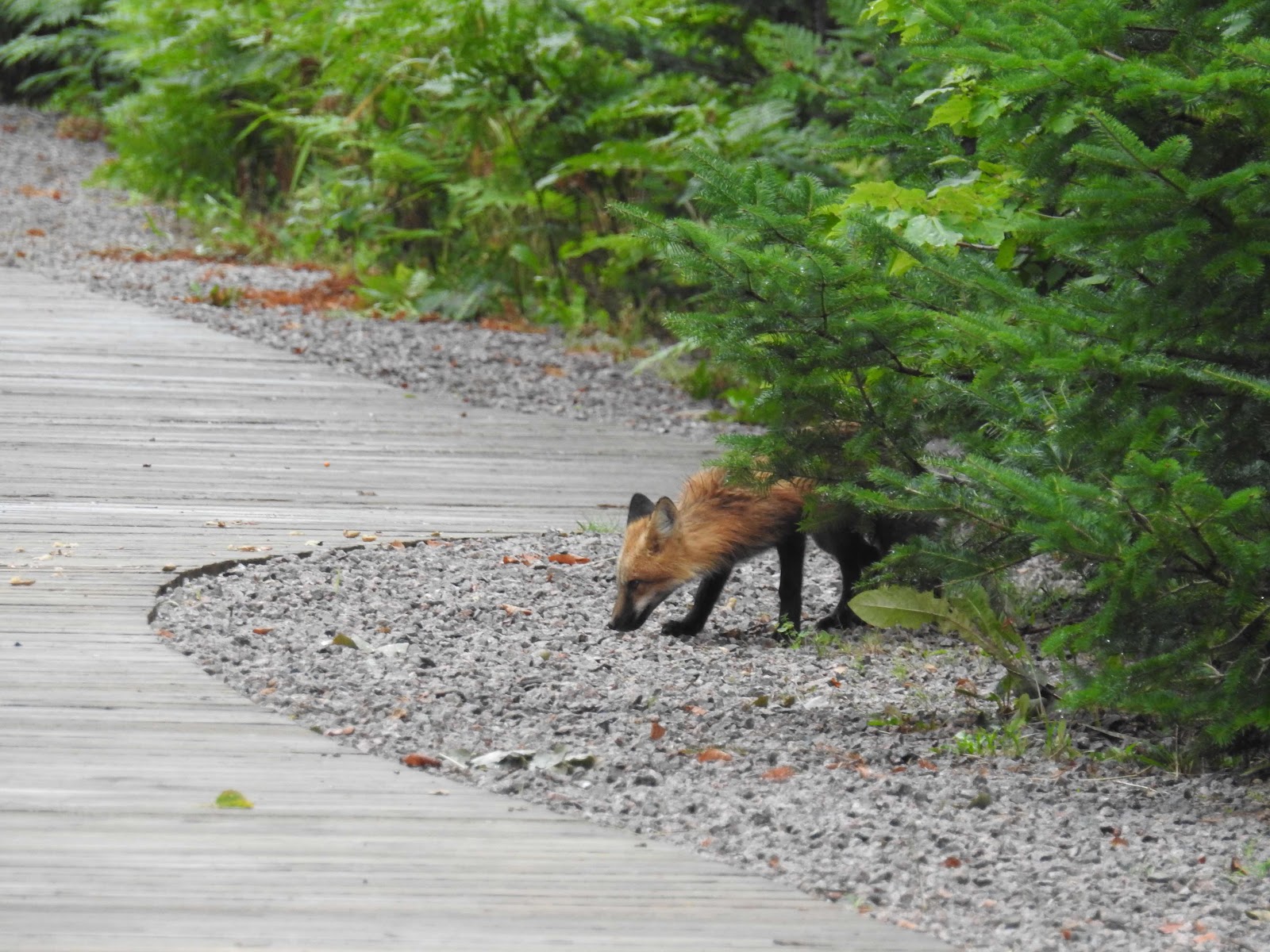
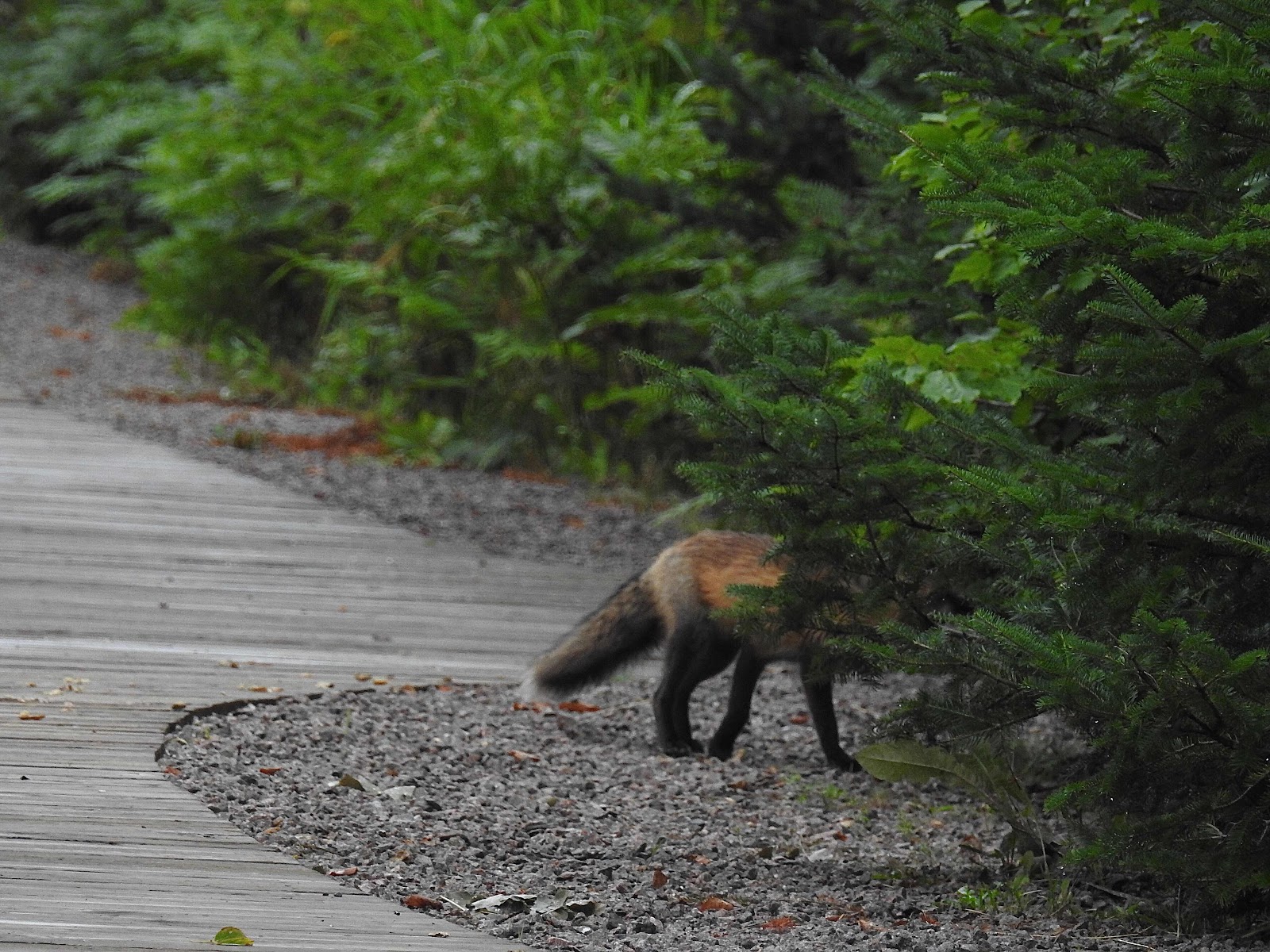
As we watched the eagle, eyes fixed high in the tree, people walking along alerted us to a Red Fox on the trail. 


We had caught a glimpse of one early this summer and watched every day for one. Now here it was. 


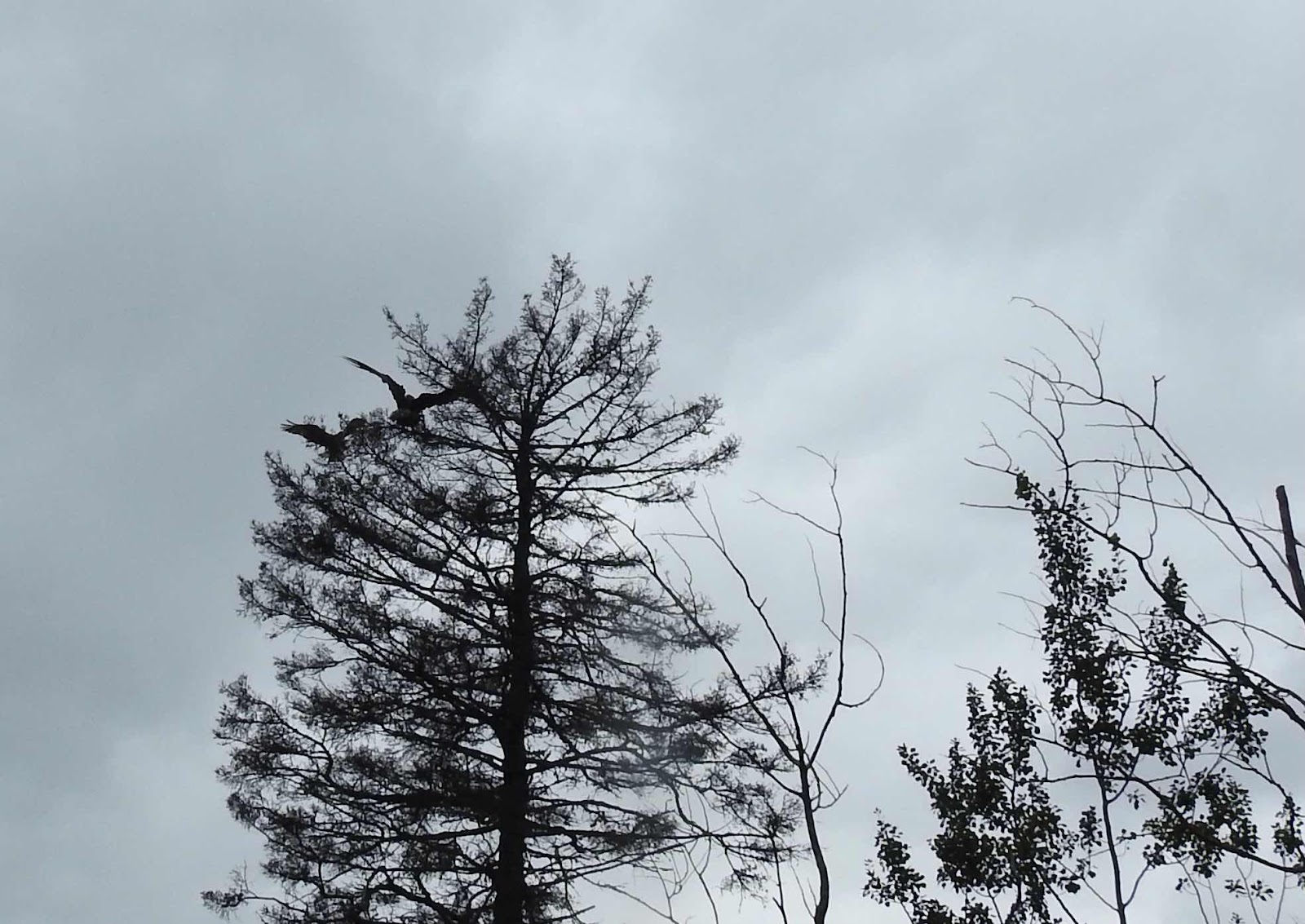
It caught a squirrel among the trees and even ate a peanut left for the other animals. It didn’t stay around long when walkers approached. They spoke to us about the fox and watched with interest as a bird swooped in on the eagle. It looked like a young gull but it was an Osprey which the woman identified.


The two were Americans from Philadelphia, a long way from home. It was their last day visiting the island. We spoke about birds and they described Osprey swooping Eagles in Chesapeake Bay just as we had seen here. They were both originally from New York and Philadelphia was home now, near children and grandchildren. People have so much in common when we take the time to stop and listen. They enjoyed the peace and quiet of the island during their stay.


Eventually we continued our walk, turning around a bit earlier than usual. On the way back, the eagle was still in the same spot. 


No sign of the fox however.


We arrived home as the heavens opened, glad to have chanced the rain to see the animals and meet other travellers, especially Eagles fans…


Sunday, 14 August 2022

Berry time

Picking berries has always been one of my favourite activities. Maybe it was the association with the delicious baked treats which always followed or the jam/jelly which brought a taste of summer into the long months of winter, but picking berries never felt like work.


I started young. I remember picking cranberries with my grandmother when we visited my grandparents every Sunday. Nan made jam of course and eventually, when she had a deep freeze, she stored some there. I always picked berries with my Aunt Esther too. We went down the shore and picked along the shoreline above the cliffs for cranberries as well. I wasn’t in school when I went with Nan, older when I accompanied Esther.


Cranberries were the start of the berry picking adventures though. Over the years, with various people, I picked a variety of berries which were plentiful in Newfoundland. Those berries came from the wild, not cultivated in a well groomed field.


There were raspberries which always seemed to have wasp nests nestled among the bushes. If you came from raspberry picking without scratches, bristles in your hands or a sting, you counted yourself lucky.


Blueberries were easy to pick. You could sit among the bushes, find a spot with biggies and pick a bucketful. 


We picked wild strawberries too. It was work to find patches of the berries, miniature compared to what is cultivated today. They were sweet and tasty though and worth the effort though we didn’t get many.


A small patch of blackberries in my grandparents yard was just enough for a small snack. We never saw enough of them for picking other than snacking.


Partridgeberries known as lingonberries in Scandinavia, were among the ground cover on hillsides. The tiny plants meant you moved around to pick them. They were close to the ground and didn’t ripen until September after school started. The berries are tart and apples go well with them in pies especially.


Crowberries were similarly located but along a coastline where they required back breaking work. I picked these with our neighbours, the Ralphs, who had picked them in their previous home, Flat Island, a rocky, isolated fishing village in Bonavista Bay. The crowberries went into puddings and were enjoyed throughout the winter. You can imagine in such an isolated place, nothing, not even a crowberry was wasted. My parents didn’t pick them growing up in St. John’s and surrounding area.


Then there were the berries picked from trees, such as squash berries with their flat stones which you strained out to make jelly. It was one of my favourites though I also enjoyed pin cherry jelly too.


The apex of berry picking was the bakeapple however. In Scandinavia, it is called cloudberry. It grows on bogs, requiring rubber boots as you scour the bog for the berries, which grow on small individual plants spread over and close to the bog, each plant with one berry. It is backbreaking work, requiring trekking over a bog and through bog holes. I picked them once which was enough for me. If you can pick a gallon of those berries, you are an expert berry picker. They understandably are expensive to buy.


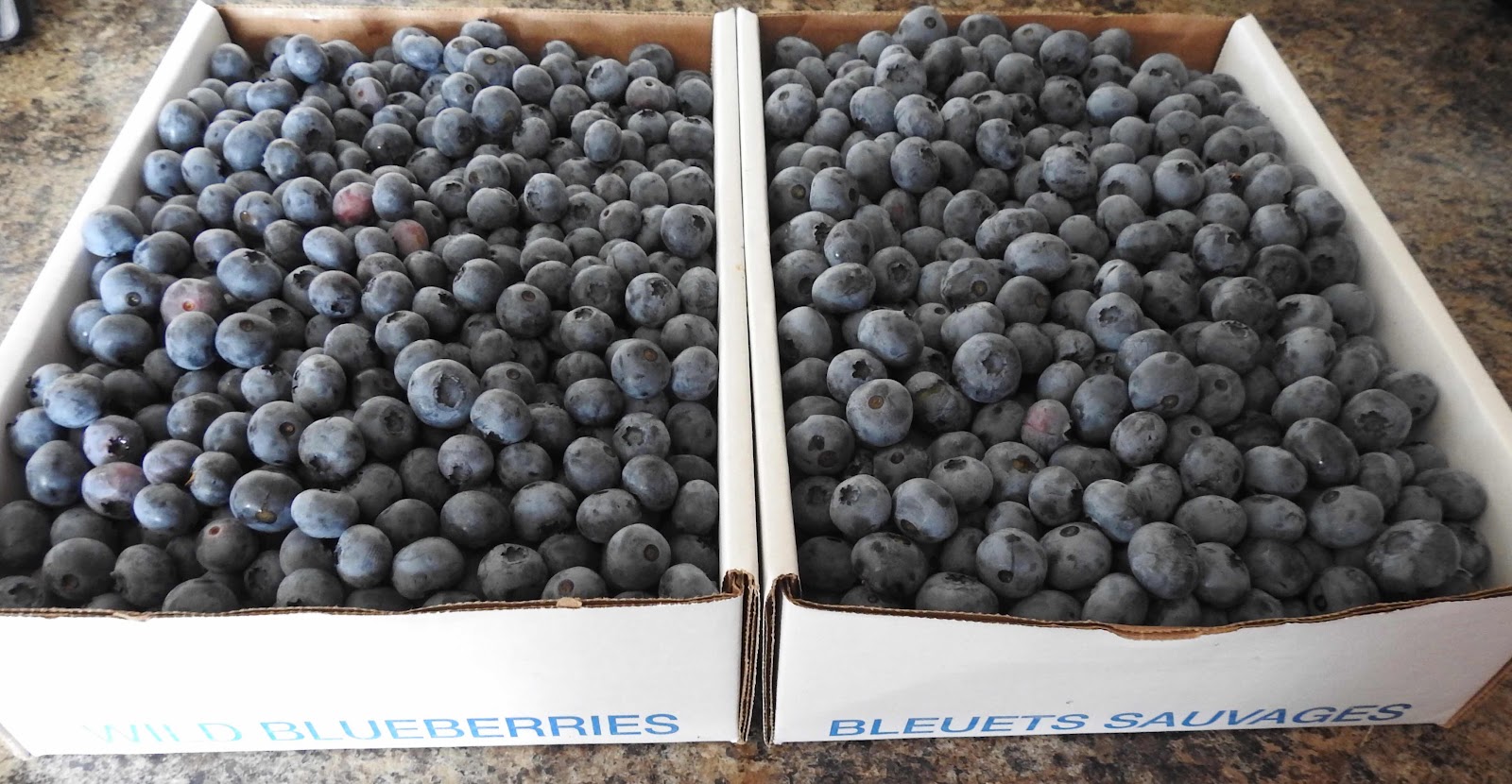
Fast forward to this past week in Tryon, Prince Edward Island. We picked cultivated high bush blueberries in a farmer’s field. 
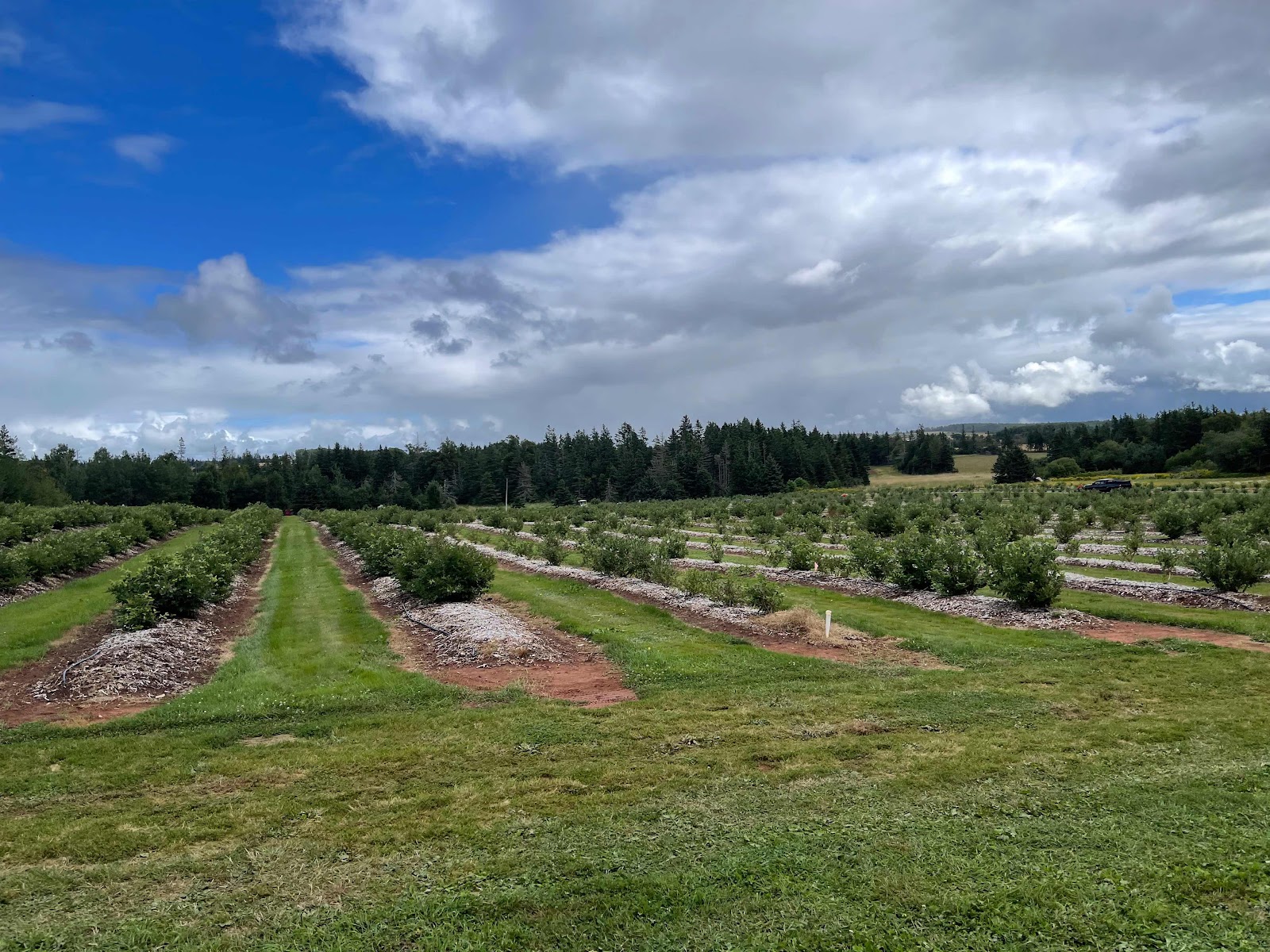


The plants are spaced apart
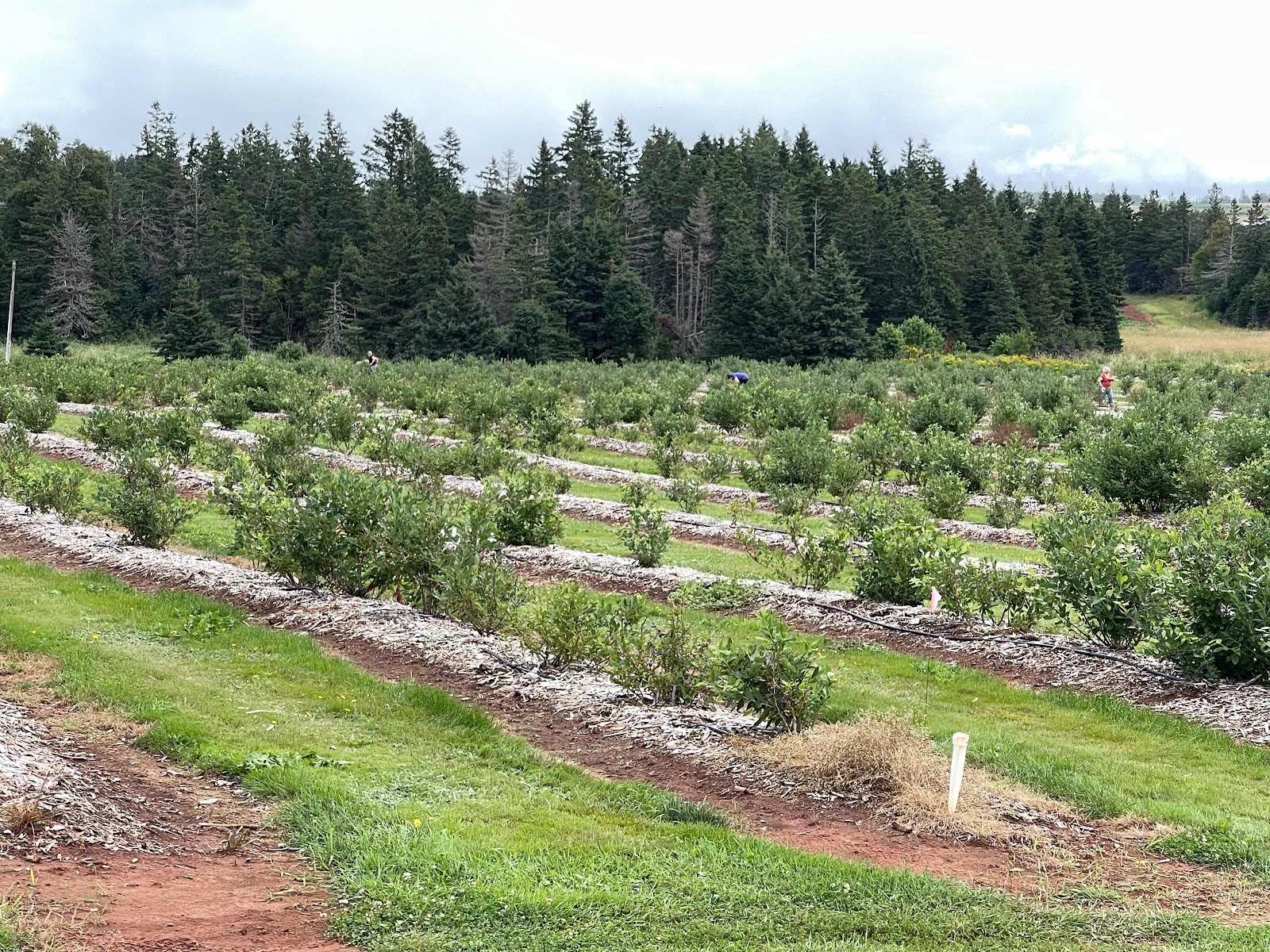


and you could put the box provided for picking under the bush to catch berries which might fall as you picked.
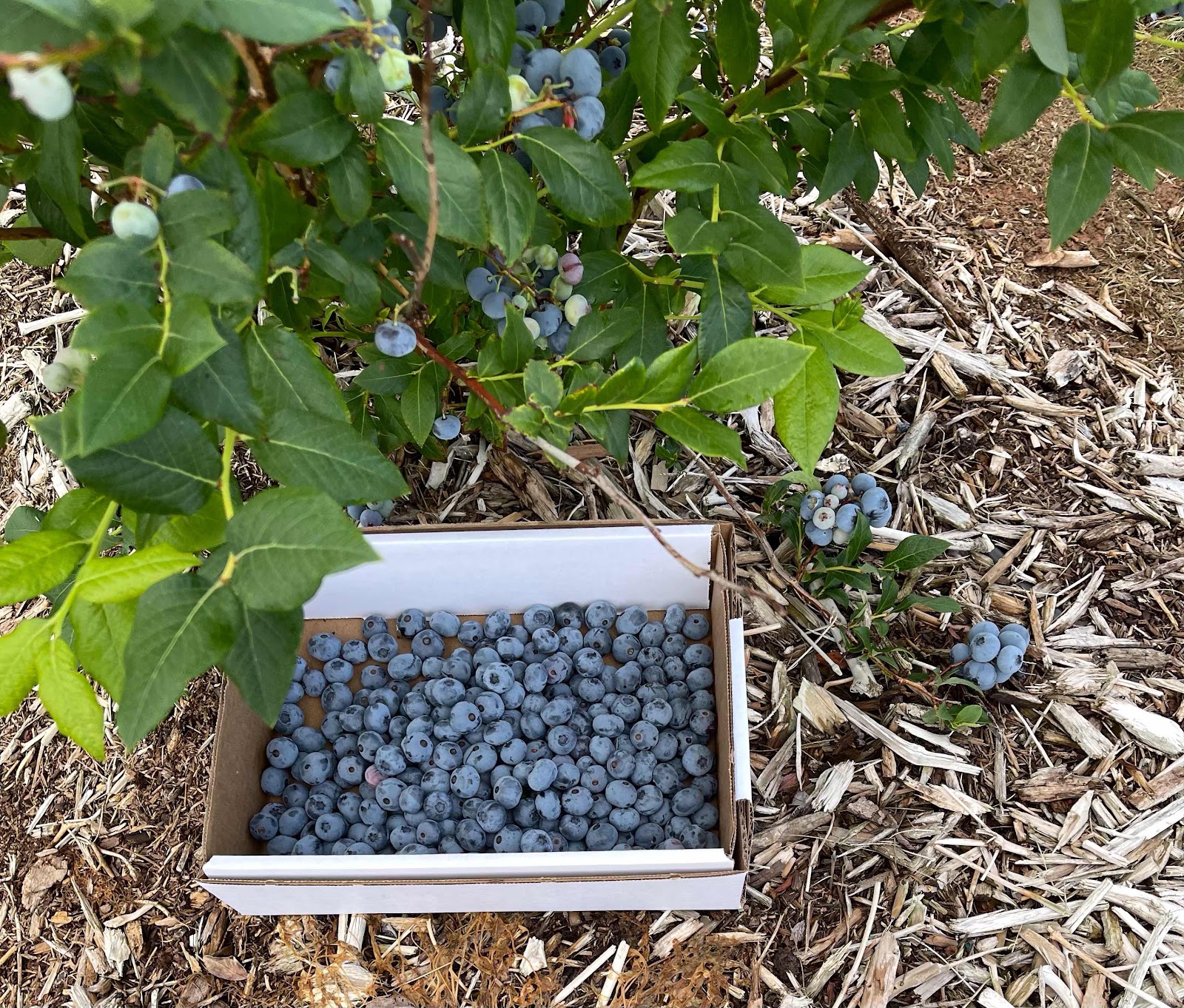


My husband and I picked quickly, filling the two boxes with the huge berries which taste like candy. 
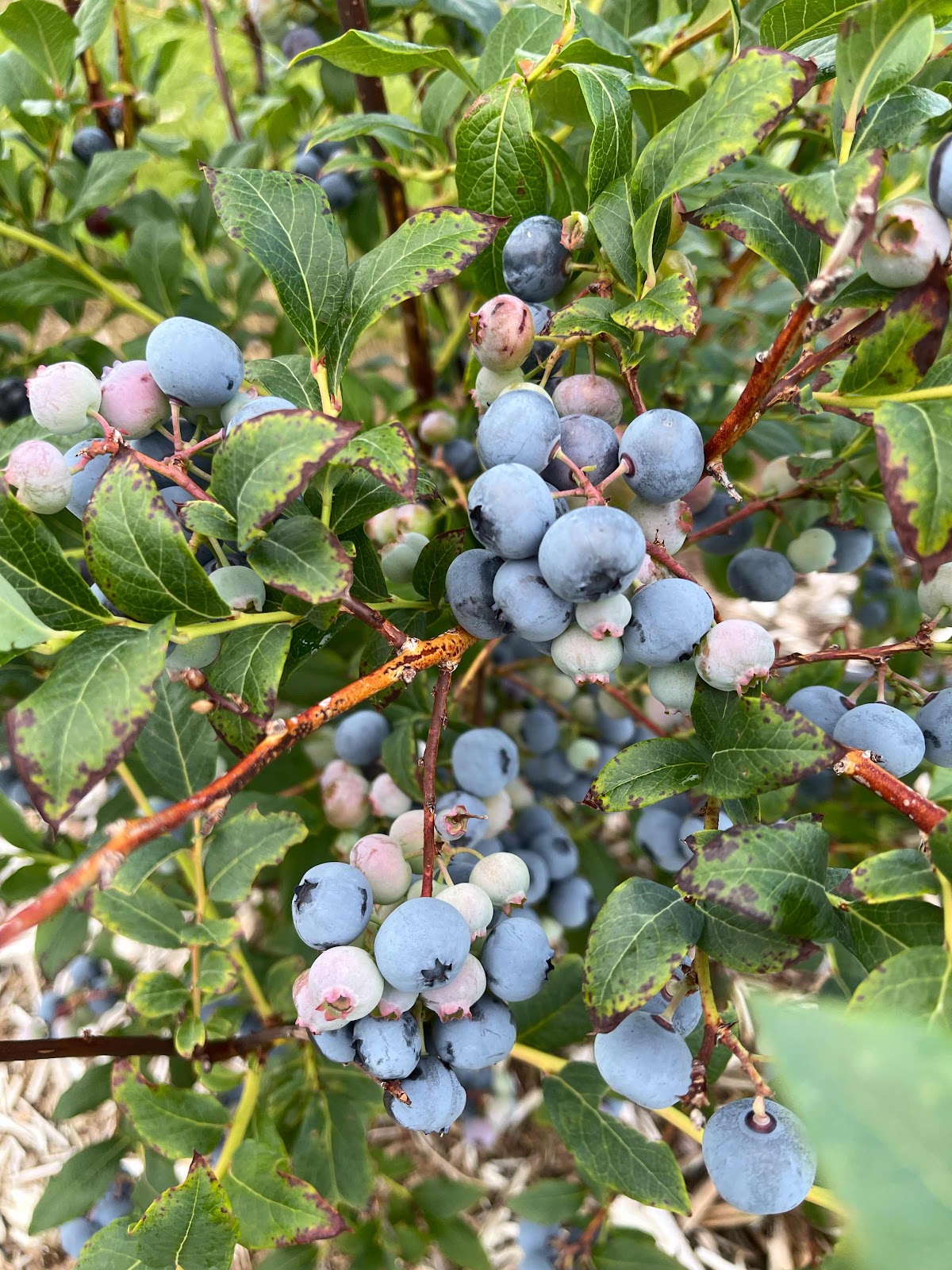


I froze some and we are eating some with yogurt for breakfast. After a lifetime of picking wild berries, this latest experience stirs up memories of simpler times when berry picking was a part of food gathering and August was the start of picking for another year. 


Blueberries anyone?


Wednesday, 10 August 2022

A visit to the Cape

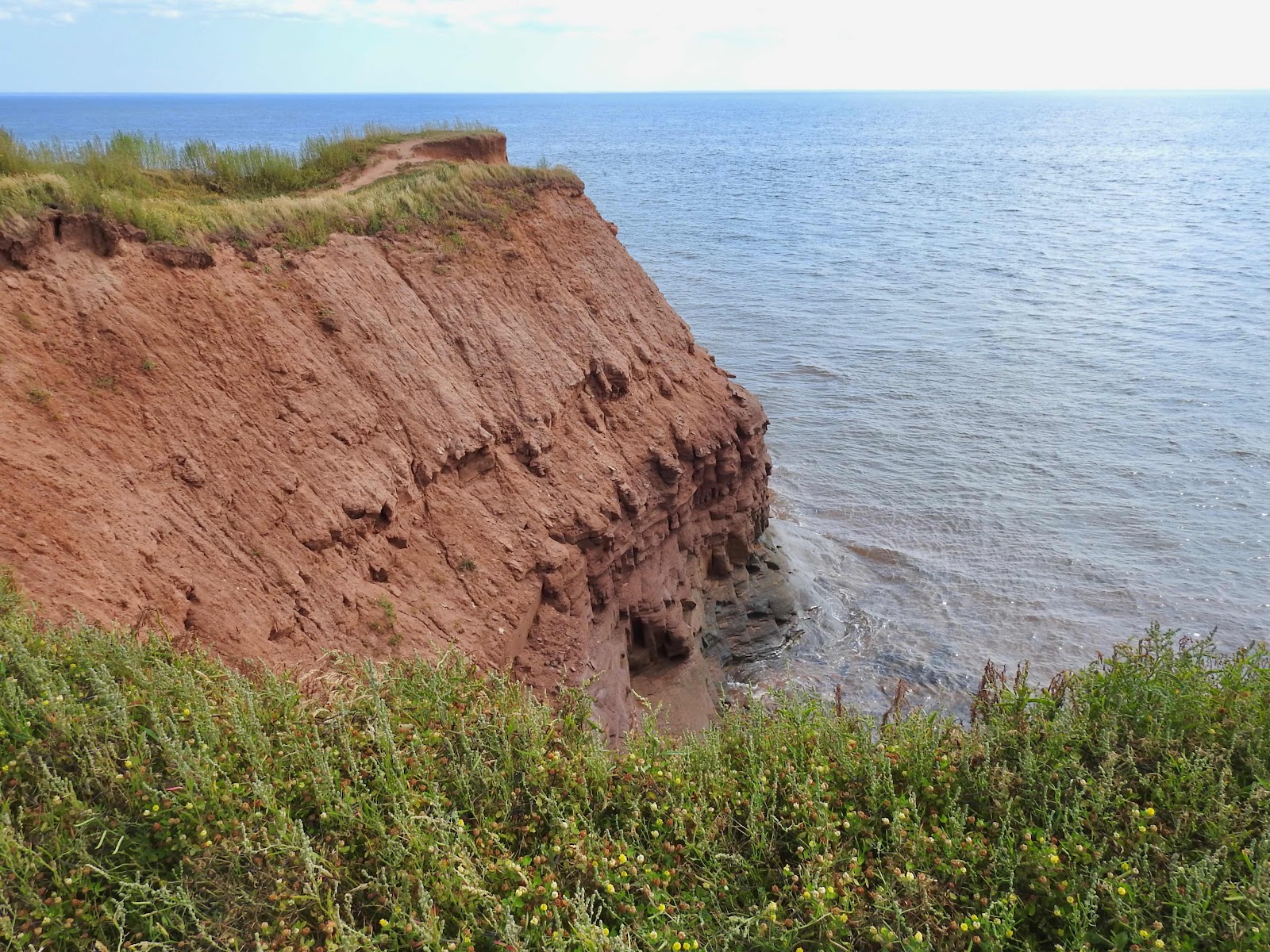
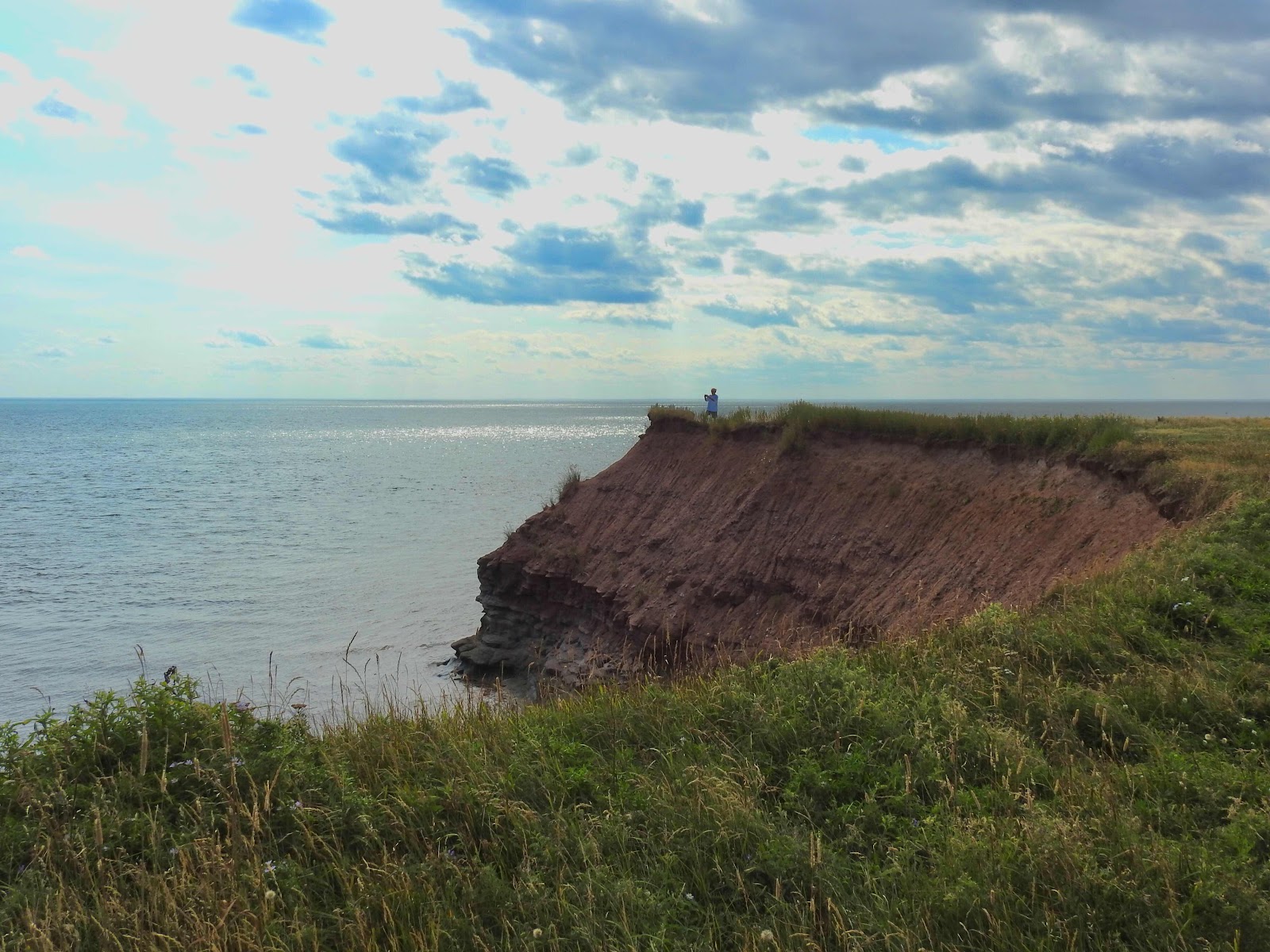
It was hot with the usual Prince Edward Island breeze making the temperature bearable. My husband and I drove along the French shore of the island, just west of Summerside, with the windows open, the breeze flowing through the car as we enjoyed the sea view. We were headed to Cape Egmont.


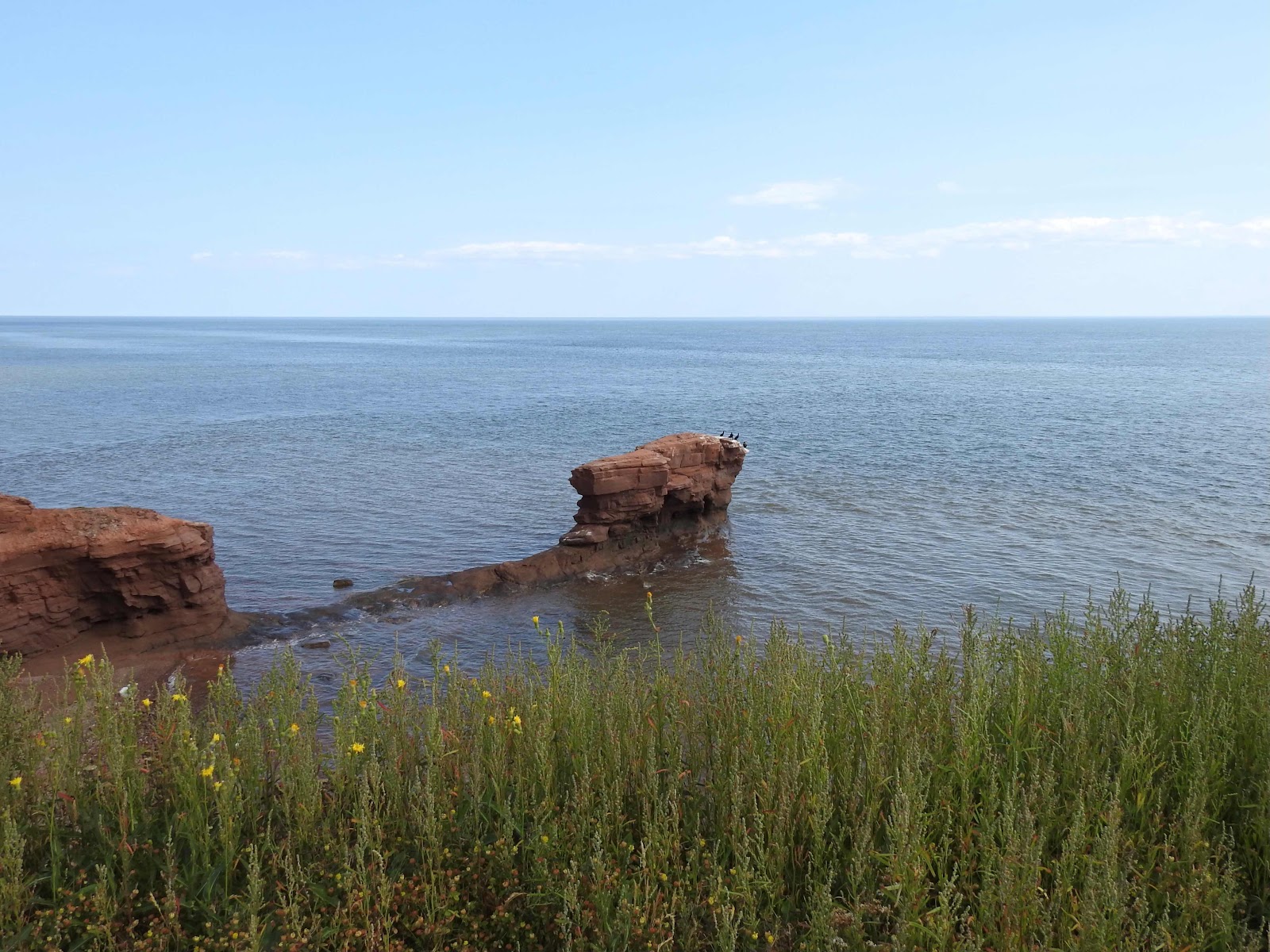
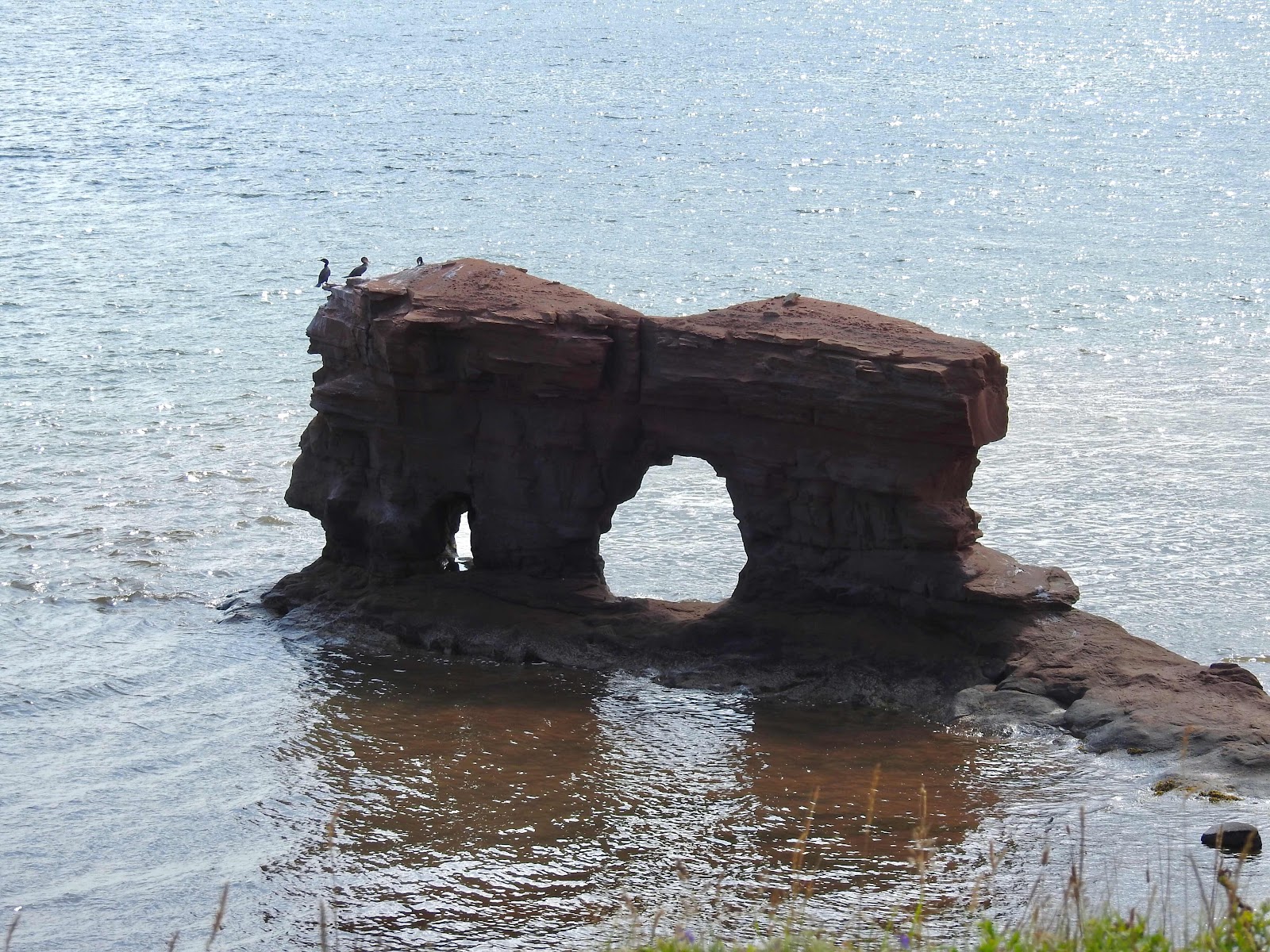
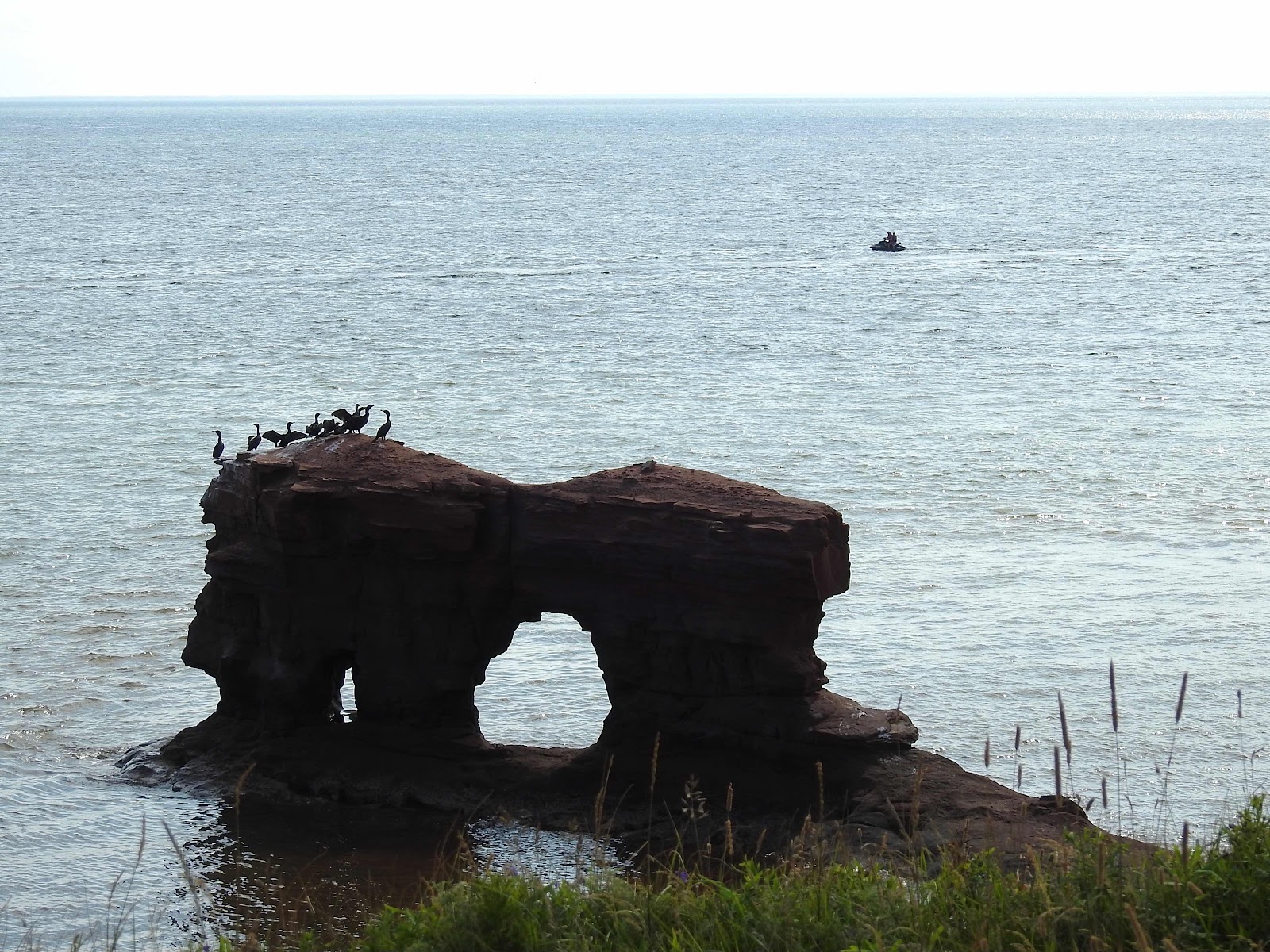
The Cape is a headland jutting into the Northumberland Strait and just off-shore, attached to the shoreline via a stoney umbilical cord,


a sea stack is visible below the cliff. The red sandstone in this area has a thick layer of soil above which is easily eroded. 


The stone takes a bit longer.


The sea stack has two holes these days, a larger one on the landward side. 


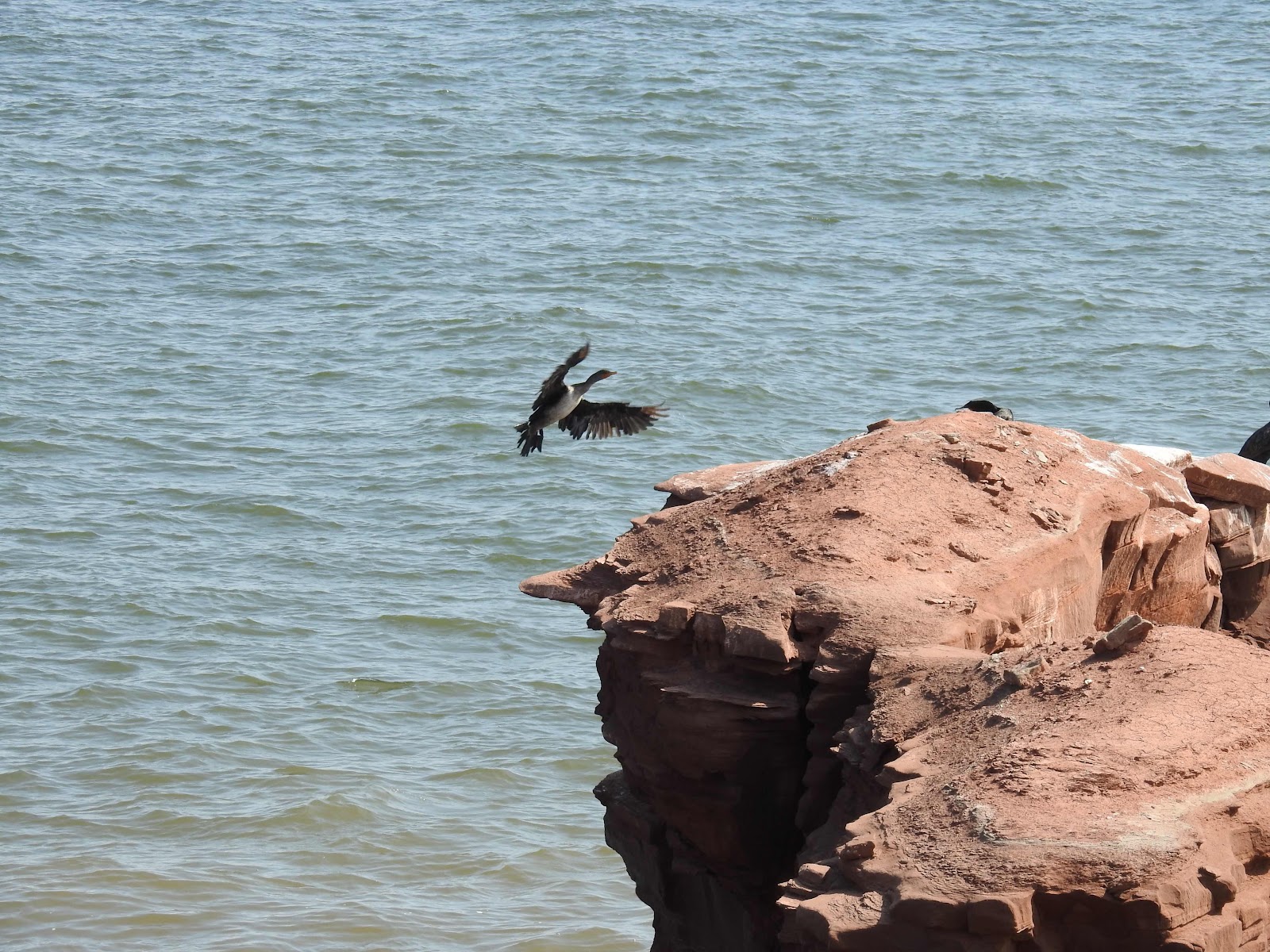
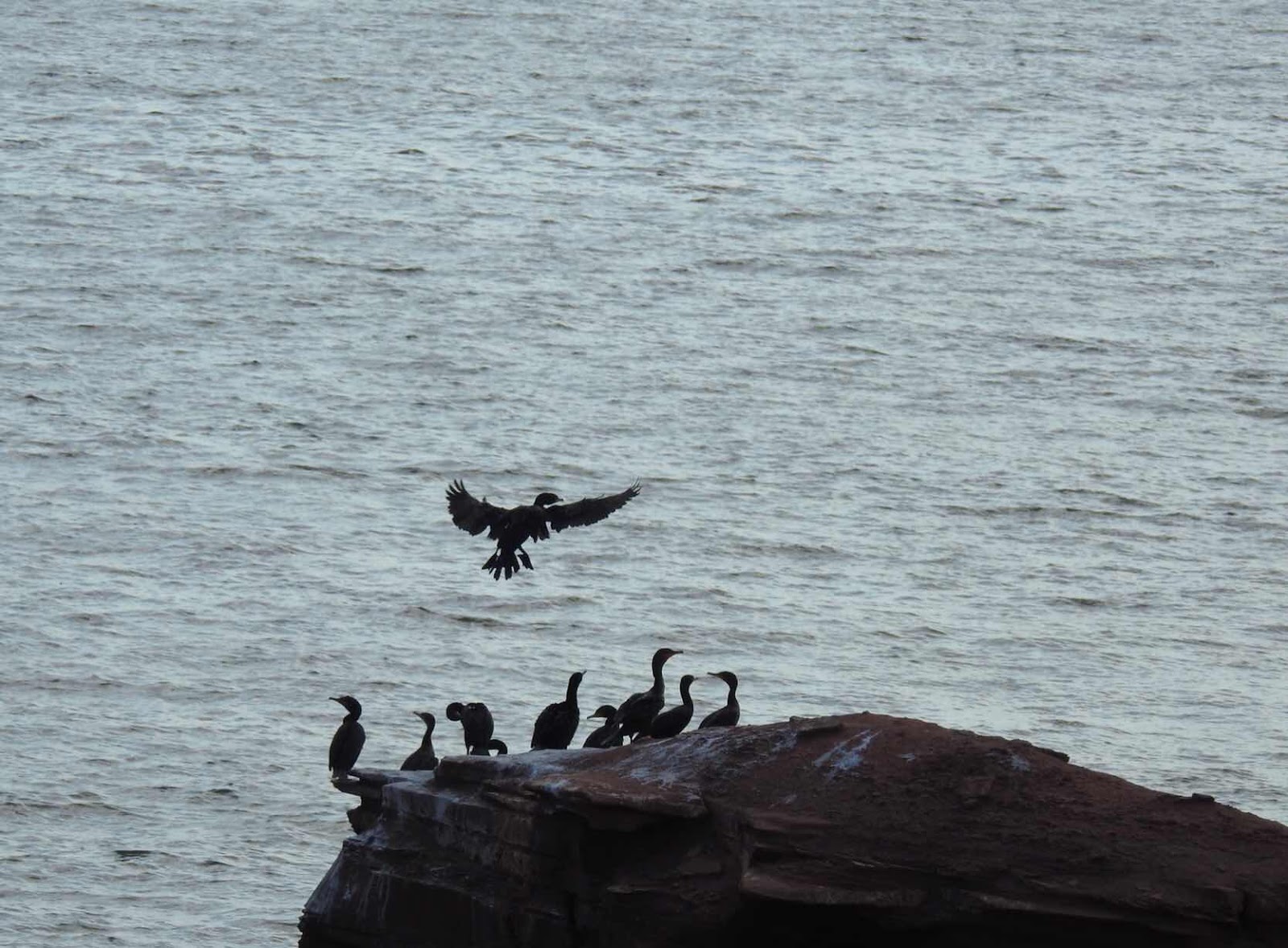
Above is a great perch for birds, especially cormorants on this particular day. One with damaged feathers makes a curious sight as it approaches for a landing. 


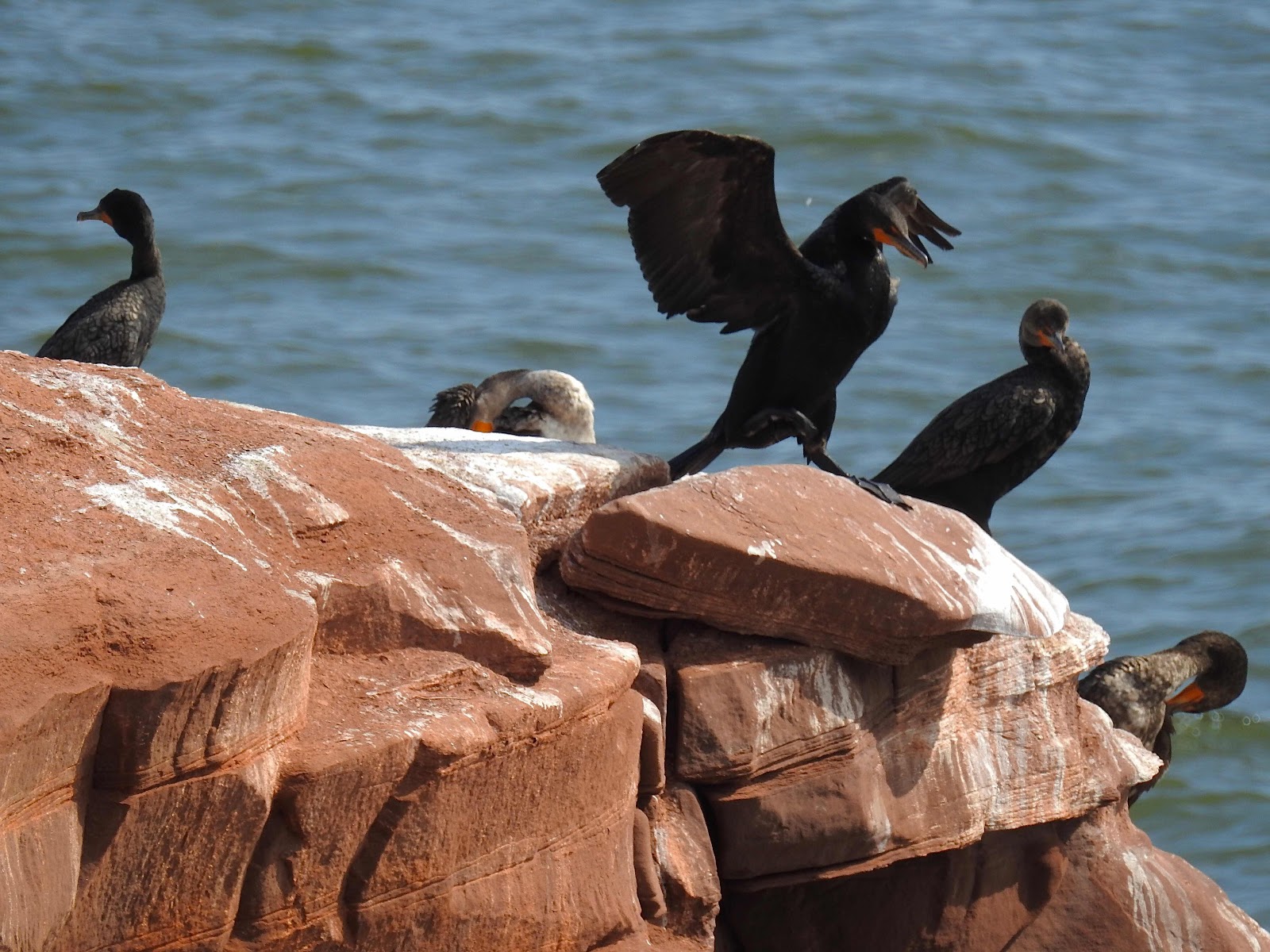
Some on the perch dry normal looking wings in the breeze.


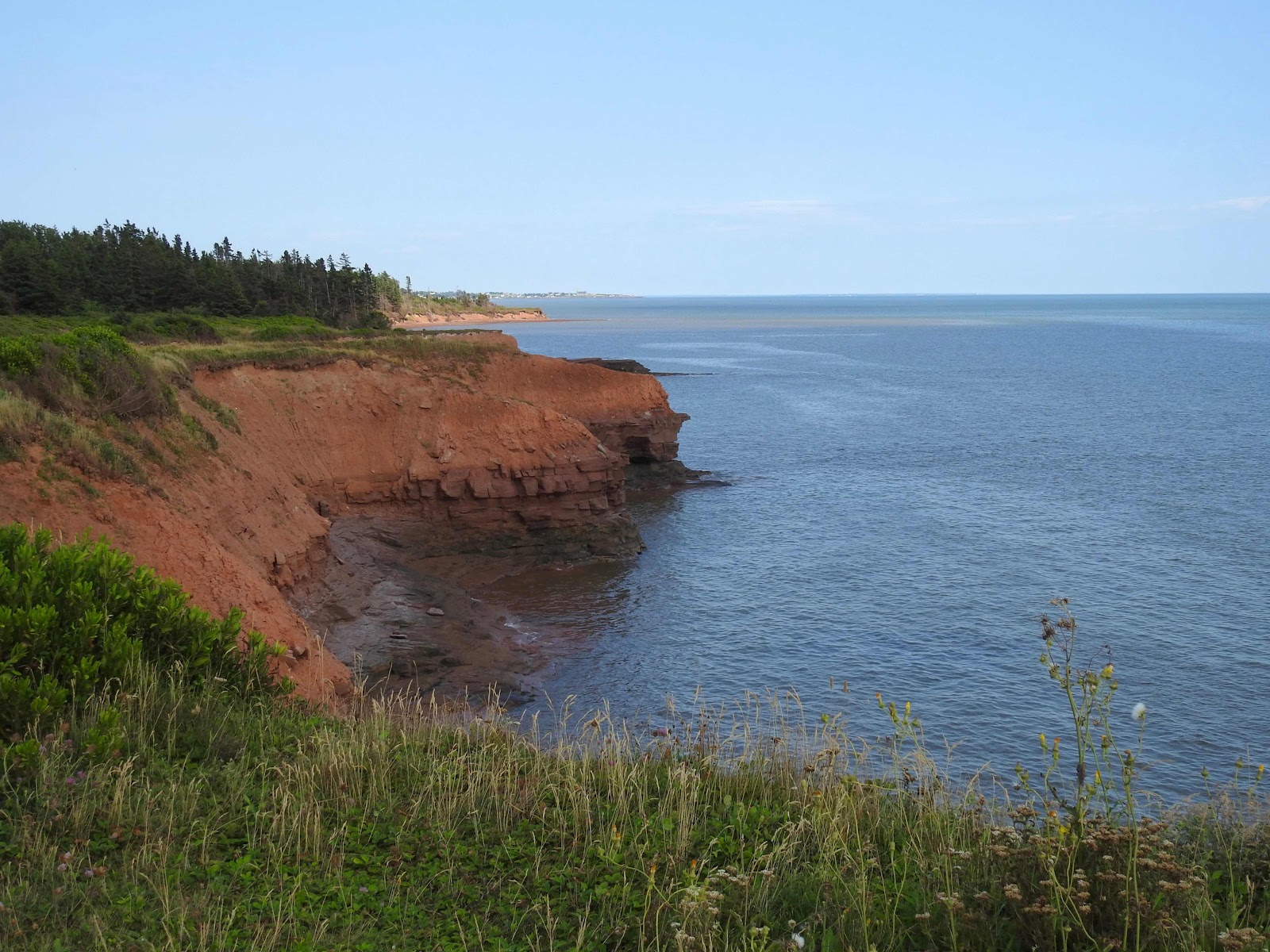
Walking along the headland, one can look east along the coastline as far as Union Corner. 


Looking west, there is my husband on the narrow strip of land opposite the sea stack taking photos.


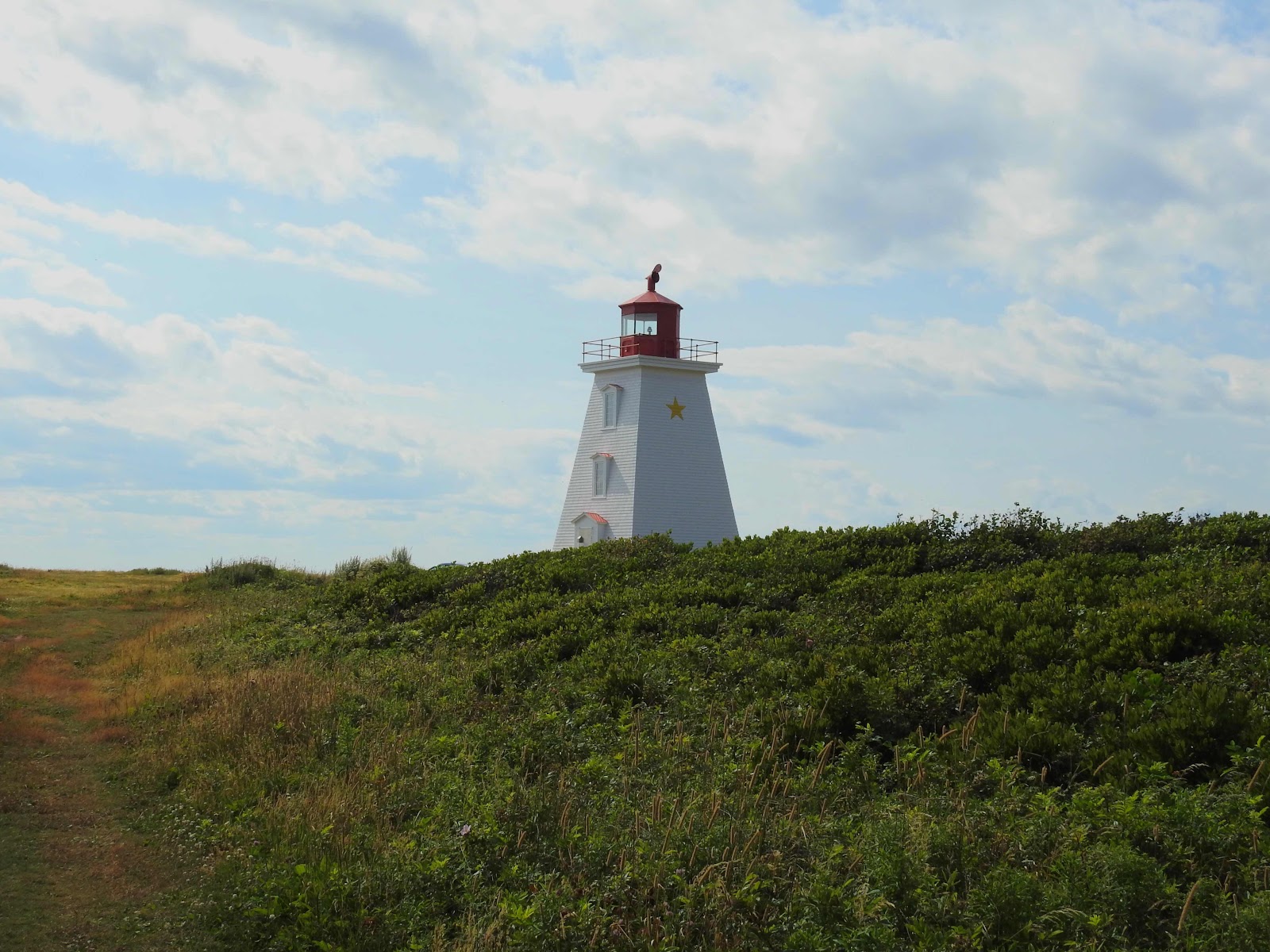
I could not stand in that narrow place myself and cannot watch my husband there. Instead I focus on the lighthouse and beyond, 


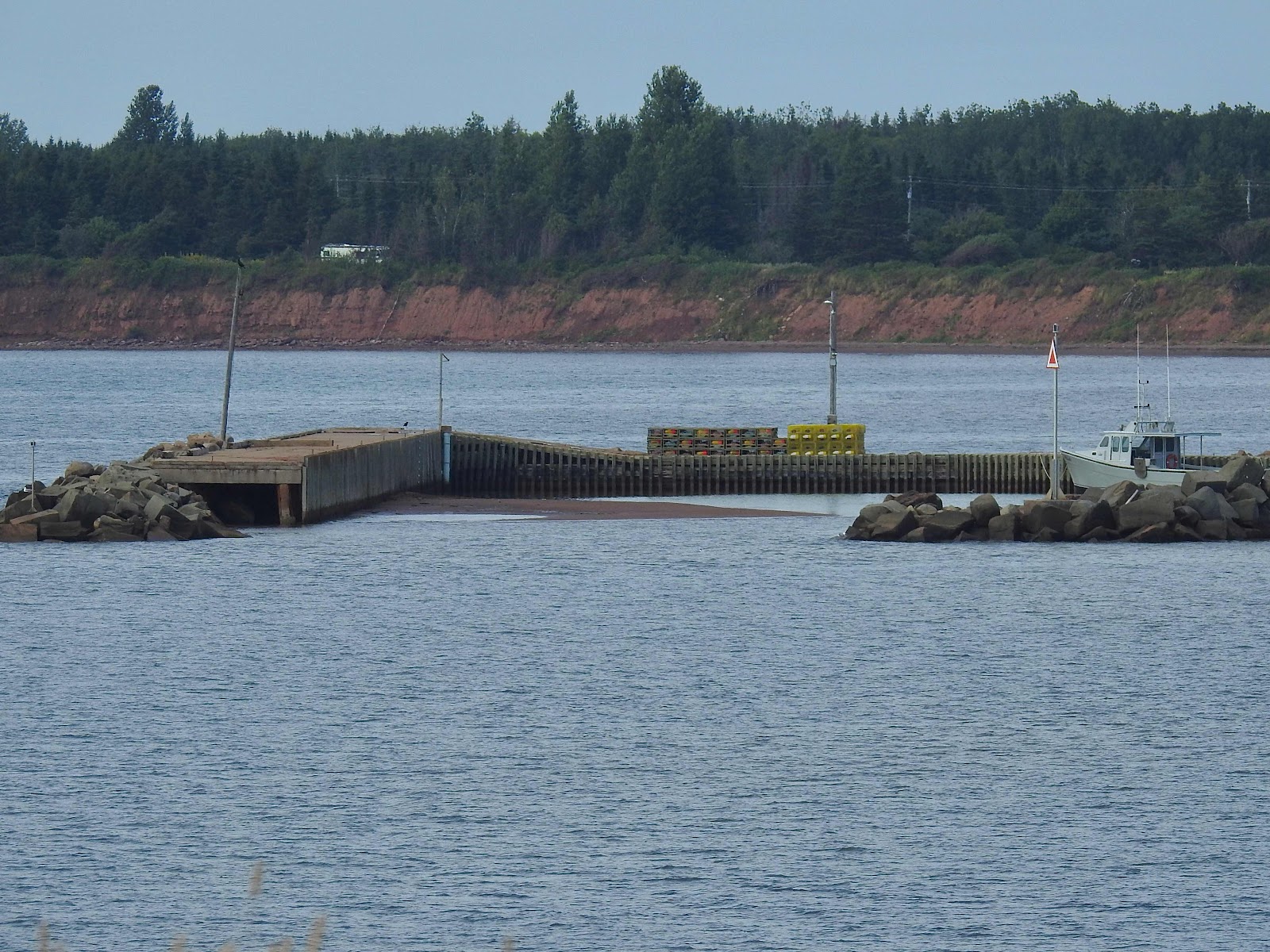
the wharf where lobster boats leave today as the second lobster season begins on the island.


Off-shore, jet skis or sea-doos zip along the coastline. They always remind me of snowmobiles, a common sight in winter in Canada. These summer versions don’t require as much clothing.


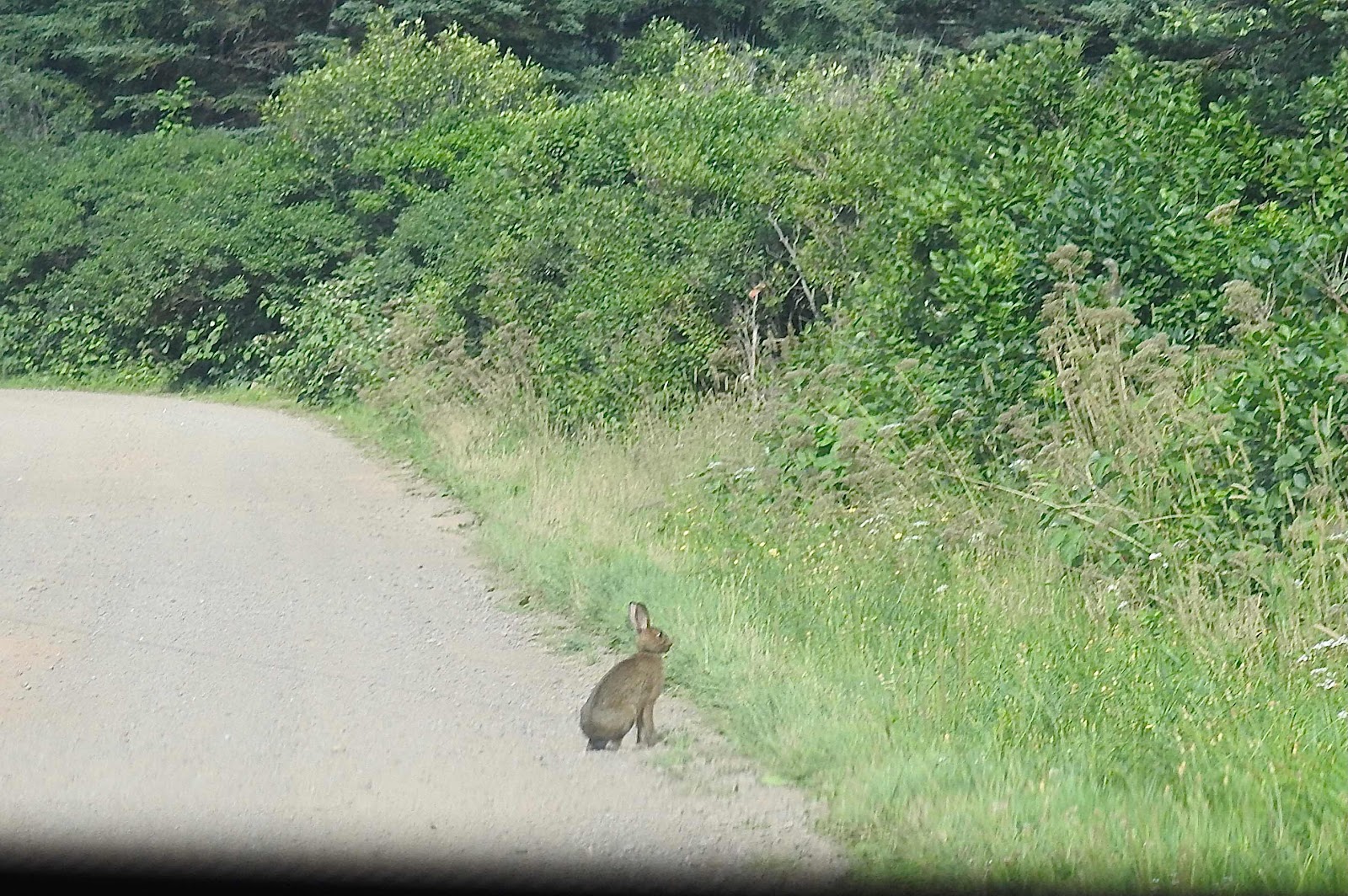
Leaving the Cape, we saw a hare crossing the road. I had to settle for a photo through the car window.


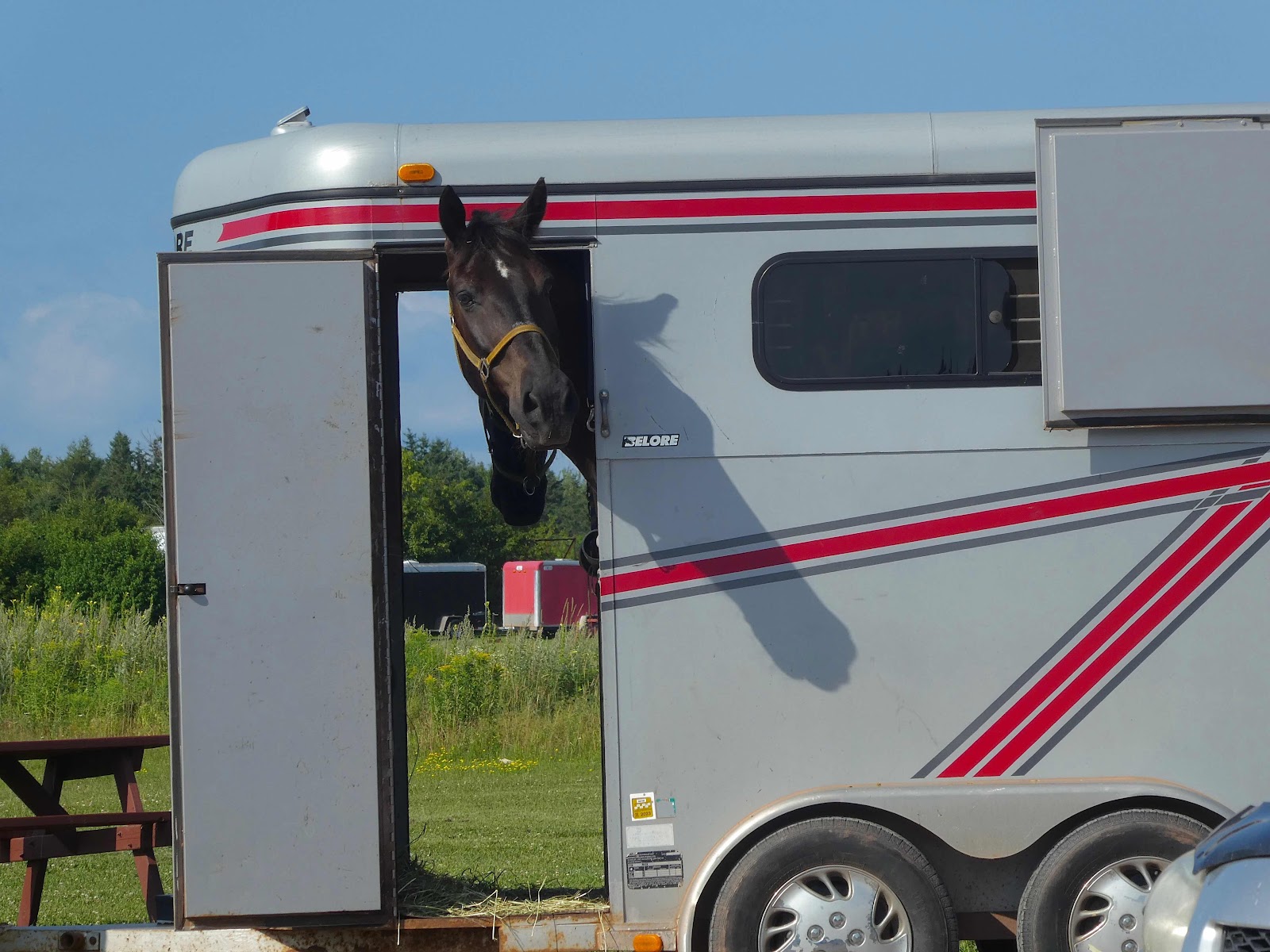
On that hot Sunday afternoon, on the way home we stopped for ice cream at a dairy bar in the area. A horse watched from its trailer as the driver lined up to order. The horse wants some too!


P. S.


Bloggers, 


Are blogs you once followed not appearing on your blog feed any longer though you haven’t made any changes and those blogs are still active? Is there a fix for it?

Sunday, 7 August 2022

Birds of a feather

We look forward to our morning walks on the boardwalk these days as the heat and humidity keep us close to home the rest of the day. My husband and I always start at the gazebo then we walk the short trail to the beach. 


We attempt to slip into the scenery so as not to disturb any birds there. 


I like to sit on the rocks and watch quietly as they come, go and walk along the beach, feeding.


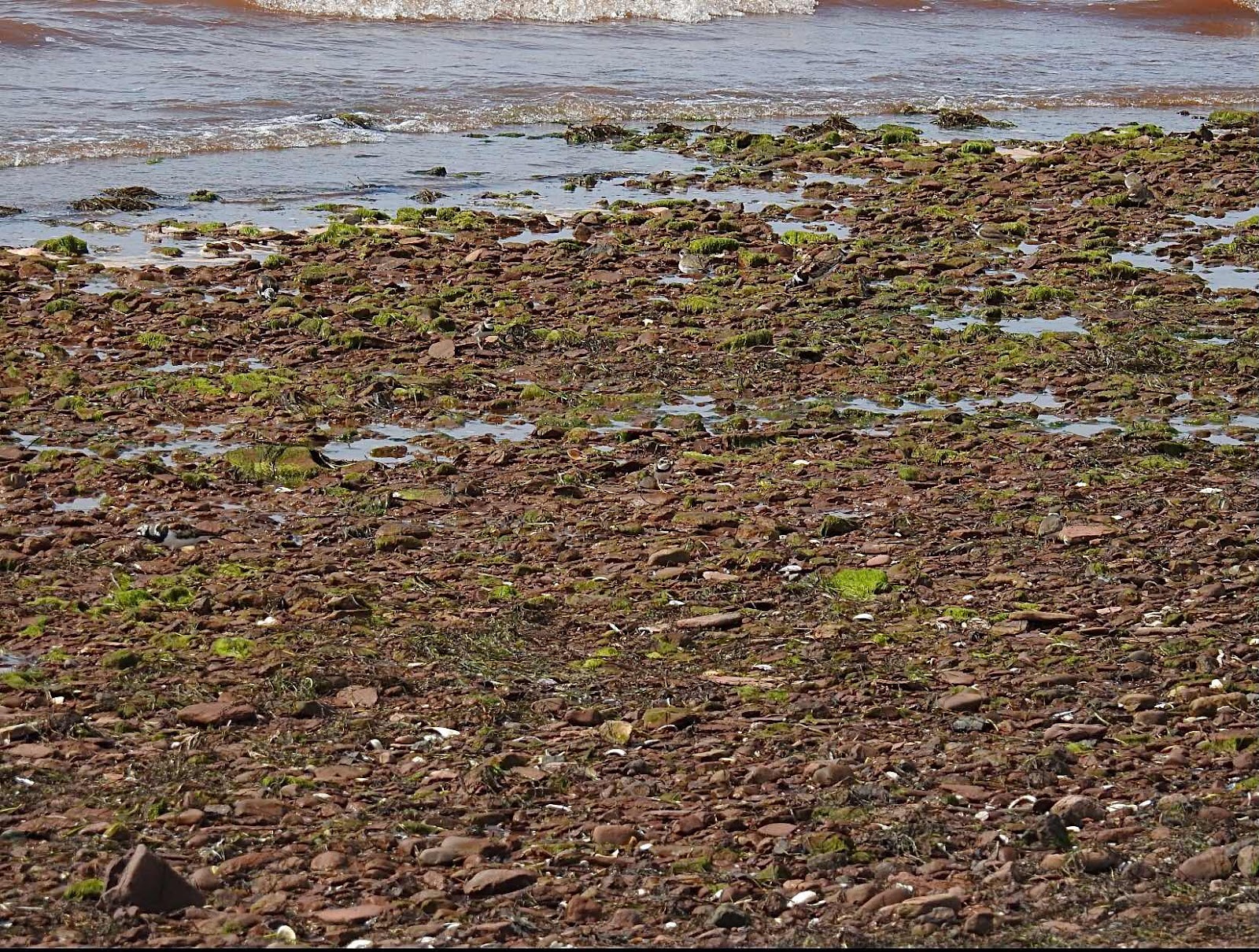
It takes a few minutes to spot the birds. This area of beach has small rocks and most of the shorebirds blend into the scene so well. In time, one sees movement among the rocks. How many birds can you see on this beach below? Hint: there are two sizes of birds there, larger Ruddy Turnstones and smaller Semi-palmated Plovers.


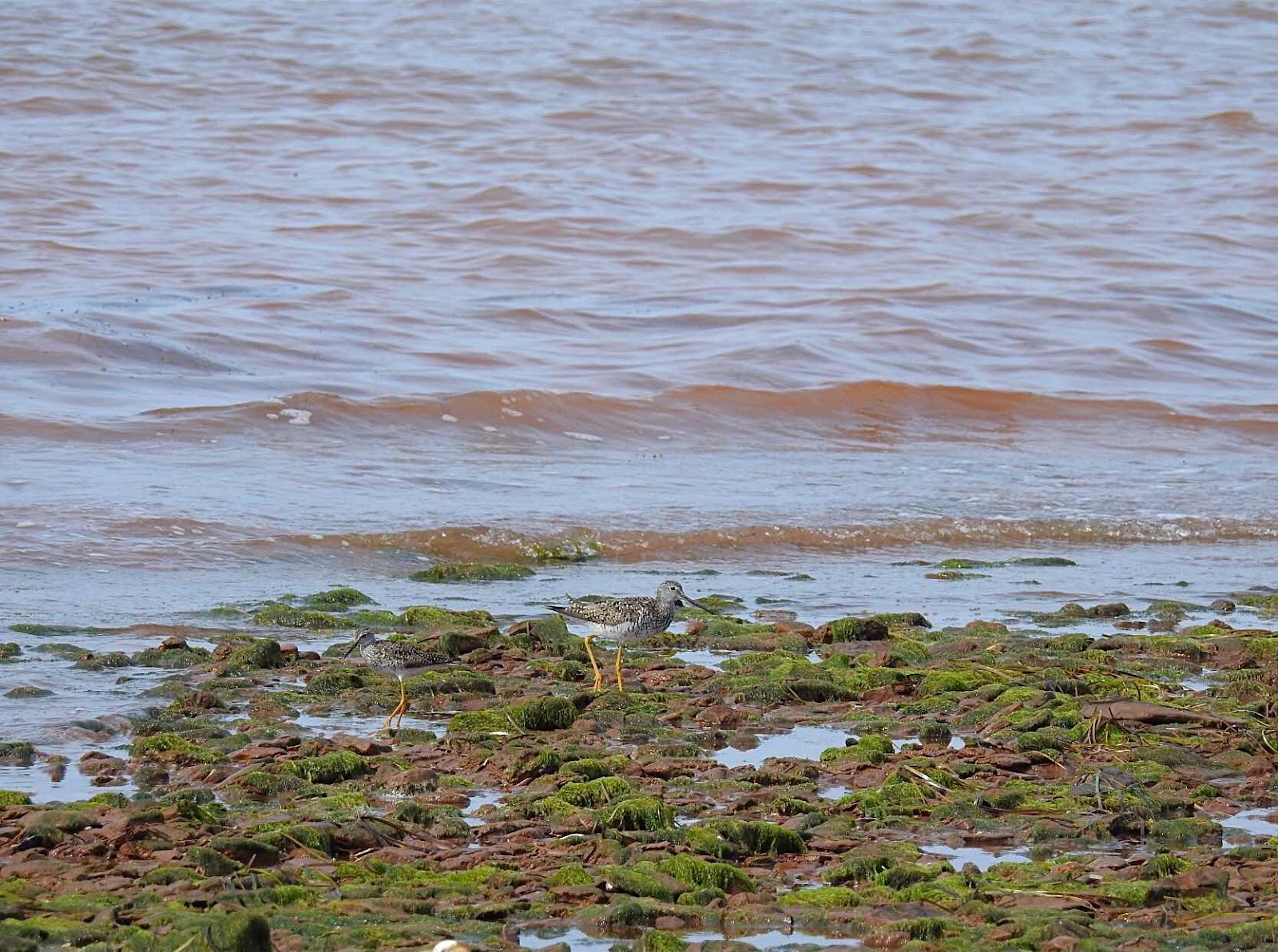
A scan of the water’s edge reveals other shorebirds as well. They forage in silhouette often, depending on their location in relation to the sun. Patience makes for better photos and easier identification.


                                               Left, Lesser Yellowlegs. Right, Greater Yellowlegs.


Then there are the larger birds. Recently, on a visit to Cape Egmont, we watched cormorants land on the sea stack there. Two of the birds had damaged wings which didn’t appear to impede flight. I wonder about their chances during the long flight south however.


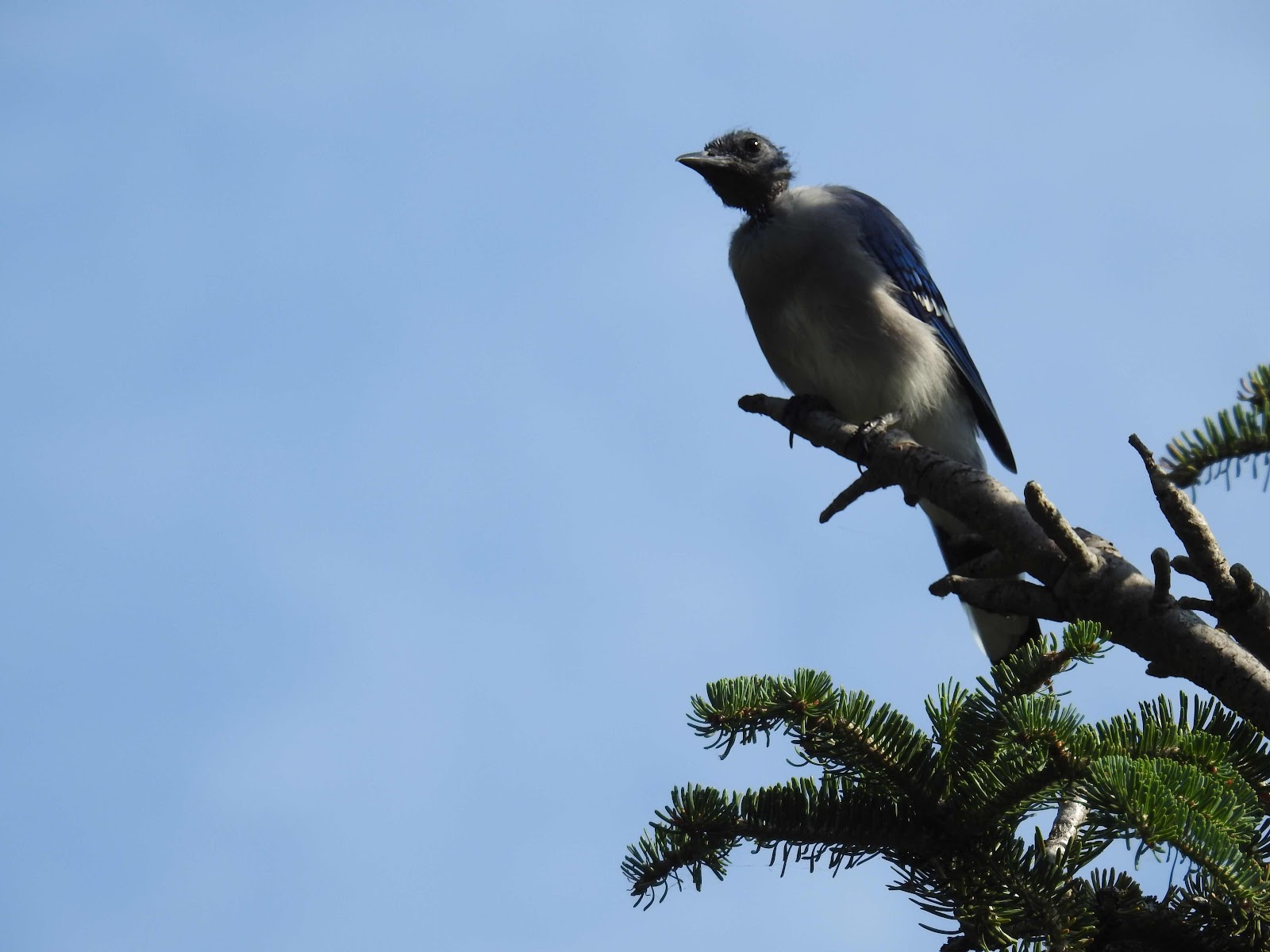
Along the boardwalk, several of the Blue Jays recently have had bald heads, probably due to molting. The feathers grow back quickly but make for an unusual sight among the Jay population.


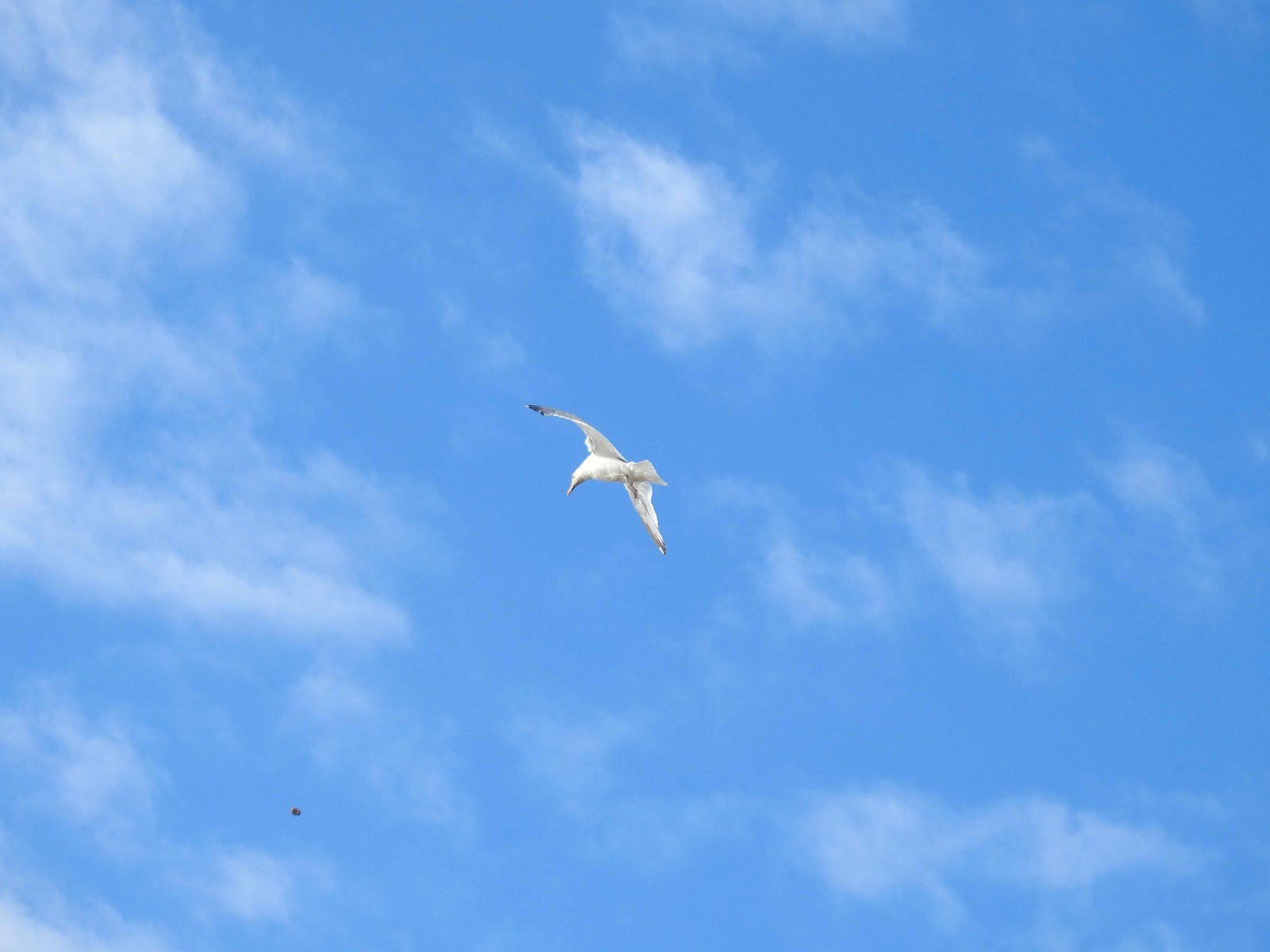
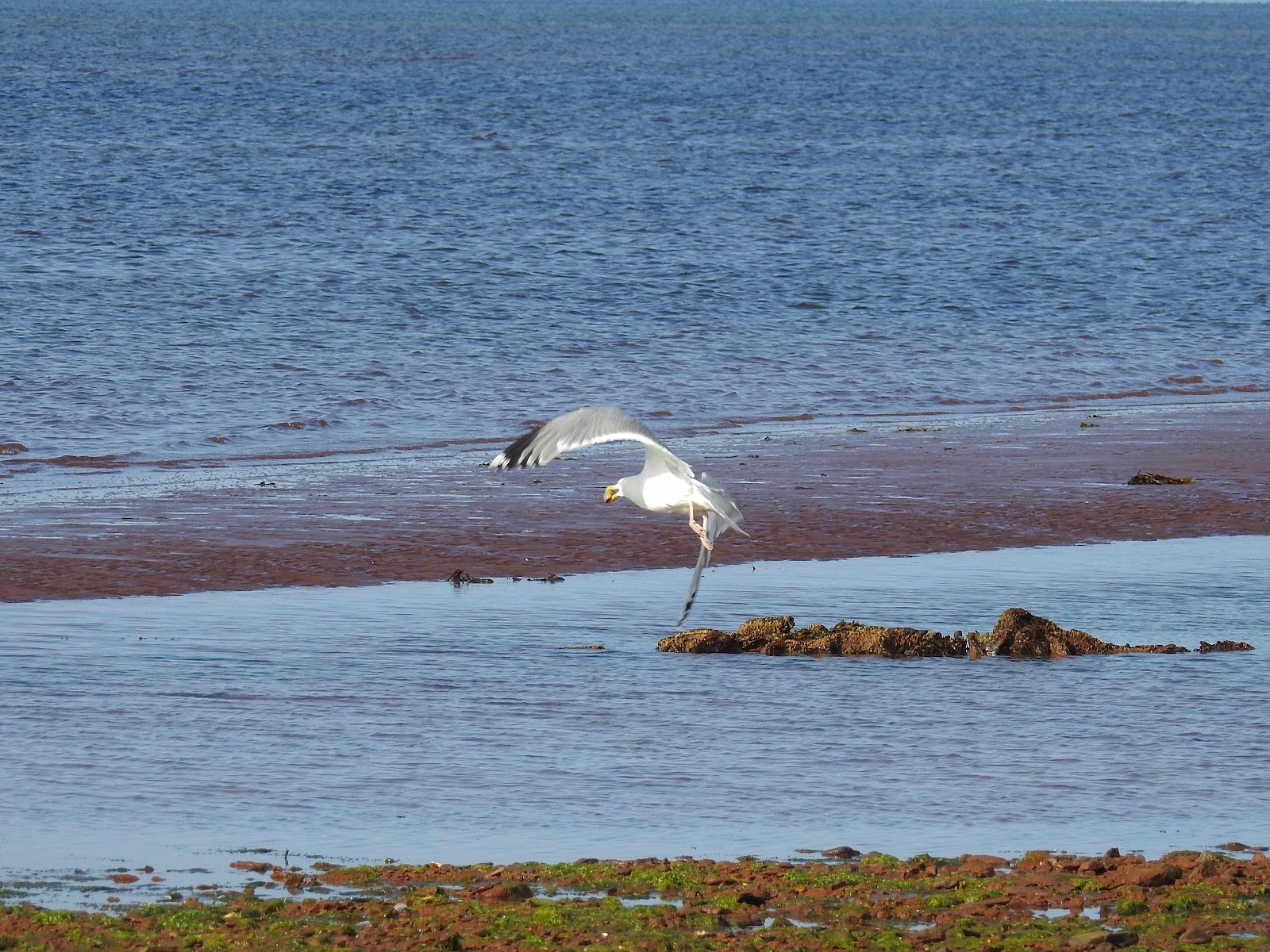
And finally, but consistently along the shoreline, the quiet as we sit and watch is broken by the sound of a shell dropping to earth from a gull above. 


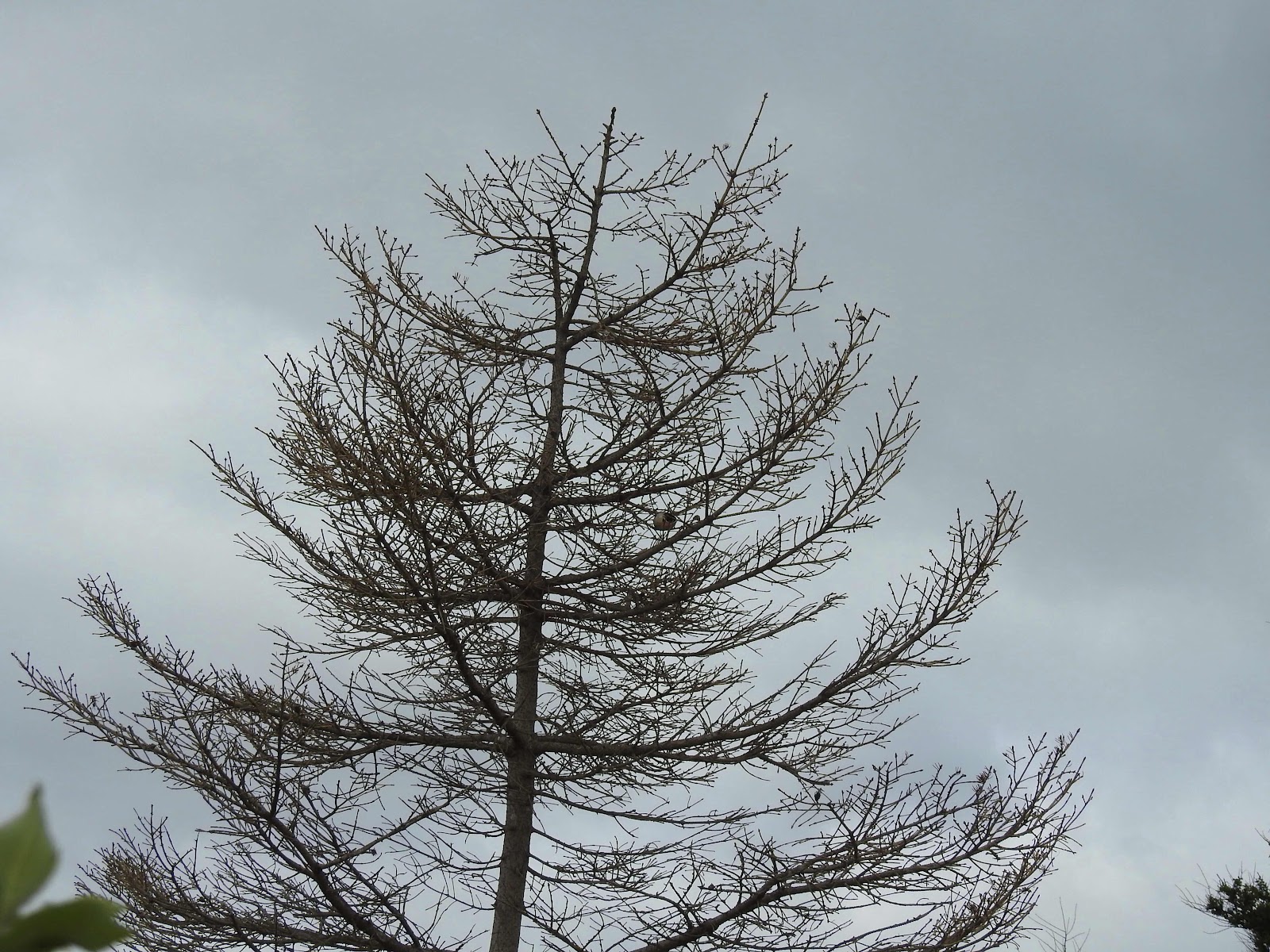
We saw something in an old snag recently and a close-up showed it to be a shell which could have been dropped prematurely by one of the gulls. 


They will repeatedly scoop up the same shell and drop it until it breaks, then eat the food inside.


This time in nature is a great way to forget the cares of the world and just enjoy nature and life in general. 


P. S.


In the photo of the two species of birds on the beach, there are 6 small birds, Semi-palmated Plovers and 3 larger birds, Ruddy Turnstones.


Maebeme asked about molting in Blue Jays. The birds molt after nesting every year. The Jays on the boardwalk here already have their feathers back.


Thursday, 4 August 2022

On the breeze

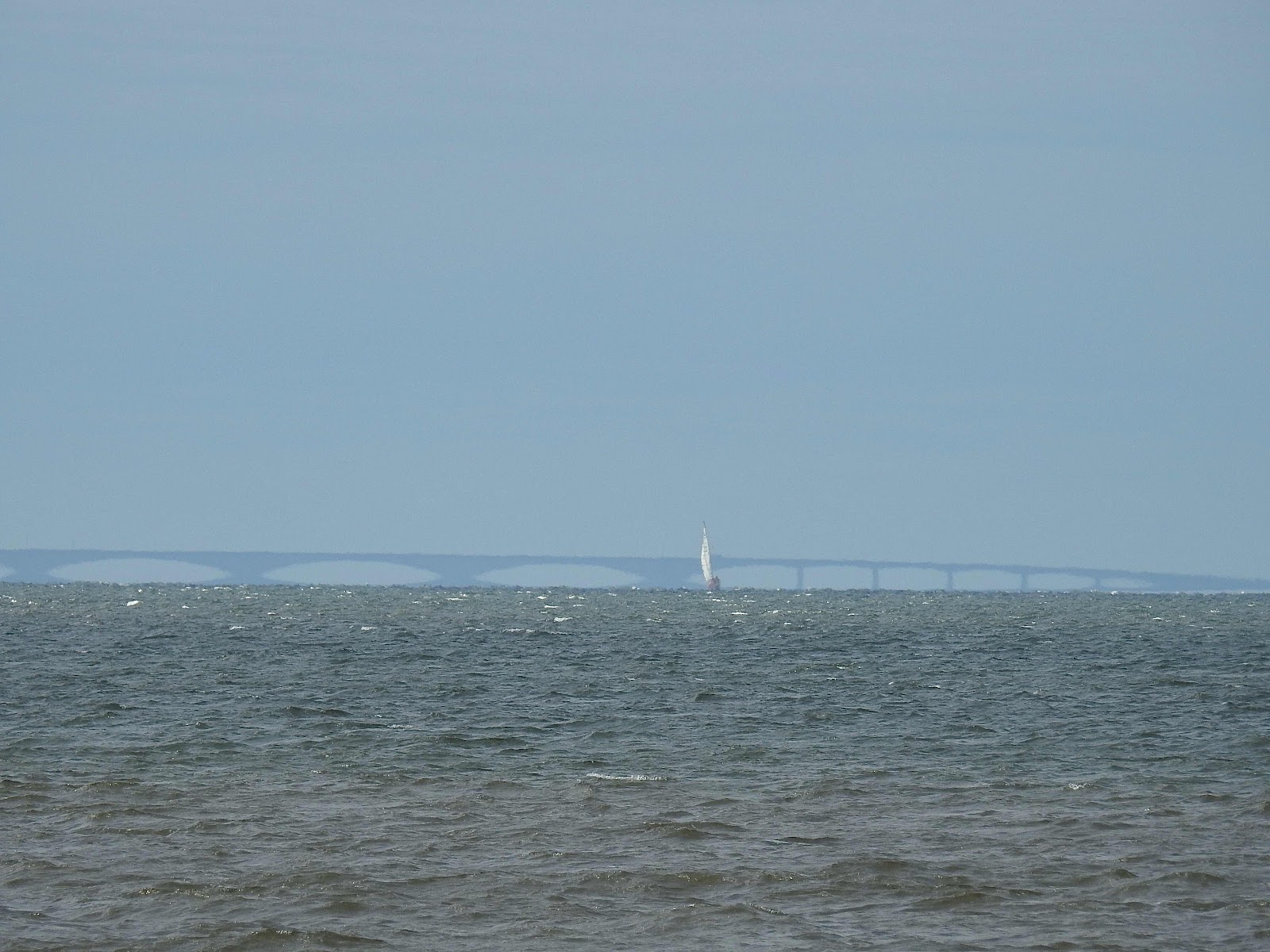
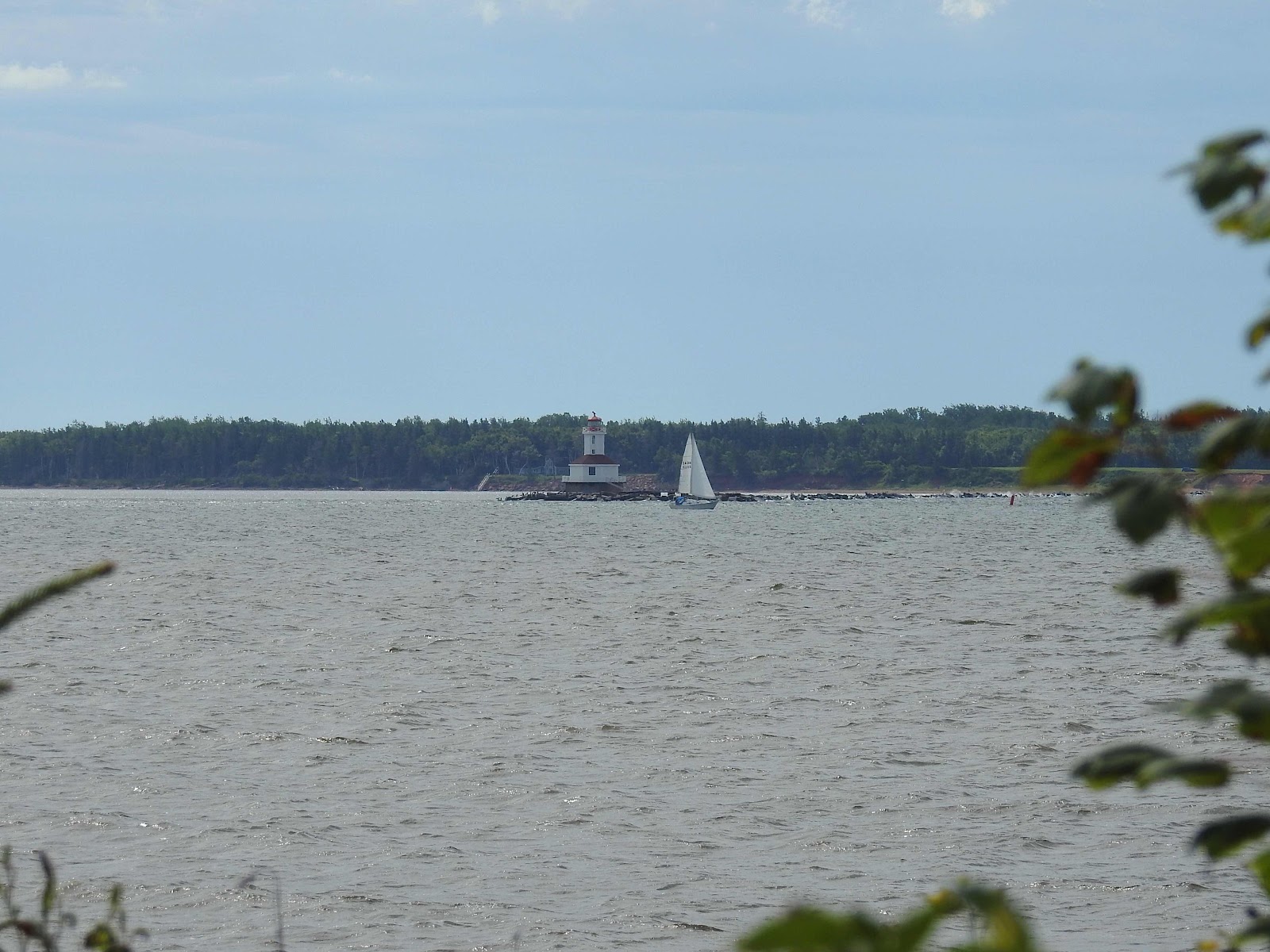
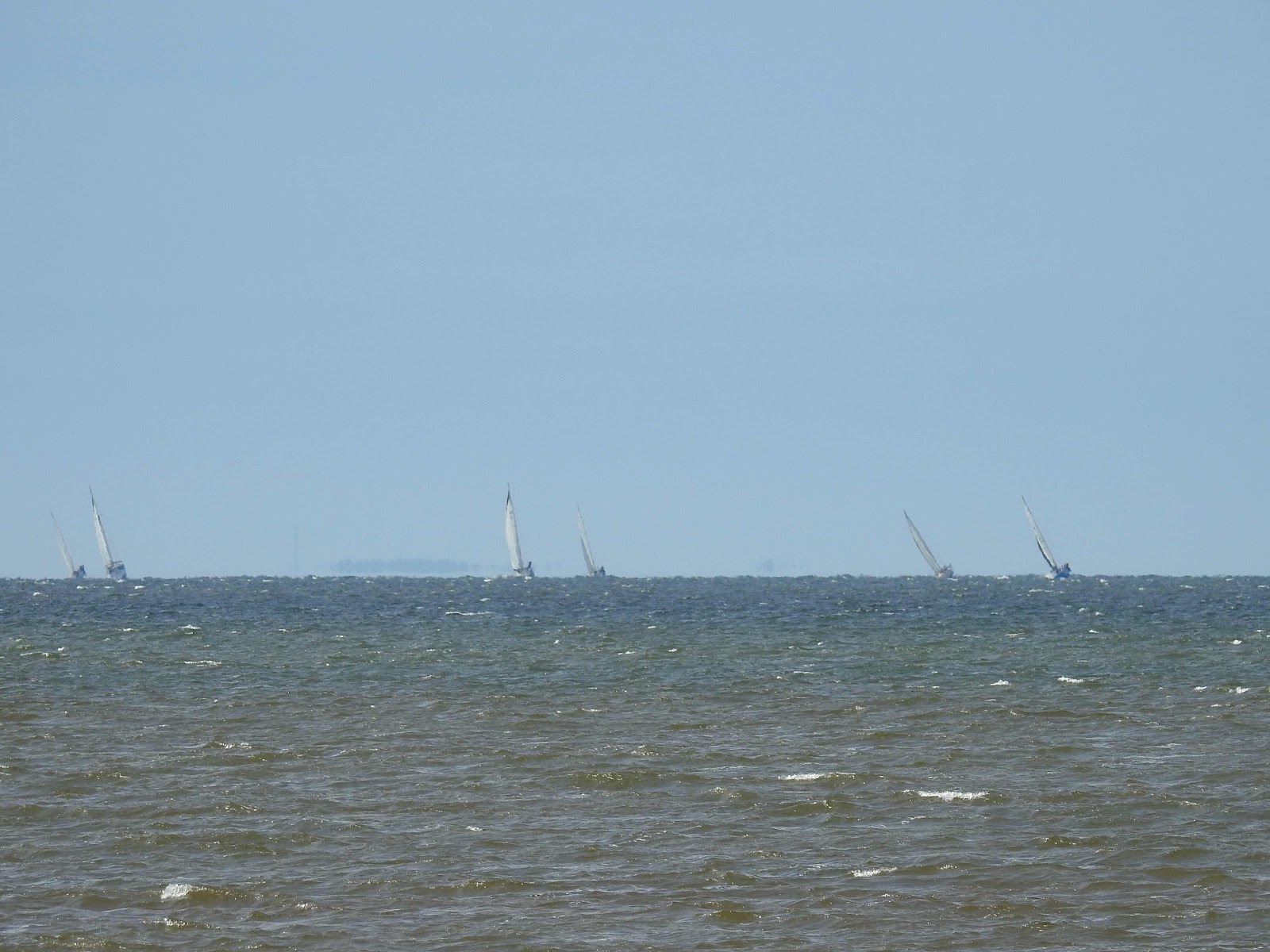
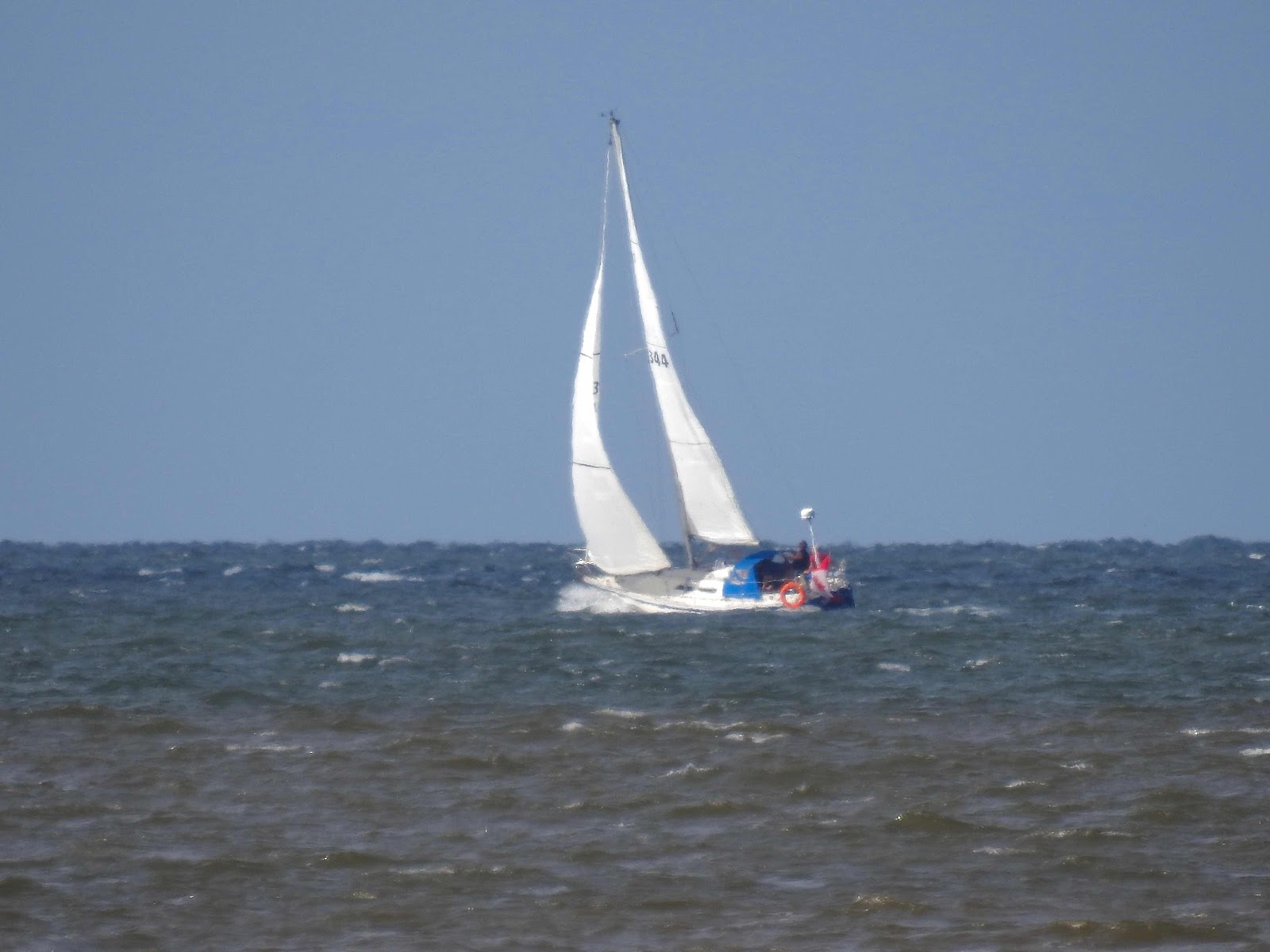
From late spring to early autumn, it is common to see sailboats in the bay at Summerside. This past weekend, a sailing race from Summerside to Charlottetown made for an interesting morning on the boardwalk as well. While we missed their sail past the lighthouse, we enjoyed watching the boats in the Northumberland Strait as they headed for the Confederation Bridge while we walked in our favourite location.


Meanwhile, one boat was headed in the wrong direction. Before long, it turned around and caught the breeze which brought it close to the others.


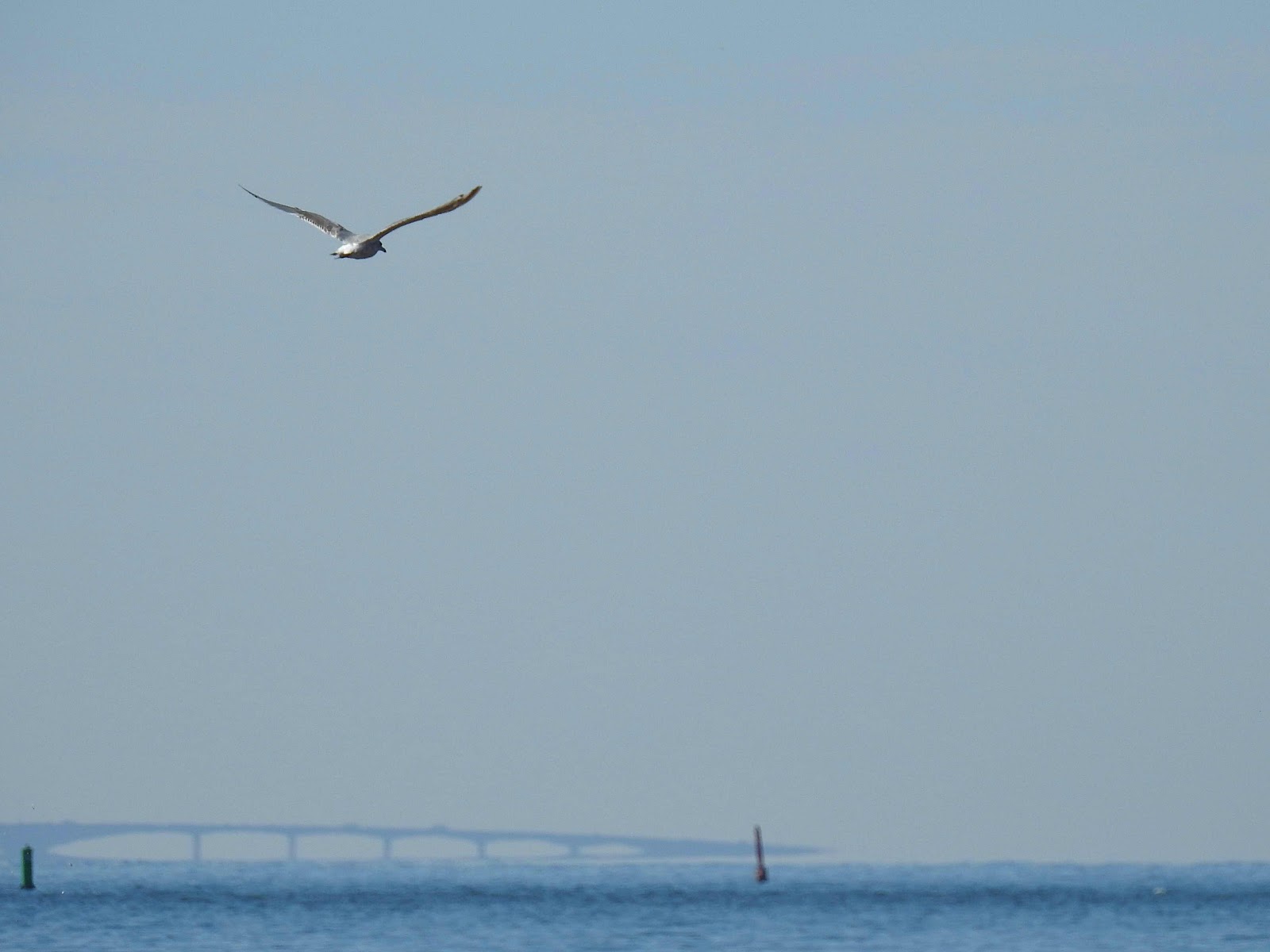
However, it was the last one to sail through the Confederation Bridge.


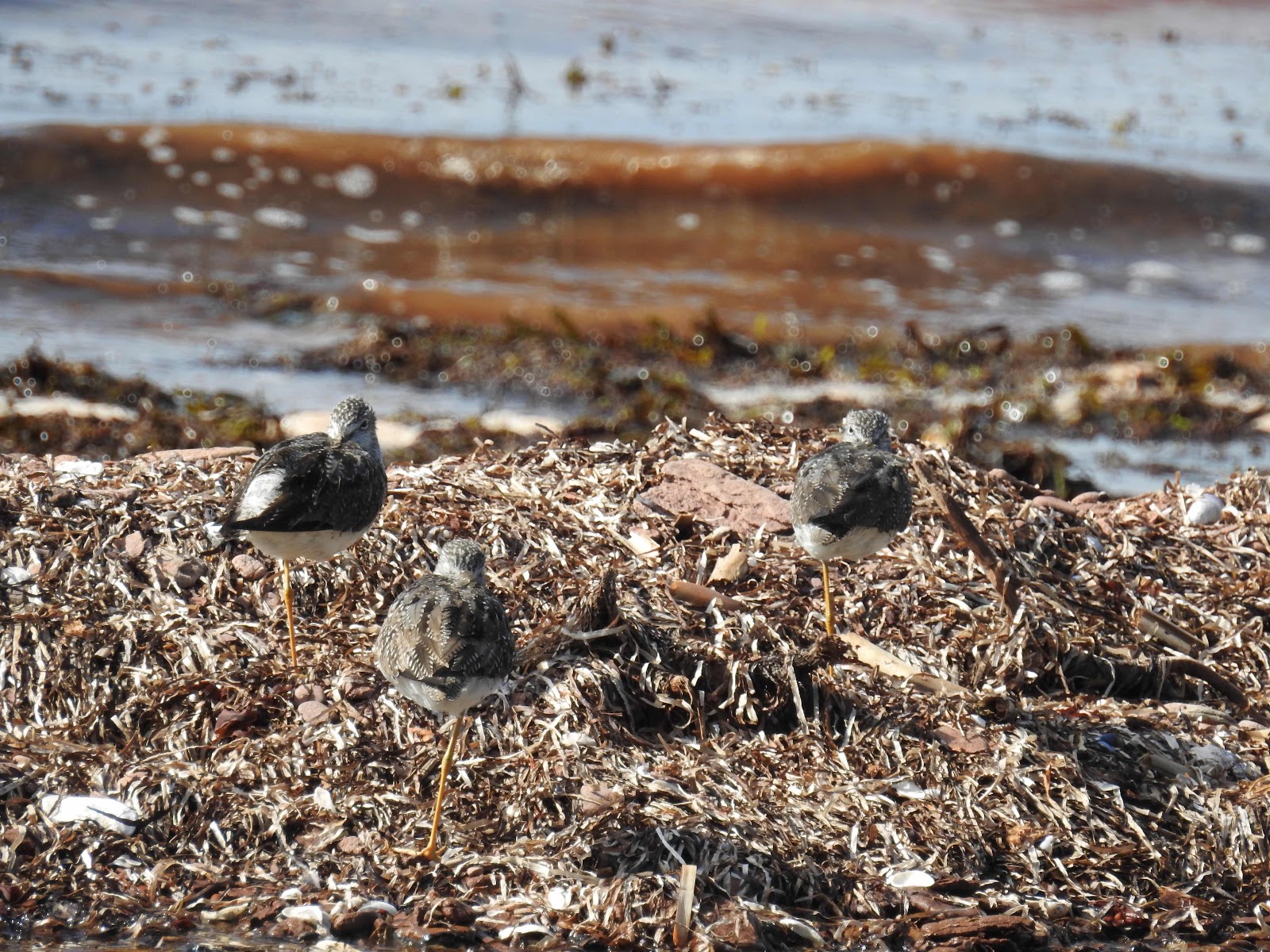
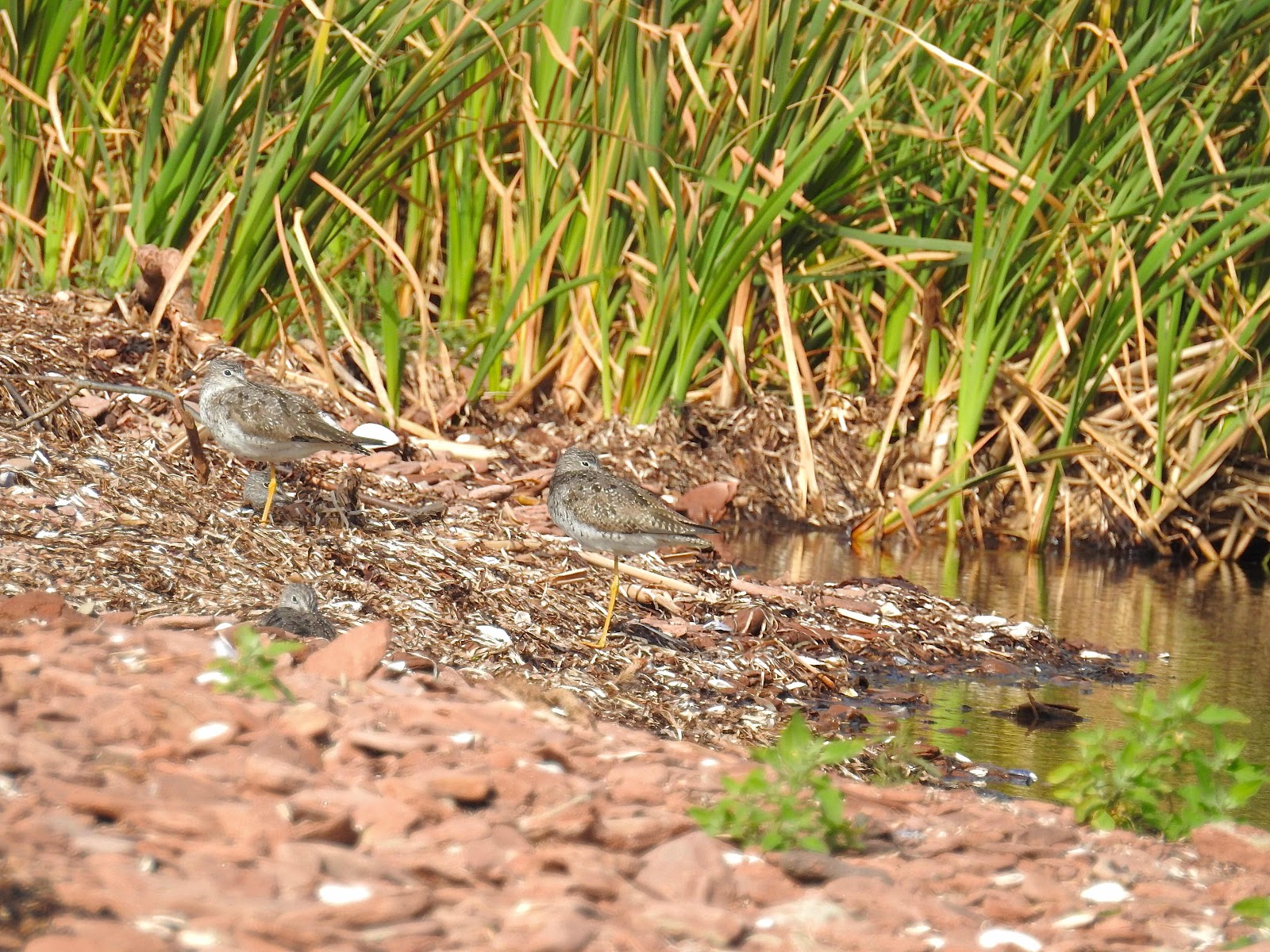
My husband and I weren’t the only spectators that day. Yellowlegs kept a one-legged vigil along the shoreline, 


though on occasion they just couldn’t take the excitement and averted their eyes from the vessels. Later, we noticed some decided to sit it out entirely.


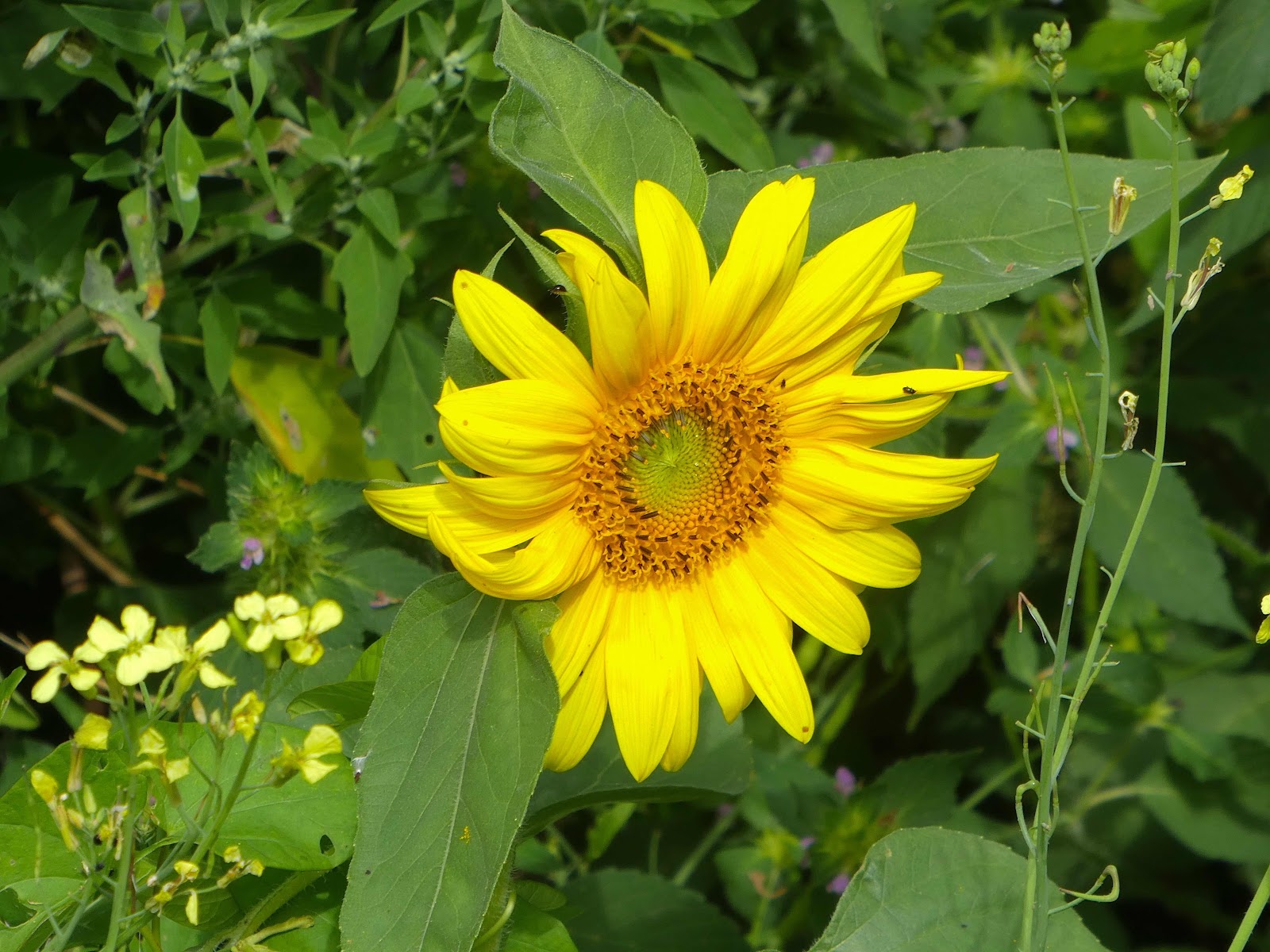
There are always distractions along the boardwalk. That day, we noticed a sunflower, probably from a seed dropped by a bird or squirrel. Every year at least one seed from bird food survives the animals and bursts forth to meet the sun.


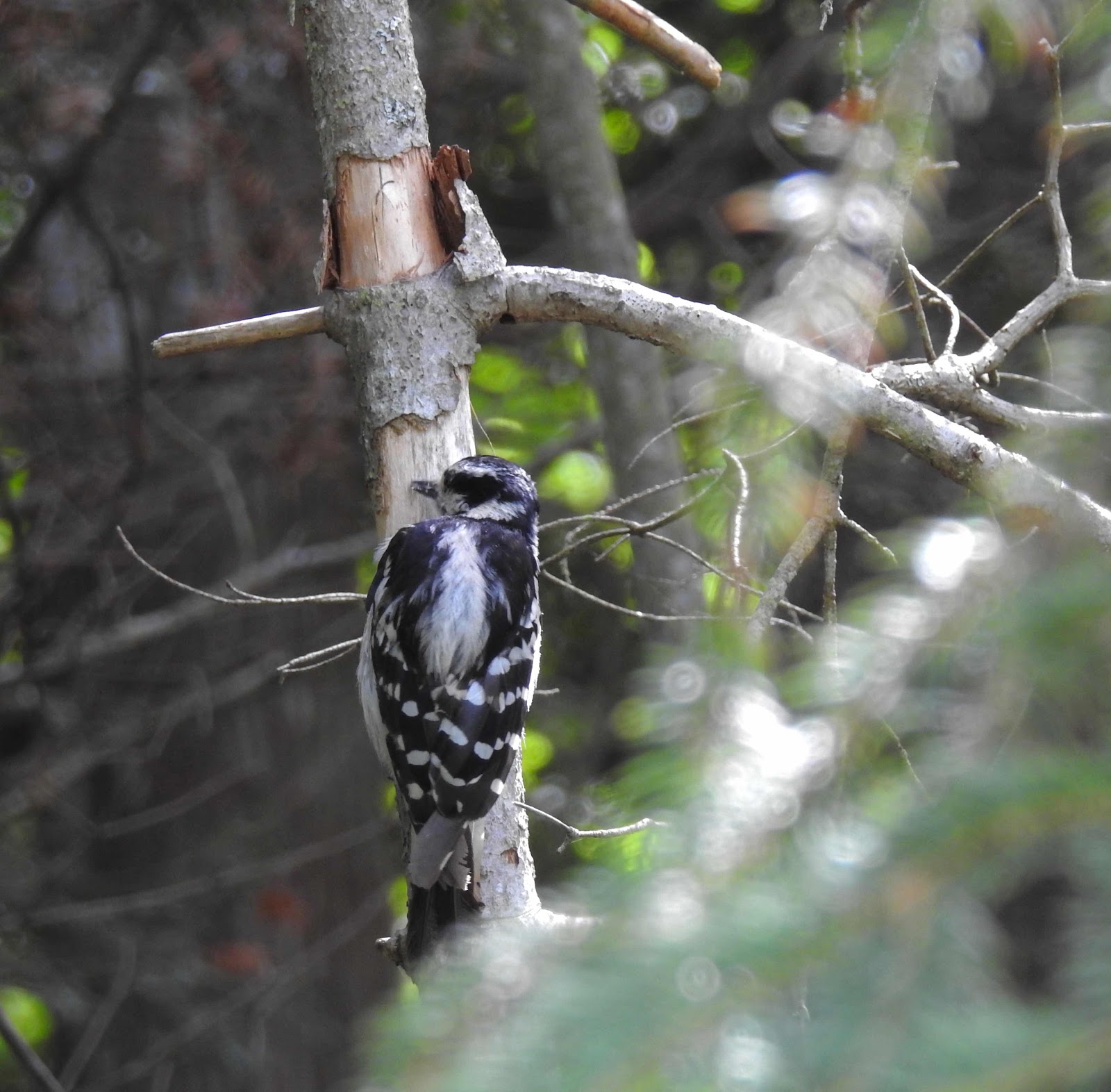
As we walked, a Downy Woodpecker was busy among the trees. It is the first one we’ve seen this summer, though they are common in the autumn.


Other boats not competing in the race sailed past the lighthouse too. 


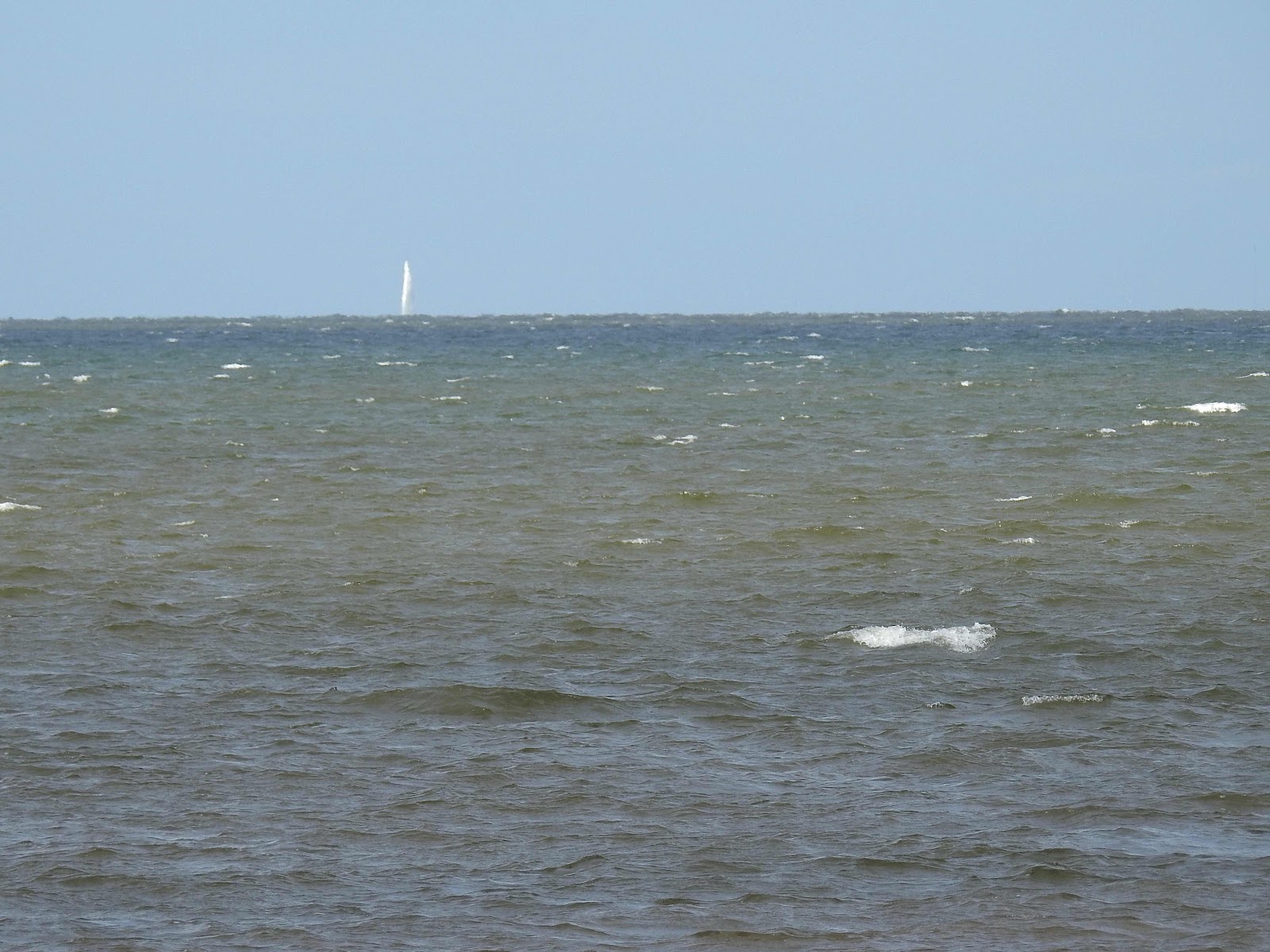
It is easy to see the curvature of the earth while watching those boats head toward the mainland across the Northumberland Strait. As they dip below the horizon, only the top of the mast and sail are visible. 


And as always, some lucky creatures can sail on the breeze any time. 


Note:


The photos of the sailboats were taken with the Nikon 83 optimal zoom. They aren’t great.