Most Popular Post

Showing posts with label lighthouse.. Show all posts

Thursday, 25 July 2019

At the beach house in southeast King’s

The beach house is on the southeast shore of Prince Edward Island in King’s county. We rented the house, about an hour and a half from home, for a week recently with our daughter and the grandkids.


The house is down a long, narrow, tree-lined, red dirt road to the sea. It sits at the end of farmed fields, which grow soy beans this year. Decks on the house overlook the sea and a screened area with a hot tube makes for relaxation and comfort away from insects.
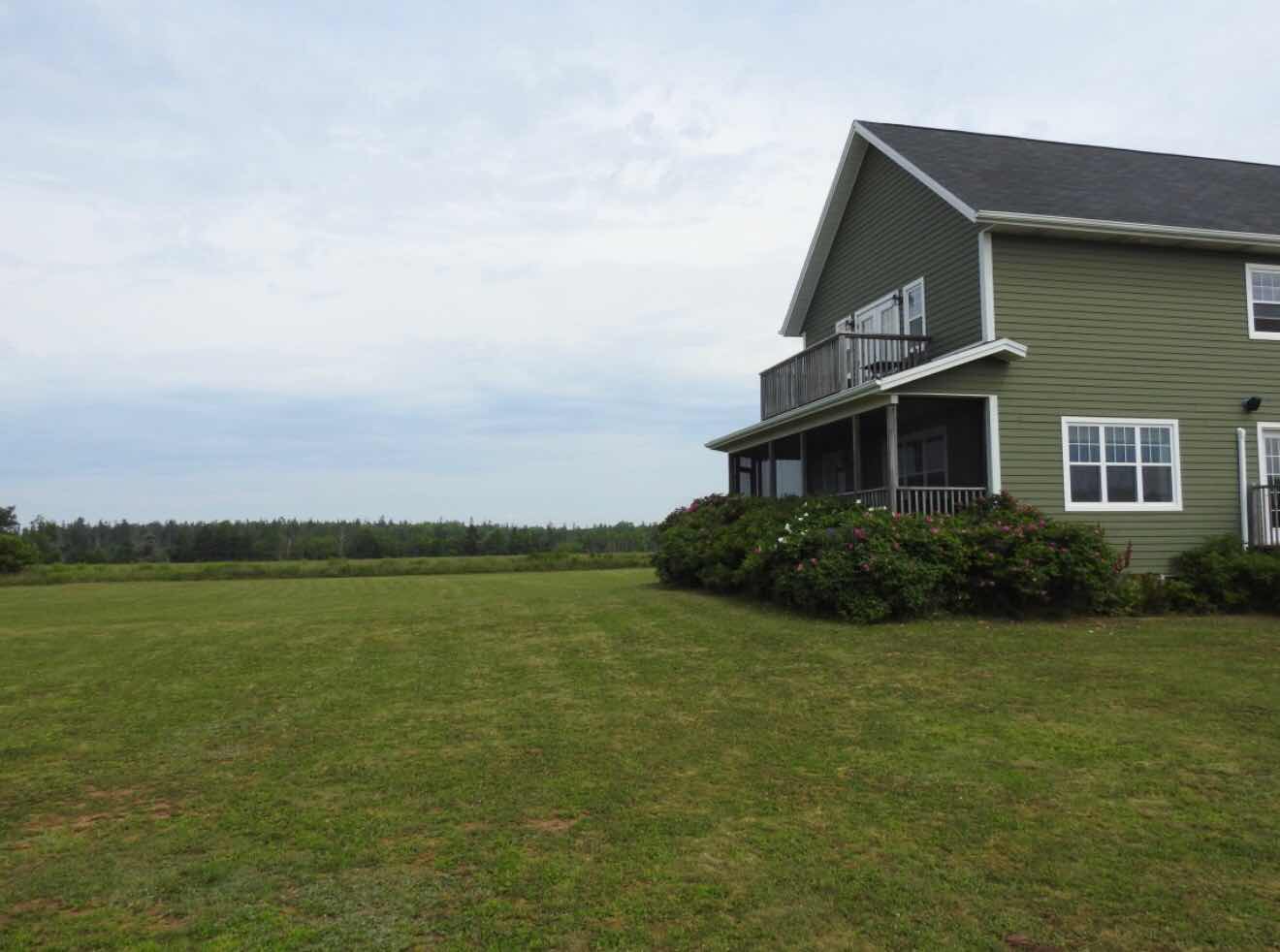


We only saw four other people walking the beach the entire week. It is pristine, the red sand lapped by the waters of the Northumberland Strait. The gentle breeze cools the body enough to be comfortable in the summer heat.
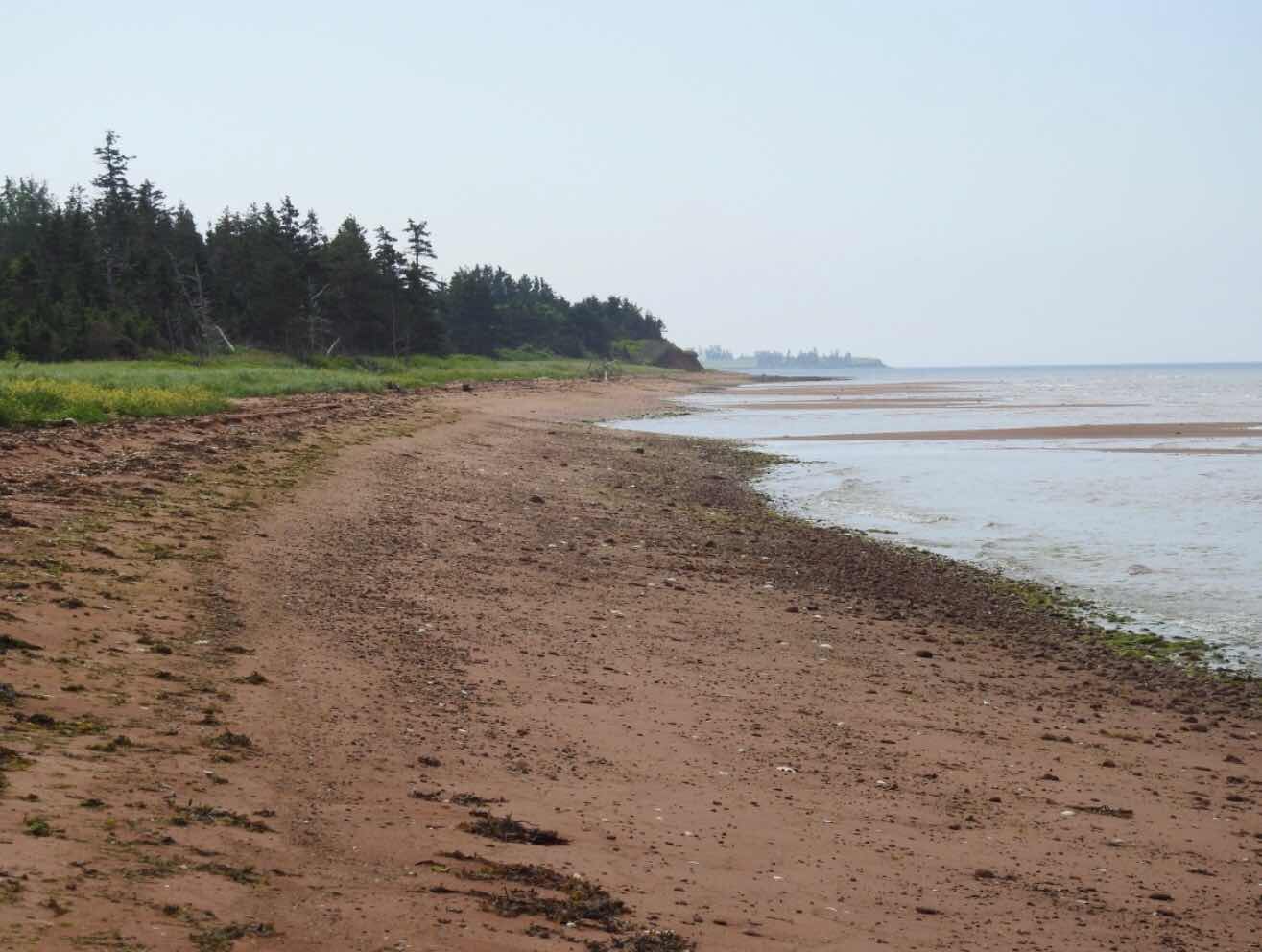


The shoreline shows evidence of erosion along its length. The soft red sandstone which breaks apart if you drop a piece is easily washed away. In places, the ocean can take a meter of shoreline every year.
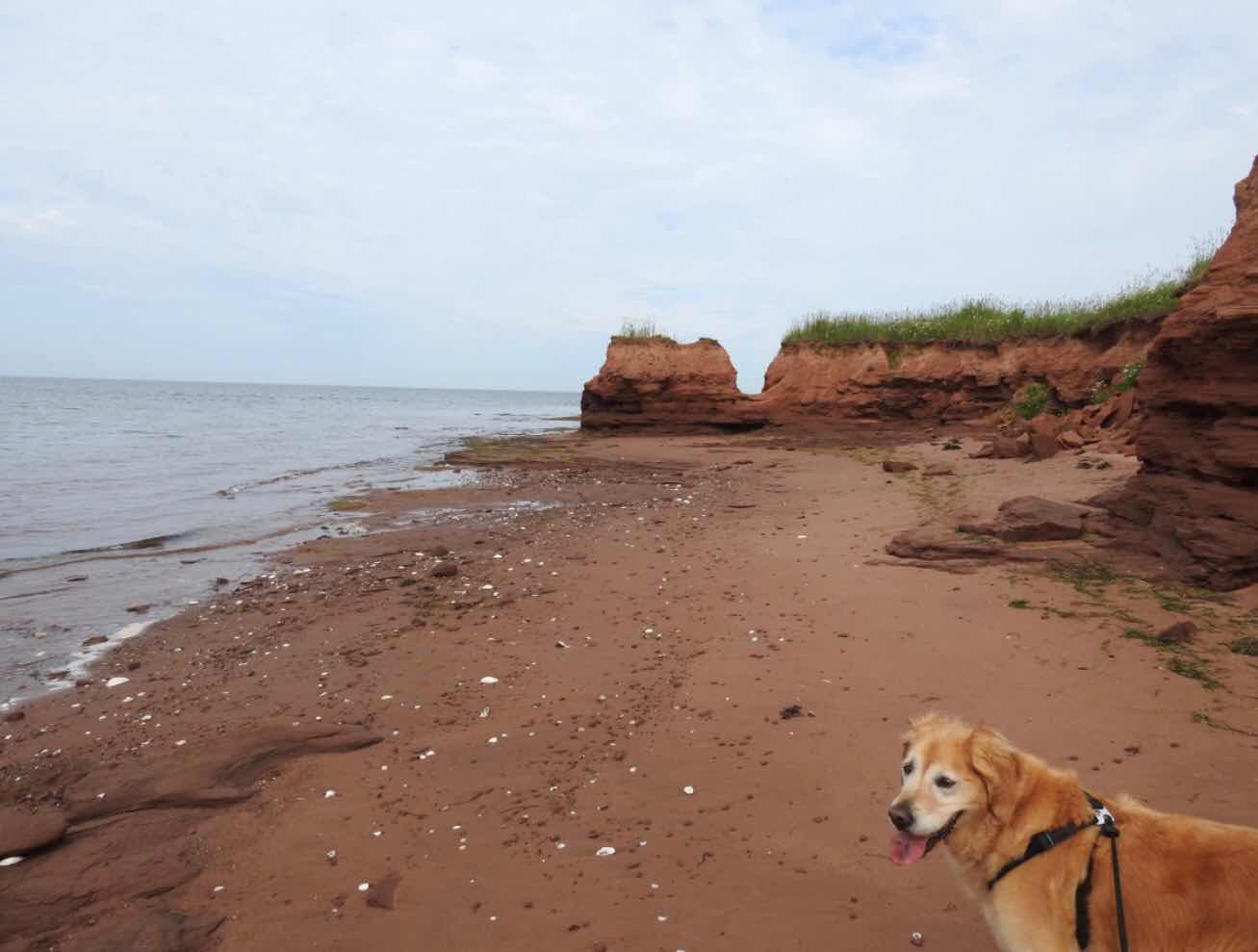


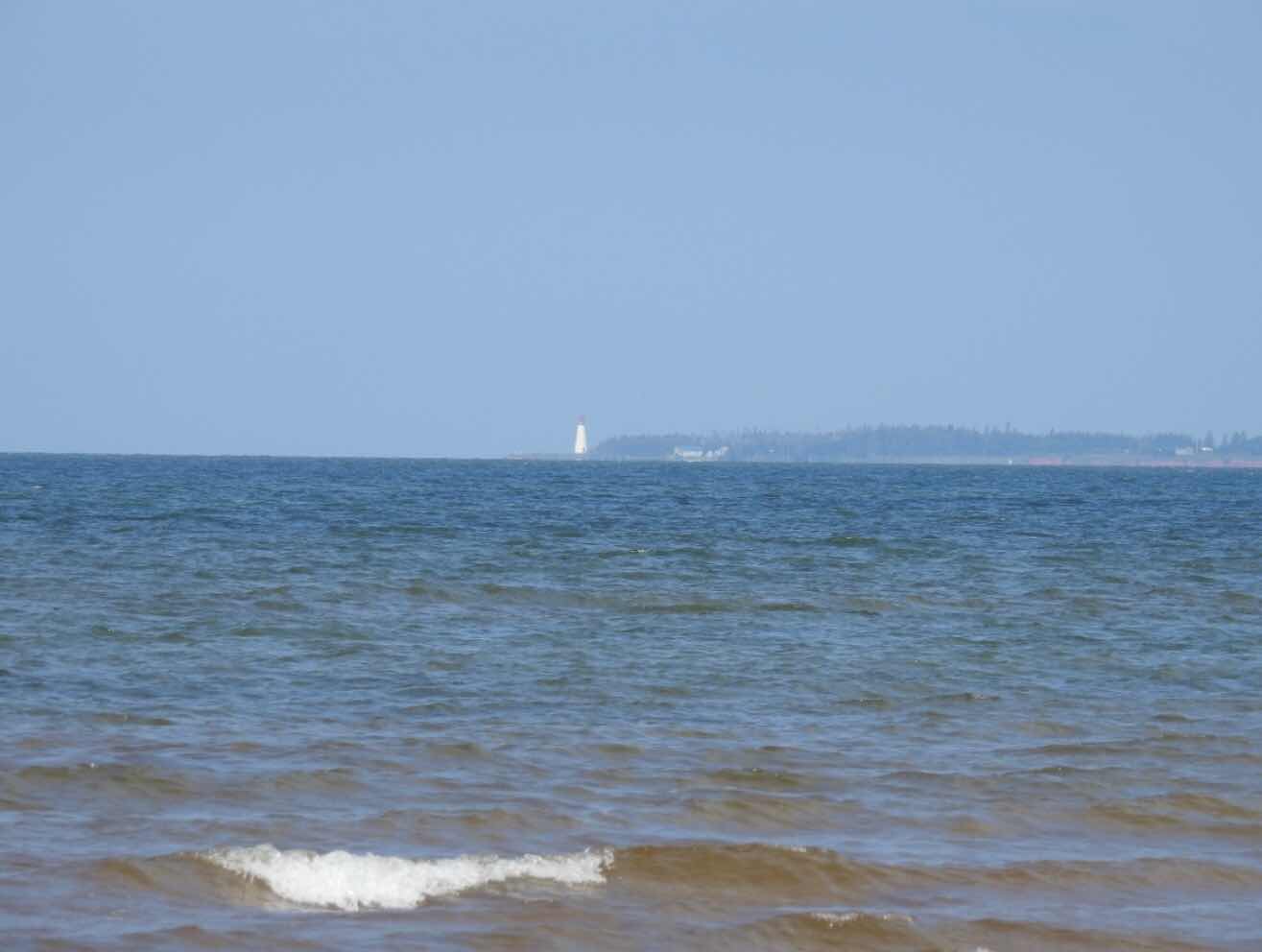
Walks on the beach fill the morning with the golden grand-dog enjoying every minute off lead, sniffing every nook and cranny. She, my husband and I walk further than the kids who prefer to play in the sand. Off in the distance, the Point Prim Lighthouse stands watch as it has for more than a century.


Sea life abounds, as rock pools appear at low tide, revealing moon snails, crabs, hermit crabs, clam and mussel shells, whelks and limpets.


Suppers are later than usual and fires on the beach fill the evenings as the kids roast marshmallows. 


The rhythm of life slows down as the rhythm of the sea takes over for a few days every summer. 


Friday, 11 January 2019

Foggy morning

Every second Saturday, I take my five year old granddaughter to her ballet class. The forty-five minute wait gives me little time to do much, so when weather permits, I walk on the nearby boardwalk.


Last Saturday morning, it was foggy. Fog over a snowy landscape is not common here but when it happens, it is a calm, damp day.


The views from the gazebo 


and the bridge were limited as I headed out. 


As I proceeded, the fog began to dissipate, making the lighthouse across the harbour just visible through the mist. 


                                             Can you see the lighthouse?

Twenty minutes later, when I arrived back at the bridge, there was a noticeable difference in the view.


It doesn’t take long for fog to disappear when conditions are right.

Friday, 5 October 2018

The lighthouse at St. Peter’s Harbour

The last time we were there, about eighteen months ago, the old lighthouse at St. Peter’s Harbour was in bad shape. At one time, the structure had been further out on the beach but it was moved in-shore to avoid being washed away. Its new location, behind the dunes, should keep it safe for some time. The building wasn’t tall enough to rise above the dunes, so it had been elevated by the time we saw it.


The lighthouse, over 130 years old, is described in Parks Canada literature as a  “square, tapered, wooden tower, with a superimposed gallery,” 


and an “atypical hexagonal lantern.” This 19th century design has withstood time, weather and a move.


The volunteer group which has worked on the old lighthouse, has made progress over the last number of months.


Today, the red and white structure stands proudly in her new paint and it looks like work is progressing inside.


From the beach, the restored gallery and light stand above the dunes, 


peaking over the sand to watch the ocean spectacle as it unfolds along the Gulf of St. Lawrence.


Thank you to all who are restoring the old treasure!

Monday, 25 June 2018

At the Cape

A recent visit to the New London Lighthouse gave my husband and me the opportunity to visit Cape Tryon as well. We knew of the Cape, at the edge of a farmer’s property, accessed via a red dirt road through his fields. The area is open to the public however.


At the end of a rough road, the sandstone cliffs are up to 35 meters above sea level. 


Such high cliffs are unusual on Prince Edward Island. The Gulf of St. Lawrence lies below. In the distance, the traditional beaches of the island are visible.


There isn’t beach here. The sandstone rises out of the water though it has eroded into caves in several areas at sea level.


Over the rocks below and any ledges in the cliffs, cormorants are in residence.


I have been fascinated with cormorants since we moved to the island. They fly over our house spring to fall as they travel back and forth to the lighthouse in the Summerside Harbour. Their goose-like V formations are a regular sight.


We observed the birds, noting the white feces over the rocks. Here, it is subjected to the elements, thus does not become the famous guano, which is a much sought fertilizer. 


The nests are made of stick and twigs, coated white as well.


This is the oldest cormorant colony on the island dating back to at least 1941. Two species of cormorants, Double crested and Great, live here. We saw Great cormorants at a distance. 


They have white around their beaks. Both species have a prehistoric look, with the long hooked beak and the S-shaped neck. 


Cormorants aren’t songbirds. Sometimes they sound like pigs. You can hear the voices and calls here.  Their grunt-like sounds were common on this visit.


A close-up look at one of the Double crested birds shows their uniqueness. 


The deep blue eye and the orange around the beak adds colour to the matte black. The feather pattern shows a combination of small and larger feathers and long ones of the tail. 


These birds are made to swim fast and far underwater in pursuit of food. They always surface a distance from the diving spot. Cormorants can cover a large area in a matter of seconds.


The lighthouse at Cape Tryon is not the original one which housed the keepers and their families in the early days. This one lights the way for vessels but watches over the colony as well.


A close-up of the Great cormorants is my next goal. We will be back!


Friday, 14 April 2017

North Cape

The first picnic of the year was long overdue. My husband and I waited patiently for the temperature to rise to 10 degrees C, 50 F, without much wind and the day finally arrived. We packed lunch and a thermos of tea, switchel to be exact, black unsweetened tea and winter gear in case the wind was blowing at the Cape. We were off.


We hadn't been to North Cape last year, so it was a good place to begin our picnic-hiking season this year. North Cape is at the north western tip of Prince County, Prince Edward Island, where the Gulf of St. Lawrence and the Northumberland Strait converge. In the distance, the coast of New Brunswick is the nearest point of land.


There is a wind farm at North Cape, 


a research center and an interpretation center. 


In season, a restaurant is an option but a picnic is always our first choice.


The cliff is five meters from our feet as we enjoy our lunch on a bench overlooking the Gulf of St. Lawrence. As we sit there, the erosion of the past winter is evident.


Boulders, tipped over the bank in some areas, appear to have prevented more damage in those areas.


Looking along the edge of the cliff, the damage to the rest of the coastline is obvious!


Red sandstone, which looks like sand, is exposed during low tide. 


Off shore, a rock/sand bar appears to be a nesting place for sea gulls. In the distance, ducks bob in the water.


The lighthouse stands behind the Interpretation Center, unmanned now for generations. 


It was built in the 1860s and has been moved several times since, due to erosion of the coastline. It was last moved 400 feet in 1951, and now looks to be about 200 feet from the edge of the cliffs.


The air is clean and fresh. We are the only people in the area. Cars near the research center signal others unseen by us. It is peaceful but invigorating at the same time. No need for mitts and a hat but the winter coat is essential. We breathe deeply to take it all in and look forward to another great picnic-hiking season.


Friday, 10 March 2017

The wait

Two degrees Celcius and the sun is shining. The frozen bay is spread before us! My husband and I are dressed for the cold as we park by the boardwalk in North Rustico on the central north shore of Prince Edward Island. We haven't been back here since July and everything is covered in its frozen shroud. We are curious to compare the scenes of summer with winter in North Rustico. 

The Acadian monument is partially buried in the snow now, waiting for its time to remind visitors of that proud heritage. The shrubs behind the monument are mere skeletons of their former selves.


Only vestiges of some plants, such as Queen Anne's Lace, remain now, the stalks and seed pods having survived the worst nature can dispense.


The entrance to the bay is the only open water in the March setting.


Winds have taken their toll on the patriotic display at Court's Wharf.


The pine trees have lost their brilliant green as a result of the decrease in daylight hours in the cold season.


Ouside the bay, the breakwater is encased in ice and snow.


Activity on the bay is different now, snow machines replacing human power.


Yet, some things never change. The lighthouse stands vigil as it has for almost a century and a half, though it might be ready for spring. We are!