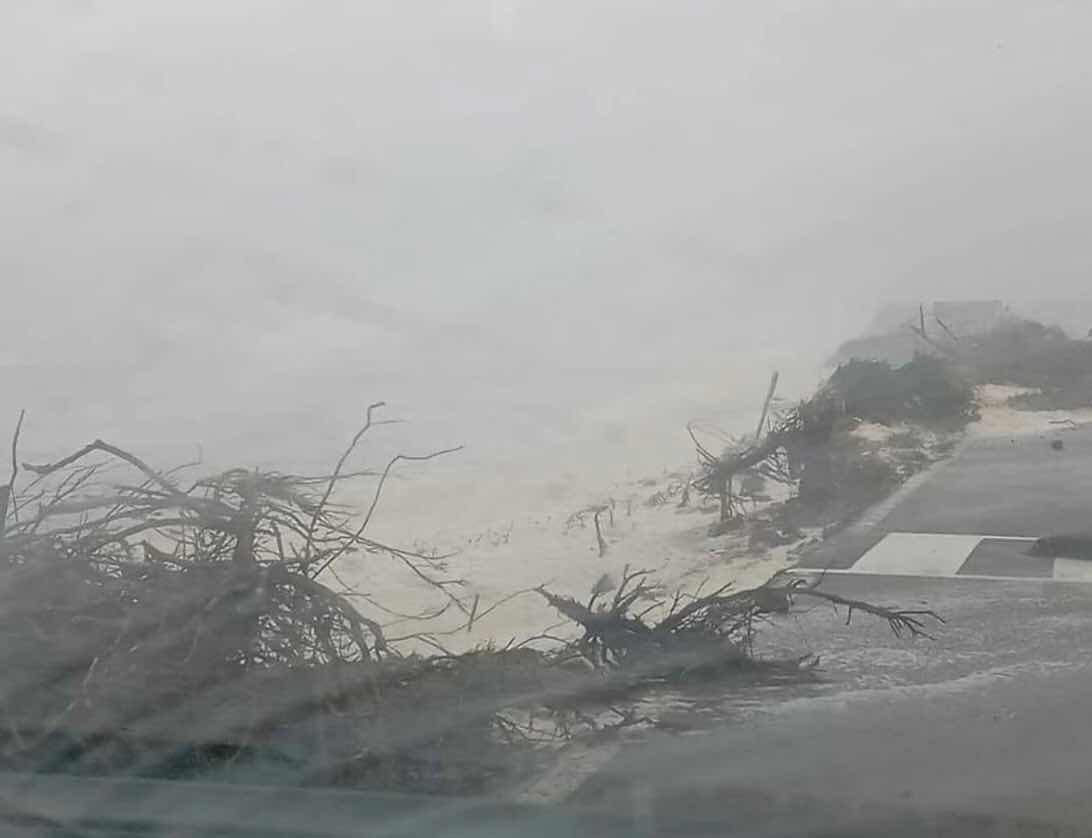
Most Popular Post

Sunday, 23 October 2022

Another day at the beach

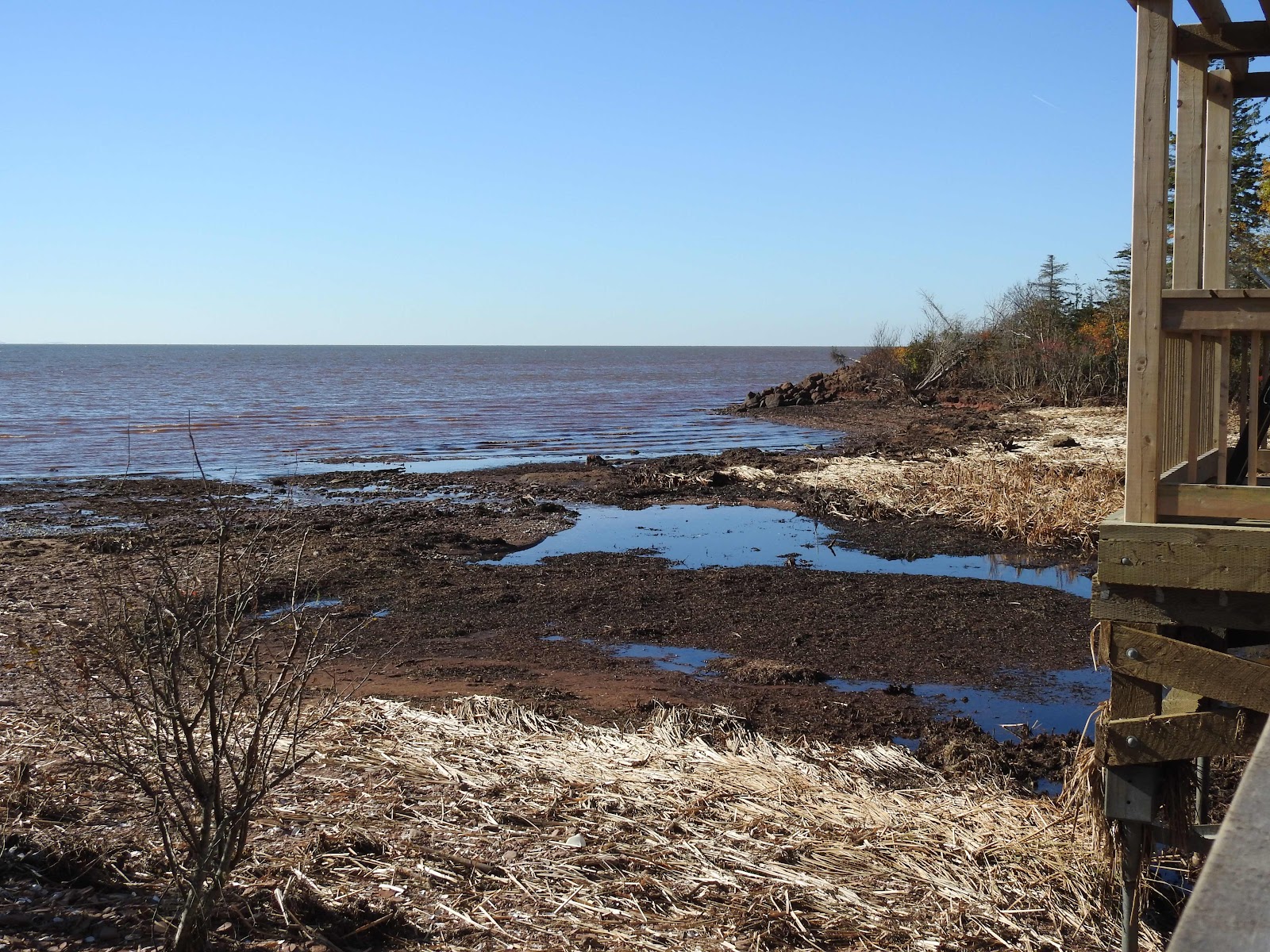
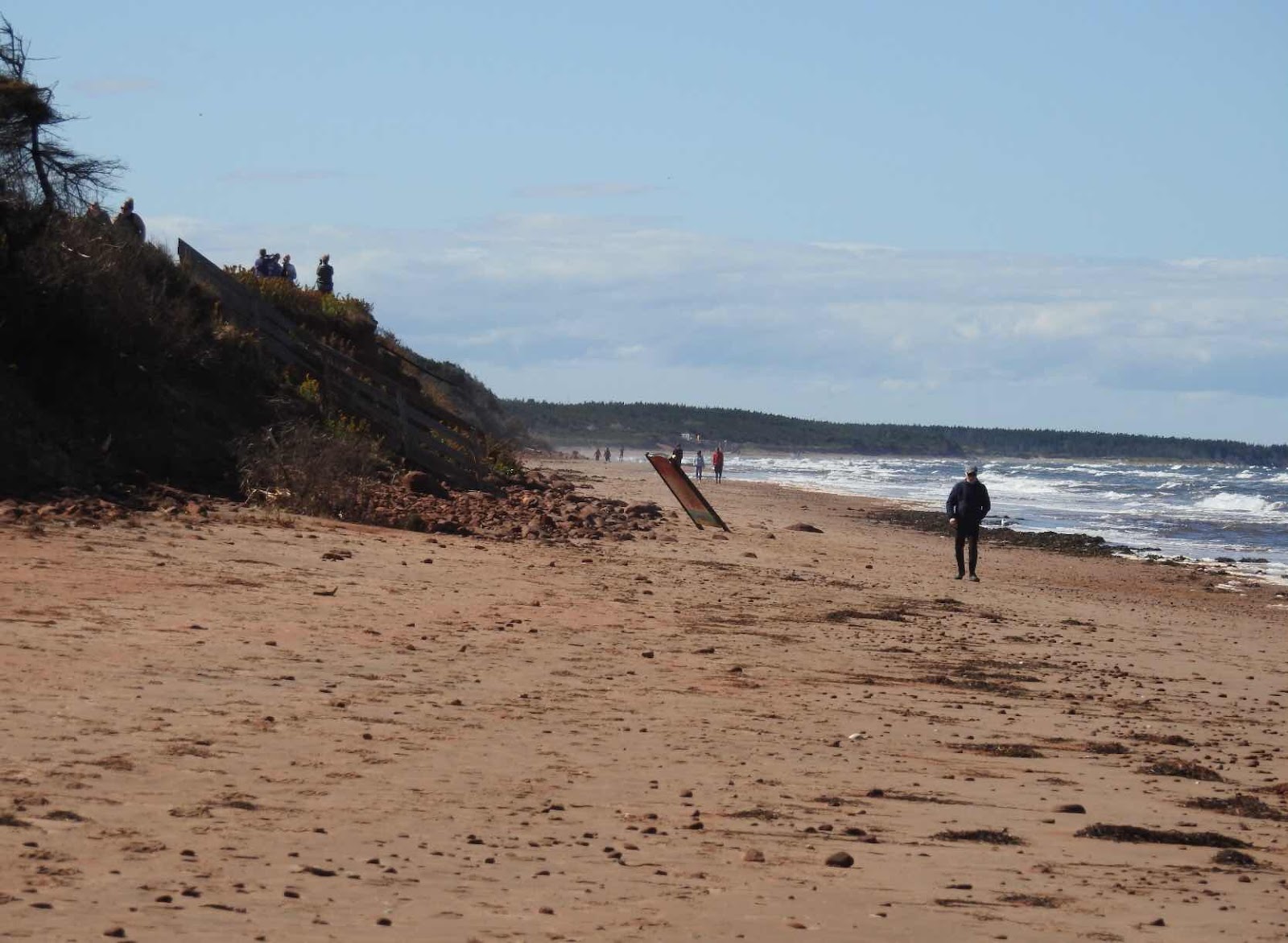
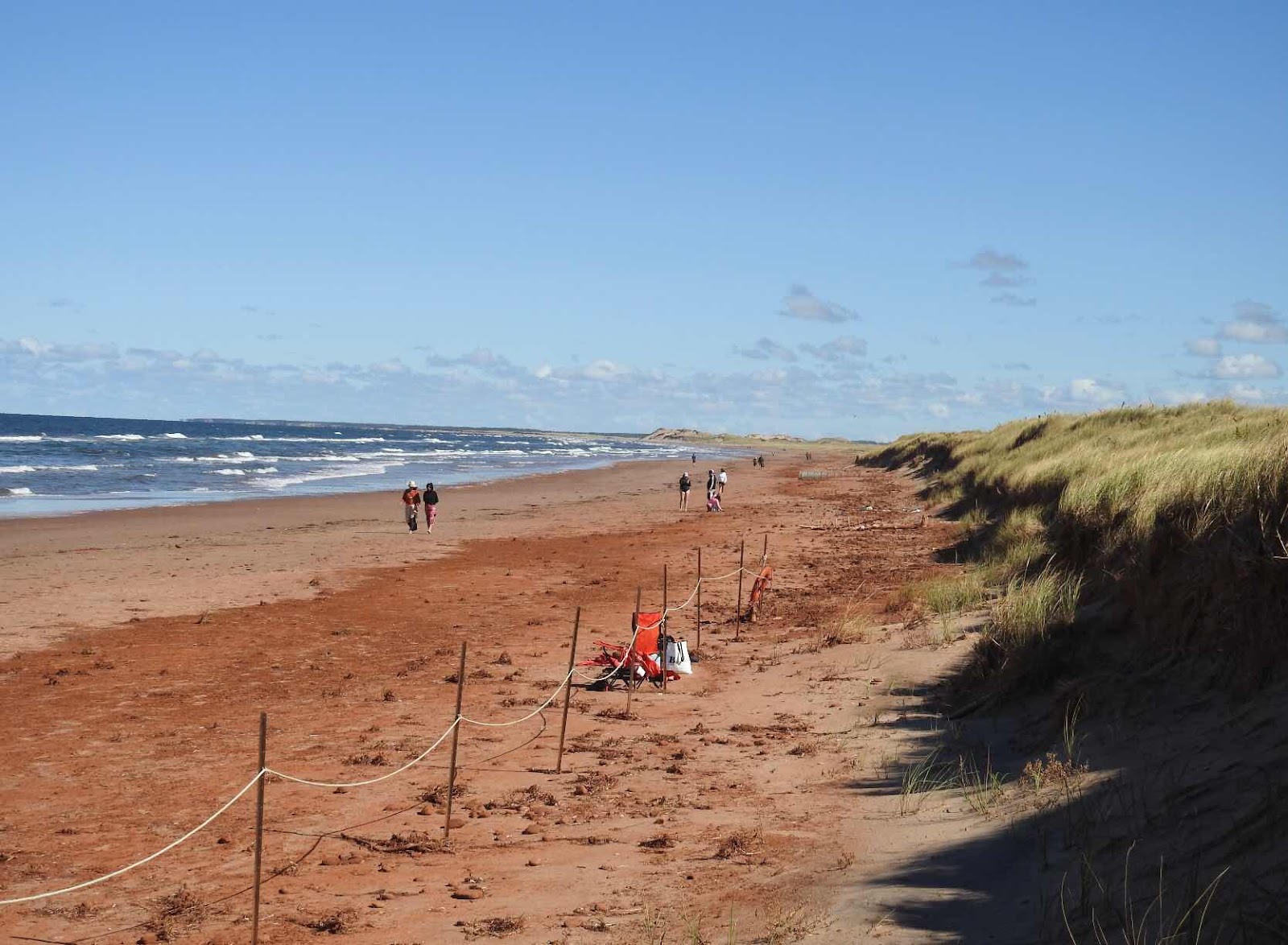
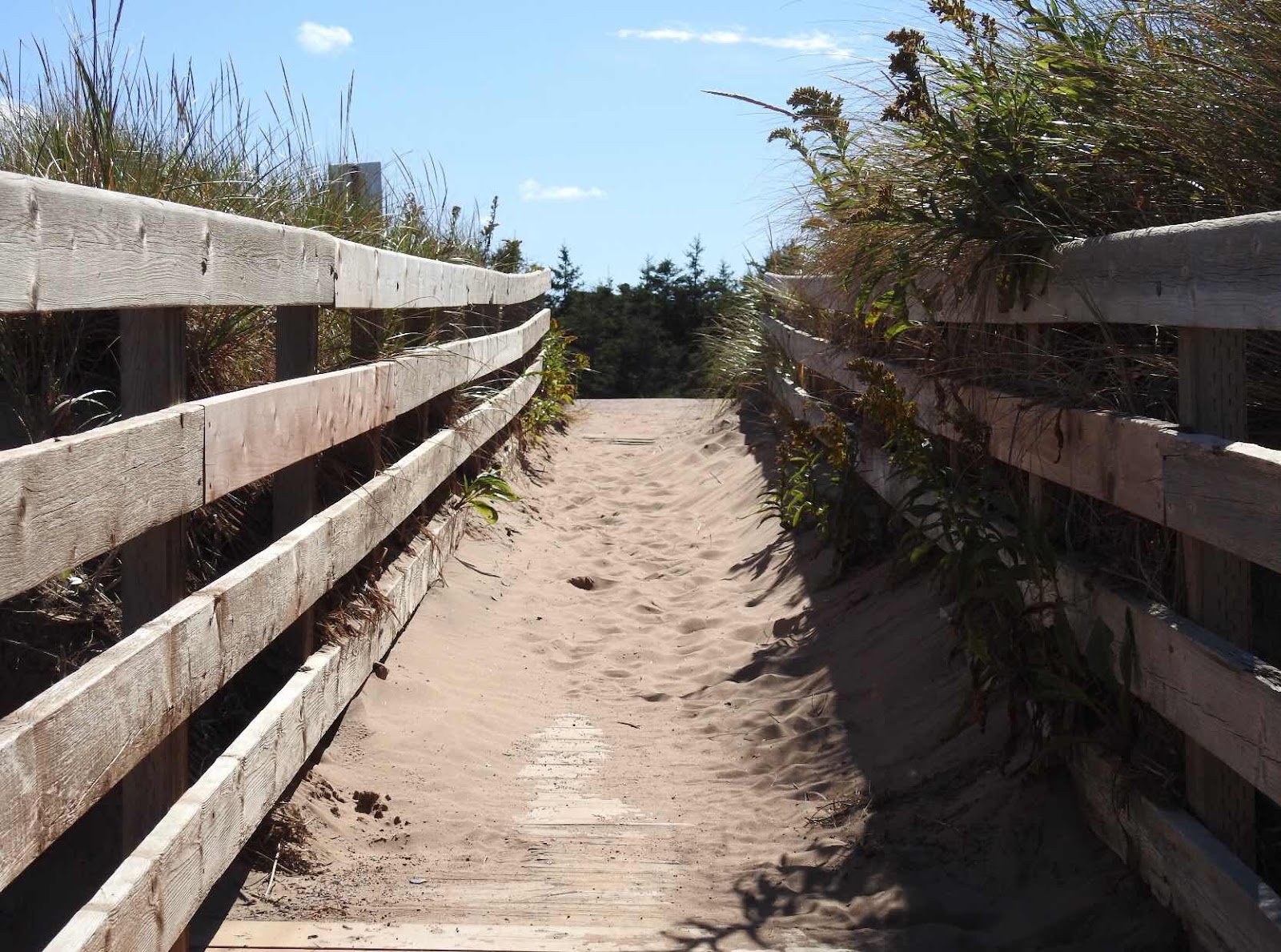
We hadn’t been to Northport in a few years but it is a place we like to visit. On a beautiful autumn day, with a cooling breeze, we headed west to walk the beach and have a picnic.


Northport is in western Prince Edward Island on the north coast. It is predominantly a fishing area, but as is common on PEI, farming is part of life in the area as well. 


We walked on the beach and explored this part of west Prince County which didn’t experience the same fury of Fiona as did the east coast of the island. However, there was wind damage to some trees along the shoreline but this area, inside a sandbar, didn’t appear to have the storm surge like more exposed places.


There is always interesting driftwood along this shoreline, large trees which have come to rest on the beach where they are weathered by sun and sea.
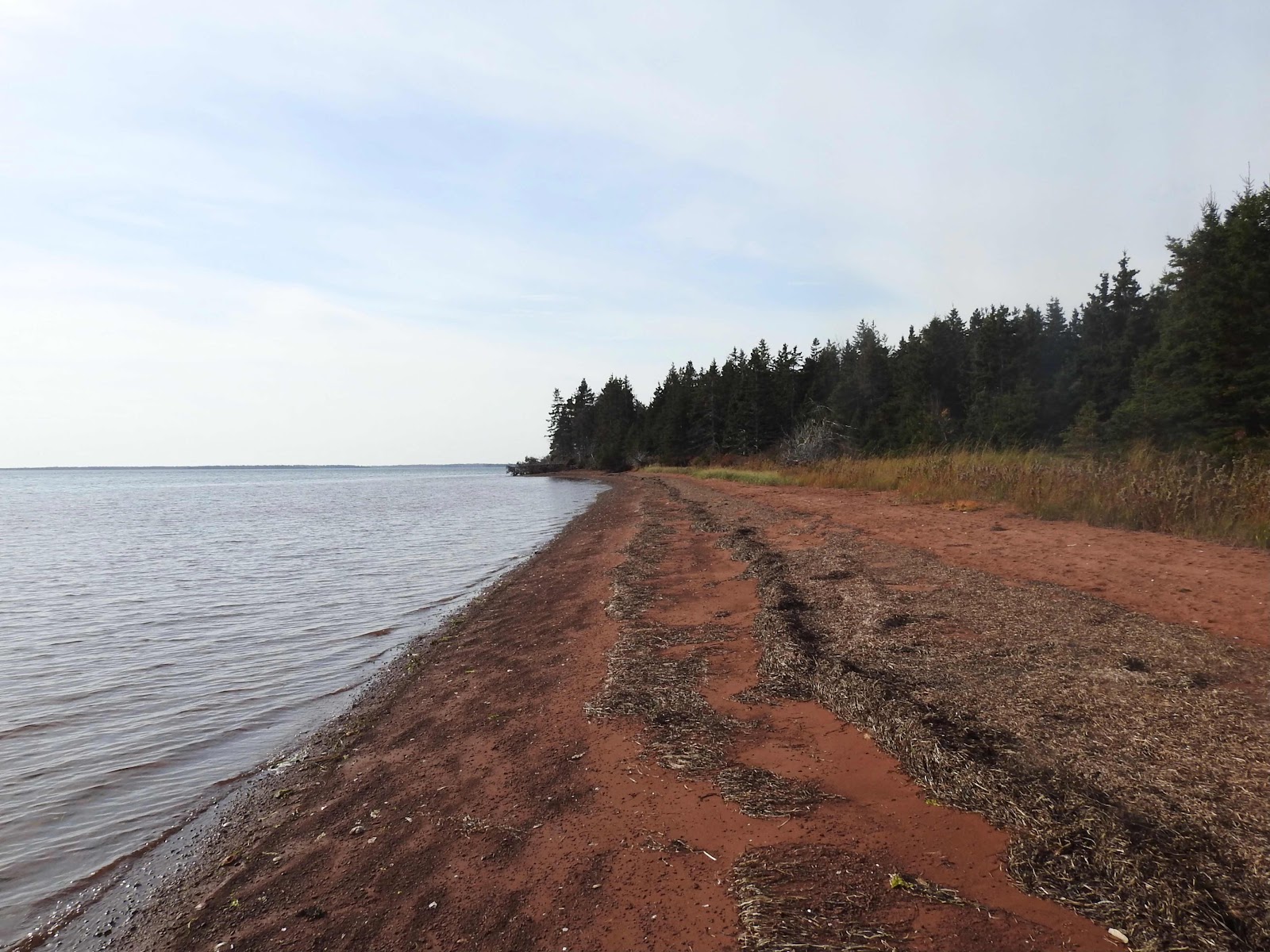


Further along, another tree is determined to live in spite of its precarious position hanging across the beach. It continues to grow and the trunks are beginning to grow vertically from their horizontal positions.


The roots spread into the bank, providing enough nutrients to keep the tree alive.
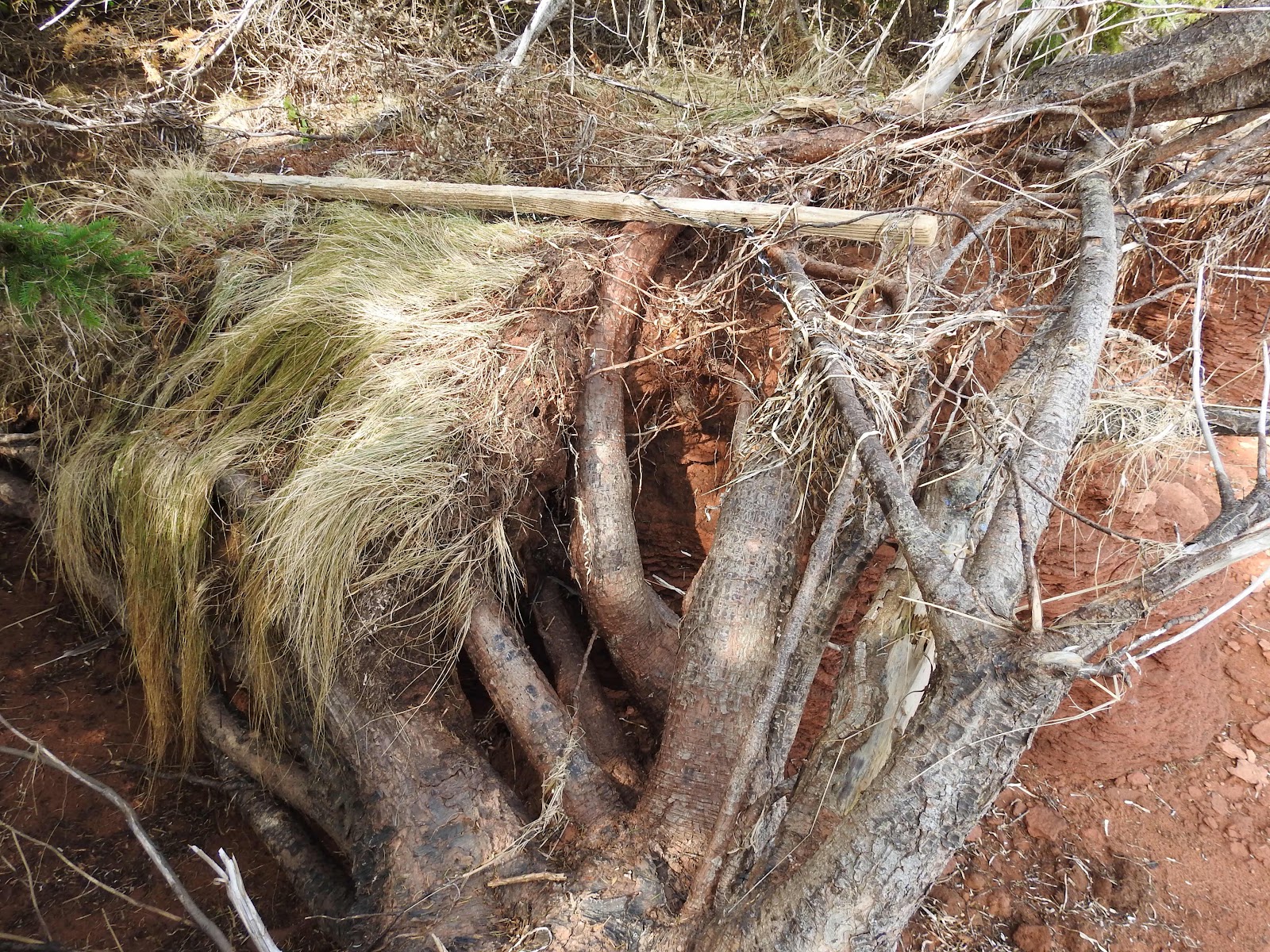


From the point, you can see the oyster beds in the bay which the Double-crested Cormorants use as perches.
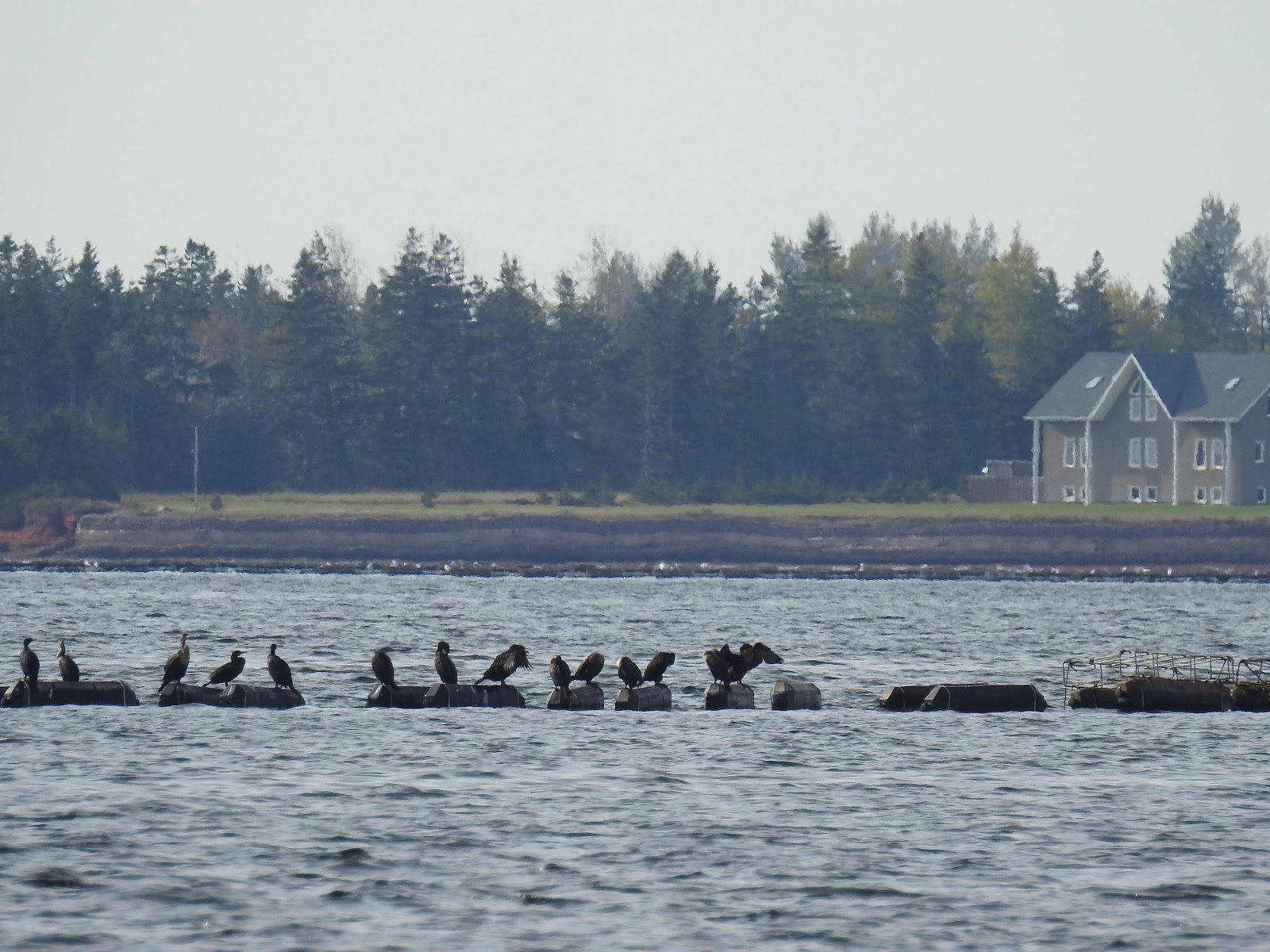


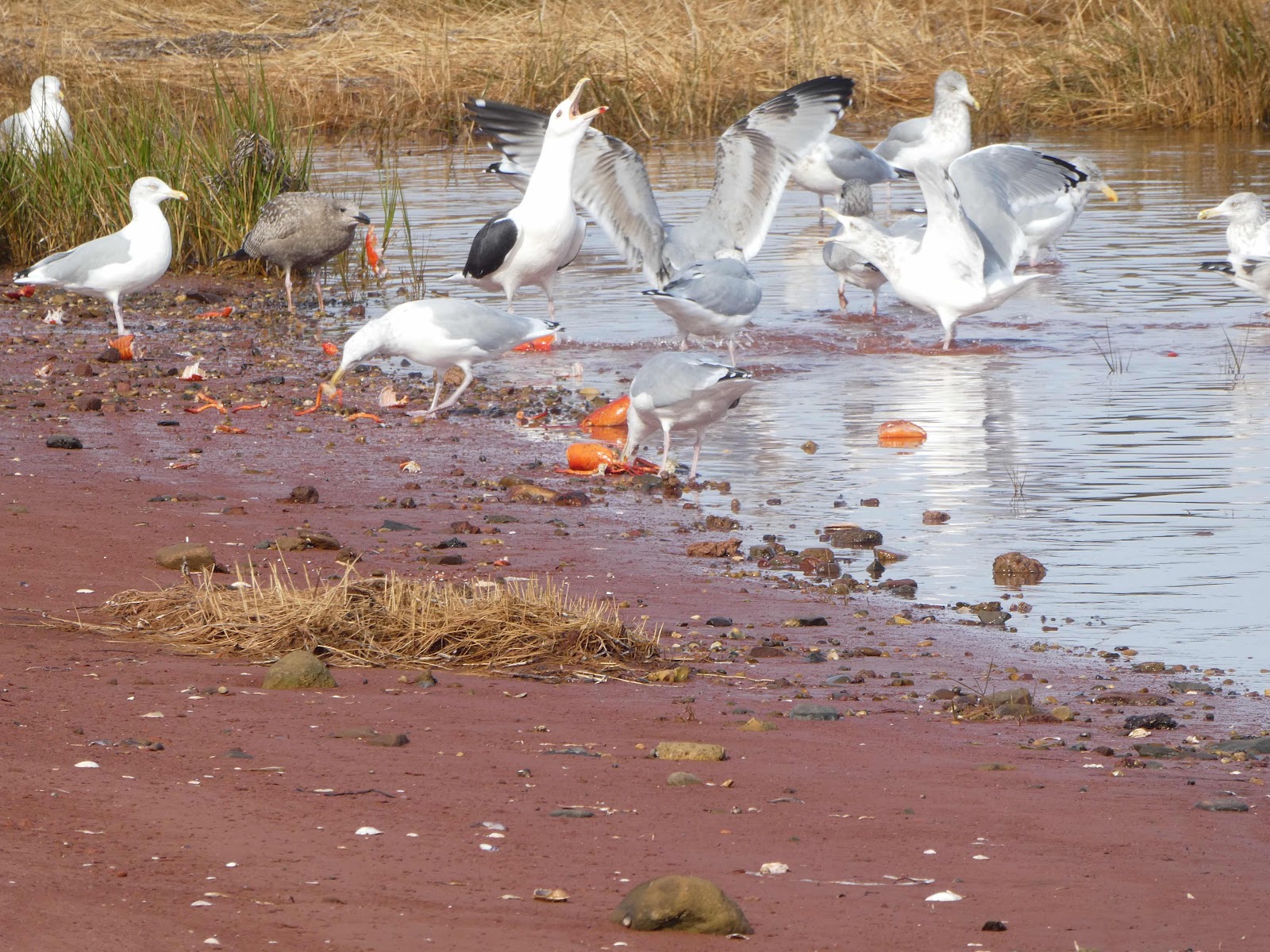
Meanwhile, in the opposite direction, near a cottage on the bay, gulls enjoyed lobster shells left for them to share. A Great Black-backed Gull, called out, while the darker young Iceland Gull picked the shells. Herring Gulls appeared to be enjoying the shells too. 


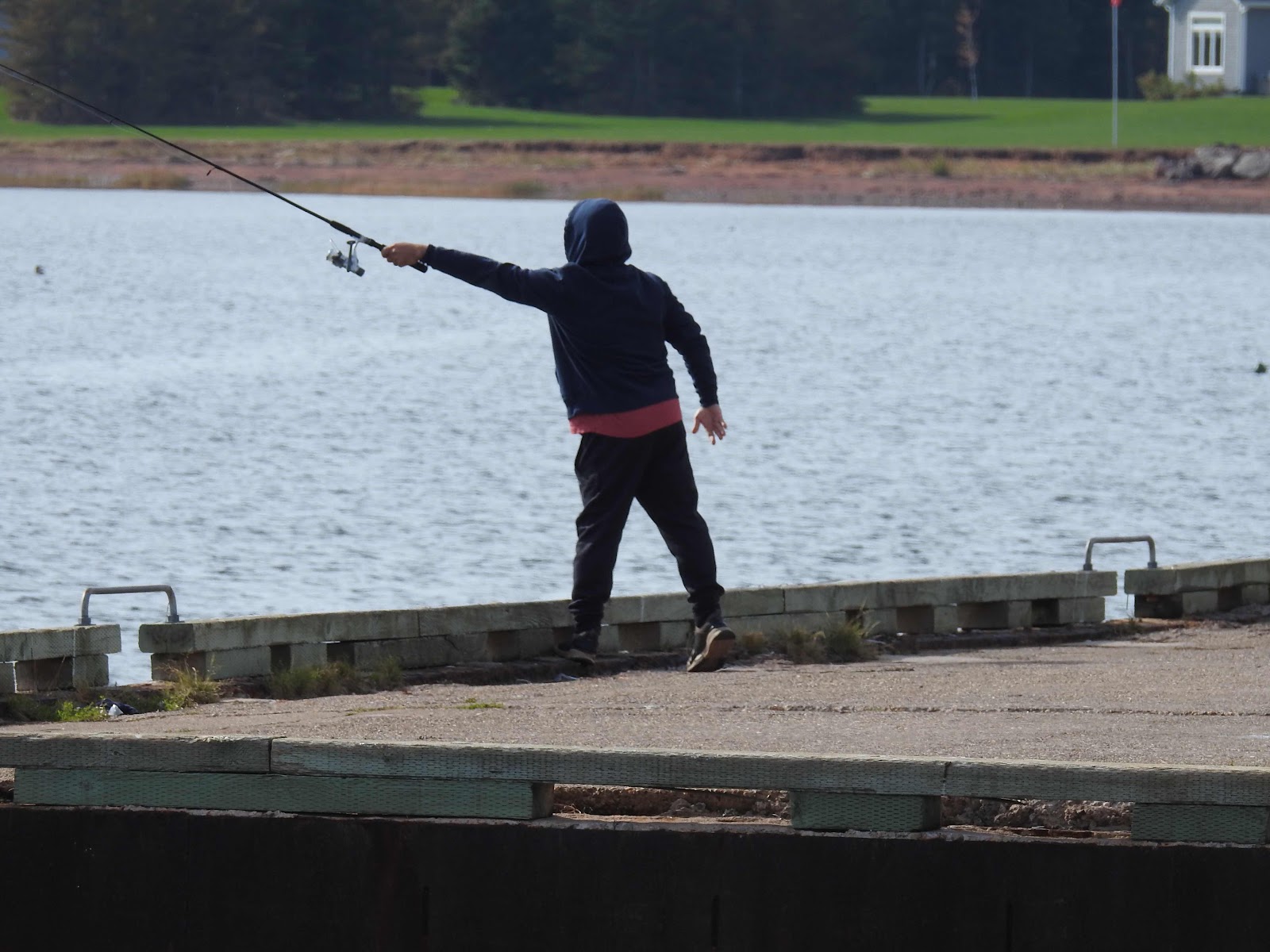
We stopped by the wharf where four men were fishing with a rod and reel, landing small fish for supper. 


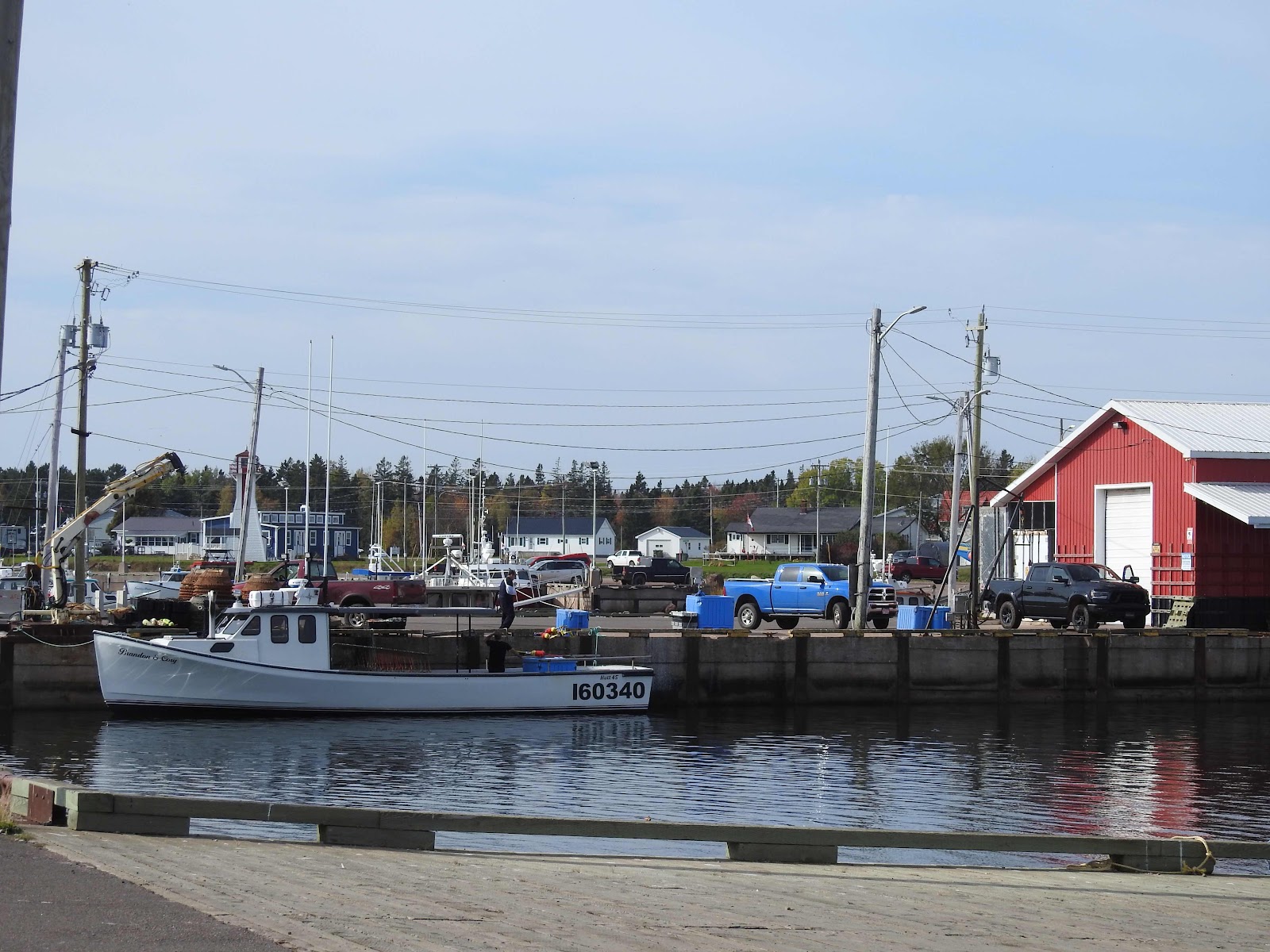
There was a lot of activity in the boat basin as well. 


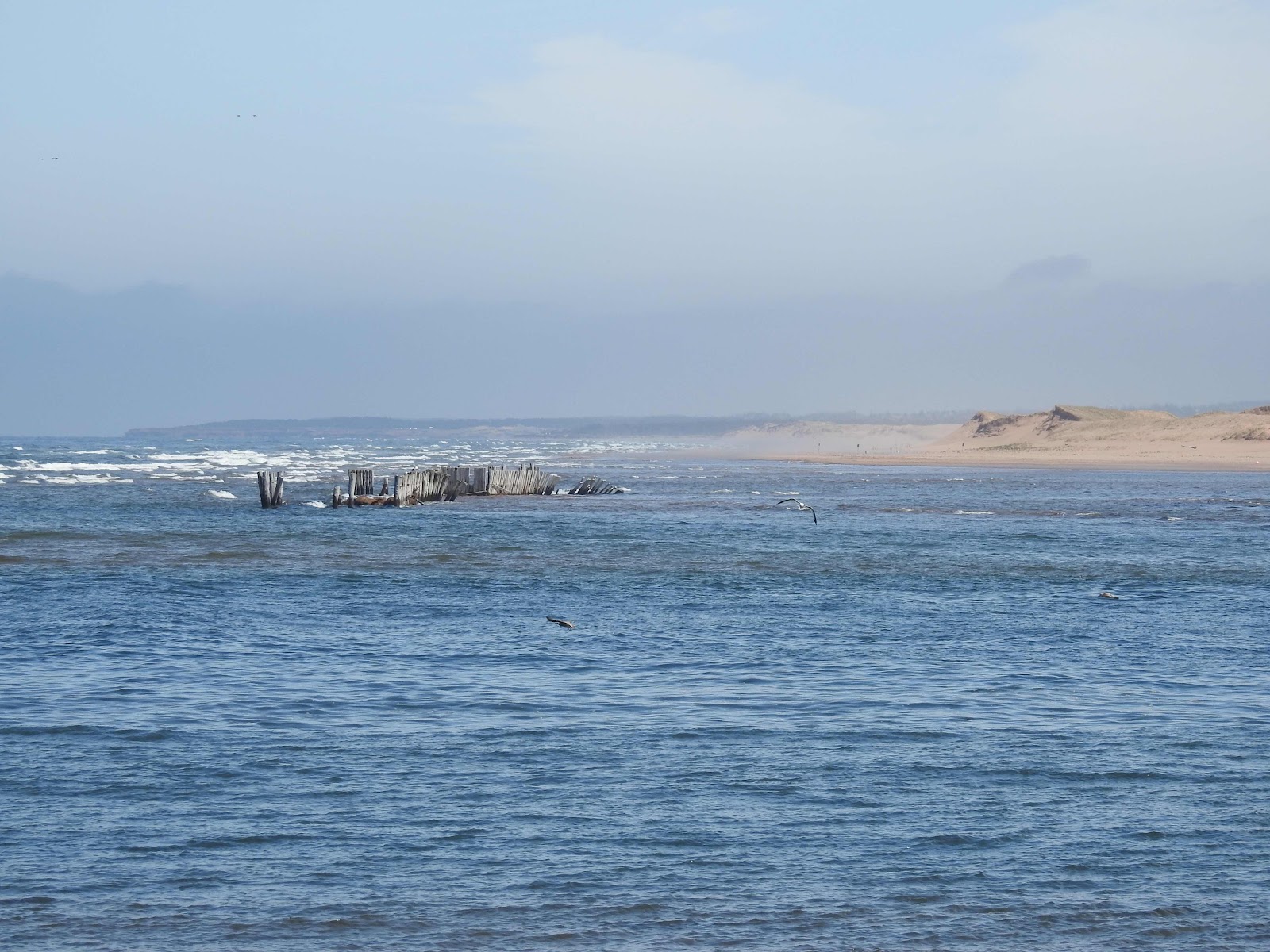
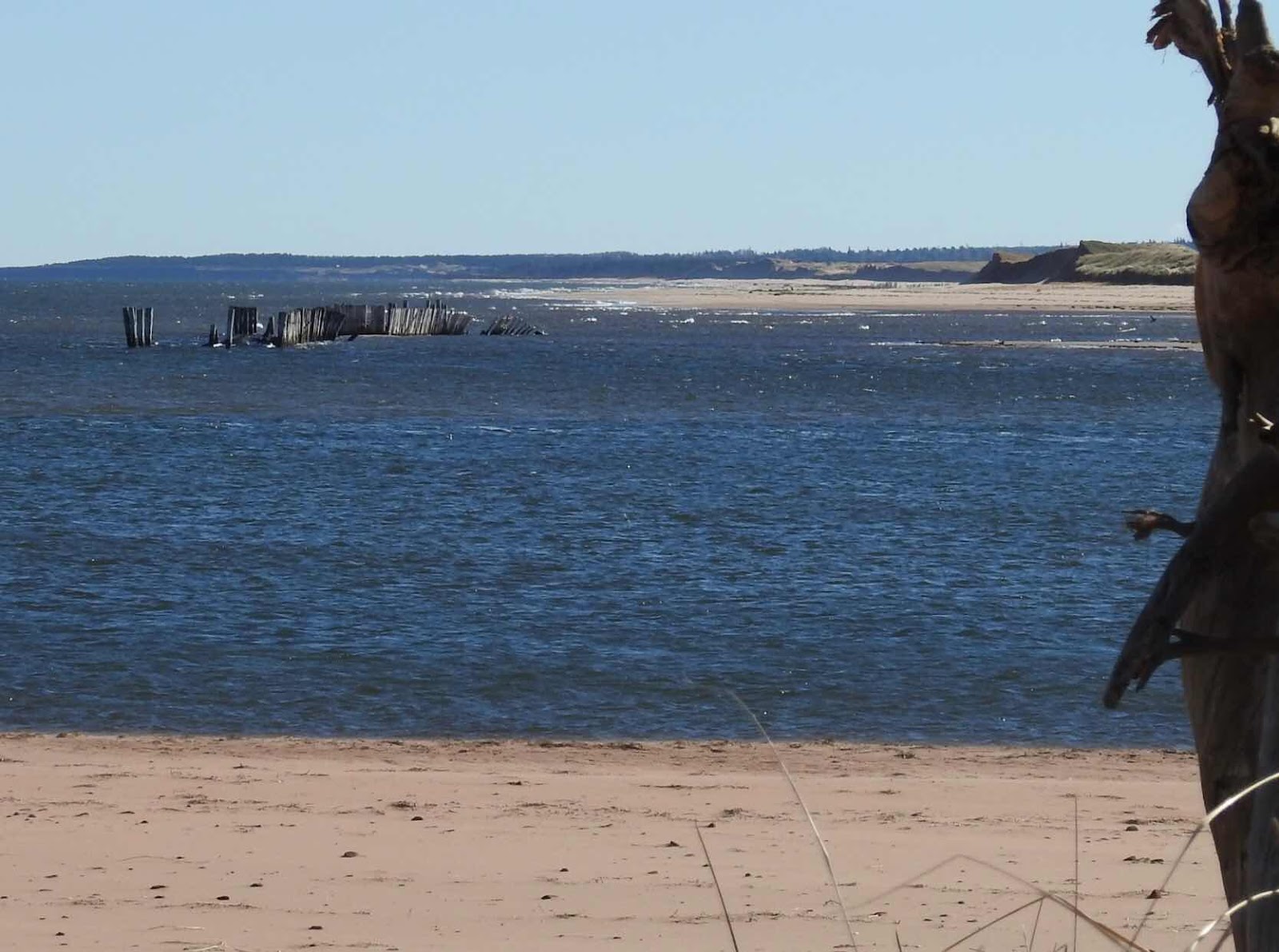
Off shore, on a sand bar stands the old lighthouse, now privately owned.


Since it was windy, we drove further along the coast to find a sheltered spot to have lunch. We decided on the yard in front of Christ Church, nestled among the trees. After a quinoa salad and hot tea, we explored the area, visiting the cemetery which has been in use since 1850.

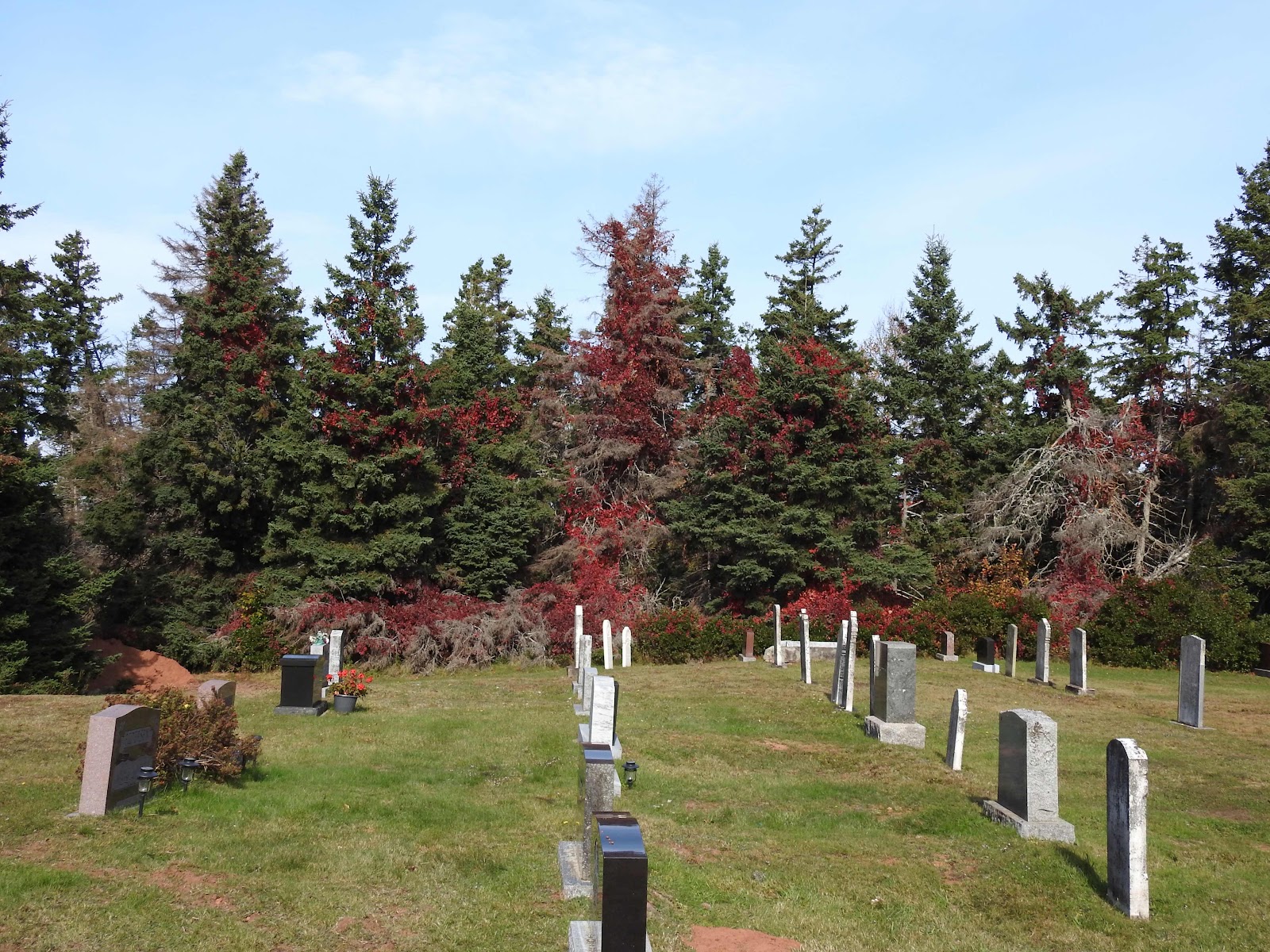


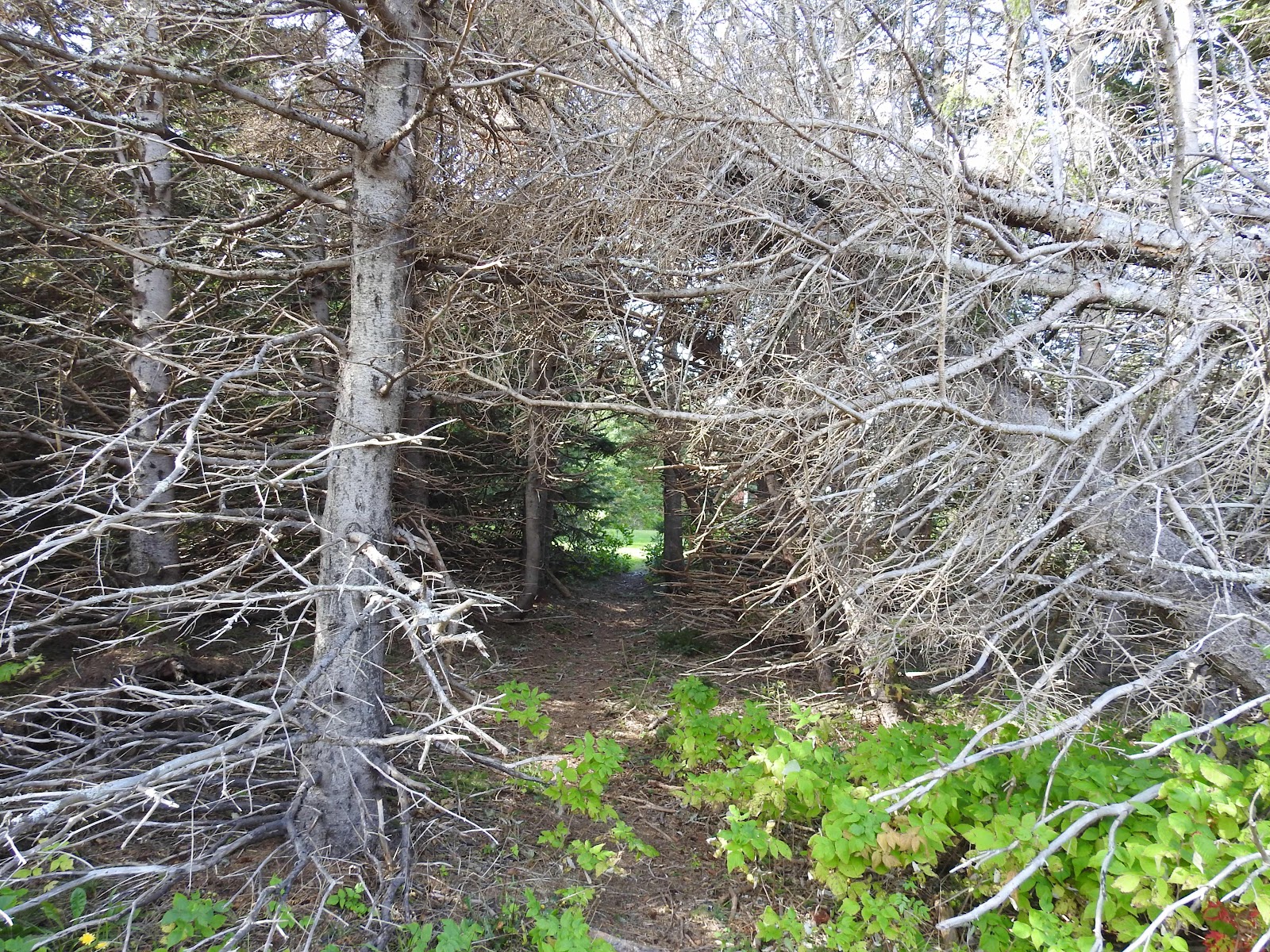
Some of the evergreens surrounding the cemetery were covered in vines which were dressed in their autumn colour. A path through the trees led to the Kildare Capes, an area we will explore further another day.  


After lunch, we headed further up the coast, but that’s another story.


Wednesday, 19 October 2022

The north shore

We were slow to return to our excursions around the island after Fiona. Trees are down everywhere and trails are slowly being cleared. Two weeks post storm, we returned to the boardwalk and later to beaches where we love to walk and have picnics. My husband and I will enjoy autumn as much as we can since we will be limited by the weather soon enough.


On one recent outing we went to the north central shore, first to the New London Lighthouse which I have featured numerous times on this blog. The old sentinel made it through another storm unfazed by the look of it. 


Not the beach and sand dunes however. In June this year, you can see the extent of the beach across the channel.


Post Fiona, the dunes are greatly reduced and the sand washed out to sea. It will be a slow return.


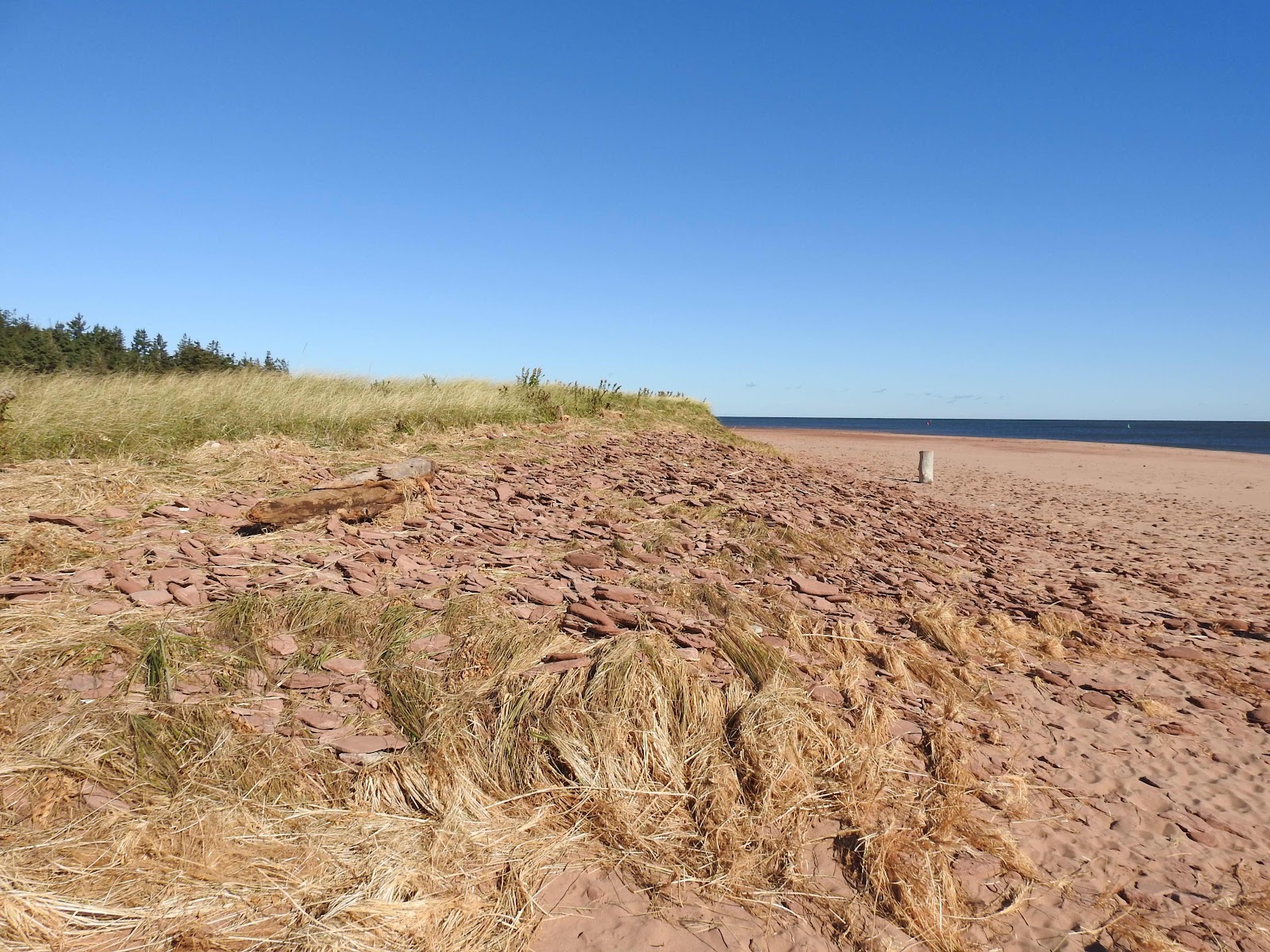
Closer to the lighthouse, the storm surge destroyed the Marram Grass and dumped sandstones over the area.


We walked the beach towards the cliffs where our daughter fishes for bass. We had never been to this area before and on such an autumn day, it was the perfect time to check it out.


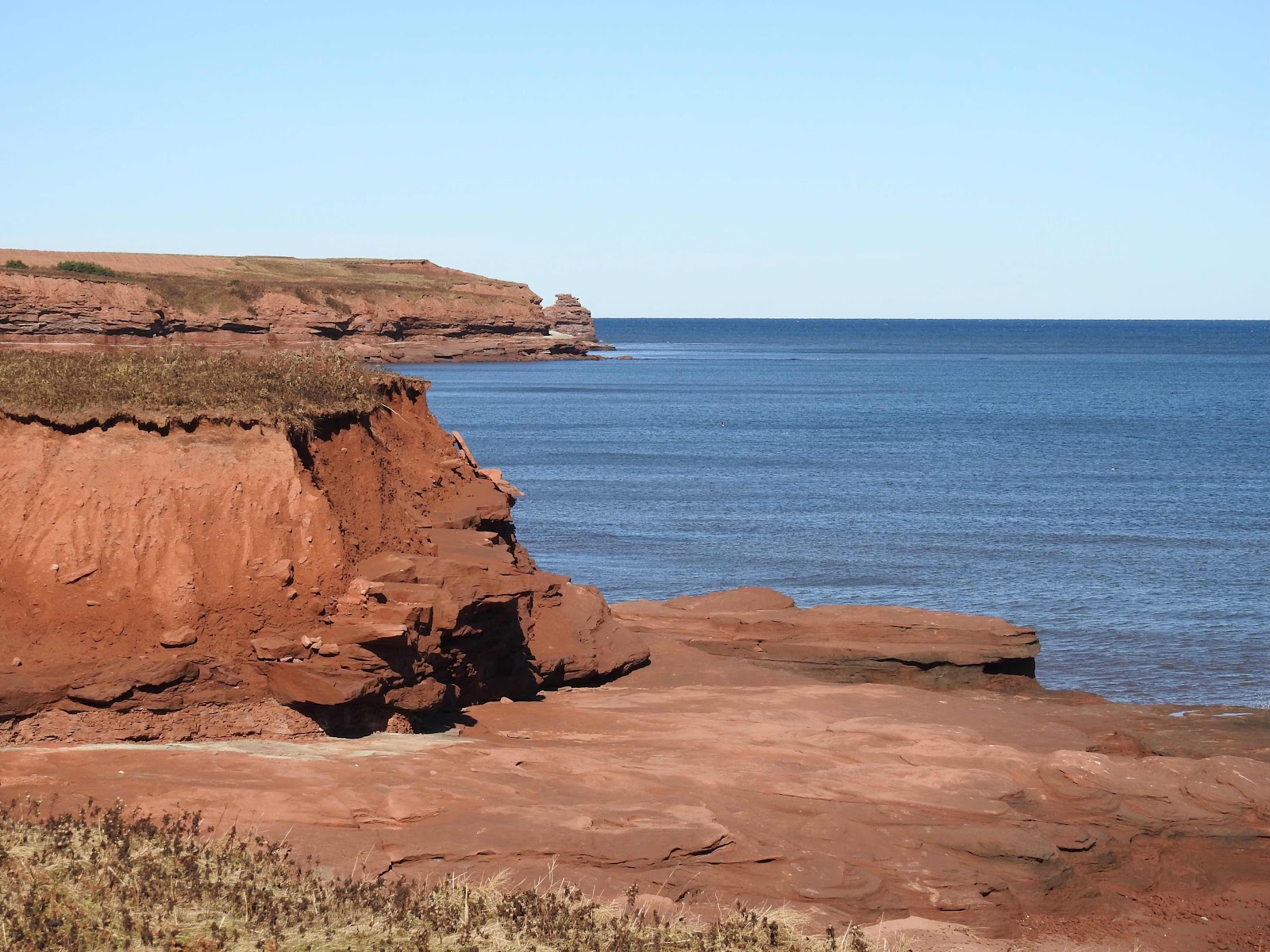
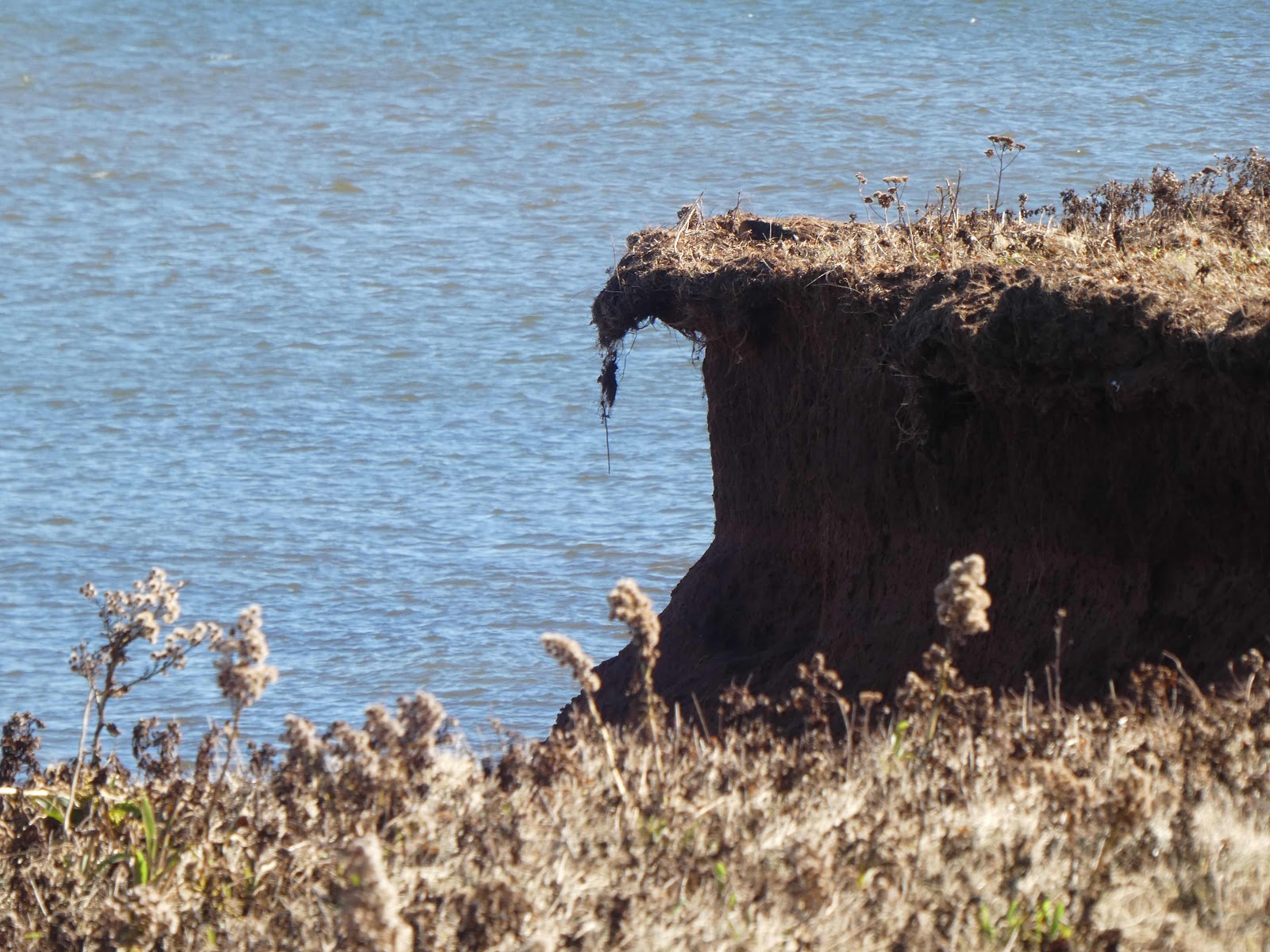
The red sandstone stood out against the natural blues. 


The faded October grass and wildflowers at the edge of a farmer’s field cling to the red soil as long as possible, hanging over the edge as more soil washes or falls away.


A lone tree nearby shows the direction of the prevailing wind and withstood the wind speeds brought by Fiona.


A sea stack, difficult to see in its entirety from the path, is beginning to become a sea arch. If you look closely, you can see two glimpses of sea blue through the sandstone.


Anglers park along the cliffs and take a path down to the shoreline below  It is too treacherous for these old legs to attempt such a walk. We will return when our daughter is fishing there one day.


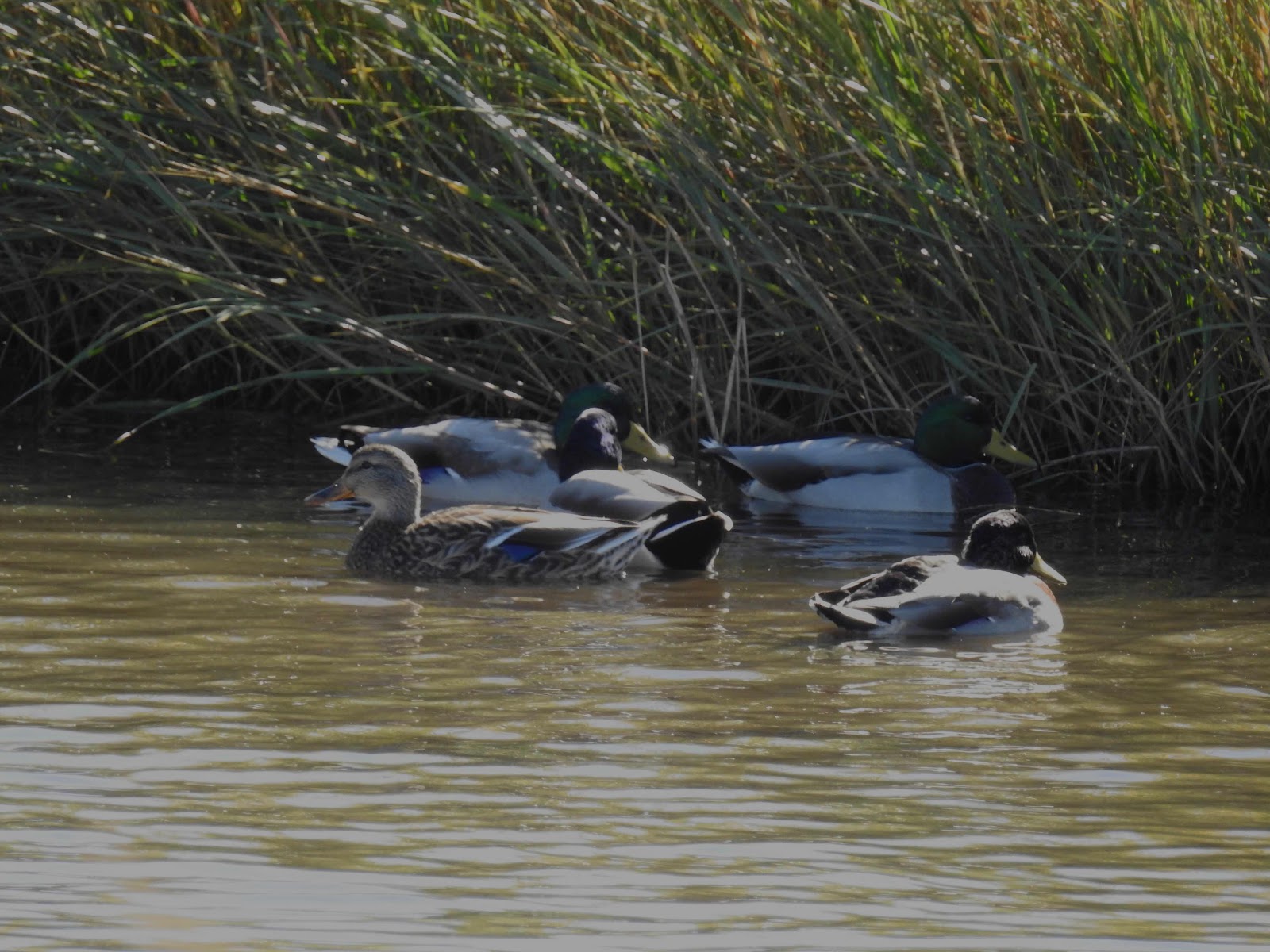
The wind was cold requiring gloves and a hat so we decided to have our picnic in a more sheltered area. On our way to North Rustico, we passed a flock of mallards enjoying the day at French River. I hadn’t seen mallards in some time, so it was a treat to watch them for several minutes 


and meet a new friend too.


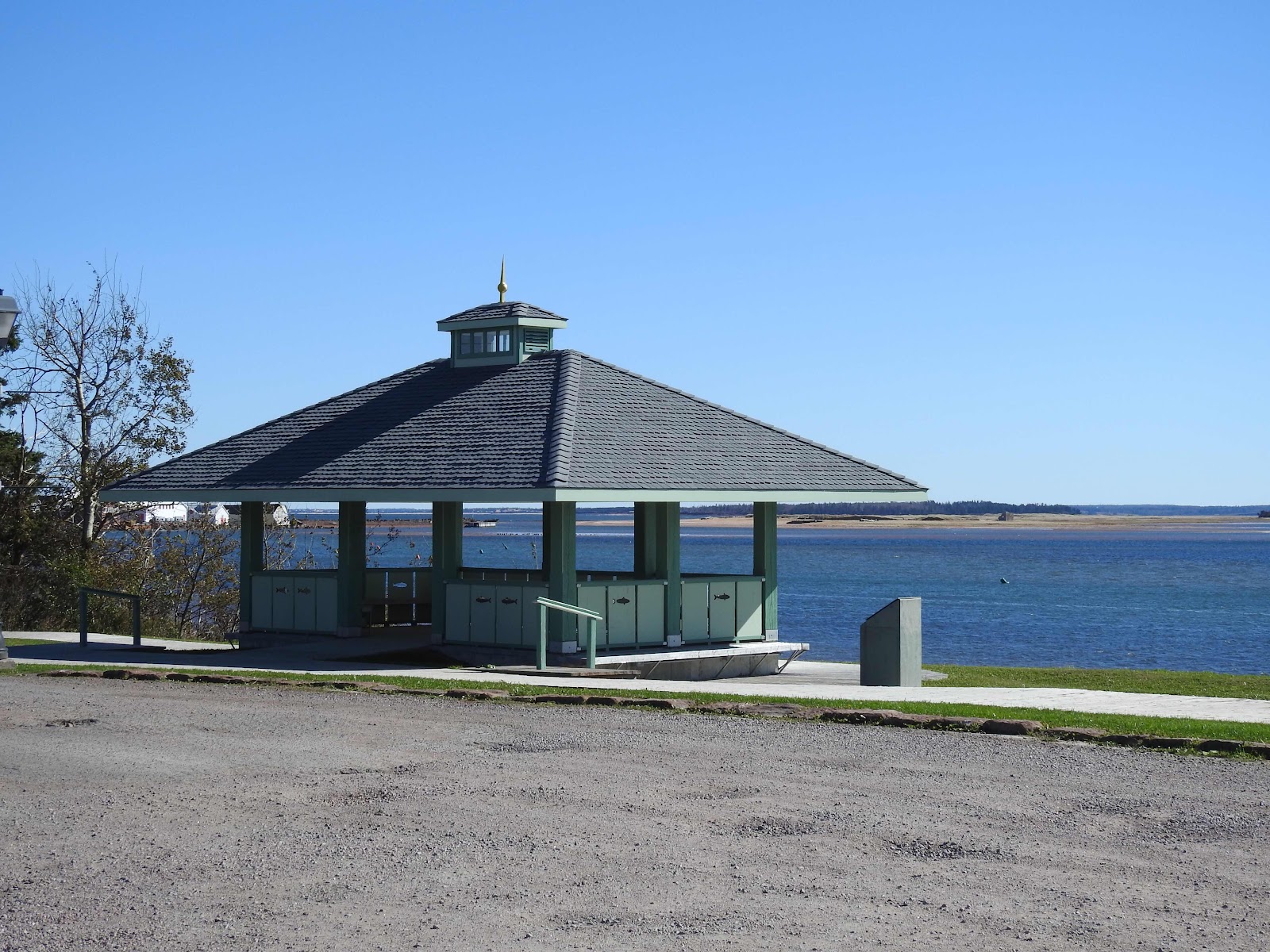
The gazebo at North Rustico has a view of the harbour and is a great place to have lunch. Our turkey soup hit the spot, warming us to our toes.  


Our excursions will continue as long as possible this autumn and a hot picnic lunch will be on the menu.


Sunday, 16 October 2022

At the salt marsh

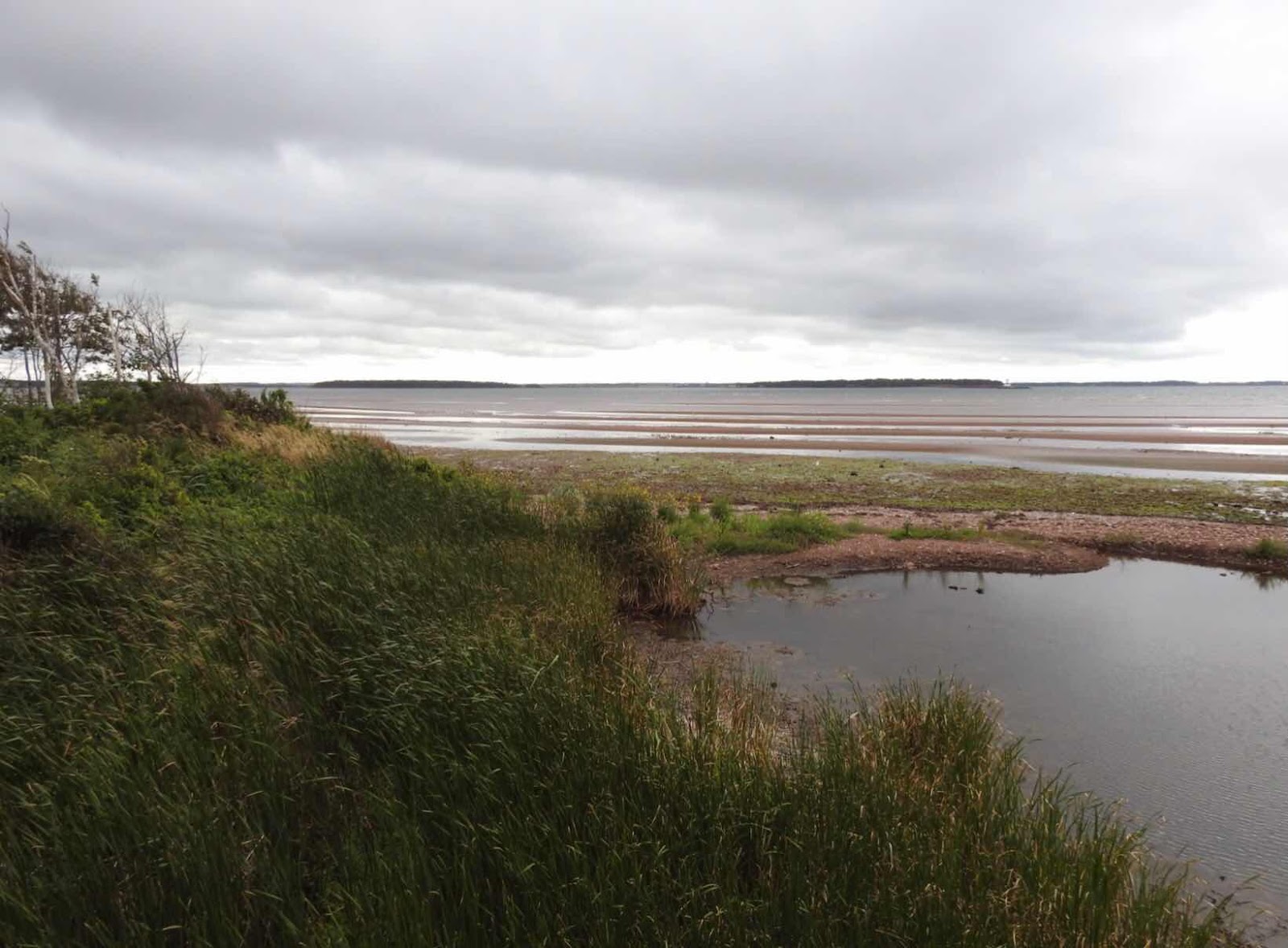
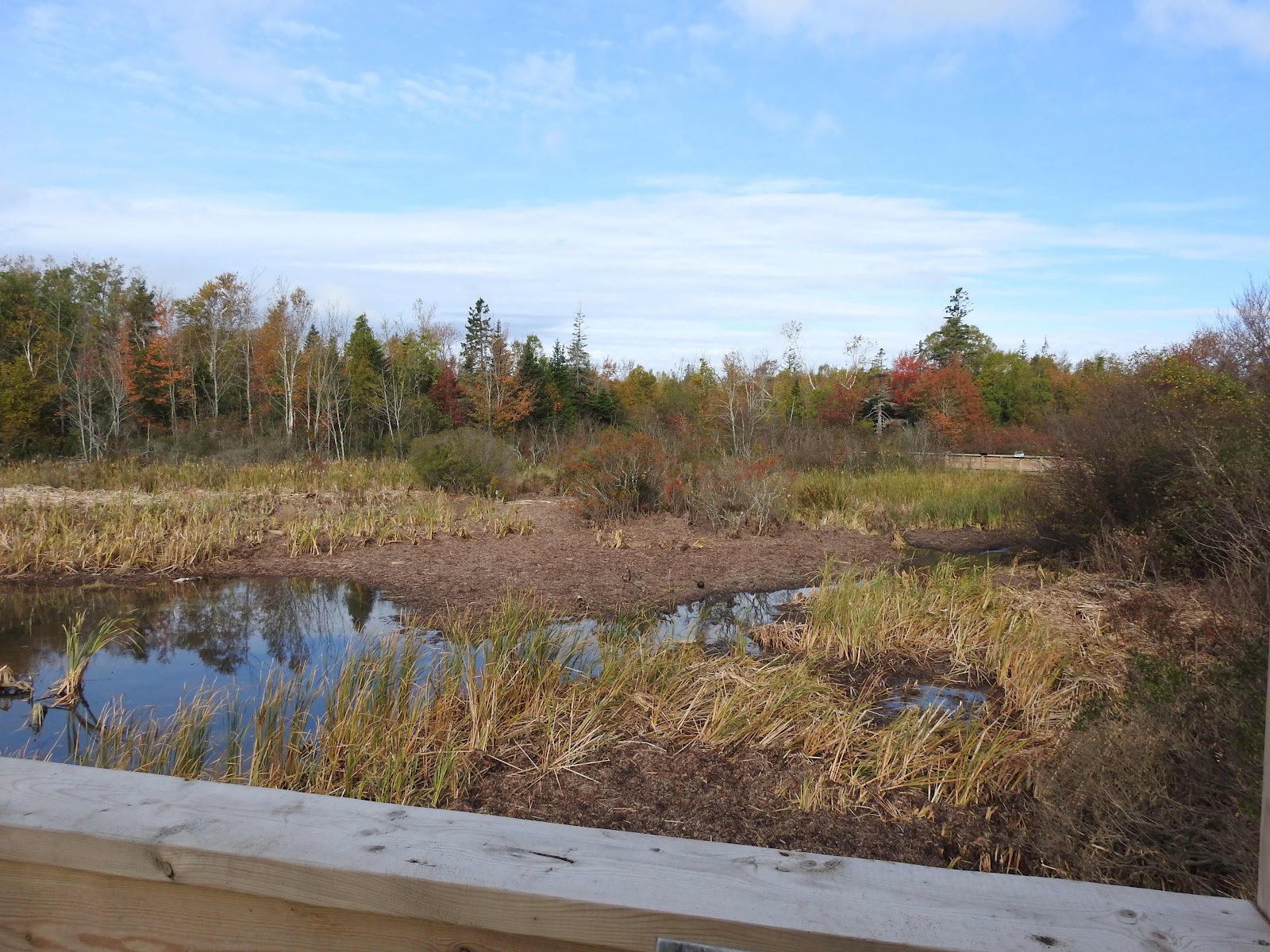
Every time we go for a walk to the boardwalk in Summerside, we always begin at the gazebo overlooking the salt marsh. 


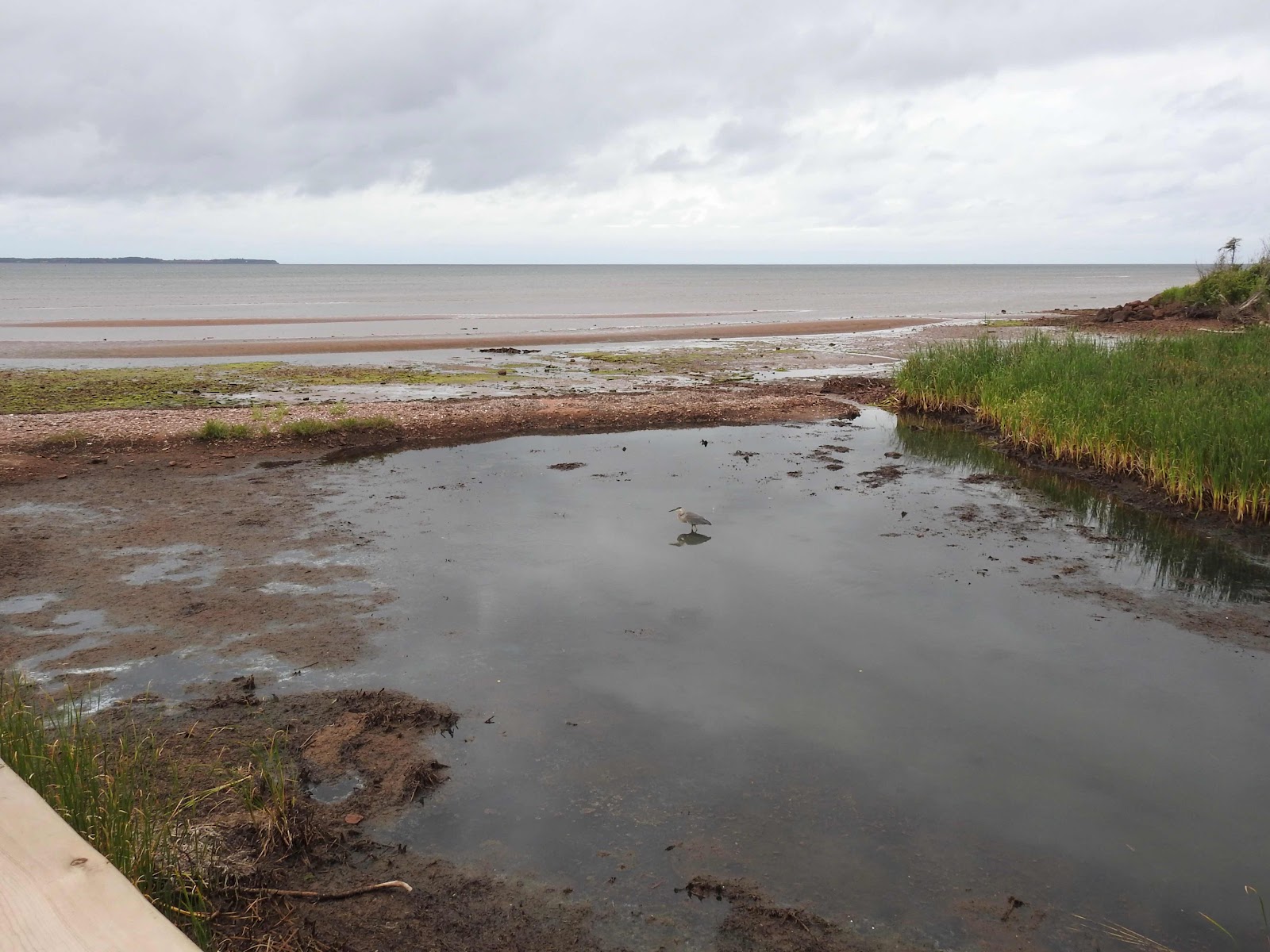
The view across the bay is tempered by the weather.


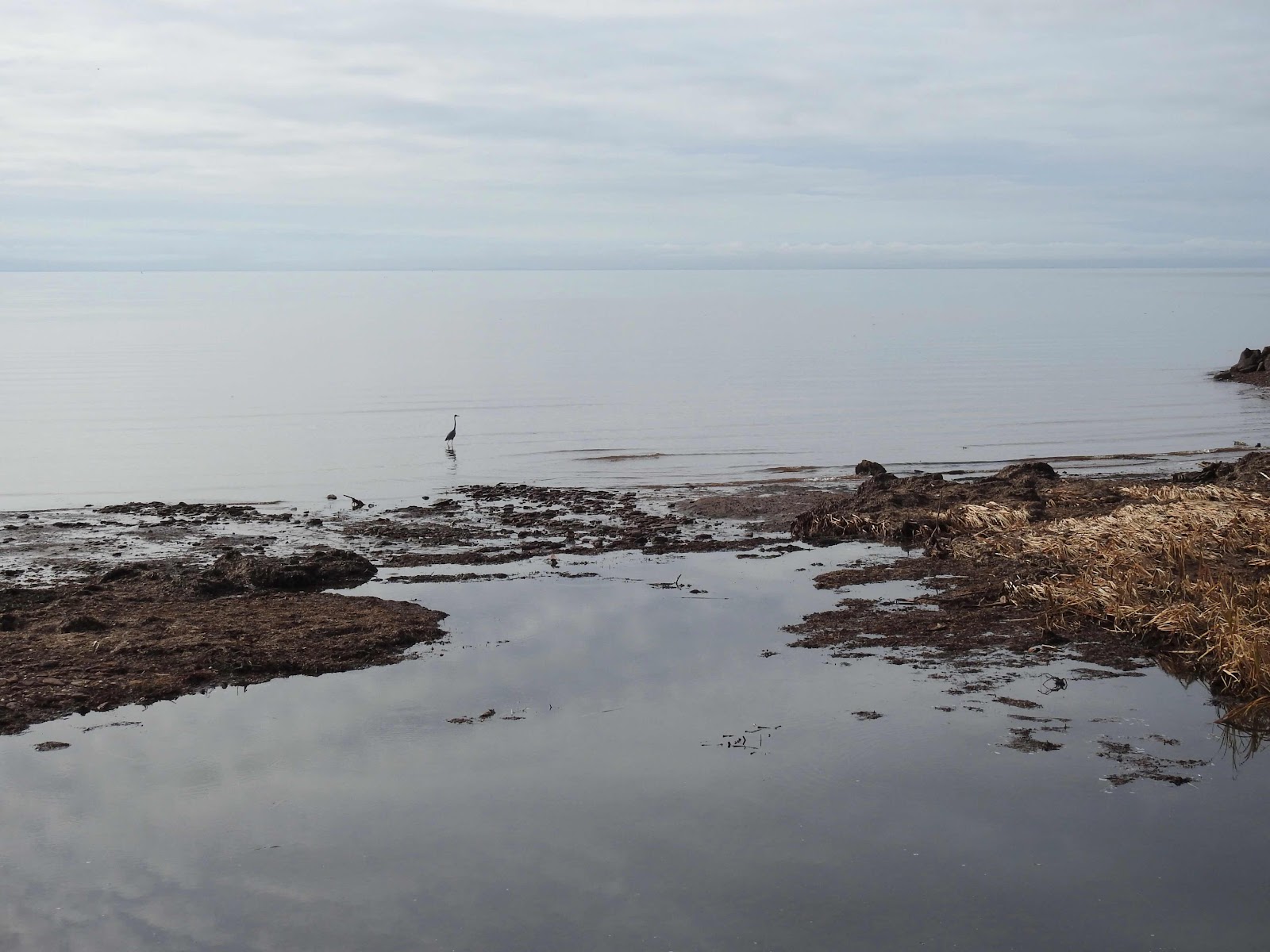
This area is frequented by numerous bird species from Black-capped Chickadees in the trees bordering the marsh to Great Blue Herons which wade in the water feeding on fish and frogs.


We were anxious to see how the area and indeed all of the boardwalk fared from Fiona when she blew through over three weeks ago. When the area was finally reopened, we didn’t know what to expect as far as damage there was concerned but it surprised us nonetheless. 


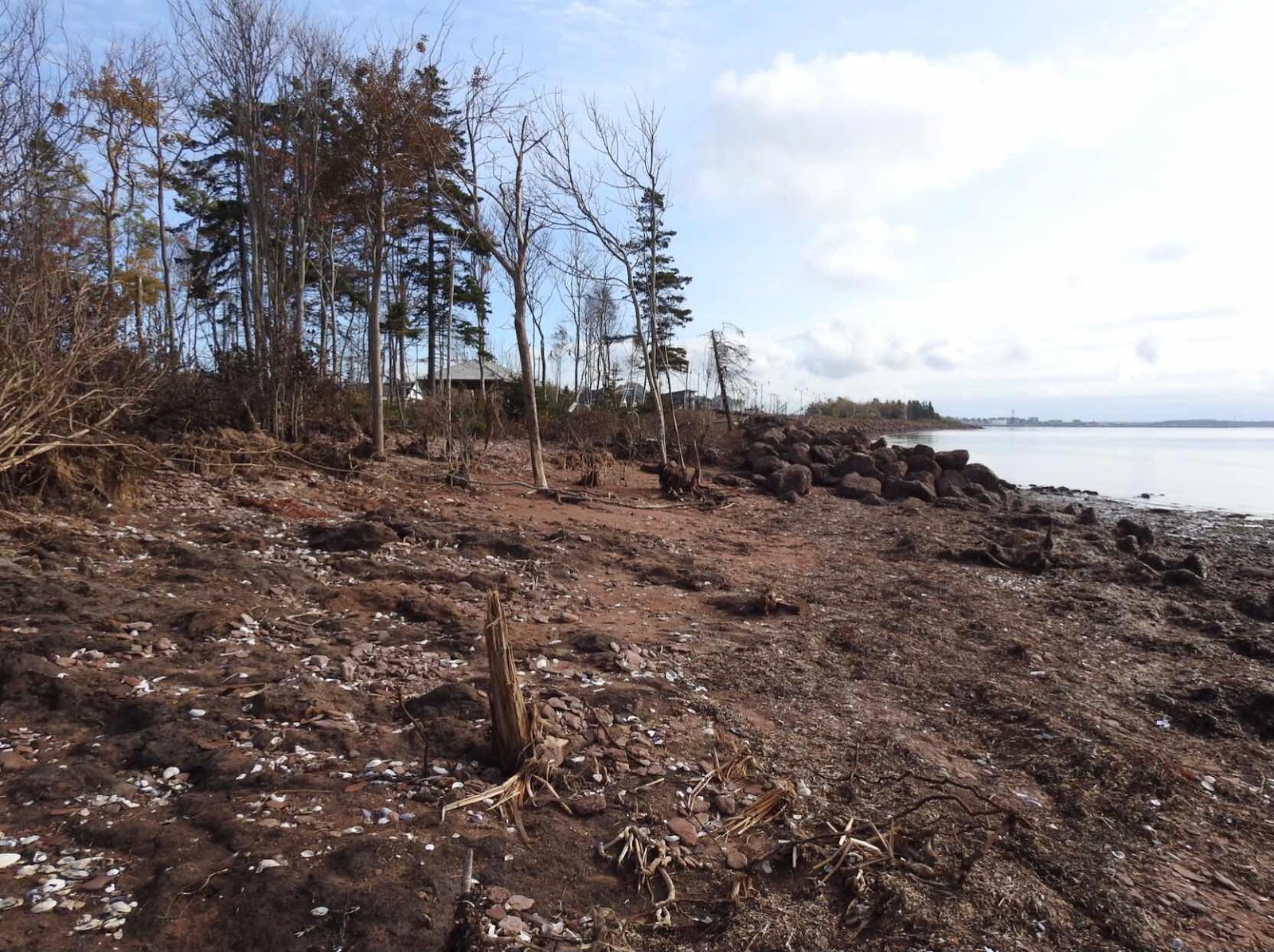
The area was devastated by the wind and especially the storm surge. 


However, while the environment was devastated, the animals were there!


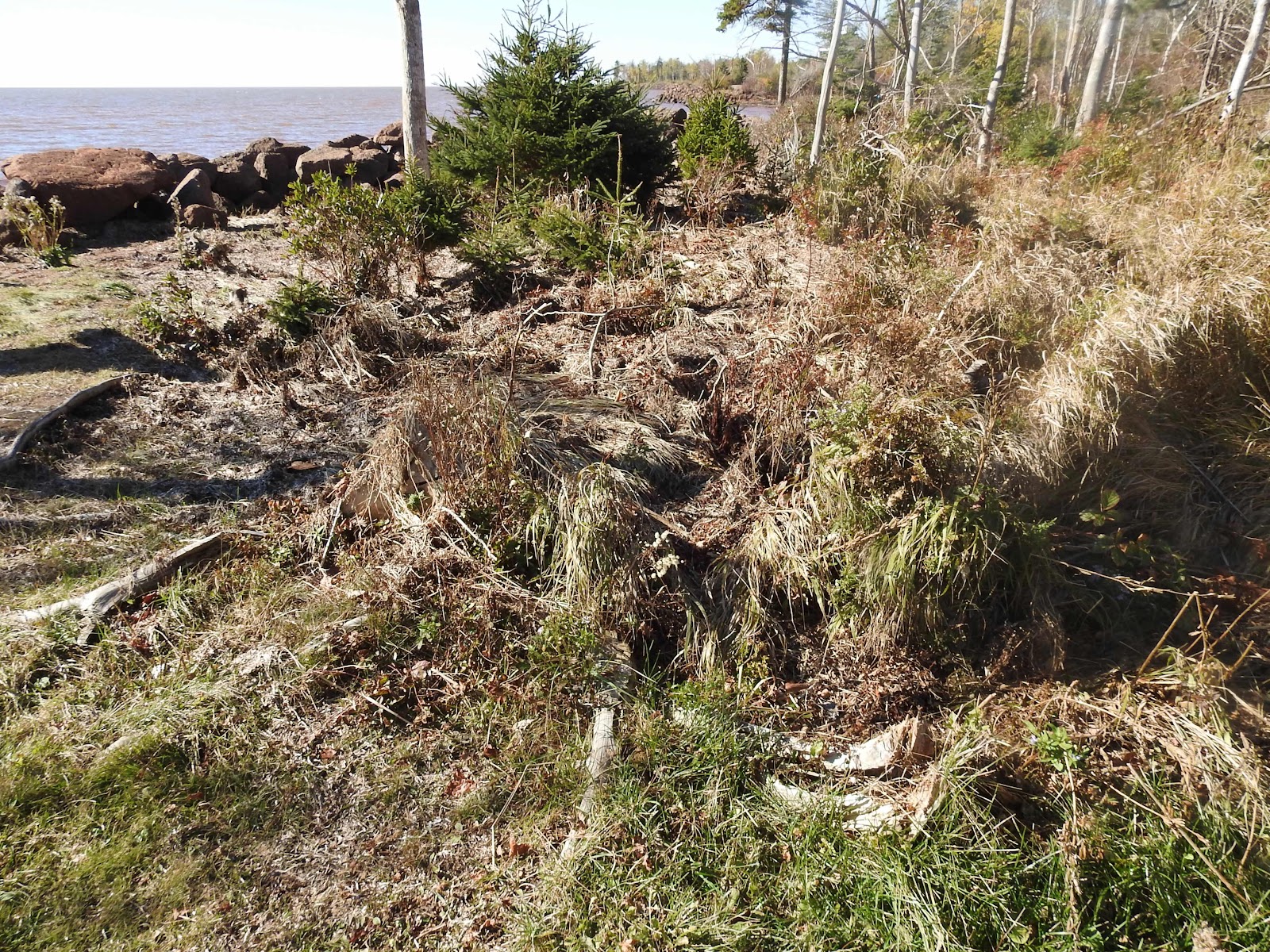
Waves had crashed over the rock revetments along the shoreline dropping seaweed by the boardwalk 


and everywhere in between.


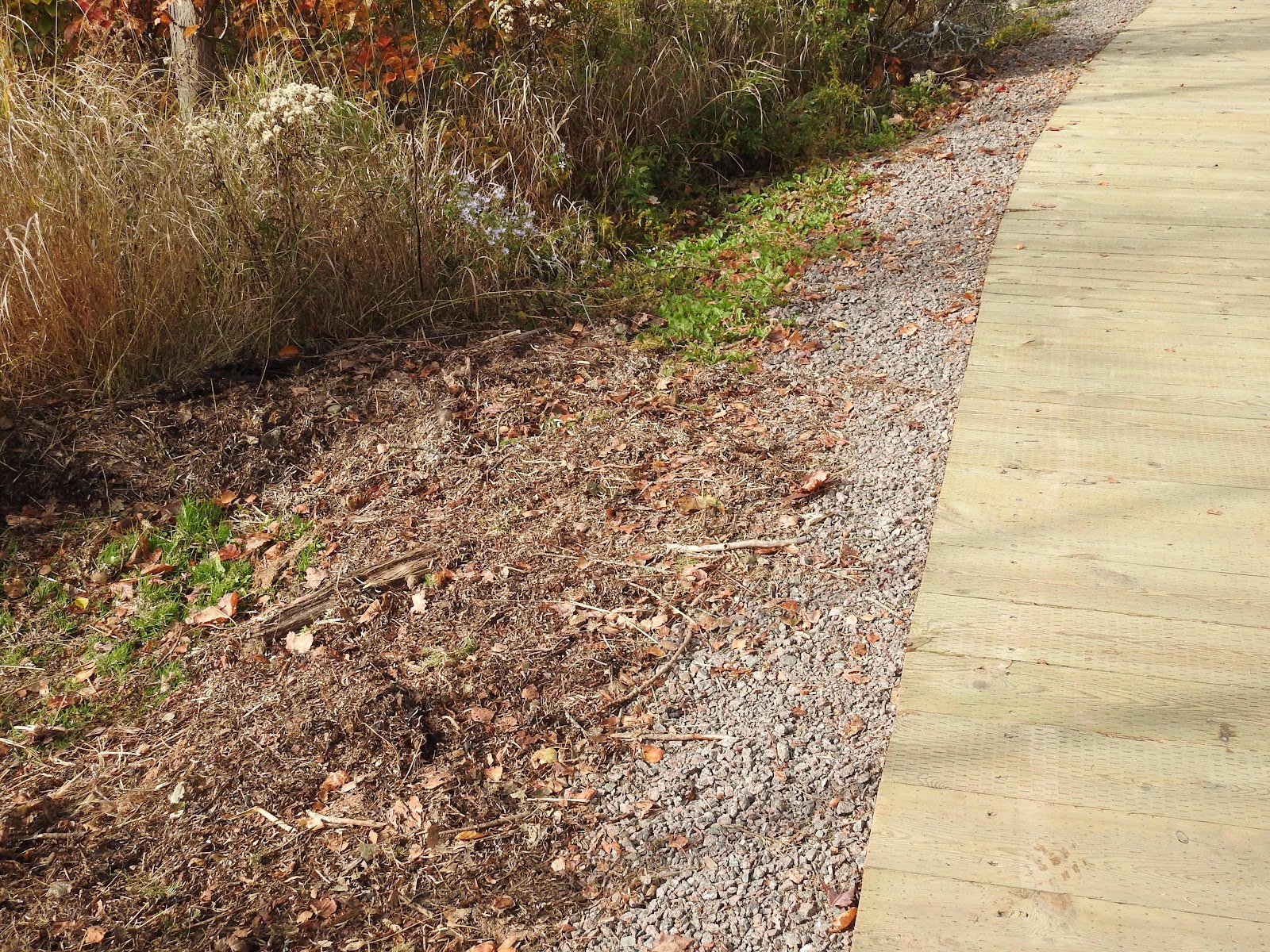
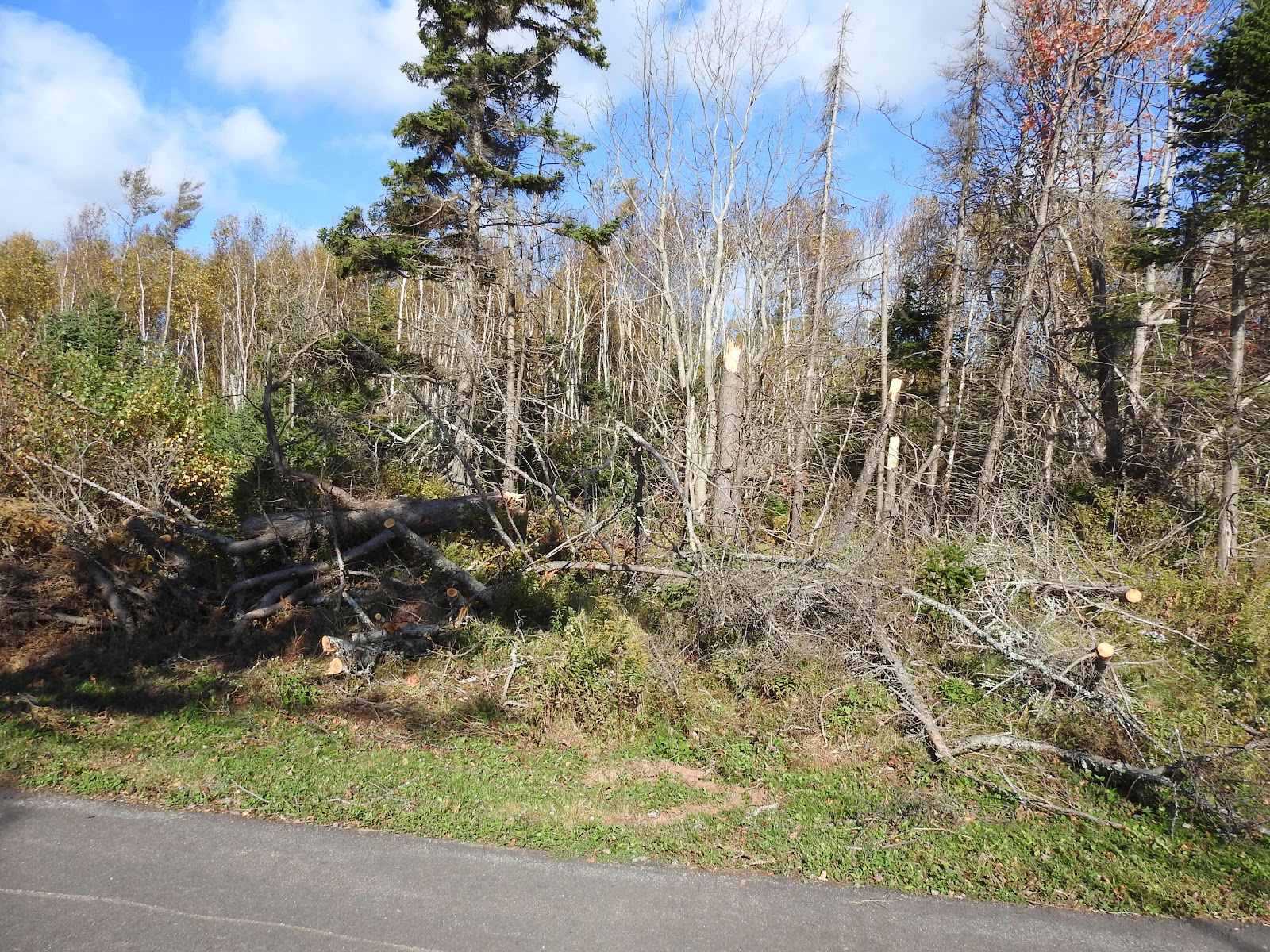
Some trees had succumbed to the winds and evidence of the damage is along the boardwalk. 


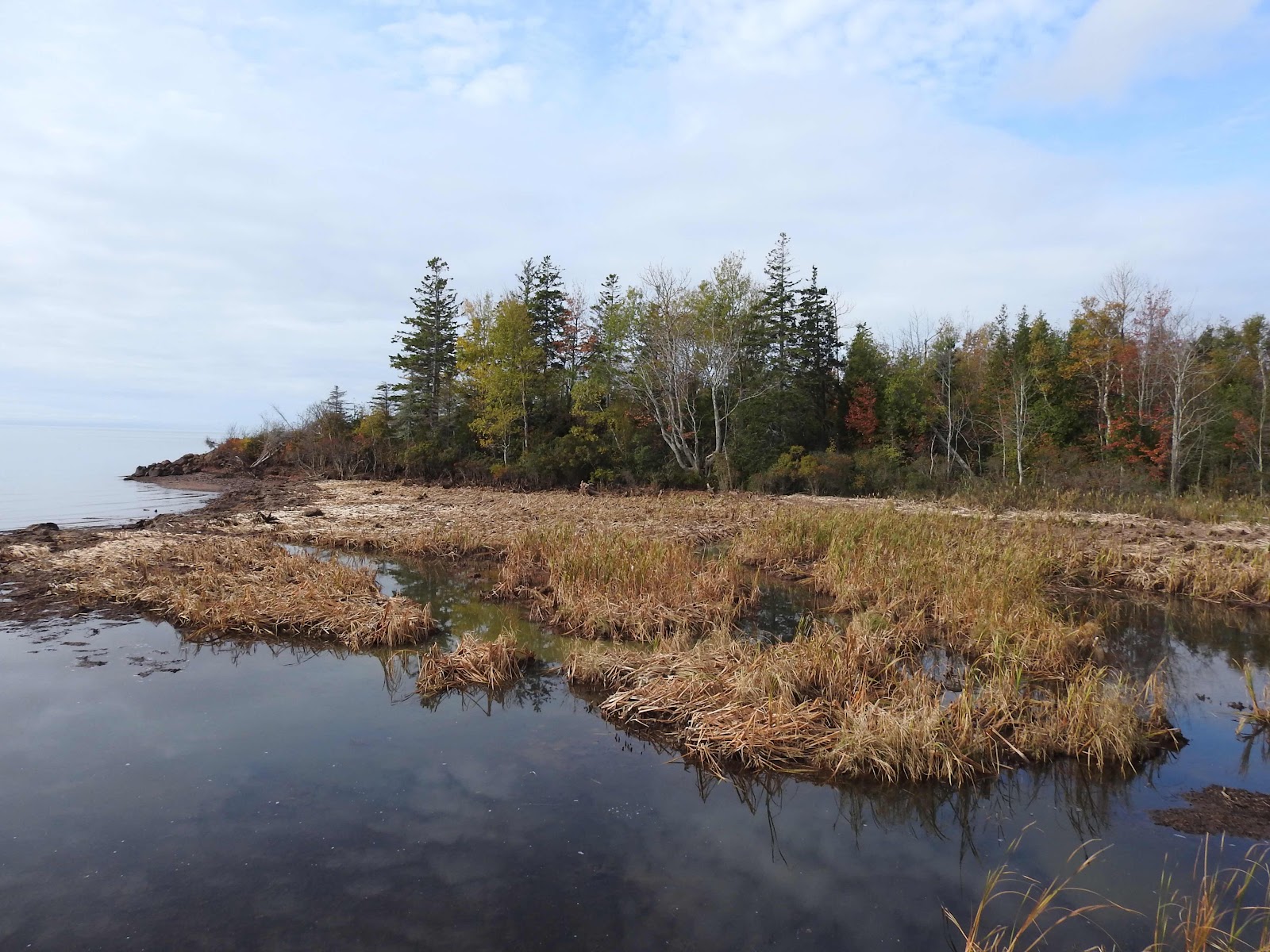
The more significant change, we felt, was in the salt marsh which is our favourite area. This section of trail always changes with the weather and the seasons anyway, depending on the amount of rain we have or high tides and wind conditions. The small boundary of seaweed and sand between the marsh and the sea was destroyed, with the tumultuous salt water advancing up the stream, depositing the seaweed almost fifty metres from the shoreline. 


Bulrushes and grasses were flattened. The change was dramatic. 


It has been interesting to hear environmentalists speak of the destruction on the island from Fiona, urging patience as dunes will recover over time. Watching the salt marsh over the last few weeks, I can see how this would be so. In those few weeks, the boundary of seaweed and sand is returning to the mouth of the salt marsh.


It will be interesting to see how the bulrushes and grasses return to the marsh with so much seaweed now as the substrate.


We are witnesses to both the fury and restorative possibilities of nature. 


Monday, 10 October 2022

Foxy

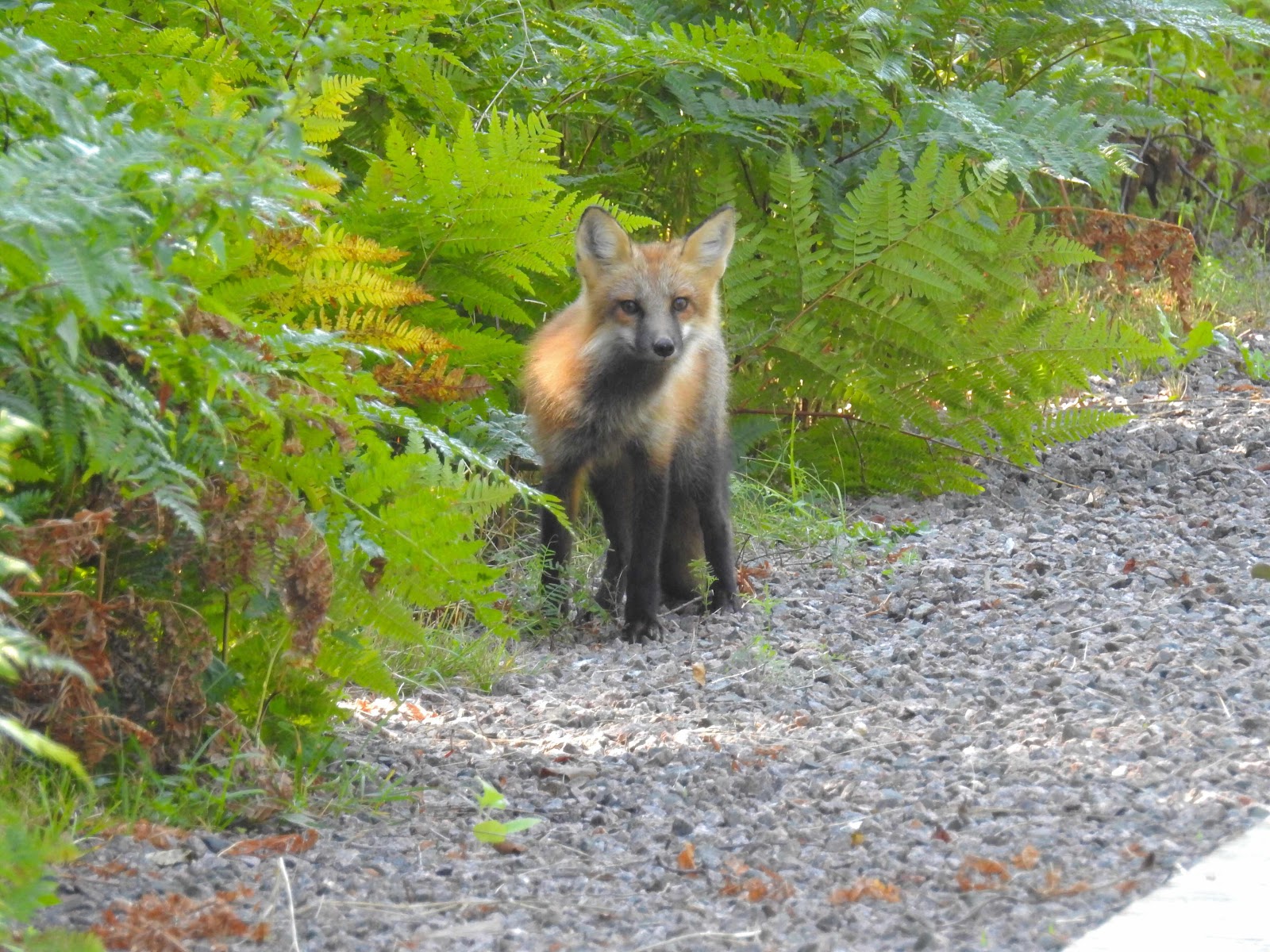
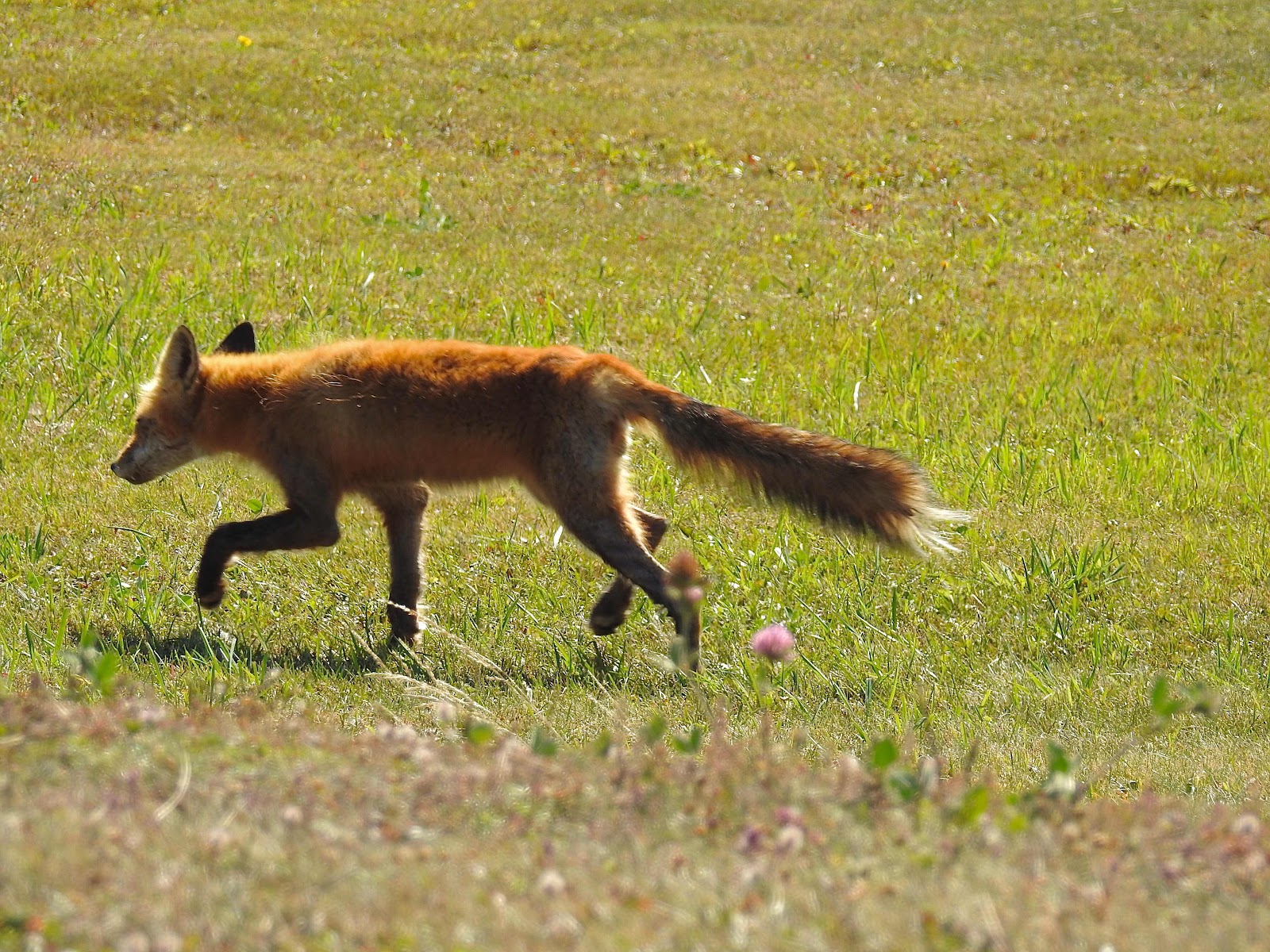
This past August, my husband and I had an encounter with a fox early one morning on the boardwalk in Summerside, Prince Edward Island. I omitted this fox from any posts so here he is today. Foxes live in the area and we’d seen one in July and I suspect it was the same one. Its colouring and markings were the same.


We came around the bend in the trail and there it was, stood near the culvert area he frequents. 


We were the only ones on that section of trail and we stopped to watch. He thought we’d have food I imagine. Its soft fluffy coat was a beauty, with markings of grey, black and red. White triangles on either side of its face were in perfect symmetry!


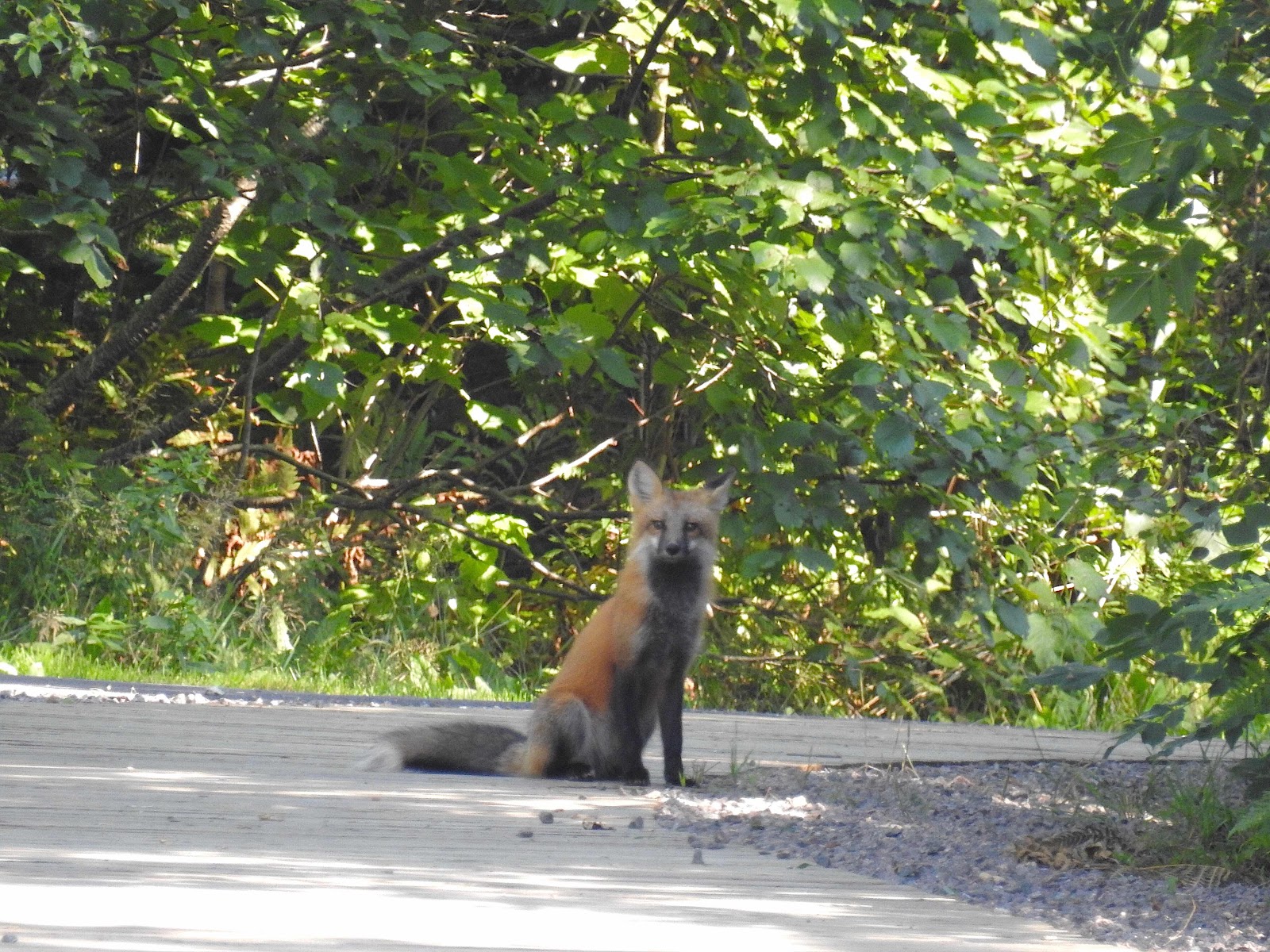
Eventually it sat on the stones watching us, not missing a move, content with the distance between us.


By this time another walked approached, walking the family pet. He stopped too and watched for a few minutes as the fox licked out its tongue. I imagined Foxy jeering the dog as it did so. 


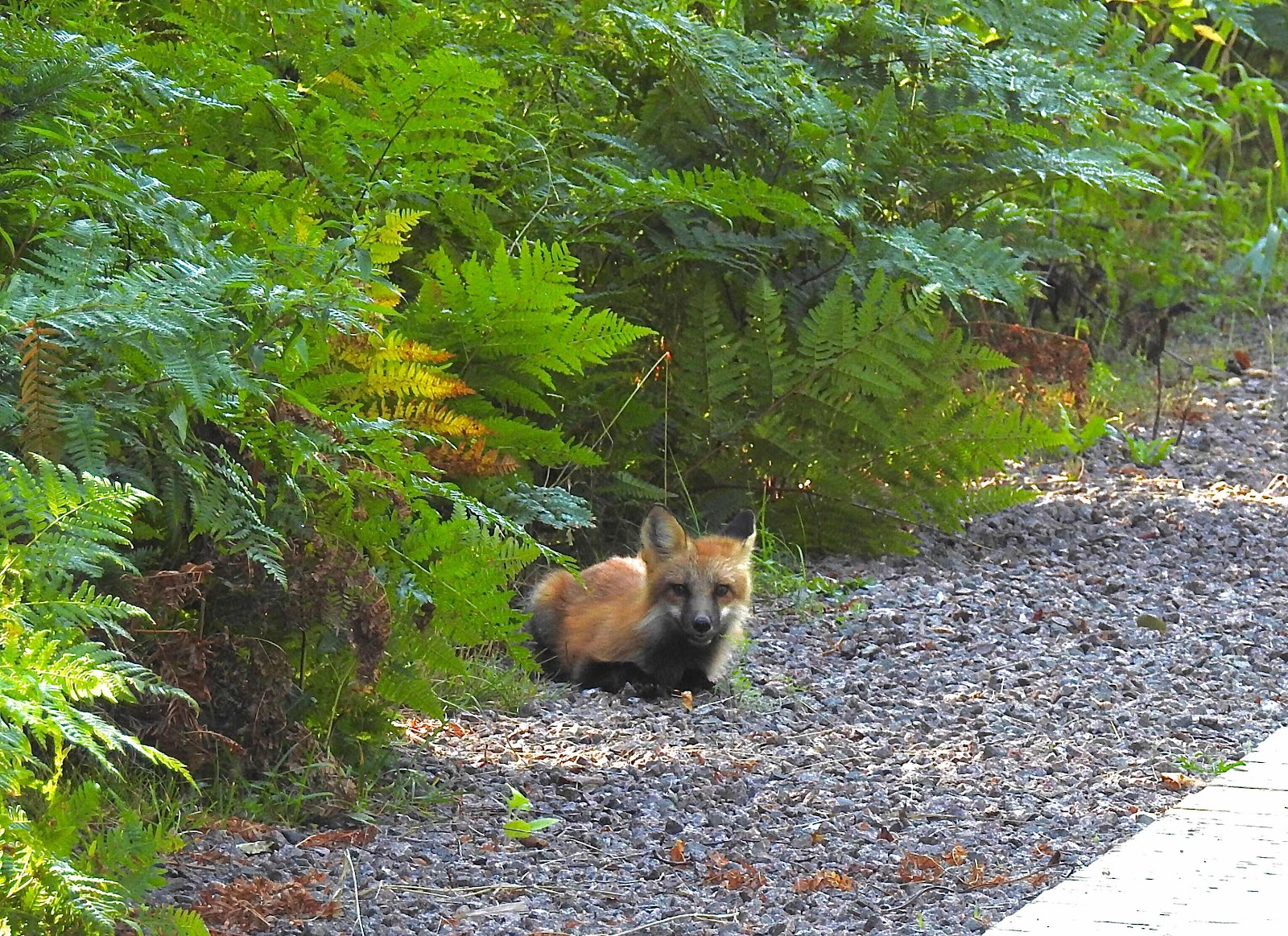
Foxy felt safe enough to lie down and continued to watch every move.


When the dog walker started to move forward, the fox disappeared into the undergrowth. As we continued along that section of trail, I looked back to see Foxy at the bend in the trail, watching us.


He disappeared into the woods as another walker approached.


This past month, just before Fiona blew through, we saw another fox on the north shore of the island. We didn’t get a good photo of this one, however, it spent several minutes scratching as we watched. As it walked away, it looked like it might be mangy. 


Mange has ravaged the Red Fox population on the island in recent years. We can only hope our fox of the boardwalk stays healthy.


Thursday, 6 October 2022

If it’s not one thing…

It has been a rough few weeks. Two weeks ago, we were living with news of the approaching Fiona, her exact landfall in Atlantic Canada unknown. As the week progressed, every weather update had us more anxious, but we prepared as east coasters do. When the storm hit, it was our worst weather experience ever.


Summerside has its own electric utility so we had power before much of the island including our family. Our grandchildren didn’t have school so we had them over for a cooked dinner. Little did we know they were brewing Covid and contagious which we found out two days later. The following day, we had symptoms. We had avoided Covid to this point.


While neither of us had life threatening symptoms with Covid, we had the equivalent of the flu with no energy. My symptoms were worse than my husband’s though we’d both had two vaccinations and two boosters. My main concern was that the symptoms would continue for weeks like they do when I have a cold or flu. While I always have allergies, I haven’t had a cold/flu for a few years thanks to masking. Now we are both taking Paxlovid.


So the stress level has been extreme for a few weeks and we will be thankful to return to normal. Meanwhile, there are islanders who are without power still and it will be into next week before some are connected to the grid, more than two weeks post Fiona.


When we compare what we experienced to the people of Pakistan with flooding and people of Florida with hurricane Ian, we know we were fortunate with Fiona. When will others return to normal? Flooding and drought have affected the world food supply, as has the war in Ukraine. 


We can do our small part to help others during the catastrophes they face by contributing financial aid, but the larger problems must be addressed. What do we do about those? And though we want to return to our comfort zone, we shouldn’t be satisfied with a return to the status quo. That’s what brought us here. How will society at large harness the resources, knowledge and skills to tackle the problems? It is easy to despair but where does that lead us?


P.S.


On a brighter note, younger members of our family recovered quickly from Covid, although the adults took longer than the children. 


I mentioned previously how the birds were missing the day after the storm. They returned to the area the next day however. It was good to see them again. We haven’t been to the boardwalk as it is still under repair and we have been sidelined anyway. We hope to feel better and able to walk there again soon.


And finally, I have been reading your blogs but unable to summon the energy to comment this week. I always enjoy your blog posts which are an interesting part of my day. Many times the events of your lives in various parts of the world become part of the conversation between my husband and me. Blogging means I am interested in anything that happens in your part of the world which could affect you. It makes the world smaller! We may be isolated at home but not really! Blogging helped me through the long isolation of the pandemic! Thank you, blogging friends and Blogger.


Tuesday, 27 September 2022

Memories of Channel/Port aux Basques

What started out as Hurricane Fiona last week became a tropical storm as it passed over Atlantic Canada. We were warned about the wind, rain and storm surge but what we experienced was more than we could have imagined. While our house is not along the coast, those who were experienced an onslaught they could never have expected, especially along the north shore of Prince Edward Island, where the northwesterly winds did the worst damage. We were assaulted by the outer bands of the system to its west with the equivalent of a category 2 storm. Today more than two thirds of the island doesn’t have power yet.


It wasn’t the same wind direction which destroyed much of a Newfoundland community however. Channel Port aux Basques on the southwest corner of the island, was in the direct path of that monster of a storm and the on-shore winds from the advancing storm meant a wall of water, with each wave, estimated at over sixteen metres high and propelled by wind speeds of 130 kph, hit homes with the force of advancing locomotives. Many disappeared into the sea. One woman died. Up to one hundred homes in the area are missing or destroyed. 


That community is where my husband’s maternal grandmother was from. For posterity, I wrote about that side of our family in 2014 and am updating the information to reflect events since then. To those who follow my blog, you may want to stop here.


When my husband, Rick was three, his mother, Sylvia took him for a week to visit her grandparents, Julia nee Hardy and Joe Lawrence. They took the train from Corner Brook, Newfoundland to Channel Port aux Basques where her grandparents lived.


Sylvia is the middle child of Classie (Lawrence) and Richard (Dick) Mercer. She has two brothers, Richard (Dick) and Carl. The three were born in Channel Port aux Basques and have fond memories of their grandparents especially during their youth. Sylvia wanted Rick to know these wonderful people.


    Carl, Sylvia, Dick Mercer

Joe Lawrence was from Channel but Julia was from another community along the southwest coast of Newfoundland. While Joe lived into the late 1980s, Julia died more than thirty years earlier and Sylvia's memories of her are closely tied to the house where she lived, a house with a great deal of character.


            Dick at his grandparents' graves

This house had a beautiful garden where Julia grew gorgeous dahlias. She also grew rhubarb and gooseberries. It was an incredible feat to have a garden in that area because the houses were built on solid rock. Julia was a great gardener and worked hard to build up the soil for her garden.


Julia made the best thin apricot pies out of dried apricots and cooked them on plates in the oven of the wood stove. Her meals were delicious and the food was plentiful. 


Julia was a robust woman with dark curly hair. She was good to Sylvia and though she shouted at her own children, Julia didn't once raise her voice to Sylvia. Dick, Carl and Sylvia, were close in age to the youngest of Julia's own children. Julia's youngest child, Clarinda was a year younger than Dick and a year older than Sylvia. Sylvia’s mother, Classie, was Julia and Joe’s oldest child. While she loved all three of her grandchildren, Julia's favourite was the oldest grandchild, Dick. He could do no wrong according to Julia. 


                    Julia Harding Lawrence

Joe purchased their house with gold pieces which he saved by working on a ship. Later he was a conductor with the Newfoundland Railway. Julia kept the house immaculately and it was a huge house to tend. It had three levels, with the attic holding a hot water tank. This was an exceptional feature in a Newfoundland home for that time. The attic was also the storage place for mats in the summer and wool for carding.


The second level had three bedrooms, two of which had fireplaces. There was also a huge bathroom with a sink, toilet and bathtub. This was unusual as well, to have a bathroom but especially one so large and well equipped. The hall on this floor was wide enough that Julia had a bed under the hall window for guests if needed. 


The unique thing about the main floor was that it had two kitchens, one for summer and one for winter use. It also had two verandas front and back, one covered with windows all around  where Julia kept wicker furniture, the other had a covered deck. The living and dining rooms on the main floor were not used until the minister visited, like in so many Newfoundland homes. Only special guests ever got into those rooms. 


There was a wash house on the main level as well, what we call a laundry room today. There Julia kept her wash tub and a stove for heating water in addition to the hot water provided from the hot water tank. This wash house had a table and chairs where the family ate on wash days. 


In summer they ate in the summer kitchen which lacked a stove, and the rest of the year, in the winter kitchen which was warmer and had the cook stove. There was a huge window in the winter kitchen. Julia set up her rug hooking frame under that window and hooked her mats out of scraps of material. She took the mats across the Lower Road, path really, to the shoreline and washed them on the beach. 


Joe's motor boat was pulled ashore on that beach. He used this boat for fishing or going to work at the railway, motoring around the point of land in Channel and steering along the coastline to the train station. Sylvia's older brother, Dick, often went in the boat with his grandfather. The lobsters were so plentiful that the two speared them from the boat. On one such trip Joe's motor cut out and he couldn't get it working again. As they drifted closer and closer to the rocks, Dick thought they were going to die. Luckily Joe didn't give up on the motor and got it going just in time to save them from a rocky, watery demise.


       Joe Lawrence

People moved around by boat a great deal because roads were merely paths. They often used horse and cart as well however. Sylvia's father fell off the cart on his way home one day and broke his arm, in the 1930s version of a traffic accident. 


    Classie Mercer, Julia Lawrence, Dick Mercer

Channel is forever changed because of the storm, Fiona. It is questionable whether houses will be rebuilt where this old house stood. However, warm memories of the big house and the people who lived there are part of the history of the Lawrence/Mercer/Smith family. The story of Julia and Joe will live through the generations. 


Note: Richard (Dick) Mercer, Sylvia’s brother, died in 2016.


Monday, 26 September 2022

Notes from the island

Our power is back now after thirty-six hours. We were doing fine with the generator however. The silence after the generator is turned off is welcome and a nice reminder of life as we usually know it.


Our windows all have shredded leaves stuck to them. The young maple and oak trees in the back yard are still in the ground but lost green leaves. Holly leaves from the bush in the front yard were stuck to the patio doors on the back. The bush itself lost its berries which is a huge loss for the birds this winter.


Sunday, it was sunny with a slight breeze and neighbours were out cleaning up around their properties as were we. People helped each other and shared stories of their experience of the storm. 


School is cancelled for two days so far as the clean-up continues. Children were scared, but one of our granddaughters slept through it. I don’t know if I’ve ever slept that soundly.


Our gentle island took quite a hit. People are sharing photos on-line of areas of the province we all know, like Dalvay in the National Park. My husband and I were there on the 19th of September. I took these photos:


From the beach looking west


From the beach looking east


Walkway over the dunes to a crosswalk


The beach is gone now as are the dunes. The sea is up to the road.


The following photo was posted by The Sands at Darnley on Facebook:


The reports are the same all along the north shore where the tidal surge was devastating.


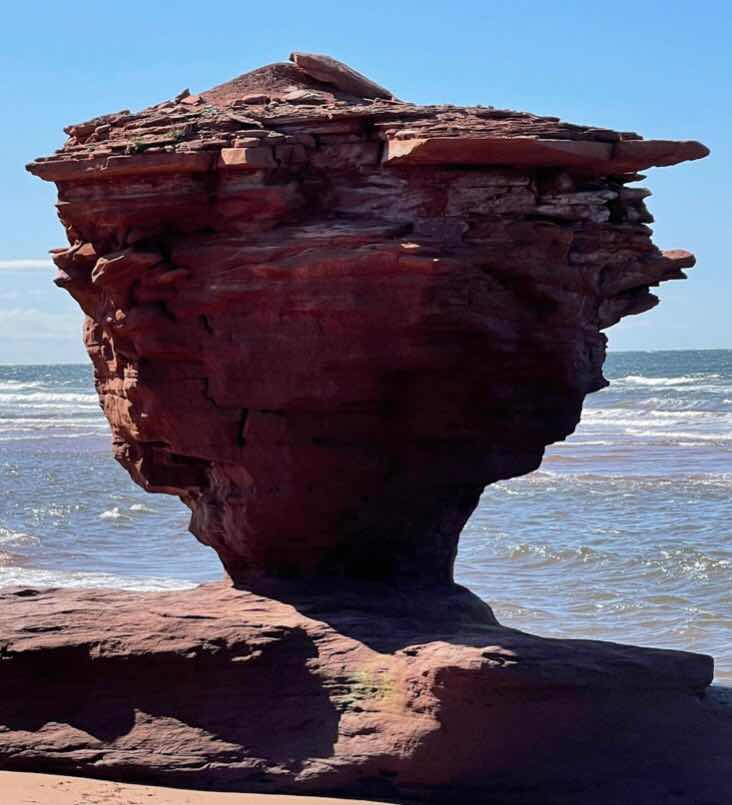
The Teacup sea stack at Thunder Cove is gone, a victim of the waves.


Some bridges and cottages were lost. There was one death.


When we were out around the house yesterday, there wasn’t one bird in the area. No crows or starlings, blue jays, cormorants or geese flying over. It was eerily quiet in the area. Where are they? Did they survive?


It will be days before we visit the boardwalk to see the destruction after the city cleans up there. What of the animals?


What of Cavendish Grove, Bubbling Springs, St. Peter’s Harbour, Cabot Beach, Canoe Cove, New London Lighthouse, to name a few.


Our island changed because of Fiona. She bit off and chewed up the coastline, spat it into the ocean and did her best to destroy what was on land. Knowing what humans have done to the environment, one can only think that we are just seeing the beginning of what others like her will bring. It is a scary thought.