Most Popular Post

Friday, 7 September 2018

Side by side

She walks with a cane but it doesn’t slow her down much. Five days a week, she and her husband walk the boardwalk in Summerside, Prince Edward Island. They are both islanders and know the history and culture of this place instinctively. They are great ambassadors for the island and for life.


He walks beside her though he is quicker on his feet and sometimes moves a bit ahead. Not for long though. He turns around and catches her eye and waits or walks back to her. They don’t speak to each other much. It’s all been said during their many years together. Each knows exactly what the other is thinking.


They greet everyone on the trail. “Good morning,” or,”It’s a beautiful day,” are standard but other conversations may ensue, especially if a dog accompanies the others. They both loves dogs.


The two observe all of the birds and other animals along the way. They enjoy every one and are in tune with their habits and activity and often share stories about them. The couple also knows every tree, bush and flower and their rhythm with the seasons. 


They stop to speak with old friends, sharing the latests news and stories from their younger days. News of children and grandchildren is always spoken. They are proud of each and every one.


Their eyes twinkle, full of life and brimming with history and wisdom. My husband and I aspire to be like them in twenty years!







Wednesday, 5 September 2018

Lunch at Doucet House

When I first saw Doucet House in Rustico this past spring, the gray-blue sky appeared to sit on the roof of the old place. 


However on this summer day, the house, believed to be the oldest on Prince Edward Island, looks like it is smiling. And no wonder!


The old house was built in 1772 by Jean and Marguerite Doucet, an Acadian family, on a site across the bay. There they had nine children. The house stayed in the family until 1982. In 1999, the new owner donated the little house as a museum and work began to transport it across the bay to sit next to the first Credit Union in Canada. 


My husband and I couldn’t see the inside of the building in April but we could visit on this day. There are three rooms on the main floor. The largest contains the kitchen, with the stone fireplace in the center of the house, where food cooked over the open fire. 


The original walls are visible today but sometime in the life of the house, were covered with sheet rock. It was removed during restoration but leaves its trace on the old wood.


Two bedrooms complete the main floor, a smaller room 


and a larger with a double bed and a mattress filled with straw. 


There is a half story above which was used for storage.


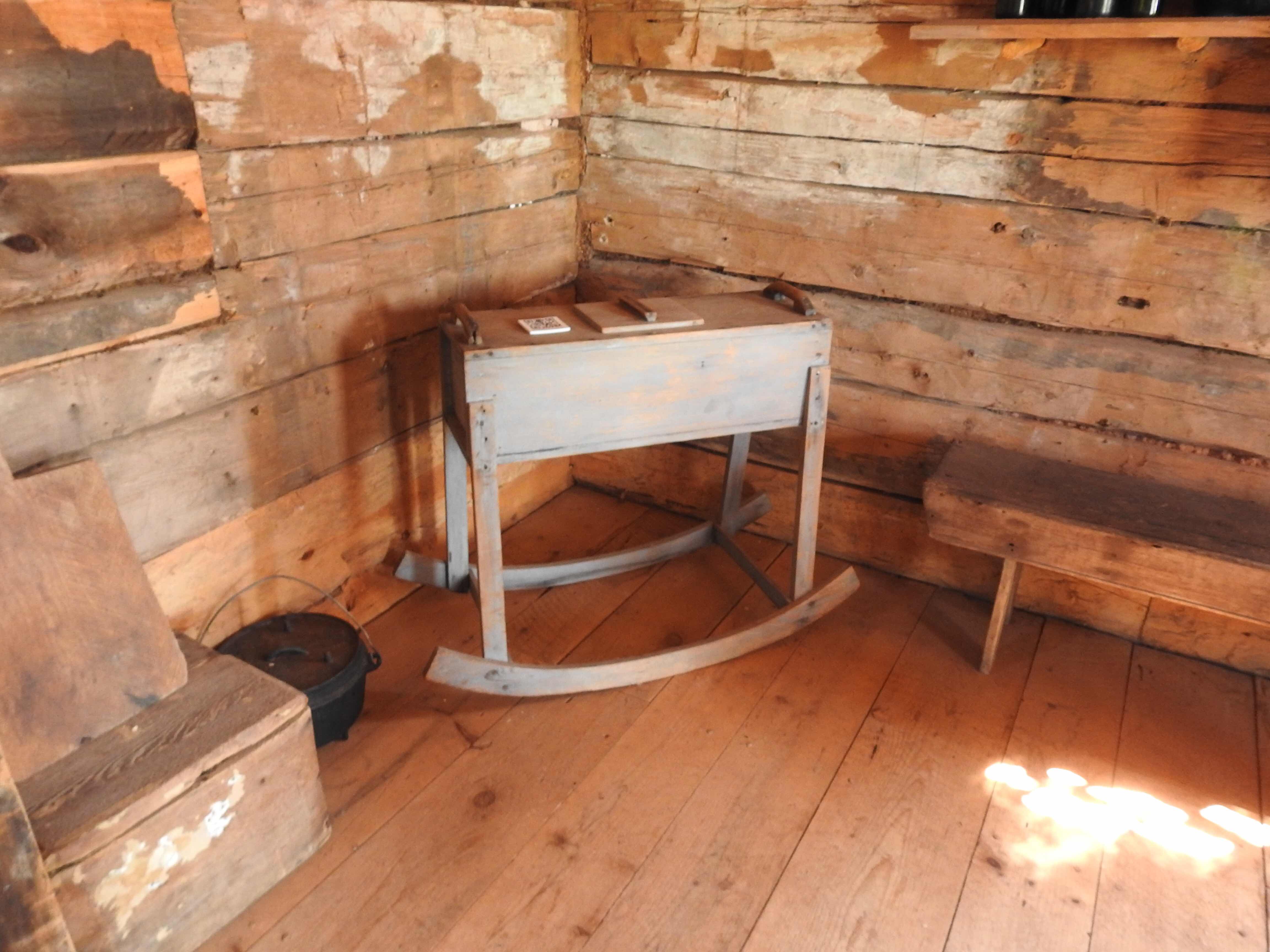
The furniture was donated by local Acadian families and includes items such as an old butter churn 


and reminders of spinning


and weaving. 


Outside, the community oven cooked bread and other staples for all the Acadian families in the area.


The fire started at the front of the oven and the coals were pushed to the back to make room for the food to bake.


There is a shed with the usual items such as a yoke for oxen 


and a wooden seeder. An old manual washing machine, invented in the United States  in 1846 and in common use until 1927, must have been a blessing to the women who used it originally.


We had our picnic outside as we imagined the ghosts of those first Acadians going about their daily lives all around us. They were great company.


Monday, 3 September 2018

The boardwalk in late summer

It’s been a hot and humid summer, with weeks of heat advisories. My husband and I have not walked the boardwalk in Summerside, Prince Edward Island for a few months, so when the heat advisories ceased, off we went. 


Numerous Cabbage white butterflies flit around the foliage along the boardwalk. However this White admiral pauses long enough for me to take a photo.


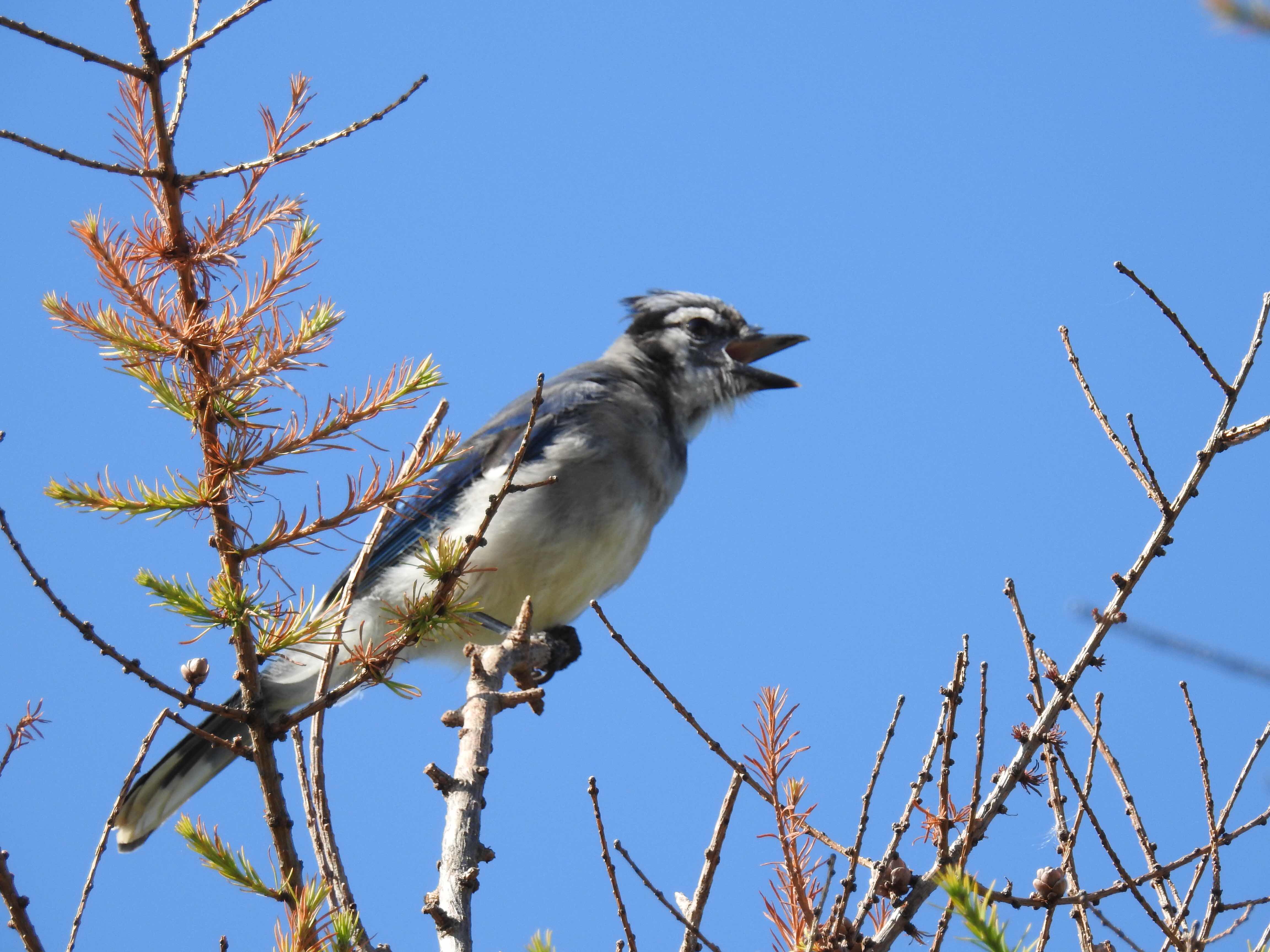
The birds are active as usual, especially the blue jays. There are dozens of them in this area and their calls fill the air. On a day when there is no wind, the calls of the jays drown out the crows and ravens.


Chipmunks are back again. I didn’t see them this past spring. They are more timid than the squirrels which approach people. Chipmunks are more shy and less trusting of people. 


Squirrels take every morsel offered by passersby. Every generation of the furry creatures learns quickly to approach all who happen by. They are rewarded often enough to keep them interested.


The Common grackles take interest in the bird seed left by people. They watch stealthily as they approach the seeds, like bandits!


Song sparrows attract attention as they sing and hop among the branches. Rarely do they land on the walkway. 


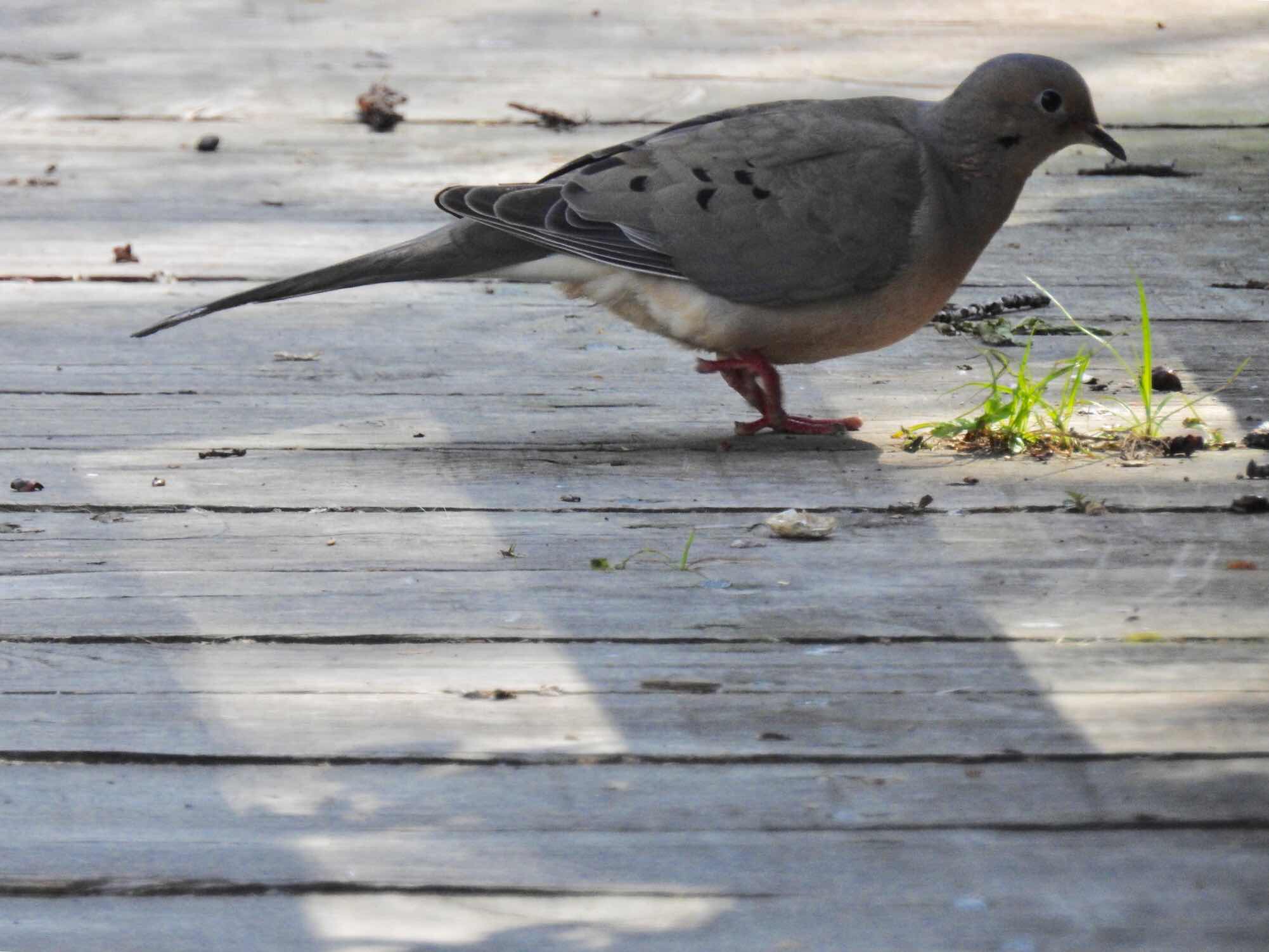
Their friends the Mourning doves mosey along the boardwalk, oblivious to the walkers.


In the water, American black ducks periodically hide among the grasses at the edge of the stream.


A muskrat takes time to check for peanuts. The younger ones are trained by their parents in what to watch for and when to hide.


Greater yellow legs find their way to the stream every year. This year, one is commonly around on her own with occasional yellow leg visitors.


A Great blue heron loves this marsh area as well. Often found wading in the water, on this day she is stood guard in a spruce tree. This is the first time we’v seen a heron in a tree. 


I also caught her flying past on her way elsewhere.


Osprey nests looks abandoned. Their property needs a ‘Vacancy’ sign.


As a tribute to all the people who bring peanuts and seeds to feed the animals, a single sunflower seed, carried by the wind, water or dropped by a bird, took root along the water’s edge. She shines for all to see as people and animals go about their business. It will be interesting to see if birds eat at the seeds when they mature.


Friday, 31 August 2018

Along the north shore

White caps. We had never seen the water so rough. When it’s stormy in Prince Edward Island, my husband and I are never by the sea. On this beautiful late August day, the wind is high and the water on the north shore is churning. 


You can hear the waves crashing into the shore rather than the gentle lap of waves along the beach which is so familiar.


We can smell the sea too, that salty, seaweed smell which is a welcome reminder of our youth in Newfoundland. That is a first for us on this island too. We let it seep into our beings as we stand on the cape along the north shore in the National Park.


The cliffs of the north shore are in sharp contrast to the depth of blue and the white caps rushing towards them. The cliffs are high too, among the highest on the island, known for its sand dunes and rolling hills. Standing along the edge of the cliffs one is impressed with the power of wind and water. 


At the lookout at MacKenzies Brook, you can see how the wave action has eroded a cave in the cliffs and the end of the cave is open now too, forming a tunnel. How long will it be before the surface above collapses?


From Orby Head, one can see the far east of the island through the haze. 


To the west, the lighthouse at Cape Tryon is visible 


and beyond it, a hint of the western tip of the island.


Below these cliffs, cormorants have their nests but all are empty today. 


They forgot to post the ‘Gone fishing’ signs.

Further along the coast, at Cape Turner, a tree defies gravity and clings to life at the top of the cliff. 


The trees along the shoreline here provide shelter from the wind. All across this area, hundreds of butterflies, mainly the Clouded sulphur species, flit across the tall weeds lining the paths.


The sounds of the sea and the movement of the butterflies are magical.


We continue our drive along the coast and have our picnic lunch at Rustico. But that’s another story.


Wednesday, 29 August 2018

On the beach

We weren’t looking for shells like our grandkids do on every beach they visit. The larger discoveries are more to the liking of my husband and I. At least it started out that way.


Driftwood is always a treat on any beach. The weathered remains of trees long uprooted from their earthly homes and cast adrift, often find a resting place on a beach. 


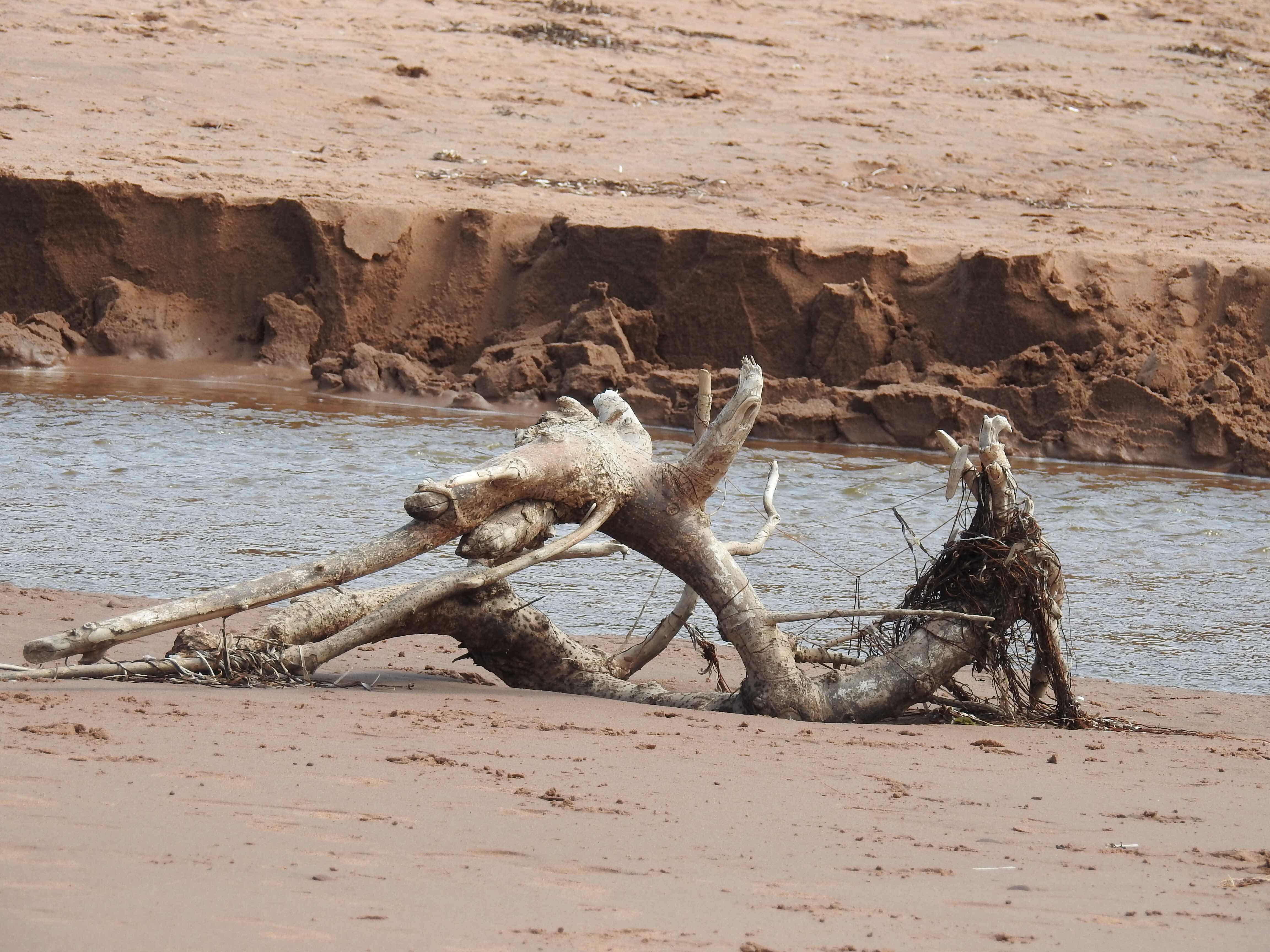
Sometimes the tree is a curious tangle of seaweed and twisted wood.


Driftwood makes a great seat on the beach too.


Colour other than blue and sand always catch the eye on the beach. This seaweed isn’t visible at high tide.


This lobster trap hasn’t caught any crustaceans lately.


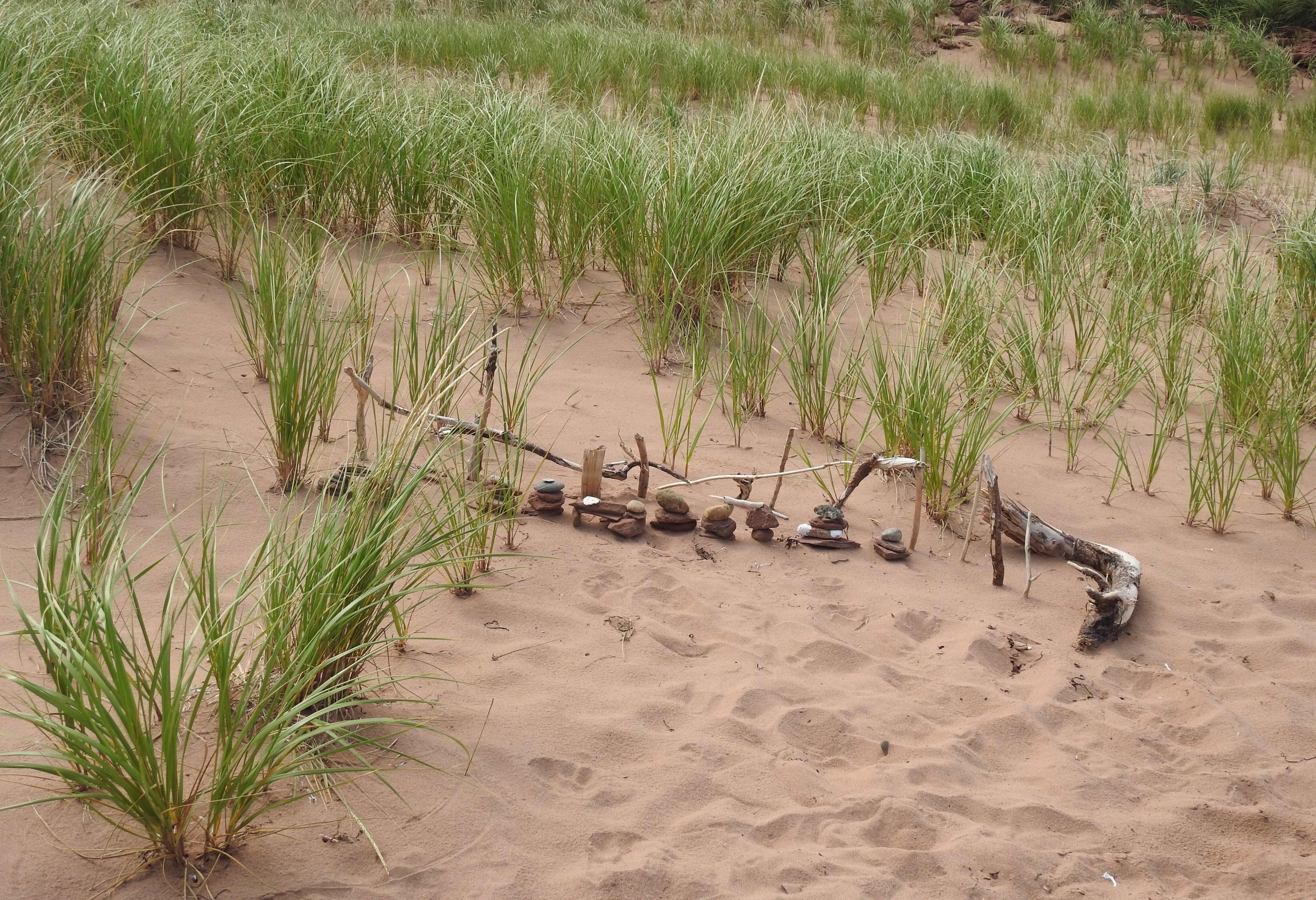
Near the Marram grass, children have taken time to position rocks and sticks above the high tide mark.


Grasshoppers were invisible until they hopped on the sand in front of us. We found  them, as tiny and as well hidden as they were, on the sand near the Marram grass.


There is more to see at the beach than sand, water and shells.


Monday, 27 August 2018

Trouble with foxes

They are beautiful creatures. However, if they take a liking to your garden, or in this case, flower bed, they are a problem. 


Our daughter’s house is near a greenbelt where foxes have their den. Every spring, it is a thrill to watch them with their young. However, they have taken a liking to our daughter’s flower bed and destroyed it.

My husband and I helped weed and plant additional perennials in a triangular bed in her front yard this year. 


Then we covered the bed in black mulch. The center of the bed had lovely ornamental grasses and around it, new plants from the garden center and some from my garden. The bed looked great.


A few days later, when I visited, the new perennials were pulled out of the soil. The mulch was disturbed and the soil below it dug up. We had no idea what had happened. I repaired the damage to the bed and composted the destroyed plants.


On my next visit, the grass was beaten down. Something was using it as bedding. The plant was tall around the edges but the center had been trampled so as to make a nest. 


Could it be the foxes?


All of the mulch was in the trench around the bed and the soil was dug up again. 


This happened when the June bugs were emerging. When we dug into the soil, maturing June bugs were easy to find. We discovered that foxes like to snack on them. It was a losing battle cleaning up this popular bed and breakfast location. They will even dig and eat worms.


Every night our daughter hears the pair of foxes at the B & B, which now is full of weeds. A few plants continue to bloom in spite of the nightly guests. The ornamental grass is flattened and the red soil exposed around it.


Next year, a new section of lawn will replace the garden bed. Will the foxy tenants destroy a section of lawn? I’ll keep you posted.