Most Popular Post

Wednesday, 15 May 2019

Shades of grey

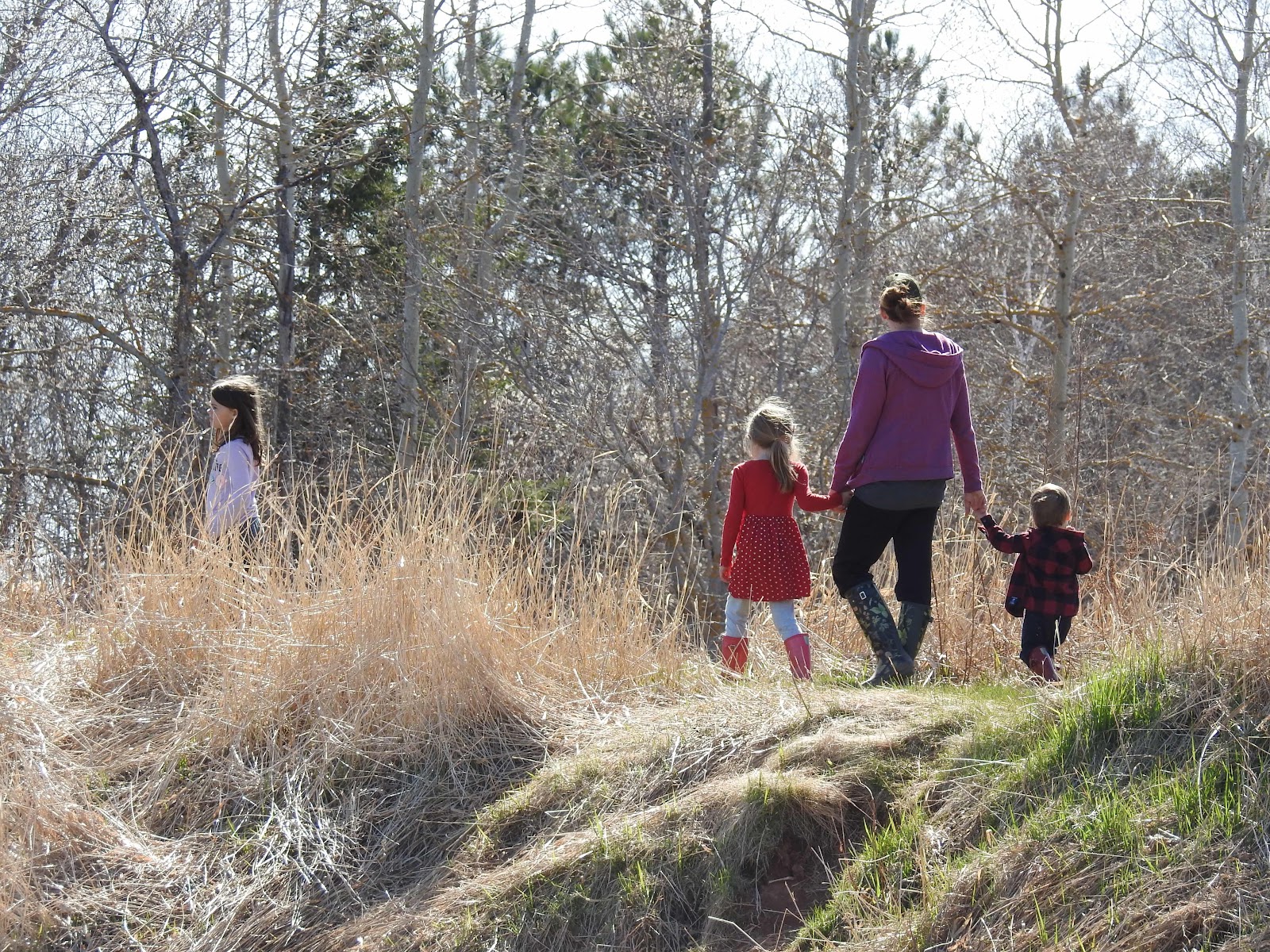
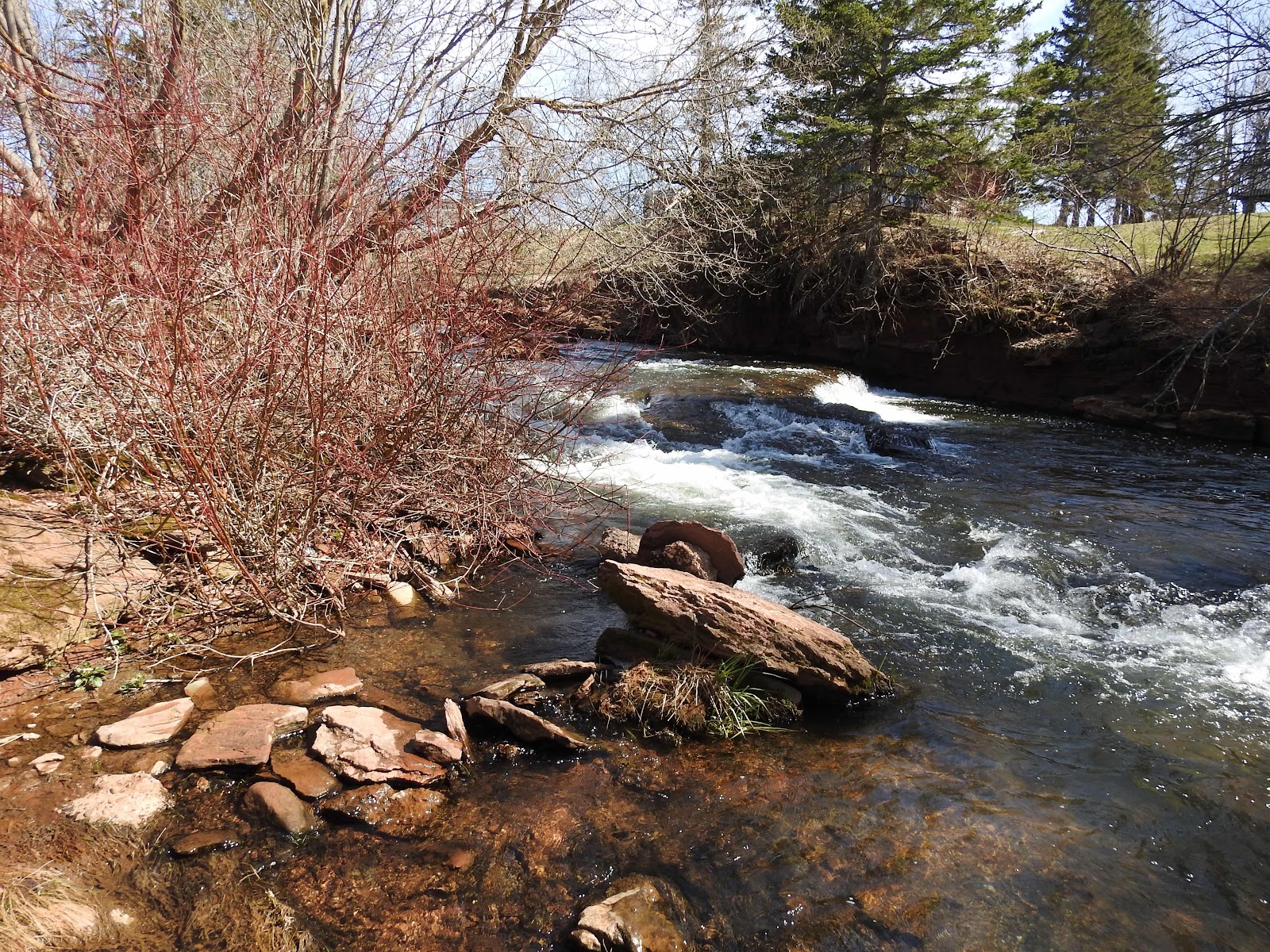
Cavendish Grove in the national park on Prince Edward Island is a favourite location for my husband and I. It is a great place to have a picnic and walk in nature. On a cold but calm day recently, we had a great picnic there and walked through the grey.


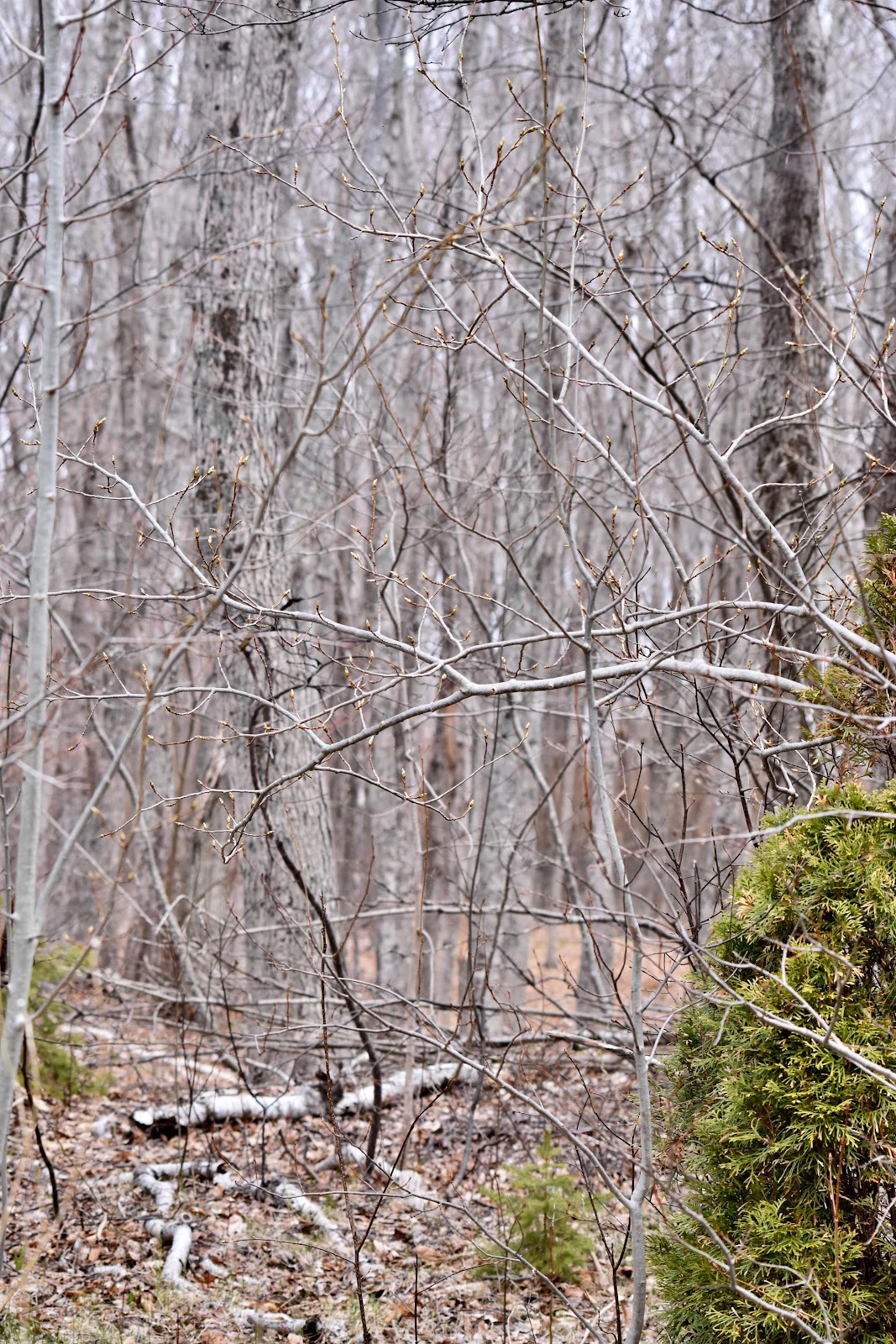
The snow has been gone for several weeks now and spring is in the air. Trees are in bud and look to be developing nicely. For now, the trees are grey, trunk, branch and twig all give the impression of gloom, but there is much more going on.


Various textures give the trunks and branches character.
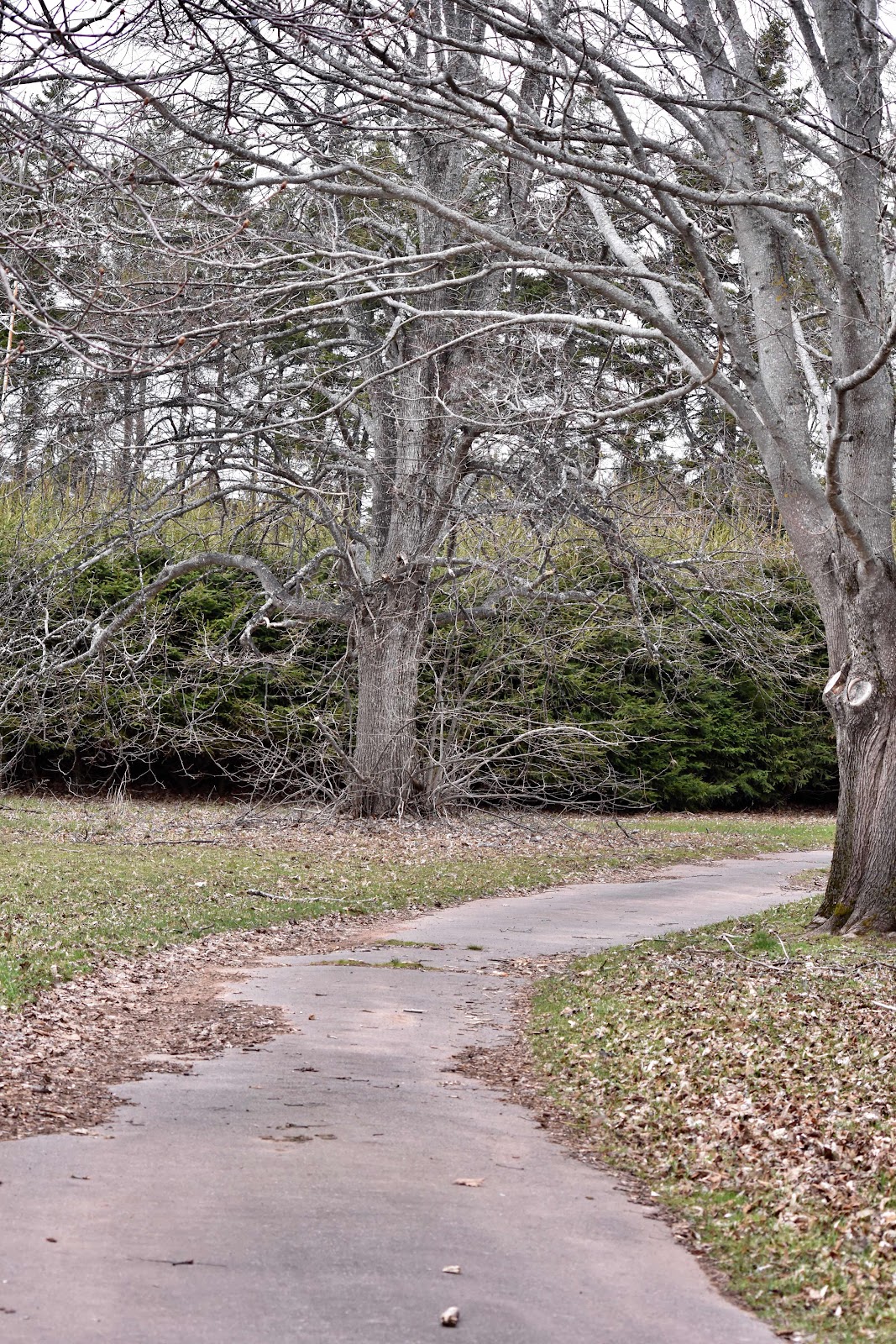


The grey of the lichens adds another dimension, as if they were painted tone on tone.
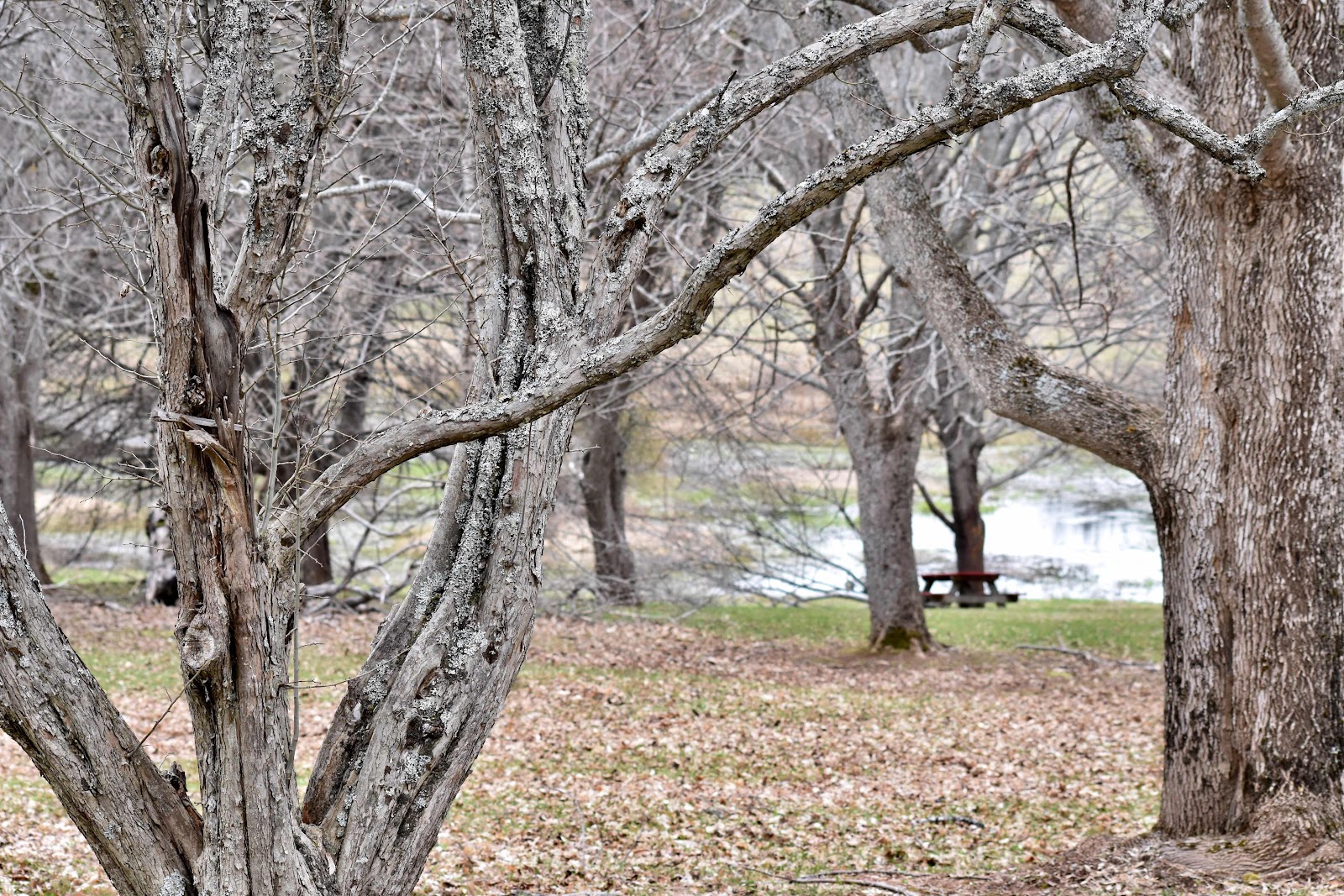


The shapes of the trunks of the trees in the grove are obvious without leaves as a distraction. Unusual shapes draw attention and almost take on an alien form.
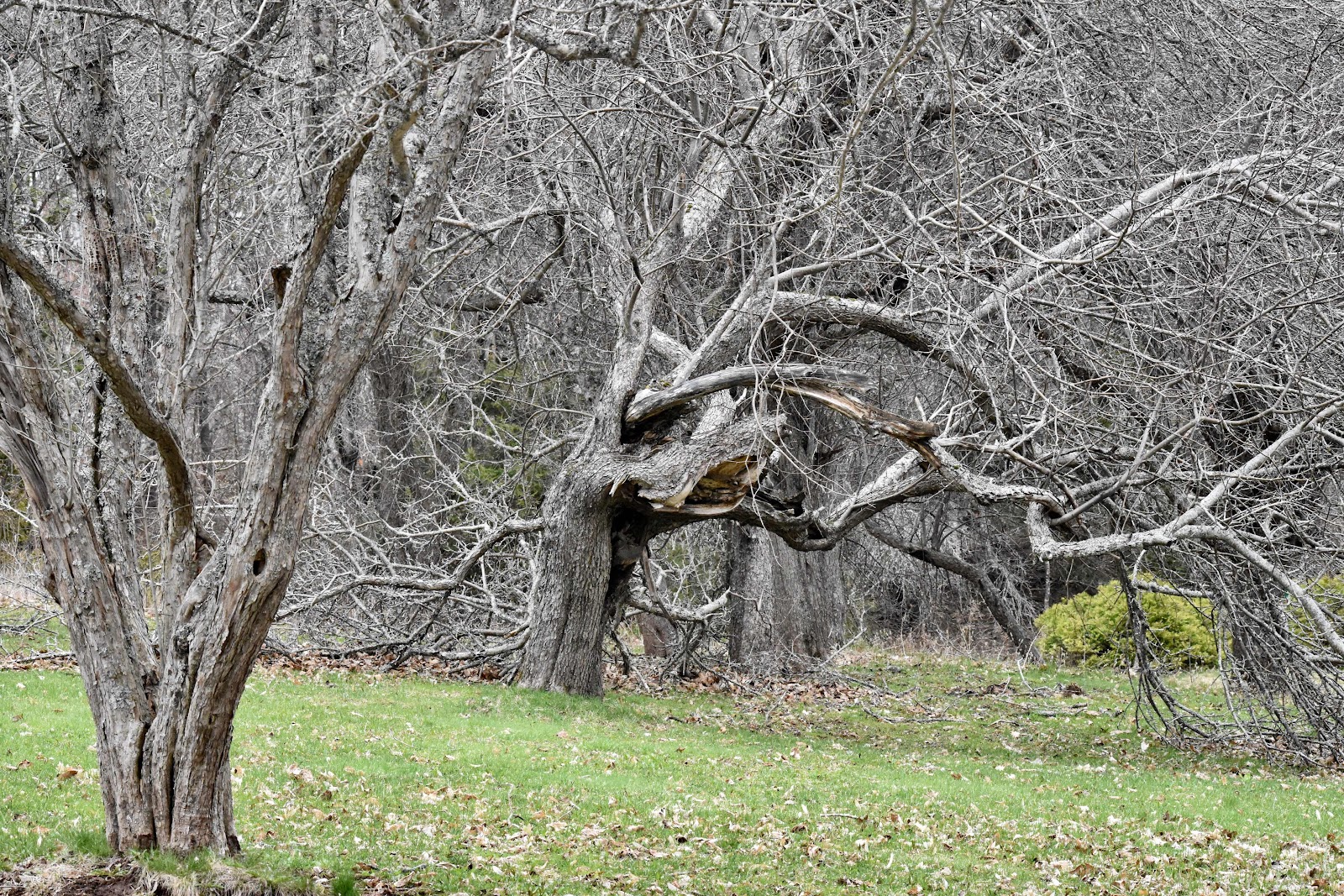


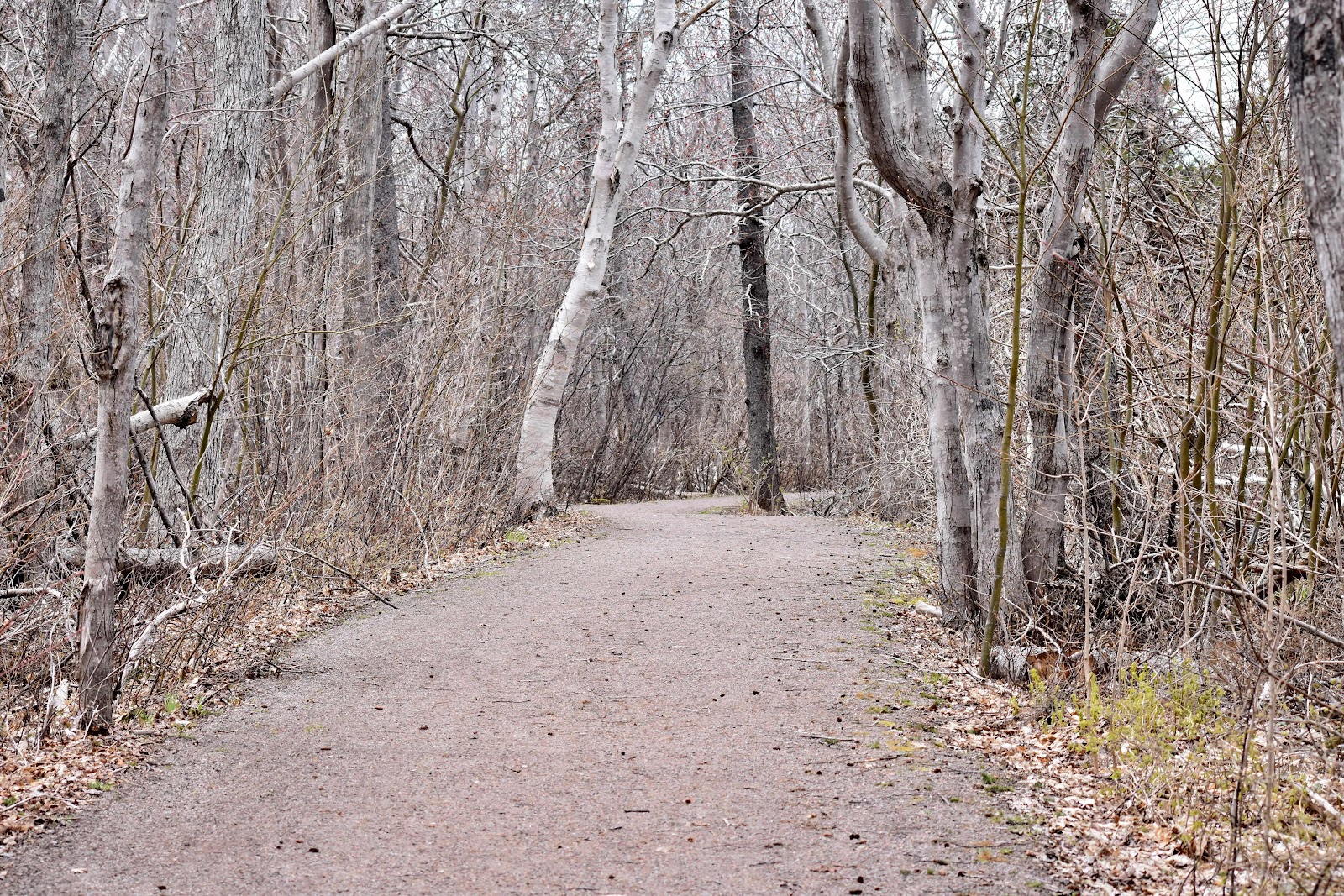
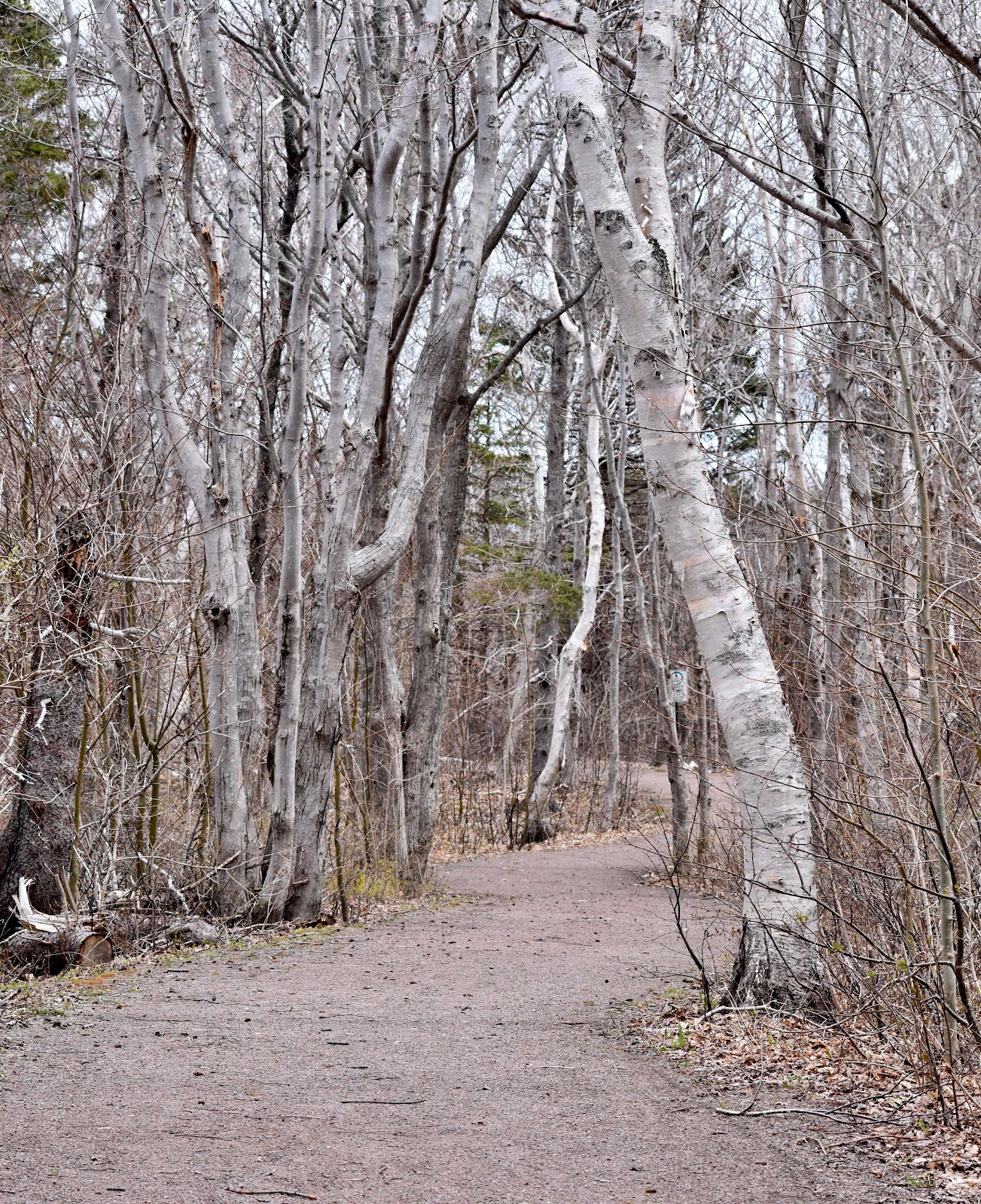
The path has walls of grey, 


which reach at least twenty meters high. Twigs stretch between trunks, uprights of various sizes, making a network of grey.


The hoof fungus stands out because of its shape but its colour blends in nicely.
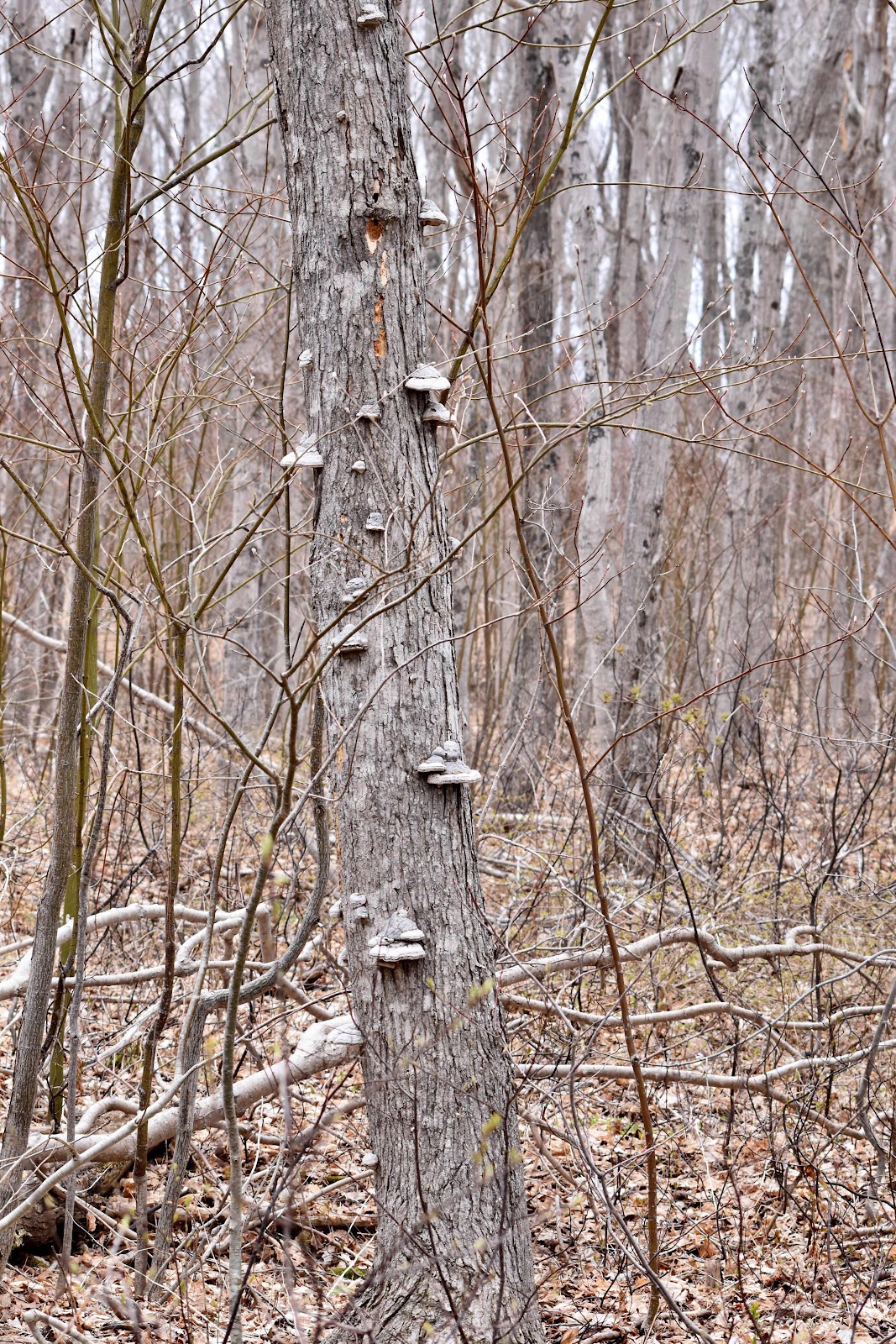


It adds another texture to the tree grey. Behind the grey, a muted brown provides highlights.


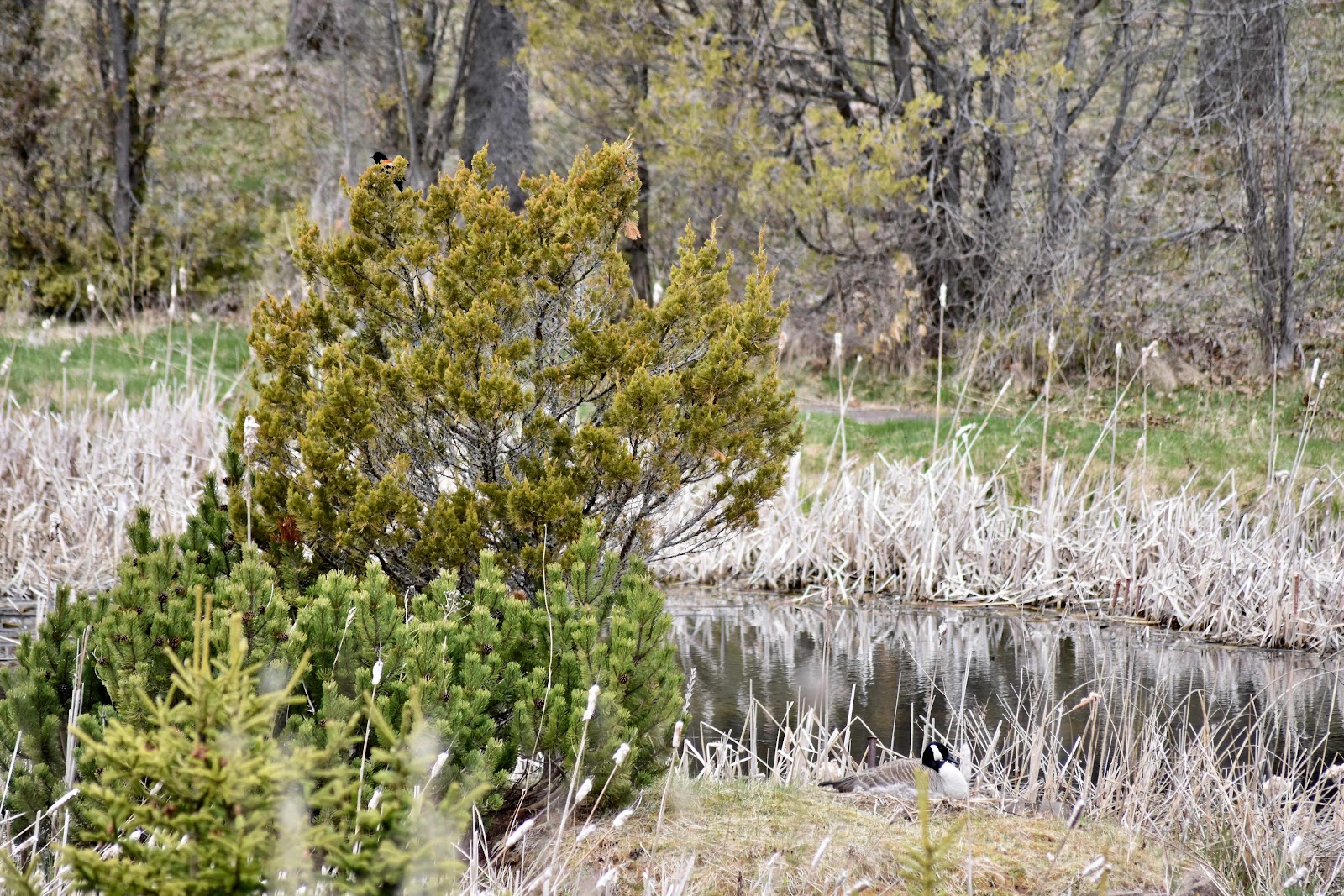
Any colour here is muted now.


The white trunks of birches provide a bit of contrast.


We had a picnic in the grove, wearing our hand warmers as we ate.
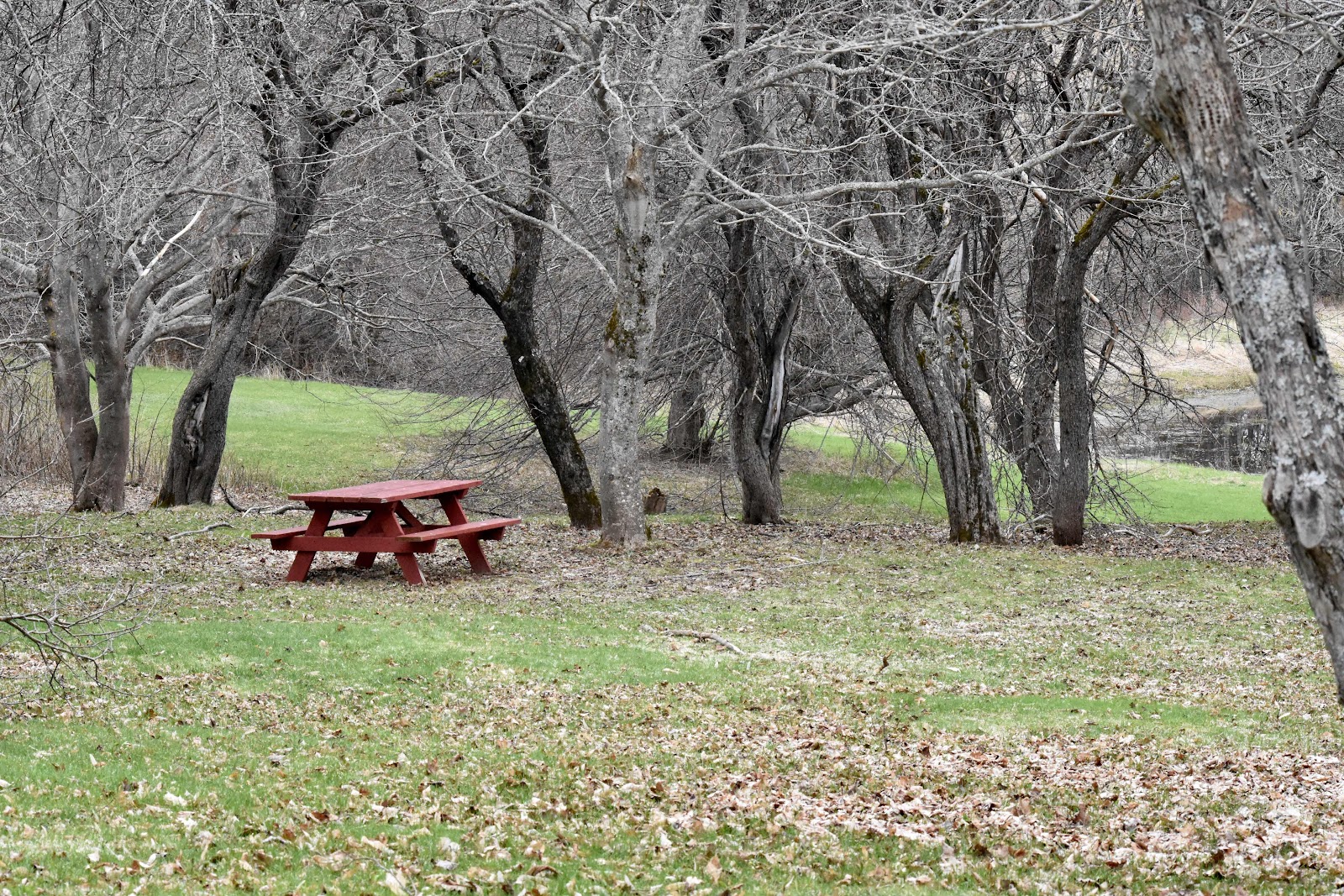


The hot tea helped as did the walk after lunch. We only saw one other person during our time there.


The new green of spring will soon overshadow the grey for the next six months. It will emerge again as the leaves disappear for another year.
Monday, 13 May 2019

Now he is two

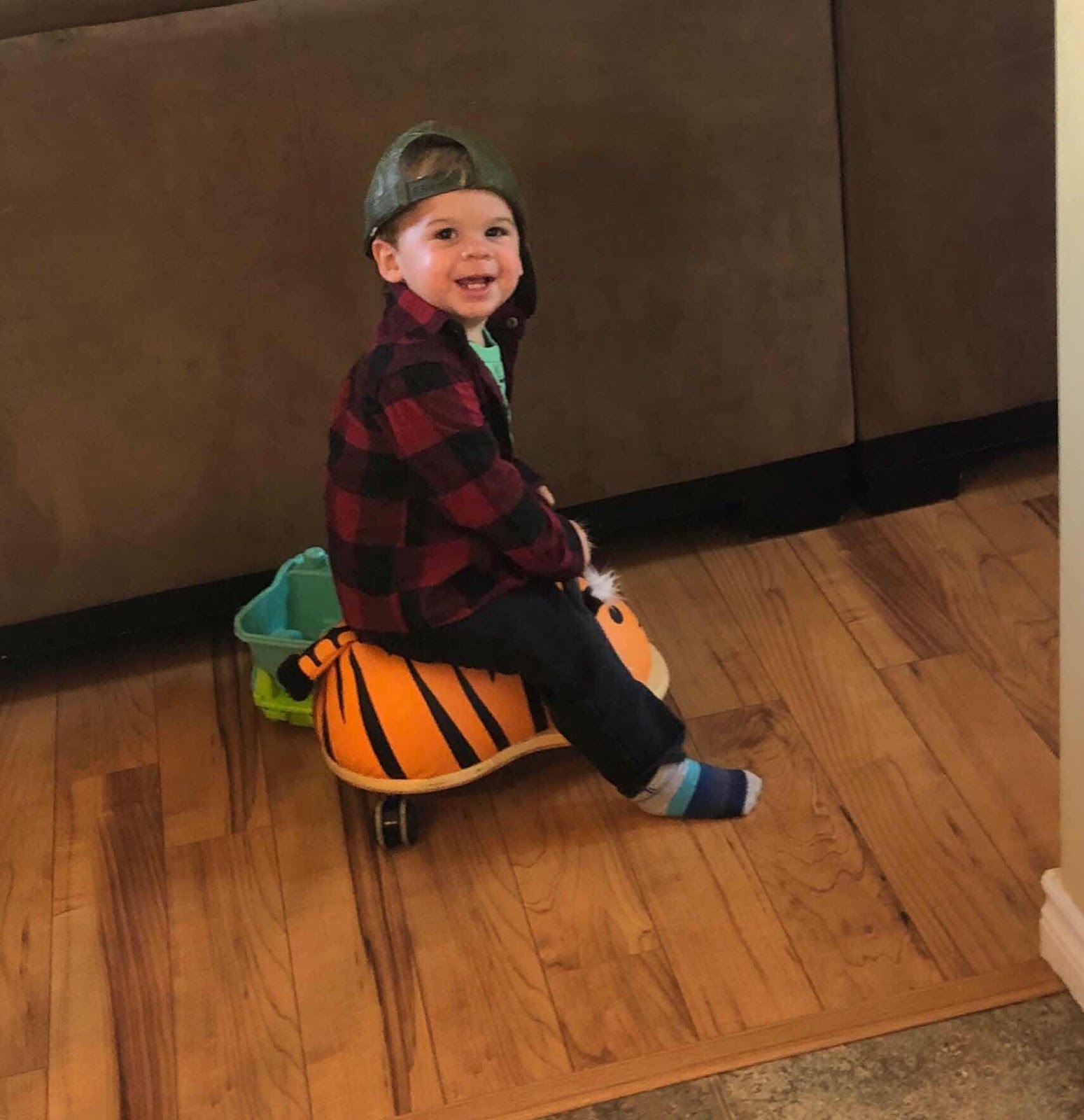
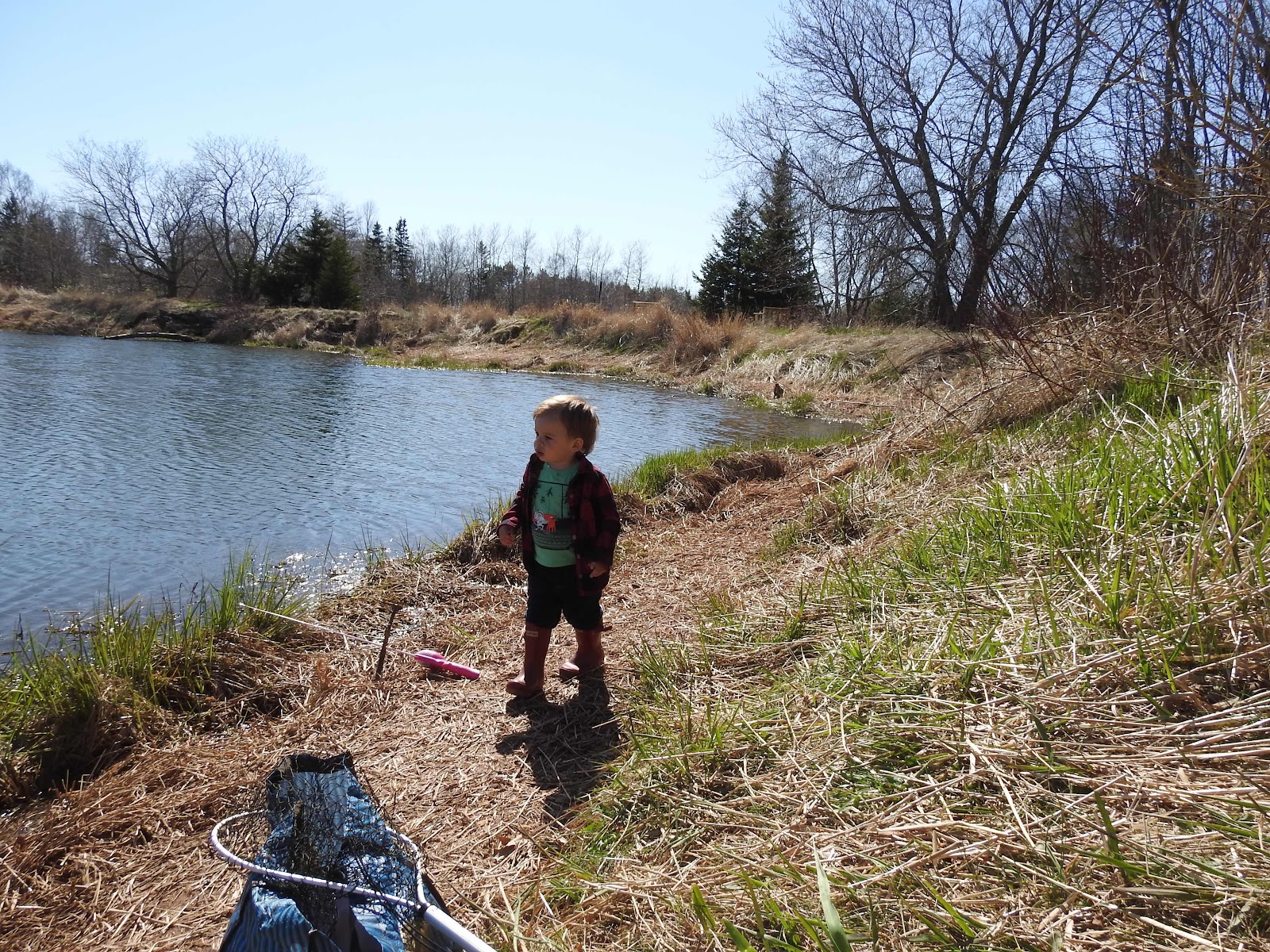
My little grandson, Owen, who will be two this week, loves animals. When we are on the boardwalk with him and his sisters, he enjoys the squirrels. If he doesn’t see them, he calls, “Squirrel, where are you?” He is also fascinated with the birds which come around to feed from your hand.


After school one day recently, our daughter, the kids, their grandfather and I went fishing for the first time this year. Last year, Owen sat on a blanket while his sisters and mother fished. This year he’s a going concern, so while our daughter helped the girls fish, my husband and I, neither of whom enjoys fishing ourselves, spent time with Owen. 


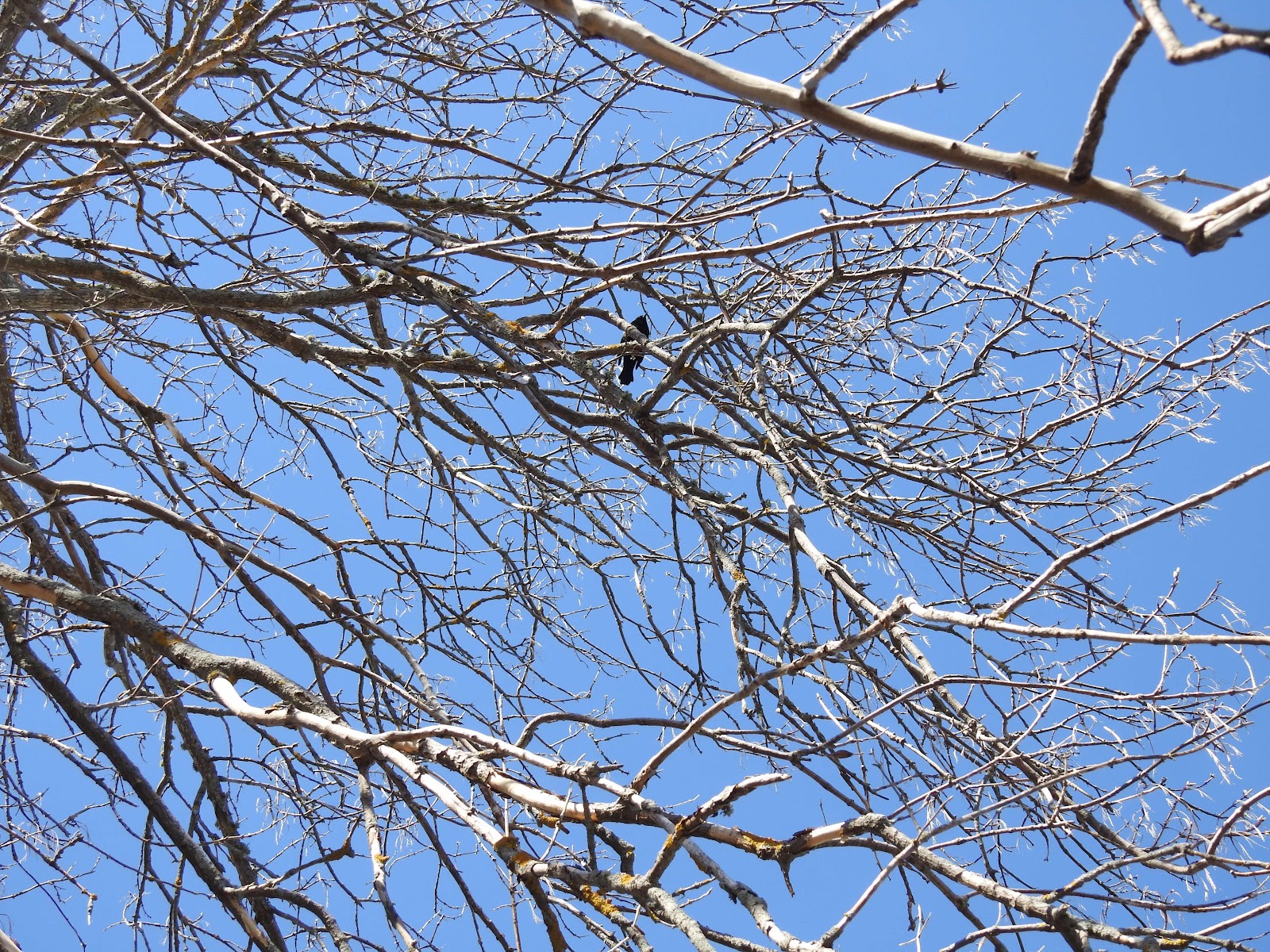
He loves the outdoors and was eager to explore and the Marchbank’s Pond area is a great place to do just that. I took him for a walk and we heard birds singing in the trees. One Red-winged blackbird high above us was insistent with its call and chattering.


Owen and I watched and listened for the longest time both on our way to and from the waterfall.


Later, while he played by the pond with his sisters, the same bird flew to a tree nearby then back to the original place again. Owen watched the bird with interest. When he walked to the falls with his mother and sisters, Owen told his mother about the bird and pointed towards it.


My interest in birds started late in life. Owen is starting early.


Happy birthday, sweet boy!


                               Owen insists on wearing the cap this way.


Friday, 10 May 2019

Cabot Beach at dawn

A week ago, we were at Malpeque for Setting Day, the first day of the lobster fishery in Prince Edward Island. However, while the fishers were busy on the water, Cabot Beach nearby was a treasure in itself that morning. 


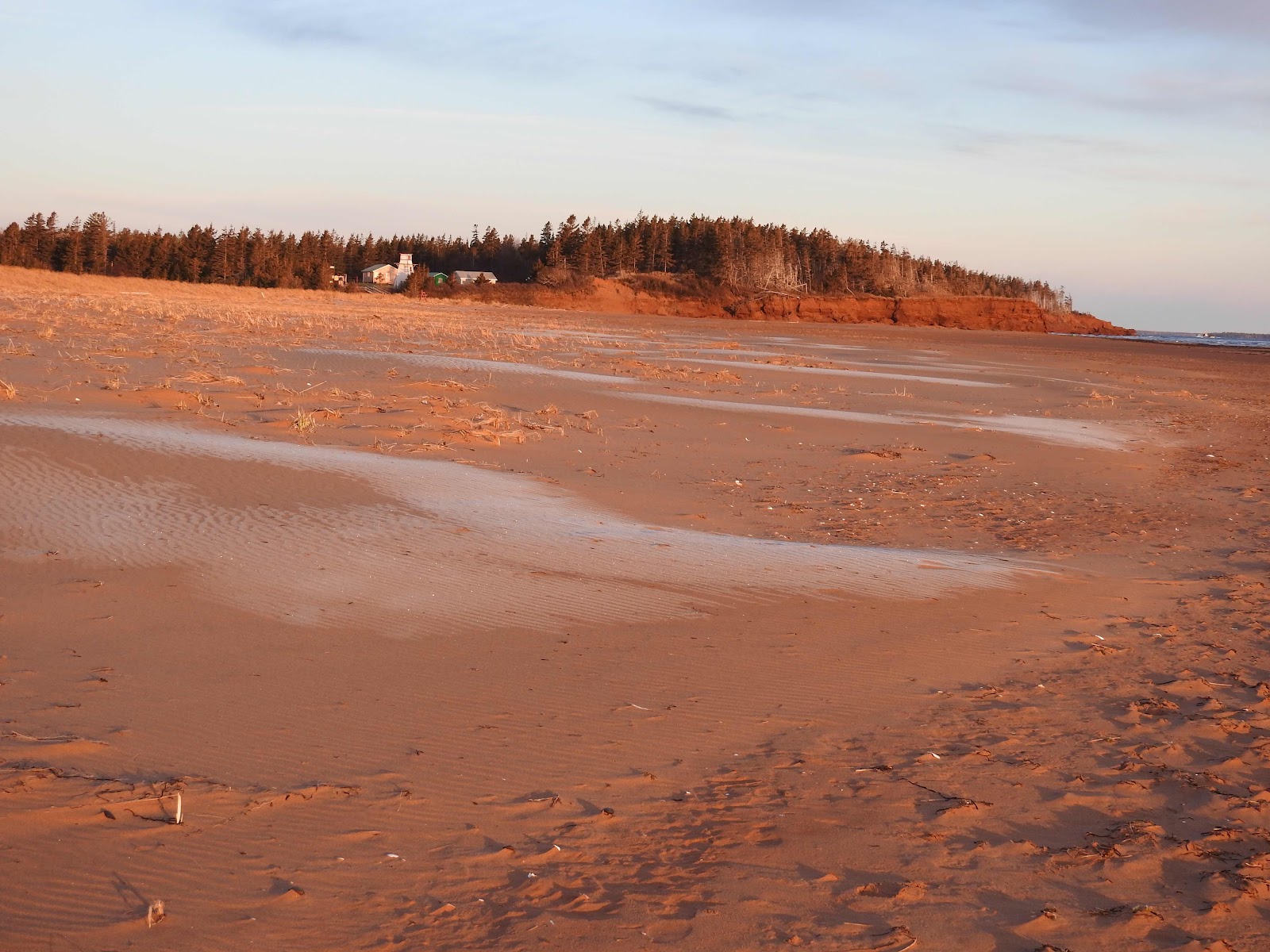
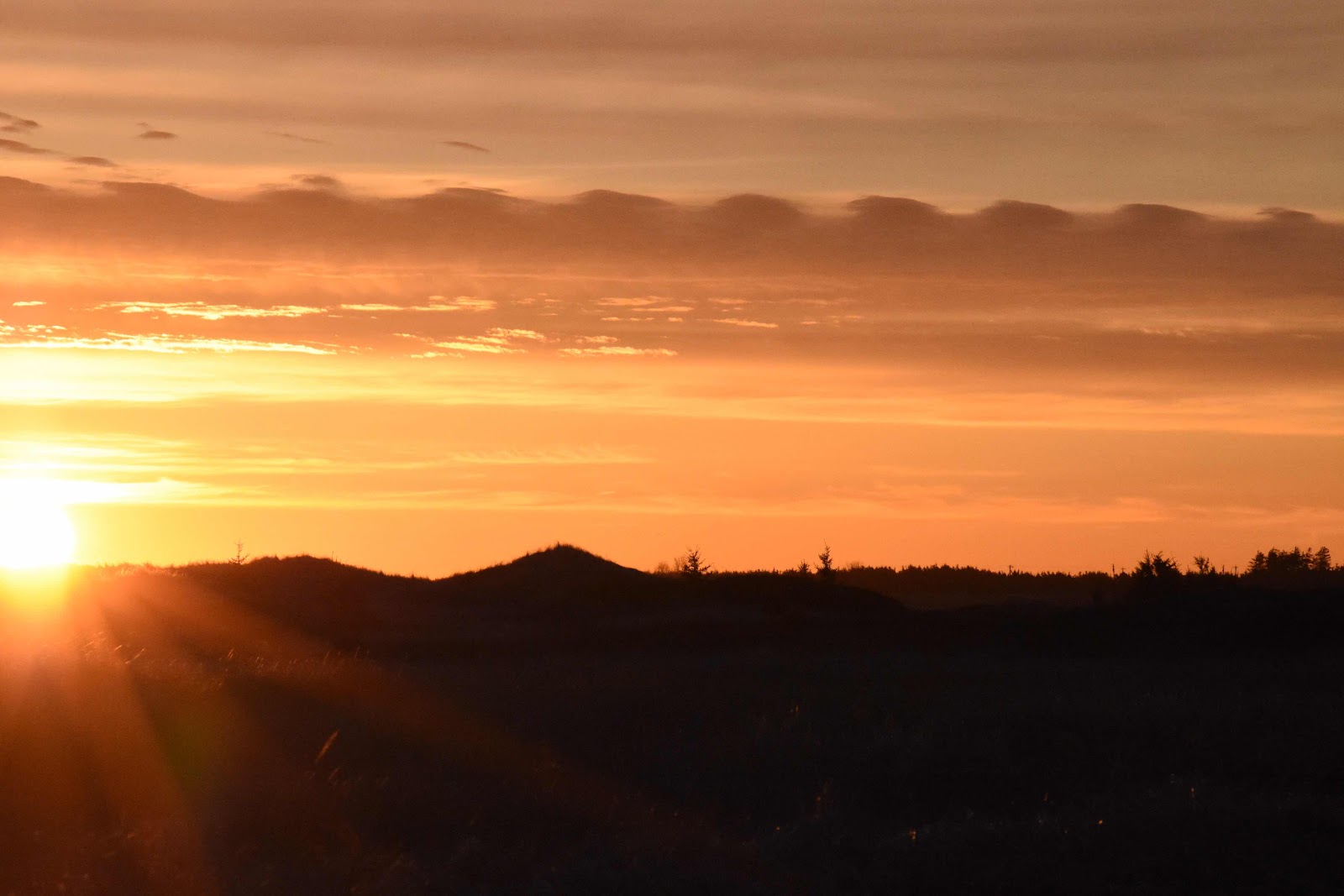
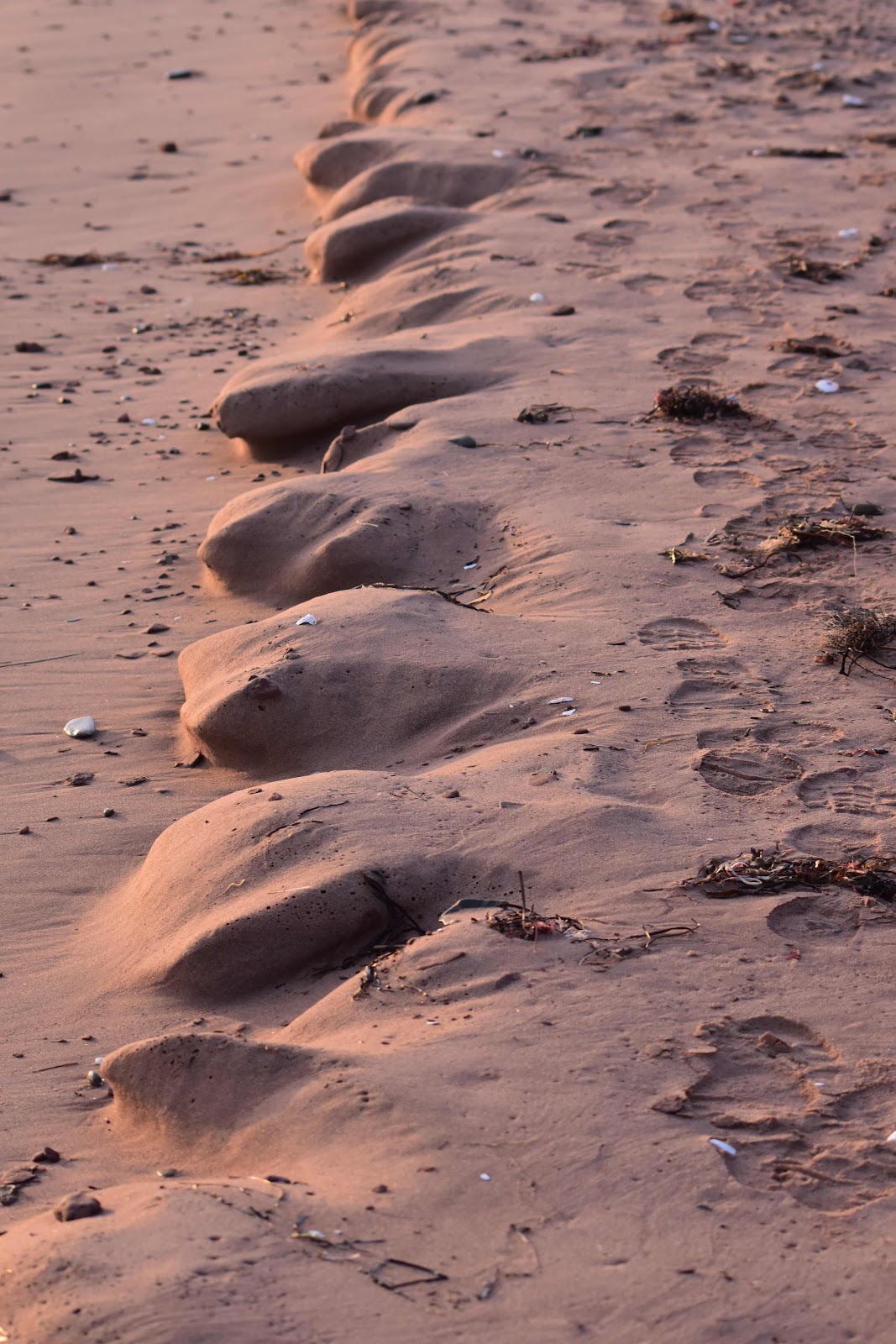
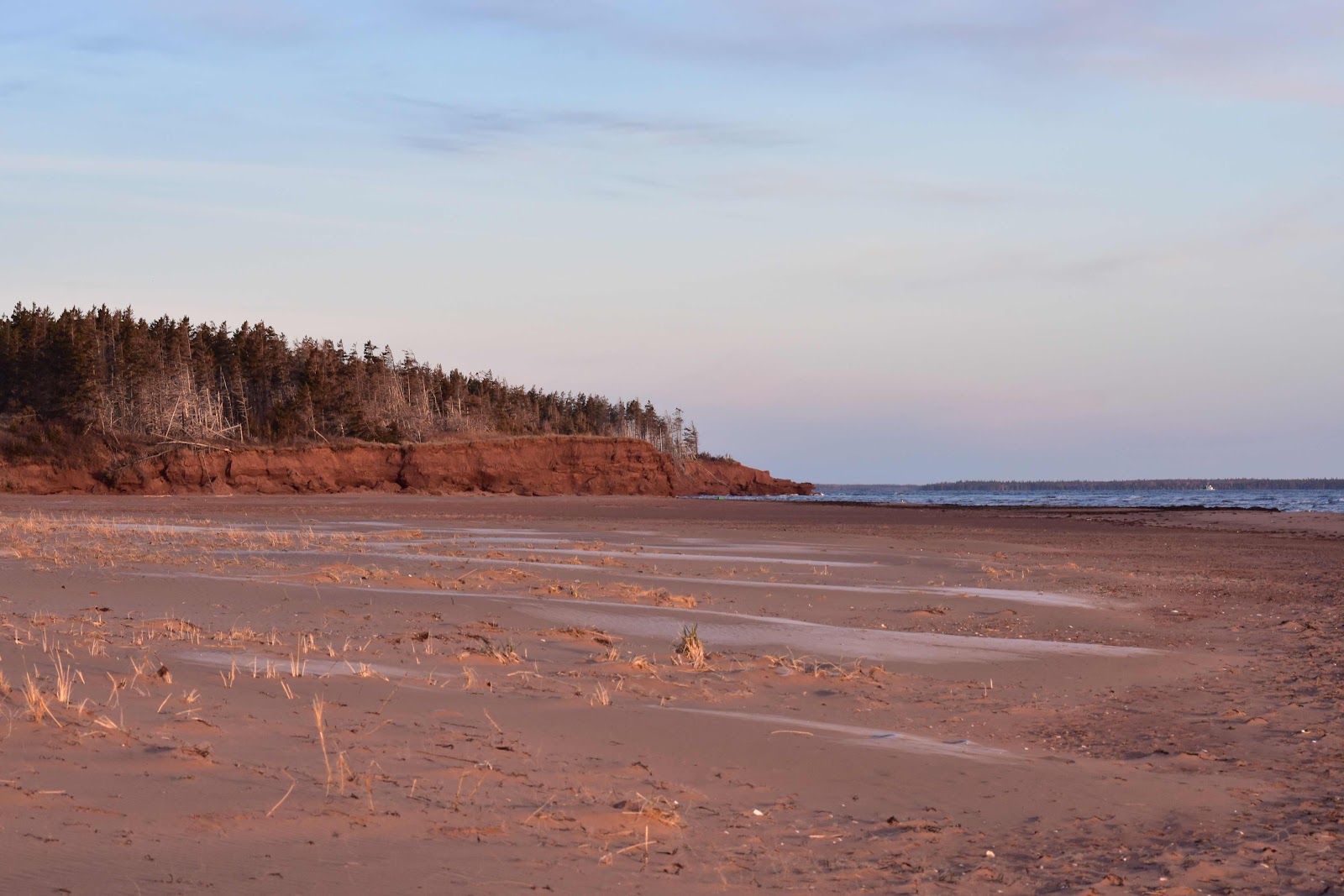
The early morning light alternated between a glow or a shadow as the sun played with the band of clouds. Frost collected in random areas along the beach, a testament to the cold of the early hour.


Evidence of the usual suspects was everywhere as the footprints of the gulls varied from tiny to large. 


The sky 


and sand imitated the wave action. 


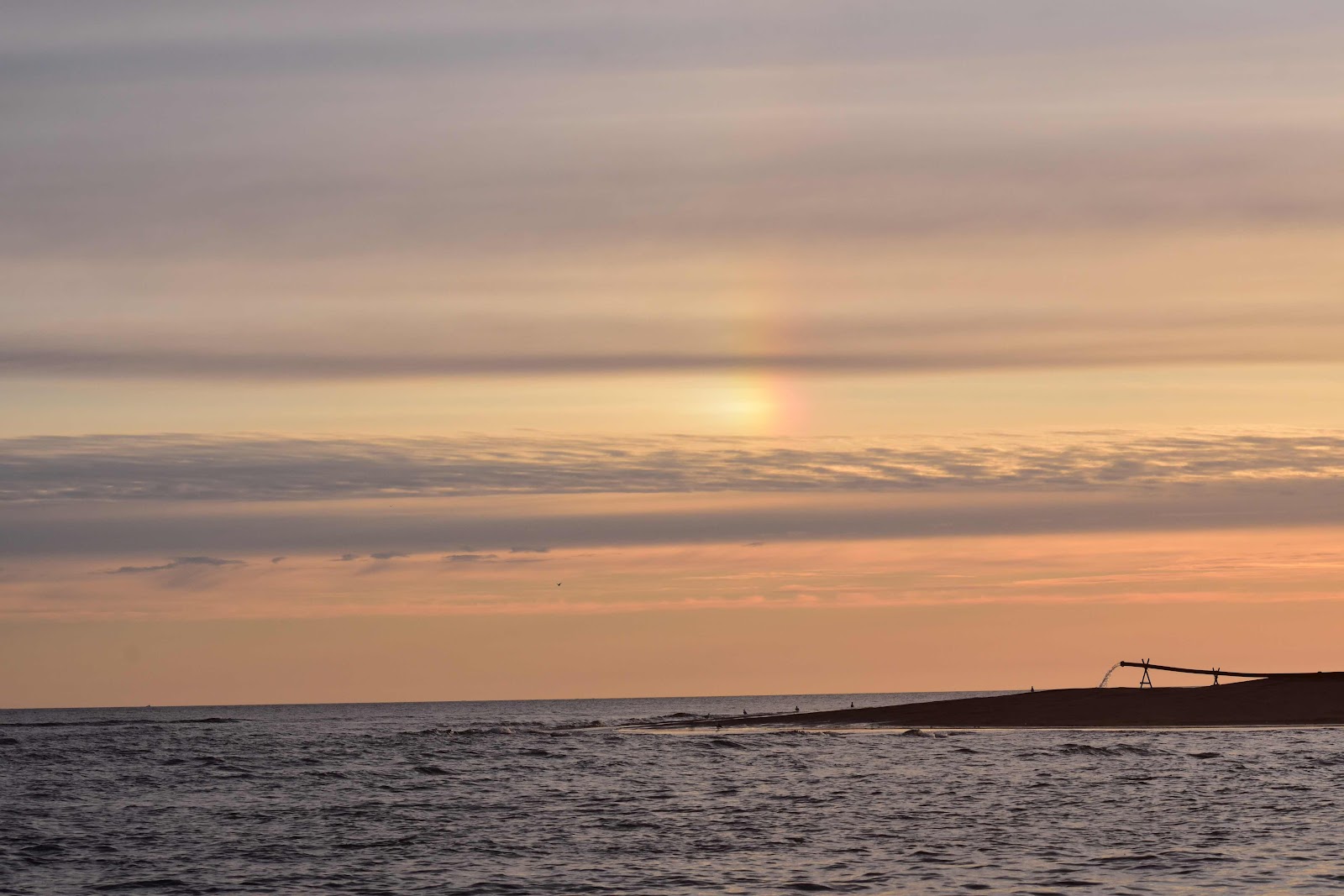
Between the bands of cloud above the horizon, part of a rainbow showed through, a rare sight indeed.


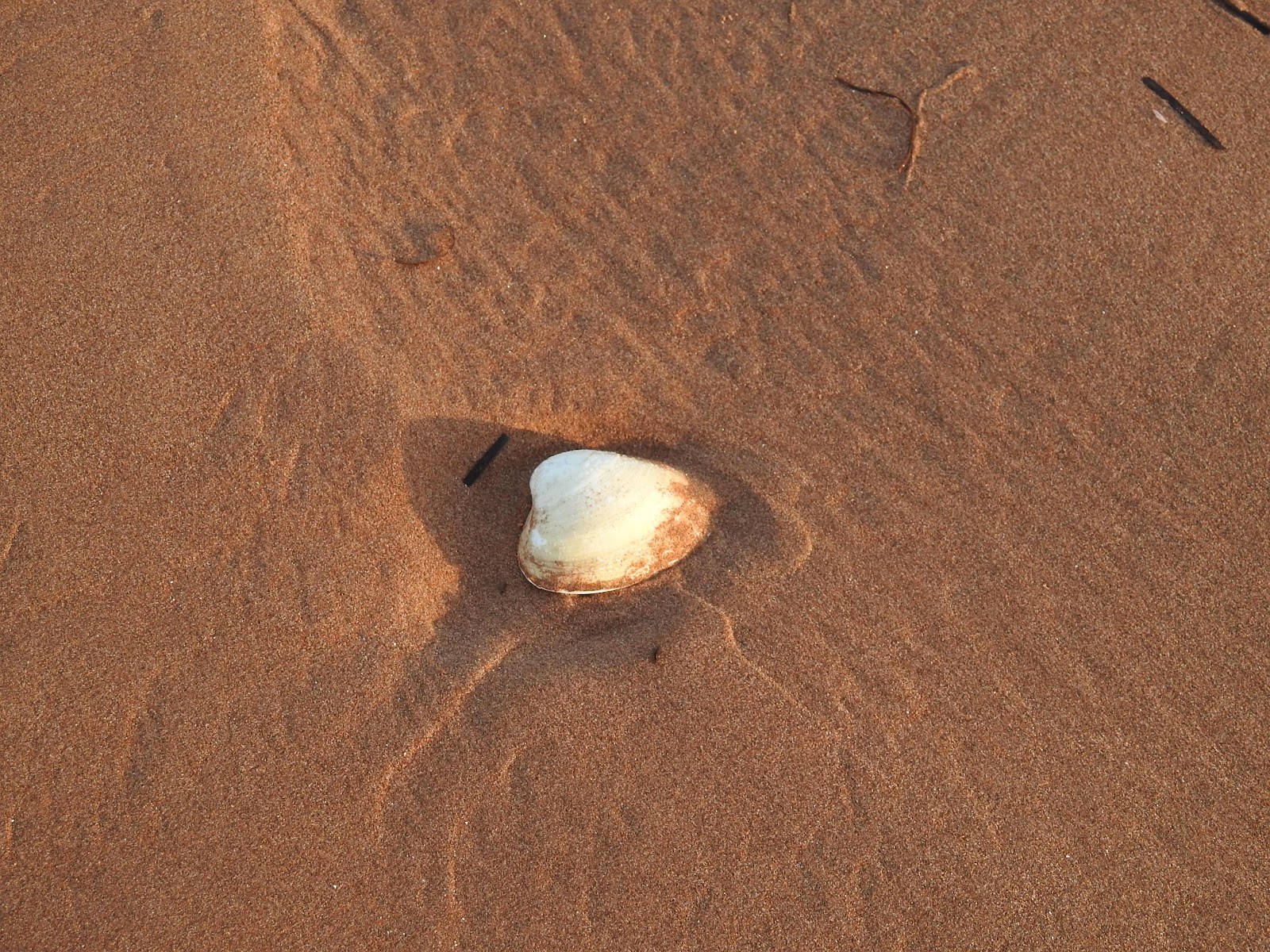
Remnants of sea life such as clams and crabs were spread over the beach as was abundant seaweed.


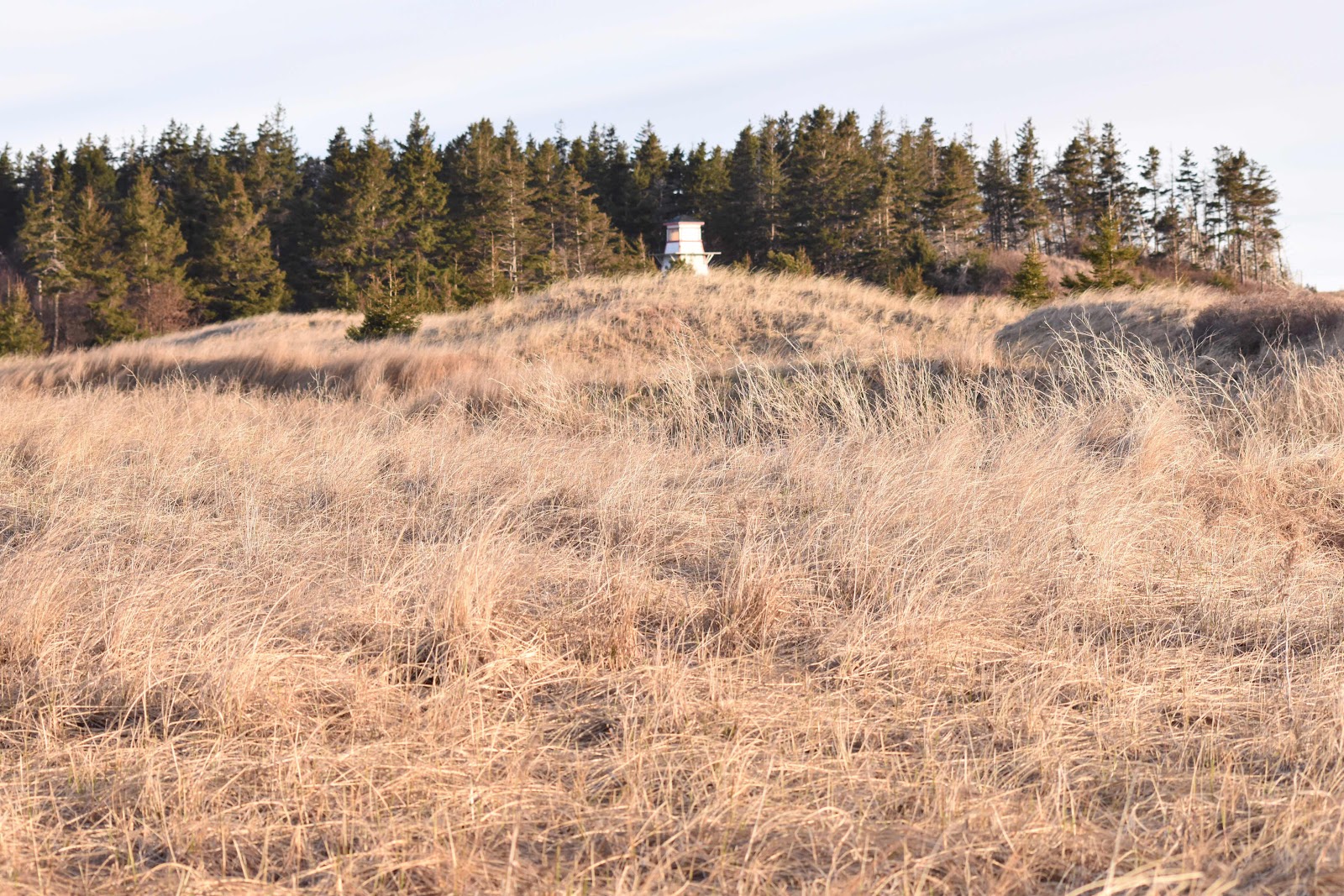
At the back of the beach, the Marram grass, which had survived the winter, waited for the sun to work its magic with chlorophyll for another year. 


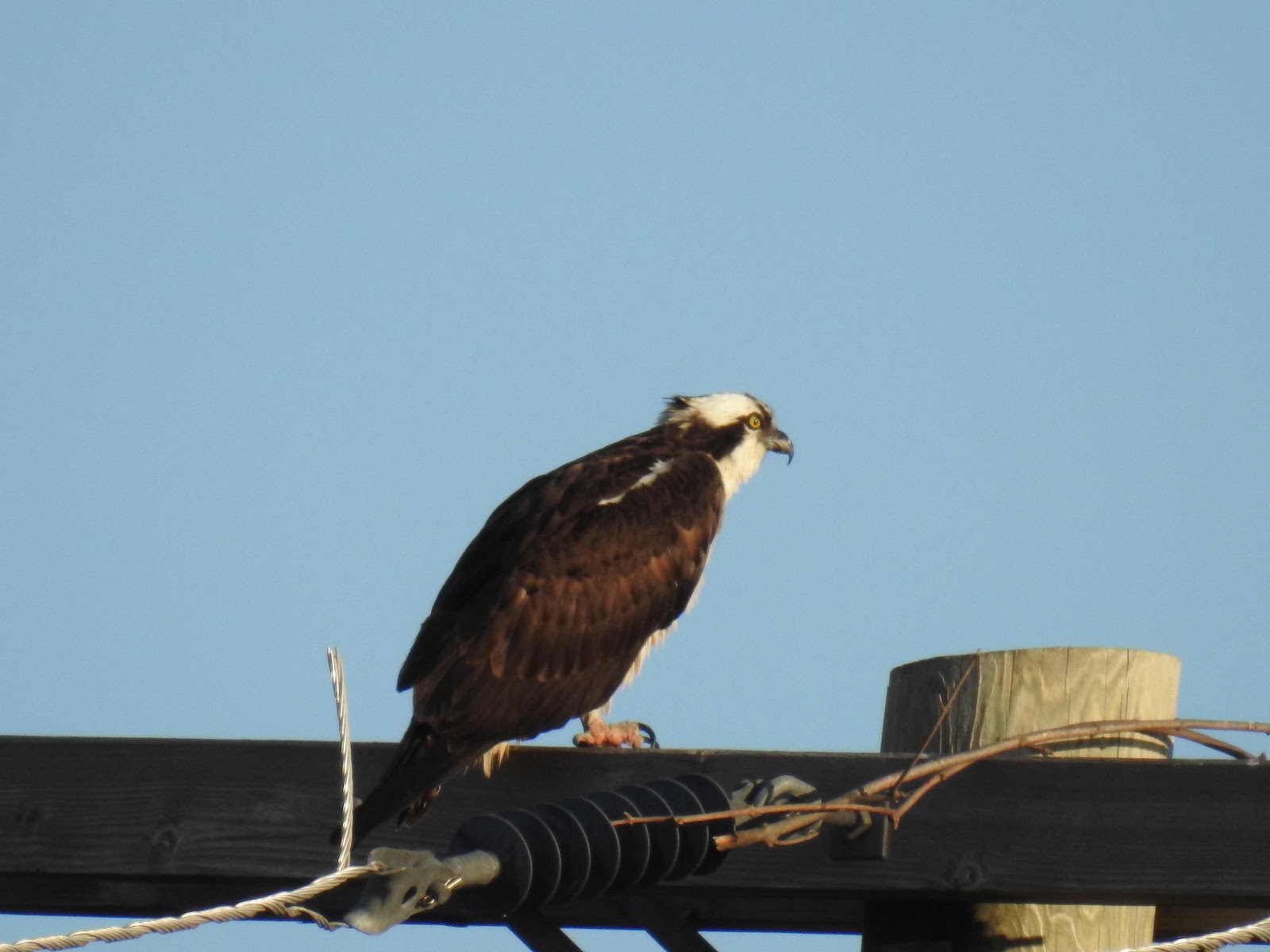
The sand dunes were alive with the sounds of numerous birds of various species. Overhead, Canada geese made their presence known as we walked back to the car. On the edge of the dunes, an osprey, perched atop a utility pole, 


waited to go fishing too, having watched the humans depart from the cove nearby.

Nature was astir and and we were fortunate to experience her early morning splendour. 

Wednesday, 8 May 2019

Out of the blue

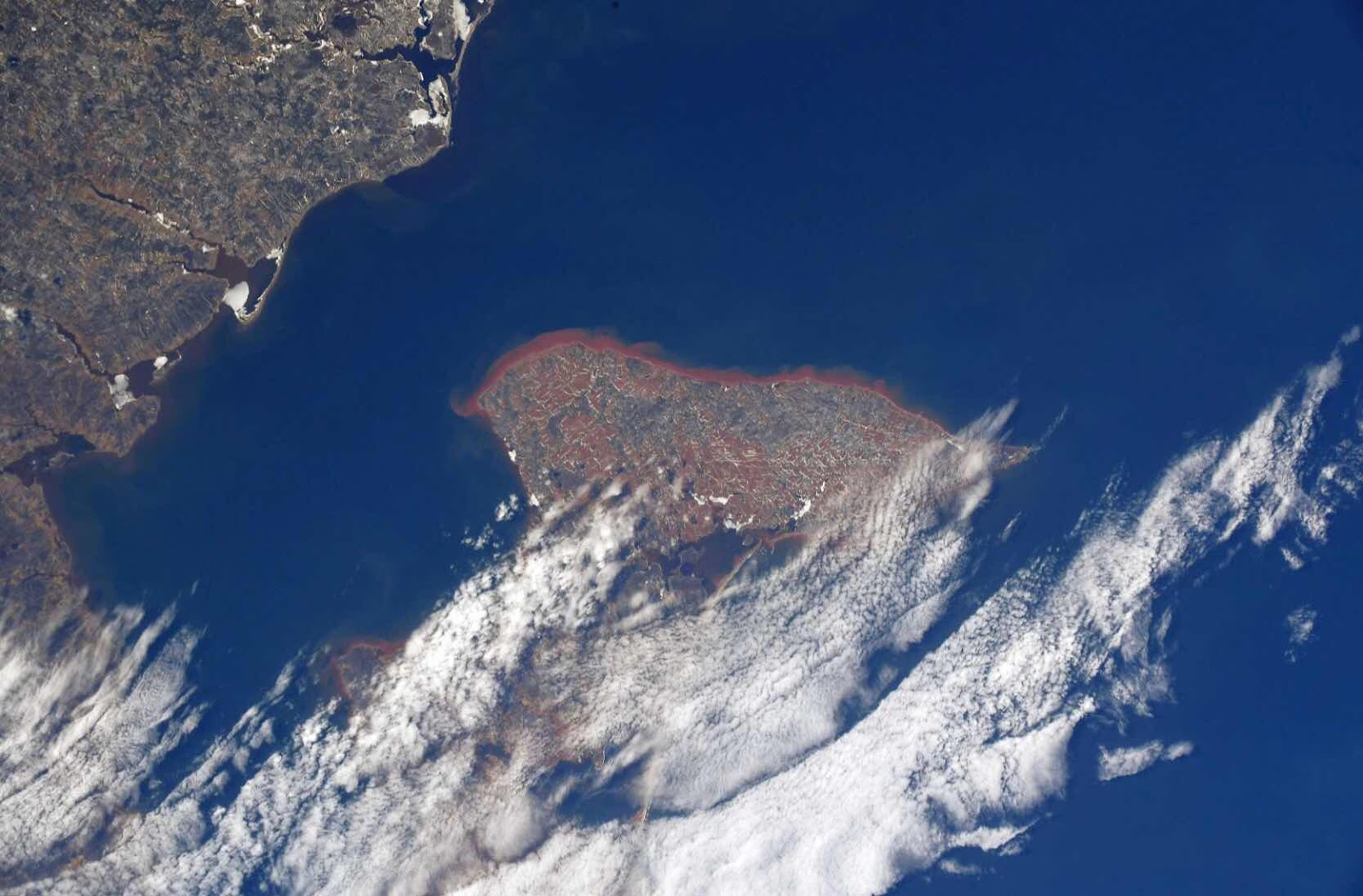
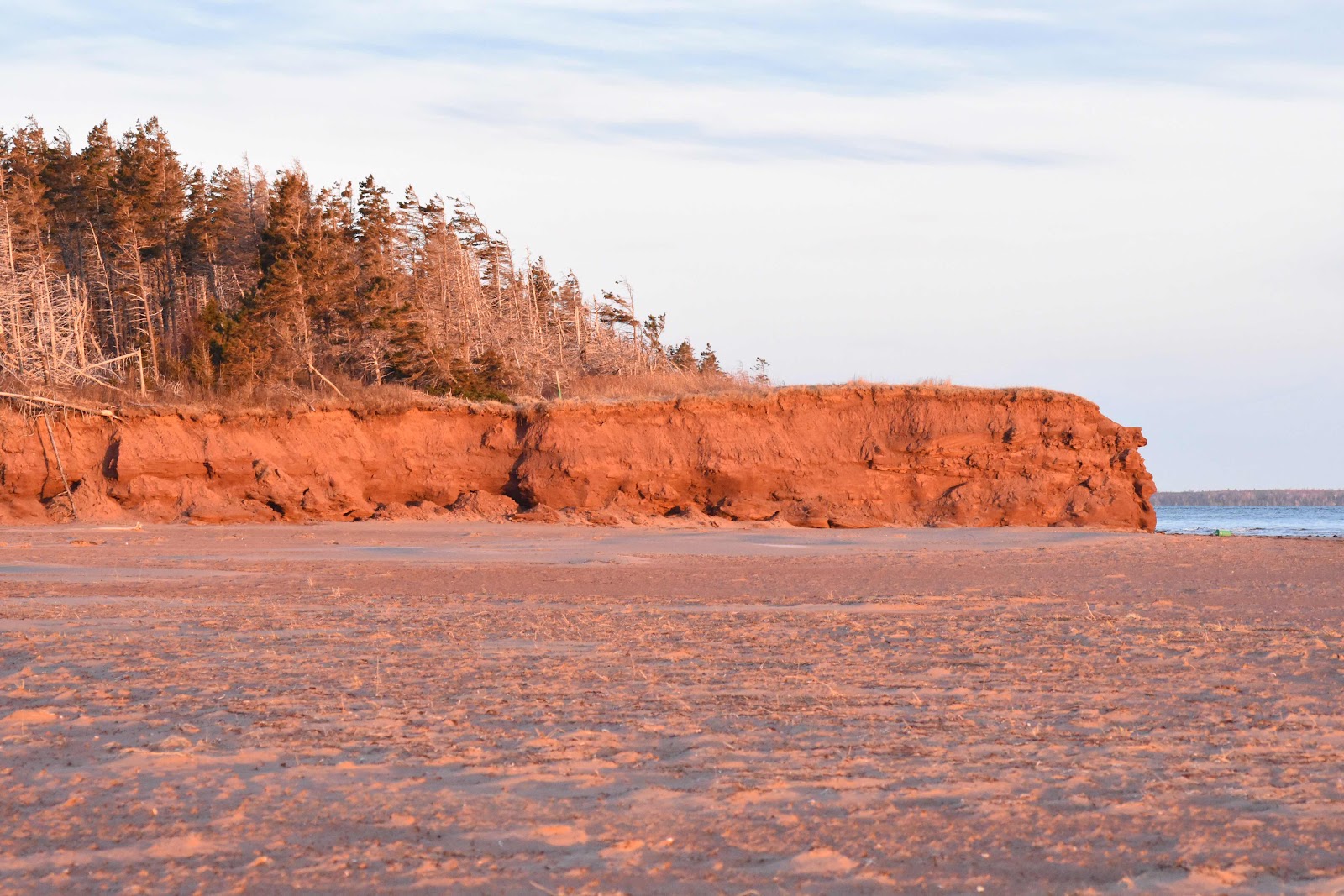
A NASA photo recently posted by Canadian astronaut, David St. Jacques, shows how the red soil and sand weep into the water around Prince Edward Island.


                     NASA photo

Fishers around the island see the results of this erosion every year as sandbars off-shore make travel in and out of ports hazardous.


Every year, dredgers work along the coast of the island to make it possible for mariners to safely navigate the coastal waters. One area with problems in recent years is at Malpeque. There, a sheltered harbour provides protection from the storms which lash the north shore of the island but the channel to the Gulf of St Lawrence, past Cabot Beach, must be dredged regularly. Last year, one vessel capsized on its return to port. While fishers survived the ordeal, the event highlighted the danger and the problem with erosion of the coastline.


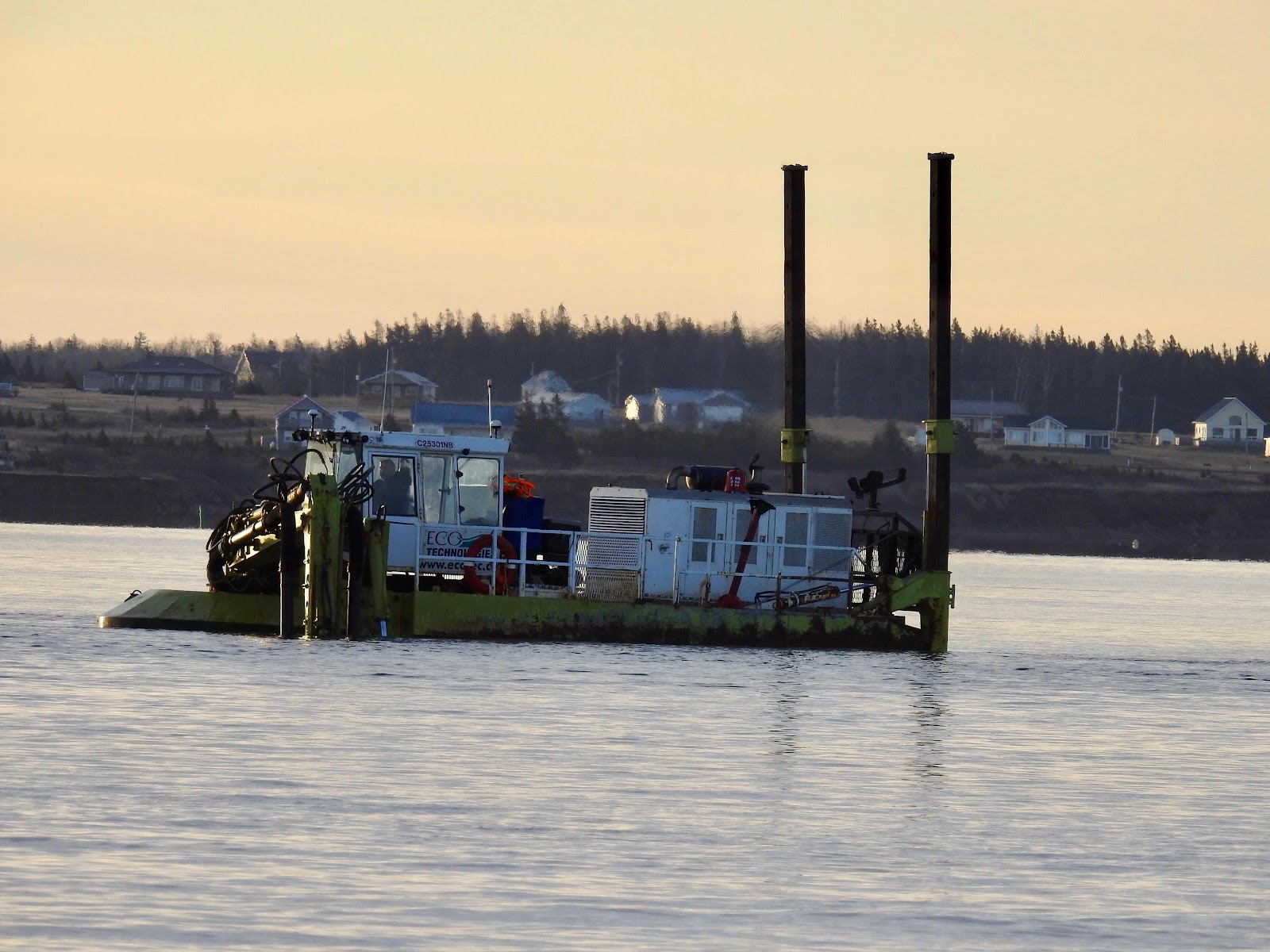
This spring, prior to the start of the lobster season, a dredger started work on that channel. 


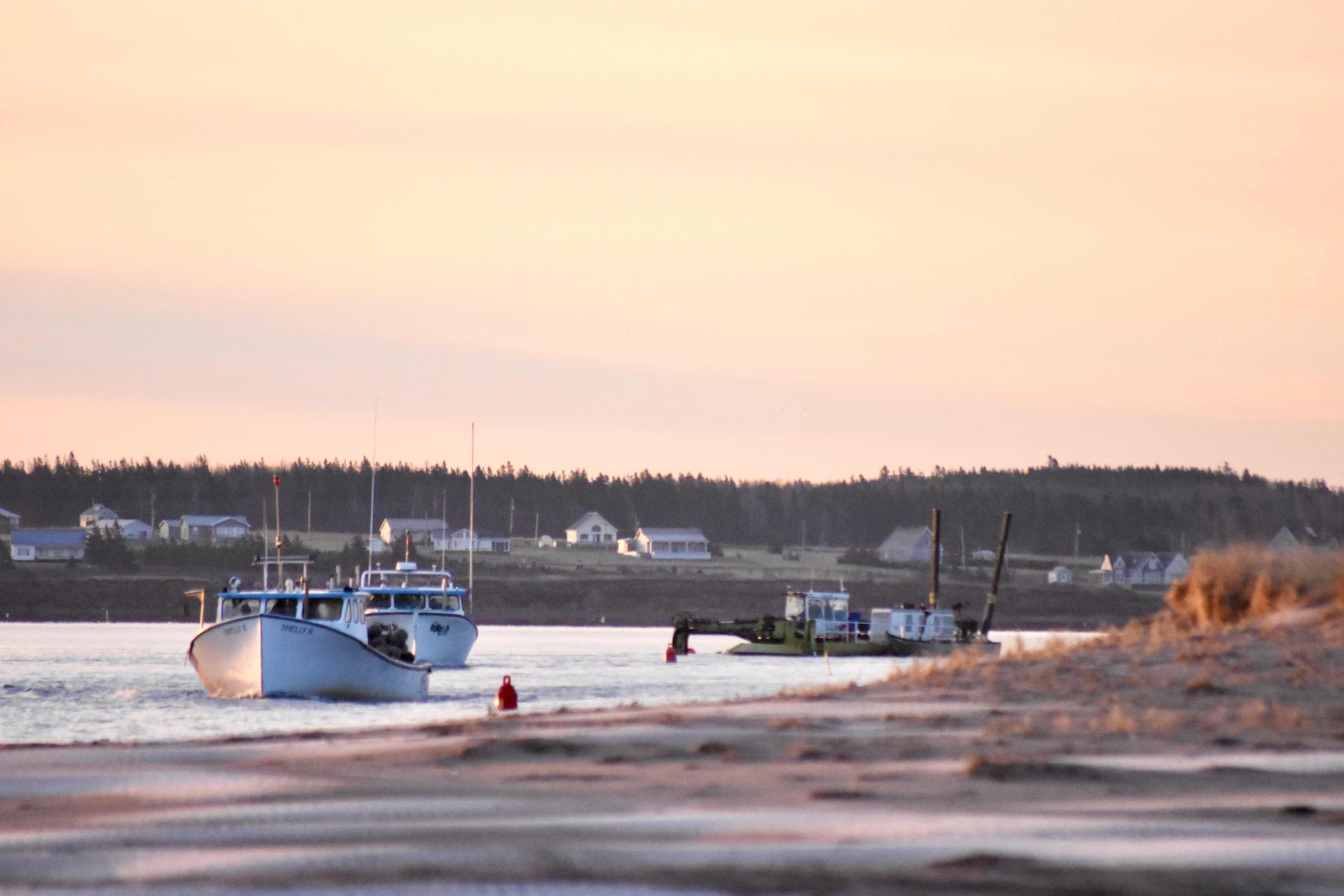
Work continued on Setting Day, the start of the lobster season. We could see the dredger from Cabot Beach and watched with interest as the lobster and mussel boats passed the dredger on their way through the channel.


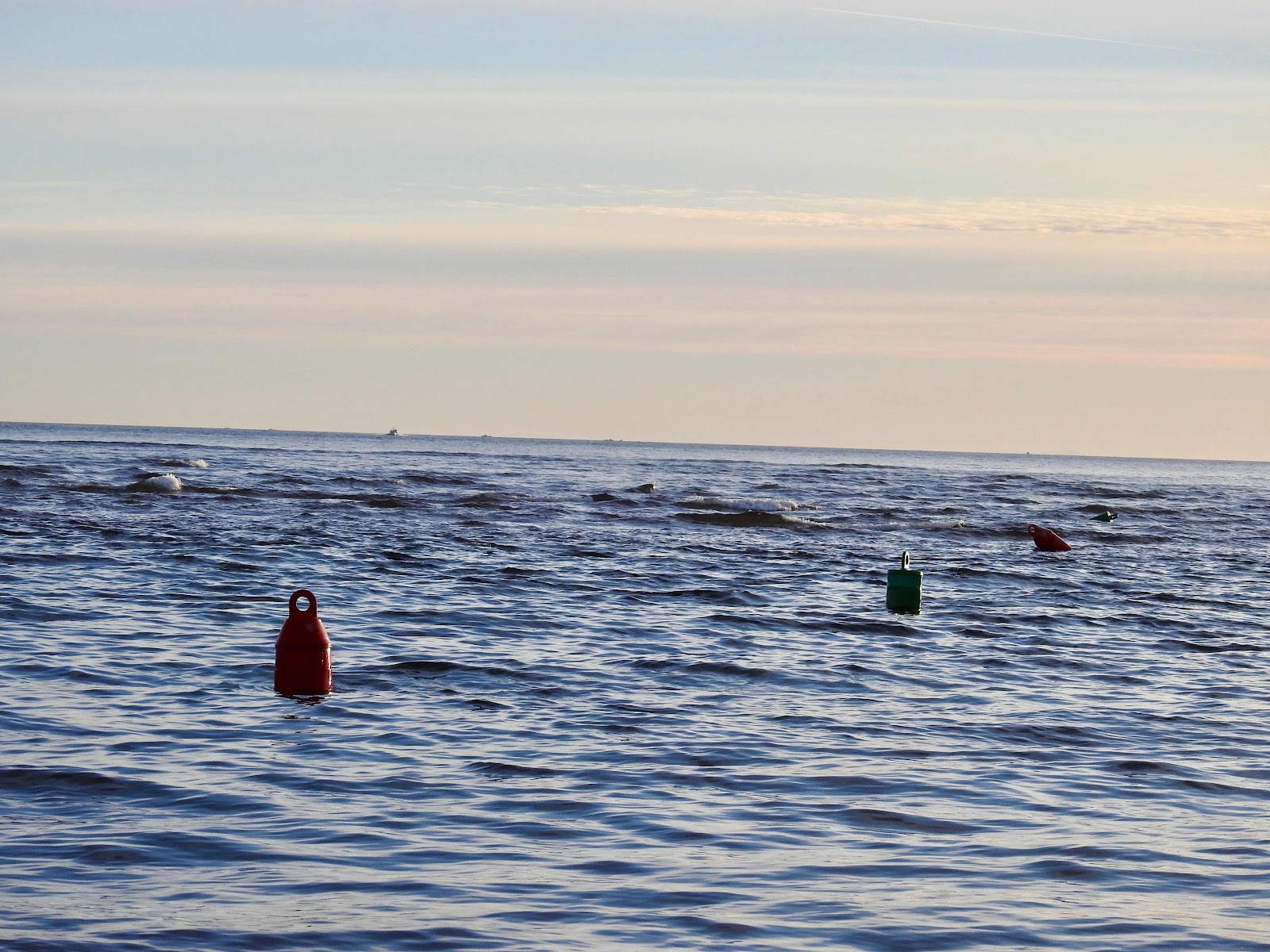
Boats kept between the red and green buoys which marked the channel. The boats were surprisingly close to shore, mere meters from the beach. Past the outside buoys, at high tide, 


you could see the shallow water, evidence of sand bars, which at low tide would be high and dry.


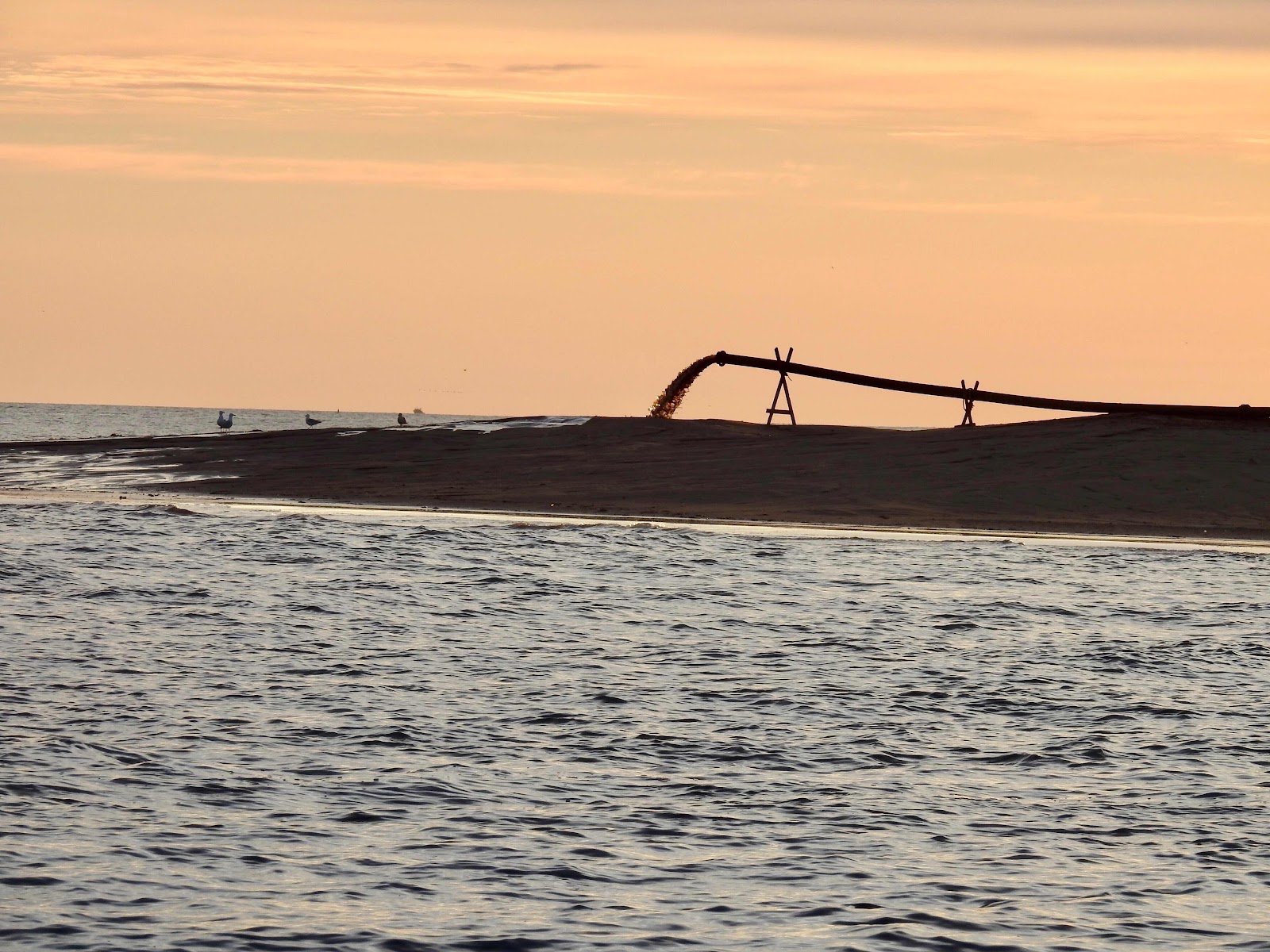
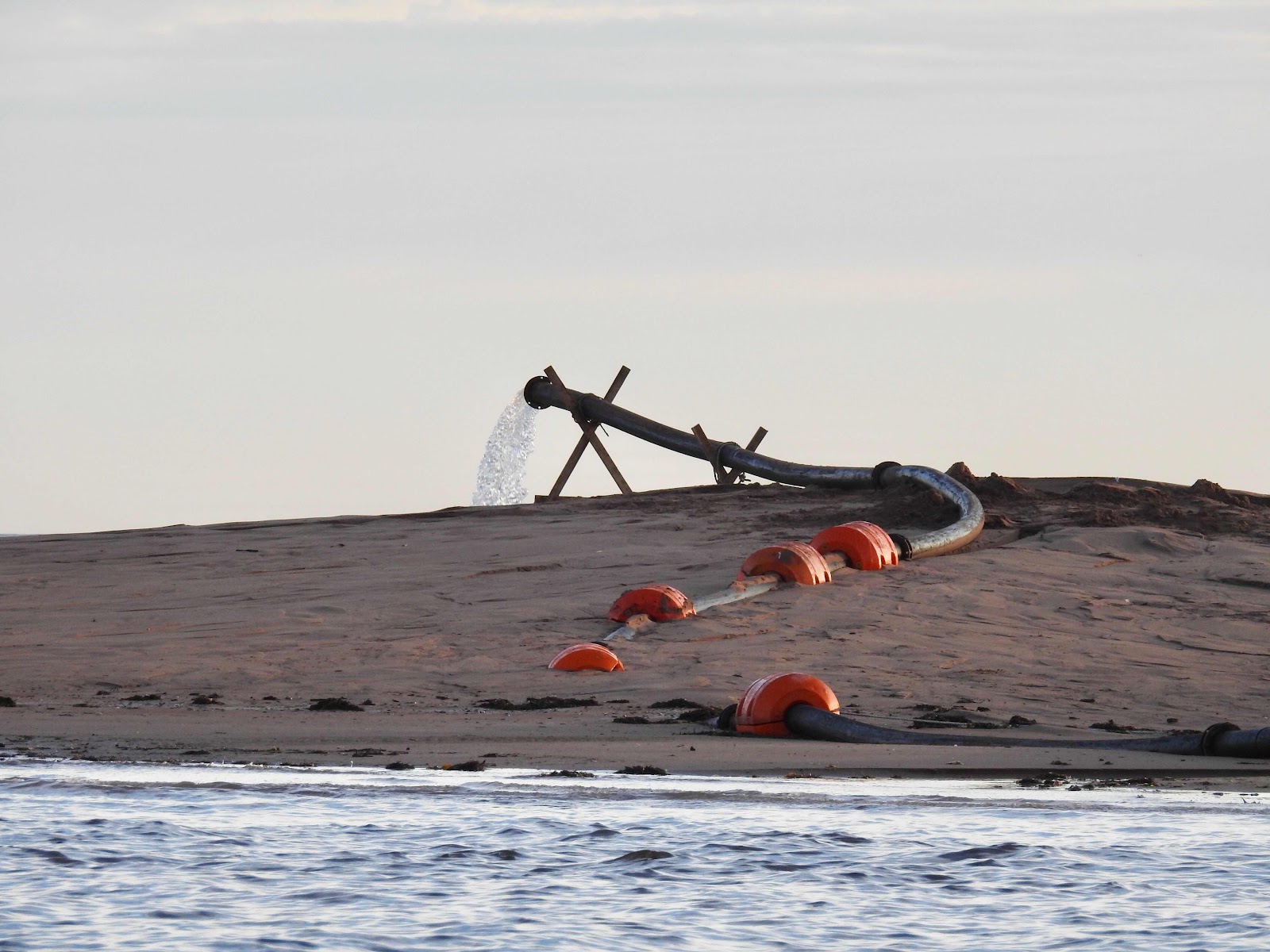
The dredger worked like a vacuum attached to an exhaust pipe from which water and sand poured. The pipe was long, emitting the sandy water on a nearby sandbar. 


Sometimes the water ran clear but within minutes, 


sandy water was emitted again. Always the opportunists, seagulls were camped out nearby to take advantage of any edibles which were dredged up and extruded. 


This is important work along the coastline of our province and we were interested to see the process in action.


Monday, 6 May 2019

Setting day 2019

We drove towards dawn last Friday morning 


as my husband and I headed to Malpeque for Setting Day, the first day of the lobster season for 2019. When we arrived at the port, the majority of the lobster boats had already left, loaded with the traps to drop into the sea. Several boats remained and were ready to leave, so we walked to Cabot Beach, along the trail through the dunes to watch the boats navigate the channel as they head to sea. The sun crept above the horizon as we approached the beach.


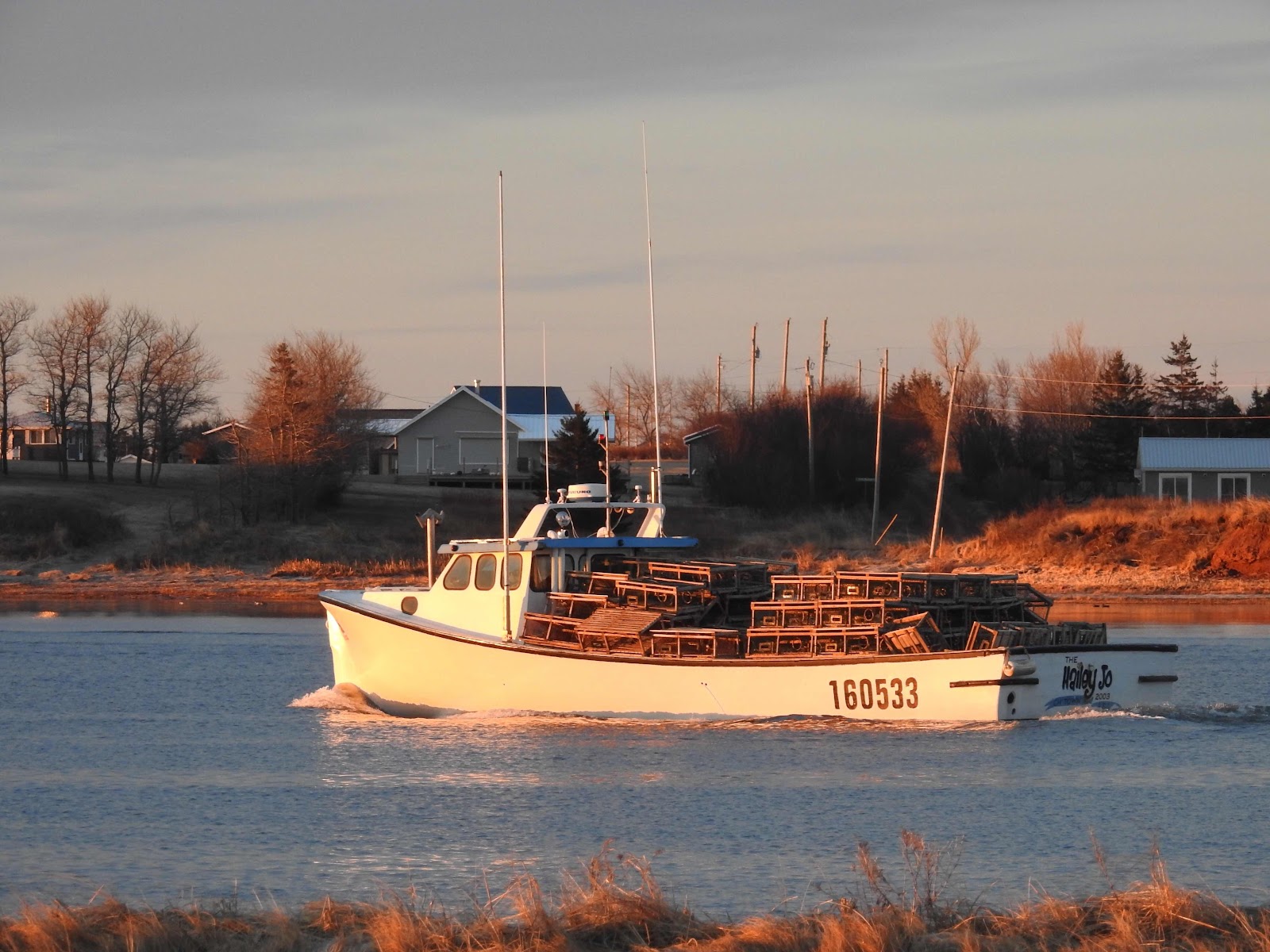
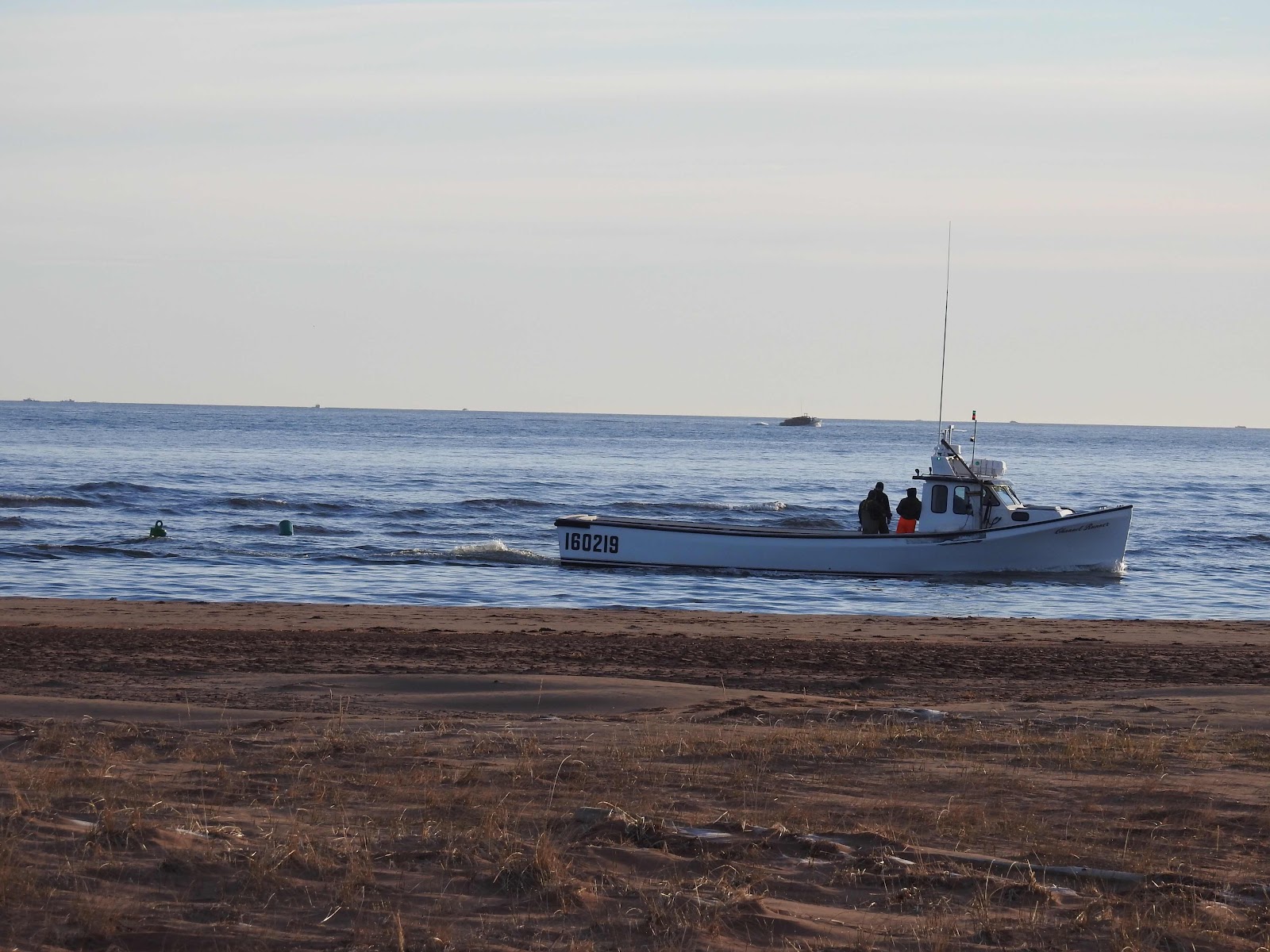
The trail parallels part of the channel and one of the boats motored past into the sun’s glow as we watched. 


We hurried along the trail to see the boat as it passed Cabot Beach. 


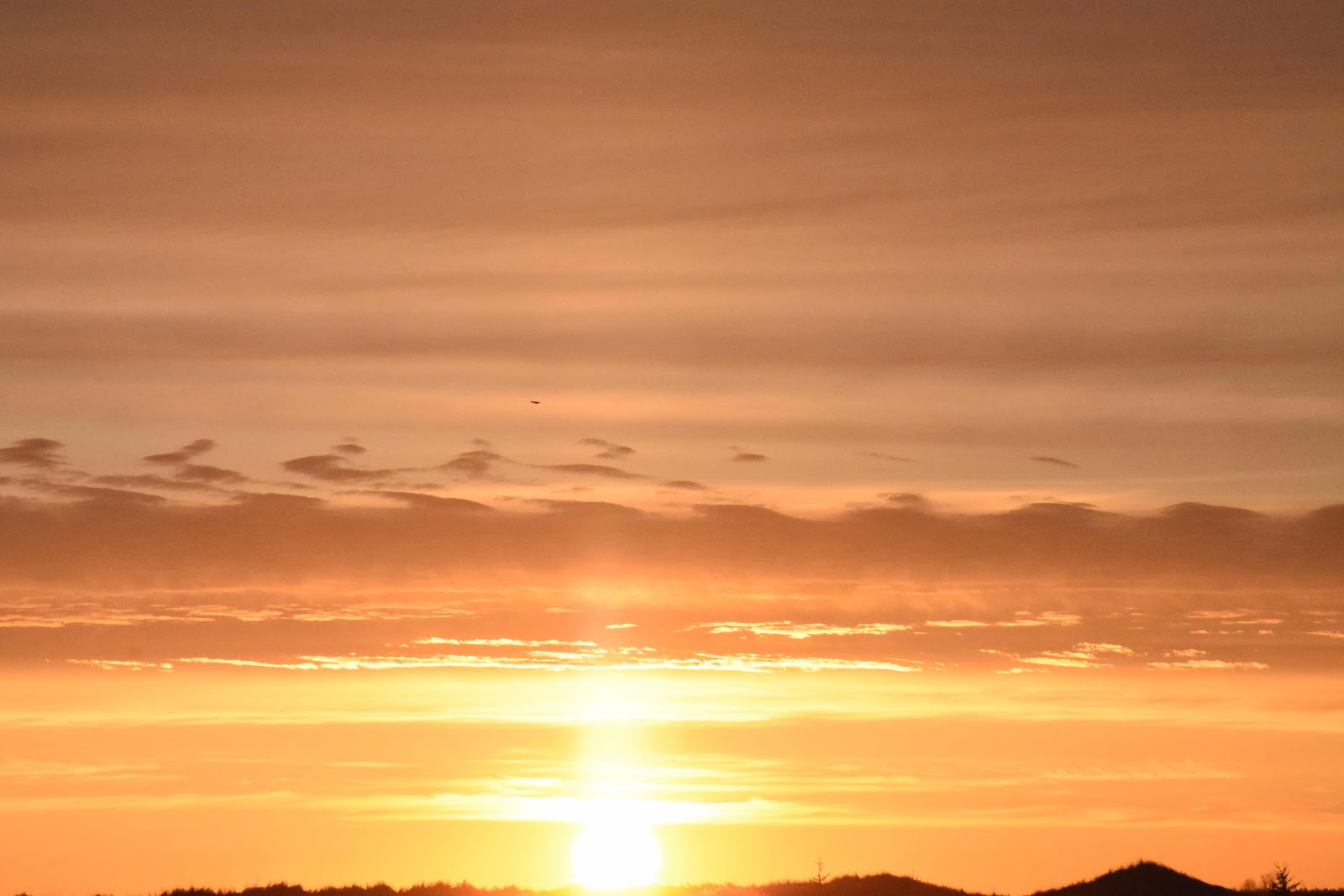
A band of clouds periodically covered the sun which was like a giant spotlight when it broke through the cloud cover. 


Other times when the sun was behind the clouds, everything was covered in a giant shadow.


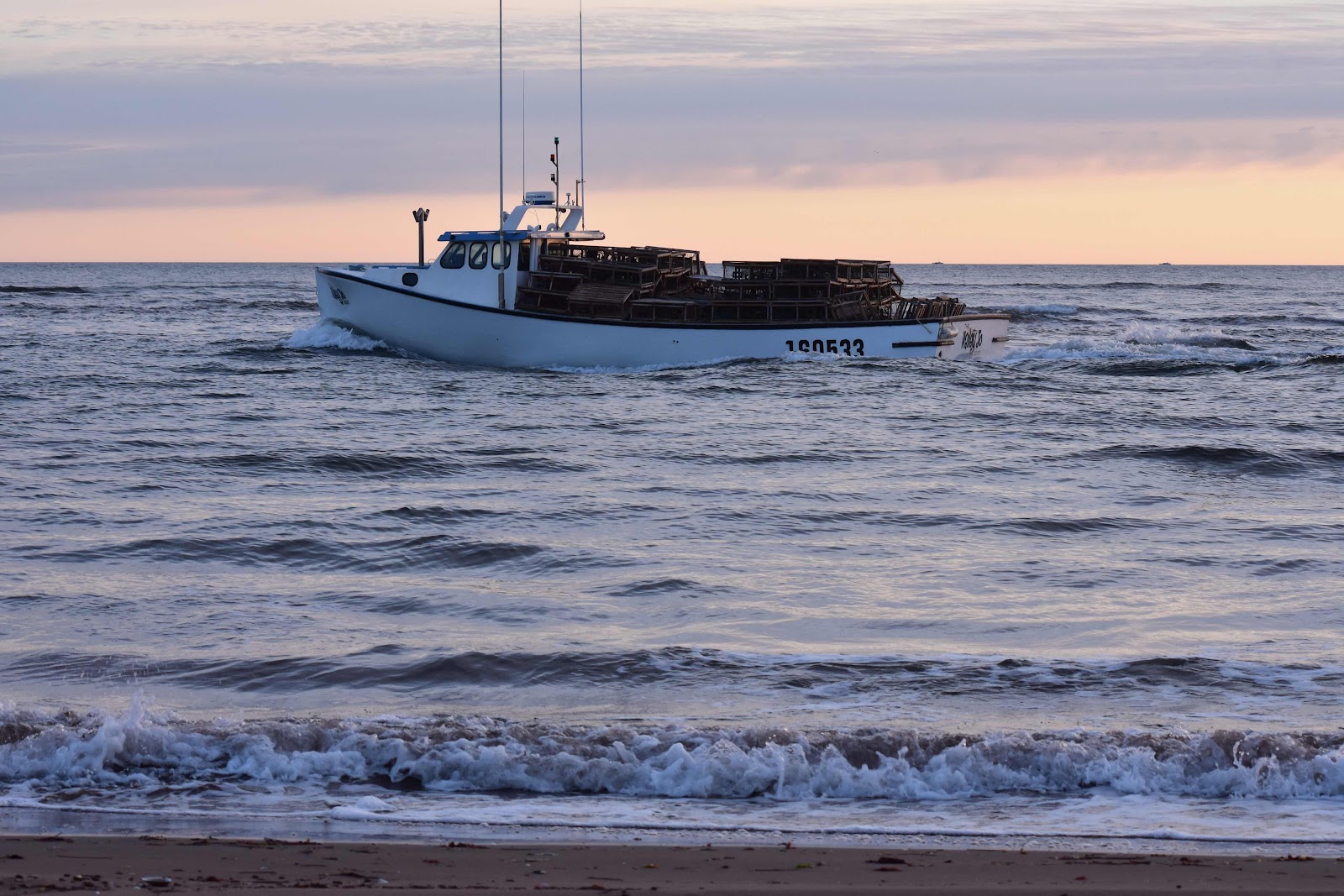
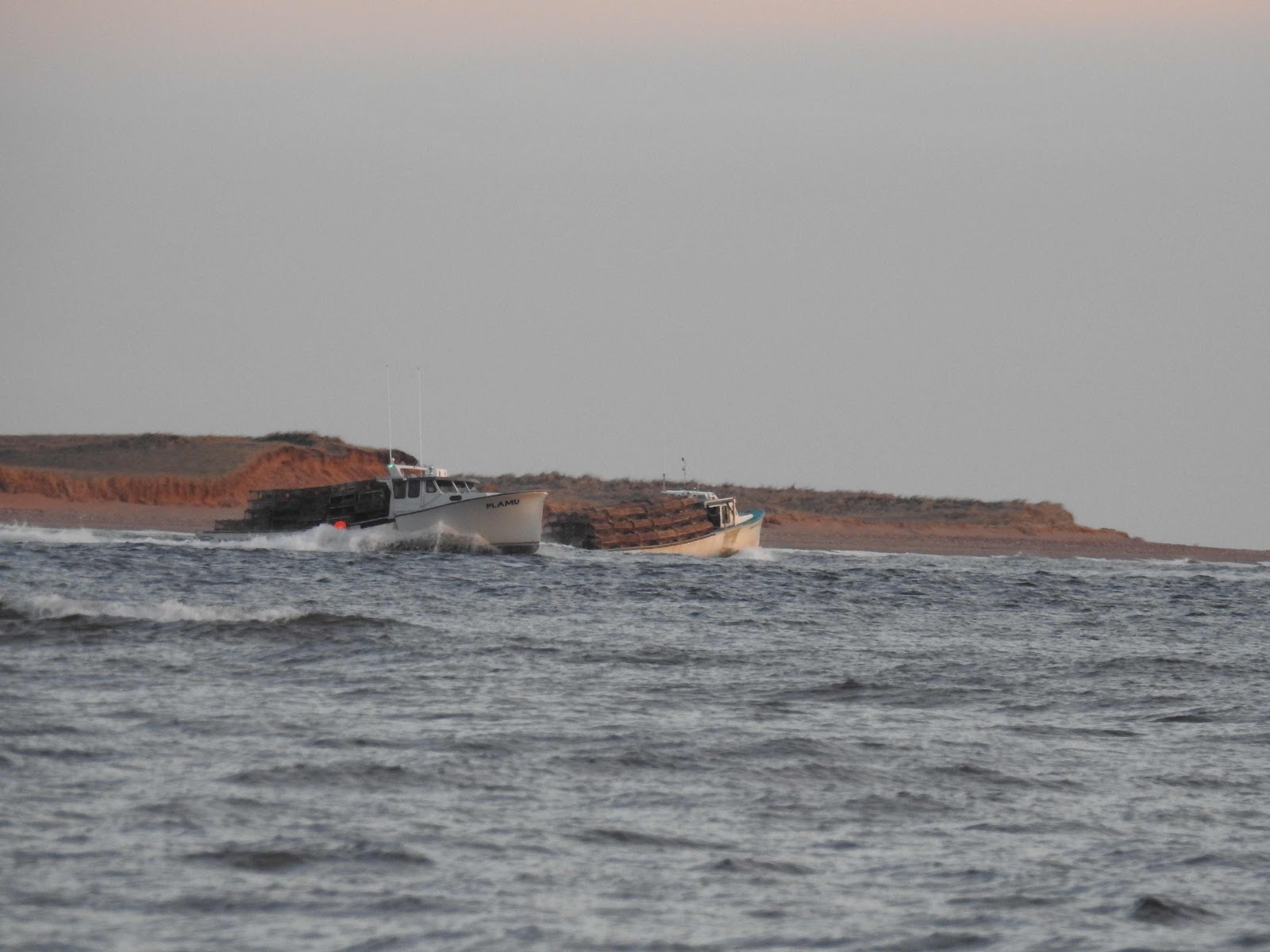
Boats were mere meters off Cabot Beach and we watched as they manoeuvred the channel, eager to reach open water. 


In the distance, from another port in the west, other boats sped to reach the Gulf of St. Lawrence.


 We could see a dozen or more boats along the horizon.


By the time the last of the lobster boats had left Malpeque, the first returned to load more traps and head out again. 


Each boat can have up to three hundred traps, which requires at least two trips for the 45 foot/14 meter boats. 


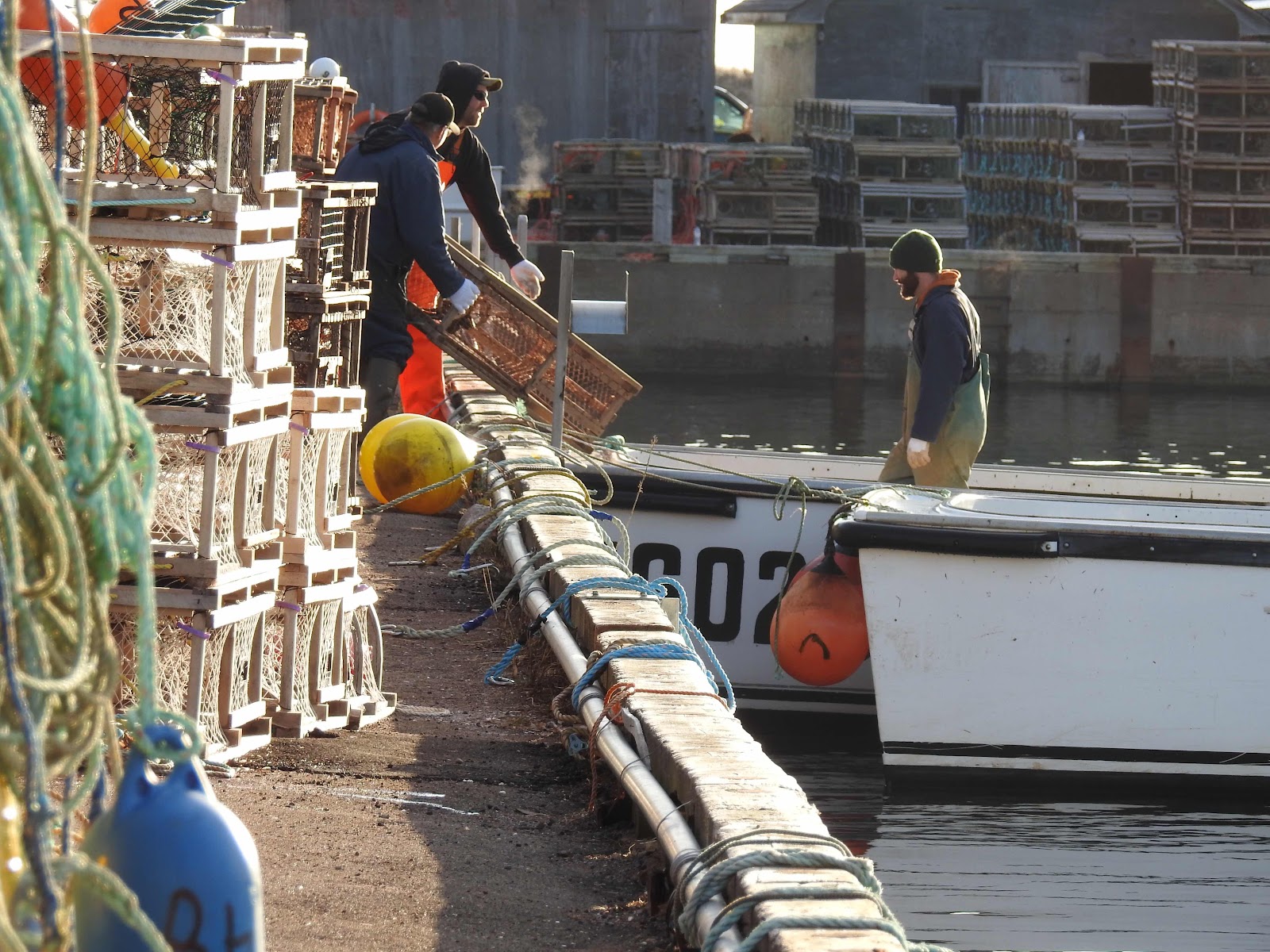
I watched as the returning crew baited traps with herring before they lifted them aboard. 


They were fast and efficient at their work, keen to accomplish the job for the day. This wharf will be busy over the next two months as lobsters are lured out of their rocky holes and crevices by these herring-baited traps. 


Fresh lobster was available on Saturday. Our first meal is on Mother’s Day. Our granddaughters, six and eight, have eaten lobster since they were the age of their two year old brother. Now they eat a whole lobster each. Their brother tried it last year and enjoyed it. I imagine he too will be eating a whole lobster before long. It is a seafood treat and a great tradition.


Friday, 3 May 2019

Serial serendipity

How can it be that from all the generations that have come before us, you and I happen to be here? Can you imagine the good fortune which brought us to this day?


In my own family, I think of my father’s paternal side and how things could have gone so differently for my brother and me. For example, dad’s father survived in a family devastated by tuberculosis. That grandfather didn't join the military to serve in the First World War where so many Newfoundland men served and died. My grandfather had a job on the railway and didn’t enlist in the Newfoundland Regiment to fight in Europe. He followed his brothers who worked on the Newfoundland Railway.


My maternal great grandfather travelled to Newfoundland in the late 1800s. His line had survived the Irish Potato Famine. The journey to Newfoundland must have been perilous for all of my ancestral lines. Then many of them fished the North Atlantic in dories and survived to have families. 


Foremothers survived all of the dangers and diseases of the time and childbirth to deliver a live baby. Many children died at birth and from disease as babies or youth but in a long long of predecessors, ours didn’t.


How many dangers did we personally survive to be here today? In my own life, there were several times my life was endangered. I almost drowned the year I finished high school, saving a friend. Another time, on the highway, my husband and I passed a transport truck. A part of the muffler of the truck flew off and slammed into the passenger side of the car where I was sitting. Luckily it hit the post between the front and back doors, at the level of my head though. The post was badly dented. This was prior to our daughter’s birth. 


Generations of your forefathers and foremothers and mine survived the circumstances and conditions of their time in human history which led to us being here today. We won the lottery!


So much of what happens in our lives is serendipitous. Our existence involves serial serendipity in fact, or as some believe, we are part of a Divine plan.


Whatever you believe, enjoy every minute! Many didn't have the opportunity.

Wednesday, 1 May 2019

Geared up

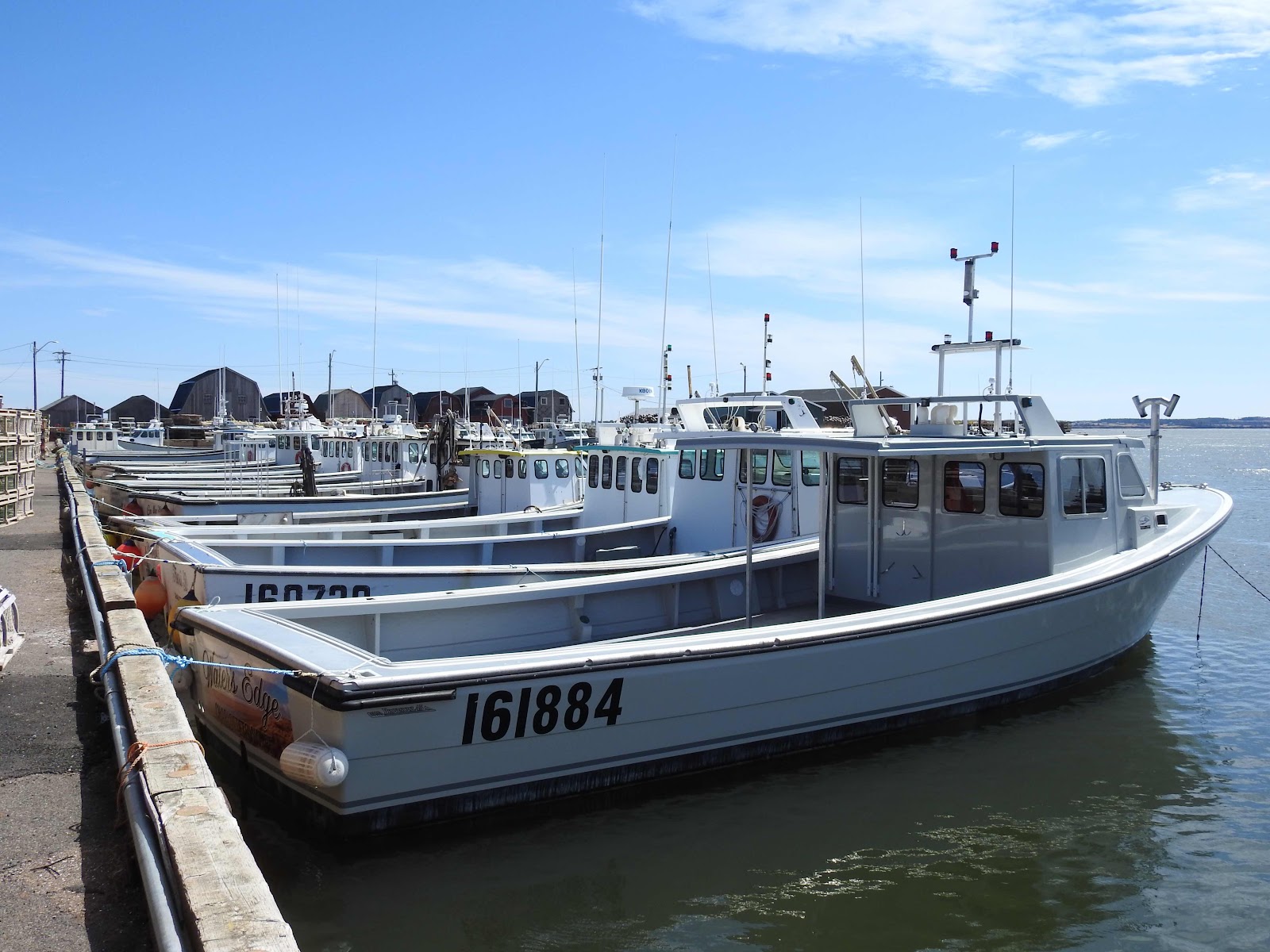
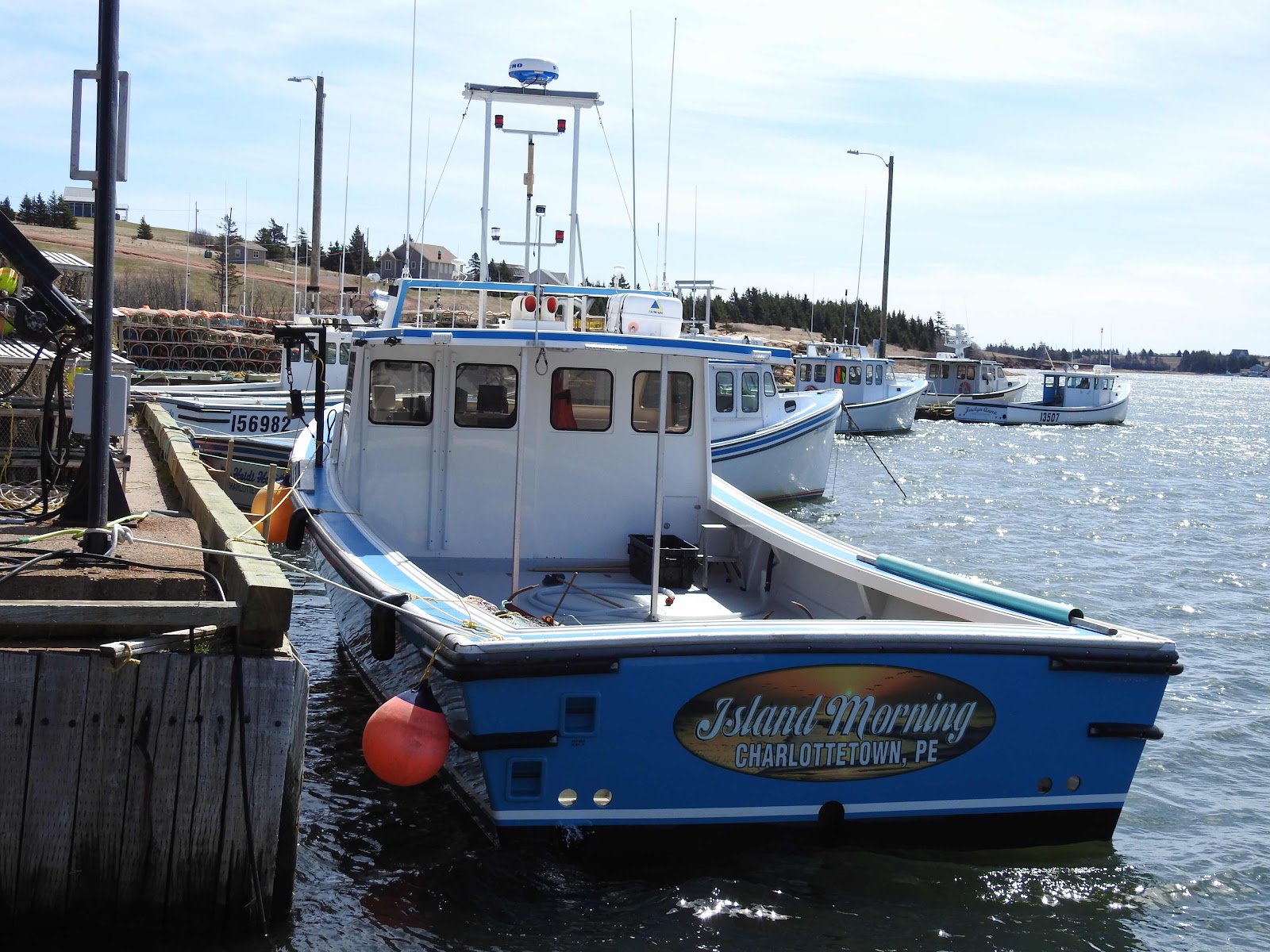
Everything is ready and waiting. Setting day, first day of the lobster season, was planned for April 29th but the wind was prohibitive. It continues to be. Now the earliest day is Thursday. Meanwhile the boats are tied up by the wharfs


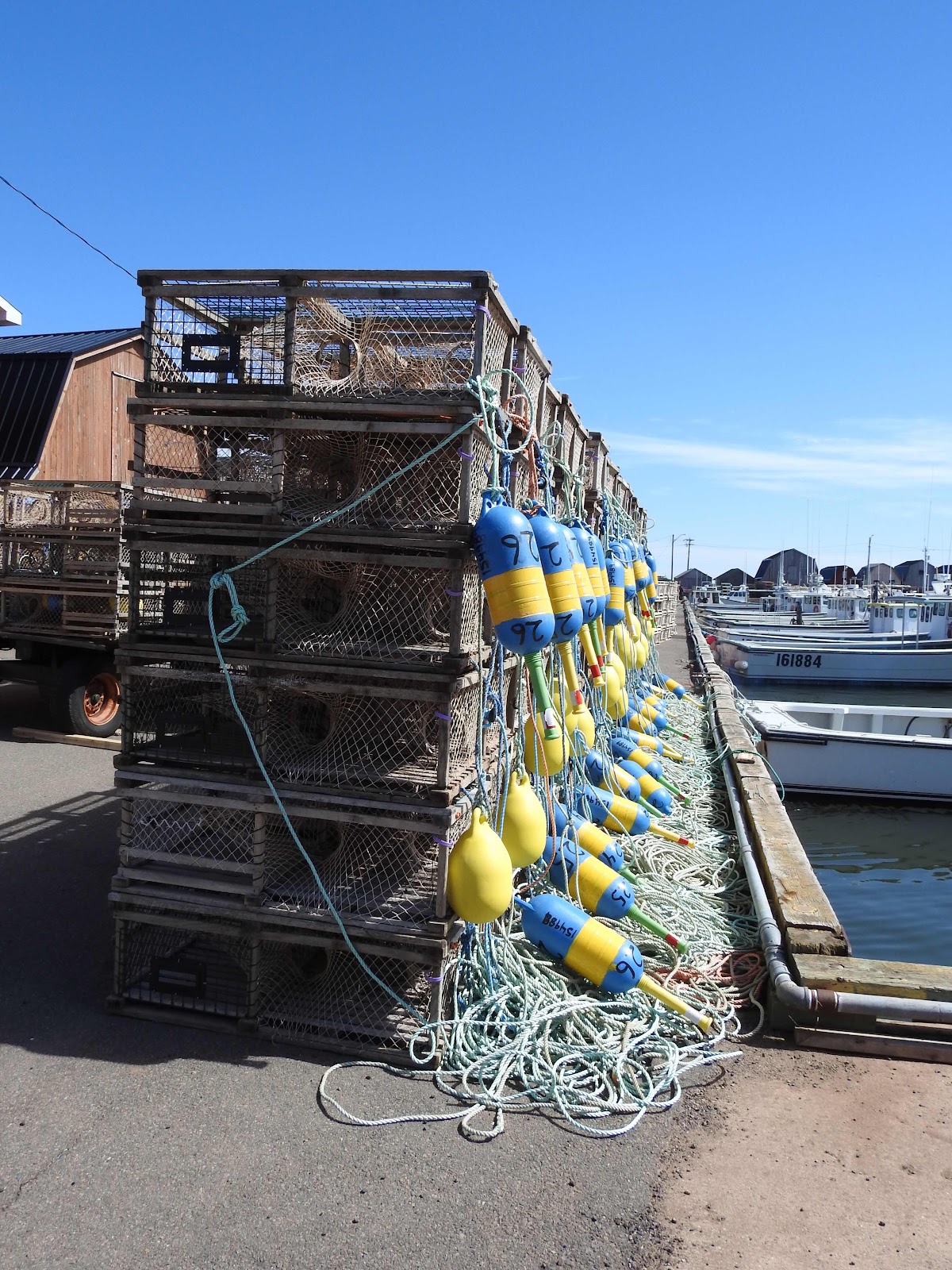
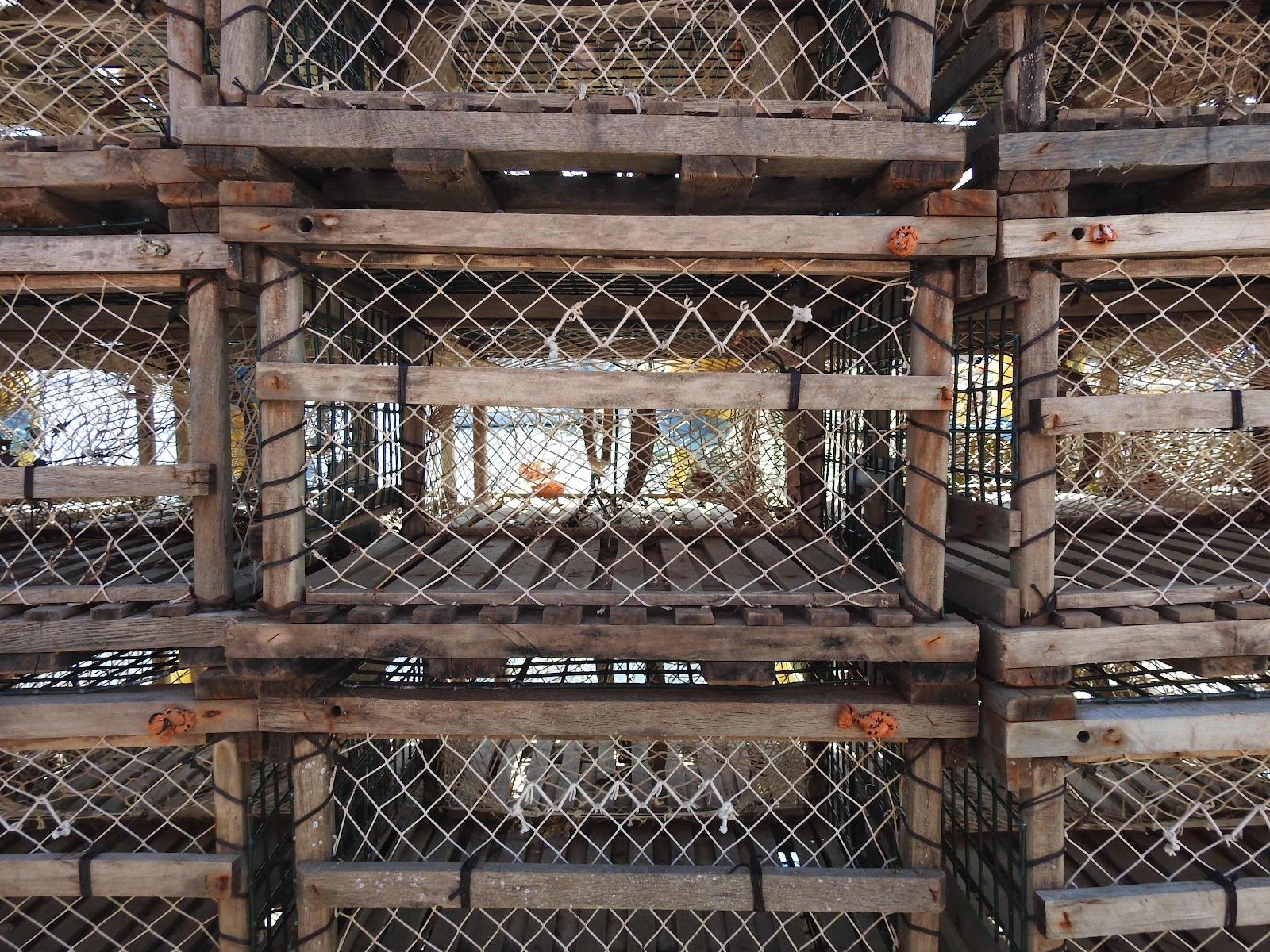
and the traps stacked behind them, ready to be loaded on board.


My husband and I visited two ports. At Malpeque, the scene was consistent with other ports around Prince Edward Island. The traps, ropes, buoys and boats all show the work which goes into the preparation for the season. 


At French River, a smaller fleet of boats is tied up, waiting for traps to be loaded once the season is a go. 


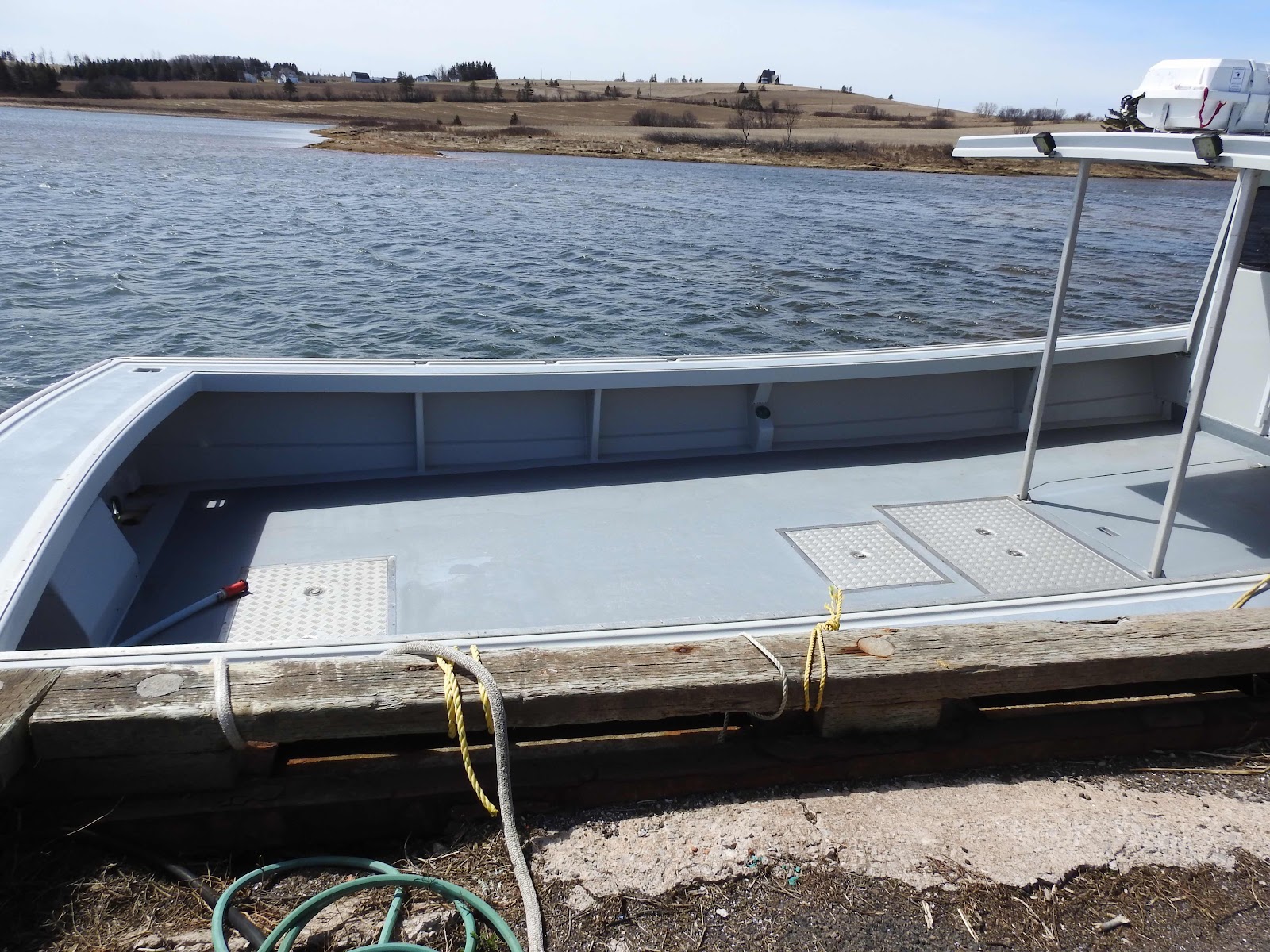
While they are not deep, the boats are wide, able to hold dozens of traps, stacked on each other. 


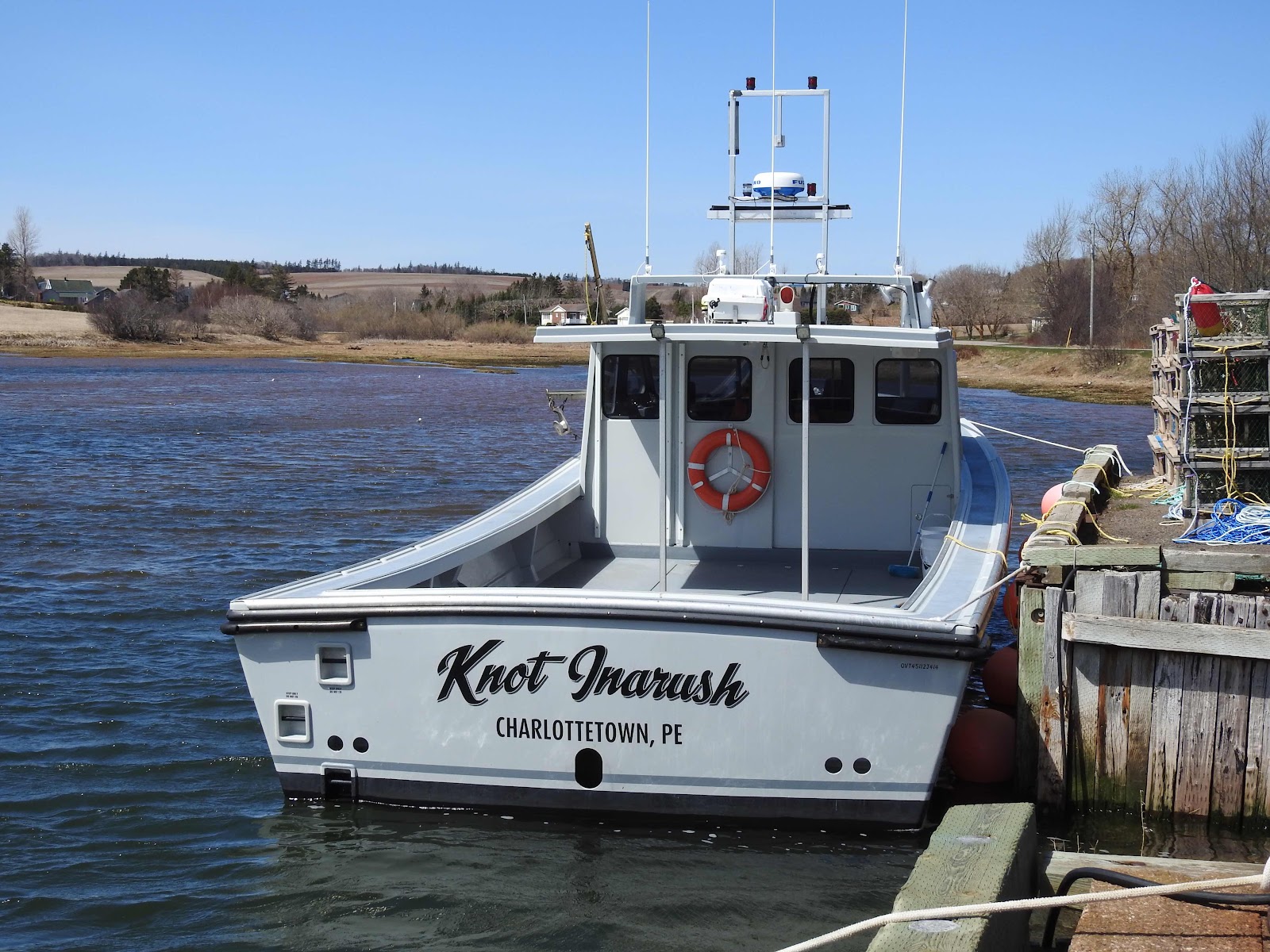
The Knot Inarush and its gear are rearing to go.


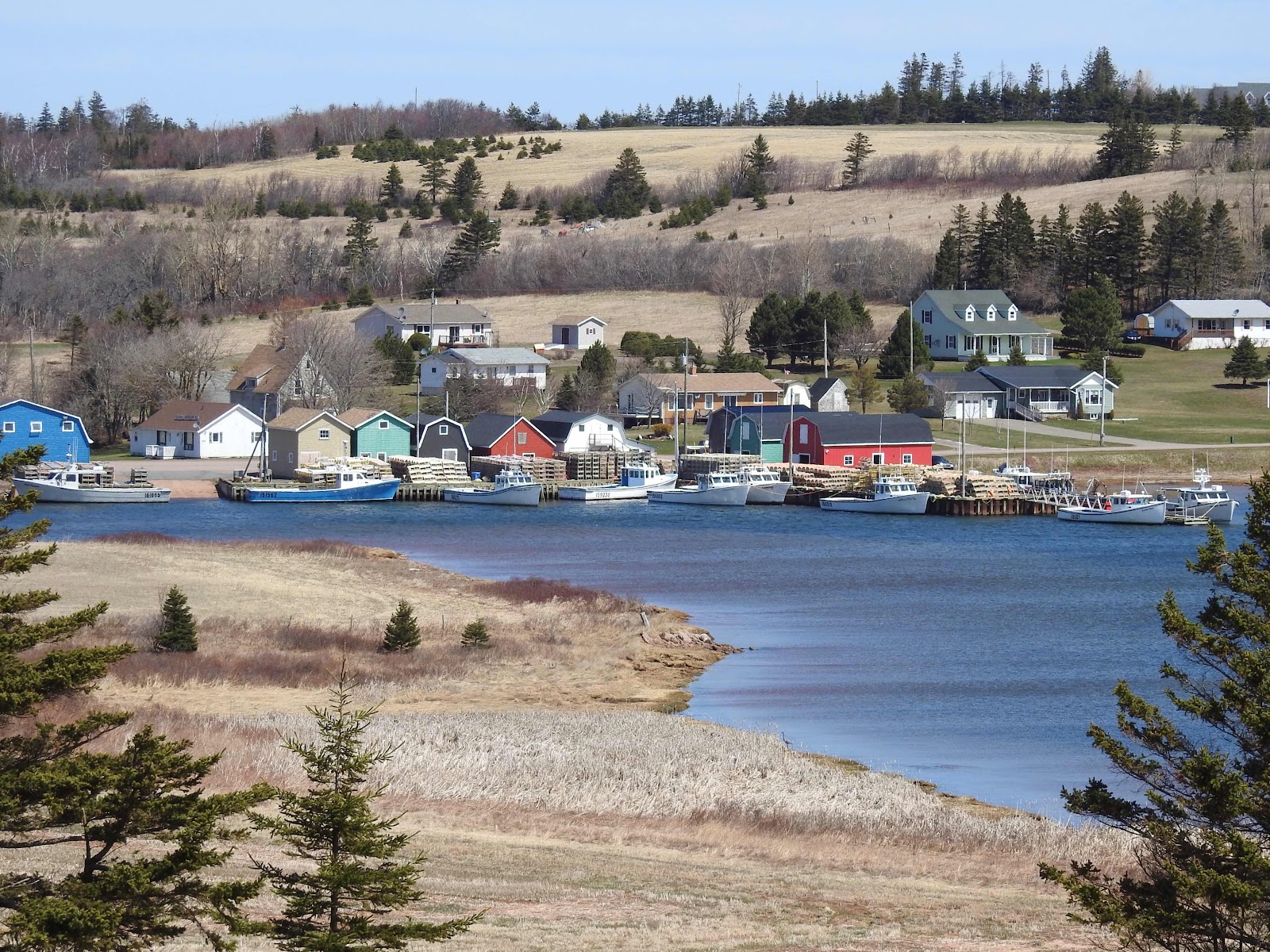
On the hill overlooking French River, the scene stretches out before us.


The yellow fields are moments from green, as are the trees, waiting for nature to do her magic. The Knot Inarush is in the left of the photo. It doesn’t matter if we R Inarush for lobster. Nature is in charge.